
Greg Thomas
This transcript was generated by AI and may contain errors. It is provided to assist those who may not be able to listen to the message.
And now we can begin the sermon.
As you well know, brethren, here in the history of the United States, one of the persons that is most admired from any country around the world is George Washington. Historians agree there were two elements that were necessary for the founding of the nation. One was George Washington leading the troops, and then the first president of the United States. And the second element, which was necessary, was the Constitution of the United States. Even Washington marveled at how independence was won against such incredible odds. He mentioned after the independence was gained in 1783, it will not be believed that such a force as Great Britain has employed for eight years in this country could be baffled, which means frustrated, in their plan of subjugating the United States. And he says, by numbers from the American side, infinitely less, composed of men oftentimes half starved, always in rags, without pay most of the time, and experience every kind of distress which human nature is capable of undergoing. Of course, George Washington had no idea God had plans of blessings upon these descendants of Manasseh, and giving them the most bounteous of lands at a specific time in history. Notice in Genesis 49, verses 22, and then 25-26, which I'll read. It says, Joseph is a fruitful bough, his branches run over the wall, by the God of your Father who will help you, and by the Almighty who will bless you with blessings of heaven above, talking about the good weather, blessings of the deep that lies beneath, talking about the rich land, blessings of the breasts and of the womb, talking about the great population it would have. The blessings of your Father have excelled the blessings of my ancestors, up to the utmost bound of everlasting hills. Yes, the United States experienced a population explosion, which was unparalleled at that time. It went in 1976 from a population of two and a half million to, in a hundred years, in 1876, 50 million, which means it multiplied 20 times over. And then, from 1876 to 1976, it went from 50 million to 220 million, more than four times. And then, from 1976 to the present time, 2020, we have around 320 million.
So, certainly it has been a population explosion. It was therefore destined for the United States, the descendants mainly from ancient Manasseh, when they founded the nation, to inherit Abraham's material blessing along with Ephraim, which is England today. God has used men and women in the past to carry out His will, even if they didn't know it, such as King Cyrus the Great, whom is mentioned in Isaiah 44, verse 28, and God calls him, My Shepherd. Now, King Cyrus was never part of the converted people. He never became an Israelite and part of God's people, but he was used powerfully. And so, God has used men and women when He wanted His will to be carried out. And there are many biblical principles to learn about the life of George Washington. So, this you could call it a biographical sermon. In fact, Mr. Herbert Armstrong used to mention examples and principles that we could all learn from. In his booklet, The Seven Laws of Success, he used many examples of men to illustrate biblical principles. That's what I would like to do today. So, I'd like to focus on the biblical principles exhibited by George Washington and what we can learn from them.
If nothing else, this is going to be a good civics class, as we used to have in school to appreciate what a wonderful country we have by studying its history. So, I'd like to cover those seven biblical principles and how we can also apply these principles in our own lives. Number one was His submission to God and His will as He saw it.
One of the qualities of George Washington was that he was a sincere and dedicated man. Throughout his writings and speeches, he constantly attributed the success of what was accomplished to God and not to himself or his troops.
In Proverbs 3, verses 5-8, it says, Trust in the Lord with all your heart and lean not on your own understanding. In all your ways acknowledge Him and He shall direct your paths. Do not be wise in your own eyes. Fear the Lord and depart from evil. It will be health to your flesh and strength to your bones. And George Washington did trust in God and submitted himself and walked humbly before Him.
He said in his first inaugural address as he took the office of president, It would be improper to omit in this official act my fervent supplication to that almighty being who rules over the universe. And no people can be bound to acknowledge and adore the invisible hand which conducts the affairs of men more than the people of the United States. Every step by which they have advanced to the character of an independent nation seems to have been distinguished by some token of providential agency. When he mentioned providence or providential, he's focusing on God as a provider and protector. In his last letter to those 13 states, after that final victory, when he was going to resign his commission, he called what had happened, quote, a miracle, and every circumstance aligning for just this one time to make everything work.
He had a sense of being used by God and protected to carry out some manifest destiny. Like Winston Churchill, when he finally assumed the prime ministership there in England, he said he felt like he was walking with destiny. George Washington always used the term of this destiny that he was being thrust into many times reluctantly, but he was going to meet the challenge and carry it out.
One of his biographers, Ellis, said that Washington wrote to his brother, quote, this was after one of the first battles in the French and Indian War, in which he fought with the British troops, and he was a colonel. He says, by the miraculous care of Providence, again, the provider and protector God, that protected me beyond all human expectation.
I had four bullets through my coat, and two horses shot under me and yet escaped, unhurt. So when he looked at his coat, it had four bullet holes, but none of them touched his body. His biographer goes on to say they're at Monongahela, which was that time in the French and Indian War, and then in the battles at Trenton, Princeton, and Yorktown during the War of Independence, bullets and shrapnel seemed to veer away from his body as if he were surrounded by an electromagnetic field of invulnerability.
So something was going on that was protecting him, and so he recognized it was through that protection and power of God that things were accomplished. The second principle. He had a sincere personal relationship with God. So after we have this first principle of submitting to God and his will as he saw it, which is something that we should do as well. We should always take in account. God is there. He is our provider. He is our protector. And just like he has done so many times, he will intervene. He will help us when sometimes we are powerless, when we are hopeless, when we don't think anything's going to work out.
He is there. And so in second instance, it says he had a sincere personal relationship with God. George Washington was not one to just constantly go to a church, although he was at least half of the time going to church. But basically where he got his major strength was in his prayers and dedication and reading the Bible. His personal prayer book, written in his own hand, was found after he died. It had 24 pages of morning and evening prayers. He had written them himself. It showed his humble, heartfelt prayers. Here was the source of his real strength of character, his biographies often missed. In Hebrews 4, verse 14, it says, Seeing then that we have a great high priest who has passed through the heavens, Jesus the Son of God, let us hold fast our confession.
For we do not have a high priest who cannot sympathize with our weaknesses, but was in all points tempted as we are, yet without sin. Let us therefore come boldly to the throne of grace, that we may obtain mercy and find grace to help in time of need. There were many times where George Washington basically knew that he was bound to get annihilated by these regular British troops with much larger canons, with a much larger army, and yet he pulled through time and time again.
Here are some excerpts from that prayer book. It says, My sins remove them from your presence as far as the east is from the west, and accept of me for the merits of your Son, Jesus Christ. So give grace to hear your calling on me in your word, that it may be wisdom, righteousness, reconciliation, and peace to the saving of my soul in the day of the Lord Jesus. Another one of his prayers. I acknowledge and confess my guilt in the weak and imperfect performance of the duties of this day. Let me live according to those holy rules which you have prescribed in your word, talking about the Bible.
Make me to know what is acceptable in your sight. So we see he had a sincere personal relationship with God. He wasn't reciting some made-up prayers by others. He just wasn't warming up you for a little time at church.
No, this was a man that knew how to go before God and truly converse with him. That takes us to the third characteristic. His genuine humility. In Isaiah 66, verse 2, it says, For all those things my hand has made, and all those things exist, says the Lord. But on this one will I look, on him who is poor and of a contrite spirit, and who trembles at my word. Another one of Washington's prayers goes like this. Oh Lord our God, Most highly and merciful Father, I, your unworthy creature and servant, do once more approach your presence.
Bless the people of this land. Be a father to the fatherless, a comforter to the comfortless, a deliverer to the captives, and a physician to the sick. His biographers are puzzled by the humility of this great man. When accepting, heading the armed forces, beginning the war, he said, I feel great distress from a consciousness that my abilities and military experience may not be equal to the extensive and important trust. He added, I beg it may be remembered by every gentleman in the room that I this day declare with the utmost sincerity that I do not think myself equal to the command I am honored with.
He said the same thing when he was named to head the Constitutional Convention, which crafted the Constitution. And many mentioned that if he had not presided over that, why these men would have eventually fought so much against each other that nothing would have come out. But they all looked at that man, and they became calm. They went at the labor, and after four months were able to finish that wonderful Constitution of the United States.
And then, when he was chosen unanimously as president, he didn't campaign. They unanimously voted him in. And he said he didn't think he was worthy of it. He told his wife he had accepted this role because he recognized a kind of destiny that had thrown me upon this service. He mentioned the same thing when he had to head the army.
Winston Churchill also talked about walking with destiny, that everything converged for him to take the reins, although none of them were actively seeking it. The most amazing moment of Washington's life was not winning the war. Many men and conquerors have done that. But what was so incredible was walking away from all that power and heading back to his home as a gentleman farmer. What he loved most of all, and he didn't do that once, he walked away four times in his life from being able to be adored and become a powerful ruler over people. The first time was when he stepped down from his role as a military commander after winning that war. The second time was when he was chosen as the head of the Constitutional Convention. After that, he just stepped back. He was elected by those men without him putting any pressure, seeking any favors from anyone. Then, when he was elected as president, he also, after his first term, he didn't demand for them to re-elect him. He also said, you have to elect me, and they did so. Then, after his second term, he went ahead and also stepped down when they all wanted him to continue.
This is from another biography, Paul Johnson. After Washington finished his second term, he said he would never again hold public office. He had his horse waiting at the door, and he took the road to Mount Vernon the next day.
No one who knew Washington well was surprised. Now, he did this the first time when he stepped down from his office as the military commander. He did it here when he finished his second term. He says, everyone else in varying degrees was astonished at the singular failure of the corruption of power to work on him, as it had done with a great majority of others. And indeed, it was a rare moment in history. In London, George III questioned the American-born painter Benjamin West what Washington would now do now that he had won the war. This was before he was elected as president. Oh, said West, they say he will return to his farm. If he does that, said the king, he will be the greatest man in the world, the man who resisted the lust for power, for remaining in charge and control. And so we see the genuine humility of George Washington. His fourth virtue was his love of the Bible. We read in Psalms 119, verse 15, I will meditate on your precepts and contemplate your ways.
There's a quote by George Washington I've never forgotten. It's in Hailey's Bible Handbook, where it has quotes of important men. And the one they're mentioning, George Washington, I've never forgotten it. It says, it is impossible to rightly govern this world without God and the Bible. In a letter by Washington's nephew, Robert Lewis, who was his secretary for the first part of his presidency and had access to his private life, said he had accidentally witnessed his private devotions and prayers in his library, both morning and evening. That on those occasions, he had seen him in a kneeling position with a Bible open before him, and that he believed such to have been his daily practice. So, Washington closed the door, but that was a place where in the morning and in the evening, he would kneel down to his Creator God. These beliefs in the Bible led him to greatly respect and tolerate other Christian religions, including Sabbatarians and the Jewish faith. He set an example for future presidents about respecting these different Christian religions. Another author, Tim LaHaye, says about this period of time, The U.S. was founded on more biblical principles than any nation in history. It's the secret to America's greatness. Those principles originally permeated our educational system, courts, public and religious life, and economic system, producing what President Ronald Reagan called, quote, traditional values. When these values prevailed, the quality of life from the family to the streets was far better than today. It doesn't prevail anymore. We witnessed the secularization of society and even of religion. The results rise of drugs, crimes as a whole, more police needed to control criminals, home insecurity, where break-ins are so common, teen pregnancies, abortions, adultery, profanity, alternative sexual lifestyles, pornography, greed, corruption, and an increase in mostly secular leaders and the media that are against traditional, Christian values. That's how far we have gone from those traditional values that these founding fathers established.
So we go now to the fifth, quality. His perseverance in face of a stronger enemy and of his many defeats. Proverbs 24 verse 10 says, if you faint in the day of adversity, your strength is small. One thing Washington did not do was ever give up. Even when defeated in battles, the British thought after so many defeats, any man would throw in the towel, not Washington. Biographer Ellis says, he was not by any standard a military genius. He lost more battles than he won, but he was composed, indefatigable, and able to learn from his mistakes. He was convinced he was on the side of destiny. Despite all his mistakes, events seemed to align themselves with his own instincts or decisions. Things changed, and all of a sudden what looked like it was going to be a great disaster, now it was a great victory or a great escape from annihilation. Sometimes, when all seen lost, he simply said, Providence, meaning God is our provider and protector, has taken us up when all other means and hope seem to be departing from us. In this I will confide. In this I will rely. He began the war at the siege of Boston, says his biographer, determined to deliver a decisive blow against more disciplined and battle-tested British regulars. He ended it at the siege of Yorktown, doing precisely that with a decisive blow and winning the war. And so he was a man that knew what perseverance was all about. Eight long years being persecuted, chased by the British, who had the fleet right there on the coast. The US did not have a fleet. They had no navy. The British Army had fought for hundreds of years. They had renowned generals. They had financial backing. This was a time when England was developing that industrial revolution. And they had all the resources. They had the biggest cannons. And the US was a ragtag group of men, many of them farmers, who had hardly gotten any training. But they had God's backing, the grace of God.
And so that takes us to the sixth quality. His personal integrity. Here was a man that stood for his own character. He was a man that applied those principles. And that's why his men revered him. He ate the same bad food. He was there with them through thick and thin. He wasn't there leading the troops from behind. He was leading the troops from the front and guiding everything. In Proverbs 10 verse 9 it says, Whoever walks in integrity, walks securely, but he who makes his ways crooked will be found out. Well, one thing about Washington, we never talked about him being crooked at all. Proverbs 22 verse 1, it says, A good reputation and respect are worth more than silver and gold. His biography, biographer Ellis wrote, Even his critics acknowledged that he could not be bribed, corrupted, or compromised.
From another biographer, Paul Johnson, it says, From the age of about fourteen, Washington deliberately preserved every scrap of paper belonging to him, and therefore wanted the record to be preserved accurately with the object of demonstrating that the offices he held were undertaken from duty, not pride, not vanity, from duty. His overwhelming ambition was to be thought unambitious. That was one of the most important things to him, that people did not see him as somebody ambitious, that just wanted to take power for his own vanity and glory. His obsession, says Johnson, with his papers, was thus a strange combination of modesty and self-awareness. He was aware there was something special going on in his life. He was finding favor and strength to do great things. Based on Proverbs 13, verse 20, which says, Washington said, Associate yourself with men of good quality if you esteem your own reputation, for it is better to be alone than in bad company. That's something that is even quoted in Spanish. Better to be alone than in bad company. He said, I walk on untrodden ground. There is scarcely any part of my conduct which may not hereafter be drawn as a precedent, which means used as an example. The founding fathers as a whole were men of character, integrity, diligence, and who feared God. At various times, such as in his inauguration as president, Washington had said he could only provide three things. First, integrity. Second, the execution of his duties. And third, firmness and justice. His major strengths were his firm convictions, great courage, and being honest to a fault. Although he was not perfect and at times could lose his temper.
The seventh and last quality that we're going to cover today was Washington's love of freedom for himself and his country. He even left in his will that his slaves should be set free. And this slavery problem anguished him throughout his life. In Psalm 119 verse 45 it says, Washington grew up in a country of virtually self-governing states with little supervision from the king of England. It was only when the king continued to impose more taxes without representation from the states and limited western expansion that Washington considered the course was irreversible toward a split. They were taking freedoms away and as he said, quote, liberty when it begins to take root is a plant of rapid growth. Those planters, those Americans at that time, they were content with what they had had at the beginning of the founding of these colonies. They were allowed to establish their own city governments and they were allowed to have free commerce and very little involvement except the governors of each of these states was appointed by the king. But once the rules changed and now the king was imposing a very strict and controlling rule over them that then they balked. Now I know what oppression is like. My family lost our liberties in Cuba and we long for freedom what had been in place of freedom. What a blessing it was to arrive at this land of the free. The biographer Johnson points out, as a central actor in the American Revolution, George Washington was one of the most important figures in world history. As America's commander in chief throughout the eight-year struggle against Britain, he effectively liberated the 13 colonies from imperial British rule. He then presided over the process whereby the new nation drafted, ratified, and enacted its federal constitution. So Washington was there at that constitutional convention, as I mentioned. Finally, for eight years, he directed during his two terms of office the administration that put the constitution to work. With such success that, suitably updated and amended, it has lasted for nearly a quarter of a millennium, almost 250 years. The revolution he thus led to success was the first of a series that created the modern world in which we live. Its spirit was animated by the same love of representative government and respect for the rule of law that had produced England's unwritten constitution over many centuries. Thanks to Washington's genius, that spirit was successfully transferred to the new American nation. Subsequent revolutions in France in the 1790s and in Latin America during the following quarter century were marred or damaged by tragedies of violence and ambition that led to lasting instability in which the rule of law could not take root. This pattern was repeated all too often in the revolutions of the 20th century. It's a little known fact, but those that know about Spanish and Latin American history that, a little later in the early 1800s, there was another founding father of the Latin American nation. He was also a mighty warrior, a very educated man, but he tried to unite Latin America as the United States had done previously. But he was not able to, because each one of those countries, we could call them states, none of them wanted to give up their own sovereignty, their own control. And at the end, he gave up and retired with the famous words, I have plowed in the ocean. Didn't do any good. And so they never were able to unite to become a powerful continent like the United States.
Hopefully, we can be inspired by his example and can apply the same biblical principles in our lives. Let's see how we can do that for a moment. Ask ourselves the first quality of George Washington, his submission to God and his will as he saw it. Have we truly submitted to God and his will in our own lives? Do we see that day in and day out? It's so important to put God first in our lives. Secondly, he had a sincere personal relationship with God. He didn't give it up, although he was such a busy man, much more than any of us could ever be. And yet, he had time in the morning and the evenings to sit down, read the Bible, plead, and ask God for guidance and wisdom. Do we do that? Number three, his genuine humility. He didn't seek power the way so many. It reminds me in Philippians 2. And many times, George Washington said he was trying to follow the example of Jesus Christ. In Philippians 2 and verse 5, it says, "...let this mind be in you, which was also in Christ Jesus, who being in the form of God did not consider it robbery to be equal with God." Or something, the term there, to sought after, to grasp. He didn't think he had to continue to be what he had been. "...but made himself of no reputation, taking the form of a bondservant, and coming in the likeness of men. And being found in appearance as a man, he humbled himself, and became obedient to the point of death, even the death of the cross. Therefore God also has highly exalted him, and given him the name which is above every name, that at the name of Jesus every knee should bow of those in heaven, and of those on earth, and of those under the earth, and that every tongue should confess that Jesus Christ is Lord, to the glory of God the Father." George Washington saw God's intervention time and time again in his life, and he had a personal relationship with God. He was not ashamed to mention God and to humble himself before him.
I have one quote from Washington when he appointed a national day of prayer in Thanksgiving in 1789. He said, In other words, as God the provider and protector, to obey his will, to be grateful for his benefits, and humbly to implore his protection and favors, recognizing that the great and glorious being who is the beneficent author of all the good that was, that is, or that ever will be, that we may then unite in rendering unto him a sincere and humble thanks for his kind care and protection of the people. And they set aside a day for prayer and fasting and thanksgiving. So we see that he had a sincere personal relationship with God, and he had that genuine humility that we just mentioned. Then, number four, his love of the Bible. He really did examine it, because many of what he wrote were scriptural verses that he put into his own words. Number five, his perseverance in face of stronger enemies and his many defeats. And he never gave up. He continued calmly, building up his army when it was defeated, and continued on. We need to have that perseverance in face of our challenges and crises, and realize that God is there. We know you can depend on him, and many times we're being tested and purified to get closer to him. And then, number six, his personal integrity. He was a man that people felt comfortable around. He was very much a man of the people. In his presidential walk every day, he didn't take a carriage when he went out. He just walked among the people. He didn't even have guards or soldiers around him, because he wanted to show that he was one of them. He didn't have a crown like a king. He wasn't in a carriage with soldiers. He wanted to give that example. He felt like he was one of them. And his personal integrity was one of his great strengths. And finally, his love of freedom for himself and his country. And we also should have that same love of freedom, love of those traditional values that these men established in this country. The freedom of speech, the freedom of religion, the freedom of assembly. All of these things that many times we take for granted. But in other countries, you don't have any of those. You get jailed, you get imprisoned for any of those things. And so hopefully we're inspired by this great example. And we can apply those same biblical principles in our lives. What a blessing it is to live in this land. And we had a godly man whom God used to bring about the blessings of Abraham upon this bounteous land that we're able to participate and share with others.
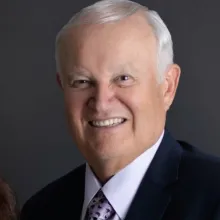
Mr. Seiglie was born in Havana, Cuba, and came to the United States when he was a child. He found out about the Church when he was 17 from a Church member in high school. He went to Ambassador College in Big Sandy, Texas, and in Pasadena, California, graduating with degrees in theology and Spanish. He serves as the pastor of the Garden Grove, CA UCG congregation and serves in the Spanish speaking areas of South America. He also writes for the Beyond Today magazine and currently serves on the UCG Council of Elders. He and his wife, Caty, have four grown daughters, and grandchildren.
