

Mario Seiglie
This transcript was generated by AI and may contain errors. It is provided to assist those who may not be able to listen to the message.
Thank you so much, Gary and Liz. I can jot that off my bucket list. That was one of the things I wanted to hear one time before you finally kicked a bucket, right? That was part of my bucket city. And that's a hard act to follow. Now, I will begin with this message stating, I don't know if this is just a coincidence or not, or if it's just the way the mind of God works. Is it a coincidence that seven great virtues in the Bible coincide with God's seven feasts?
We're going to go to several places in the Bible, and notice these seven great virtues align perfectly with the seven feasts of God. First, we need to go probably to the most important lists of virtues we have in the Bible. 1 Corinthians 13, verse 13. I'll read it to you. Very simple phrase, but probably one of the most important phrases in the entire Bible. And now abide faith, hope, love. These three. But the greatest of these is love. Agape love, as the Greek agape means. It's sacrificial, outgoing, concerned, and loved toward another person. It is selfless, not selfish.
That type of love that God has for mankind.
Love is the greatest of all virtues, according to the Bible, and is represented above all in the first feast, of which the choir just sang that final week leading to the Passover, which shows the love of God toward mankind.
There are two passages, one of which is quite famous, the other one not so much, but focus on that love of God for mankind and dealing with the Passover.
Notice in John chapter 3 verse 16, it actually deals with the spirit of that first feast. It fits very well. John chapter 3 verse 16 says, might be saved. That's the way God thinks. Not here as many have the idea of a wrathful, angry God that no, he's so loving, he didn't send his son to condemn the world, but to save the world. God was willing to sacrifice his only begotten son for all of us. The other scripture that is parallel to this one is found in 1 John chapter 4 verses 9 and 10. 1 John chapter 4 verse 9 it says, in this the love of God was manifested toward us, that God has sent his only begotten son into the world, that we might live through him. And this is love. Not that we love God, but that he loved us and sent his son to be the propitiation, which means sacrifice, for our sins. Beloved, if God so loved us, we also ought to love one another. And so we see here with this first feast the theme of God's love. Above everything else, the Passover deals with this, both in the Old Testament, where God had that sacrifice lamb with the blood on the dentals or on the doorposts, sparing the Israelites from his wrath and striking down the firstborn children of the Egyptians. And so in the Old Testament, God protects out of love his people. And in the New Testament, we have Christ's blood that is also placed in our lives, and it covers up the wrath of God that will be applied to the rest of mankind. And so the Feast of Passover is a feast of love. God's love toward us and also our love toward God. So here, just a few days, Thursday, we gather together, and the theme is going to be about love. Do we really appreciate it? Do we take it for granted? Do we value it or not? We can't take it, as it says there, in an undignified way, in a way that is lackadaisical. The person hasn't really gotten close to his Creator before that. So there's a way that we can take the Passover with the wrong attitude. Let's go to 1 Corinthians chapter 11, real briefly, to touch on this because this is the time, this is the week to do so. 1 Corinthians 11.
It says in verse 27, Therefore whoever eats this bread or drinks this cup of the Lord in an unworthy manner will be guilty of the body and the blood of the Lord. But let a man examine himself, and so let him eat of the bread and drink of the cup. For he who eats and drinks in an unworthy manner eats and drinks judgment to himself. Not discerning means you're appreciating, valuing, thanking God for it, and some just don't do it with faith.
We fall into all kinds of sicknesses, and we know God is the one that has the ultimate decision. Person's not sick because they've sinned in such a way.
It's our bodies break down. We go through things, but we have to do our part. The Passover is one of the parts that we do ask God to intervene in our lives. We know he in due time, in his time, will carry it out, but let's not annul that wonderful promise of God.
The second great virtue coincides with the second feast. It's also mentioned in 1 Corinthians 13. 13. Not only love is mentioned there, but faith. And faith aligns and fits this second feast so well. Notice in 1 John chapter 3 in verse 18, and as you know, I like to give fresh messages. I've never given this in all over 40 years in the ministry. This is just something that I've been working on for for weeks to give at this particular time. Of course, God's the one that guides and inspires. 1 John chapter 3 in verse 18.
It says, My little children, let us not love in word or in tongue, but indeed and in truth. In other words, we have to walk the walk and not just talk the talk. It's nice to talk about love, but do we have actions that correspond to it? Well, faith is the way we show our love, and we express that by the way we walk and apply it. Strong's dictionary and also the word study dictionary bring up and summarize faith as the belief in the truth and to be faithful in obedience. Belief in the truth and then be faithful in obedience to those truths. So it's not just a matter of what you believe. You apply it. You carry it out. There are actions behind this type of faith, and one of the translations of this word means being faithful, reliable, that a person is going to carry things out as proposed. Notice in Titus chapter 2.
Basically another description of what faith is all about. Titus chapter 2.
Starting in verse 11, it says, For the grace of God that brings salvation has appeared to all men, teaching us that denying ungodliness and worldly lusts we should live soberly, righteously, and godly in the present age, looking for the blessed hope and glorious appearing of our great God and Savior Jesus Christ, who gave Himself for us, that He might redeem us from every lawless deed and purify for Himself His own special people, zealous for good works. So you see here, it's not just love. Yes, we greatly appreciate what God has done for us.
Those that are baptized every year, we have this reminder to be grateful and thankful for what God does, and the Passover fits and harmonizes very well with the term love. But just like the Passover is just a momentary time when we partake of foot washing and taking of the bread and the wine, but what happens after that? Well, the following day at sunset begins the seven days of unleavened bread. Now for that, you need to have action. It's not just, oh, oh, I've gotten here the forgiveness.
So basically, that's over with. No, unleavened bread shows us we have to be conscious of not eating any leavened products during those seven days and to be eating unleavened bread, which means putting in right thoughts, right attitudes, and taking out wrong thoughts, wrong attitudes. And for seven days, we walk the walk of faith. And God sees that. He's the one that designed this.
Like I said, is this a coincidence that those three great virtues, love, faith, and the next one I'm going to bring out has to do with a third feast. So these are the biggies, and these are the important virtues in the Bible, and they coincide with each one of God's feasts.
Notice in Hebrews 11, Hebrews 11, in verse 28, talking about Moses, how he applied faith, not only believing, but carrying it out, applying it, walking that walk. It says, verse 28, by faith he kept the Passover and the sprinkling of blood, lest he who destroyed the firstborn should touch them.
Yeah, they kept the Passover. Just like some people say, well, I've already accepted God, and I already know that he's given me his love, but I'm not going to keep any of these feasts. Well, that's not what Moses did, and that's what he commanded the Israelites to do. And so by faith, belief in the truth, and faithfulness to carry it out, he kept the Passover.
And then it goes on in verse 29, by faith, something concrete, practical. They pass through the Red Sea as by dry land, whereas the Egyptians, attempting to do so, were drowned. And according to the calendar in the Bible, it talks about them leaving on that beginning of the 15th. That's when they left. They started the Days of Unleavened Bread on the 15th, the beginning of the 15th, and then on the seventh day is when they crossed the Red Sea, finishing the symbolism of the Days of Unleavened Bread.
And what did they do? They were leavened. They were talking about the Egyptians. The Egyptians were leavened, and the Israelites were unleavened in that sense. And God protected the unleavened Israelites, the ones who had been keeping those days of unleavened bread. And so it's a way of God dealing with us in a merciful way because we not only have the love, but we also have the faith to carry things out as He instructs us in the Bible.
The Bible is our instruction manual. We don't add to it. We don't take away. We just say, is this what you want, Lord? This is what you have? This is what we're going to do. Whether anyone else does it or not is immaterial.
It's our salvation we have to work out. We have to give account before Jesus Christ one day, and our faith is going to determine our faithfulness. Were we faithful or not? Or were we just, as they say, fair weather members? They're fine while things are not tough. When things get tough, that's when your faith is tested the most.
And so from these two feasts, at the beginning of this yearly cycle of feasts, we're initiating God's cycle of spiritual feasts to keep us pointed toward His kingdom, which is coming. And God's going to shake this world. Do you want to still be leavened or unleavened? If you're still in your sins and you've got that leavening, that's going to be with the world. Be punished. If you have unleavened yourself spiritually, you're going to be spared. God's going to be faithful and merciful toward us. That leads us to the third feast, which coincides with this third great virtue we already covered in 1 Corinthians 13.13, and that is hope. Now, Pentecost defines and describes the term hope. The first fruits of God, these people that are going His way, now receive His Holy Spirit. The first fruits having God's Spirit and having in their vision the hope of salvation, that better resurrection for those that are faithful to reign with Christ for a thousand years, to be part of that first resurrection. The hope is given to us through the Feast of Pentecost. Notice in 1 Corinthians 15 verse 19. It says, if in this life only we have hope in Christ, if He was just a nice teacher, if He didn't resurrect from the dead, He says, we are of all men the most pitiable. Why? Because why are you doing all these sacrifices if there isn't that future reward?
Verse 20, but now Christ is risen from the dead and has become the first fruits of those who have fallen asleep. For since by man came death, by man also came the resurrection of the dead. For as in Adam all die, even so in Christ all shall be made alive. But each one in his own order, Christ the first fruits, He's already resurrected at the right hand of God the Father, afterward those who are Christ's at His coming, these first fruits that have received God's Spirit. It's just a deposit of what will eventually transform the person and be given the totality of that spirit life. We just have a tiny portion now, but it's the first deposit. I know most of us have mortgages. We have to give a deposit down on the house, and you're paying for it. Whose house is it? Well, it's the banks until you finish it, but at least I get to live in it, right? I paid the deposit, that first one, and eventually it will. You'll finish the mortgage. It'll be totally your house. Well, it's the same way. God gave us the first fruits of His Spirit, and if we're faithful, we will receive the entirety of that Holy Spirit in a spirit body and immortal beings forever. Notice in Romans chapter 8 verse 23, Romans chapter 8 and verse 23.
I call it the hope chapter, just like Hebrews 11 is a faith chapter, because it talks about hope throughout it. Verse 23, it says, not only that, but we also who have the first fruits of the Spirit, that first deposit I've mentioned. Even we ourselves groan within ourselves, eagerly waiting for the adoption, the redemption of our body. Our bodies will be transformed, and as you get older, the body starts breaking down, and you don't rely so much on it anymore. It's not so nice as the cells age, and we look forward more and more to that redemption. But this is what the Feast of Pentecost gives us, the hope of that coming resurrection into God's kingdom. The fourth virtue found in the Bible fits the fourth feast. Now, this we've covered the three greatest in that sense, but here's a fourth one that is one of the fruits of the nine fruits of God's Spirit, found in Galatians 5 verses 22 and 23. And it follows love in these nine different fruits of God's Spirit, and that is what this next feast pictures. Joy. The fruit of joy. The Feast of Trumpets represents a coming of Jesus Christ, and that is when the trumpet sound and there will be unparalleled joy as a result.
Notice in Malachi chapter 4, Malachi chapter 4, Malachi is the last book of the Old Testament. Malachi chapter 4 in verse 2, talking about the day when Christ returns, verse 2, and it says, But to you who fear my name, the Son of righteousness shall arise with healing in his wings, and you shall go out and grow fat like stall-fed calves. That doesn't sound too good, does it? It's really not the best translation at all. If you look at the, you compare it, I'm going to read it from the New Living Translation. It says, But for you who fear my name, the Son of righteousness shall rise with healing in his wings, and you will go free, leaping with joy like calves let out to pasture. Now, you've seen these young little calves, they're just full of energy. They're very muscular, they're thin. If anybody's ever lived in a farm, when you see these little calves and you let them out of the stall, boy, they come out and they're just all full of energy, jumping up and down. Well, this is what describes, when you're transformed and you look at yourself, there's going to be leaping, back flips, a cry of joy like never heard on this earth. That's what this is trying to describe, and this is the joy. Because right now, it's like running this marathon and spiritual marathon and all these trials and difficulties, and you look and I can't see the finish line still, and you've got to be out there, you know, trudging along. But the Feast of Trumpets represents the crossing of the finish line when you triumph. You've been faithful to the end. Notice another scripture in Matthew chapter 8 and verse 11. Matthew 8 verse 11.
Christ speaking here, and I say to you that many will come from east and west and sit down, this should be reclined, because this is the way they used to have their dinners, you'd have a cushion and you would recline next to the other person and sit down with Abraham, Isaac, and Jacob in the kingdom of heaven, the kingdom that is coming down from heaven. You're going to be part of that great wedding feast, and I tell you there's not going to be one sad face. People that went through a lot of pain toward their death, and they just recollect that, but all of a sudden, here they are, just like a 16-year-old kid who feels he's got an immortal body, right? Everything works great, no pains, nothing. Well, now you've got this spirit body, and not only that, but you've got a capacity to think and to act like no brain in this earth can do. You have now a spiritual mind, and you never get old, you don't become forgetful, you don't forget your keys, you don't forget this or other things. You will never go through that. You will be eternal young forever. That's what God is telling us, and this fourth feast, the Feast of Trumpets, the trumpet sound, announcing the coming of Christ, and we're going to be so happy and joyful at that time. That takes us to the fifth feast and the fifth virtue found in the scriptures.
The feast is the day of atonement, and the virtue is mercy, God's mercy. We know this feast represents, after Christ has come back, the very next event that takes place, Christ removing Satan and his minions, his demons, they're all going to be cast out into the darkness of the abyss, and they will not be able to come out during that entire thousand-year period when Christ reigns with the saints. Satan is put out and mercy is extended throughout the millennium. Nations will now be free to follow God, the true God. And during the day of atonement, all the events surround and actually go in a circle around the mercy seat, which is where God's seat was. That's where the two carabim were there, and it was called the mercy seat, because we have a merciful God. And the day of atonement represents that. Remember the laying on of the sins upon one of those goats that represents Satan? He's inciting people all the time. He's the amplifier. He's the one that people get connected to, and all of a sudden things go batty and go crazy and do a lot of unfortunate stuff. So Satan is going to be cast out, and now mercy is going to be extended. The blood was sprinkled on that mercy seat, symbolizing the atonement, which meant the covering over of the sins, and the forgiveness to God's people is extended. It is all unmerited. All have fallen short of the glory of God. And so God's mercy is the symbolism of this day of atonement. Notice in Matthew 23 verse 23, Christ mentions about mercy being one of the most important virtues in the Bible. He says, Woe to you, scribes and Pharisees, hypocrites. Matthew 23, 23. For you pay tithe of mint and anise and coming, and have neglected the weightier matters of the law, justice, and mercy and faith. These you ought to have done, showing that yes, we should tithe, but we shouldn't just be fanatical in the way that the Pharisees even tithe their little mint brush, their little plant, and they would count the mint leaves so that they were so meticulous about that. And then, of course, they were swallowing the spiritual camel. And so I don't I've had plants like that before. I don't go around saying, Oh, well, I've got to take one leaf out of this one. Oh, I tithe, but it's just one of the duties. The most important thing is extending mercy and judgment. It says here, justice and faith. In James chapter two, we see the importance of mercy, something we learn in life. We learn to extend it to others as we wish others to extend to us. James chapter two, verse 12, to so speak and so do as those who will be judged by the law of liberty. It's not a law of slavery in the Bible. It liberates us. For judgment is without mercy to the one who has shown no mercy. Mercy triumphs over judgment. Yes, if we've extended mercy toward others, God's going to extend a lot of mercy toward us.
That takes us to the sixth virtue in the Bible. It coincides with the sixth feast, the Feast of Tabernacles. The sixth virtue here is one of the fruits of God's Spirit as well, the fruit of peace. This is going to be the great contrast between today's world and the coming world. We have forgotten what peace truly is to be free from fear, free from threats, free from war and violence and terrorism. We just had another incident over there in France, another person killing others.
We have lived under a nuclear threat for so long, we've gotten used to it.
The weak nations, as it mentions there in the prophets in the Old Testament, are growing strong. It's becoming unavoidable and inevitable, the clash as the world with all of these nuclear weapons one day, as God will permit for things to have a third world war which Jesus Christ is going to intervene. He's going to stop the bloodshed. Notice in Isaiah chapter 2 in verse 1, it tells us about this kingdom of peace that Christ is going to establish. It's ironic that the statue in front of the United Nations there in New York is based on this scripture, Isaiah chapter 2, verse 1 through 4, and of course they have not found peace in the United Nations. It says, verse 2, 2 Now it shall come to pass in the latter days that the mountain of the Lord's house shall be established on the top of the mountains and shall be exalted above the hills, and all nations shall flow to it. Many people shall come and say, Come and let us go up to the mountain of the Lord, to the house of the God of Jacob, to the house. He will teach us his ways. See, Satan will no longer deceive the world. And we shall walk in his paths, for out of Zion shall go forth the law and the word of the Lord from Jerusalem. He shall judge between the nations, and rebuke many people. They shall beat their swords into plowchairs and their spears into pruning hooks. That's what that statue has a man who is turning one of these swords into a plowshare.
And it says, Neither shall they learn war anymore during the thousand-year period. It's going to be peace. We're finally going to know what it's like, not fearing some bomb falling from heaven and destroying so many human beings.
In Isaiah chapter 9, just a couple chapters over, Christ is described as the prince of peace. Isaiah chapter 9 verse 6 says, For unto us a child is born, unto us a son is given, and the government will be upon his shoulder, and his name will be called Wonderful, Counselor, Mighty God, Everlasting Father, Prince of Peace, of the increase of his kingdom, of his government, and peace. There will be no end. So we see one of the characteristics of God's kingdom is going to be peace. Inner peace as well as external peace. People will have peace inside them as well. That takes us to the seventh feast, the last one, which harmonizes with the following virtue, which is talking about the eighth day, the last great day. The virtue is righteousness. It's summed up in 2 Peter chapter 3 verses 11 and 13 through 13. This is what it's all going to end. What is that great virtue that is described here in 2 Peter?
Chapter 3 and verse 11. It says, Therefore, since all these things will be dissolved, what manner of persons ought you to be in holy conduct and godliness, looking for and hastening the coming of the day of God, because of which the heavens will be dissolved, being on fire, and the elements will melt with fervent heat. Nevertheless, we, according to his promise, look for new heavens and a new earth in which righteousness dwells.
Yes, that's the basis that people who are ignorant, who have never had the chance to understand God's truths, that never had God's Spirit in this life, when they wake up after the millennium in that second resurrection, they'll learn the path of righteousness, just as we have had to learn it in this life. In Isaiah chapter 30 verse 20, Isaiah chapter 30 verse 20, we see here those saints, those members that are transformed are going to teach and educate the people during the millennium, and they will appear when people want to go the wrong way. Notice what happens. Isaiah 30 verse 20, it says, and though the Lord gives you the bread of adversity and trials it's talking about and the water of affliction, yet your teachers will not be moved into a corner anymore, but your eyes shall see your teachers because they appear. Spirit beings, your ears shall hear a word behind you saying, this is the way, walk in it. So today, people are left to do what they want. There's no one there to intervene. Many times they ruin their whole lives because of a wrong decision, but during that period of time, when all these billions of people are on the earth and God's servants will be teaching them, it will show them the path of righteousness. And it says, verse 22, you will also defile the covering of your images of silver and the ornaments of your molded images of gold. People will throw away their statues of the different versions of God. You will throw them away as an unclean thing. You will say to them, get away. That's a wrong way to worship God. I remember as a young man, being 17, I remember reading the book, The Ten Commandments, and realizing that they're not only physical, but spiritual in nature. And I had a big crucifix that we had actually brought from when I was in Cuba. It was made out of silver, and my mom always had it sort of like protection. And I learned that was an idol itself. That's not Christ. I'm supposed to direct my attention to Christ. And I took that, opened the window in the back there of my room, and there's a big forest, you know, overgrown. If you've ever been in the Appalachian area, and boy, I just threw that thing out there. Get away from me! I'm not deceived anymore. I don't need that. I want to worship God in spirit and in truth. And so we have here what people will learn. That's the path of righteousness. In Isaiah 65 verse 19, we see this period when people will have a chance. They'll only have a hundred years to decide what to do from the best understanding we have. Isaiah 65, 19 says, I will rejoice in Jerusalem, and join my people. The voice of weeping shall no longer be heard in her, nor the voice of crying. This is talking about in the future. No more shall an infant from there live but a few days, nor an old man who has not fulfilled his days. For the child shall die one hundred years old, but the sinner, being one hundred years old, shall be a curse. So God's going to give you a chance, one hundred years, to follow the way of righteousness. And I'm sure a lot of men and women involved in mafias and killings and all these horrific things, people will say, no, I'd like to do that. And no matter what, they will be cursed after a hundred years and be thrown into that lake of fire. But God is going to be merciful to those who want to be there when the new Jerusalem comes. Everything has to be purified. There can no longer be sin on the earth, when God the Father comes down. So we have this new cycle of feasts coming up with a Passover.
Let's try to think about these seven virtues during each of these feasts.
The theme of the first one, Passover, will be God's love. That's the one I'm going to be covering, God willing, this Thursday night. The days of Unleavened Bread, walking in true faith, removing the unleavened bread, or removing the leavened bread, and removing the leavened thoughts from our minds. Pentecost, let's think about the hope of salvation, that better resurrection, which we have been called to be part of. Trumpets, let's remember the joy when that will one day happen. It'll all be worthwhile. Atonement, remember the mercy of God, that He will focus on Satan and not us for the sins that were propagated. And then, of course, the laying on of hands of the other goat, which represents God's people and Christ being slain for us. Then tabernacles, symbolizing the peace on earth. And finally, the eighth day, the last great day, righteousness. So, brethren, let's keep this in mind and have these spiritual goals during this year and make it a better spiritual year overall.
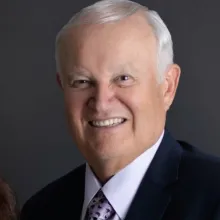
Mr. Seiglie was born in Havana, Cuba, and came to the United States when he was a child. He found out about the Church when he was 17 from a Church member in high school. He went to Ambassador College in Big Sandy, Texas, and in Pasadena, California, graduating with degrees in theology and Spanish. He serves as the pastor of the Garden Grove, CA UCG congregation and serves in the Spanish speaking areas of South America. He also writes for the Beyond Today magazine and currently serves on the UCG Council of Elders. He and his wife, Caty, have four grown daughters, and grandchildren.
