

Greg Thomas
This transcript was generated by AI and may contain errors. It is provided to assist those who may not be able to listen to the message.
Well, good afternoon once again, everybody. It's nice seeing all of you. I've already been challenged in some of the back rooms that I have a job ahead of me, and that is to keep all of you awake. Because some of you are not only living by the Spirit from above but went over to the wine country.
And, you know, whenever a preacher gets up and there are people out there that have a cup of coffee in their hand, you know we've got problems going on. But anyway, I wanted to share something with you that Norman Nega Smith was kind enough to give me, and I just want to show you this. You know what these are? These are first fruits. They're little peachats. But they're first. But that's like all of us in the calling that God has given us.
We're tiny and we're small, but we come in a bunch. And that's the beauty of the message of Pentecost. I just thought I'd like to share that with you for a moment, because that's very important. Because God knows exactly what we need it, and to think that, you know, when we look at ourselves here and if that's how God calls us, well, well that's well and that's fine. And God's Spirit will be alongside of us as we heard this morning. But it certainly is exciting when we recognize that God has taken us as first fruits and He's put us into an entire family and sealed us with the Spirit and we're all working together.
And that's the lesson of Pentecost. That's it. I'll go home. That's pretty good. I mean, there it is. Paul, we're about there? Okay. Do I hear an amen? I'm going to put on my Maui glasses. I told Paul after that message that when he was flipping those glasses back and forth and looking at all those Hawaiian girls, they all look like Jackie. So we just wanted to be careful. We're trying to keep the men and the women together here. We're doing everything we can on this Pentecost. We even supplied the beautiful wind outside today just to kind of get the feel going on for Pentecost.
And great. Well, I do have a message for you. It seems as if Robin always has something to say. And that is a part of my calling, and I'm delighted that I may be able to do that with you today. For those of you that may not be able to write fast enough today, I have some encouragement for you. I have a gift. God is not the only one that has a gift. I have a gift for you today. And that is simply that there is a handout to the sermon afterwards. For those of you that have the gift of computers, I will send it to you tonight, and you will have it.
Because I have a number of things that I would like to cover with you on this Pentecost 2010. I want to mention that there's a question that is out there today within the body of Christ. There's a question, whether it be fellowships or Bible societies, whether it be individual teachers, and that is exactly, how can we be relevant? How can we be relevant to this world that we are in today? How can we continue to reach people in this world that is so diversified, in this world that is going so rapidly by, this world that everything just seems to be changing and changing and changing?
How do we grab ahold of people? And how do we make them stop? How do we make them consider their lives? How do we bring them to the understanding of the gospel of Jesus Christ and the kingdom of God? You've probably had those discussions amongst yourself. We've had those discussions with our elders locally. We've had those discussions in the United Church of God. We've had those discussions as board members of the United Church of God. How can we indeed be relevant in this world which seems so apart from yesteryear and maybe even the world that we grew up in 50, 60, 70 years ago and or thousands of years ago when this message was first given?
Many of us that have either grown up in the church or been associated with the church for many years often hear the phrase, it's a four-letter word so it is simple, and I will dare to say it, it won't be bad. And that is simply we talk about the work. I think that's a jargon, that's a colloquialism that all of us discuss about the work, about being a part of the work.
What is the work? And thus, if we are a part of the work, how do we and are we used by God as instruments to bring others that he might choose to bring into doing what? The work. We must then understand what the work is. We say, well, how can we do that? We must have meetings. We must spend countless hours of trying to understand what to do. And perhaps God will reveal it if we allow enough information to come down through the funnel and then maybe we can go out and do the work more effectively.
Turn with me, if you would, to John. John 6. And join me in the Gospels in John 6. And let's notice, starting in verse 25. This is cutting into the sequence of the story of Jesus talking to the multitude and dealing with the issue of bread and him being the bread of life.
Of course, the all-time props are given to him a little bit more than the Maui glasses that we experienced this morning. The prop of the fish and the loaves that were given to him to help the audience understand that he is indeed the bread of life. But further on in that conversation, then, we notice, and when they had found him, verse 25, on the other side of the sea, they said to him, teacher, when did you come here?
And Jesus answered in them and said, most assuredly, I say to you, you seek me not because you saw the signs, but because you ate of the loaves and were filled. In other words, we're basically there to, in a sense, be filled. But Jesus was talking about something that runs much deeper than just simply being physically filled, as all of us are right now, after a wonderful Pentecost meal.
Do not labor for the food which perishes, but for the food which endures to everlasting life, which the Son of Man will give you, because God the Father has set His seal on him. And now we center and we focus in verse 28. Then they said to him, what shall we do? That is the question that the disciples of God asked down through the ages, once they come into contact with the Christ.
Okay, now what shall we do that we may work the works of God? How do we do the work and what is the work about and how can we proceed from you, Master? And Jesus answered and said to them, this is the work of God. Makes it very simple that you don't believe in Him who sent Me, that you believe in Him whom He sent. In other words, to come to understand what God the Father has done above and how He has sent no less than Himself through His Son, and that that is the key.
That is the center. That is the gospel of being able to do the work and being effective. And that when we do that and when we understand that and that we believe in Him being the Christ whom He sent. Simple few scriptures out of the Gospel of John. How then do we build upon this foundation of what doing the work is and how we can be relevant today in 2010 in being able to move towards the audiences of this world, whether as individuals across a coffee table, one on one, telling the story that God has given you, or whether we are a collective and we go out in power and in might and with force to be able to share the message of Jesus Christ and the Kingdom of God and to be able to do that work.
Where do we go to? Do we go to some other manual? Do we go to some professional? Do we keep on listening up here or has that understanding and that work and how to be relevant in 2010 come our way? I suggest that it has.
And that's why I would like you to turn to the book of Acts. The book of Acts, because it's all laid out there for us. The relevancy of God the Father and Jesus Christ and the Kingdom of God is laid out in the Bible. You do not have to go looking for it. You simply have to believe it.
You don't even have to go and write a new script. The script is found right there in that first Pentecost message of the Apostle Peter. Join me if you would in Acts 1, and maybe you are already there. For other than John 6, this will be my text for today that we are able to go through.
What we are coming to understand in the book of Acts is that God was beginning something new.
He was calling the Israel of God. He was calling a covenant people that were not just simply going to be based upon race, but based upon His grace as the message of God was going to extend and expand simply beyond the tribes of Israel. It was something that was expanding because when you even use the word new as a new covenant, it is a matter of breathing life into something that is and expanding it. Still based upon what is of old, but now in an expanded sense of the gospel, of the good news, of the message of love and power and wisdom from God above. And here we are in the book of Acts. Join me if you would, beginning here. We are going to start up in chapter 1. We are just going to go through this. The former account I made, O Theophilus, of all that Jesus began both to do and to teach until the day in which He was taken up.
After he, through the Holy Spirit, had given commandments to the apostles whom He had chosen, to whom He also presented Himself alive after His sufferings by many infallible proofs, and being seen by them during forty days, and speaking of the things pertaining to the Kingdom of God. Now we are going to move into something that I want to show you that is very, very important. I am just going to move this microphone over here because I hear it rubbing.
That is not any extra sound like fire or winds or anything, but I hear some rubbing going on here. I hope it is not distracting you. Being assembled together with Him, He commanded them not to depart from Jerusalem, but to wait for the promise of the Father, which He said, you have heard from Me.
For John truly baptized with water, but you shall be baptized with the Holy Spirit not many days from now. The first element that I want to share with you this afternoon, what we might call the first point of three Ps, is simply this, is that God made a promise.
That is something that we need to tell the people today that God has something in store for them. He has a promise. He said that He would send the promise of the Father.
Now, historically of old, the Spirit of God had been a transitory element. The power of God that came upon an individual to do a specific deed, and then in a sense it would depart. But this was something new.
And Jesus Christ, before He left, had said, I'm going to give you something. I'm going to give you a comforter. I'm going to send you the promise.
And it's going to be special. It's going to be the gift that we heard about this morning.
The promise was incredible. For days, they were eager and they were anticipating what that promise might be. One of the keys of the early church, if you'd like to jot down a word and ask yourself, how anticipatory and how eager have you been for this day to come? And every day, because of your relationship with God the Father and with Jesus Christ.
A New Covenant Christian has an eagerness and is up on their tiptoes in their heart, waiting and seeking and longing and searching for what God wants to give them.
Therefore, when they had come together, they asked Him, saying, Lord, will You at this time restore the kingdom to Israel? And He said, it is not for You to know times or seasons which the Father has put in His own authority, but You shall receive power when the Holy Spirit has come upon You. The second P that I'd like to share with you, if you'd like to jot it down and to stay in sequence, is God not only offered a promise, but He promised power. Not just words, not just an idea, not just ideals, but He promised power. And that You shall become witnesses to Me in Jerusalem and in all Judea and Samaria and all the ends of the earth. This is what Jesus Christ said to His disciples then and now. And I'm sharing this with you this afternoon that God shares with us a promise.
He shares with us power. And with that promise and with that power comes a purpose. Very important to understand. Very important to be able to internalize. We see in Acts 1 and verse 14, very interesting, the early church coming together. And these all continued with one accord in prayer and supplication with the women and Mary, the mother of Jesus, and with His brothers.
The opening of the book of Acts has people that are together in prayer. And what is amazing when you look at this story is that these are people that beforehand had not really liked one another.
These were people that had issues with one another. These were apostles that had been tearing apart one another for who might follow Christ and or the brothers of Jesus that were now come latelies and or even the women and that the prayer brought them together.
Now we move into Acts 2. And what I want to share with you, we're going to start in Acts 2 and verse 1, is something very specific. And I'd like to give you the title of this message. The title of this message is Seven Keys to the Pentecost Manifesto. Seven Keys to the Pentecost Manifesto.
A manifesto is a declaration of motivation and intentions. And here we have the first sermon that is given under the auspice of the New Covenant at the birth of the church by a man that had been a follower of Jesus Christ to set a template, to set a foundation for all teaching and all gospel preaching henceforth. And we're going to go through it together. And I think you'll find it fascinating. When the day of Pentecost had fully come, they were all one accord in one place. And suddenly there came a sound from heaven as of a rushing mighty wind, and it filled the whole house where they were sitting. And then there appeared to them divided tongues as a fire, and one sat upon each of them, and they were all filled with the Holy Spirit and began to speak with other tongues, as the Spirit gave them utterance. And there were dwelling Jerusalem devout men from every nation under heaven. And when this sound occurred, the multitude came together and were confused, because everyone heard them speak in his own language. And then they were all amazed and marveled, saying to one another, Look, or not all these who speak Alleans? How is it that we hear each man in our own language in which we were born? And there were people from all around the world that are mentioned here, even visitors from Rome. And they were amazed because they heard people speaking in our own tongue, the wonderful works of God. Very key phrase in this, What is the wonderful works of God that convicted them and caught their attention?
And they asked a very basic question, Whatever could this mean? An important question, and they're needed to be an answer. A very big question. In other words, why are we here? We're listening to this man. Why me and why now? It's very interesting that as God augmented the beginning of the Israel of God under the new covenant, there is a parallel between this time and that of the Old Testament. We see, and again, when you think of ancient Israel, that up against Sinai, there was the fire that descended. There was the different symbols that were going on. And so there is that whole symbolism that is occurring. What is very interesting in all of this is to recognize that as language had divided people before, now God is using the gift of tongue and gift of language to unite people, almost in the sense of the opposite of the Tower of Babel.
And it says, whatever could this mean? And what is very interesting and something that I've always taken is verse 13. Others mocking said they are full of new wine. Whenever I have seen that phrase, it always reminds me, wherever God is, Satan isn't far behind. Here, the work of God is getting off the ground, and right there out in the audience says, look at those guys up there! They must be drinking because it's only 9 o'clock in the morning. And it was just to bring down the message of God.
Now, notice what it says here, though. But Peter, standing up with the eleven, raised his voice and said to them, men and brethren and of Judea and all who dwell in Jerusalem. What is very powerful in this sequence, if you want to circle it, is you find Peter standing up. The same Peter that we read about the Gospels that was either sinking in water, or he was running away out of the Garden of Gethsemane.
Here is a man that is now standing up. A man that is now full of the Holy Spirit.
But he's more than just simply full of the Holy Spirit. He's full of a story, and he's full of the seven keys of the manifesto, a Pentecost, that he is going to share. Because you cannot be more than you are. You cannot share more than what is inside of you. And what I'm about to share with you should be inside each and every first fruit that is in this room.
Let's notice then, as we begin the story here, what he speaks about. He speaks about it in Jerusalem. I believe that this is what we need to be talking to one another about and encouraging one another and lifting one another up. And this can also be the work of God as we begin to preach what is preached here in Acts 2. Notice what it says here. Men of Judea and all who dwell in Jerusalem, let this be known to you and heed my words. For these are not drunk, as you suppose. It is only the third hour of the day, but this is what is spoken by the prophet Joel. You might want to jot down on your notes to stay with me. Here is the first key. In the message, the manifesto that is delivered at Pentecost, Peter is going to speak about fulfillment. Fulfillment of prophecy. He says, And it shall come to pass in the last day, says God, that I will pour out my Spirit on all flesh. And your sons and your daughters shall prophesy, and your young men shall see visions, and your old men shall stream dreams, and on my men servants and on my maid servants, and I will pour out my Spirit in those days. And they shall prophesy, and I will show wonders in heaven above, and signs on the earth below, and blood and fire and vapor of smoke, and the sun shall be turned into darkness, and the moon into blood. And before the coming of the great and the awesome day of the Lord, and it shall come to pass, that whoever calls on the name of the Lord shall be saved. What we see here is under the instruction of the Holy Spirit is that the Apostle Peter, talking to an audience, talks about the fulfilling of the plan of God. When he mentions about the book of Joel, this is seven or eight hundred years before this time. He speaks of a God who has planned things out, who speaks of the end from the very beginning, and has a purpose. And it's not a purpose that always happens all at once. When you look at this, you see some of these things. If you'll join me for a moment, it talks about blood, and it talks about vapors of smoke, and the sun shall be turned into darkness. Those are not things that necessarily happened right then and there on that Pentecost. It's a layering. It's a dualism. It's moving towards the crescendo. It's moving towards an end. But what we do notice is simply this, that all flesh is going to have that opportunity to be saved. This is a message for all of humanity. And you notice in it says in verse 21, that whoever calls on the name of the Lord shall be saved. Whether it be nations, whether it be families, whether it be individuals, that is the call. That is the first key of fulfillment. That God has a purpose. He has a plan.
He has promises, and he has provisions. You know, when you think about fulfillment and prophecy in relationship to this first message, join me if you would in Luke 22 in verse 31. Would you join me over there for a second? And Greg Rorm, if you are out there, I would appreciate it if you would come up here because all of their hot air is rising up, and I am feeling it, and I'm getting hot up here. And I'd appreciate if you turned that fan on me a little bit more. I'm Luke 22 in verse 31. And the Lord said, Simon, Simon and David, Simon, as Satan, has asked for you that he may sift you as wheat. But I have prayed for you that your faith should not fail. And when you have returned to me, strengthen your brethren.
This, in a sense, was a prophecy, and it was a promise that Jesus understood that Peter was going to be going down, that Peter was going to falter. He was going to sink into his own human nature. He was going to run from the one that had called him to be a part of the journey.
And Jesus, looking his head, said, I have prayed for you, and that your faith should not fall. And when you have returned to me, strengthen your brethren. God always gives a first fruit, a job.
He always gives each and every one of us a task. Not just the pastor, not just somebody in some home office, not just somebody in someplace over the river or some other congregation. Each and every one of us have been called to be a witness. Each and every one of us have been called to be a first fruit. Each and every one of us have a story to express, to squeeze out of us of what God has done. And to recognize that when you see Peter standing up in front of this audience, he is fulfilling a prophecy that Jesus knew that he would come back, that he would instill with him in that spirit to rise up, face his fears, move through those hoops, and filled with the Holy Spirit, not only throw away a pack of Marlboros, not only put on some sunglasses from Maui, but to express and to share that he is a servant of the Living God who from time immemorial has expressed that he wants one and all, whoever they are, to be a part of his family. And that as they heed that call, that they become a part of prophecy. Fascinating. Point one, first key of the Pentecost Manifesto is about fulfillment. And God can fill us full. God will bring into completion his purpose in time and in place. You and I understand that with prophecy. We understand that we're here on Pentecost. This is about the Feast of First Harvest, reminding us that if there is first fruits, or are first fruits, and a smaller harvest, first fruits demand greater fruits, more fruits. A small harvest demands the great harvest to come. And in God's time, and in God's way, and in God's purpose, all of humanity is going to have an opportunity to experience God, up close and personal, and make that choice, have that opportunity, to have their knee bow before Jesus Christ. Let's go to verse 22. He then moves from the fulfillment of this prophecy in Joel, and we reach the second key of that Manifesto. One that we need to share with the world today, as much as Peter did back in yesterday. Men of Israel, hear these words, Jesus of Nazareth, a man attested by God to you by miracles and wonders and signs, which God did through him in your midst, as you yourselves also know. The second key of relevancy within the Pentecost Manifesto, whether it be in 31 A.D. and or whether it be in 2010, is simply this, is that we need to speak of Christ and his life as a man, that he was indeed a human being. That is so important to understand. That is why we love him so very much.
Isaiah 7, verse 14, that prophecy from Isaiah reminds us it speaks of him as being a manual God with us. And perhaps it is his commonness that bespeaks his greatness. Just think about that for a moment. I'm always reminded of that phrase that Abraham Lincoln once made, in which Abraham Lincoln said, God must have loved the common man because he made so many of them. Join me, if you would, in Isaiah 53. In Isaiah 53, it speaks of that man-ness, that humanity, that commonality that he and we share together.
Again, a prophecy that came into fulfillment. 1. Who has believed our report, and to whom has the arm of the Lord been revealed? For he shall grow up before him as a tender plant, and as a root out of dry ground, and he has no form or comeliness. And when we see him, there is no beauty that we should desire him. He is despised.
He is rejected by men, a man of sorrows, and acquainted with grief. And we hid, as were our faces from him, and he was despised, and we did not esteem him.
You have to understand that when this message was first given, that the gods of Olympus were alive and well in the Roman and the Hellenistic mindset. Gods that were either above the clouds, or gods that were made in marble, that were in the temples, or in the public squares of the Roman and the Greek world. Jesus, a man, was indeed so non-Olympian. He was the altar Olympian, not full of muscles, not seven feet tall, like some NBA ball player today, not dashing looking like whoever is dashing looking today in 2010. If I mention Robert Rufford, I'll date myself, because he was dashing looking, not to me, but to you girls. You think of whoever it was, that Jesus was very ordinary and very plain. He was a man. He was so non-Olympian.
What is amazing when we understand that Jesus was not only a man, but he was also the Son of God and the Creator, by which all things were made, that he being God, being the Creator, being the one who made pain, would experience pain. It's enough to experience pain. You think about that. I've talked to a lot of you, and you know what you tell me as your pastor? You share with me your pains.
A lot of you today are in pain, one reason or another. Perhaps some of us are getting seasoned, older. We creak. We squeak like the Tin Man out of the Wizard of Oz.
And we need a little lube job here and a little lube job there, here a job there, a job everywhere, a job job. We're not moving like we used to. We're people. Can you imagine having been the Creator and the one that in the human sphere created pain, but you yourself would eventually feel pain?
It is important, or as important today as it was 2,000 years ago in our sermons, in our articles, in our messages within the body of Christ, to share with people this second point of the Pentecost Manifesto, that Jesus was indeed exactly like us. He was a man. This is not lost when Luke wrote this, because again remember Luke is writing this about 30 years, 40 years after these events. There were a lot of people that were saying, well, no, Jesus Christ did not really come to this earth. Jesus Christ was not really a man. God himself could not somehow inhabit this physical tent. God did not really become a part of us. He does not understand. Basically, in that sense, a cosmic, Gnostic ghost that could not feel pain, that could not understand what you and I are going through as individuals. Luke knocks out right out of the park. Peter knocks out right out of the park. He says, Jesus of Nazareth, a man. Why is that so important that we share that with so many people out there today that are hurting, that have spiritual pain, and have emotional pain, and have physical pain, and at times are afraid of death itself, and they don't know how to deal with it, but they don't feel that there is anybody relevant to snuggle up against them in that sense, to comfort them, to give them warmth, to know what they're going through. Just like today, when Mr. Sharp was talking about being a heavy smoker, and Larry, you were a heavy smoker, after you told me the number of sigs you had in a day.
It's one thing for me, who never really smoked, but a few when I was young, sorry, Mom, but to come across an individual like Mr. Sharp, who has been there, who knows what the pull of the drug is like, who knows that he wants to surrender his entire body and soul and spirit to God Almighty, and to be his servant rather than a little nicotine. And a lot of you have done that, not just Mr. Sharp, and great credit to you and to God's Spirit. It's tough sledding, and there's a lot of other tough sledding that is out there. For me, who did not, to go to Larry and say, well, Larry, this is really how to do it. You just need the Maui sunglasses, and you'll get over it. That doesn't cut it. But for somebody that had that same habit, who had that same pull, had it prayed about it, and said, never again, and then they walk by, and somebody just blows it on them. Oh, boy. You're going to relate with somebody like that. That's why it is so important today that you and I, as a part of an extension of Pentecost, 31 A.D., understand that, number one, that we are to preach a gospel, a fulfillment of the prophecies coming true through Jesus Christ, that all humanity might be saved, and number two, that we center on the aspect that we worship a Savior that can relate with us that was a man. Shakespeare himself once said, he just had scars that never felt the wounds.
And when you have somebody that you can relate to, it is so important. I'd like to share something with you from a book entitled Acts for Today. It's by a gentleman named Green, and why it is so important that we speak of Christ the man. Jesus of Nazareth was a man attested to you by God with mighty works, wonders, and signs of which I've just read. Green says this, we need a delicate balance in the way we understand Christ and share Him, and that is forever the work of the Church until the Father and the Son return as to share this belief in Christ. At times we focus too much on the divinity of Jesus, and perhaps give the impression that He is so entirely God that He is scarcely one of us. That is dangerously wide of the mark, and it leads to Jesus' worship with scant attention to the Father and the work of the Spirit. It also accounts for the tendency in certain nations to regard Jesus as so far out of reach that you need the assistance of the Blessed Virgin, or a St. Christopher, if you are to gain His ear. On the other hand, if we regard Jesus too exclusively a man for others and no more, there can be no salvation. There can be no way back to God.
Thus, my friends, we are driven to a paradox. Whenever we seriously consider the person of Jesus, He is both divine and human. He is the bridge that is firmly anchored on our side of the river, and yet reaches equally firmly to God's side. In this way alone can He be a reliable interpreter of God to us, and a sure route back to God. A bridge that does not reach both sides of the river is not a bridge at all. It is a folly. The earliest evangelist. I suggest this manifesto, this declaration, these key elements of what the work is instinctively manage to keep that balance and to face that paradox. The second key that I want to share with you is simply this.
The early apostles, never tired of speaking of Jesus the man. Notice then, it says, as you yourselves know, verse 23, Him being delivered by the determined purpose and foreknowledge of God. You have taken by lawless hands and have crucified and put to death.
The third key I would like to share with you today as we examine this manifesto.
The script that is written out for us to share and through God's Spirit to convict the world today is that the early church, the Apostle Peter under the auspice of the Spirit, speaks of Christ's death. Third point, if we are going to be irrelevant today, if we are going to share with people what God is doing, we need to share the reality that Christ did die. It says, you've taken by lawless hands and have crucified Him. You notice right here that Peter uses the C word to crucify. That comes from a word that can be used both for cross or to crucify from staros.
It means basically to be impaled on a stake and on a piece of wood. Sometimes that is very hard for individuals to imagine. It is so gross. It is so horrible. It is so unimaginable. And yet, the Scripture, the Gospel, the Good News gives that to us to help us understand what the love of God is all about. For some, it draws them to God and His message. For others, they say, this man must not be the Son of God. Some of the Jews that were there in that square at that time, when they heard that He had been crucified, they said to themselves, how can this man indeed be Messiah? Because we've been taught ever since that we were young that anybody that is hung on a tree, hanged on a piece of wood, is accursed. To be accursed was like a double penalty. It is hard enough to be cursed. But to be accursed and made anathema that any Jew that broke the law and was hung on a tree, you were to turn your back and you were to walk away, they were no longer a part of the camp of Israel. You can imagine then when the Jewish community heard this, and Peter is up there strong and valiant and he's preaching this, to recognize how some of the Jews just had to shake their head that perhaps at that time God's Spirit was not working with them. They could not make that breakthrough. They could not throw away that particular pack of Marlboros, as it were, and be able to go forward. But I would suggest to you, I would suggest to me and my preaching to you in my writings to the church and to others that read that we stick with this manifesto that is in Pentecost. You and I have an obligation to speak of death, of Messiah. We have an obligation and a responsibility to jolt people into reality that this the Son of Man, the fulfillment of all prophecy, did die to shake people and to wake people up.
I know today that the younger generation of which I no longer include myself since yesterday, just teasing, I know today a lot of people, you know, it's hard to grip them. Have you noticed how the ads become more and more gripping, quicker and quicker paced? And sometimes they just start with a jolt. You know, they jolt you just to get your attention, to grab your attention.
You know, a lot of people today tell me, Mr. Weber, we need a speaker. We need a message that jolts people's attention, grabs them like a Rush Limbaugh or an O'Reilly who's working for the folks. Or a Paul Harvey's voice of yesteryear, how many of you have said that to me? How many of you have perhaps thought that? Is there anything more jolting? Anything more that can grab an individual than to share the death of a man that has nailed to a tree with spikes of iron, put in his hands, put in his legs, and then a spear jammed up his side?
I'm sorry if I'm making you lose your meal this afternoon.
How more action-packed? How much more jolting of a message do we need? How much different does that kind of message resonate, be it 31 A.D. or today? I suggest that this message is not only for the world, but it's for you and me as first fruits of God thinking every day to jolt us, to tune us into the reality that God is calling us to. You've taken him with flawless hands and crucified him.
But then notice we move to the fourth key that I want to share with you.
You took him by flawless hands and have crucified him. You have put him to death, whom God raised up, having loosed the pains of death because it was not possible that he should be held by it. For David says concerning him, I foresaw the Lord always before my face, for he is at my right hand that I may not be shaken. Therefore my heart rejoiced, and my tongue was glad. Moreover, my flesh will also rest and hope. For you will not leave my soul in the Hades and or the grave, nor will you your holy one to see corruption. You have made known to me the ways of life. You will make me full of joy in your presence. For why? For what?
Why was David saying that a thousand years before this event and before this message on Pentecost Day? It goes to the fourth key element of the Pentecost Manifesto. The church today, as the church yesterday, needs to speak of Christ resurrection. Christ resurrection.
For when we understand that resurrection, and here we are during the spring festival days, here we are through Passover, then the days of Unleavened Bread. When was Jesus Christ resurrected? He was resurrected during that festival of newness, during the days of Unleavened Bread.
What does that mean to you and me? What did it mean to David? That when we understand the resurrection, we come to understand that there is the power of God. His purpose is going to be His purpose is going to be fulfilled. Jesus was a man, and yet nothing holds God back from His purpose either for Christ and or for you and or for me. And that there is no stone heavy. There is no place too dark in this world, in our life, in our hearts. You see, Jesus was very familiar with dark. He was most likely born in the dark, an angel in a barn stall, and He was placed in the dark in a grave. And yet the light of God blessed Him as a baby and later resurrected Him in power from that grave. I was listening to a radio show the other day. They were talking about a guy that was down in the Cape Canaveral area, and he had a press pass, and he was able to see one of the launches go off, which is a very incredible thing. Maybe some of you have done that before if you've been to Florida, where you can actually see one of the space shuttles go up. And they said there is such power that from six miles away you can feel the rumble and you can even feel the heat from six miles away. It is the most powerful experience that man has ever produced on his own. I submit to you that a greater miracle occurred. Just as Larry was talking this morning about miracles in Egypt and the miracles that God is working with us today, I submit that that power of lifting a missile up into the heavens is less than the power of what God did for his son, to raise him up. When humanity had judged him illegally, tried him unjustly, the heavenly court above reversed that, just like the Supreme Court does with the lower court, and says, no, not at all, illegal, no good, not guilty, this is my son, and to raise him now in glory.
Brethren, that is so exciting. That is what we've been called to, to understand, to believe that. That is the work of sharing that and recognizing, as it says in 1 Corinthians, that if God has done this for the Son, that he is going to do it for each and every one of us in order, as it says in the book of Corinthians, and to recognize that every human being has that opportunity one day, to be resurrected just as Jesus Christ the first fruit was. That's exciting.
That's wonderful. That's one of the things that we need to consider. It goes on to say, then, men and brethren, let me speak freely to you of the patriarch David, that he is both dead and buried in his tomb. Verse 29 is with us this day. Therefore, being a prophet, and knowing that God is sworn with an oath to him, that of the fruit of his body, according to the flesh, he would raise up Christ to sit on his throne. And he foreseeing this spoke concerning the resurrection of the Christ, that his soul was not left in the grave, nor did his flesh seek corruption. And this Jesus, God has raised up of which we are all witnesses. Therefore, being exalted to the right hand of God, and having received from the Father the promise of the Holy Spirit, he poured out this, which you now see and hear. For David did not ascend into heaven, but he says himself, the Lord said to my Lord, sit at my right hand till I make your enemies your footstool. What we find here is the fifth point that I'd like to share with you of the Pentecost Manifesto. The Holy Spirit inspired Peter to speak of Christ reigning in power and glory. Point number five, Christ reigning in power and glory forever uninterrupted. What a difference today when we think about it.
In the kingdom of man, in the world that is encapsulated by time and space, we see men come, we see men go. We see people, whether they be premiers or presidents of countries in Europe or Asia or America, that become a hope, become a dream, become the ideal, become the latest new thing, become the champion that is going to correct everything, only to find that you name your candidate, you name your president, you name your man, whoever it is, that within a year, two years, where at one time maybe there's 70, 80 percent up the polls, they're down to below 50, they're down to 40, down to 20, and all of that hope and all of those prayers that went towards that individual and all that time and that energy goes basically down the drain and starts all over again in four years, six years, or eight years. Brethren, the fifth point of the Pentecost Manifesto is that we have a Savior, a King, that is going to reign in power and glory forever, and He is going to remain at the right hand of God, and He's going to take out every enemy, every individual, everything that we fear. I wanted to share something with you. If you'll turn to 1 Corinthians 15. 1 Corinthians 15. And let's pick up the thought in verse 12, speaking of enemies. This is what Christ is over and is supreme. And a little bit about what this day of firstfruits is about. I'm going to be addressing this out of the life, the living translation. But tell me this. Since we preach that Christ rose from the dead, why are some of you saying there will be no resurrection from the dead? For if there is no resurrection of the dead, then Christ has not been raised either. And if Christ was not raised, then all our preaching is useless, and your trust in God is useless. And we apostles would be lying about God, for we have said that God raised Christ from the grave. But that be true if there is no resurrection of the dead. And if there is no resurrection of the dead, then Christ has not been raised. And if Christ has not been raised, then your faith is useless, and you are still under the condemnation of your sins.
In that case, all who have died believing in Christ have perished. And if we have hope in Christ only for this life, well, then we are most miserable in the world. But the fact is, here come the keys out of the Pentecost Manifesto, but the fact is that Christ has been raised from the dead. He has become the first fruit of a great harvest. First fruit. On this, the Feast of First Fruits, of a harvest that extends beyond Him, of those who will be raised to life again. You know, all the research in the world can't even cure the common cold. You already know that, don't you? And yet, God has already provided a cure for something much greater than the common cold, and that is death. So, you see, just as death came into the world through a man, Adam, now the resurrection of the dead, has begun through another man, Christ. Everyone dies because all of us are related to Adam, the first man. But all who are related to Christ, each and every one of you today in this room as first fruits with an elder brother who is the first fruit. We are in the family of God. We are family members of Christ who are related to Him. The other man will be given new life, but there is an order to this resurrection. Christ was raised first, then when Christ comes back, all His people will be raised. And after that end will come when He will turn the kingdom over to God the Father. For He surrenders everything to God the Father, having put down all enemies of every kind. For Christ must reign until He humbles all enemies beneath His feet.
And the last enemy to be destroyed is death. Jesus Christ is not simply another lamb, another sacrifice, another dead sacrifice that comes and goes. He has been resurrected, but not only resurrected, He now reigns on behalf of His Father and to recognize that He even triumphs over death.
That may not mean a lot to you, some of you that are younger, and I'm seeing some younger people and I'm looking at them in the eyes right now. I'll look at Al and make you feel young for a moment. Well, death may not mean a lot to some of you that are in your 20s or in your 30s, because, well, you still think you're immortal. You do have the Olympian mindset and the Olympian bodies, because the aches and the pains of age have not set in. But death is an enemy. You ask Silvio Jaromeo if death is an enemy this week, death that has separated him from the love of his life.
You that have lost children, you who have lost mates, you that are at age 70, 80, an orphan, because your parents have died. You are an orphan. Death has robbed you of your mom or your dad that you can no longer get on the phone and say, hey, mom. And sometimes maybe you didn't call your parent as much as you ought to. But you knew that you could. That was the point. You just knew that you could and that they would always want to be on the other end, just knowing that they were there, knowing that you could call if you wanted to call. Death is an enemy. Death was an enemy in 31 AD. Death is an enemy in 2010. That is a message of relevance that we must jolt this world with. This from the manifesto of Pentecost. We don't have to go looking how to do it, friends. It's all right here in the message of Pentecost. This Jesus, God, is raised up, of which we are all witnesses. And I mentioned that already.
Therefore, let all the house of Israel know that God has made this Jesus, whom you crucified both Lord and Christ. So often we use that interchangeably. And I'd like to share that with you for a moment. So often we say, Lord and Christ. They are actually two different terms. Please stay with me for a second. When we speak of Christ, we speak of the anointed one. We speak of Messiah. We speak of the blessed Son of God that He sent. I'm using language that's out of the Bible, out of the book of Mark. And actually back to the book of Joel. Jesus Christ came as Messiah.
Many people recognized Him as Messiah, but they were disappointed in Him as Messiah.
Many people thought that when the Messiah was to come, that He would actually be like David and march in front of armies of hundreds and thousands and march on Sesiah. That was the Messiah that they were waiting for. Rather than marching in front of an army, He marched in the multitudes of sick, of lame, of lepers, of sinners, of publicans, of prostitutes, of people that the world had basically pushed aside and thrown onto the scrap heaps on the outside of the camp of Israel. Jesus came as Messiah. He came as Christ. But what is fascinating here, if you'll notice, you may want to be brave enough if you want to. If you haven't moved your fingers at all today, you might want to circle that word, Lord. Because it is understanding Lord and Christ together that we understand the power of what Peter is saying here now to the audience. That Jesus did not just simply come as a man. He did not just simply come to die in the grave and be one more martyr for the cause of Judah. He was not just a local champion of Bethlehem. He was resurrected.
He now sits in glory. He is Messiah and He is Lord. The term Lord there was a term that was used in the Greek Septuagint, the Greek language Old Testament that the Jews used. It is the word Yahweh. It is the word Yahweh that was used in the Old Testament to speak of God. There was nothing to a Jew that was higher than the word Yahweh, so precious to many that they could not even pronounce it, lest they themselves come under a curse. There are some that are like that today.
What is being identified here is that Jesus, and this is what Peter is telling us, that Jesus is in that sense no less than God. He is no less than the rock that Israel followed. He is no less than the I AM that visited Abraham, that visited Moses, that led the children of Israel all of those years for a purpose and a plan as a type of the anotype that would come of the greater Israel, the new covenant Israel, one that is still on a journey, one that has a promise, yet unto the kingdom of God. This, then, when you look at it, becomes in a sense the first creed of the early apostolic church, that Christ is Lord. Christ is no less than God.
It is interesting that this, and we're almost done here, we're going to have just two short points. It's been a kind audience, and nobody's nodded off. If you're nodding your head, it's only an agreement, is to understand something this. Maybe you have never noticed the sequence of the Pentecost message, and that is simply this. The last thing is the greatest.
There's this crescendoing of all of these points that are coming up. We've only gone through five. The last two will be quick. The last thing that Peter says is that Jesus Christ, whom you crucified, he's telling the audience that you had personal responsibility for killing who? For killing who? For killing no less than God. What do you do if the audience gets it? If the Spirit is working with them, as it says in Romans 8, 14, not only leading them to throw out a pack of cigarettes, not only leading them to put on some sunglasses, but leading them to understand where they are and where they are apart from God, and that they have had the responsibility of no less of having a role in putting their Creator to death. And that they not only rehearse that in their mind, but they become convicted in their mind.
Where do you go with that kind of audience? What happens when you jolt them and you've got their attention and you come into what it says here? Now, when they heard this, they were cut to their heart. It doesn't say that they flipped the channel. It doesn't say that they reached for another magazine. It doesn't say that they went to listen to another preacher.
They didn't say, well, this guy's boring, and they get out their remote control and push a button.
They were convicted. They were told that they had killed no less than God Almighty, not only Christ, not only Christus, as it says in the Greek, but Lord Yahweh. And to a Jew at that time, there is no name above that which is Yahweh.
But now Jesus is associated as later on it would say that there is no name under heaven by which one must be saved. What do you do with that audience? Where do you take them next? What do you do? And they said, men and brethren, what shall we do?
Then Peter said to them, repent and let every one of you be baptized in the name of Jesus Christ for the remission of sins, and you shall receive the gift of the Holy Spirit. The sixth point that I want to share with you of the Pentecost Manifesto, of the message that we must continue to perform and do to do the work of God to point to who Christ is, is they spoke of hope. And this really fits in very well today. And I may share something on behalf of our elders. Didn't God just inspire them this morning? Weren't those just beautiful messages that Mr. Sharp and Mr. Smith brought to us? They were so up. They were so positive. They were so, what?
Hope-filled. Sometimes we don't feel like we have hope. Sometimes we don't think that our prayers are going anywhere above that ceiling. Sometimes we are, Susie and I were talking about this today, that sometimes we don't even need to have Satan condemn us because we are still condemning ourselves for something that God threw away a long, long time ago, but we keep on living with it.
Some of you are not able to be the first fruit of God that you have been called yet because you have not yet come to that stature of belief that God is fulfilling His purposes, that Jesus was a man, that He died, that He was resurrected, that He now reigns in glory. Therefore, we don't have much in our hope factor. See, going back to John, what is the work of God to help people understand that of Him who He sent the Father is really who He is. And because He is who He is, having lived and died and resurrected, all for the glory of the Father, that we don't have to continue to carry the baggage that Mr. Smith was talking about this morning. God is not interested where we're from. He's more interested in where we're going. He does not look at the baggage. He looks at the ticket and the destination of where He's sending us, and that's to His kingdom. But at times, we don't think we're really able to do it because we don't recognize who is before us and ahead of us, the Christ, and that God has given us a gift, the gift of the Holy Spirit. Pericletos, I didn't say parakee, Pericletos, the one who literally walks alongside of us, more than just simply a human Barnabas, that man of the Spirit, but the very Spirit of God, which is Holy, which is Spirit, which is no less than the Christ, that He said He would send a comforter to come to understand the fullness of what our life should be. Why am I sharing this with you? Why am I excited about it? You are firstfruits. Have you ever taken an orange? You know, when you take an orange, you ladies, guys, you ever do that? You get an orange? What do you do? You know, you get it on that. Susie, help me. What do you call it? The Spirit is supposed to help you with this one. What is it? Juicer. You know, you go like this, right? You get the juice out, right? What is the juice that should come out of a first fruit? What should be squeezed out of us by our life's actions?
How we respond to God? How we treat one another? How we can be like that Barnabas that Mr. Smith talked about? I could not possibly be a Barnabas to you, lest I understood that I'm a part of prophecy. You're a part of prophecy. That Jesus was a man. That Jesus was crucified and put to death. He did not stay there. He was resurrected. Not only that, He was resurrected in glory.
And thus, if I'm excited today as your pastor, it is only that I want to give you hope, as Peter gave that audience hope long ago. A first fruit. You might want to jot this down if you have not taken a note today. It's simply this. A first fruit is a dealer in hope.
You and I, this coming week, this coming month, soon are going to run into people that have no hope. And maybe humanly they ought not.
Maybe humanly they have blown it. Maybe humanly they don't look good. And yet you, not me, I'm not going to be there, you are going to be the agent of hope. You are going to be the witness to share the story, to share the work, to share of Him who is that was sent by the Father above not to be the problem, but to be the answer.
I can ask you a very basic question. I'll ask each and every one of you for a moment. You don't have to raise your hand right now. Confession is good for the soul, but not right now.
Especially in public. Are you hope-filled? And are you a purveyor of hope? How much hope, how much encouragement have you given to people that have smashed themselves into a dead end wall like these guys did in Jerusalem?
That's your job. That's your responsibility now as witnesses. It's not just Peter's job.
It's each and every one of our job that has a story to be like Peter. Why was Peter so effective? Peter knew that just days before he had smashed into a wall. He was good as dead.
He was the one that had said, I will always be there for you. Even all the others run away. I will be the one that takes the stand for you.
And you know the story. Peter was dead in his tracks. The beauty of the story of Peter speaking on Pentecost, the beauty of hopefully myself as your pastor sharing my humanity and my hopes with you, is the humanity that binds us together. That I am one dead man in that sense before God began dealing with me, sharing the story with others that were dead, such as you.
Peter is speaking as a dead man to dying men. He knew what the Marlboros tasted like. He had been there. He was one of them. And yet Jesus had said, Peter, you're going down. But when you return and you will return, you will have the hope that I share with you. Feed my sheep. And the last part of the Manifesto, point seven, is simply this. He says, I'm going to give you a promise. Repent, believe, be baptized, and you shall receive the promise and the gift of the Holy Spirit. Do you have that manifesto down? Are you living that?
Are you living that? Are you believing that?
Were you just here today to hear soft things? Things that would just go over your head, and you can go your way and say, I've done my duty. I've kept Pentecost.
We are yet a work that is in fulfillment. The job never, never ends until Jesus comes down on behalf of His Father. You and I have been called to be witnesses.
We cannot be more than we are. We must have that spiritual, skeletal structure that the Spirit has revealed at Pentecost to this day. That God is in the midst of one fulfilling His purposes.
Nothing will stand before them. Jesus was a man. Jesus, number three, was dead.
Jesus, number four, was resurrected. But He's not just till there at the cave, number five, He is resurrected, now stands at the right hand of the Father.
Number six, because you and I have been given this gift of understanding thus, because we have been given hope, because we have been given hope, we have no other thing to do but to give others hope. For we were dead, we were made alive, we now share that. And we remind people that God has given His promise, and He will be good to it. We can't do it alone, friends. No looking at this today. I see this peach. It's small. And it will wear away. But then when I put it in here, I think of all of you. And I think that God has put us into a family of firstfruits to encourage one another to stay together. We can't share this message just by ourselves. We need to when we can and when the Spirit moves us. But I want you to see this bag for a moment. And thank God that He's called a bunch of us to be together, to be a sweet savor before Him on this, the Feast of Firstfruits.
Remember, if you did not get any of this sermon, the handout is out there at the door when you go home.
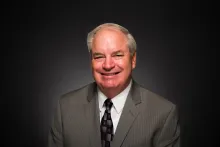
Robin Webber was born in Chicago, Illinois, in 1951, but has lived most of his life in California. He has been a part of the Church of God community since 1963. He attended Ambassador College in Pasadena from 1969-1973. He majored in theology and history.
Mr. Webber's interest remains in the study of history, socio-economics and literature. Over the years, he has offered his services to museums as a docent to share his enthusiasm and passions regarding these areas of expertise.
When time permits, he loves to go mountain biking on nearby ranch land and meet his wife as she hikes toward him.
