
Rick Shabi
This transcript was generated by AI and may contain errors. It is provided to assist those who may not be able to listen to the message.
Like always, it's a great opportunity to be able to speak to all of you. And it's a subject that has to do with the youth. But, as you know, everybody here is young at heart, too. It doesn't matter how old you are. We're always going to be trying to apply and learn about God's principles. And looking back at time, I wish that we would have had more of these messages as I was growing up and attending church as a young man of 17 years old. These were the type of messages I would have liked to have heard more of.
I certainly did hear some, but not enough to help me as a young man learn that so much wisdom is found in God's Word that is applicable for today. These things are as fresh as if they would have been written yesterday. And they are for our prophet. God wants us to be the best we can be in this life. And there are some principles found in the book of Proverbs that they never get old.
I never get tired of learning from this book. It's one that even during the Sabbath thoughts, we've covered one proverb for the last 15 years, and we've gone through more than 20 chapters. And as you can read today, there was one more that I'm sure many times we just passed over and didn't realize how much God is giving us as far as advice and guidance in our lives. And so we're going to cover some of these vital principles in this book of Proverbs that was written by a father to his son and later daughters, because he talks about my children. And in this case, most of these Proverbs, not all, but most were written by King Solomon to his young son as he was growing up.
And like I said, it also addresses daughters because he had many children. And so here's the wisest man that God said he was going to give him wisdom beyond any other human being that ever existed before or after, of course, with the exception of Jesus Christ. And I believe those that have God's Spirit in the Church have certain guidance and principles that even King Solomon, he could have drawn closer to God because we know God gave him enormous wisdom.
And yet Solomon didn't apply it in the latter part of his life like he should have. And so here are some wonderful principles that are so fresh. They are so up to date. You can look at the latest research and basically it focuses on these principles and backs what they are saying. So for today, speaking to the youth and also all of us, because all of these are applicable, no matter what age we have, you will see and identify, yes, these principles apply to me, too.
I need to keep this in mind as I do my walk every daily life that we have, our daily walk. And so they never become old or obsolete at all. So this is part one of the great principles in the book of Proverbs, the great principles in the book of Proverbs, especially for the youths. And so I'd like to start with the first one because there's so much to cover.
And so we can just immerse ourselves in God's Word on this first principle that God gave. The first point that he wanted the youths to remember is mentioned in Proverbs 4, verse 4. Proverbs 4, verse 4. Here's the God of the universe who approved and inspired what is written. In Proverbs 4, verse 4, talking about the son mentioning his father. In this case, it was David instructing Solomon. He says, So it's talking that if you take wisdom as something that you treasure, that you seek in your life, that is the great principle for youths to find out.
Because wisdom is not just knowledge. You can go to college and get knowledge. You can find out information about earning a living, but you'll find very little about how to live your life. Again, many of us that have been in the church for many years will recognize when I came into the church and I started taking the Bible seriously in my life. I saw this principle, get wisdom. I didn't know what wisdom meant at that time. I thought, well, it just means having common sense. But I didn't know what godly wisdom was all about.
But soon after I started attending church, I learned there's this fountain of wisdom in God's word that can guide my life at that early stage that helped me so much. And, thankfully, God put it in my heart to have that as a goal in life. So, at that time, I was thinking about my career, following my dad's footsteps as a medical doctor, and that's where my mind and thought.
But as I was called and started attending services, none of my family backed me up, but I continued attending, I started realizing there's knowledge that I wanted to partake of and to receive that I couldn't get at the colleges and universities of this world. And so, I thought to myself, what is the best way I can acquire this knowledge, this wisdom that the Bible talks about? And so, at that time, what existed was Ambassador College. There were three campuses at that time, and I thought, I want to learn about this wisdom. I wanted to learn about this knowledge even more. I can always study later on for any type of degree, but I wanted to learn how to live.
I remember one of the mottos of Ambassador College at that time was that we not only teach you how to earn a living, but we teach you how to live. And that got my attention. I wanted to learn how to live this life, not just to make a living, not just get a degree somewhere to earn money.
I wanted to learn how to live it. And so, basically, I sold whatever I had available, got my savings account, which I had accumulated. Not too much, but I had been working after school, and so I took that money and I headed for Ambassador College, and I was accepted. And I was 18 at the time, and so I headed to that place. But what was it? My goal was to get wisdom, acquire that type of knowledge that is mentioned here in Proverbs 4.
Notice what it says here in verse 7. Wisdom is the principal thing. Therefore, get wisdom, and in all you're getting, get understanding. Exalt her, talking about knowledge as being like a person that you really want to be close to, that you want to live within that relationship. And she will promote you. She will bring you honor when you embrace her. She will place on your head an ornament of grace, a crown of glory. She will deliver you. Hear, my son, and receive my sayings, and the years of your life will be many. I have taught you in the way of wisdom. I have led you in the right paths.
When you walk, your steps will not be hindered, and when you run, you will not stumble. Take firm hold of instruction. Do not let go. Keep her, for she is your life. Well, at that time, I really didn't know much about this. Just a young boy had learned much from my parents as far as wisdom. As such, I had a happy childhood.
At that time, you could still run around on your bicycle, never worry about getting kidnapped or some crime committed. So you lived a pretty carefree life. But as far as wisdom, I didn't really know what it was. But I knew where I could find it. I know I could go to God's college and find it there. And so, there I was, a young boy, aged 18, and I went through four years of Ambassador College. And I found that wisdom. As a matter of fact, I don't know if it's still there or not, in the Pasadena campus, but they have this big rock, and it said, The Word of God is the foundation of all knowledge.
And I found that that was very true. I had four wonderful years as a student and graduated from there with a degree in theology and in Spanish. At least I knew how to live and put my path and aim my path forward. I learned how to have a good marriage as far as how to court a girl, how to treat her, the principles that we had in the Christian living classes, and what to do according to the Bible, what not to do, how not to treat a girl.
That was still in the future. I wouldn't be married for another basically six years, but I had the foundation for it. And I was able to apply it when I found that right person that God brought me. And we were able to start with the right principles based on the Bible. And it was a joyous and a wonderful time to wait until that marriage took place and to be able to share a true love, a true friendship, a true and pure relationship.
You know, that got us on the right path. Now I had a partner that was sharing those same aims in my life. And so it says here, get wisdom. So let me go into a bit what wisdom means. And there are a lot of different definitions. I've explained it to you in the past in different ways. But it means practical and applied biblical principles. It's what you do and say at the right time, at the right place, and with the right motive.
You live that way. Notice in Proverbs 25 and verse 11. Proverbs 25 and verse 11. It says, a word, fitly spoken, is like apples of gold in settings of silver, like an earring of gold and an ornament of fine gold, is a wise rebuke to an obedient ear, a person who is willing to listen, especially to what God's word says, to have an obedient ear, that what is told you take very seriously in your life.
And one of the first principles about seeking wisdom is realizing that we don't have it, that we need it. In other words, confessing your ignorance. We're not born with wisdom in our heads. That's just a blank slate where experience and knowledge is written into it. But nobody has a program where wisdom is brought into the scene when you're born and that you grow up with wisdom. You have to seek it, and you have to realize that's not something that you have inherently in you.
You're not born with it. Notice what Benjamin Franklin once said, The doorstep to the temple of wisdom is a knowledge of your own ignorance. So first, don't think you know it all. Don't think that you don't need to. You already are a wise person. That's the worst assumption a person can make. No? A wise person first recognizes that wisdom comes from God, from God's Word, from His Spirit, and from the advice of those that have God's Spirit, that have the experience and know what life is about.
We live in a world that is filled with knowledge but is starving for wisdom.
The practical advice for living the right way. You're not going to find that in the TV. You're not going to find that in the movies. They're very seldom do they have something that really does teach the wisdom of God in a godly life. That's not something that's going to sell tickets at the movie theater. And yet, it's the most valuable thing. According to the Bible, it's worth more than all the riches and all the jewelry in the world. And certainly, I can agree with that. In Proverbs 2, verse 3, we see the Bible tells us that we have to ask for wisdom from God. Verse 3, it says, For from his mouth come knowledge and understanding. He stores up sound wisdom for the upright. He is a shield for those who walk uprightly. He guards the paths of justice and preserves the way of his saints. Then you will understand righteousness and justice, equity, and every good path. Yes, you'll learn to discern what apparently many times appears to be something true, but you know that according to the biblical principles, something is wrong. Somebody is trying to deceive you. Somebody is trying to lead you the wrong way. You find out that decisions that are made every day require godly wisdom. What kind of words are you going to say? What kind of actions are you going to do? What kind of relationships are you going to build? When should you speak? And when should you keep quiet? All of these things are the stuff that life is made up of. Many times, because we lack the skills, we can destroy relationships. We can destroy family, union, and marriages. And so, again, God says, seek this here. God provides the answers, but we have to be humble about it. If we think we already know it all, we make a huge mistake, which goes into further the second principle we're going to be covering here in a moment. Notice Proverbs 9, verse 10.
It says, the fear of the Lord, again, the word should mean the deep respect for God is the beginning of wisdom. And the knowledge of the Holy One is understanding. Certainly, Christ is the perfect example of that. He knew when to talk, how to act in every circumstance. And he was filled with God's spirit and wisdom. He gave us the perfect example, and he says he can guide us. He goes on to say, For by me your days will be multiplied, and years of life will be added to you.
It says there's going to be positive results. If you follow God's ways, you're going to be less sick because you're not going to be filled with all kinds of anxiety and all kinds of wrong emotions and all kinds of troubles that can keep up on you.
God says, if you follow my way, you're going to be at peace. You're going to have inner peace. You're going to have joy. You're going to have love. You're going to want to share, to be generous with others, to have others' interests before your own. To be worried about how the other person is doing more than how one is doing. He goes on to say, if you are wise, you are wise for yourself.
That's the best investment you can do for your own life. And if you scoff, if you reject that advice, you will bear it alone. You will bear the consequences because you're going to have to give account for your own life. And guess what? You're going to have to face the consequences of making wrong decisions. So God says, do it my way. You're going to be blessed. You're going to be happy. You're going to have a fulfilled life. Or if you do it the world's ways, you're going to pay a very heavy price for that.
So investing in God's principles is the best thing that we can do. And we can never be 100% complete or perfect about it. We are all learning. I learn every day to apply better these principles. So our life is like a workshop. Every day we get to go out to the tool shed, sharpen our tools, see what we make of that day. Is it going to be something edifying, something worthwhile, or is it going to be an absolute loss of time and effort, a worthless investment?
That's up to us. Notice what it says in James chapter 1. Keep your finger, if you can, in Proverbs. Because we're going to be going back there. But James chapter 1 verse 5, he says, If any of you lacks wisdom, let him ask of God, who gives to all liberally and without reproach, and it will be given to him. God wants to share his wisdom with us, but he can't share it if we don't want it, if we reject it, if we want to do everything our own way, if we think we know better than God, God's not going to provide anything.
He goes on to say, But let him ask in faith, that God is there, that he's listening, and that he's going to act on our behalf. Let him ask of God, who gives to all liberally and without reproach, and it will be given to him. But let him ask in faith, with no doubting, for he who doubts is like a wave of the sea, driven and tossed by the wind. For let not that man suppose that he will receive anything from the Lord.
There has to be a commitment. There has to be a resolve to follow God's ways. He's not going to give us wisdom if we're going to use it wrongly. Just like you can't put a child inside of a tank, give him all that power, and the child's going to blow things up. If he has God's spirit, doesn't know how to use it, he can do a lot of damage. And so it says here that we have to submit ourselves to God, do it his way, and then he will fill us with his spirit of wisdom.
He says, for let not the man suppose that he will receive anything from the Lord. He is a double-minded man, unstable in all his ways. So we have to be fully committed, fully convinced. God is there, and he will answer us. So again, to summarize this first principle, we have to seek godly wisdom. And the sooner we do it, the less headaches and heartaches we're going to have in life. As you go back in your life and you think, boy, am I so glad that I put God into the picture. I could have made some horrible mistakes in my life if it had not been for those principles that made me be wary and cautious, and I didn't commit to the wrong person, or I didn't commit to the wrong way of life. So, from seeking wisdom, now the second principle that we see in Proverbs, applying to this section, is avoiding becoming a fool according to God's definition. So you seek wisdom, and then God defines what not being wise actually means, which is being a fool, and that's being a fool before God. Many times, before men as well. So I'd like to focus on this because it talks about it many times here in the book of Proverbs, and there are three Hebrew words principally that mean a fool according to the Bible. The first one is a veal, the second one, naebel, and the third one, kasihl. I don't have to go into all the technical part, but it means more than just being foolish or acting foolishly. It means being hard-headed, empty-headed, and wrong-headed. That's what being a fool in the Bible means. In Proverbs 1, verse 7, it says, The fear of the Lord is the beginning of wisdom. This is the starting point. Deeply respect God. But fools, a veal, despise wisdom and instruction. They're not going to listen. They're going to tune out. They're more busy doing their own thing in life. The term here, the Hebrew for fool, from the word study dictionary, it says, an adjective, meaning foolish in the sense of one who hates wisdom and walks in folly, despising wisdom and morality. So it's not just not listening to counsel, but also not listening to the right path, not wanting to do things the right way. According to an author and pastor, James Merritt, he wrote the book, What God Wants Every Dad to Know. I hardly recommend it. Hardly recommend it. Very good material. He says, a fool, and here are ten descriptions of the fool with these three different Hebrew terms.
A fool is vain and a loudmouth who loves to hear himself talk and forces others to do the same. Proverbs 18.2, it says, a fool has no delight in understanding, but in expressing his own heart. Just has opinions on everything. Whether he knows much about it or not, the thing is he's not going to keep his mouth shut. He knows better. He's going to tell you everything you need to know about something. And this person is a loudmouth who loves to hear himself talk. In the good news Bible version of this verse, it says, a fool does not care whether he understands a thing or not. All he wants to do is show how supposedly smart he is. In other words, he's out to impress others. Many times he doesn't know what he's talking about, but nobody's going to be able to get a word in edgewise. Have you ever met people like that? This is one of the descriptors. The second description of a fool is the pseudo-intellectual. That means the one who pretends to be an intellectual who thinks he knows more than God about things. I don't need God. I know enough on my own. Notice in Proverbs 12 verse 15.
It says, the way of a fool is right in his own eyes, but he who heeds counsel is a wise. This is why it talks about being hard-headed, because this person already is very conceited and doesn't really want to hear advice from others.
He thinks he knows it all. In Proverbs 26, 12 is another scripture along this line.
Proverbs 26 verse 12.
It says, do you see a man wise in his own eyes? There is more hope for a fool than for him. This is going as an extreme fool, a person that is just very full of himself, doesn't really want to give another person a chance to explain things, because they dominate the conversation. They know better than everyone else. It's very tedious when you hear someone like that. You just want to get away from them, because in their lives, they're not showing the right example. They're lacking in humility.
The third, the scripture, Proverbs 12 verse 16. This is the hot-tempered bully who thinks anger and violence proves his worth. So here's a fellow, or it can be a man or a woman, who thinks they can bully people, they get angry, they intimidate others. Proverbs 12 verse 16, it says, A prudent person doesn't just fly off the handle. Sometimes they talk about a person losing it, just going into this rage. That's another description of a fool in the Bible. The fourth description is the rebellious child or teenager who loves evil, hates good, and thinks sin is just having fun. Doesn't take it seriously, the consequences. Proverbs 10 verse 23, it says, It says, He avoids that type of situation. A person, many times, doing evil toward another and thinking it's just a joke, thinking it's not important. Many times harming a person in the process.
And chapter 13 verse 19 also has a proverb along this line. It says, They are hard-headed, they're stubborn, doesn't matter all the consequences. They like their lifestyle. They blame others when things go wrong. They always have an excuse for why things didn't turn out. And so it says here that they enjoy the way of rebellion and defiance. Very sad.
Here's the fifth one.
Proverbs 11, 29.
It says, In the good news Bible version, it says, It says, These are the latter climbers who put wealth, position, and material possessions above the happiness and well-being of his family. I remember an incident happened while I was there at Ambassador College. I got to be one of those tour guides that would take visitors through the Ambassador College. I remember we'd go to Ambassador Hall, and that was the big mansion of Hewlett Merritt, one of the great multimillionaires of his day. And yet, he ruined the relationship with his children in such a way that when he died, none of the children wanted to keep that beautiful mansion. They didn't want that reminder of what they had suffered in that place. And they sold it to Mr. Armstrong and Ambassador College at a very low price, because they just wanted to get rid of their parents' memories about it.
And so, in this case, that man didn't leave anything about his legacy. None of his children wanted to follow in his steps. And it says here, you will inherit the wind. There won't be anything left of your presence and your influence, because it was rejected. If a person just puts wealth and position and material possessions above the happiness and well-being of his family. We need to have a balance to have both the welfare and be able to have the means, but at the same time putting family first. I'm becoming a workaholic and slaving and just making money and then losing the most precious thing, physical, that you have, which is your own family.
Then we also have Proverbs 18.6.
This is the divisive troublemaker. Proverbs 18.6.
It says, a fool's lips enter into contention and his mouth calls for blows. This is the type of person that after you've been around them for a while, there's always going to be an argument. There's always going to be conflict. You're not going to have peace around them because they're always upset about something.
The fool's lips enter or bring contention and his mouth calls for blows. People just get angry because of the way the person talks and acts.
This person loves to start arguments. If you're around them long enough, there's something that is going to upset you about them. It says they rub you the wrong way. It's very sad that the person's lifestyle is causing that and they don't see it. They don't see the damage that they're producing. There's Proverbs 21 verse 20. There's another type of fool here. 21 20. There is a desirable treasure, in other words wealth, and oil in the dwelling of the wise. But a foolish man squanders it. Doesn't matter what they're involved in. They just spend like a drunken sailor. They spend more than they earn and they save nothing. And so the fool says they squander. The riches, everything they have, they don't know how to manage their own wealth, their own money. And then Proverbs 10 verse 18. Proverbs 10 verse 18. This is another example of a fool, the way he wrongly uses his mouth, his words. Proverbs 10 verse 18. It says, whoever hides hatred has lying lips, and whoever spreads slander is a fool. In the multitude of words, sin is not lacking, but he who refrains his lips is wise. So the person who spreads slander, lies, gossip, half-truths, doesn't care who it hurts. They just want to get the information out, whether it's true or not. They just can't keep their mouths shut about it. If you talk enough, probably say something you should have. Verse 20 says, the tongue of the righteous is choice silver. The heart of the wicked is worth little. The lips of the righteous feed many, but fools die for lack of wisdom. They do a lot of stupid things. Get themselves into all kinds of trouble. Get themselves fired because they didn't know how to speak the right words. Insult other people. Offend other people. So again, a fool doesn't know how to control his tongue. His tongue controls the fool. And so all kinds of problems are going to be produced. Let's go to Psalm 14 for another definition of a fool. Psalm 14. This is one of the roots of a fool. What produces a fool? Verse 1, it says, the fool has said in his heart, there is no God. They are corrupt. They have done abominable works. There is none that does good. And so that's another one. He doesn't fear God.
And of course, the fool also uses all kinds of corrupt words and not only offends, but with the vocabulary, wrong type of vocabulary, produces all kinds of damage. You can tell a lot about a person's vocabulary that they use as far as evaluating their behavior. Christ said, Matthew 12. Let's go there for a moment.
Matthew 12.
Let's see here. Just looking at that scripture. Might be another place where it says, we're out of the abundance of the heart. The mouth speaks. Don't have the scripture with me right now, but we all know it pretty well. Matthew, let's see. What is it? Verse 6? 36. Matthew 12. 36. Yes, but I say to you that for every idle word men may speak, they will be given account of it in the day of judgment, for by your words you will be justified, and by your words you will be condemned. So that is the principle there. We're going to all be judged by it. And we see the society dumbing down with their vocabulary, and that's just a sign of how much degeneration, how much are we lowering the bar. Even in the news programs now, you have to be careful what kind of vocabulary is being used. That's a very telling sign of the times. I'd like to go now to the third principle, which is to learn to control your tongue. Learn to control your tongue. The book of Proverbs tells us how important that is.
Do you know how much the average person speaks every year? How many words? They've figured it out. The average person speaks 11 million words in a year. The words tongue, mouth, lips, and words are mentioned in Proverbs close to 150 times.
Proverbs 23 verse 15.
Proverbs 23.
Proverbs 23 verse 15. It says, verse 15. My son, if your heart is wise, my heart will rejoice. Indeed, I myself, yes, my inmost being will rejoice when your lips speak right things. It's wonderful to be around people that speak right things, things that are positive, edifying, respectful. Interest in the other's well-being goes on to say, Do not let your heart envy sinners, but be zealous for the fear of the Lord all the day, for surely there is a hereafter, and your hope will not be cut off. Again, from what we were reading there in Matthew 12, there's going to be a hereafter. We're going to have to give account for our words and our actions as well. So we have to teach kids to guard the words that come out of their mouths early and often. They are a means of life and death, of encouragement or discouragement, of healing or hurting. Notice Proverbs 18 verse 21.
It says, Death and life are in the power of the tongue, and those who love it will eat its fruit. Yes, a person can be sentenced to death for their words, or they can be exonerated and liberated. It just depends what kind of words have come out of their mouths.
Someone calculated the power of words are so powerful that Adolf Hitler wrote a book called Mein Kampf, which means my struggle. He wrote that before World War II. It mentions that for every word in that book, Mein Kampf, 135 people died. When you total all the people that died in World War II, just from the words of that man, how much evil and violence was brought upon the world. So our words have a lot of importance, a lot of significance. Continuing on in Proverbs 10, 19-21.
Proverbs 10, 19-21. It says, in the multitude of words, sin is not lacking, but he who restrains his lips is wise.
He tells us, be careful. In verse 31 of the same chapter, it says, It says, the mouth of the righteous brings forth wisdom, but the perverse tongue will be cut out. The lips of the righteous know what is acceptable, but the mouth of the wicked what is perverse.
And so we have to be very careful of the words we use, be able to control our tongue. There's a story of a wealthy grandfather. He was getting up there in age. Because he was going deaf, his family knew that he couldn't hear hardly anything at all. He went to the doctor one day and was fitted with a tiny hearing aid, one of those that go inside the ear. And it not only overcame the man's deafness, but it allowed him to hear perfectly. And yet, you couldn't tell that he had a hearing aid. He went into the auditory canal. And when he went back to the doctor for a check-up a couple of weeks later, the doctor said, Your family must be extremely happy to know you can now hear. The grandfather said, Well, I haven't told them yet about my hearing aid. I just sit around and listen to their conversation, and guess what? I've already changed my will three times. So again, one of the godly principles in Proverbs is to learn to control our tongue. And the fourth and last principle we're going to cover today is to learn to control our temper. To lower our temper, a chore. It's supposed to be a pun. In Proverbs 16, verse 32, it says, He who is slow to anger is better than the mighty, and he who rules his spirit than he who takes a city. The person was able to exercise control, not fly off the handle, not lose his grip on his words and his actions. That's a very valuable person. The statistics show us it's so important for our health and our welfare. More than 60% of the homicides in America are committed by angry family members. More than half of all the homicides of people getting murdered, it happens by angry family members. All of a sudden they go and they just become so angry and violent, they kill another person. The number one killer in America is heart disease, and one of the major causes of heart disease is anger. Dr. Redford Williams, director of Duke's University Behavioral Medicine Research Center, stated, The hostility and anger associated with Type A behavior is the major contributor to heart disease in America. So again, just having that hostility and anger well up causes all kinds of serious problems to the blood pressure, hormonal system. People who struggle with anger are five times as likely to suffer coronary heart disease as the average person. People with heart disease more than double their risk of a heart attack when they get angry. Notice Proverbs 14, verse 17. Proverbs 14, verse 17. It says, A quick-tempered man acts foolishly, and a man of wicked intentions is hated. So a person that just quick-tempered flies off the handle, does a lot of foolish things. They later regret in life. And you can't take those actions back once they've already been produced. You can apologize, you can try to make amends, but it does leave a lasting impression.
It not only does foolish things, it is also divisive. It creates divisions. Notice Proverbs 15, verse 18. It says, A wrathful man stirs up strife, but he who is slow to anger, allays contention. Allays means softens, delays, avoids contention. So again, are you a peacemaker or are you a warmaker?
And a quick-tempered is destructive and is exhausting. Proverbs 19, verse 19.
It says, A man of great wrath will suffer punishment, for if you rescue him, you will have to do it again. In other words, this is a behavioral pattern. Many times it starts with the little child who was not controlled when he had those temper tantrums. And he was allowed to just go off and do what he could, and the parents just allowed it. That's one of the biggest mistakes a person can do. Because when the child is willfully defiant and rebellious, that's something that has to be dealt with. It can't just be ignored or pass over. Then later on you're going to have an adult flying off the handle that way.
So you don't want the child to get accustomed to that type of behavior. One thing in our home when we were teaching our four daughters was it's unacceptable to have a temper tantrum that way. You can talk about it, we can discuss it, we'll deal with it, but you're not going to have this behavioral fit. Those will have consequences that will be dealt with. That's not the right way. It's been a big blessing because that nipped it in the bud before it could become a long-term habit. The result of this is you can destroy a home, you can destroy a marriage, you can destroy the relationship. If you don't learn how to control your temper, how to keep it like water, it can be something very beneficial. You can channel that river and it can be led into a dam and it can produce electricity and do so much good. But if you allow that water to just run and overflow, then you have a flood and it does enormous amount of damage. So you have to learn how to channel and set it up and canal those forces to be controlled, not let them run over. So I'd like to summarize these four main principles that we've covered in Proverbs for the youth. First, get wisdom above all. And there are so many ways to do so. Nowadays you have quotes that you can pick up. I love to collect good quotes. Those help you and guide you along the way. You can read good books that are edifying, that are helpful, that have a lot of wisdom in them. Number two, avoid becoming a fool according to God's description. Avoid those type of behavioral patterns. Learn to control your tongue. Does it have to be said? Can it be avoided? Can you avoid saying those words that can be harmful or hurtful? You learn to control them. And you have to learn to control your temper, because that can be like a grenade going off in a home. It can be so explosive, so damaging. And then afterwards you have to pick up the pieces of the relationships.
I remember again going back several years. This was when I was on a trip to one of the Latin American countries. And I had to deal with a wrathful person, a person who was quick-tempered. He intimidated people. I had to work with him at that time, because he was attending church, and he had certain responsibilities. And so I watched him. I saw the situation. I had to have patience, because his family was there. He had children. He had relatives. And there were many times that I wanted to put my foot down. But there finally came a moment when I was there with another minister, and we had to deal with something. And all of a sudden he had this outburst of anger, and started attacking us, and started calling us names, and just going off. Because that was the way he intimidated people. I remember I just looked at him calmly, and I said, I'm sorry. I don't deal with this type of behavior. I'm not going to get angry. I'm not going to go along with you. But right now, your job is over, because I cannot work with that type of person. Boy, he stopped, because he realized he lost it all. He lost membership. He lost the relationship. And guess what? After he was out of the way, that whole area flourished. And up to today, we have more members. We have people at peace. And it does talk about the troublemaker. But you shouldn't get upset about it. You should act as you should with calmness, but firmness. And sometimes the people come back. They're repentant. You always have to be willing to help out. Sometimes they never come back. But you have to learn to control your temper, or your temper can destroy a lot of good things in your life. So hopefully, not only the youths that are here present, but all of us, young at heart as we are, can learn so much from these principles in the book of Proverbs. For they are timeless principles given by God in His own word. And believe me, if we follow these principles, we can be assured we're going to live a better, more fulfilling, and more importantly, having a godly life where God will be pleased with what we did with it. Next time, we'll continue with these principles to the youth and to the rest in the book of Proverbs.
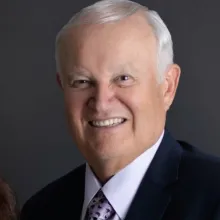
Mr. Seiglie was born in Havana, Cuba, and came to the United States when he was a child. He found out about the Church when he was 17 from a Church member in high school. He went to Ambassador College in Big Sandy, Texas, and in Pasadena, California, graduating with degrees in theology and Spanish. He serves as the pastor of the Garden Grove, CA UCG congregation and serves in the Spanish speaking areas of South America. He also writes for the Beyond Today magazine and currently serves on the UCG Council of Elders. He and his wife, Caty, have four grown daughters, and grandchildren.
