

Robin S Webber
This transcript was generated by AI and may contain errors. It is provided to assist those who may not be able to listen to the message.
I'd like to give you my title right up front, so that you'll know what I'll be talking to you about for the next three hours, just to wake you up. But it's always important to get it right out there. And it's simply this. It's a little long, and my titles tend to be a little long. I'm sorry, but it's not ABC. But here we go. The Living Legacy. The Living Legacy of the Dead in Christ.
I want you to think through that for a moment. The Living Legacy of the Dead in Christ. There's no better way to be able to share this message with you than to go write to Scripture. And that's what we do in the Church of God community, because the Bible is God's Word and Prince. So join me if you would in Romans 6 and verse 1, and let's begin to unlock, hopefully, what God has given me to share with you today. That is going to build upon the fine foundation of Mr. Star Wars. But it's going to be very important to start here. In verse 1, what shall we say then? Shall we continue and sin that grace may abound? Certainly not.
How shall we who died to sin live any longer in it? Or do you not know that as many of you that were baptized into Christ Jesus were baptized into His death? Therefore, we were buried with Him through baptism into death.
When you were baptized, you were baptized figuratively into death. But beyond figuratively, as we'll build upon this message as we go along, that just as Christ was raised from the dead by the glory of the Father, even so, we also should walk in newness of life.
For if we have been united together in the likeness of His death, certainly we shall also be in the likeness of His resurrection. Knowing this, that our old man was crucified with Him, and that the body of sin might be done away with, that we should no longer be slaves of sin. For he who has died has been freed from sin. Now, if we died with Christ, we believe that we shall also live with Christ. You see the back and forth. Knowing that Christ, having been raised from the dead, dies no more. Death no longer has dominion over Him. For the death that He died, He died to sin once for all. But the life that He lives, He lives to God.
Likewise, you also, also, reckon yourselves to be dead into sin. But alive to God end Christ Jesus, our Lord. Therefore, do not let sin reign in your mortal body, that you should obey all of its lust. And do not present your members as instruments of unrighteousness to sin, but present yourselves to God being alive from the dead, and your members as instruments of righteousness to God, as Mr. Star Wars brought out in his first message. So, that's where we're at.
I don't know if there is any better set of Scriptures to show us the simplicity, but the complexity, of where life and death come together before our Heavenly Father in the framework of Jesus of Nazareth. It's incredible, and it's fantastic. And it brings this, Romans 6 actually brings the Passover of the New Covenant and the Days of Unleavened Bread together. Because two nights ago, we observed, we came together, and we observed the death of our Lord and our Savior. And He died. And the Passover in a sense is about death, and a very special death that we might live.
But now, the Days of Unleavened Bread, let's understand this. The Days of Unleavened Bread are about the new life in Christ. It's about the new man. It's about the new lump. It's about the new way. It's about a new that is not from around here. Oftentimes in the Bible, when the Greek is used about new, it means it's not from around here.
It's not just new and improved, like you find something that's on a shelf in a grocery store. And you know what? The package is smaller, but the price has gone up. But it's not improved, nonetheless. No, this is new, as humanity has never experienced. And so we look at this, and recognize that God is doing something new from us.
We that are made in His image, that we're of dust, that are now born from above, in a new birth, as revealed in the Passover of the new covenant in the Days of Unleavened Bread. My question that we're going to build upon today is, what does it mean to die in Christ and to live in Him?
Not just day by day, but moment by moment. Romans 6, 1-13, death and life, in one sense, become one. One in our existence. And we need to separate that out a little bit. It does. And it's an invitation to a journey. And its deep meaning is to be forever embedded in our hearts, on our pilgrimage. Not to a promised land of just merely milk and honey, but that as we follow a greater Moses, the second Moses, the Christ, Messiah, Jesus of Nazareth, to a greater promised land. As He leads us, not just simply through some water, but He leads us from the shore of slavery, across the Gulf, and onto the shore of freedom, and towards eternity.
So you see the integration of both the experience of old, and what we're going to be talking about, the experience of today. As we move forward, I would like to offer three stepping stones on your pilgrimage in the new life. That's what we're going to center. I want to give you three stepping stones. They're going to be very, very unique, that we're going to be discussing here. To always remember and to consider regarding our personal covenant with God. It is your personal covenant. It's not the United Church of God's covenant. It's your personal covenant. You were not baptized into any church, sect, creed, or denomination of this world.
You were baptized into the name. And the name means everything that God is, everything that Christ is. You were baptized in the name of God the Father, and Jesus Christ, and the Holy Spirit, for the remission of your sins, that Christ's righteousness might cloak you. And thus, you begin to live anew for the very first time in your life.
Scripture tells us that we are to remember. I'll just ask you to jot these down. I'm going to give you some homework to go along, so we're done before three hours is over. But jot down 1 Peter 1, verses 10 through 12, where Peter, later on in his ministry, says, I would want you to remember.
I want you to go back. I want you to focus. To remember, when you stop remembering, you forget where you're going on ahead. Join me in John 14 for a moment, then I'll take you to this one. In John 14, the Gospel thereof, in John 14, on that last night of Jesus' life, a promise that he made to his disciples then and now, in John 14, 26, but the Helper, the Comforter, the Pericletus, as it were, in the Greek, the Holy Spirit, whom the Father will send in my name, will teach you all things, and bring to your remembrance all the things that I said to you.
So, we're going to be talking about today some of the things that Christ shared with his disciples then and with us down through the ages. Now, at this time, I'd like to have our ushers pass out what I gave them to pass out. So, what we're going to do, there's going to be three stepping stones.
But I just, I don't want to scare you, but it's a little bit like we're going to go to a graveyard here. Of course, we're just dealing with what Jesus went through, and you know, but we're going to go to a grave... Susan and I like graveyards, you know, we go there, and grass is green, and we like to look where people are from, and sometimes you like to see from this date to that date, and you know, it's very relaxing because nobody's talking to you when you're in the graveyard.
So, we just kind of recognize that. But we're going to be dealing with three grave stones that have words that are few, that are simple, and sometimes the simpler the statement is made, the more profound it is. I'd like to give them to you right now. You might want to jot them down. It's not going to have to use your hand a lot.
Number one, the first stepping stone towards eternity in this new creation that God is creating in you. Because God is not done creating. Let's remember that. We always talk about the seven days of creation. The creation is in existence, and the creation is in you today, as Mr.
Starwehr said. Christ is in us, and wherever He is, things are happening. Number one, Jesus is Victor. Jesus is Victor. And that's a statement by Corey Tinboom. We'll talk about her as the sermon goes on. Number two, and this is very interesting. This is very interesting.
There's a name on it, but there's no birth, and there's no date. But you know how normally the dash tells you all about a person, or doesn't tell you enough, and you have to fill it in? There's only one word on that gravestone. Are you ready? You might want to write it. Don't miss this. It's only one. I was a great father, I was a great grandfather, I served in the...you know, as we often see. If you're doing that, don't worry about it. But anyway, simply this. Forgiven. That's all that is on the gravestone, other than the name. The individual wanted the world to know, as they passed by His grave for decades and scores of years ahead, that He had been forgiven. Number three is simply this. And this is actually up in Riverside National Cemetery, and it's right by where my folks are buried. And it's simply this. I was wandering around one time, looking around, and I looked down, and it just struck me, and I wanted to share it with you. Number three, the property of God. The property of God.
Now, here's what I want you to think about. This is the living legacy of people that have died and are buried. But their living legacy continues with everybody that will stop by and look down and be witnessed, too. That Jesus is victored. That number two, this individual had been forgiven.
And number three, then, that this individual believed that He was the property of God. So, here's some big questions before we launch a little bit further. The big question is this. How do these three tombstones factor on a daily basis in the life of the new man, the new woman, the new community, called the Body of Christ, in a new and a living way, as it says in the book of Hebrew?
These are not just simply little sayings. This is life.
These are vitamins from above that allow us to grow in Christ, both in His death, both in His life. So, again, my SBS, the living legacy of the dead in Christ.
Before we go any further, when we're advised, alert.
We may think that we are going in a straight line to the kingdom right now.
But at times, unbeknownst to us, we may just be going in circles, and we think that we're making progress.
I hope and pray that this message might open up some blind spots.
Blind spots don't just happen on the freeways. They happen in our lives.
And that it will enliven your understanding and my understanding of our calling to be a new creation in Christ. Christ being the ultimate, unleavened one with a capital O.
One more warning. Here we go.
God's next new business in us might mean going back to old business, that He needs to finish up.
And maybe we have not had the courage. We have not had the chutzpah.
We've been running the other way, just like Jonah.
And you know, when you read the Scriptures, you sometimes recognize that God will take us back to the same town, into the same spot, until His covenant people get it. Lastly, what would you like written on your tomb when it's all said and done?
What would you like? What is going to be the living legacy that you pass on to others?
So with that, let's do some unpacking. Number one, let's look at the first tombstone. And I'd like you to take your hand out here for just a second, that was passed out to you.
And we're going to be talking about Corrie Ten Boom in the second point, more.
But Corrie is buried up in northern Santa Ana, right below the city of Orange.
Interesting, because anybody that knows anything about the hiding place, the book, or the movie, or her story, you might think that she's buried over in Holland, but she's not.
She's buried in northern Santa Ana, beautiful memorial park up there.
And we look at this for a moment. Susan and I actually had... this is not our picture, but we were at a funeral for somebody else, and we knew that she was buried there, so we... well, I'm sorry, we walked over a lot of people to get there. But that anyway... did I say that? Anyway, that...
we finally found it, and we were stunned at the simplicity, but the magnificence of what is stated here.
So let's take a look at this. It says, if you look at it, it says, Cory-Tin-Boom. My ancestors had names like that. They were Dutch on my dad's side, from 1892 to 1983.
And this is her living legacy. Notice what it says. Jesus is Victor.
Three words. I wish my sermons were that short. I'm watching Paul, Smith's eyebrows or eyes. What does it mean, Jesus... now everybody's looking at you, Paul. Let's see, it's off me. Anyways, that... Jesus is Victor. What does that mean? I'd like to share with you what the Latin means when it comes to Victor. It means to conquer. It means to conquer. It's saying that Jesus is the conqueror. We often think of conquerors of the past, be it a Genghis Khan from Mongolia or Alexander the Great from Macedonia, and we can go on and on and on. So, to conquer... but this is a different kind of conquering.
And it's amazing that when he conquered what he conquered, he didn't kill anybody else but allowed himself to die. Just kind of wrap your mind around that for a moment. It also means, if you want to jot this down as a word, he is triumphal. A triumph. He's on top of the situation.
He has completed the foe completely, just as much as when David conquered Goliath. And Goliath came down, and he didn't finish the job until he took the sword and cut Goliath's head off. And it was indeed finished. David had been the great conqueror. The little shepherd, but the great conqueror of Israel.
And here it is, interesting to have on the grave of a little Dutch lady who was a Christian. John 15 and verse 7. Join me if you would, please.
John 15, 7. If you abide in me, and we are to abide in Jesus both in death and in life, if you abide in me and my words abide in you, you will ask what you desire, and it shall be done for you. So that's what we're going to do. We're going to share some words out of the Scriptures that we might learn how to abide within the life and within the death of Jesus Christ.
Starting with Psalm 103, which actually he as the pre-existent Christ, being the word inspired David, Psalm 103. Join me if you would there for a moment.
In Psalm 103, and let's pick up the thought in verse 1.
Actually, I'm going to read it. You've got it, but I'm going to read it out of the New Living Translation.
Let all that I am praise the Lord with my whole heart. Not a half a heart, not a quarter of a heart, but my entire heart, my whole heart, my united heart.
And I will praise His holy name and let all that I am, all that I am, not just a quarter, not just an eighth, but every bit of my fiber.
That I might praise the Lord and that I may never forget the good things that He has done for me.
We rehearsed that the other night during the New Testament Passover.
And I bid you to join me over in John 16 and verse 33 just to begin to recognize how Jesus is Victor, how He has triumphed in John 16 and verse 33.
And this is why we have the festivals to be filled with the Spirit of God, to be filled with the Word of God, to get our mind off of a world that is not working to the world that we have been called pilgrimage to on a daily basis until we meet our Maker.
In John 16, 33, these things I have spoken to you that in me that you may have peace.
How much peace is out in the world today? How much peace is in the United States of America? How much peace is in California right now?
How much peace, never going to get personal, is occurring in your life right now as you face a hurricane, as you face a tornado, as you face an earthquake that may be rattling through your family or just rattling your own personal heart.
That you may have peace. In the world, you will have tribulation. But be of good cheer. I have overcome the world.
Christ is a victor. Christ is triumphant.
Christ did it in a way that we could not do it ourselves because we are human beings.
Let's go to Genesis 3.15. That triumph took a while to happen, but it was going to happen in God's timing.
Let's go back to Genesis 3.15 for just a second, which is actually the first prophecy of Scripture.
It's about the one that would be Messiah, that would become Jesus of Nazareth, born in Bethlehem.
Notice what it says here. When man decided to throw out God's world, make his own choices about what his world was going to look like. No, thank you, God. Thanks for informing me, but we want to be self-informed. This is the wordage of today.
This is our truth. This is my truth. We're going to partake of the tree of good and evil.
You may not agree, but God, know what you said, but it's my truth.
And so they were taken outside of the garden. The door was closed. The caribs were in place.
That door had to be opened by one that would come along and say, I am the gate. I am the door.
I am the way back to that which you rejected from the very beginning.
Notice what is said here in this prophecy.
As he speaks to the serpent, he is actually speaking to the serpent.
And I will put enmity between you and the woman and between your seed and her seed.
And he shall bruise your head, and you shall bruise his heel.
Now, here's the story, especially for the kids.
It's simply this. Who is going to be the winner here?
The one that gets just his heel bruised or the one that gets his head crushed?
Who do you think comes out of this all right?
I'm watching your eyes, honey. They're really wide. Anyway, I'll make it short.
The one that gets his head crushed loses. You know what this all comes out to, like in a ballgame?
Christ the victor won. Satan zero. Just going to make it simple.
So we take a look at this.
But again, let's go to 1 John 3 and verse 8 to see the New Testament speak of this prophecy.
In 1 John 3 and verse 8.
He who sins is of the devil.
For the devil has sinned from the beginning.
For this purpose, why did Jesus come to earth?
There could be a couple of handles on that, but this is one of the big ones.
For this purpose, the Son of God was manifested that he might destroy the works of the devil.
And that's what we came to realize as we came up to the Passover of the New Covenant this year.
That before God's calling and before understanding what he was doing through Jesus Christ to reconcile ourselves to Him.
We were under the sway of the prince of the power of the air, as you find in Ephesians 2 and verse 2.
Christ came, and by that victory that he had on Golgotha, he cut that cable cord.
And he began to inaugurate the kingdom of God. The victory was won.
Only the details have to keep on being worked out here below.
When he was on Golgotha, just like David in the Valley of Eloth, after he cut off the head of Goliath, his last words, two of his last words, there's one after that, but he said, It is finished. About three o'clock, yesterday afternoon in type, as you think of that week, he was on that wood, on that altar of Golgotha.
And he said, It is finished. In the Hebrew, it means complete. It was done.
Remember the message I gave you last week when we went through all of that from Psalm 22, Psalm 23, Psalm 24?
I gave that message in part in type yesterday on Zoom, and I have to tell you something.
I asked the people about, when I got up to speak about, not in my office, but about Zoom, about 10 to 3, I said, Look at your watches.
We are dealing with Christ in real time, as we recognize that he would die at 3 o'clock and be sacrificed just like the Passover lamb. It was very moving to me, personally.
You just kind of almost get into even more, even than when I was here.
Just the aspect of what that means. I want to share a thought with you.
Let's go to Ephesians 4 and verse 8.
Maybe you've never sensed what this is about, but in Ephesians 4 and verse 8, notice what it says here.
Therefore, he says, When he ascended on high, he led captivity captive and gave gifts to men.
You have to understand that Paul is writing this in the Roman world, and what the Caesars would do once they had conquered a tribe in Gaul or conquered the Dacians over in what is modern-day Yugoslavia, Romania, and in that area, that they would take the treasure, they would take slaves, they would take the king of the nation.
And of course, that emperor or that general would be given what is called a triumph.
That's what it was called. You were given a triumph.
And they would come through the gates of Rome, and following that chariot would be the king that had conquered everybody else, and they were led in chains. And everything that he thought that was his was now no longer his.
Christ, Jesus is victor. This world is being liberated.
You are in the first fruits of being liberated. This world is being liberated.
And Paul gives us this sense of taking captivity captive.
That which held us in captivity as the prince of the power of the air and a very real being no longer has that same power.
His days are numbered. And we need to live like that and to know that.
Let's look at a focus here, if you could, for a moment. Exodus 14 and verse 8.
We read this last night as we pass scriptures around the table to read. Chuck and Kim were there. Mary Ann was there.
My mind's going. Somebody else was there. Susan was there, of course.
Raise your... Oh! There they are right there!
Because their arms went up the highest. We read Exodus 14.8, where it says, and they went out of Egypt with a high hand. And they said, you know what we're going to do? We're going to have a high hand.
And all around the table, we raised our hands high.
And that's how our hearts have got to be during these days of Unleavened Bread as we practice coming out of Egypt. That our hands are high because the Christ is now on high, and because He's on high, our hearts are on high. And we don't go low because we abide in His words and we can read His word, and He's given us His Spirit, He's given us His words to guide us in the pilgrimage towards the Kingdom of God.
But wait a minute. Death and life. Join me one more verse in this. Ephesians 1, very important. Ephesians 1. Join me, please.
Let's see how death and life work together. Ephesians 1.
Okay, here we go.
And one of the reasons why I'm giving this message to you, dear friends, is simply this, because I'm following the example of a good man, Paul.
And he says this, that the God, in verse 17, of our Lord Jesus Christ, the Father of glory, may give to you the Spirit of wisdom and revelation in the knowledge of Him. The Him there, the pronoun, you always have to watch the pronouns when you're reading the Scriptures. Is it referring to the Father? Is it referring to Christ? But enlightened about Him being Christ, the eyes of your understanding be enlightened, that you may know what is the hope of the calling and what are the riches of the glory of His inheritance in the saints.
And what is the exceeding greatness of His power towards us who believe according to the working of His mighty power, the same power that brought Israel out of Egypt, the same power that opened the Red Sea, the same power that ultimately opened the grave.
And when we think of that, what Mr. Star Wars mentioned, we are a people that believe that there is no stone too heavy for God to remove. You say, well, what are we talking about over there? No, I'm talking about the stones that are affecting you today. And I know being in an audience that's big that there are blockages, there are stones that we have not yet allowed God to remove.
For us. Because we're trying to remove them ourselves. How's that working? I sound like John Garnet. How's that working for you that know John?
And we're waiting for something else. And God says that He has given us what we need. He says He has given us the Ephesians 1-3.
Every spiritual blessing, He's given us the armor. He's given us the werewolf hall.
As Dennis mentioned, I was so delighted to hear him say, Christ dwells in us.
The triumph, the triumph for, along with His Father's Spirit that dwells in us, is ready to act.
And yet, at times, we put Jesus on the bench like a ballgame.
And we're running up and down the court, and we're wondering why we're not scoring for God. And things aren't going anywhere.
And that's why we have to have real, believing faith. And I'm sure that prayer was given at the Passover that we have believing and living faith that Jesus is victor. Let's continue this.
Which He worked in Christ when He raised Him from the dead, and seated Him at His right hand in the heavenly places. Oh, that's where He is! He's not down in the ground like everybody else. He was resurrected.
He ascended, and He was exalted, and now He's at the right hand of God. Far above all principality and power, and might and dominion. And every name that is named not only in this age, but also in the day which is to come. And He put all things under His feet, and gave Him to be the head over the things to the church, which is His body, the fullness of Him who fills all in all.
It is that same Jesus that Paul reminds us, brethren, in the triumphs that are yet ahead of us, as we continue to die daily, and give our lives over to God the Father and to Jesus Christ. As we die daily, and stop looking around out here, wondering what God's going to give us next, rather than recognizing He's given us everything when His essence is dwelling in us. We need to draw upon it. Go to the well. The well is in our heart. The Holy Spirit is in you.
Jesus said, I will come to you.
As it says in Philippians 4, 12-13, I can do all things through Christ Jesus who strengthens me. Let's go to number two. Second tombstone. Let's take a look at this for a moment.
Let's go to 2 Corinthians 5.17.
Again, this is what the Feast of Unleavened Bread is all about. Therefore, verse 17, if anyone is in Christ, he is a new creation.
Again, let's remember God didn't even stop creating the new creation in you when you were baptized.
That was just the beginning. It's that graduation. You go to, oh, we're going to graduate. Remember when you went to high school? I'm going to go to graduation. I'll be graduated. Life will be over. Oh, no, no, no. It's just beginning, folks. Then you might go to college, or you might go to a trade school, or you might just get into work. And it goes on and on.
Notice verse 21. Notice verse 21.
Now, stay with me. The second tombstone, the second stepping stone to eternity, was the word forgiven. Let's understand that if Jesus is the head of the body, then it is our arms that do His reaching. It is our hands that do His holding. It is our legs that do His walking.
And yes, ultimate forgiveness comes from God. But if we are disciples of Jesus Christ, then we also... Are you with me, dear friends? We also have to be a forgiving person. If we are not a forgiving person, we are having issues with being a new creation. And if we are not a forgiving person, then we are a little wobbly on the foundation. Because the foundation is of none other than Jesus Christ, who on the cross said, Father, forgive them, for they know not what they do.
He is the Son of God. But then there was Stephen, a few years later, when he was about to be stoned, he said, Father, don't put this to their charge. In the Lord's Prayer, commonly in Matthew 6, what we call the Lord's Prayer, our Father, which art in heaven? Hallowed be thy name. Thy kingdom come, thy will be done on earth as it is in heaven. Give us this day our daily bread, and forgive us our... get ready... and forgive us our death.
Can somebody help me out there? Anybody? As we forgive others. Being a member of the new creation, men and women, and the community of God, is not just simply to receive God's forgiveness, but also then to forgive others. I want to bring this home by again the example of Corey Tinboom. How does that work? We can talk about Jesus. He is the Son of God. We can talk about Stephen. He is one of those great pillars that we are in, the Book of Acts. How has that dealt with in real time? I think Corey Tinboom is a person in real time.
I'm going to share some thoughts about the hiding place, the book, and also the movie. Allow me to explain for a moment, Corey Tinboom, during World War II, with the Nazi occupation of Holland, along with other countries, did this too. The Dutch are fairly well known for what they did in hiding the Jewish community amongst them. But what happened at that time, Corey finally turned them in. You've all seen these movies where you know they're hiding behind a wall.
Finally, somebody lets the secret out. Corey and her sister, Betsy, were taken to a concentration camp. Betsy died. Corey went on to live and became an incredible witness for the love and the mercy and forgiveness of Jesus Christ. That's again why you see in this first point, Jesus is victor. But she had a personal victory when it came to forgiveness. Allow me to share this. This was a couple years after the war. The big task came in 1947, while she was speaking in Munich, down in Bavaria, at a church there.
At the close of the service, a balding man in a gray overcoat stepped towards to greet her. Corey froze. She knew this man well. He'd been one of the most vicious guards at Ravensbrück. Now he was pushing his hand out to shake hers and saying, a fine message, Fraulein. How good it is to know that, as you say, all of our sins are at the bottom of the sea. And I, Corey speaking, writing, who had spoken so glibly about forgiveness, fumbled in my pocketbook rather than to take his hand. He would not remember me, of course.
How could I remember one prisoner amongst the thousands of women that were marched without their clothing to the showers? Not the showers that you will be using tonight, but the showers of extermination. But I remembered him. I was face to face with one of my captors, and my blood seemed to freeze.
You mentioned Ravensbrück in your talk. He was saying, I was a guard there. But since that time he went on, I've become a Christian. And I know that God has forgiven me for the cruel things I did there. But I would like to hear it from your lips as well.
Froline. Again the hand came out. What we might call the second coming. Will you, not God above, but will you forgive me? And I stood there, Corey speaking. I, who sins, had again and again been asked to be forgiven, couldn't forgive. And I asked to get died in that place. Could he erase her slow, terrible death simply by asking? The soldier stood there expectantly. After all, she's a Christian. Put yourself in her spot.
Put yourself perhaps in the spot of where somebody's reached their hand out to you, and you have not grabbed hold of it. Interesting. The soldier stood there expectantly, waiting for Corey to shake his hand. She wrestled with the most difficult things she had ever had to do. For I had to do it. I knew that.
The message that God forgives has a prior condition that we forgive those who have injured us. And even though Corey often spoke of the need to forgive others, she knew she couldn't forgive this man in her stay with me. And maybe this is where you and I are at. I'm wrestling with one on this right now. Susan knows that. With a friend who's calling me, and I've not yet taken his phone call, so I'm practicing to myself.
Corey writes she couldn't do it. Just couldn't do it. But then, God had to do it through her. So often, we're doing things, dear friends, on our own works, rather than allowing God's Spirit to move us and to move through us. He gives. He gives, and along with the command, the love itself.
He gives the command to forgive others as we have been forgiven. Oh, didn't I need it? No. But He also gives the love along with the command, the love itself. God gave Corey the strength to forgive and love the man when she could not find the love herself. God gave Corey that strength. Romans 5 and verse 5. Join me if you would for a second.
Romans 5 and verse 5.
Now, hope does not disappoint because the love of God, the love of God is not on a shelf at Vons. It's not on a warehouse down on the 5. But the love of God has been poured out in our hearts. It's already there. Me, some of us, have not tapped into it deeply enough by the Holy Spirit who has given to us. The love of God shed abroad in our hearts. And yet we dam it up.
Rather than let it flow.
I'm speaking to myself. Standing there before the former SS man, Corey remembered that forgiveness is an act of the will. We're never going to feel like forgiving. Are you with me? And can we talk? You're not going to feel it. You're going to want to run away from that event. Or just go frozen like Corey did.
There are people that you know and I know collectively in this room whose hands are out to us now. That we're just staring at them. And almost pushing them back into their sin. Because of our lack of love. Have what they've done been horrible? Absolutely, I'm sure.
But when you forgive, you will never be able to reek or reap out the vengeance that you feel so humanly apt to do. It means in a sense you lose what you want to do.
But you gain in the death of Christ who forgave those that did that to Him.
And we then live in Christ and we witness Christ to others by forgiving them.
When Corey got that, that that love, that damn had to be broken by God's Holy Spirit. Not outside of her, but inside of her heart. She thrust out her hand. Isn't that good news? She thrust out her hand. Here's a Dutch gal that was in a concentration camp under the SS Guards. Question. Reads interestingly, what would you have done?
There are some situations that in my life I just so much wish I could go back to. Whether as a husband, whether as a human being, whether as a pastor, whether as an elder to people. And the good news is about everything I'm sharing is, you know, sometimes, remember I said, life is like a round trip and God will take us back again to do that which we did not witness of Him the first time. Remember the story I shared with you about Peter and Jonah? Jonah who ran from Jaffa and went to Spain. But Peter went to the Gentiles and taught them about Jesus Christ, about faith, and about repentance. What unfinished business does God have with you as we, about to move to the third point, what unfinished business does God have with you that we have not yet lifted Him up as the victor? He is our champion. Christ is our champion. Christ is the Lord of our existence. And who have we not forgiven? Just allow me to finish this then. As I put my hand out, look at this reading here, excuse me, an incredible thing happened. The current started in my shoulder, raced down my arm, sprang into our joint hands. Hands were clasped. Wow! And then this healing warmth seemed to flood my whole being, bringing tears to my eyes. She said, I forgive you, brother. I cried with all of my heart. For a long moment, we grasped each other's hands. The former guard, the former prisoner, I had never known God's love so intensely as I did then. But, but, even so, even so, I had tried, but I didn't have the power. It was the power of the Holy Spirit. God says in Romans 8 through Paul that He has put His Spirit and the Spirit of Christ in us. How often that you need something and you reach for it and you're reaching in all the wrong spots, we simply have to tap into that. We'll go back to the third point real quickly here. I hope that story just kind of sank into all of us. Every time I read it, I gain something else out of it. It's amazing. But let's go to the third point. The third stepping stone is we're the property of God, the property of God. It's interesting that in... when we go through the Scriptures to recognize what's happening, basically to move short and to compact this real cookie, we are not our own owner. I'm going to make a comment here. It may sound really not progressive in this day and age. I am owned. As a member of the New Covenant bonded with God, God owns me. I am His servant and I am His slave. Oh, no, don't bring up a slave! Yeah. I am owned. I am God's servant. I am here to do His bidding.
See, Adam and Eve did not want to be owned. They were in paradise. God gave them all, but they still couldn't cash it in. They didn't want to serve God. They wanted to serve themselves. That's why you always have to go back to the beginning of the movie to see how we got where we got, and recognizing what Daddy and Mama, Adam and Eve did. We are owned by God. Boy, you say, well, that's kind of unprogressive. Show me if you would in Philippians 2. In Philippians 2, you know there's an old expression, what's good for the goose is good for the gander? In Philippians 2.
Almost there.
In Philippians 2. Getting there. 2 verse 8. Let's notice what it says here. Ephesians. One second. Philippians. Philippians. Pardon me. Okay, you're there. I'm not. Okay. Notice what it says here.
Let this mind be in you, which was also in Christ Jesus, who, being in the form of God, did not consider it robbery to be equal with God, or to grasp to hold on to God, but made of himself of no reputation, taking the form of a bondservant. What? What? What? Here's one who is uncreated, who created all things, and he comes down and lowers himself to be framed by the purpose that he came down here for. He that had been uncreated now is the Son of Man, yielding himself up to the one that we now know is God the Father, but made of himself of no... taking the form of a bondservant, coming in the likeness of men, and being found in the appearance of a man, he humbled himself, became obedient to the point of death, even to the death of the cross. Wow! That's it! But notice what happens. Therefore, God also has highly exalted him and given him the name which is above every name, that at the name of Jesus every knee should bow. When we talk about Jesus' victor, he allowed himself to become a servant, to be encapsulated in this fleshly tent. And he died setting us the example, where he said to his father, not my will, but your will be done. He said that he came to serve and not be served.
We just went through the foot washing of humility, the rabbi, the one that created humanity getting down and washing the feet of his disciples. He was a servant. He was a doulos. And oftentimes I know there are different thoughts on this as, what is a bondservant? What is a slave? But in doing this, in being victor, in forgiving by the reconciliation that comes through his blood, he allowed us to be reconciled. He allowed us to be bought. I'm going to just take you to one scripture. Come with me to 1 Corinthians 6, 20. To show that we are not our own person. In 1 Corinthians 6, 20, notice, For you were bought at a price, therefore glorify God in your body, and in your spirit, which are God's. That is why that man that is buried by my folks up in Riverside National Cemetery. Dear brethren, he got it! Are you with me on this, the high day? He said, You will be my God, and I will be your person. I will be your servant. I will be your slave. You own me. It will be your will, not my will.
Join me if you would in Colossians 3. In the book of Colossians 3, and let's look at verse 22-24. Bond servants. I recognize this is also talking, understanding the context. It is talking about society. There were slaves. There were bondservants. There were also people that were indentured. That is 2,000 years ago. But now, let's take it in a spiritual sense, because so often the apostles themselves, in their writing epistles, are saying, I am a bondservant, or I am a slave of Jesus Christ before they write. And it says here, bondservants, obey in all things your masters, according to the flesh, not with eye service as men-plazers, but in sincerity of heart, fearing, reverering, respecting, adoring, worshipping, you put your sin in the moon there, of God. And whatever you do, do it heartily, as to the Lord, and not to men.
Whatever we do, we do it to the Lord. How can you become more unleavened during the days of the leavened bread? Whatever is in your heart, that is not of God. Take a look. Whatever is not written in this Bible about righteousness, it's time to cast it out of your life. It's repugnant to God, because of what the gift of God that He gave us, which is His sacrifice, His dear Son. Whatever is in your heart, because that's your motor, that's your engine, that's your repository of your energy. You give that to God.
You give your thoughts to God. Your thoughts come out from your motives. You give your thoughts to God. You give your words to God. You give your deeds to God. You give your actions to God. You give your results to God, and you give Him glory. You give Him glory. Even in the body of Christ, so often you run into just a tsunami of pride.
Look what I know. Look what I think. Look what I've done. Rather than giving God glory and humility. Hmm. Are you ready? Are you ready to do that? Or are we just going to go through the Days of Unleavened Bread again? Oh, the Days of Unleavened Bread. You know, I'll go to church, I'll do my time, and I'll have my macaroon when I go home. You'll show whatever it is, macaroon, and enjoy it. They're really good. I had some this afternoon. But if I'm not feeding on God's Word, if I'm not drawing on God's Spirit that He has gifted you and me inside of us, you might as well go back to Egypt.
Did I say that? Yeah, you might as well go back to Egypt. Or your heart is looking back to Egypt. When God says He wants you to be a new kind of person, a new kind of man, a new kind of human being, on this greater exodus that's moving now to the promised land of eternity in the kingdom of God.
Not behind a man. Not behind a man. Moses never made it over the Jordan. You know why? Because God wanted the children of Israel after 40 years to recognize, as wonderful as Moses was, that what He was offering only He could deliver. It was only God that rescued Israel out of Egypt. It was God that brought them out of the wilderness. It's God that brought them up to the Jordan for another river cross, or another water opening, which also happened, Dennis, during these days.
It was God and not man. As we're looking through this week, and we spot this, I've got to tell you a quick story, but I have fun. We're in college. We're at Ambassador College. Susan and I, we took her to a place called Gwyn's, which was on Colorado Boulevard. Some of you will remember that. It had different names. You know what? I got so busy.
Probably just because... I won't go there. Anyway, I was looking at Susan. She was my date. I'm busy, and you know, talking. Susan will probably remember this, and all of a sudden, you know what I ordered during the days of 11 bread? My favorite breakfast. French toast. I'm there in French toast, and I'm buttering.
I want that puppy lacquered. Syrup, and there's powdered sugar on it. Victor, you like powdered sugar? Okay, good. Don't do it during this week. So then, I'm doing that, and I'm about to take a bite. You know what I do, and I'm sure you've done this, too. Oh, no! It's the days of 11 bread. You know what I do, because I didn't want to actually declare and witness about the days of 11 bread to the waitress.
You probably didn't care. So I take my napkin. He ever had a really wet, sloppy French toast? And I'm going like this. Then I'm crumpling it up in the napkins. Then I'm taking it back to the restroom. That's the 11th dump. It was the restroom. We've all been there. We've all had those laughs. Those are some of the great lessons. Get ready. I'll probably do it again.
Not the French toast. It might be something else. But here's the point. What about inside of us? That's what needs to get rid of that we have not yet given to God. A basic lesson of the days of 11 bread is Deuteronomy 16 and 3. Deuteronomy 16, verse 3, where it says, Remember that God rescued you. That the one that was the word was the victor.
And he led Israel out. He did it so incredibly, so powerfully, so wonderfully, that the bread did not have time to rise. So you go back and you remember why you put leaven out of your house, because of what God did. He did it so quick that the leaven could not rise. And that's a lesson for spiritual Israel.
You and me today, when God tells us because He owns us, and we are the property of God, and we have trust, and we have confidence in Him, we have voluntarily given ourselves to Him, right? We didn't have a gun to our head when we were baptized. We didn't have a gun to our head when we said we will go down into the grave in a type of death and rise in a type of life and resurrection.
No, that was your commitment. That was your vow before the throne of heaven. But that commitment remains that when God gives us something to do, do it with haste. Just on that night of the Passover, when He says, here's what you're going to do. You're going to have the sandals on your feet. You're going to have the belt around your waist. And you're going to have a staff in your hand.
Because when it happens, and when I act, be ready. Be ready to get up, to get out, and to get going, as you and I are rescued and delivered today from the spiritual land of Egypt.
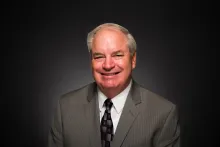
Robin Webber was born in Chicago, Illinois, in 1951, but has lived most of his life in California. He has been a part of the Church of God community since 1963. He attended Ambassador College in Pasadena from 1969-1973. He majored in theology and history.
Mr. Webber's interest remains in the study of history, socio-economics and literature. Over the years, he has offered his services to museums as a docent to share his enthusiasm and passions regarding these areas of expertise.
When time permits, he loves to go mountain biking on nearby ranch land and meet his wife as she hikes toward him.
