

Chris Rowland
This transcript was generated by AI and may contain errors. It is provided to assist those who may not be able to listen to the message.
We're all here once again observing the first day of unleavened bread, but it's the first day of unleavened bread. Special High Holy Day, the first holy day of this season. We are observing the time when God delivered Old Testament Israel out of Egypt and out of slavery of Egypt. And spiritually speaking, we are observing and celebrating our delivery. Our delivery out of the slavery of sin and our delivery from the wages of sin, which is death. Of course, Christ sacrificed His life so we could have that deliverance. Christ paid the death penalty on our behalf for our sins. You know, most Christians in the world, very sincere people, and I have a lot of hat and ratio for many of them, but they most believe in the world that's where it begins and ends, with Christ's death and our acceptance of His sacrifice.
It begins and ends with that. That once we accept the sacrifice of Christ, we are saved. Once we accept that sacrifice, we've been delivered from death. But God's annual feasts and holidays show us there is more to it than that. There is actual plan, steps for carrying out that plan to extending it eventually to the whole world. They show us that the Passover is only the first step in God's plan of salvation and God's plan for delivering us from death. As we also know, Christians of the world, for the most part, don't observe the Passover.
Instead, they observe Easter, which originated long before the birth of Christ, to honor the goddess Astart, or Ishtar, fertility goddess. But with the Passover, we have the first step in God's plan of salvation, which is the sacrifice of Christ to pay the penalty for our sins. Now, with the Days of Unleavened Bread, we have the next step, which is putting sin out of our lives and putting Christ into our lives.
Very, very meaningful. So there's more to it than just accepting Christ's life. We also have to follow up on that as well. But if we have Christ living in us through the power of God's Holy Spirit, we will be delivered from death at the time of the first resurrection. What I want to talk about is what we're about right now, for all of us now.
Is there anything yet, except for Christ's sacrifice, we have that death penalty removed from us? But is there anything yet that we need to be delivered from? And to be delivered, would that require further sacrifice? That's what I want to look at today on this Feast of Unleavened Bread in 2017. We will see that sacrifice and deliverance go hand in hand. You can't have one without the other.
And what do we still need to be delivered from? And what sacrifices must we make in order to receive that deliverance? As we'll look at today, my title for my sermon here this afternoon is Spiritual Sacrifices and Our Deliverance. First, I want to take a look at this question I mentioned just a moment ago. Do sacrifice and deliverance go hand in hand? Are they connected together? I want to show you just three examples from the Old Testament that illustrate that they do go hand in hand. First, let's look at the deliverance of Noah and his family.
Let's go back to Genesis 6. Genesis 6, beginning in verse 5. Then the Lord saw the wickedness of man was great in the earth, and that every intent of the thoughts of his heart was only evil continually. And the Lord was sorry that he made man on the earth, and he was grieved in his heart. So he said, I will destroy man whom I have created from the face of the earth, both man and beast, creeping thing and birds of the air.
For I am sorry that I have made them, but Noah found grace or favor in the eyes of the Eternal. In verse 13, God said to Noah, The end of all flesh has come before me, for the earth is filled with violence through them, and behold, I will destroy them with the earth. So here all flesh is sacrificed, so Noah and his family can be delivered. I'm showing that sacrifice and deliverance go hand in hand. Then after Noah was delivered, he offered a sacrifice.
Genesis 8, verses 20 and 21. Then Noah built an altar to the Lord, and took of every clean animal and of every clean bird, and offered burnt offerings on the altar. And the Lord smelled a soothing aroma. So there, sacrifice and deliverance. He said, made a sacrifice again. Let's take a look now at the deliverance of Isaac. Let's go to Genesis 22.
Genesis 22, beginning in verse 1. Second example showing how deliverance and sacrifice go hand in hand. It came to pass after these things that God tested Abraham. He said to him, Abraham, and he said, here I am. Then he said, Take now your son, your only son, Isaac, whom you love.
Go to the land of Moriah, and offer him there as a burnt offering on one of the mountains of which I shall tell you. Verse 6. So Abraham took the wood of the burnt offering and laid it on Isaac his son. He took the fire in his hand and a knife, and the two of them went together. But as Isaac spoke to Abraham, his father, and said, My father. He said, Here I am, my son. He said, Look, the fire in the wood, but where is the lamb for the burnt offering? And Abraham said, My son, God will provide for himself the lamb for the burnt offering.
So the two of them went together. Then they came to the place of which God had told him. And Abraham built an altar there and placed the wood on order. And he bound Isaac his son and laid him on the altar upon the wood. And Abraham stretched out his hand and took the knife to slay his son. But the angels of the Lord called to him from heaven and said, Abraham, Abraham. And he said, Here I am. And he said, verse 12, Do not lay your hand on the lad, or do anything to him.
For now I know that you fear God, since you have not withheld your son, your only son from me. Then verse 13, Then Abraham lifted his eyes and looked, and there behind him was a ram caught in a thicket by its horns. So Abraham went and took the ram and offered it up for a burnt offering instead of his son. They were delivered. A sacrifice was made for Isaac's deliverance. Let's look at now what we're celebrating here.
We celebrated last night and in essence this week as well. And that's the deliverance of Israel out of Egypt. Let's go to Exodus chapter 12. Again, illustrating how deliverance and sacrifice go hand in hand. Exodus 12 verse 3, Speak to the congregation of Israel, saying, On the tenth day of this month every man shall take of himself a lamb according to the house of his father, a lamb for household. Verse 6, Keep it until the fourteenth day of the same month, and the whole assembly of the congregation shall kill it, shall sacrifice it, at twilight.
Verse 12, For I will pass through the land of Egypt on that night, and I will strike all the firstborn in the land of Egypt, both man and beast. Against all the gods of Egypt I will execute judgment. I am the eternal, and the blood should be assigned for you on the houses where you are. And when I see the blood, I will pass over you, and the pledge shall not be on you to destroy you when I strike the land of Egypt.
So a passover lamb was sacrificed so Israel could be delivered. Out of Egypt. But that was only the beginning. When it came to sacrifice, the sacrifices were made to deliver Israel out of Egypt. Exodus 12 verse 29, It came to pass at midnight, the Lord struck all the firstborn in the land of Egypt, from the firstborn to Pharaoh, who sat on his throne, to the firstborn of the captive, who was in the dungeon, and all the firstborn of the livestock. So all the firstborn of Egypt were also sacrificed, so Israel could be delivered. But there's more. Exodus 14. Let's go to Exodus 14 and verse 22.
So children of Israel went into the midst of the sea on the dry land, and the waters were a wall to them, on their right hand and on their left. And the Egyptians pursued and went after them into the midst of the sea, and all Pharaoh's horses, his chariots, and his horsemen. And it came to pass at the morning watch, the Lord looked out and bombed the army of Egyptians through the pillar of the cloud, and so on, dropping down to verse 26. Then the Lord said to Moses, Stretch out your hand over the sea, as the waters may come back upon the Egyptians, and on their chariots, and on their horsemen. And Moses stretched out his hand over the sea, and when the morning appeared, the sea returned to its full depth, while the Egyptians were still fleeing into it. So Lord overthrew the Egyptians in the midst of the sea. And then the waters returned and covered the chariots, the horsemen, and all of the army of Pharaoh that came into the sea after them. Not so much as one of them remained. Pharaoh's entire army was sacrificed, so Israel could be delivered. Verse 30, So Lord saved, delivered Israel that day out of the land of the of the hand of the Egyptians, and Israel saw the Egyptians dead on the seashore. Every deliverance requires a sacrifice. Sacrifice and deliverance go hand in hand. And since this was a great deliverance of an entire nation, a great sacrifice was required. Think of that. Which now leads us to the greatest sacrifice and the greatest deliverance of all time, leads us to the sacrifice of Jesus Christ. Christ died and sacrificed his life on the Passover day of 31 A.D. So the entire world could be delivered from death. Let's turn to John 3 16.
John 3 16, For God so loved the world, not just you and me, people he called the entire world. God so loved the world that he gave, he sacrificed his only begotten son that whoever believes in him should not perish but have everlasting life. The father's sacrifice is only begotten son, so the world could be delivered. But the son sacrificed even more than just his life. Do you realize how much he sacrificed? More than just his life. We really think about it. Let's go to Philippians chapter 2, because it's a little bit of a clue as to how much Christ sacrificed so we could, so the world could be delivered. Philippians chapter 2 beginning in verse 5, Let this mind be in you which was also in Christ Jesus, who, being in the form of God, did not consider robbery to be equal with God, but made himself of no reputation taking the form of a bond servant or a slave and coming in the likeness of men. Think what Christ sacrificed there. He sacrificed his power and glory and his equality as God that he shared with his father. He sacrificed all that so he could take the form of a slave and so he could then come in the likeness of men with all the limitations of man. Verse 8, And being found in appearance as a man, he humbled himself and became obedient to the point of death, even the death of the cross. So Christ sacrificed the position he had with God, the thought of God his father, so he could become flesh and so he could then suffer and die in order to deliver us from death. Tremendous sacrifice so we could be delivered from death. And so he not only delivered us, but he could deliver all of mankind from death. And so he could potentially deliver all deliver all who've ever lived in the past from death. See, no greater sacrifice and no greater deliverance is possible than the sacrifice and deliverance we all have through the sacrifice of Jesus Christ. Now then, let's look at the hard and core one I want to really talk about today. Let's look at spiritual sacrifices and our deliverance. See, other sacrifices all of us must still make under the new covenant.
And do we still need to be delivered from anything? Even after being delivered from the wages of sin through Christ's sacrifice, there's still more deliverance we need.
Let's take a look at all this one step at a time. I want to begin by asking this question, what is the new covenant? What is the essence and what is the bottom line when it comes to the new covenant? Now, you could give an entire sermon or maybe two or three sermons to cover that particular question, but I just want to point out the bottom line, which is given to us in the book of Hebrews. Let's turn to Hebrews chapter 8. Hebrews 8 verse 1, where Paul, the writer of Hebrews, says this, now this is the main point of things we are saying. We have such a high priest who is seated at the right hand of the throne of the majesty in the heavens, of course, that high priest being Jesus the Christ, the Messiah, the Savior. What has Christ, what has our Messiah obtained for us, and what is he the mediator of? Hebrews 8 verse 6, he's obtained a more excellent ministry inasmuch as he is also mediator of a better covenant, which is established on better promises, which is established on the promise of inheriting the eternal life in the kingdom of God. You can't get any better promise than that. Verse 7, for if that first covenant had been faultless, then no place would have been sought for a second. What was the fault of the first covenant, or what was the fault of the old covenant as we call it, was the fault with the covenant itself, was the fault with the laws of the old covenant, was the fault in the Ten Commandments. That's what many Christians of the world think. They think the fault was in the Ten Commandments somehow, and that the new covenant then does away with that, thus removing that fault.
But what does Paul, or the writer of Hebrews, say? Where was the fault of the old covenant, according to the book of Hebrews? Hebrews 8, verse 8, but because finding fault with them, the fault was with the people of Israel, not with God's laws. The fault was that they didn't have it within themselves to keep that covenant. They didn't have it within themselves to keep God's Ten Commandments in God's laws. So what then is the solution to that? What is the new covenant set out to do that the old covenant couldn't do? Hebrews 8, verse 8, again, because finally fault with them, he says, Behold, the days are coming, says the Lord, when I will make a new covenant. This is what the new covenant's all about. This is the bottom line. I make a new covenant with the house of Israel and with the house of Judah, not according to the covenant that I made with their fathers in the day when I took them by the hand to lead them out the land of Egypt, because they did not continue my covenant and I had to disregard them, says the Lord. For this is the covenant, verse 10, that I'll make with the house of Israel after those days, says the Lord. I will put my laws in their mind and I will write them on their hearts and I will be their God and they should be my people. See, under the new covenant, God is setting out to write his laws in our minds and on our hearts, rather than on two tablets of stone, as just directions for them, which they couldn't keep because it wasn't written in their hearts and on their minds. So the new covenant, having God's holy righteous laws written on our minds and on our hearts, he wants to do that so they become a permanent part of us. That becomes of what we are and who we are.
But let me ask this, having God's laws written in our minds and written on our hearts, does that require sacrifice?
And does this also tell us something from which we all need to still be delivered? Let's look at the latter first. Let's look at what we still might need to be delivered from. See, what do all of us still need to be delivered from? And there are three basic things, three basic overall things we still need to be delivered from. You might come up with other things, but these are three overall things we all still need to be delivered from. We still need deliverance from all of these things. In order to be delivered from these things, there are higher sacrifices, we'll see. But what do we still need to be delivered from? Number one of these three overall things. Number one, we need to be delivered from Satan. Let's go to 1 Peter 5.
1 Peter 5 verses 8 and 9. 1 Peter 5a, be sober. 2 Peter 5b, be vigilant. Because your adversary, the devil, walks about like a roaring lion, seeking whom he may devour. He wants to devour us. We have to be delivered from that. 2 Peter 5b, resist him. Remain steadfast in the faith, knowing that the same sufferings are experienced by your brother in the world. See, Satan wants to devour us, and not just us. He wants to devour your brotherhood in the world. He wants to devour and destroy all the people of the world as well. Who Peter calls, I mean, this is very interesting, Peter calls your brotherhood.
They are also our brothers and sisters, not just those of us who are called now. How so? Why are they still called our brothers and sisters? Because they were also created the image and likeness of God, with the potential of becoming eternal members of God's families. It's like we have that same potential.
Will it require sacrifice in order to be delivered from Satan? We'll get to that a little bit later. First, what else? What's another second major thing that we all need to be delivered from? We all need to be delivered from the ways of the world.
Let's go to 2 Corinthians chapter 6, to show that we all need to be delivered from the ways of the world. Of course, Paul's writing this to the church at Corinth, and Corinth had become a kind of a worldly church by this time in many ways. They need to be delivered from the ways of the world. No reason Paul wrote this letter. Second Corinthians chapter 6, beginning in verse 11.
O Corinthians, we have spoken openly to you. Our heart is wide open. You are not restricted by us, but you're restricted by your own affections. The thing that's holding you back, the thing that's restricting you are your own affections.
Affections for what? What was it? What kind of affections were restricting them and holding them back from growing spiritually?
As the following verses reveal, they're restricted by their own affections for the ways of the world. And I want to qualify this, so let me qualify after I read it. But verse 14. Do not be equally yoked together with unbelievers, for what fellowship has righteous of the lawlessness? What communion has light with darkness? What accord has Christ would be vile? Or what part has a believer with an unbeliever? And what arrangement has the temple of God with idols? For you are the temple of the living God. As God has said, I will draw in them and walk among them. I'll be their God and they shall be my people. And then he says, therefore, verse 17, come out from among them and be you separate, says the Lord. I want to qualify this. I want to be very clear here. This is not saying we should not have friends who are in the world. And it's not saying we should not have fellowship with people in the world. It is not even saying we cannot marry someone who may not believe the same way we do. Paul is simply saying, don't make the ways of the world your ways whether conflict with God's laws. That's all he's saying. So please understand that. Don't make the ways the world your ways when there's a conflict. Our ways and God's ways should be separate from the ways of the world, whenever the ways of the world are contrary to the ways of God. That's what he's trying to point out here.
So remember, Satan is still the God of this world, 2 Corinthians 4, 4, and we need to be delivered from the ways of the world. That can at times be a struggle because the ways the world can be very, very strong influence and a very strong pull on us at times. And seem very inviting. But does it require sacrifice to be delivered from the ways of the world? Again, we'll look at that in a moment. What one additional overall thing must we all be delivered from? And this is the greatest thing of all. I think this is the hardest and most difficult and the greatest struggle we can all have. This third thing we need to be delivered from. And if you guess what it is? We need to be delivered from ourselves.
Why? Why do we need to be delivered from ourselves? I thought Dr. Kabbal was going to steal this from me, but he didn't. He got close. Romans 8. Romans 8 verse 7. This is the reason why we deliver from ourselves, because the carnal mind, our natural minds that we all have, is enmity against God, and is not naturally subject to the laws of God, nor indeed can be. So those who are in the flesh cannot please God. That is, those who are living by their fleshly human desires cannot please God. Let's go back to Romans 7. Romans 7 verse 14. This is where I think Dr. Kabbal read verse 12. I'll start in verse 14. And this shows us why we need to be delivered from ourselves. Paul understood. Paul realized he needed to be delivered from himself, and he was apostle. And he was many years into being in apostleship by the time he wrote this. For we know that the law is spiritual, but I, Paul said, who was an apostle of Jesus Christ, I am carnal, sold under sin. For what I am doing, I don't understand what I will to do, that I don't practice sometimes. And what I hate, sometimes I find myself being pulled in and I to doing that. If then I, an apostle of Jesus Christ, do what I will not to do, I agree with the law of God's law that God's law is good. But now it is no longer I who do it, but there's a sin that dwells in me. There's something that's in me that's contrary to God that I need to be delivered from. It's in me. It's part of me. I can't get rid of it. For I know that in me that is in my flesh nothing good dwells. For to will, to follow God's will is present with me. But how to perform it, how to perform what is good, I can't find how to do it. So I just pull in the opposite direction that I somehow need to be delivered from. For the good that I will to do, I do not do. But the evil that I will not to do, that sometimes I find myself practicing doing it. Now if I do what I will not to do, it's really no longer I who do it, but there's a sin that dwells in me that pulls me that way. It's just a part of me that I need to be delivered from. I find in a law that evil is present with me the one who wills to do good. For I delight in the law of God according to the inward man. But I see another law in my members warned against the law of my mind and bring me into captivity to the law of sin which is in my members. O wretched man that I am, who will deliver me from this body of death? See, we all need deliverance from ourselves.
Now then, let's move on to the final area we need to look at today when it comes to spiritual sacrifice and deliverance. And that is what spiritual sacrifice, what spiritual sacrifices must we make to be delivered? What spiritual sacrifices must we make?
See, what spiritual sacrifices are still required under the new covenant in order for us to be delivered from Satan, from the ways of the world, and from ourselves. As we saw earlier in the case of Noah and his family, in the case of Isaac, in the case of the deliverance of Israel out of Egypt, they all involved the sacrifice of an animal. They all necessitated the death of an animal. In the case of Christ's sacrifice, it necessitated the death of the Son of God. So, all these sacrifices were characterized by the death of what was being offered to God. But what kind of sacrifice must we make? What did the Apostle Paul tell us in regards to that? Let's go to Romans 12. We'll just appear a few pages, a few chapters to Romans 12. Because we're in the book of Romans already. Romans 12, verse 1. Where Paul wrote this, he said, Be sheath you therefore brethren, by the mercies of God, that you present your bodies a living sacrifice, wholly acceptable to God, which is your reasonable service. So, we must be a living sacrifice. We must be in the process of sacrificing ourselves, not by dying for what we believe, but by living what we believe. In what ways can we demonstrate to God that we are striving to be a living sacrifice? And what kind of sacrifice must we make? I'm just going to quote this. I won't turn there, but in Ephesians 2, verses 20 to 22, the Apostle Paul refers to Christ as being the chief cornerstone in whom the whole building being fitted together grows into a holy temple in the Lord, in whom also you are being built together for a dwelling place of God in the Spirit. So Christ here is called the chief cornerstone upon whom the temple is built. We are the temple of God today. And Christ is the chief cornerstone upon whom we have been built upon. We're the house of God today. And as the chief cornerstone, Christ is our foundation, and there is no other foundation, as Paul wrote in 1 Corinthians 3, 11, for no other foundation can anyone lay than that which is already laid, which is Jesus Christ. As the foundation for the household of God, what kind of a stone or what kind of a cornerstone is Christ referred to as being? How does the Apostle Peter tell us? In coming to Christ as the chief cornerstone, what kind of a stone does Peter tell us we should come to? Let's turn to 1 Peter 2 again. Let's go to... Not again, but let's turn to 1 Peter 2. 1 Peter 2.4. 1 Peter 2.4, we're talking about coming to Christ. Coming to Him as to a living stone. So we come to Christ as to a living stone.
Coming to Him as to a living stone, rejected by men but chosen by God and precious. Now, if we come to Christ as to a living stone, and we're built on that foundation, Jesus Christ being that foundation, what then does that make all of us? What kind of stones are we? Verse 5, you also as living stones are being built upon a spiritual house.
Spiritual stones being built upon a spiritual house. That's what we are. We are spiritual stones. He's building a house, and He's the spiritual foundation, the cornerstone, and we are spiritual stones to build that spiritual house of God, which is God's temple, God's church.
As spiritual stones being built upon a spiritual house, what kind of sacrifices must we make? You also as living stones are being built upon a spiritual house, a holy priesthood, to offer up spiritual sacrifices, acceptable to God, through Jesus Christ. We need to offer up spiritual sacrifices. We must be a living sacrifice to offer up spiritual sacrifices. We must be that, we must be a living sacrificing, we must do that, we must offer up spiritual sacrifices. We must be that and we must do that in order to be delivered from Satan, in order to be delivered from the ways of the world, in order to be delivered from ourselves, because every deliverance We have to sacrifice what we make in order to honor all people. If you're going to honor all people, what would you need to sacrifice in order to do that? Remember the word honor means to value. So what he's saying is to value all people. To do that, what must we sacrifice in order to value all people? We have to sacrifice or give up our right to dishonor anyone, even if we feel they should be dishonored. We need to hold back from doing that. It's not our job. And we should not dishonor anyone, even if they dishonored us. Why? Because that life is still valuable to God. And we have to become like God.
And if we do that, if we make that spiritual sacrifice, what will that deliver us from? It will deliver us from being dishonorable. It will deliver us from going contrary to the mind of Christ, who died for those who dishonored Him. He died for them anyway. He loved them. He so loved the world, even those who dishonored Him. What else? One more here, 1 Peter 2, 17. Honorable, it says, love the brotherhood. Love the brotherhood. What spiritual sacrifice must we make in order to love the brotherhood? We must sacrifice hatred, sacrifice bitterness, animosity, or feelings of ill will toward anyone. We have to sacrifice those feelings. Get rid of them. Even if we feel that's what they deserve.
And if we make that spiritual sacrifice, what will we be delivered from? If we make that sacrifice, we will be delivered from all those negative feelings and emotions which have the potential to destroy us or to stunt our spiritual growth.
And we could go on and on right here in 1 Peter. But in looking at the spiritual sacrifice we must make in order to be delivered from ourselves, let's note three primary sacrifices we must all make. And then I'll look at a couple secondary ones as well. Let's look at three primary sacrifices we have to make in order to be delivered from ourselves. These are mentioned specifically in God's Word. One, we must sacrifice, make the sacrifice of a broken heart and a contrite spirit.
Let's go back to Psalm 51, Psalm of David, when he sinned with Bathsheba. They need to be delivered from that. Psalm 51, first I'd like to read the heading. To the chief musician of the Psalm of David, when Nathan the prophet went to him after he had gone into Bathsheba, he committed adultery with Bathsheba. He was told by Nathan, you are the man, David, that did this. And David had already condemned himself when he heard that from Nathan. So David then wrote this Psalm. Have mercy upon me, O God, according to your loving-kindness, according to the multitude of your tender mercies. Blot out my transgressions. Wash me thoroughly from my iniquity and cleanse me from my sin. For I acknowledge my tender aggression. My sin is always before me, against you, and you only have a sin and this evil in your sight. To be delivered from his sin against God, what kind of a sacrifice did David realize he needed to make? What kind of a sacrifice did David know God would desire for him to make? Psalm 51, verse 16. You do not desire sacrifice, or I would give it. That is, you don't desire a sacrifice of an animal. If I could sacrifice an animal to cover this, I'd be glad to do it, but that's not what you need. I need more than that. You don't desire the sacrifice of an animal, or else I'd give it to you. You don't really delight in burnt offerings.
David knew God did not really desire for him to give an animal sacrifice. He knew that God desired for him to make a spiritual sacrifice.
What spiritual sacrifice did God desire for David to make? Psalm 51, verse 17. The sacrifice of God are a broken spirit, a broken and a contrite heart. These, O God, you will not despise. So in order to be delivered from ourselves and from our sins, God desires the sacrifice of a broken heart, of a broken and contrite spirit. What was the second primary sacrifice to make in order to be delivered from ourselves? Second major sacrifice is a sacrifice of mercy. Let's read that in Matthew, from Christ's words himself. Matthew 9.
Matthew 9, verse 10.
Now it happened that Jesus sat at the table in the house, and behold, many tax collectors and sinners came and sat down with him and his disciples. And then the Pharisees saw it. They said to his disciples, Why does your teacher eat with tax collectors and sinners? Now the Pharisees judged everyone by their own standards of righteousness, and they condemned those who didn't live up to those standards.
But sometimes we want to make a sacrifice in order to be delivered from our own standards, because at times our standards of righteousness may hinder the work of God.
What sacrifice does God desire instead? Verse 11 again, When the Pharisees saw it, they said to his disciples, Why does your teacher eat with tax collectors and sinners? And when Jesus heard that, he said to them, Those who are well have no need of a physician, but those who are sick. But go and learn what this means. You're going to have to learn what this means. You're going to have to go through some experiences to really learn what this means. You're going to have to experience some things, and you'll understand. Go and learn what this means. I desire mercy and not sacrifice. I desire not an animal sacrifice. I desire mercy. I desire the sacrifice of mercy, not an animal sacrifice. For I did not come to call the righteous, but sinners. I desire the sacrifice of mercy, not the sacrifice of an animal. Why? Because Christ didn't come to call those who are righteous, or those who think they are righteous. He came to call sinners and those who know they are sinners, that know they need a Savior.
He came to call sinners and those who know they are sinners to repentance and to the calling He's given us. He came to call sinners and those who know they are sinners to repentance and to the calling He's given us. Who know that more than anything else, anything else, we need mercy. We need God's mercy. We know there's no way we can ever make up for all of our sins against God. We need God's mercy and forgiveness. When we make the sacrifice of mercy, what then are we delivered from? We are delivered from judging wrongfully by the wrong standards. Because we're going to extend mercy to this person, judging what we see. I think they deserve this or that. We don't know their heart. God does. So we can be delivered from judging wrongfully when we apply mercy. We can be delivered from having to strive to get even or to get retribution. Which then will deliver us from all kinds of negative emotions and stress. And we will be delivered from trying to take matters into our own hands. I'm going to extend mercy. I don't understand the whole situation, but there's more to it than I can ever know. I'm just going to leave it in God's hand and extend mercy to that person. I'm not going to try to get back or get even or have ill feelings towards them. And we can be delivered from trying to defend our own righteousness, which none of us have. There is none righteous, no, not one. Romans 3.10. All have sinned and fell short of the glory of God. Romans 3.23. So the spiritual sacrifice of mercy will deliver us from many, many things. What is the third primary sacrifice we must make in order to be delivered from ourselves? We can make the sacrifice of Godly love.
Ephesians 5.1. Be image of God as dear children, and walk in love as Christ also has loved us and given himself for us, and offering and a sacrifice to God for a sweet-smelling aroma. So he's saying here that Godly love is a spiritual sacrifice. Christ's love for us is likened here as being a sacrifice to God for a sweet-smelling aroma. Godly love is a spiritual sacrifice.
What does Godly love do? I can spend a lot of time on it. I'm not going to turn there, but we all know 1 Corinthians 13. Godly love suffers long. 1 Corinthians 13.4. What does that deliver us from? Making that sacrifice of suffering long, what does that deliver us from? It delivers us from being impetuous and from acting too soon. What if we just waited? Maybe something would have turned out different, turned out better. Also, it says, love is kind. Same verse. Which delivers us from the consequences of being harsh and unkind.
What else does Godly love do? I'm just going to...what about 1 Corinthians 13, verses 7 and 8? It says, Godly love bears all things, believes all things, hopes all things, endures all things. Love never fails. What sacrifices deliver us from what? They're all spiritual sacrifices. They deliver us from what? Those Godly love sacrifices deliver us from giving up. They deliver us from losing heart, from losing faith, from not being able to endure to the end. And most importantly, the sacrifice of Godly love delivers us from failure.
Because Godly love never fails. I want to quickly mention three additional spiritual sacrifices that can deliver us from ourselves. I'm just going to mention these. Hebrews 13, 15 says, Let us continually offer the sacrifice of praise to God.
Where will the sacrifice of praise deliver us from? It will deliver us from getting a root of bitterness. If you're praising someone, you find something about someone to praise, you forget the negative things, you're not going to get a root of bitterness towards that person. You can deliver us from that. In Psalm 116, verse 17, it says, I will offer to you the sacrifice of thanksgiving.
I will sacrifice or give up being unthankful, which will deliver us from all sorts of negative feelings and emotions. And finally, Psalm 27, 6 says, I will offer the sacrifice of joy in his tabernacle. Spiritual joy will deliver us from being upset about things we shouldn't get upset about, especially in his tabernacle, in his church. In God's church, we shall all be filled with joy and harmony.
In conclusion, every deliverance requires a sacrifice. In Christ's sacrifice, it gives all of us the greatest deliverance possible, the deliverance from death. But even after Christ's sacrifice, we all still need deliverance. We still need to be delivered from Satan, from the ways of the world, and from ourselves. And all those deliverances require a sacrifice. And these spiritual sacrifices we make now will help us become like Christ, who we can rule with Christ, at his return, to help deliver the entire world. And that is the bottom line and a major lesson we can learn during the Days of Lemon Bread, when it comes to spiritual sacrifices and our deliverance.
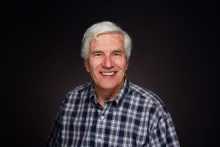
Steve Shafer was born and raised in Seattle. He graduated from Queen Anne High School in 1959 and later graduated from Ambassador College, Big Sandy, Texas in 1967, receiving a degree in Theology. He has been an ordained Elder of the Church of God for 34 years and has pastored congregations in Michigan and Washington State. He and his wife Evelyn have been married for over 48 years and have three children and ten grandchildren.
