

Robin S Webber
This transcript was generated by AI and may contain errors. It is provided to assist those who may not be able to listen to the message.
That's a beautiful hymn, isn't it? That's what all of us have been doing. And yet, that mountain remains open for each and every one of us, because the journey is not over. We'll talk about that in a moment. I did want to mention, while it's on my mind, lovely flowers today. Fall is in the air. Going to start getting a little bit cooler soon, and our leaves up where we live up in the plains are beginning to change, and appreciate the lovely flowers. Thank you very, very much. The Pilgrimage Festival of the Feast Days is now complete. It's done. And we must remember that many of these festivals that God originally ordained are what we call Pilgrimage Festivals.
But even if the Pilgrimage Festival of the Feast of Tabernacles is now complete and done, our pilgrimage towards the Kingdom of God is not. Rather than I have news for you this afternoon, we remain pilgrims. Allow me to share a definition of what a pilgrim is. A pilgrim is a worshipper or devotee to something greater than himself. And his vocation and or her vocation is not complete until he or she has reached the source of their devotion.
Be it a city, be it a shrine, be a kingdom. Let's understand something very clearly about the pilgrimage that our Father has set us upon and what we are headed for. And I'd like to give it in three points. I'm going to repeat it again and again because repetition is, after all, the best form of emphasis. It is the pilgrimage. Our goal is to have Christ live in us. The Apostle Paul said, I have not yet apprehended. Number two, our destination is the kingdom of God. Again, Paul in his terminology would say, I have not yet apprehended. He was still on the pilgrimage. Number three, our role is to always, always trust God with our lives.
Paul, in his way of being, would say, while I desire it so much, I have not yet apprehended. He was still moving, still growing, still exploring, still moving on that pilgrimage that God had for him. His pilgrimage, though, is now done and complete. Ours remains. And while each and every one of us look forward to that kingdom of light, why is it, then, that we remain in this darkened world, this darkened society?
All of us are coming off the face. And like Julie got up, first feast she's ever been able to experience, and it's a wow! Whoo! Fantastic! But why doesn't the feast remain all year long? Why do we have to go back? Well, there's a very succinct purpose for this, friends, and allow me to bring you right out of the Bible to you. Join me, if you would, in John 17. Some of Jesus' last words in his earthly ministry on that night, before he was betrayed. John 17 verse 13. But now I come to you, and these things I speak in the world, that they may have my joy fulfilled in themselves.
The purpose, our being, our journey is to understand what joy is. Joy is not always things that are happy. Joy is something deeper that God is developing and creating inside of us. I have given them your words, and the world has hated them because they are not of the world, just as I am not of the world. And now verse 15, the headline scripture, I do not pray that you should take them out of the world.
Father, keep them there. I'm not going that direction. I'm not asking that you remove them from this darkened society, this darkened age, this worldliness is around. But I will do this. I'm asking that you will keep them from the evil one, because you're not going to be a part of this world, just as I am not of the world. Verse 17 then, how do we gain our protection by this? To set them apart, sanctify them by your truth, your word is truth. So we come to find that we are here for a purpose, so that we can point to God by our example, we can witness of His presence in us on a daily and person by person basis, that we might glorify Him.
You know, one of the reasons why we're kept in the very dark world is to be a light. I don't think that light is ever more pronounced than when it is very, very dark. That is when light does, if I can use this phrase, it does its magic.
Just even the smallest light in the greatest darkness just explodes, just is so vivid and cuts to the eye. And that's one of the reasons why our Father has us here and has not taken us out of this world, that we can be a light. Join me in John 8 verse 32. In John 8 and verse 32. That is not actually the verse that I want. Let me go to John 8.35 and see if that's the verse that I want. Pardon me. Well, I'll get that right between now and red ones, but that God has, I'm an optimist, God has called us to be a light. And as I said, a light shines no more brilliantly or triumphantly than in darkness. Being a light in the very dark world, though, is not an easy assignment. Jesus never said that it would be. He said that it would be worth it. His instruction was to remind us of the source of our light and our calling to emulate such light. You and I have been called to be the light of the world. But there are three very real human inclinations that can snuff out that light on our ongoing pilgrimage, and I'd like to share them with you.
Three very real inclinations that are in our human framework that can snuff that light out. Number one, we can forget who called us and why. Number two, we can limit His saving power.
We can limit His saving power. Number three, we can settle for knowing His name rather than living up to it, the name that has been placed in our heart, in our mind, and in our soul. It is very interesting, as we now move off the Feast of Tabernacles, how close the spelling is of two words. And I'd like you to, would you number one, write down one word. If you've got notes, you can do this. If not, you can scribble in your mind. Write down the word, very succinctly and large, spell promise. P-R- I'm going to let you spell it out into the American educational system. You spell promise.
Got a couple teachers here. They better get it right.
Now, I want you to put three letters in front of it. C-O-M. Isn't that amazing how closely the two words promise and compromise come into play?
Two different words. Promise and compromise. Two words that can represent two trees, and you know where those trees can be found, but two words and two trees that have incredibly different results. As we move away from the Feast of Tabernacles, as we have been called to be lights in a dark world, my question is simply this, that only you can answer, which word are you going to settle for? That is going to kind of create the light that you will be. Will you compromise?
Or will you stand on the promises of God? Well, that's what I want to talk about today. Today, I want to focus and encourage you to maintain your pilgrimage by not only walking with God, but standing up for God. Standing up, shining forth in a darkened world. You know what, folks?
I didn't make up the assignment. God did. Jesus solidified it by the prayer that He offered His Father on our behalf. Where can we gain that insight? Well, as I've often said, we read to know that we are not alone. Let's go to the Old Testament. A story that never grows old.
It's there when you need it. You might need it as soon as Amen today, because you never know what's coming your way. Join me if you would in Daniel.
And join me if you would in Daniel 3.
Here are three individuals that believed in the promises of God. Three individuals that did not compromise. Three individuals that lived in the darkened world, the darkened society, of literally living and existing year in and year out in the kingdom of the beast, otherwise known as Nebuchadnezzar. And yet they had a light. They set an example of standing up. They did not compromise. And it's amazing how that example comes down to us this very day.
Now, again, we can say, but you know, God, the assignment that you've set before me is very difficult, and most likely it is. But we read these examples to encourage us, because obviously, where these three gentlemen were, was a very tough spiritual neighborhood. It was very hard to be on a pilgrimage with God when you had King Nebuchadnezzar standing in front of you. And what is interesting is that, as we think about this, and the reason why I'm bringing this up today on this Sabbath after the Feast of Tabernacles is we enter a world in which we don't know what lies around the bend. Just think of the last month and what has happened in the world, happened in the world of finances, etc., etc. So we better know what lies inside of us. Let me share that again. We don't know what lies ahead of us, so we better really know what lies inside of us to anchor us.
Daniel 2 is a very basic story, Daniel 2 and 3. We come off of Daniel 2, and it's interesting that in Daniel 2, this is after Daniel has interpreted the dream of Nebuchadnezzar. Whenever you always find this in the Bible, when a king gets his dream interpreted, he is a really good guy for at least today. Be it Pharaoh or be it Nebuchadnezzar and or others that come into play with God's servants. Notice what it says up here in verse 46 of Daniel 2. Then King Nebuchadnezzar, after the dream was interpreted, fell on his face, prostrate before Daniel, commanded that they should present an offering and incense to him. And the king answered, Daniel said, Truly your God is the God of gods, the Lord of kings, a revealer of secrets, since you could reveal this secret. And so the king promoted Daniel and gave him many great gifts, and he made ruler over the whole province of Babylon. Verse 49, and also Daniel part petitioned the king, and he said, Shadrach, Meshach, and Abednego over the affairs of the province of Babylon. But Daniel sat in the gate of the king. Good day for the home team! The Jewish boys from Jerusalem finally got it! You know, here they're in a Gentile kingdom. The lights are going to shine more than ever. You know what? The king is on our side. It's a good day! Daniel 3.
You never know what lies around the bend. And it's interesting, because sometimes, unlike Daniel 2 to Daniel 3, we don't get a chapter break. We don't know we're moving from chapter 2 to chapter 3. Chapter 3 is coming. We don't know it, because we're reading this as a Monday morning quarterback, right? We don't get to set the chapter, say, Okay, I'm now ready, and we will now move into chapter 3 of my life. I'm spiritually prepared. Our God is good, and I am ready to face whatever comes my way. No, we find something else here.
Incredible turn of circumstances. Just when you think...
Have you ever run into people like that just when you think they're getting it? They don't?
They change? Have you ever noticed that whatever you're planning in your life is not what you planned for? Something else comes our way.
So, again, you better know what lies inside of you. What lies inside of us? Allow me to repeat it. This is our goal this year. This is the pilgrimage. The goal of our life is to have Christ live inside of us. Our destination is the kingdom of God, and our role is always to trust God with all of ourselves. Those are the goals. Those are the stepping stones to the pilgrimage, and therefore Daniel 3. Nebuchadnezzar, the king, made an image of gold whose height was 60 cubits and its width is 6 cubits, and he set it up on the plains of Dura in the province of Babylon. And King Nebuchadnezzar sent word to gather together the satraps, the administrators, the governors, the counselors, the treasures, the judges, the magistrates, and all the officials of the provinces might have thrown in the dog capture to come to the dedication of the image which King Nebuchadnezzar had set up. And so all of those individuals show up. That's verse 3 in paraphrase form.
Then a herald, verse 4, quite allowed to you it is commanded, O people, nations, and languages, that at the time you hear the sound of the horn, flute, harp, lyre, and sultry in symphony, with all kinds of music, you shall fall down and worship the gold image that King Nebuchadnezzar has set up. And whoever does not fall down and worship shall be cast immediately into the midst of a burning fiery furnace. So then the whole orchestra sounded forth and it says that they fell down at the end of verse 7 and worshiped the gold image which King Nebuchadnezzar had set up. Now, very interesting that, you know, just shows a human overreach. The dream had basically said that Nebuchadnezzar's kingdom would be the head of gold. Basically, the revelation came that you will be the head of gold, but human overreaches made a whole image of gold, the whole body of gold, and laid it out there 90 feet high, 6 feet wide, could not miss it. And you could not miss what you were supposed to do when the orchestra sounded forth. Now, notice verse 8. Therefore, at that time, certain Chaldeans, other translations say astrologers came forward and accused the Jews. And they spoke and said to King Nebuchadnezzar, O King, live forever. You know, whenever you want, that's also a very important part in the Bible, that whenever you see carnal people come forward, all they would ever say is, O King, live forever. That is always to get the King in your favor. And notice what happens. He says, You, O King, have made a decree that everyone who hears the sound of the horn, the fruit of the heart, the leer, and sultry, and all of the music, shall fall down and worship the gold image. And whoever does not fall down and worship shall be cast into the midst of a burning fiery furnace. Now, there are certain Jews whom you have set over the affairs of the province of Babylon, Shadrach, Meshach, and Abednego. These men, O King, have not paid due regard to you. They do not serve your gods or worship the gold image which you have set up. Now, very interesting. Let's understand something and stand some of the things that are happening in your life. We realize that before this, after Daniel had interpreted the dream, that Daniel was allowed to sit in the king's gate, which is a high position.
Michiel, Han, and I, and Azariah, otherwise known to you as Meshach, Shadrach, and Abednego, which are their Babylonian names, were also granted positions.
When we are in God's hands, things just do not happen by accident. There is a design for this.
It was not accidental. The king was not having a moment and saying, I think I'll point them, because God was going to use their appointment for a very specific reason. Because when we see that they are called out, as it were, we don't know in the whole story what you're familiar with that. If these were the only Jews that did not bow to the image, and or specific Jews, that God was using for a purpose to move around the purpose of mankind, because obviously there is jealousy. There is also anti-Semitism when you get the sense of the Jews. Anti-Semitism was alive in a well long before 60 years ago. It's very interesting. The Jews, the Jews, the Jews.
These men were put in this position for a reason and for a purpose. What was the purpose?
To be a light in a darkened world. To see whether they would stand on the promises of God and or with a compromise. Let's notice what happens here. It says, "'You king and whoever does not,' mentions about certain Jews, they do not serve." Verse 13, then... Let me just make sure I'm in the right point. Yeah. King Nebuchadnezzar, in rage and fury, gave the command to bring Shadrach, Meshach, and Abednego. So they brought these men before the king. And Nebuchadnezzar spoke, saying to them, Is it true, Shadrach, Meshach, and Abednego, that you do not serve my God or worship the gold image which I have set?
Now, if you are ready at that time and you hear the sound of the horn and all of the instruments and all of the coming forth and you fall down and worship the image, which I did, this is going to be good. But if not worship, you shall be cast a medium to the midst of a burning, fiery furnace. And who is the God who will deliver you from my hands? Now, a very important key is we move off this festival experience, which has been very positive. I want to share a very basic formula that comes out of the Bible, at least from my reading.
Wherever God is, Satan isn't far behind. In Daniel 2, it was a home run for God through Daniel. There was the interpretation of the dream. Daniel was promoted. Wowser. Fantastic. Great!
Everything couldn't be better. God is king. But wherever God is, Satan isn't far behind. I'm not saying that to cause dread in you, because we recognize the God that we worship. What I'm saying as your pastor to you is, in this sense, be aware. Be on guard.
Because Satan will want you to take that promise and the promises of God and put C-O-M in front of them. Compromise your pilgrimage. Compromise our goal to have Christ in us. To be in that kingdom and to always trust God. Always recognize this. Just because Satan gives you one good blow doesn't mean that he's not going to come around again. Here Nebuchadnezzar comes again in a sense of trying to weaken them. Shadrach and Eshach and Abinne go answer and say to his king, O Nebuchadnezzar, we have no need to answer you in this matter. If that is the case, our God, whom we serve, is able to deliver us from the burning fiery furnace, and He will deliver us from your hand, O King. But if not, let it be known to you, O King, that we do not serve your gods, nor will we worship the gold image which you have set up. What have we done? How could that come out of our mouths? Maybe we need to think about this for a little bit.
I wonder if they had thought. You know, it's amazing what can go through your mind in a split second, questioning what path He will walk down, whether it is following the promises of God or compromising by human reasoning. And that human reasoning comes very naturally to ourselves. I like to read something out of the life application commentary, thoughts that might have been going through Meshach, Shadrach, and Abinne go's mind. I want to share something which is very interesting.
To a great degree, looking from the outside, these three young Jews in the kingdom of the beast could have very much, in a sense, fit in. Because after all, their names were Babylonian names. Meshach, Shadrach, Abinne go. They most likely were not wearing Yama lukes. They were most likely wearing Babylonian garb. They were in Babylon. At long glance, you might not have noticed that they were all light. To a great degree, humanly, maybe they would have wanted to fit in. Who, in our right mind, wants to be different than everybody else? Right, young people? But theirs was not just simply a dual citizenship.
God has not called us as Christians to experience a dual citizenship.
Our citizenship is in heaven.
Now, we have a secondary, but not dual. It's not at the same level. That's a bad way of thinking. Our primary citizenship is in heaven.
And just, if you have that in your mind, just when you think in, God's going to put crunch time on us to make sure that we know where our citizenship is.
But, you know, if Meshach, Shadrach, Abinne go, it just kind of settled for the dual citizenship thing. And I've got one foot here and one foot here, one foot in heaven and one foot on earth.
They might have thought this way when the king said, Bow! They thought, you know, maybe we'll take that up. Out of the Life Application Bible, here's some thoughts.
This is humorous, but oh, so poignant.
Now, what is your name? Who are you at? And what do you have in front of you that may be separating you on that goal to the kingdom of God? What idol have we set up in our lives that blocks the vision of God? Here's what they could have thought. Number one, well, we'll fall down, but we'll not actually be worshipping the idol. Number two, we won't become idol worshippers, but we'll worship it this one time. One time, just one more time. And then ask God for forgiveness.
Kind of biblical, theological, I think it might work.
Number three, the king has absolute power and we must obey him. God will understand.
Number four, the king has appointed us. We owe this to him. God will understand.
Number five, this is a foreign land, after all. So God will excuse us for following the customs of this land.
You know, even before Rome was, when in Rome, do as the Romans do. It's never kind of left, you know.
Number six, this is my favorite. Our ancestors set up idols in God's temple. This isn't half bad. Number seven, we're not hurting anybody.
Number eight, if we get ourselves killed, some pagan will be appointed, and they won't be able to help our people get out of exile.
Now, we know our friends, Michelle, Hannah, and I, and Azariah. They didn't go down that path, and neither should we, friends.
Let's understand a very basic theorem, and our pilgrimage. We do not find our values in a trial.
Are you with me? We take our values into the trial. You will not discover yourself in the trial.
God has already found you, and we are to be found in Christ. That is our value. That is our rock. That is our anchor. That is our sale, and that is how we are to carry out our pilgrimage.
Otherwise, we compromise, and compromise never helps anybody. Allow me to share a story with you.
Story under the title of compromise. Listen to it carefully, because this may be about you.
A hunter had a gun aimed at a large bear, and he was ready to pull the trigger.
Just then, the bear spoke in a soft, soothing voice, saying, Isn't it better to talk than to shoot? Why don't we negotiate the matter?
What is it that you want? The bear was kind of reaching into this man's inner self.
The hunter lowered his rifle to answer, Well, I just want a fur.
Well, that's good, said the bear. I think that's something that we can talk about.
All I want is a full stomach. Maybe we can reach a compromise.
So they sat down to talk it over. The bear and the man. A little while later, the bear walked away, alone. The negotiations had been successful. The bear had a full stomach, and the hunter had a fur coat. For those, I know it's morning services, he was inside the bear.
Hate explaining my jokes.
What is the difference, friends, between the hunter and ourselves?
And Michelle, Hananiah, and Azariah. Those three never lowered their rifles on their adversary.
Why is that? They had internalized something greater than the external forces, ferociously coming at them for Nebuchadnezzar, who was having conniption fit and was ready to throw them into the furnace. What did they value? And why did they not lower their rifle and compromise?
And how has that light, of which each and every one of us has been called to be, come down to our day? Back to Exodus 20. Back to Exodus 20.
And let's just read God's word and understand the foundation, the firmness that God wants us to realize as we're on this pilgrimage. And God spoke all of these words, saying, verse 2, I am the Lord your God, who brought you out of the land of Egypt, out of the house of bondage.
And you shall... There's no negotiation, friends. You shall have no other gods before me. It is so very important to always remember and to know the first commandment in long form.
Because if you know it in short form, it says you shall have no other gods before me. The long form reminds us of the God that we serve. It is the God of rescue. It is the God of champion. It is the God that brought us out of slavery, whether it be physical or spiritual, and gave us another opportunity. Number one, what held them to where they did not lower that rifle and compromise is they understood the power of the first commandment to never forget who calls us, who is our champion, and who comes first. Number two, you shall not make unto yourself a carved image, and your might say graven image of any likeness of anything that is in heaven above, or that is in the earth beneath, or that is in the water under the earth. Neither shall you bow down to them or serve them. For again, I am the Lord your God, am a jealous God, visiting the iniquity of the fathers upon the children of the third and the fourth generation of those who hate me.
But, verse six, showing mercy to those the thousands that love me and keep my commandments.
The thrust of the second commandment is simply this, friends. It's not just about sticks and stones. It speaks to us that are under the new covenant. Never limit God's saving power.
Never box God in. Never diminish His eternity as Isaiah 57 in verse 15 brings out that, you and I have the opportunity to have company with Him who inhabits eternity. Never limit His power. Then notice what it says, and you shall not take the name of the Lord your God in vain, for the Lord will not hold Him guiltless, who takes His name in vain. What is the thrust of the third commandment? We bear more than a name. We bear an existence.
The third commandment is not about a swear word. God has come into compact with us. He says, I am holy, therefore you be holy. I will be your God. You will be my people. We will be in covenant. They will forever know that you are my people. When we diminish the third commandment simply to the alphabet and four letters plus God's name, we're missing the boat. Not that we shouldn't couple all those letters together either. Please understand, we're in more trouble.
The third commandment is not about a verbal event. It is about a spiritual existence because God has rescued us, because we have been rescued by the God that is limitless. Thus, understanding that our life is going to be different.
And we will not compromise. We will stand on the promises of God. We will be that light that Jesus has called us to be. We will not lower our rifle. We will understand our role of being a light in a darkened society. We will remember what the power of the Psalms tells us. Psalm 119. Join me there, please. Psalm 119 and verse 11. Following the advice of David, and that's what they did. These gents were reading the Psalms in those days, and they knew what it said in Psalm 119. Verse 7. Your Word, your Law, I have hidden in my heart that I might not sin against you.
Every Jew born raised until he died knew the Shema. Deuteronomy 6 and verse 4. Hero Israel, the Lord your God is one, and you shall serve him.
Your champion, your hero, your rescuer, the one who gave your people and gives you every day a new opportunity, the one that cannot be limited, and the one that says, I am your God and you will be my child and we will be of one name. Remember who's put that name on you. Never sullied. Never lower your rifle for some sweet talker that comes along and says, let's talk about it. Be it a bear or be it a Nebuchadnezzar. And he said, well, that's really nice. Neb gave the boys another chance.
Can't be all bad. You know, when you know what you're about, you will be about what you know.
And that doesn't mean that your knees won't be shaking at times with some of the things that are going to come our way this year, friends. And I don't know what lies around the bend other than we've got to get around that bend. But it's not a matter of your knees shaking. It's a matter of your heart staying firm. The knees are going to shake. That's human. That's human. But I want to share a thought with you out of Shakespeare. Shakespeare once said, the coward dies a thousand times, but the brave only die once. Rather, in some of us in this room and others in the body of Christ, you know what? We've got to go back to some of these very basics, even in the commandments, to firm up our hearts and firm up our resolve. When you know what you're about and then you're about what you know, you are not going to suffer from a dipsukos. Does anybody know what dipsukos is? It's a spiritual disease. Sounds kind of Greek, doesn't it? Dipsukos? Go to James 1, 6, 2, 7 later.
Dipsukos is the word that James uses about being double-minded. Double-minded. And the Greek actually infers that it's better than double-minded. Well, what that infers is, you've got two brains in there telling you what to do. Have any of you ever seen a two-headed snake in the San Diego Zoo? Am I the only one? That's the first place I always wanted to go as a boy when I was six years old. You know, little Robbie, as soon as admission was paid, which was like about a dollar back then, go to the reptile house, I wanted to see if that sucker was still alive.
You know, of course, you know, with two heads, where do you look, you know? You look kind of like that.
God has not called us. Did I just do that? God did not call us to be a two-headed snake.
He has not called us to be double-brained. He hasn't called us to be like the hunter. Should I, or should I not? Should I, or should I not? It goes through our life, wondering what we're going to do, like with flowers on them, you know, the petals on a flower. She loves me, she loves me not.
And or, again, let's take it this way. Let's all look.
I will love God with all of my heart, all of my mind, all of my soul.
I will love God with all of my heart, all of my mind, all of my soul.
Now, you're all smiling, but you all know that's the choice that we have every day of our life. Is that not true? So that, what? For us, know to God's glory. For us, know that we might be the light that God has called us to be. Notice what happens. Let's finish up Daniel here.
Daniel 2. Notice what happens here. Because of what they did, what God did. I'm going to go real quickly. I think many of us are familiar. If not, please read it. I never like to say anything is familiar, but we know that they get thrown into the Babylonian microwave of microwaves.
And they are, you know, they are supposed to be zapped so much that the people that threw them in, they become crispy critters themselves. Notice what happens then. Verse 23, And these three men, Shadrach, Meshach, and Abednego fell down, bound into the midst of the burning fiery furnace. You know, what they did is, but they fell down because probably they were bound. So that it would be easier to toss those human hot dogs into the barbecue as it were. And so they land. Just think about this for a moment. Maybe you've never thought, maybe you just thought, well, it's time to walk into the flame. No, it wasn't like that.
They were bound, thrown in. Here we go. They land. But notice what happens here.
Nebuchadnezzar and Hisotashi rose in haste and spoke, saying to these counselors, Did we not cast three men bound into the midst of the fire? They answered and said to the king, True, O king! Look, he answered, I see four men loose walking in the midst of the fire, and they're not heard. And look at that. The form of the fourth is like the Son of man.
Then Nebuchadnezzar went near the mouth of the burning fiery furnace and spoke, saying, Shadrach, Meshach, and Abednego, servant of the Most High God, come out and come here. Then they came out from the midst of the fire. And the rest of the story basically says that, again, for a moment at least, Nebuchadnezzar was in tune, if but for a moment, glorifying God, promoting them. But did you notice what happened here? Because of their commitment and their lack of compromise and standing on the promises of God, these men did something incredible.
They were willing to give their life. What is interesting is what occurred. It says that there is one liken unto the Son of man. It could have been a very real appearing. It says liken unto. Let's just take it where it's at. Son of man normally refers to the one that would become Jesus Christ. If you want to write this down in your word, you just knew it this. This is what you call a theophany. T-H-E-O-P-H-A-N-Y. It is what in the Greek is called a God appearing. The Son of man, as you go through the book of Daniel and other places in the book of Acts and Revelation, refers to Jesus Christ. They were willing to give their all. And whatever they were, they were willing to give. Standing on the promises of God, standing on the law of God, that you shall worship Him only, you shall not limit Him, and you shall remember that you are His, that you bear His name. That was tucked so deeply inside of them that they were never willing to lower their rifles on Nebuchadnezzar and his henchmen. And because they gave their little, look what God did. He gave His much, and He literally appeared with them. Join me if you would in Psalm 118. In Psalm 118, verse 6, they read these things and understood them. The Lord is on my side. I will not fear. What can man do to me? The Lord is for me among those who help me.
These are the words that are echoed later on in Hebrews.
These three were called to be lights. I want to share something, friends. They're light as well as the light of others, because it's the light that was within them that God placed there that shone to others and gave others courage down through the ages.
Esther, later on, was appointed, just as these men had been appointed. These men were appointed to be counselors. Esther was later on appointed and chosen to be queen. You and I know the story, though, that a time came when she had to reveal her citizenship and where it lie.
It's mentioned by her cousin Mordecai, for who knows, but for such a time as now, the kingdom has come upon you. Christ himself, later on, as he would be challenged, would not lower his rifle, that in that time of temptation, when Satan kept on coming at him again and again and again, Jesus came down to a very basic point. He said, don't you know, in Matthew 4 and verse 10, it is written, you shall serve the Lord and you shall serve him alone. Shot down Acts 5.29, and maybe you can make a Bible study out of that. That later on, when everything was going against them, when Peter and John were taken by the religious folk of their day, they came back with one statement. They weren't counting the posies. They weren't negotiating with the bear. They said, we must obey God. We must obey God rather than man.
Why do I share all this with you, friends? Because even though the pilgrimage festival is over, the journey goes on. The pilgrimage is ours for the victory in Christ. Remember, you are a pilgrim.
Remember, our goal is to have Christ live in us. Our destination is the kingdom of God, and our role is always to trust God with our lives. I want to encourage you, please listen to me for a moment and be willing to take a note. We're going to go about two minutes here.
Know that we are here for a reason. God planned it that way. Jesus prayed it that way. Father, keep them here. Why now? I don't want to go through this trial anymore. It's more than I can bear. Father, keep them here, but keep the evil one away. Know that promise and compromise have a lot in common with the letters involved, but lead two different directions. Know who we serve.
Know who we stand among. Ecclesiastes 4, 12-13. Homework, jot it down. Ecclesiastes 4. It says that a three-court knot is a strong knot. Don't only know your God, but know who you are fellowshiping with to strengthen you, to encourage you in this way. People that talk about the promises of God, people that talk about the blessings of God, people that talk about the reality that we have not only been called to walk with Christ, but to have Christ walk inside of us.
Talk to people that are not shy about talking about the Bible, filling themselves with the Word of God so that they might not sin against Him. Be around people that are promise-driven, not compromise-ridden. Be around people that are promise-driven, not compromise-ridden. Know that God will give you the answers you need even when you do not remember. Many of us are familiar with those verses. I don't need to go into it. Well, I've got a bad mind. Yeah, but we worship a great God, and He will not give you a hundred verses, but will bring the verse that you need and will convict you of that and guide you so that that rifle goes right back up. Know that it is not by our strength, and know that it is not about us, but it is all for Him. Brethren, the pilgrimage festival is over, but not the pilgrimage. The Kingdom of God is ahead, and I look forward this coming year, walking it, talking it, living it out with each and every one of you. I as a pastor, your elders, your brethren are the Michels, the Hananias, the Azarias, the Gerdesop, the Strengthen-ups. To know that we're not alone, to reach out, look up, keep your feet on the ground, and remember, you have been called, just like those three men of old, not to fall down, but to keep on standing up for God. Good seeing all of you. Thanks for your attention. As soon as you are able to spend a little time with you before we have to get off, always remember myself, those that are new with us, myself, our elders, we're just a phone call away. We're here to serve you this coming year, because we love our God. We love His Christ, and because that love is in us, well, we love you, and we're here to take care of you as your shepherds.
Look forward to seeing you afterwards.
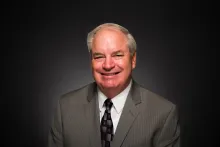
Robin Webber was born in Chicago, Illinois, in 1951, but has lived most of his life in California. He has been a part of the Church of God community since 1963. He attended Ambassador College in Pasadena from 1969-1973. He majored in theology and history.
Mr. Webber's interest remains in the study of history, socio-economics and literature. Over the years, he has offered his services to museums as a docent to share his enthusiasm and passions regarding these areas of expertise.
When time permits, he loves to go mountain biking on nearby ranch land and meet his wife as she hikes toward him.
