

Jorge de Campos
This transcript was generated by AI and may contain errors. It is provided to assist those who may not be able to listen to the message.
Good morning, brethren. It's nice to see you all and lovely smiling faces. And the choir was very beautiful. The words were very meaningful, and particularly as we are on the Day of Pentecost. Very humbling because God does want us to humble ourselves, come to Him, and He wants to be at one with us. And He is here to give us of His Spirit so that we can be at one with Him. Brethren, indeed, I have been blessed by God and my family has been blessed that we can serve in various ways. And one of the ways that we can serve is helping the Portuguese work, as Mr. McNeely mentioned. And one of the things I have found is there is an enormous opportunity out there. In Brazil alone, there is over 200 million people. In Portugal, it's a lot smaller. There are 10 million people. But the Portuguese language of the European-type languages is somewhere around about the fifth, fourth, or sixth somewhere-sized language, European-type languages in the world. The Portuguese were amongst the colonialists. They actually went out towards the eastern side of the world, and the Spanish went to the western side of the world. That was kind of decreed by the Popes at that time. So there's a lot of influence, Portuguese influence, out in Africa, in the Far East, whilst in the southern America, the western side of the southern America, it's more Spanish influence. And the state itself is kind of on the western side of the imaginary line that the Pope drew many years ago. And that's where the Spanish went, and the Portuguese went to the other side. But as we see, and as there is a big work, and I have the opportunity to visit the brethren in Portugal and help out with some of the translation work and reviewing, one of the things I find that when we visit brethren that are scattered and they do not have regular contact with ministers, although they have contact through the website and things like that, and what you can get today from the website is really a blessing for the brethren around the world. But without that personal contact that they have, we find that sometimes the brethren start picking up on little things and becoming a little bit on the legalistic side, a little bit trying to build up their own in a sense like self-righteousness, building up, putting certain little weights around the law or principles related with the law. And you find that you need to encourage them because they're trying their best, but they think that certain things are needed. And I don't want to go into specifics because I don't want you to think that I'm against some of those things, not necessarily against, because they are trying with their heart. But the point is those extra little things do not make us righteous in front of God.
And when I thought of that, it made me meditate about what Paul wrote in Romans. And I'd like you to turn with me, please, Romans 10, in the 10th chapter of Romans. And yeah, Paul is saying, you know, really, I want all Israel to be saved. And I'm impressed with the zeal that the Jewish and the Israelite community at that moment exhibited. And he said in verse 1 in Romans 10, brethren, my heart's desire and prayer to God for Israel is that they may be saved.
And I strongly believe that Paul's intent was not just to Israel, it was to all mankind, to all nations, to all people. And I think all of us have that desire that everybody in the end will be in God's family and everybody ultimately will be saved. And then he refers specifically to the people. He says in verse 2, For I bear them witness that they have a zeal for God, but not according to knowledge. They zealous, they zealous to serve God, but there's something lacking in them. And in verse 3 he says, for they being ignorant of God's righteousness. And the question I want to ask today is, are we ignorant of God's righteousness? And therefore they, he says, yeah, they seeking to establish their own righteousness. And what is our own righteousness? Well, maybe it's our self-righteousness. It's things that we may do that we think, well, that will make us righteous in front of God, and have not submitted to the righteousness of God.
And the question I have is, have we submitted to God's righteousness? I want you now to turn with me to chapter 3 of the same book in Romans, because yeah, Paul makes it very clear what we are not. It says, yeah, in Romans 3, starting in verse 10, Paul in Romans 3, verse 10 says, as it's written, there is none righteous. No, not one. I, George, am not righteous. None of us is righteous. There is none who understands, there is none who seeks after God. They all turn aside. They've together become unprofitable. There is no one who does good. No, not one. Of our own selves, our righteousness is like filthy rags. We know that.
But what are we to seek then, brethren? What is the major goal that we have, the major vision that we have, that has been given to us that you and I individually need to seek? And you probably are thinking of Matthew 6, 33. So let's turn there, because in Matthew 6, 33, Christ, in the Sermon on the Mount, was explaining what we need to seek. And he says in Matthew 6, 33, but seek first the kingdom of God and His righteousness. Quite often, brethren, when we read the statement, we read the statement, seek the kingdom of God, and we quite often think we need to seek first God's kingdom. And it's kind of as if we swallow the next few words, and His righteousness, because we don't pay often too much attention to that. And then all these other things shall be added to you.
But it says, seek you first. So which is first? The kingdom of God or His righteousness? Because in our carnal mind, it appears two things. But it says, seek you first. So which one is first?
Well, the kingdom of God is first, because that is the what. What we are to seek. And His righteousness is how we can get there. It's one goal. It's not two. What is the kingdom of God? That's what we've got to pursue. How is through God's righteousness? It's not your righteousness. It's not my righteousness. And you and I have to submit to God's righteousness, to His righteousness, to actually seek the kingdom of God effectively. So my purpose today, brethren, is to spend a bit of time to see how we can strive to have His righteousness in our daily lives. And using the analogy that Christ gave us, maybe just a page before, in your Bible, in the same Sermon of the Mount, using the analogy of what people call the sample Lord's Prayer. If you turn a page back, in Matthew 6, starting in verse 9, it says, In this manner therefore pray, Our Father who art in heaven, hallowed be thy name. Thy kingdom come. In the Lord seek you first the kingdom of God. And so we want the kingdom of God to be on earth so that God's will may be done. How? How do we seek that? And then in verses 11, 12 and 13, Christ gives us three specific points of how to pursue His righteousness towards starting to desire and seek the kingdom of God on earth. So that His will may be done. Now quite often, you and I, brethren, when we think, let our kingdom come, you and I think of the wall tomorrow. Right? Let our kingdom come, the wall tomorrow there will be peace on earth, and it's 100% right. However, didn't Christ say in Luke 17 when He says, the kingdom of God is within you, is amongst you? Because the King, which was Christ, was amongst us at that time. And also it says, when we repent, it says, the kingdom of God is at hand. And what is meant by that? It's meant a little bit more, brethren. Just like Christ, the King of the kingdom of God, that will be ruling in the kingdom of God on earth, we are training, brethren, to be kings and queens and priests and leaders in that kingdom today. So you and I, brethren, today, need to start in our daily lives. We need to start putting into practice the kingdom of God, how we practice our lives on a personal way. So we should exemplify, albeit a lot imperfect, but we should start to become more and more perfect. We should exemplify the kingdom of God on earth today. By the way we live, by putting on God's righteousness in our daily lives.
And how do we do that, brethren? It clearly is by putting on God's righteousness. Now we move on to the next section, because Christ then starts exemplifying to us here in verse 13. Give us this day our daily bread. And you and I may say, alright, and particularly, in my case, I'm working in a commission-only profession, job now, and I know every day, if I don't bring something home, there's no bread. When you are in a commission-only job, that becomes so much more reality. And indeed, it applies in a physical way. But I believe this means more than physical. So I want to show you the other section where Christ used or exemplified this model prayer, some maybe two or three years later, after the Feast of Tabernacles in his third year of his ministry in Judea, and that is in Luke 11. And I want you to turn now to Luke 11, please.
In Luke 11, we can see the same model prayer that he is instructing his disciples about. And you can see that section in verses 2 through 4, Luke 11. And then again, in verse 3, he's talking exactly the same model prayer or sample to us, give us our daily bread. Now I want you to look a little bit further, in verse 5. Now he goes and starts explaining to them a principle. Because the question I have is, is the daily bread just food on our table, or income in our job, or just proper health so that we may be able to go to work, or is more to it.
And in verse 5, it says, it gives us an example. You can read that it says, which one of you having a friend and going to him at midnight. Now brethren, if you go to one of your friends' home at midnight, I think the friend will say, there's something wrong. I mean, because you would go at 12 o'clock, or at 2 o'clock in afternoon, or 10, not at midnight.
Right? I mean, if somebody knocks at your door at midnight, and he says, say to him, I want three loaves of bread, you know, you wouldn't do that at midnight. Right? So it must be pretty serious. And then it says in verse 8, For I say to you, though, he will not rise, he will not rise and give to him because of his friend, yet because of his persistence. Because it gives an example that he persists, and he keeps knocking, and then he wakes up, it's midnight, he's tired, and he gets up, and he says, well, it's his friend and his persistence. So it's bringing a point here of saying, I want bread.
So he's talking about bread. And there's a point of persistence which says, we've got to keep asking. Then there goes on in verse 9, and then in verse 9 he's talking a little further, and it says, as a parent, sorry, in verse 9 he's talking about ask, and it will be given, seek, and you will find, knock, and it will be open.
And then it says, you as a parent, in verse 10, a son comes to you, in verse 11, and asks for bread. So he's still talking about bread. And will you give to your children a stone, or a serpent, or a scorpion? That's not. He'll give the children what they need, the bread. So Christ was talking about bread. In verse 3 we said, give us our daily bread. We go to the Father and ask for the daily bread.
Then he says, in verse 6, 7, and 8, we're going to persist and ask for this bread on a persistence basis. And on verses 10, 11, and he says, a father will obviously give the bread. And what is the bread that we ask from the Father daily? It's in verse 13. He says, if you then, being evil, know how to give good gifts to your children, how much more will your Heavenly Father give you the Holy Spirit to those who ask Him? So daily, daily, when we come to God and ask for the daily bread, yes, it's a physical meaning to you and I.
But in addition to the physical meaning daily, you and I, brethren, need to ask God for His Holy Spirit. And I think we all probably do. But it kind of reached my brain at a different level of understanding when I tied these together to say, Christ is asking us to persistently, even if it is at midnight, ask and knock and seek daily for the daily bread, the bread from heaven, the manner that counts, which is the Holy Spirit. Daily, persistently. And maybe to you that's nothing new, that. But as I got into this job, which is commission only, I came to realize that I was not asking God as persistently for God's Holy Spirit on a daily basis.
And I had to change. And I tell you, brethren, if you ask, and if I ask God for His Spirit daily, persistently, I found that I just have that extra little perception, awareness, sensitivity to things around, which I would not have had if I had not asked for that on a daily basis, when we go through our daily challenges in our daily lives. And that is the beginning of putting on, of pursuing God's righteousness.
We can only put on God's righteousness with God's Holy Spirit. You and I cannot do it. And then it gets on to another theme, because it goes on to another important point. But before I do, I just want to mention something interesting here. It doesn't just say, give me our daily bread, or my daily bread. It gives us our daily bread. So we don't just ask for God's Holy Spirit for me, myself, and I. We ask for the greater community of God's church and God's people, because we all need God's Spirit. And with God's Spirit, we are able, as we go out into the world, into society, communicating with different people, with God's Spirit, we interact with people.
And when you and I interact with people, we're going to find that we may say a certain thing that is going to upset somebody else. Boy, do I say that!
Often, it's easy for me to say things that upset people. But likewise, others may say things that will upset me, that will offend me. Could be people out in the world, could be people in the church. And what happens? Immediately, we get this external stimulus, and immediately we get this emotional feeling. But of God's Holy Spirit right there, you and I can use stirred up God's Spirit in our minds to actually have the correct emotions and the correct reactions.
And that's what Christ is going in the very next point, because it says, forgive us our sins, for we also forgive everyone. It says here in Luke 11 verse 4, and the same thing in Matthew. I want to go back to Matthew at this stage, Matthew 6 verse 12, where it says, forgive us our debtors, we forgive our debtors.
Brethren, this to me has to deal with people interaction. When you and I interact with people, there's going to be hurts, there's going to be offenses, there's going to be sore spots. And therefore, you and I have to have inside us a capability to just let certain things go. Now that's not easy. Particularly if those that hurt you are those that you love most, or vice versa. If you and I hurt those that I love most, it's very easy for me to say something that will hurt my wife, because she's closer to me.
So easy. And likewise, we've got to forgive one another, because we do say things wrong. Now, if you and I are daily praying for God's Spirit, then it will help us in overcoming these offenses, and will help us in forgiving people.
And if you look in Matthew, you can see Yah in verse 14, because now in this section, He elaborates this point in verse 14 and 15. For if you forgive men, their trespasses, your heavenly Father will also forgive you. But if you do not forgive men, their trespasses, neither will your heavenly Father forgive you or your trespasses.
Brethren, forgiveness, it's probably one of the very difficult things for us to do. It's very difficult. Turn with me to Matthew 18. See that we are in Matthew. Let's go to Matthew 18, because Yah is an example of a servant that was unforgiving.
And in Matthew 18, verse 33, it shows at the end when this servant was not forgiving to his other servant. It says in verse 33, Should you also not have had compassion or was forgiveness on your fellow servant, just as he had, or I had, on you, just as I had pity on you, I forgave you.
And his master was angry and delivered him to the torturers until he should pay all that was due to him.
So it's basically the principle is if we don't forgive out of this, how can God forgive us?
So my Heavenly Father also will do to you if each of you from his heart, genuine, it's genuine from the heart.
Preferance is not easy in the heart, genuinely, to forgive when other people that are close to us have hurt us, because when they hurt us, it breaks trust.
It really breaks trust. But we, it says, yeah, from the heart, we've got to forgive. And it says, yeah, does not, and so will my Father also will do to you if each of you from the heart does not forgive his brother, his trespasses.
Now, sure, we've got to forgive. And you and I know it's got to be based upon repentance. And that's not nothing new, but it's important to remember.
There is Luke 17. I want you to go back to Luke 17, because it brings an interesting point here about forgiveness that people quite often don't think of in that moment.
But in that way, look 17 in verse 3, says, Take heed to yourselves if your brother sins against you, rebuke him. So, yes, if he sins against you in a kind way, in a godly way, draw that to his or her attention.
And if he or she repents, forgive him. There is repentance. And if he sins against you seven times in a day. Well, seven times in a day. Now, I heard some people say, well, it probably must be a different sin. Well, it doesn't say that. It doesn't say that. So, I can't say it must be a different sin, because it doesn't say that. And it says, if he sins against you seven times in a day, and seven times in a day returns to you saying, I repent, you shall forgive him. Now, clearly, repentance is a condition. The problem is, if he's done it seven times a day, he said he repents. After the sixth time, you kind of wonder, has he really repented? Right? But it says, if he says, I repent, I will forgive him. That's why, in the next verse, in verse 5, it says, increase our faith. You see, you've got to trust now that he is some repentance. And obviously, it's a big subject. It's not my purpose of today's sermon to actually go into it as far as the fruits of repentance and all that and reconciliation and the whole thing, because there's different stages in this whole process.
But the point is, forgiveness is something that we have in the heart. And yeah, maybe it'll take time to heal. That's a different story. And that's reconciliation. And that's a different story. It's part of it, but I don't want to go into it. But the point is, to forgive is in the heart. Forgive. Because if you don't let it go in the heart, it creates this bitterness in the heart that then it carries, it's going to affect your health, it's going to affect you, it's going to do a whole lot of things actually probably worse for you and I if we don't forgive.
And it yes, it requires faith. But if you and I have faith towards others and accept their repentance, and we exercise that faith, then you and I can have the faith that God will forgive us if we say to God we repent. And how many times have we said to God, I repent, and I've gone back and have done the same thing? Haven't we? Well, I have. And I'm not saying, you know, we're saved by grace only. We've got to change. We've got to repent. We've got to repent. We've got to change.
But God is merciful. And when we repent, He forgives us. And if we forgive others, and we therefore have the trust and faith in others that we can forgive, then we can be have that confidence because we are showing the same forgiveness to others that God will show the same forgiveness to us.
To point is, brethren, I cannot do that without God's Holy Spirit. I need God's Holy Spirit daily, and so do you. And we all need God's Holy Spirit because of our own righteousness who you and I cannot do it.
We require God's Holy Spirit daily for having to have this interaction with people that we can forgive. It's not easy.
When we do that, brethren, are we not, in a way, doing God's will on earth? Isn't that what God wants us to do?
And therefore, aren't we seeking the kingdom of God first? And isn't this how we are in our little world, putting it to practice?
Brethren, we need God's Spirit to do that. But there is another angle to it because Christ then, in Matthew 6, 13, He gives another statement.
Matthew 6, 13, and says, and do not lead us into temptation. Matthew 6, 13.
So, so far we've seen we've got to seek God's kingdom first. God's kingdom is our goal.
God's kingdom must come on earth. Ultimately, that's what we want. But in our little way, there are certain things we've got to start putting into practice, which is His righteousness, which is in our little way.
We are trying to grow into the Spirit, into the way of how things will be done in God's kingdom.
And that is through God's Spirit, and that is trying to implement God's righteousness.
And one of the areas is interacting with others, keeping the right relationships with others. And therefore, when those relationships go wrong with God's Spirit, we are trying to correct Him and making Him right.
But then the other point, which is on verse 13, says, and do not lead us into temptation.
Now, I had a lady in Portugal asking me, why must you and I pray for God not to lead us into temptation? Would God lead us into temptation?
So why must we pray God don't lead us into temptation?
Now, of course, God does not lead us into temptation.
You see, what leads you and I into temptation is our carnal minds, is our human nature.
It's the society around us. It's Satan and his influences around us, and the peer pressures around us.
That leads us into temptation.
So starting from our own human nature and our carnal desires and all the other evil passions that you and I may have, that leads us the wrong way.
So that's why we've got to pray to God. God lead us not into the way of our carnal minds and of the world and of Satan. God lead us into the other way, daily. Brethren, you and I need God's Holy Spirit daily to fight, to overcome the problems of the society around us.
We need God's Spirit every day to ask God to lead us in a way that we are putting on God's holy righteous character daily in our lives.
And by having God's Holy Spirit daily, you and I are going to be more attuned to that still, small voice that says, don't do that.
And so attuned that we're going to pick it up early enough.
You know, it's... the world is like you being in a roller coaster. You know, you know, when you go on a roller coaster, you go...
...all the way up at the beginning and right at the top.
If you control before you start going down the hill, it's very little energy and force and will be a lot easier to control than once you start going down the hill and then trying to stop it.
And therefore, God's Spirit will be a lot more attuned to that still, small voice so that we don't start sliding down the hill.
And therefore, it will be a lot easier for you and I to overcome daily and to put on God's holy righteous character.
Which, after all, it's His righteousness. His righteousness in dealing with people and His righteousness in overcoming our own weaknesses and developing God's character.
Turn with me, please, to Acts 10. We're going to read in verse 34 and 35. Acts 10.
And now we're talking about Peter. He opened his mouth and said, In truth I perceive that God shows no partiality. God does not discriminate between people, nations, races, color, or whatever.
But he says in verse 35, But in every nation, whoever fears God, whoever, like we heard in a beautiful choir song, whoever humbly seeks God and fears God, and works righteousness, is accepted by Him.
Which righteousness? Is it our self-righteousness? No. So which righteousness must we work? It's God's righteousness. He's His righteousness.
We're going to seek His righteousness. We're going to work His righteousness. How do we work God's righteousness in us?
By having God's Holy Spirit daily, we try and live like Christ lived, so that Christ can live in us.
And we must use God's Spirit daily, and we must stir God's Spirit daily. We've got to work it daily in overcoming and in dealing with people the correct way.
Then it says we will be accepted by Him. That's how we seek His righteousness. Turn with me, please, to 2 Timothy.
2 Timothy is a scripture that is often referred to when we talk about God's Holy Spirit. Simple scripture, Yah.
And it says, therefore I remind you in chapter 1 verse 6. 2 Timothy chapter 1 verse 6.
I remind you to stir up the gift of God, which is in you through the laying on of my hands.
Brethren, you and I need to be reminded, particularly today on the Day of Pentecost, celebrating the giving of God's Spirit, the true bread that fills you and I.
The true bread that makes us full and contented.
Brethren, if we are depressed, we need to pray more for God's Holy Spirit because it's the only entity that will fill us, will fill you, will fill me, God's Holy Spirit.
It's the bread from heaven, it's the manner that will make you contented, that will help you overcome people's relationships, that will help you overcome your own and my own problems.
So, for God is not given as a spirit in verse 7 of fear, but of power. Power to sort out people's relationships when they're not right.
Of power to help us overcome when we need to overcome. And of love, of outgoing concern, and of a sound mind.
So, brethren, we see our Christ through the model of prayer, gave us a simple example of how to seek His righteousness.
In a sense, if we turn back to Matthew 6. If you and I turn back to Matthew 6.
Matthew 6 verses 9 to 13, which is the model of prayer, in a sense, have been summarized in verse 33, which says, Seek you first the kingdom of God and His righteousness. The model of prayer, in a sense, is a small expansion of that goal, that vision that you and I need to seek.
But in Matthew 6 verse 13, in the latter part, it says, But deliver us from the evil one. Why, brethren?
Because if you and I are seeking God's righteousness, if you and I are seeking the kingdom, how, through His righteousness, by trying to deal properly with people, by really working on in developing God's holy character in your and my personal life, if you and I are trying that and doing those things through the power of God's Holy Spirit daily, I can tell you, Satan will not be happy with you. Satan will not be happy with me. And therefore, he is going to try and destroy you and I.
Therefore, we need to ask as well. Deliver us from the evil one. Protect us because there are going to be things that are going to make your life and my life difficult.
On the other side, if everything is going just so well, I quite often wonder, Whoops! What am I doing wrong? Things are going so well.
You know? I don't know if it's happened to you, but I sometimes look at that. Because I know when you're trying to please God, when you're trying to seek His righteousness, there's going to be attacks.
After all, Christ said, They persecuted me, they'll persecute you. Look how Paul was persecuted. It was stone, taken as if dead, because he was trying to do what was right.
So, but deliver us from the evil one. Because, God, Yours is the kingdom, and Yours is the power, and Yours is the glory, forever.
If we do this, we know, and we need to ask daily for it. And if we ask daily for it, if we seek daily for these things, then we know that God will help us.
We know that God will intervene for us. And we know that we are seeking God's righteousness, and not our own self-righteousness. And so our self-righteousness, therefore, is not important. Those little do's that we may start saying, Well, I can do this, or I can't do that on the Sabbath, or I can do this. Sounds like actually not that critical. You know, obviously, we observe the Sabbath, we observe God's laws.
But you know what? Some of the other little burdens we try and make ourselves righteousness, they don't count. Because the important thing is, how do we deal with people? How we treat one another? And how are we overcoming?
And putting on God's righteousness through the power of His Holy Spirit.
Brethren, with God's Holy Spirit daily in our lives, I can assure you that God will help you overcome whatever problems. And God will make you happier and contented and more fulfilled throughout the years ahead. May God grant you the strength and the character to daily seek God's kingdom first and His righteousness.
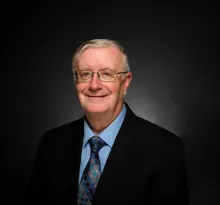
Jorge and his wife Kathy serve the Dallas (TX) and Lawton (OK) congregations. Jorge was born in Portuguese East Africa, now Mozambique, and also lived and served the Church in South Africa. He is also responsible for God’s Work in the Portuguese language, and has been visiting Portugal, Brazil and Angola at least once a year. Kathy was born in Pennsylvania and also served for a number of years in South Africa. They are the proud parents of five children, with 12 grandchildren and live in Allen, north of Dallas (TX).
