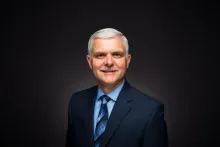

Roy Holladay
Let’s be inspired now to prepare to be teachers in the Kingdom of God by examining four teaching styles Jesus used to reveal God’s truth to man during His time on earth. To prepare for our future teaching roles, we should draw inspiration from scripture as the Bible reveals these styles to us to emulate and apply now. May all our examples glorify God!
This sermon was given at the Lake Texoma, Texas 2017 Feast site.
This transcript was generated by AI and may contain errors. It is provided to assist those who may not be able to listen to the message.
You look like a fine, cheerful group of people. Wasn't that music beautiful? Thank you so much, Cora. That was absolutely... well, it was inspiring. It very much was. I wanted to march up here, but I had to wait. I lost the moment. It's nice to be here. I'm actually here in three of my favorite places all at the same time. I got the flowers from a beautiful flower garden. I've enjoyed the flowers all week. I'm also in a toy store, my second favorite place of mine. There are no children running around in my feet. That's how it goes in toy stores sometimes. And, of course, I'm here with all of you, Feast of Tabernacles. It's a very beautiful day, seventh day. Heaven, we had a wonderful feast here. It's just been very, very beautiful. And that clapping is to God our Father and to Son Jesus Christ. It's nice to see God working through all of you. I've had a chance to watch things from aside and be a part of things. It's been wonderful working with you. It's so nice to work with people who are all trying very hard to let Christ lead them and to put away self and work in harmony. And it's certainly something we all can look forward to in God's kingdom. Well, we've heard much during this past week about our future roles as kings and priests in the kingdom of God, of how we'll be teachers of God's ways to those living in the millennium. Today, we will focus more closely on teaching God's way now and in the millennium. I've entitled my sermon, Teaching God's Way. Teaching God's Way. Or, I guess you could say, teaching God's Way. Two different ways of looking at that. Now, it is a fact that God does not want teachers who have only heard His Word or who have only knowledge of His way of life.
Millions of people read the Bible every day across this planet. They've been doing it for centuries. But they don't apply it in their everyday lives. And that approach to God's Word frankly won't cut it with God. God wants teachers who have practical hands-on experience in living life His way and according to His law of love. God does not want teachers who know His Word but fail to live it. Let's be turning back to the book of James. God does not want teachers who know His Word but fail to live it. And that's why God, I believe, inspired James to write several scriptures. James 1, 22, the first one.
James 1, verse 22. And it should be familiar to all of us.
But be doers of the Word, not hearers only, deceiving yourselves. And then there's also James 4, verse 17. James 4, 17.
Therefore, to him who knows to do good and does not do good, to him it is sin. To him it is sin. Now, James did not invent these statements on his own. These are not the words of James, per se. They echo what Jesus Christ Himself taught. Let's notice in Matthew 7, 21. Matthew 7, 21, please.
Here Jesus was teaching His disciples, He said, Not everyone who says to me, Lord, Lord, shall enter the kingdom of heaven, but he who does the will of my Father in heaven. Also, let's turn to Luke 11, 28. Luke 11, 28.
Another time when Christ was teaching. Luke 11, 28. But He said, More than that, blessed are those who hear the word of God and keep it.
Blessed are those who hear the word of God and keep it. When we put these together, what we should never forget is that God holds us accountable for what we do with what we know. We have to know the word, and we have to do the word. The Apostle Paul also taught Christ lessons, or these two lessons, same lesson when he said Romans 2.13. Let's turn back there. Romans 2.13. To impress upon us our responsibility before God, the Father, and Jesus Christ.
Romans 2.13. For not the hearers of the law are just in the sight of God, but the doers of the law will be justified. Over and over again, consistent message, we have to know, and we have to do God's law. Clearly, brethren, if we desire to teach as kings and priests in the kingdom of God, then we must know God's law, His word, and we absolutely must be doers of His word. You see, society is full of all sorts of know-it-alls.
I've met many people through the years, and you have too. I've met many people that can quote more scripture than me, and that have studied Bibles more closely than I probably have. But without God's Spirit dwelling in them, without the help of God's Spirit, they're missing out something very important. That God, through His Spirit in us and with us, has opened to us through revelation. And so God does hold us more accountable than those whom He has not called at this time.
God wants teachers that know it both, doing in the knowing, and we must be actively striving to practice God's way of life. Now, we can't wait for the kingdom. We won't get there if we're not practicing it now. And one final point here. If we wonder why God requires His teachers to be doers of His word, and we need one more reason than just the old, because God says so, reason, right?
We need more than, well, God said it, do it, well, why else? My response to you would be to do this. How many teachers do we have in this room? Anyone that has ever taught or is teaching? I'll raise my hand. I've got quite a few here. All right? Perhaps you can go up to one of those teachers later on and ask them, or frankly, I guess I can tell you now.
Go talk to some teachers, and they'll tell you that if you want to know any subject very well, what do you do? You teach it. In teaching, you learn it so much better than the students do. Now, it's got to be a reason God wants us to be teachers now. We will learn it so much better now. So you want to know God's way really well? Teach it. It benefits others and will certainly benefit us now. And that, frankly, is the way God's way of love works.
In the giving, we receive so much more in return. It's a beautiful thing God's love. Now, it's also a fact, and research and education supports this, that the most effective teachers love their subject. They love students, but they really love their subject, too. They love what they teach. Not only do they know the subject well and practice what they teach, they are enthusiastic about their subject. And it's their enthusiasm so often that it inspires their students, that it inspires them who they are teaching.
Those who teach God's way express love and enthusiasm for God's Word. Let's be turning back to Psalm 119. There's a very enthusiastic person we hear a lot, hear his voice a lot of in the book of Psalms. Psalm 119, verses 97 through 102. I'd like for us to consider King David.
David was a king, of course. David was also a teacher. And although he died all around 3,000 years ago, David's Psalms still teach us, and they still inspire us with this expression of love for God and for God's law. Let's read a few verses here. Psalm 119, verses 97 through 102. David writes, Oh, how I love your law. It is my meditation all the day. You, through your commandments, make me wiser than my enemies, for they, your commandments, are ever with me.
I have more understanding than all my teachers, for your testimonies are my meditation. And I understand more than the ancients, because I keep your precepts. I have restrained my feet from every evil way, that I may keep your word. I have not departed from your judgments, for you yourself, you yourself, have taught me. That's a song he's singing to God. And as we read this, brethren, we're singing with him.
We're singing the same words to God 3,000 years later. The words David wrote. But can you see, can you feel David's excitement and enthusiasm here? For his subject, his love of God and love of God's law. David knew that God himself was his teacher. Can we have that same enthusiasm for God's law, for what we're learning? Are we also excited about having God as our teacher? Now let's turn to Psalm 71. Let's turn back a few pages to Psalm 71, verses 17-24.
In Psalm 71, 17-24, we find David, it seems he may have written this some years later, we find David writing this Psalm as an old man. And yet he's still praising God. Psalm 71, verse 17, O God, you have taught me from my youth, and to this day I declare your wondrous works. Now, also, when I am old and gray-headed, O God, do not forsake me. Until I declare your strength to this generation, your power to everyone who is to come. Also, your righteousness, O God, is very high. You who have done great things, O God, who is like you. He's still singing praises to God, even as a gray-headed man in old age. And did you notice how in verse 18 he asked God for more time? He says he wants more time to declare or to teach about God's power to his own generation, perhaps to his children and grandchildren, maybe great-grandchildren, but also to people, he says, to those yet to come. As a teacher, we want to keep teaching. We want everyone to know what we know of the subject we love so much. God obviously granted David's request. I say that because we have before us David's finished psalm. He was able to finish this psalm by which he did teach then and by which he teaches many generations, even this generation, before me right now in this room. Talk about God's awesome power.
But there's more. Look here how David ended the psalm with a prophetic reference to the kingdom of God. We can recognize this when we pay attention to the verbs. The future tense verb, shall. Verse 20. You who have shown me great and severe troubles, you shall revive me. You shall revive me again and bring me up from the depths of the earth. You shall increase my greatness and comfort me in every side. He's talking about a future event yet. And also with the Lord I will praise you and your faithfulness, O my God. To you I will sing with the harp, O Holy One of Israel. My lips shall greatly rejoice when I sing to you.
In my soul which you have redeemed, my tongue shall also talk of your righteousness all the day long, for they are confounded, his enemies, for they are brought to shame who seek my hurt. It's amazing when you pay close attention to the words that David understood. God had revealed to David that in the future God would redeem him from sin and death and resurrect him.
David was a prophet. He was also a prophet. David truly had great reason to rejoice, just as we do. We have the very same reason as David to be rejoicing. Can we see why David so loved God? Why he yearned to teach others about God? And so God preserved David's poetry by which he still, again, I point out to you, by which David still teaches others today. He's still teaching. He's still teaching, even though David is yet in the grave. But we are not King David, and there are a few of us here who are poets, but not all of us can write beautiful songs like David. Yet God has revealed to us the beauty and wisdom of his law, and God has called us to his way of life.
You see, we have every reason to love God. We have every reason to desire to teach others about him. And we should be praying to God to instill within our hearts and minds that fervency, in our own way, that he can help us to teach others about his way of life, and those ways that we can be comfortable with and ways we can learn to improve in. In fact, teaching God's way of life is what God expects us to be doing.
Not just in the Kingdom, in the Millennium, but now. Let's turn to Matthew 28. God expects us to be teaching his way of life now. Matthew 28, verses 19-20. You see, that's the commission Jesus Christ gave to his church collectively, and it's the commission he's given to us individually. Matthew 28, verses 19-20. Matthew 28, 19-20. Jesus said this. Go therefore and make disciples of all nations, disciples or students, baptizing them in the name of the Father and of the Son and of the Holy Spirit, teaching them to observe all things that I have commanded you, and lo, I am with you always, even to the end of the age.
We all have a part in that commission. We all have that part in supporting God's work, in supporting the ministry, in being lights and examples. We've heard that mentioned several times today, and you're going to hear me talk more about that here in a little bit. So, brethren, we do have a part to play in teaching the way of God. But how? How do we teach? How can we teach? Well, we follow the example of Jesus Christ. We follow Jesus Christ. Jesus Christ is our King. He is our High Priest. He is our Great Teacher. We are His students. He has provided His example in Scripture for us to follow.
And in the time remaining, I'd like to show you together, we're going to look at four teaching styles that Jesus Christ practiced. There are four teaching styles, at least, we can look at today, that He practiced. And what we'll find is that Jesus Christ practiced all four different styles at different times, depending on the situation, on what was most effective to reaching that person's mind. He did not limit Himself to just one style or approach of teaching.
And that's okay for us to follow, because that means we can find an approach, likewise, that works for us, according to the time and season, you might say. So, there are four teaching styles. Let me give you style number one. Style number one, and I'm going to use some references to teacher education research. I've been able to do a little bit of that in the past, and I'm going to share with you some of what I've been learning and what I see happening here in Scripture, too. The first teaching style is labeled teacher as authority.
Teacher as authority. Now, this style is traditionally what we think of when we talk about teachers in teaching. That is, there's a teacher standing at the front of the room lecturing to students. And that teaching style is typically how we conduct services in the United Church of God. And, in fact, that's what I'm doing to you right now. I'm practicing teacher as authority. But to help you remember this style, it's also known as the sage on the stage.
I don't quite fill the bill. A sage, if you don't know, a sage is a very wise person, someone who has experienced and has learned a lot of things. He's called a sage. And so what I'm doing right now, and what we do every Sabbath at services and other times, is called teacher as authority, sage on the stage. Some of the characteristics of this traditional style of teaching is that the teacher acts as the expert or the formal authority in primarily lectures or lead-class discussion. According to a leading psychologist who has studied the process of learning, his name is Anthony Groscha, G-R-A-S-H-A, he writes that the teacher as authority possesses knowledge and expertise that students need. Students need this knowledge and expertise. And so the teacher gives that because the teacher is concerned with transmitting information and ensuring that his students or her students are well prepared. Well, when we look to Scripture, we find that Jesus made effective use of the sage on the stage style. Jesus was the ultimate authority of God's word and way. In the Gospels, of course, we find a number of examples of Jesus practicing this teaching style. On hillsides around Jerusalem and Galilee and elsewhere, he taught hundreds and thousands of people at a time God's word, teaching them about the gospel, the kingdom of God. And sometimes, in order to reach a larger audience, Jesus had to be resourceful. He had to think on his feet. And that's what good teachers do as well. During what is called the Sermon on the Mount, for example, many scholars suspect that Jesus used the mountain or the large hill, used its natural contour like an amphitheater, so that he was able to carry his voices over the masses of people. We see something similar, if you turn with me, to Mark 4, verses 1-2. In Mark 4, verses 1-2, Jesus sometimes had, again, to be resourceful. In this case, he changed the stage, you might say. His stage became a boat just offshore. I thought it was pretty creative. Mark 4, verses 1-2, You know how your voice can carry out over water. It was a very brilliant approach to teaching so many people at once. Peter, John, Stephen, Paul, they would follow Jesus Christ's example. They would lecture his sages to large crowds, whoever God's spirit and Christ himself led them to teach. This style of teaching was typical during that age, and quite effective. This style remains predominant means for God's ministers today to teach his word. One might say that through technology and internet, the sage on the stage style remains beneficial and effective in carrying the teacher's words across the room, and beyond these walls, and far beyond any hillside or lake we can imagine, it goes across the world in a nanosecond. Maybe that's a little fast, but it goes pretty fast over the internet.
But because words carry, and because Sage on the stage teaches authority, those who practice the teacher as authority style must be very mindful of the authority God has given to them. And to the words, he inspires them to speak. Let's notice the words of Ephesians 4, verses 11-12. Ephesians 4, verses 11-12. It's a reminder here of where this authority comes from, particularly to God's chosen ministers. Ephesians 4, verses 11-12. Paul here is stating that God himself appoints men into positions of authority in the church. And that includes that position as teacher. Let's read here. Ephesians 4, 11. And he himself gave some to be apostles, some prophets, some evangelists, some pastors and teachers. Why? Well, for the equipping of the saints, for the work of ministry, for the edifying of the body of Christ. We see a similar scripture over in 1 Corinthians 12, verse 28. 1 Corinthians 12, verse 28.
1 Corinthians 12, 28. We read, And God has appointed these in the church, first apostles, second prophets, third teachers. After that, miracles and gifts of healings help the ministrations, varieties of tongues. God's ministry, as well as people in general, must be mindful of the words they use. No matter what teaching style is used, teachers can cause harm with the words they use. If you speak, sir, even if you've mis-signed something, you can cause confusion and consternation by what words we use or fail to use correctly. And of course, that's especially true for those who have been given authority to teach God's word. With greater authority comes greater accountability, and God holds us accountable. That seems to be one reason for James's admonition back in James 3, verses 1-2. Let's read it together. It's very important for the need to guard our tongues. Here we have James's admonition about being a teacher, James 3, verses 1-2. James wrote, My brethren, let not many of you become teachers, knowing that we shall receive a stricter judgment. For we all stumble in many things. If anyone does not stumble in word, he is a perfect man, able to bridle the whole body. Well, very few of us are perfect right now. We are a work in progress and in process.
This warns all of us who teach to be careful with the words we use. But yet, there seems to be something a little bit deeper behind the main thrust of James's warning here. The warning seems to be specifically directed toward those who would take the office and authority of teacher in the church upon themselves. It seems there are people back in James's day that were appointing themselves to be authorities of God's word. Perhaps they did this to gain a personal following. That is human nature. That can happen. So, Scripture shows us that the vital role of teachers in the ministry and the importance of the teacher's authority of teaching. These are very important approaches to teaching God's word. But God's church is better served by both the expertise in God's word and the formal authority given by Christ to those whom He has appointed to those positions of authority. We do not take these positions upon ourselves as pastors, elders in the church. We pray to God. We believe God puts us in these positions. Trust me. This is nothing I would choose for myself. It is an honor and humbling thing to teach God's word to people. We in the church believe this is something God does through His Holy Spirit and through prayer. It is not something we take upon ourselves. That is the gist, it seems, of James' warning. So within God's church, the teacher as an office of authority is not one we take upon ourselves. However, more broadly speaking, all of us are teachers, and all of us are expected to be teachers in a more generic sense. So now let's turn to the three other ways that all of us can be practicing teaching. The second style is teacher as facilitator.
Teacher as facilitator. And if that word is tripping you up, spelling-wise, it's also known as the guide by the side. The guide by the side. The teacher as facilitator, again according to Anthony Grascha, emphasizes the personal nature of teacher-student interactions. The teacher guides and directs students by asking questions, exploring options, suggesting alternatives, and encouraging them, the student, to make informed choices. Again, this is called the guide by the side. The Bible records numerous instances when Jesus Christ acted as a facilitator.
He worked closely with individuals in order to guide them. He'd lead them with questions. He'd work with them. He just wouldn't tell them the answer. He'd let them come to it little by little on their own. Let's look at a real quick example of this. This is John 3, John 3, verses 2-10. I'm just going to read a little bit of this episode. This is when Jesus had a late-night discussion with Nicodemus.
Jesus' discussion with Nicodemus is a pretty good example of this teaching style. John 3, verse 2. Notice how Jesus welcomed Nicodemus' questions and then led him to greater understanding. It goes on a little further than what I'm going to take time to read today with you. Verse 2 of John 3. This man, Nicodemus, came to Jesus by night and said to him, Rabbi, we know that you are a teacher and come from God, for no one can do these signs that you do unless God is with him.
And Jesus answered and said to him, Well, most assuredly I say to you, unless one is born again, he cannot see the kingdom of God. And Nicodemus said to him these great questions. How can a man be born when he is old? Can a man enter a second time into his mother's womb and be born? It's very confusing. Nicodemus himself was a great teacher of God's word, or so he thought, I'm sure at this point.
And Jesus answered most assuredly, I say to you, unless one is born of water and the Spirit, he cannot enter the kingdom of God. That which is born of the flesh is flesh, and that which is born of the Spirit is spirit. And so Nicodemus again was a member of the Sanhedrin. And so this meeting at night was very secretive for personal reasons. Nicodemus didn't want it to be known. However, the fruit of this meeting bore, and probably other meetings like it, is evident.
You don't need to turn there, but you can jot this down. In John 7.50, we find that Nicodemus later becomes the disciple of Jesus Christ. And I'm sure he heard Christ's lecture as a sage, but I suspect this guide by the side approach is very personal and very moving and very instructive for Nicodemus. It was an effective way of teaching. Another especially good example of the teacher as facilitator is that of, by one of Christ's disciples, Philip. The story of Philip and the Ethiopian, if you turn to Acts 8, verses 30-31.
Here, Philip has been sent by an angel of the Lord to intercept an Ethiopian, traveling along in his chariot. I think you may remember the story. And then verses 30-31, we get to the gist of the story. So Philip ran to him and heard him reading the prophet Isaiah. And he said, do you understand what you are reading? And the Ethiopian said, how can I, and I love this, unless someone guides me. He needs a guide by the side. He can't get it by himself. And he asked Philip to come up and sit with him.
And so then we read that Philip rode along with the Ethiopian for quite a distance. And then in verse 38, Philip opened his mouth, and beginning at this scripture, he preached Jesus to him. He taught him one-on-one as a guide by the side. He instructed and guided the Ethiopian in a very direct and personal way. And his instruction led the Ethiopian to believe that Jesus Christ is the Son of God.
And Philip baptized him. It's a very effective teaching style. Now, these examples remind us those whom God calls will need individual and personal instruction in God's Word. Being a sage on stage will not be enough for people to learn more individually about God in their lives. Facilitators provide much-needed one-on-one guidance in helping others build their own personal relationship with our God. The facilitator approaches are especially beneficial to families.
Our children will not learn God's way by only listening to a sage on the stage. Wouldn't that be nice if they could? But they need a guide by the side. They're not going to learn God's way by reading the Bible themselves. Some of them are too young to read it.
Deuteronomy 6, verse 5-7. Deuteronomy 6, verse 5-7. And I think this is well known. Deuteronomy 6, verse 5-7. You shall love the Lord your God with all your heart, with all your soul, and with all your strength. In these words which I command you today shall be in your heart. You shall teach them diligently to your children. You shall talk of them when you sit in your house, when you walk by the way, when you lie down, and when you rise up. Isn't that a beautiful opportunity to speak guides on the sides to our children? Those intimate moments when it's just mom or dad with the kids, or grandma or grandpa, or... It's just a beautiful time to talk about God, those precious moments. God's words command that parents be facilitators, that they be their children's guides by the sides, and teach them God's word and way of life. Starting from day one. Yes, day one. I know they're just going to burp and spit a little bit, but get them used to your voice. Get them talking about God to them. We never know what's going in. So our children need much of our guidance, and I think we know this, but we need to do it. They need our guidance to help them stick to God's narrow path. And it's especially critical, my own experience working with young people, they especially need that help during the ages of 10 to 20. Yes, to age 20, and probably beyond. I know they're going to tell you, I'm grown. That's how they say it down here. I'm grown. You don't need to tell me what to do. But you know what? They're probably right. They don't need us to tell them what to do. They don't need a lecture from a stage on a stage. Our children need a loving guide by the side. They need a loving guide by the side. And that's something I would like for all of us to think about in the months and years ahead. Style number three. Style number three is teacher as delegator. Teacher as delegator. According to Grashe again, the teacher's delegator style is concerned with developing students' capacity to function autonomously. That means independently. Students work independently in projects or as part of a self-directed teams, and the teacher is available at the request of students as a resource person. The teacher acts as an observer and counselor, so the teacher is stepping further away from the students, you might say, letting the students learn to walk a little bit on their own. I think of helping my kids learn to ride a bike. They still think that your hand is on their back, and you're squatted on the ground panting while they're 15-20 feet further down the road, right? They don't know you're not there. You've pushed them off, and you're behind watching them from a distance. A short way of seeing this is what I call a counselor from behind. This is the counselor from behind approach.
In Luke 10, Jesus practiced the teacher's delegator style. Luke 10. Let's look at that briefly. In Luke 10, starting in verse 1, Jesus is pretty modern for his time. He's doing all these things teachers are just now discovering they need to do. Christ is doing it. Well, probably since Garden of Eden. In Luke 10, verse 1, After these things, the Lord appointed seventy others, also seventy disciples, and sent them two by two before his face into every city and place where he himself was about to go. So he has seventy disciples, and he's breaking them up into groups. He's going to give them group homework. I know our kids love group work. Not so much. I know. You see, many classroom teachers do this sort of approach. They divide students and their class into groups to complete a group project. They do teamwork. They do all these fancy things to help them learn a little bit on their own about the subject. Well, Jesus did something similar in ordering his disciples into pairs. Jesus also gave them clear directions, and he even told them what to say as they moved from place to place. Notice here in verse 4 through 9 of Luke 10, he told them, Gather neither money bag, knapsack, nor sandals. Greet no one along the way, don't dilly-dally along the way. But whatever house you enter, first say peace to this house, and if a son of peace is there, your peace will rest on it. And if not, your peace will return to you. And remain in the same house, eating and drinking such things as they give, for the laborer is worthy of his wages. But do not go from house to house. Whatever city you enter, and they receive you, each such things as are set before you, and heal the sick there, and say to them, The kingdom of God has come near to you. And now in verse 16, Jesus said to them, He who hears you hears me. He who rejects you rejects me. And he who rejects me rejects him, the Father, who sent me. And so Jesus sent his disciples out ahead of him to heal the sick, to teach others what he had taught them. And in so doing, Jesus gave his disciples opportunities to develop teamwork. Jesus knew they could do this, but they didn't know they could do this. Jesus was giving them opportunities to build self-confidence in teaching what he had taught them. He knew they could do that. He wanted them to know that they could do this. Of course, they're not doing it alone. God was working with them. It gave them opportunities to develop their teaching skills, their people skills, learning how to build rapport with individuals. And he also knew, in teaching his way, first things I talked about in my sermon, in teaching God's way to other people, what were the disciples going to learn? They were going to learn God's way so much better because they're teaching it. It's no longer a passive activity. Teaching becomes active. That's part of what we need to be gaining from this example. He wanted them also to learn, to accept, and enjoy the challenge and the weight of a responsibility that comes with teaching the way of God to others, of teaching God's truth. It's a serious thing, yes, but it's also a very wonderful thing when you're explaining God's way to other people. God wants us to experience that, too. You see, notice verse 17. Notice how excited they are at their success. When they come back, look what they achieved. Verse 17, Then the seventy returned with joy, saying, Even the demons are subject to us in your name. It worked. It came back jubilant. They were really psyched up. They were excited about their experience. That would have been an exhilarating experience, to say the least. Jesus gave them necessary hands-on experience to prepare them for their future roles in building His church.
By delegating and being the counselor from behind them, Jesus gave His disciples a most precious learning experience. Kind of reminds me of what we read earlier. I'm going to turn to it again in Isaiah 30. I always think of Isaiah 30. Let me turn to it first. Isaiah 30, verse 20-21, was mentioned a couple of times. Break in the middle of Isaiah 30, verse 20.
It helps if I get to the right chapter. There it is. Yet your teachers will not be moved into a corner anymore. But your eyes shall see your teachers. Your ears shall hear a word behind you saying, This is the way walk in it whenever you turn to the right hand or whenever you turn to the left hand. You notice the teachers aren't leading them. The teachers aren't lecturing them. The teachers in the Scripture aren't guiding them by the side. Where are the teachers? Behind them. It makes me wonder, are the teachers going to be acting more like those counselors from behind? They're letting them walk. We're going to be helping people walk on their own. We're going to be watching them like a parent does a child to see if they're going to go the right way. No, no, no. Go back. Go this way. I think that may be part of it. I don't think it's just going to be a sudden voice from behind to make people jump up and get scared. I think it's going to be much more of a learning moment at that point. Delegating has been a long practice, a long approach in our congregations, too. Through the years, I've seen a lot of young people. There used to be kids crawling on the floor and running through the hall like they're not supposed to be. As they grow, we've given them opportunities to serve. In our congregation in East Texas, these kids that used to run around, they're helping in the sound booth now. They're helping in cleaning the building. They're ushering. They're helping a stage crew. That's what we need to be teaching our young people in the congregations. Some of us are getting older, and we need their help. What a beautiful way to help our children know that this is not Mom and Dad's church. This is your church. God wants you here, young people. He wants you to love Him and His law. He wants you to have the thrill of joy of learning to serve and practicing His way of life, just like you see so many all the time doing. You can be an enlightened example to the little kids running around you. It's a wonderful thing, the process of delegating. Of course, when we delegate, we have to understand it's going to be messy at times. It's going to be messy. There's going to be mistakes made, like someone forgot to put water in the lectern.
Oh, you did. Good. Thank you. Thank you, Andy. No, you were fine. But, you know, when we learn there's going to be mistakes, you've got to allow people to make mistakes.
God lets us make mistakes all the time. And mistakes can be fixed. They can be fixed. So we've got to let our young people do that, both in our congregations and our families. Give kids more responsibilities. This world is a scary place, and it's so easy to be a helicopter parent. I've had to fight that myself. You want to hover. You want to be right at their feet all the time. Okay, no, no, no. Be careful. What time you've got to get home? Okay, you know, all this stuff. Well, I still do it in my head, but I'm learning to back off. I'm learning to be more of the counselor from behind. And it's not easy. But God has His eyes on our children, too. Let's talk about the fourth style, teacher as personal model. Style number four is teacher as personal model. The teacher who practices the teacher as personal model believes in teaching by personal example. Okay? That person establishes a prototype, Gramsci says, for how to think and how to be a person. How to behave. Now, this strategy is the strategy I've heard. Probably the first day I started attending services. Set a good example. Be a good example.
It's what we hear so often in the church. It's because of what we see so often being done in Scripture. If you want another word, another phrase for this, I call it the model to be followed. The model to be followed.
Jesus Christ modeled how to live without sin during His entire life. And the Gospel's record of His life offers incredible, many rich examples for us to follow.
In fact, let's turn to Matthew 16, 24. Just to look at a few. Matthew 16, 24. Matthew 16, 24. Among the first things Jesus taught those whom the Father called, He taught them a very simple phrase. Matthew 16, 24. And then Jesus said to His disciples, If anyone desires to come after Me, let him deny himself and take up his cross and follow Me. Follow Me.
And Jesus sets the ultimate example for us to follow. The ultimate example of selflessness and humility, of love and obedience, of compassion, of service, and so much more. I can't list them all. He is our awesome Savior.
Yet among Jesus Christ's many examples, most memorable is His example in teaching of selfless love and service. On that night, He was arrested. Let's look at John 13. John 13. And I hope we think of this example often in our daily walk in life when it gets rough and we just don't... We get cranky and retired trying to be a good example and we just want to cave into our carnal nature. I hope we can remember this example. This is what I try to cling to. John 13, verses 13-15. After washing the feet of His students, His disciples, Jesus instructed them, saying, You call me Teacher and Lord, and you say well, for so I am. If I then your Lord and Teacher have washed your feet, you also ought to wash one another's feet. For I have given you an example that you should do as I have done to you. That's our example. Example of service and humility. Now we know, don't we? We know in Satan's twisted world, being a servant doesn't count for much. In fact, people just kind of walk on you. You open a door for people and they just shove on through without a thank you. You let somebody... You be nice. Let somebody get ahead of you in line and five other people will jump in. Okay, I'm being very generous today. It's good. It's good. But Christ's example of washing his students feet reminds us that he is the greatest of all teachers. He truly is. His example teaches us that God's way is the way of selfless love. And sometimes it means we get walked on a little bit from time to time. His example is the ultimate example we are to follow. By following Christ's example, you see, we also set an example, don't we? By following Christ's example, we become examples to others who may not really know what they're looking at or understand why we're doing what we're doing, but they're going to notice. God willing, they will notice.
The example is very important. It's repeated over and over again. Look at 1 Corinthians 11. You're just going to look a few scriptures. Boom, boom, boom here. 1 Corinthians 11. Paul wrote, 1 Corinthians 11, imitate me, Paul said, just as I also imitate Christ.
That's what we should be doing, imitating. Ephesians 5, verse 1-2. Ephesians 5, verse 1-2. Again, Paul writes, Yeah. We're supposed to be sacrificing ourselves, even as Christ sacrificed himself for us. In Philippians 2, verse 4-5.
Let each of you look out not only for his own interest, but also for the interests of others. Let this mind be in you, which was also in Christ Jesus. We have to be putting on Christ's mindset. Getting rid of the junk and putting on the mindset of the new man in us, Jesus Christ.
We must also be ever mindful of our job description. That's what I call it. Look at Matthew 5, verse 14-16. Look at this job description that Christ assigns to his followers. He did this in the Sermon on the Mount, apparently early in his ministry of teaching. In the Sermon on the Mount, Matthew 5, 14-16, Christ said, here's our job description.
You are the light of the world. The city that is set on a hill cannot be hidden. Nor do they light a lamp, nor do they light a lamp and put it under a basket, but on a lamp stand. He gives light to all who are in the house. Let your light so shine before men that they may see your good works, and glorify your Father in Heaven. We are called to do good works of God's way of life and to set a model to be followed through the way we live out our lives in willing, surrender, and obedience to God. But we don't set an example to glorify ourselves. We don't have to fight setting an example and feeling puffed up about, oh, what a good boy-girl I am. That's good, but you better not think on that too much, because that's pride creeping in. Oh, we've got to be careful of pride. We've got to be careful of pride. We set the example so that people will glorify God if they might. They may not notice it. What we do should point people to our Father, even as everything Jesus Christ did pointed people to His Father, our Father. That's what His example is all about. An example is the most powerful means of teaching. So we have learned that Christ's example consistently teaches us that Godly teachers are servants in living examples and doers of God's way. Whether we teach or learn from a sage on the stage, a guide on the side, a counselor from behind, or a model to be followed, we need, brethren, we need to be practicing what Jesus Christ is teaching us through God's Holy Spirit combined with His Holy Scripture. It's a powerful thing. God's Holy Spirit in His words. And we do that in helping one another, learning from others, and helping others to learn. And we can learn that from men and women, and even from our children. Our children can be beautiful examples of godliness. And so today on the seventh day of the Feast of Tabernacles, we yet live in the world, yet we are not of the world. God teaches us to be lights now in the darkness of this world. And in time, people may finally recognize our example and glorify God. That's what we hope. And if they don't do that in this age, well, then maybe they'll do it in the age to come. In their resurrection, when those people will see us again, when they see us serving under Christ as kings and priests, and who knows? Perhaps then, in that future time, after we dim down our glorious glow a little bit so they can see us, and maybe they'll recognize us. And they'll ask us, is this why you never played sports on Friday night?
Is this why you never put up Christmas lights?
Is this why people spat on you and cursed your family?
Is this why they locked you up in prison? And we'll say, yes, isn't our Father wonderful?
And they'll think they've gone to heaven. But we'll say, no, it's Earth. And we'll explain to them what happened. And we'll tell them all about our Father's love, and about the kingdom, the kingdom, and about Jesus Christ, the King.
And we'll tell them of salvation, of how to avoid their second death, and why we glow so much. And they'll beg, show us how to walk God's way. And we will teach them. And they will sing and laugh and praise God. And I'm convinced we will too. And no one will cry anymore. So, brethren, may we all have perfectly teachable hearts, and may we all be teachers in the kingdom of God.
Let’s be inspired now to prepare to be teachers in the Kingdom of God by examining four teaching styles Jesus used to reveal God’s truth to man during His time on earth. To prepare for our future teaching roles, we should draw inspiration from scripture as the Bible reveals these styles to us to emulate and apply now. May all our examples glorify God!
