
Robin S Webber
This transcript was generated by AI and may contain errors. It is provided to assist those who may not be able to listen to the message.
Long ago, in far away, a man was shipwrecked on an island, where so goes the novel. For those of us that will remember having read Robinson Crusoe. There are a lot of valuable lessons within that novel, and to begin this message, I would like to share one of them. When Robinson Crusoe was wrecked on a lonely island, one of the first things that he did is he went down to the beach, and he began drawing on the sand. And he drew up two columns, one of which he called the evil, and the other of which he called the good.
He was cast on a desolate island, but he was still alive. And so, in one sense, there was a spot for the evil, and yet, on the other hand, a spot for the good. He was still alive, and he wasn't drowned.
He was apart from human society. That was not good, and in one sense, that was evil. But at the same time, he wasn't starving, and that was good. He didn't have any clothes. Nobody likes not having any clothes. He put that on the evil side. But on the good side, he put, I'm in a temperate climate, and I won't need a lot of clothing. I'll be all right. He wasn't with much defense, didn't have anything to really defend himself. That was not good. Yet, at the same time, he recognized that there was nothing to defend himself against, because all the animals and the birds on the island were basically tame.
He had no one to speak to. That wasn't any fun, and that wasn't good. He might put that on the evil side. But God had sent and brought so much in that ship that was just offshore that he didn't really need anybody to speak to. Everything had been provided for him. So, as he went down and looked at the column of good and looked at the column of evil, our friend, Robinson Crusoe, finally came to a conclusion, and that is simply this, that there was no condition in the world so miserable that he couldn't find something for which to be grateful.
But before he began going down those columns, our friend Robinson Crusoe had to do something that each and every one of us have to do as well. Otherwise, we'll just get stuck on the one column. He had to think before he could think. He had to think before he could think. It's very interesting that back in the middle of the 17th century, during the Quamwellian era, in England, many of the churches, often in the stone above the altar, had an inscription.
It was simply this, think and thank. Now, that equation seems so very, very simple. So why is it that so often we are not thankful or thankful enough? You and I realize that the crush of life, the pressures of life, the complexity of life in the 21st century can cause us not to think. It doesn't give us time to think. And then, when we don't think, neither can we be thankful. Have you ever noticed that it's a little bit like Robinson Crusoe until everything is stripped away from you? It's very hard to think about what you need to be thankful for, because normally we're thinking about everything else other than that.
There was another gentleman, other than the fictional character, Robinson Crusoe, who did a lot of thinking and did a lot of thinking. Join me if you would. Let's open up our Bibles and come with me, if you would, to Colossians. And let's look at Colossians and pick up the chapter here, Colossians 3, and beginning in verse 12. And we're going to read the writings of a gentleman that had everything taken away from him.
A little bit like Robinson Crusoe, he had been stripped bare. The gentleman's name was the Apostle Paul. We need to remember that the book of Colossians is called a prison epistle, because Paul was in prison. He had given up everything for his testimony concerning Jesus Christ. And there he was, in a sense, lay bare. But I think we'll find that, really, he had the right idea and was indeed very full.
In chapter 3 and verse 12, therefore, as the elect of God, holy and beloved, it says to put on... Oh, that means then it's not natural. It's not something that comes in the box. We have to put on mercy, kindness, humility, makeness, and longsuffering.
Bearing with one another, forgiving one another, and if anyone has a complaint against another, even as Christ forgave you, so you must also do. But above all of these things, put on love, which is the bond of perfection. Notice then, verse 15, and let the peace of God rule in your hearts, to which also you were called in one body, and be thankful.
Something that we find in this one Scripture is that thankfulness and peace go hand in hand. Thankfulness and peace go hand in hand. They are not strangers. They come together, and they produce something. Let the word of Christ well in you, verse 16, richly in all wisdom, teaching and admonishing one another, in psalms and hymns and spiritual songs, singing with grace in your hearts to the Lord. And whatever you do, in word or deed, do all in the name of the Lord Jesus, giving thanks to God the Father through Him. Here was a jailbird for Christ.
The Apostle Paul stripped of everything, and yet there was peace at the center. Not on the outer edges. Not something he had to go reaching for, but it was working itself from the inside out. Why is that, friends? Because I believe the Apostle Paul was a thankful individual, and he came to recognize that the peace that he needed to see him through came from a thankful heart.
And that's what I'd like to lead you up to in this message today, is I'd like to speak about a thankful heart, what it takes to have a thankful heart. I want to say to explore the purpose and the power and the peace that comes with a thankful heart.
Now, here we are. Yes, we're on Thanksgiving weekend, and we've already eaten the turkey, had the dressing, enjoyed the gravy, had the pie, etc., etc. But being thankful should not be reserved to one day within the year. Now, perhaps at times, either as a child with a parent or a student with a teacher, or maybe in the course of hearing another message somewhere, perhaps to one degree or another at one time or another, we have in a sense been shamed into thankfulness.
Oh, Johnny, you're just not thankful. You're not. You should be. And so we kind of, in a sense, get shamed into thankfulness. Well, I'll try to find some if I can. The purpose of this message is not to shame us into thankfulness, because if you shame somebody into thankfulness, you're working from the outside in.
And that's not going to last more than a contrary moment. Rather, what I'd like to do this afternoon is plant a seed of thanksgiving in you. I think thanksgiving and a grateful heart go hand in hand, and they work from the inside out. And then when you are a thankful human being and when you are a grateful person, there is nothing that can touch it. No event. No person. Nothing can take the gratefulness that's in your heart because of what God has done for you.
And that's what I'd like to do this afternoon, is to plant a seed of thanksgiving. Why is that so important? What do we need to understand and what do we need to comprehend? And why am I bringing you this message this afternoon? Allow me to share this reality with you. Thankfulness leaves little room for discouragement. Thankfulness leaves little room for discouragement. One of the things that I do as a pastor is I talk to people that are discouraged and down.
And there are, yes, absolutely many, many reasons why as human beings we could be discouraged or we might be down. But I do realize that one of the antidotes to discouragement and one of the greatest of all is being a thankful individual. I'm not talking about being a Pollyanna. And we'll be talking about that a little bit more if you've read the novel, read the book, or seen the movie. And I'm not talking about being Pollyanna-ish about this. And we'll conclude with that thought strongly towards the end of this message. But why is it that thankfulness doesn't allow room for discouragement? To bring us to point.
Allow me for a moment, if I might, to share a story with you that I think will bring us to this point. There's an old legend about a man who found the barn where Satan kept all of the seeds of his arsenal. They were all in one place, and they were in this barn, and the man went in there, and he began to look at all the barrels of seeds. And what he recognized and came to understand is that there were more barrels of seeds of discouragement than any of the rest of the barrels all put together.
And somebody came over to the man and explained why that was. Because he says, discouragement is the easiest thing to grow, and it grows anywhere and anywhere, and doesn't take a lot of maintenance. Well, that really got the man, and he felt all the more discouraged about hearing that. And then he asked, well, is there any place that those seeds of discouragement don't grow? And guess who came into the room just at that moment? It was Satan. And he asked Satan directly that question, is there any place where these seeds of discouragement won't grow? And Satan at first was reluctant. He didn't want to give the answer, and then reluctantly and sadly he supplied the answer. He said that the one place that the seeds of discouragement cannot grow well is in the heart of a grateful individual. That's why it's so important for us to understand the power and the purpose and the pleasure of Thanksgiving. Thanksgiving does not always come at what we might consider humanly appropriate times. And again, this is what even shapes the holiday that you and I just observed on this past Thursday. As Mr. Henderson was mentioning the first message, we recognize that in our national heritage, we can go back to the saints, which we have come to know as the pilgrims, the forefathers, the old comers. There are many, many names for them. These individuals came from England and were headed for Virginia, but they landed in Massachusetts here in November or December of that year in the cold of winter. And to recognize how many family members died, multiple wives died, multiple children died. Out of those eight families of pilgrims with names like Alton and Brewster and others, only about half of them made it through that first year on Massachusetts Bay. So it kind of began to become a celebration. It's kind of a celebration in New England of celebrating that first year that the old comers made it through. Later on, George Washington would make a proclamation of it during the time of his presidential tenure. But it wasn't really until a very special time in America that it became a national holiday. And guess when that was? That was during the Civil War under the administration of Abraham Lincoln. To recognize that it was a time the greatest conflict of this nation had ever known. Hundreds of thousands of young men dying, brother firing upon brother, cousin firing upon cousin, and so far away from the dream of their great-grandfathers to think that their grandchildren and great-grandchildren would be shooting at one another. And the country divided. And yet it was at that time that Abraham Lincoln, in 1863, recognized, in a time of intensity, it was a time to think. It was a time for introspection. It was a time for investigation. And yes, perhaps it was a time for national repentance, understanding that the state that the nation was in, a divided nation, in what they needed to do. Allow me to read just for a moment a couple of thoughts about that time, which I think will be of interest to all of us.
It mentions here, it has seemed to me fit and proper that God should be solemnly and reverently and gratefully acknowledged, as with one heart and one voice, by the whole American people. He said, I do therefore invite my fellow citizens in every part of the United States, and also those that are at sea, and those who are sojourning, like the first message brought out, sojourning, in foreign lands to set apart and to observe the last Thursday of November as a day of thanksgiving, and praise to our beneficent Father who dwells in the heavens.
Why did he say that? Because a little bit further up, he had mentioned, we have become too self-sufficient to feel the necessity of redeeming and preserving grace, too proud to pray to the God that made us. The reason why I bring this out is for us to recognize that sometimes repentance and thanksgiving go hand in hand. It's not always a thought that we have in our natural psyche, in our natural pattern, but repentance, of understanding, perhaps, how far we've removed ourselves from God, is the first step towards thanksgiving, just as we saw with Abraham Lincoln. Such a demand on ourselves to think, to investigate, to explore, and to give thanks, also allows us to begin to develop a command of our situation.
Lincoln was a man who read God's Word. He was known for that. And he understood a basic principle that I'd like to share with you today, and it's simply this. A thankful people are a growing people. Allow me to share that with you again. A thankful people are a growing people. I could say that a thankful people, excuse me, a thankful family is a growing family. We could say that a thankful congregation is a growing congregation. A thankful nation is a growing nation. When we have people come through our doors here in the United Church of God, Redlands, when they sense and feel our thankfulness, that does something to people.
They know where they are. They know that they've come into something. They recognize that there's a well-being. I didn't say perfection. I didn't say lives without troubles. But there's a well-being and there's a strength. I think Abraham Lincoln understood that. Come with me if you would, perhaps thinking about Lincoln.
Maybe he had, as he thought of that proclamation, had considered some scriptures in the Bible regarding thanksgiving. Come with me if you would to 1 Chronicles. Over in 1 Chronicles we find something that is very interesting from a man who had done some things wrong.
And we find it over in 1 Chronicles 16. It was a man that had had to repent. In 1 Chronicles 16 it's not too far removed from the tragic incident of Azzah bringing in the Ark of the Covenant and that spilling that occurred in front of Jerusalem and the death of that man. And David, having not done things right to bring that about, but God gave him another opportunity to notice what happens in 1 Chronicles 16, verse 4.
Speaking of David, he appointed some of the Levites to minister before the Ark of the Lord, to commemorate, to thank, and to praise the Lord God of Israel. One of the job descriptions of the Levites was simply this, to give thanks. Now, I don't know where you work, but one of your job descriptions was simply, what do you do? What do you do on your job? I give thanks. That's my job. This was a job description. And there were men of Levi that at given times their job was simply to give God thanks.
Why is that? For an example to others, we find it build upon in chapter 23. Join me if you would in chapter 23. And let's begin in verse 28 to see how they did it. Because their duty was to help the sons of Aaron, those are the priests, in the service of the house of the Lord, in the courts, and in the chambers, in the purifying of all holy things, in the work of the service of the house of God, both with the showbread and the fine flour of the grain offering, with the unleavened cakes, and what is baked in the pan, with what is mixed, and with all kinds of measures and sizes.
Now we come to verse 30. This is what we want to center on. And the Levite's job was to stand, which tells you something. That shows respect when you stand. To stand every morning to thank and praise the Lord.
And, and, and evening. This line of work that was required of the Levites, part of their job description was to give thanks in the morning and the evening. Why would that be? Two times a day. Number one, to thank God for what was coming. Number one, to thank God for what is coming. And then, number two, to thank Him for what came. You know, when you thank God ahead of time for what's going to be coming in that day, even if you don't know what it is, may I share something with your friends? It's going to change your perspective. And then, at the end of the day, when what has come has come, things that were unexpected, and yet are the answer to your prayer. Not your list, but your prayer, that God might work His work in you. Then you thank God for what came. When you do that, our perspective, your perspective, my perspective, is going to change. And that's very important. You know, this is following a parallel that we find in heaven above. Join me, if you would, in Revelation 7. God has a lot to say about praise and gratefulness and thanksgiving. That moves beyond the Levite order of old. In Revelation 7, I think it will come to be fascinating that there's a whole part of the court of heaven whose responsibility is to praise and to thank God. In Revelation 7 and verse 11, And all the angels stood around the throne, and the elders, and the four living creatures. Now the elders and or the four living creatures apparently are senior members of the heavenly court, created spiritual beings that are God-counselors, and they fell on their faces before the throne and worshiped God, saying, Amen, blessing, and glory, and wisdom, thanksgiving, and honor, and power, and might be to our God forever and ever, Amen. A part of the formula of worship that we find from heaven above is thanksgiving. Can you imagine that ingredient missing in heaven above? Now if it's missing in our lives down here below, we take our example from up above, and this is what David then was later on patterning around the temple in Jerusalem, this alignment of what is successful in heaven above, and that is in itself very, very important. Not only that, but David himself practiced that. Join me if you would in Psalms. Come with me if you would to Psalms 92. In Psalms 92, let's notice David's personal example.
Psalm 92 and verse 1. He says, it's good to give thanks to the Lord. It's just plain good to give thanks to the Lord and to sing praises to your name almost high, and to declare your loving kindness in the morning and your faithfulness every evening. Therefore, you see that pattern that he initiated before the temple. You thank God in the morning, and then afterwards at nighttime, you thank Him once again. Thanksgiving, or thankfulness, is not just something that you put at the end of a card when it comes to God. It's got to move throughout our entire system if we're going to be blessed by God. When we give thanks to God continually, we will find, friends, that we don't take His blessings for granted. We'll find that we don't take His blessings for granted. And people that are looking for God are going to find Him, sometimes through those busy intersections of life. But first of all, we have to think before we can thank. How important is thankfulness? Join me again if you would, coming with me to the New Testament. What I want to share with you is that thankfulness can be a part of spiritual success that God wants you and I to experience as Christians. If you'll come with me to 1 Corinthians 1, because being thankful is not always a matter of being thankful for things when everything's going all right. Just like I shared with the example of Abraham Lincoln during the Civil War. Thankfulness involves introspection. It involves excavation of our thoughts and our motives. Inspection, sometimes repentance. And sometimes to be thankful for things that we don't even totally understand yet. Find that story over in 1 Corinthians 1. Join me there. You might already be there. 1 Corinthians 1. Let's understand that the Corinthian church was probably what we might call the poster child.
For the first century churches, that's what you didn't want your church to look like. It was a congregation that was going everywhere, anywhere, with anybody. They were following Peter, they were following Paul, they were following Apollos, there were the meat-eaters, there were the vegetable-eaters, there were the married folk, there were the single folk, there were the tongue-speakers, there were these people. You know, it just went on and on and on. It's kind of like, kind of go like that, and you think you got it, and then just over here and here and here and here and here and here and here.
Could have driven any pastor a little crazy. And yet, notice Paul's example that we find in 1 Corinthians 1, verse 4. This is how he starts his thinking, his writing, his epistle. I thank my God always concerning you for the grace of God which was given to you by Christ Jesus, and that you were enriched in everything by Him, and all utterance and all knowledge, even as the testimony of Christ was confirmed in you.
What I'm sharing with you here, friends, is simply this. Paul put thanks right up front. It was an engine. A grateful heart is an engine that will help us move through some of the challenges that we have in our life, where there will be peace in the center, that will work itself from the inside out, even when the outside is, shall we say, fairly stormy. But this was not just a one-time thing. Join me, if you would, in Philippians, another one of Paul's writings. In Philippians, and again, let's remember, Philippians is one of the prison epistles. How thankful would we be if we were in prison? Oh my!
God just wants me here! Worked for Him for 25 years, and look what it got me! Kept in the way for 25 years, and now look! Nobody! Nothing! Bread and water! Don't like the bread! Not crazy about the water! What was that Paul's attitude? Philippians 1, verse 3. I thank my God upon every remembrance of you, always in every prayer of mine, making requests for you, all with joy for your fellowship in the Gospel from the first day until now. Being confident of this very thing, that He who has begun a good work in you will complete it until the day of Christ.
Why could Paul say that, friends? Because he was confident, because he was thinking, because he was grateful, his heart was full, and he knew that if God had done that for him, that he was in alignment with God. He was in alignment with the court of heaven. He was in alignment with the examples that we find back in Chronicles. He was in alignment with the Spirit of God that was in him. And if this was happening for him, it would happen for others, even though it did not look like a good day today. Join me one more time in Colossians.
Colossians 1. Remembering again that Colossians is, yes, a prison epistle, written from house imprisonment. Colossians 1 and verse 3. We give thanks. Oh, Paul just put that down there, because he needed some filler. He knew how big the Bible was going to be, and we needed another sentence in it back in 60 or 65, 80. No, no. This was not filler.
This was the fuel that filled Paul's tank. We give thanks to the God and Father of our Lord Jesus Christ, praying always for you. Now, why is it that Paul could say this? As a follower of Jesus Christ, he recognized that, having given his life, his past, his present, his future to Christ, and everything that God done for him, that the victory was already won.
The victory was already won. It was just the details that had to be worked out. And it's not just always the devil that's in the details. God can be in the details. You and I are also in the details. It is that mix of the Spirit and our doing. And the more that we do, the more God can do through us.
Paul recognized how important it was to be a grateful individual. Gratefulness is such an important thing to be a part of. Do you realize that when we're not grateful, when we're not thoughtful, when we're not thinking, when we're not introspective, when we're not considering our ways, when we just think that we're down here by ourselves, it is the first step of removing ourselves from God? If you are not grateful and the thankful individual, it is the first step away from God. And say, Weber, where can you find that in the Bible? Will you join me? Let's go to Romans 1. Comment to me if you would. And this is Paul's great treatise on the world that was around. Romans 1 is basically about the Gentile community, and then he works on the Jewish community in Chapter 2. We won't go there, but we will center on Romans 1. In Romans 1 and verse 18, Paul understood the world of antiquity. He understood what the philosophy was that was taught on the steps of the academy in Athens that it spread throughout the Hellenic world. And in chapter verse 18, he says, The creation of the world has invisible attributes are clearly seen, being understood by the things that are made, even as eternal power in Godhead, so that they are without excuse. Because also they knew God, they did not glorify Him. Or shall we say, praise Him, or be thankful as God.
They didn't acknowledge God, even though it was plain. Are you with me? All you have to do is look up the stars of heaven every night. And the city of God shows itself very plainly and very clearly. And every night that city of God, as it were, comes out before us to look at. And yet people deny that existence. They're not grateful. They're not thankful. And not being thankful is not just reserved for the academians of ancient Greece or Rome. But we need to be careful that we're not ungrateful.
Perhaps, in one sense, as it's been said and sent as sin, and you can go to verses like that, but ungratefulness is certainly a very, very, very sad sin when we recognize what God has done for us.
You know, it's also interesting. You say, okay, Mr. Weber, I'm beginning to get the drift of this message, so I'm just going to give God thanks for everything. No, I want to go to the other side of the coin for just a second, because you also need to make sure or careful what you're thanking God for.
Join me, if you would, over in Luke 18. In Luke 18, that's why you have to think before you thank, and you have to consider what God would think about what you're thanking Him for. This is the very famous story, or the story of the publican and the Pharisee. The two men that are side by side in the temple. It says, Two men went up to the temple to pray, one a Pharisee and the other a tax collector. And the Pharisee stood and prayed thus with himself, God, I thank you that I am not like other men.
Extortioners, unjust, adulterers, or even as, well, this tax collector. I pass twice a week. Yeah, he was good Pharisee. Mondays and Thursdays. I give tithes of all that I possess. And so, this is a classic example, is that before you give thanks, you've got to think. And you've got to consider, am I in alignment with God's purpose and God's plan?
This Pharisee was certainly on the wrong key. Also, that we need to understand, though, that as Christians, as people of faith, it is very, very important to give God thanks. Did you realize how sensitive God is to a grateful heart? If you are not aware of that, allow me then to ask you to turn to Luke 17. Join me, if you would, in Luke 17.
And come with me to verse 11. In Luke 17 and verse 11. Fascinating story. A story that you may be familiar with, but I want to illuminate it for you and maybe add some things that you've never considered before. This is the famous story of the 10 lepers that became before Jesus. Starting in Luke 17 verse 11. Now it happened as he went to Jerusalem, that he passed through the midst of Samaria and Galilee. And then as he entered a certain village. And we need to understand that God never enters anything by accident.
There are reasons why he does what he does. And there's very much a reason why he has entered your life as well, because nothing by God is done accidentally. And there met him, 10 men, who were lepers. Back in the world of antiquity, there could be nothing worse than a leper. Nothing that was looked down upon more than a leper.
They were outcast from society. They were the dreads of society. And here were 10 men whose common misery had brought them together. Something very negative. Their health condition had brought them together. And there's a story in this as well. It's interesting sometimes how people are brought together, not by what they have, but by what they don't have. And sometimes by the negatives. And the negatives can draw and does bring people together. Birds of a feather do flock together, and perhaps for a reason, to serve a purpose. But if you're only with people because of adversity or negativity, maybe then we need to think that one through as well.
Because negativity and adversity are not enough to maintain and bond the kind of friendships that God wants us to have. But they were lepers, and they stood afar off because they couldn't come near anybody. And they lifted up their voice and said, Jesus' Master have mercy on us.
It's very interesting that they didn't ask for healing. They only asked for mercy. And so when he saw them and understand that God sees everything, it's not like, Oh, there they are. God does see everything. He said to them, Go show yourself to the priest. And so they went. Now, if you go into the book back in the Old Testament, when a leper was in remission and when he was in the process of being healed and healed enough, he had to go back first to the priest to show himself. And then he could reenter the community or the camp of Israel. Christ said to the lepers, You go first.
They had not been healed yet. He only gave them a commandment. He gave them instruction. He wanted to see if they had an obedient heart, and that they did, because they did go on their way. And as it was, they went their way, and they were cleansed. And one of them, when he saw that he was healed, returned, and with a loud voice glorified God and fell down on his faith at his feet, giving him thanks.
And then it's very interesting what Jesus concludes here. And he was a Samaritan. Well, in the Jewish mind, this is the one individual that would not have done it. In their mind, if anybody had done it, it would have been one of their own, because after all, they were, after all, in the right place, right time, right people, right church, etc., etc., etc.
And here, of all people, was a Samaritan. And he came back. He did return, number one. He did return. And notice with a loud voice. He did it with all of his being. That seed of thanksgiving that was in him had blossomed out so much that it wasn't, Thank you. Thank you. No, it was loud! He was full of it, not full of himself, but full of what God had done for him. And so Jesus answered and said, well, wait a minute.
Weren't there kin here? But where are the nine? Were they not any found who returned to give glory to God except this foreigner? And he said, arise. He said, your faith has made you well. You see, there is more than a physical healing. There was a spiritual healing that was occurring. Now, the point that I want to share with you, friends, thus we lose the point is simply this.
The stories of Jesus tell us that he was so sensitive that he could feel individuals touching his clothing and feeling the power go out of him. This story conversely tells you and tells me that God is also sensitive to an ungrateful heart. He can be sensitive to an ungrateful heart. He knows who are thankful and he knows who are unthankful. And the point of all of this is to recognize, what is our part in this story about Samaritans?
All of us at one time or another were afar off. All of us, friends, were at a distance. We didn't have the fullness of the Gospel. We didn't have the fullness of the expression that Christ was doing for us, past, present, and future. We didn't have that enriching, enduring, ennobling relationship that comes by the sacrifice of Christ and by the indwelling of the Holy Spirit and by the grace of God the Father to be secure in a world that is insecure.
How loud is our thanks? How often do we return? What do we have to be thankful for, friends, as we've come through another Thanksgiving weekend? What can we be loud in expression about? What should we be grateful for? You might say, well, Mr. Weber, I don't have anything to be grateful for today. If you don't have anything to be grateful for, allow me to share what I'm grateful for.
And then maybe once you begin to think about it, you can add to that list. I like to think that every member of the Redlands congregation may make a comment here about the Redlands congregation. May I? I'm watching your eyes to see if I can. Good. You are a very grateful people, and you're a people full of thanksgiving. And if my voice goes up at times, it's only because you well know I get excited about what I'm talking about. Because hopefully I'm not full of myself, but I have the loud cry of the Father and the Son for each and every one of us.
And of all people, we should be most grateful. And you express it so well week in and week out because of your warmth and humility and hospitality that you afford. People, when they come to our congregation, people always love to come to the Redlands congregation. My encouragement is to not keep you in the status quo, though, but is to stretch us, to expand us, to allow that seed of thanksgiving to continue to grow and to develop and to nurture in us.
So what do you and I have to be thankful for as I begin to conclude? Number one, we can be thankful that we have a Heavenly Father. We have a Father. What an expression! One of the great expressions of the Bible. You know, when the children of Israel, the brothers, went down and visited Joseph when he was in Egypt. The one thing that bound them together is they said, we have a Father. And they were speaking of their Father, Jacob. Oh, to have a Father. Now, some of us don't have a Father today, either out of circumstance or age or time.
But none of us are really orphans. We always have a Heavenly Father. Now, the same Heavenly Father that's described in James 1, 18 and 19, where it says that we have a Father in Heaven, the Father of lights, in whom there is no shadow of turning. There's no shadow of turning. He's always a high noon.
He's always there for us. He always wants our best. He wants to elevate us, if only we'll come with Him. We have a Father, one that's given us an invitation to be a part of this family. I don't think that's anything that we can't but share a loud voice on. Number two, we have a Son. We have God the Son. We have Jesus Christ.
We have God in the flesh. We have a Passover. We have an Advocate. We have a High Priest. We have a Savior.
What does that mean to us on this Thanksgiving weekend? That somebody gave His life for us, willed His life through and through to be our sacrifice. And not only our Savior, not only our sacrifice, but sometimes when you think of Lazarus, you say, oh, I wish I had the same kind of relationship with Jesus as Lazarus did because they were friends. And yet Jesus said, of all of His followers, He says, I no longer call you followers, but I call you friends. That we can think of Jesus and be thankful with a loud voice that we do indeed have a friend. We can be thankful that that same Jesus that took the doubts of Thomas and turned them around to answers for Him is the same Jesus that takes our doubts, our reservations, and works them through just as much as He did with Thomas in that upper room. How thankful are we for that?
We can be thankful that we have the same relationship with Him as Peter did. No, Peter who fell flat on his face again and again and again through Scripture, and yet every time that same Jesus Christ would pick him up and said, Peter, you're going to go down because Satan wants to sift you like so much wheat. But when you return, so Christ already saw that return, when you return, go to the bench, go to the corner. No, you get back in the game. Feed my sheep. How thankful are we when we fall flat on our kisser like a Peter? That Christ is there to restore us. As example, as older brother, as savior, as advocate, as friend. How thankful are we? Number three, we have this Holy Spirit. How thankful are we for that Spirit to recognize that we have the very essence of God flowing in us and through us, healing us, convicting us, working with us, bringing things to remembrance.
Nobody likes to walk alone in the dark when you're a child and here we're the children of God. And yet God gives us one that is in the Greek called paracletus, which just means literally one who walks along a side of you. We've been assured by God that He will never leave us nor forsake us. How thankful are we? Number four, we have His word. How thankful are we for this Bible? I want to share something with you and it's an important part of this. How thankful are we for the Bible? Have you ever noticed over the years when I speak to you, I always, in one way or another, try to get you to open up the Bible when I'm speaking? I invite you to explore with me. I invite you to come with me. I invite you to investigate. Why do I do that? Why?
Because I'm thankful for God's word. There are men and women, I want to speak to the young people in here, there are men and women that have gone to the stake and been burnt to death so that you and I can just read the wonderful things of God in our own tongue. You know that there was a time just 500 years ago when the Bible was only written in two languages, and if you didn't know Greek, you were out of luck. And if you didn't know Latin, you were out of luck. And if you were just a peasant like me, you were out of luck. And yet there were men and women that painstakingly, word by word, tried to faithfully adhere not even to the secondary language of Latin, but to go to the original Greek and Hebrew to try to get to us straight the things that are in the Bible. So when I open up my Bible, I'm thankful. I'm not only thankful to God above who has given me this word, but I do it as a testimony to the men and the women that died. Because I'm thankful for men like Tyndale and others. Otherwise, all of us would be in the dark. Number five. We have a spiritual family member. You know, we have spiritual family members that you and I haven't even met yet. You know, when I was thinking about it, I mentioned in the announcements today that our family is getting so big that, you know, maybe pretty soon we'll have to put a hole in one of the walls and add a little bit. And that's a good blessing. First of all, like Robinson Crusoe, it sounds like an evil because it might be expensive. But that's a good when you think about it. That's a good.
When men and women were being called out of Bithynia, Cappadocia, Listerum, Gerbe, Iconium, Asia, Phrygia, as Paul did his part and God did the rest, these were maybe a man or a woman here or there. And this is the whole weight of the Bible when you go to the book of Ephesians when it says, don't you know that there's been a whole host of people that have gone before you? You're not alone. Even if your father or your mother divorced you, maybe they're followers of Jupiter or Hermes or Mercury or Aphrodite or etc. etc. It's like you're being put out over here. I want you to recognize something. God has given you fathers. He's given you mothers. He's given you cousins. He's given you brothers. The church is built on the apostles and the prophets. And as the apostle Paul said, these are men that were of like persuasion as you and me, flesh and blood, and that we are given again God's word as a spiritual scrapbook to understand what that family is like. I have a question for you today, friends, on this Thanksgiving weekend. How thankful are we, not only for the Bible, but for the spiritual scrapbook that it gives each and every one of us? Number six, I'm thankful for the Sabbath and the Holy Days. Remember what I shared that old Cromwellian line out of the 17th century? Think and thank. And this is the whole problem with the world today, that the world that is restless will not rest and will not follow the command of God to stop and to hold everything, to consider the Creator, to consider that we're a creation, to recognize that we don't have to make plans. God has made a plan for us. Salvation is in there. We can be a part of that. And yet, because we're so busy and we don't stop and we work like the old Beatles song, Eight Days a Week. I'll figure that one out for a moment. Eight days a week. In a seven-day week, we don't stop. God says, stop and think. Because when you think, then you can thank. Same with the Holy Days. That we not only understand the love of God, which is immeasurable, but we also recognize that that loving plan is a plan. There is a purpose and it is on schedule. Number seven, we have a church. What a blessing to be able to assemble with the people of God. You might be looking around right now and say, what? You mean this group? Then? Yes! Because our fellowship, first and foremost, as John says in 1 John 1.3, our fellowship was with the Father and with the Son. And then everybody else is at it. And these are individuals that have taken God at His word. And God has taken them, seen the baggage, loves them anyway, and says, this is the way I'm headed. I want you to go with me. We need to be thankful that we have a church.
I'm so thankful that there's a church. I realize that sometimes people think that the Bible is enough. But, you know, the Bible is a wonderful book, but it can be lonely if that's all you have. And that's what some people have. Because if you're not with people, you're never going to be able to work out the wonderful things of God the way He wants, because people are the direct object of our conversion.
Did you hear me? People are the direct object of our conversion. We have to have something to aim for. We have to have something to love, even when they're, well, unlovable, irritable, kind of Corinthian. Father, I want to give thanks for that Redlands congregation. And when we center on that, and we have that peace in the center, everything else is going to work out all right. Number eight, and then we're going to conclude. We have a wonderful country, most blessed land that has ever been. Not because of what we have done, but because of the, well, when we think of the pilgrims. And when we think of all of those that have followed. But we can even go beyond that and recognize that the blessings of this nation go right back to the great patriarch Abraham. And because of His faithfulness, God said, I'm not only going to bless your seed in a spiritual note by and through Jesus Christ, but also there are going to be the physical blessings. As Jacob put His name on the children of Joseph, His grandchildren, says, by my name they will be called. And the blessings that came down to me from Abraham are going to go down to them. We recognize today that in America and Britain, the modern day descendants of ancient Israel, Manasseh and Ephraim, we are blessed because of one man's faithfulness. We're blessed because we're having daily bread every day. What a blessing! Every day we have food on our table. And the last thing I want to mention is we have the blessing of answered prayer. We have the blessing of answered prayer, just like that Samaritan that was healed with leprosy. Now, I want to share a thought with you, then we'll conclude. And it's perhaps the most important thought. That's why I saved it at the end.
But wonder if I don't see my future. And wonder if right now things look bleak and they look dark. I don't want to be a Pollyanna. Being a Christian is not being Pollyanna. It's not easy being a Christian in a world that doesn't rest. And yet we've got to recognize that when we give thanksgiving, when we remember what it says in Romans 8, 28, All things work together for the good. It doesn't say that all things are good. It's like that evil column right there. At first they look like they're in the evil column. It says, all things work together for the good that love and keep my commandments. We've got to have that faith. See, a part of being a thankful individual and having a grateful heart, it also has to be a heart that is full of faith. Now, with all of this stated, my friends, I want to ask you a question. Thinking of all the benefits that God wants us to have, why wouldn't we want to have a grateful heart? Let's be a thankful people. Let's continue to grow in this, remembering that the seeds of discouragement that Satan wants to plant can be planted anywhere because they're not hard to keep up, except one place. And that is the heart of a grateful individual. Mr. Carlisle.
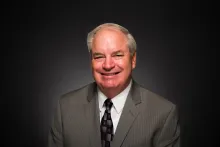
Robin Webber was born in Chicago, Illinois, in 1951, but has lived most of his life in California. He has been a part of the Church of God community since 1963. He attended Ambassador College in Pasadena from 1969-1973. He majored in theology and history.
Mr. Webber's interest remains in the study of history, socio-economics and literature. Over the years, he has offered his services to museums as a docent to share his enthusiasm and passions regarding these areas of expertise.
When time permits, he loves to go mountain biking on nearby ranch land and meet his wife as she hikes toward him.
