
Robin S Webber
This transcript was generated by AI and may contain errors. It is provided to assist those who may not be able to listen to the message.
About 250 years ago, Daniel Defoe wrote a classic talking about a man that had been shipwrecked. A man that had survived a little bit like our friend Andrew did, an accident. Unfortunately, unlike Andrew and the occupants in his vehicle, the occupants in that man's vehicle, nobody survived but him. And he was washed ashore. I'm not talking about Tom Hanks, and I'm not talking about Wilson. I'm talking about the original Robinson Crusoe. Here was this gentleman about 300 years ago, and it's actually off of a true-life story in part. But here was an individual that was wrecked on an island, and he did something once he came to himself. What he did was he recognized that he wasn't going to get off that island any too soon. So he drew up two columns. I'd like to do that right now. He drew up two columns. One column he called the evil. You might want to do this if you want to, just to say along with me. One he called the evil, and the other he called the good. Then he sat down in that sand on that seashore, and he wasn't bothered because there was nobody talking to him. He had a lot of time to think about what he was going to do and what had happened to him. He began to draw down these ideas. You might want to draw these down with me just to stay. First of all, on the evil side, he came to the realization that he was on a desolate island.
He was on a desolate island. That's evil. The good in it was that he was still alive. Next, what he did, he came to think about it a little bit further. He recognized that he was appreciative that he was alive because, you know, while the island was desolate, he had not drowned like everybody else on the boat. He also came to understand something else. He was... no humans around. No humans around. But he was not starving. He was on one of those luscious survivor islands where there were coconuts and everything else that he needed. Next, he came to think about it a little bit further. He didn't... no clothes. Ouch! Of course, there's nobody around. No clothes. But he got to think about it a little bit more, and he recognized that he didn't need a lot of clothes because he was in the tropics.
As he went down the list a little bit further, he recognized that he had no defense. He had no defense. He had no defense. He had no weapons with him. But as he thought about that, he recognized, as he looked around, that there were no wild beasts.
There were no wild beasts that might harm him. He thought about it a little bit more as he sat on that seashore and thought about it and got to thinking and thinking that... I'm going to have to go up here. Well, I've got one more spot here. I can go down. He was without any defense. He had no one to speak to. No one to speak to. No speaking. Nobody to speak to. But he recognized that the ship off the ocean had washed everything to him, all of the different books, and everything that was necessary had been washed ashore for his basic needs. Again, all of his needs were going to be supplied.
What happened was, as he wrote down this column, and you've got a picture that this is on the seashore, and it's sandy, as he thought about it and as he took time to think, he concluded that there was not any condition in the world so miserable, but that he could not find something to be grateful for.
I'd like to move from this whiteboard into your minds and into your hearts, and for a few minutes this morning, talk about the issues of thinking and thinking. They go hand in hand. The title of the message is, Thinking and Thinking. It's very interesting that in cathedrals of old over in England, those terms are often side by side. Actually, it's thought that they come out of the same base, that to be able to thank, you have to be able to think. That's what we'd like to talk about. Let me go to a very real-life character, one that is also written up about. Join me, if you would, in Colossians 3. In the book of Colossians, we find a story here about another individual that was isolated, that was, in a sense, set apart from him, and just like Robinson Crusoe had everything taken away from him. Why is it that so often that we don't really have that chance to sit down in the sands of life and think until everything is indeed taken away? This gentleman's name was the Apostle Paul. He began to go over the things that he could be thankful for. Now, what's very important to remember about the book of Colossians is that it's a prison epistle. A prison epistle. And yet, in the remotest set-off spot, isolated, as was Robinson Crusoe from the life of man, he was able to really think about the things that he could be thankful for. Let's pick up the story in verse 12.
The qualities that are talked about. You have to be willing to put them on. There's an action that is involved. And it all goes back to this thought of thanksgiving, that we're able to do that in verse 13 because we're able to forgive others as because we have been forgiven. But above all these things, put on love, which is the bond of perfection.
Then, now we're beginning to center. Focus here. And let the peace of God rule in your hearts, to which also you were called in one body. And be thankful. Very interesting. That these two words appear in the same verse. Peace and thankfulness. Peace and thankfulness. Just as much as Robinson Crusoe in the classic came to a certain amount of peace, even in a very troubling situation, that as any of us that have read the classic went on for years and years and years and years, he came to a certain amount of peace because he had stopped, he had thought, and he was thankful for what he had.
Then notice verse 16, that the word of Christ dwell in you richly in all wisdom, teaching and admonishing one another in psalms and hymns and spiritual songs, singing with grace in your hearts to the Lord. Now again, let's focus on verse 17. And whatever you do in word or deed, do all in the name of the Lord Jesus, notice, giving thanks to God the Father through him.
Again, what we want to understand as we carefully read the Scriptures, which should encourage us to carefully live, is to recognize that before we can be thankful, we have to be thankful. We have to think about it. We have to stop. And we have to consider. And that's what I'd like to do a little bit in the course of this message today, is just to encourage us to think so that we can be a thankful people. Now, you and I realize that Thanksgiving is coming up right around the corner. That's good. It's always good to have a message about thankfulness or gratitude as we come up to Thanksgiving.
Whether it be a holy day and the meanings thereof and or certain national holidays, they bring us into remembrance of certain very important things. You know, I've already talked about two individuals that suffered adversity. We talk about Robinson Crusoe, who is fictional. We talk about Paul, who by no means was fictional, and is an example there for us. And I've just mentioned Thanksgiving. Let's consider Thanksgiving for a moment and to recognize that if we go back 400 years to the pilgrims, to the, as it's called, the forefathers, the old comers, the saints, they had many names.
And in 1621, they had a big feast with the help of the Native Americans up there in New England. And out came the first Thanksgiving. Now, I could go into that story for about an hour. I love to talk about pilgrims, but that is not the genesis of this message today. We appreciate the pilgrims.
We appreciate their steadfastness. The point is this. Out of adversity came Thanksgiving. Out of adversity and stopping, then, came Thanksgiving. What I would really rather center on today is not the pilgrim of forefathers in 1620 and 21, but to again to show how often thankfulness must spawn from adversity. Let's use the example again of Thanksgiving, because Thanksgiving was basically a localized custom for many, many years throughout what became the United States of America.
It had been basically a New England phenomenon, because that's where the Puritans and that's where the pilgrims were. There's actually two people. I don't want to confuse them. They're Puritans and pilgrims. That's another thought. Pilgrims were basically thought of as a seperist. But anyway, that is basically a New England scenario. It started to move, but it was not a national holiday. Many of you may not realize that it became a national holiday, and not just simply a New England tradition, during another time of adversity. It was during the Civil War, of all things.
Here was brother against brother, cousin against cousin, neighbor against neighbor, countrymen against countrymen. What a sad thought for the founding fathers, to think of their children now at war with one another. But the American experiment, the American dream was not yet over, that while the Constitution and while the Declaration were thoughts of another century, they were still being tested and put into the oven of real time and real situations in this country. It was during this time, after the Gettysburg event, which was a major battle, and with Thanksgiving coming up, that Abraham Lincoln wrote this declaration that I'd like to share with you for a moment. Because it pinpoints something.
What I want you to do is, we're not just talking about Robbins and Crusoe today, we're not just talking about Paul. They're both either not real and or they're dead, and this is our time. And perhaps what I'm sharing with you today is to recognize a valuable key, friends, and that is simply this. That even in the midst of adversity, we must have a thankful mind. Now, please understand, I'm not Hayley Mills, we're not rearing the tape to 1962, and we're not just talking about being a Pollyanna, please. Have any of you ever seen the movie?
Oh, it's so wonderful! You know, looking out her window, we're not talking about being Pollyanna-ish. What we are talking about is living life. It's very interesting what Andrew brought up, is that Andrew and those that were in the car with him had another opportunity to live, to walk away, and or to be carried away, right? But to think about what happened, and to recognize that you and I have been called to life not only to live, but to live well.
Not only to experience events, but to live in existence, friends, of Thanksgiving. Let me pull into this thought. It was on April 30, 1863, and pardon me, it was actually before the Gettysburg battle, which was actually July 2, 3, and 4, in 1863. But President Lincoln proclaimed a national day of fasting and prayer. And in making this proclamation, he said, It is the duty of nations, as well as of men, to own their dependence upon the overruling power of God, and to recognize the sublime truth announced in the Holy Scriptures and proven by all history, that those nations only are blessed, whose God is the Lord.
We have been the recipients of the choicest blessings of heaven. We have been preserved these many years in peace and prosperity. We've grown in numbers and wealth and powers. No other nation has grown. But we have forgotten our God. We have forgotten the gracious hand which preserved us in peace, multiplied and enriched and strengthened us. And we have vainly imagined in the deceitfulness of our hearts that all of these blessings were produced by some superior wisdom and virtue on our own.
He continues, We have become too self-sufficient to feel the necessity of redeeming and preserving grace, too proud to pray to the God that made us. Yet it seemed to me fit and proper that God should be solemnly, reverently, gratefully acknowledged, as with one heart and one voice by the whole American people. I do, therefore, invite my fellow citizens in every part of the United States, and also those who are at sea and those who are sojourning in foreign lands, to set apart, observe the last Thursday of November, as a day of thanksgiving, and praise to our beneficent Father, who dwelleth his language, not mine, in the heavens.
Wow! Oh, that a president might speak like that today. Now, today, you and I are in America, and our leaders still do, in that sense, unlike Europe, do speak of God. But, may I say, Lincoln went on, didn't he? And put some meat on the bone. What do we learn from this? Well, I course corrected, and this proclamation was actually made before Gettysburg, which was in July. Let's understand, the nation had indeed been at war already for two years, and gone through massive battles that no human being should ever see. Here it was, in the midst of adversity, that Lincoln brings this out. And to recognize, and I'd like to share with you, if we're going to be a thankful people, friends, let's understand that it does demand. Thankfulness has certain demands. It just doesn't come. And one thing I'd like to share with you today, please, is, as we're talking about thankfulness, we're coming up to thanksgiving, I am not here to shame you into being thankful. I think we've all done that at one time or another, trying to shame somebody. Oh, you're just ungrateful. You need to be thankful. No, no, let's understand something. Thankfulness does not come from the outside in. Thankfulness is a seed that must be planted on the inside of an individual. It must be nurtured. It must be watered. It must be examined. It must be thought about. It must be sustained so that it might grow. Therefore, thanksgiving demands introspection. It does demand investigation of our motives. And as Abraham Lincoln brought out in this, for the nation as a whole, sometimes thanksgiving demands repentance. We haven't always put repentance together with thanksgiving, have we? To kind of recognize that perhaps we have done just this, where do we just kind of look at this side of the board and wallowed all in this, up and down and all around. You know, your jaws are down to the ground. Rather than recognizing that as Christians, you and I have been given a calling. You know, it's interesting that when we make this kind of demand upon ourselves to be a thankful person. Well, I've never been thankful. My folks weren't like that. Grandpa certainly wasn't like that. That's what Grandpa did. And that may, in a sense, be a part of our natural DNA. But we have a Heavenly Father as well. And we are to nurture the spiritual DNA. We are to nurture the thankfulness that God talks about here. Because I suggest to you, friends, that we may need that more than ever in the years that lie ahead. Because when we are thankful, it will allow us to have peace in the storm. Doesn't mean that the winds won't come, but thankfulness will anchor us. Lincoln was a man that, while he was not a churchgoer, per se, he was a man that was given to read the Bible. He was also given to read Shakespeare. It's often thought that those were the two greatest influences on him. But he was indeed a man that did read the Bible. And perhaps he had read over here in 1 Chronicles 16 something very interesting that was established. So that Israel of old could be a thankful nation. 1 Chronicles 16. Let's take a look here.
1 Chronicles 16. Let's center, if we could, together on verse 4 to begin the thought.
Speaking of David. And he appointed some of the Levites to minister before the Ark of the Lord to commemorate. And notice, one of their job responsibilities was to thank and to praise the Lord God of Israel. How would you like that to be a part of your job description? And this is what Israel is up here talking about. His job and what it is like. Can you imagine a part of your job just being, what do you do during the day?
What are you paid for? Oh, I thank God. That was a part of the job of the Levites was to offer God praise and thanksgiving. Let's continue this story over in chapter 23. Put some meat on the bones here. 1 Chronicles 23. And let's notice verse 28. Speaking of the duties of those that worked around the temple. Because their duty was to help the sons of Aaron in the service of the house of the Lord, and the courts, and the chambers, and the purifying of all holy things, and the work of the service of the house of God.
Both with the showbread and the fine flour, and all the different things that they had to do there. And then notice verse 30. Let's center. To stand every morning to thank and praise the Lord. And notice then they had another job assignment. This is neat. It's kind of neat just when he's center on one verse and milk it, look at it, look what else they had to do. It wasn't only in the morning they had another job assignment. They were also commissioned to thank God at nighttime.
Here's an entire order of men dedicated to one thing and one thing alone, and that was to give God thanksgiving. Have you ever wondered perhaps why they did it twice a day? Well, let's stop. Let's think about it for a moment. Maybe it was, number one, thanking God for what is coming. Do we do that as a people? Do we thank God for what is coming even when we don't know what's coming down the highway of life on that day?
Thank you, God, that you are going to be with me. Thank you, Lord, that whatever comes my way, I know that you're going to give me the strength and the ability and the discernment to be able to handle it so that it might glorify you. Then, at the end of the day, to thank Him for what came. Sometimes, perhaps, it's easier to thank God for what is coming rather than, at the end of the day, to thank Him for what came.
There are just some things that we can't avoid. It's not like going down soup plantations and skipping around and moving around those cabanza beans. If you don't like cabanza beans, you can move on to the broccoli. No, you've got to kind of just handle what comes your way in life. There's no skipping the vegetables of life, and sometimes there are not skipping the events of life, are there?
But, again, to thank God, because recognizing that there's a reason for it. When we praise and give God thanksgiving, and we make it a regular part of our life, and we don't just simply reserve it for thanksgiving day, between eating the turkey and watching the football games on the television, something is going to happen. What is going to happen? Let's appreciate that we are mirroring something that is actually occurring in heaven. Join me, if you would, in Revelation 7. In Revelation 7.
Because it's kind of interesting to say, wow, David had the Levites do all of this down here below, but do you realize that there is something occurring at all times up in heaven above? In Revelation 7, in the beginning of verse 11, it's speaking about the throne of God. It talks about, all the angels stood around the throne and the elders of the four living creatures, and fell on their face before the throne and worshiped God, saying, notice, Amen, blessing and glory and wisdom.
Notice, thanksgiving and honor and power and might be to our God forever and ever. Oh my, that must be just a chorus that our human ears could not even begin to drink in and or to understand the anthem of thanksgiving that goes up before God. But not only that, David also didn't only ask others, but set an example himself. Join me if you would in Psalm 92. You know, when you start looking for thanksgiving, thanksgiving prints are all over the Bible. Psalm 92, and let's take a look at verse 1. In Psalm 92 and beginning in verse 1, It is good to give thanks to the Lord and to sing praises to your name almost high, and to declare your loving kindness in the morning, and notice, and your faithfulness at night.
He was establishing the pattern in his own personal life, just as was the pattern of the Levites at the temple. And it's very interesting when he said, it's good to be a thankful person. It's good. It's cool. It's neat. It's healthy. Things happen when you are a thankful individual. Why is that? When we make thankfulness a goal, when we make thankfulness a goal, now you think about what's happening in your life right now.
Whatever is happening in your life, we have about 60, 62 people out here today, maybe 62 and a half, ladies. I don't know. Anyway, 62 people do not know what's happening in your life right now. I could share what's happening in my life. I'm not only preaching to you, I'm speaking to myself with issues that are occurring before me, that are large, that are big. And I begin to go back to my buddy Robinson Crusoe. And plus, I take a good wife along with me, who makes me think about these things, to give God thanks for what is entering into my life right now.
Even sometimes when maybe the cross seems heavy or the issue seems large, to look for an ability to thank God for what has come into our life, because He alone is going to help me, and He's alone going to help you to be able to come through that to glorify Him. But we must be a thankful person. I have found over the years that when we thank God continually, we will find His blessings ahead of us.
I've often remembered a phrase I heard many years ago. People that are looking for God are going to find Him. If you are not looking, if we are not stopping, if we are not thinking, we will not find God. We will not experience His blessings. We will not experience the strength that He wants to offer us in the adversity that we might be going through.
And at the end of the day, we will not be able to glorify Him. When we are thankful, it will change our attitude. Well, I don't like being thankful. Nothing to be thankful about. Did you look at the stock market yesterday? You think I'm dumb? When we are thankful, it will change our attitude. May I say something? That is a natural spiritual law. When we are thankful, it will change our attitude.
We will become more gracious. We will become more loving. We will become more humble. Thankful people are humble people. Just as Lincoln said, we thought it was about us, Lord. And we have not thought upon Your name. We thought that all these blessings came because of us and what we were doing. Thankfulness will make you a more humble person. It says that the poor in spirit are going to have a wonderful reward in the Kingdom of God. Let me show you how this works for a moment. Join me if you would in 1 Corinthians 1.
If ever there is a person that should not have been thankful, may I give you candidate number one? Probably the Apostle Paul. The Apostle Paul, after all that he did, all that humanly he gave up, all that he had done for others, shipwrecks, beatings, walking the Roman Empire, spreading the Gospel, this and that, and then he finds himself much of his adult life, or the end of it. He's basically a jailbird. He's in prison. Of course, he transforms that through his thankfulness, because he is not just simply the prisoner of Rome, but he is Christ prisoner.
He establishes in his thanksgiving a way of being. Notice what it says here in 1 Corinthians. You're already there. Let's take a look at 1 Corinthians 1 and notice verse 4. One way that is really neat when he studied the epistles the way that they're laid out, is that the Apostle Paul always made thankfulness, the engine of his communication. It was not a caboose. Notice this. I thank my God always concerning you for the grace of God, which was given to you by Christ Jesus. Let's understand something. A thankful person is going to not use thanksgiving as a caboose, but the engine that runs their heart, establishes their communication, and allows a focus is how they're going to approach others.
Now, we just read this. May I ask you a question? Because we just... Who is he talking about? He's talking about the Corinthian church. The bad boys, the bad church of the first century AD, can't get along about anything. Nothing. Divide it at one another. Singles against the marrieds, the slaves against the afraid people, the people that were following Peter, against the people following Paul, following this person.
I mean this. This church had more strands than noodles and spaghetti. But notice what Paul said. I thank my God always concerning you. Interesting. Join me in Philippians, just to show that this was not a mistake on the part of the Apostle Paul. Philippians 1. Notice verse 3. I thank my God upon every remembrance of you, always in every prayer of mine, making requests for you with all the joy, for your fellowship in the Gospel from the first until now, being confident of this very thing that He who has begun a good work in you will complete it unto the day of Jesus Christ.
I'm just thankful for you. Again, let's go to Colossians. One more. You know, sometimes it says 3 is a charm. Let's go to Colossians. Colossians 1. We give thanks to the God and the Father of our Lord Jesus Christ, praying always for you. What I want to share with you in this, two points. Number one, the Apostle Paul put thanksgiving right up front in his life. It was right out in front of him. He had to catch up to the thanksgiving.
The rest followed. Number two, second point I want to share with you. You can't be thankful enough. You can't say thank you enough to people. I will say this. We're not talking about flattery, but we're talking about responsible attention of what God is doing. Let me use an example about being thankful. Many years ago, I first started ministerial work when I was about age 22, and would oftentimes get a phone call from my mentor and say, We're on our way. It'll be 11.30, midnight, and out the door we would go. I remember two or three times I worked for a man that was right on the spot and was always great with emergencies.
We would often beat the police and or the ambulances. We would be there. Somebody would have died. Somebody would have had a heart attack. Somebody would have basically succumbed to cancer. I always remember what this gentleman said when we entered the room. Here, somebody has just died probably within 20 minutes to 35 minutes. He just simply said, God is good. Thank you. As a young guy, I'm going, What?
I'm going, What? I'm not saying it that out loud, you know, as we're walking into the room with a bereaved individual there as well. But in my mind, I had kind of like this. I had kind of stepped back and I go, What's good about this? What is good about this? Somebody has just died. But that's how kind of a 22 or 24 year old mind might be. But I came to recognize a principle just like David, just like Paul, that when you look for God in a situation, when you give God thanks for all things in any situation, He is going to make sense out of it.
Not in the moment, not in the day, but it's the principle that I am sharing with you right now that whatever is happening in your life that you're concerned about, that you're tackling, that you're working with, that seems as if you naturally, of and by yourself, don't have the strength, I want to share something with you, a key to spiritual power. Give thanks to God for the issue at hand.
Give God thanks that He is going to glorify Himself in you for what you are going through, that you cannot do it by yourself, just like America couldn't do it by itself 140 years ago. But give God thanks, you put that up front and you're going to begin to see your life begin to change, and that's very, very important.
And that's something that you've got to do. Join me, if you would, in Psalms 116. In Psalms 116. Psalm 116.
And let's pick up the thought in verse 17.
Psalms 116, verse 17. I will offer to you the sacrifice of thanksgiving, and will call upon the name of the Lord.
The sacrifice of thanksgiving is one sacrifice which really pleases God. Why is that? Saying thank you is hard, and it is opposite to our human nature. It does indeed run against our grain.
And when we say thank you, even when on the surface we are in an adverse situation, what we really do is we are sacrificing. We're saying, God above, I am not going to be the Lord of my life. I do not have the answers of and by myself down here. But I thank you for being there. And I thank you ahead of time, knowing that I am loved, and that your eyes are on me, and that while I do not understand this completely in this human frame, I recognize that we're going to come out on the other end together, and I'm going to be better for it. It doesn't mean I'm not going to take some hits. It doesn't mean I'm not going to go through some experiences. But I will be better for you are completing me in Christ. And it's a sacrifice. You know, in ancient times, people had to, when they went up to Jerusalem, they had to take something to sacrifice. They had to actually, and there are verses I won't go into right now, where they would have to take it. It was a very personal thing. What are some of the ways that you and I can sacrifice the sacrifice of thanksgiving before God? Let me give you one. Number one, first sacrifice is just remember what God has done. Remember what God has done for you. Maybe not what God is doing for you today, but remember what God has done before you and for you. Another way of sacrificing, of thinking, of sitting down with Robinson Crusoe on a beach and taking time is simply this. Tell others what God has done in your life. We heard about that. I mean, it's really amazing how these messages go together. I didn't know what Andrew was going to speak on. He didn't know what I was going to speak on. But it all comes. He shared in that sense his thankfulness to God. He walked away from that car and recognized it was not because of his good driving or the other guy's driving. We haven't gotten that far yet in the story.
His was a testimony about the good God that still desires to work in his life and the life of the Capitol Girls. It is not enough simply to remember what God has done for you. Share it with somebody else. Tell others what God has done. The third point in this is sacrifice of thanksgiving. Because so much has been given to us by God, then give to others. Give to others. Gifts of time and self and resources. I've told you this story before, but sometimes the simplest stories need to be repeated again and again. The story of the old old man that was digging a hole and had a small apple tree that he was going to plant. He's digging and huffing and puffing. He's about 80 years old. Getting that and a little boy comes up and a little boy says, Old man, why are you digging that hole and where are you going to be planting that tree? Old man stopped, put his shovel down, looked at the boy, looked at the hole, looked at the boy. And he said, I'll tell you what, young man. He says, I'll tell you while I'm digging that hole and while I'm digging that tree. Little boy interrupted and he said, yeah, but by the time it gets big enough to have fruit, well, you won't be here. Nice kid, right? So anyway, the old man looked at the boy and said, yes, honey, but you know, when I was a little boy just like you, somebody else had planted a tree that I was able to enjoy. So I'm just passing it on.
The sacrifice of thanksgiving means that you're moving beyond yourself and thinking of others, giving gifts of time, of self and resources. I'd like to adjust for a moment in conclusion. Maybe if you have a pencil and paper out there or pen, we're going to think and we're going to thank for a moment as the San Diego congregation about some of the things that God has put into our life. Oh yes, there are things that we wish weren't there right now, but I don't want to necessarily go over the evil list right now. You already know what that is in your life. Neither do I. But let's think about some of the good things. Let's think. Let's thank.
Number one, we have a heavenly Father. We do have a heavenly Father. How wonderful that is. You know, when the sons of Jacob came into Egypt and they came before the Viceroy of Egypt, who they didn't know at the time, was their brother. You know the first thing that they said? We have a Father. That's how they identified themselves before strangers. And you and I, we're going through some pretty strange times right now, even in the United States of America. Some of the challenges that we have nationally, some of the challenges we're going to have with our finances, some of the challenges that have just been there all along in our life. Let's be thankful, friends, that when we think about it, that we have a Father. And he is our, you know, sometimes there are people out in society and they are fathers by what we call accident.
Of course, no child is really an accident in that sense, you know what I'm saying. But we have a Father that is our Father, not by accident, but because He wants to be. And it is by design, and it didn't start with us, it started with Him. Let's look at another blessing that we have on the good side.
We have a Savior.
We have a Savior. We have a Savior. We have a high priest. We have a Passover.
We have a God that says in John 15, verse 15, don't just simply call me Master any longer.
But I'm no longer just going to simply call you disciples.
I'm going to call you my friends. You are my friends.
We have a Savior who is not, and He is our Master in that sense, yes. He is our high priest, and He is our King. But we have somebody that we can relate with, that knows what we're going through. What a blessing that is. We have another thing is that we have the Holy Spirit.
The Holy Spirit.
What a wonderful blessing that is. Let's think. Let's think. We have the Holy Spirit. You know, Jesus on that night, as He was about to be betrayed, said, by the way, I'm going someplace. You can't go there. But also understand this. You are not going to be left orphaned.
You are not going to be left alone. There's going to be a constancy. There's going to be a support in your life. And I'm going to send somebody to take care of you. I don't know how many of you have been orphans. Don't need to raise your hands, please. My mother was an orphan. My mother lost her mother when she was three. Then she lost her father, my maternal grandfather, when she was six. This is all around 1930 in Chicago during the Depression. When you are an orphan, it does leave its marks on you for life, to one degree or another. It's always something that's there worrying about abandonment, wondering if somebody's going to be there for you. Jesus on that night in which He was betrayed said, by the way, I've got a good thing for you. I want to share something with you. You are not going to be an orphan. I will come to you. The Comforter will come to you. No matter what we're going through in our life right now, we read to know that we are not alone. Another blessing to think and to thank. We have God's Word. We have God's Word. What a blessing when you think about that. And what a joy to think of the good men, the good women, that have died to preserve this Word. The good Jew, the good Greek, the good Englishman like Tyndale, who would go to the stake and be burned to death so that you and I might be able to have the words of God in our own tongue. What a blessing. When you think about this Word of God and the good thing that it is, I look at it anymore to be able to open up the Bible to recognize that it is a sanctuary from human reasoning. It becomes sick and tired of human reasoning that is coming at us at the speed of light in this world that is around us that is becoming more and more secular. It's a sanctuary from human reasoning. It's a staff of encouragement and comfort. And it's a sword. It's a sword to defend us from the wiles of the devil. You know, another neat thing that we have is we have family members. We have family members that have gone before us. People of note like Abraham and Isaac and Jacob and Peter and John and Rahab the stranger, the person outside the camp, Mary Magdalene the psychotic. You know, it's a family tree. All families are families. You know, we've all got our different uncles and aunts. What can I say?
Maybe I'm one of those uncles and aunts to somebody else. I'm not sure. But what I'm saying is what a rich family that we have. And we're reminded they were men of like passion as we are. And yet in their time, they were thankful people were able to make it. You know, it's very interesting something that was mentioned here by Andrew. We have the Sabbath and we have the Holy Days. What a blessing that God who made humanity and knows us better and knows our needs more than anybody else says. Okay. Time out. Time out from the world. Time out from the rush and the twirl in the world. You are going to take 24 hours. And I want you to think during those 24 hours. Think. I want you to relax. I want you to get a good night's sleep. Other than when you come to morning church is that I want you to get a good night's sleep. I want you to be able to meditate. I want you to realize that there's something else happening in this world beside you. How thankful are we for the Sabbath? How thankful are we for the Holy Days as a guide through the plan of God? And seven times out of the year we come into contact, not with what man thinks God is doing, but by observing those days we come to understand what God is doing in the kingdom of man. We have another one here just very quickly. I'm just going to put down here. You can go home and contemplate on this. We have a church. What a blessing that we have the San Diego congregation. What a blessing that we can get together with like-minded, like-hearted, spirit-led believers where we come out of a world and we come into this oasis on the Sabbath day. What a joy! Yeah, but I don't like people. Too many people. Too many people with problems. Well, you know, people without problems, you know what they are, don't you? Dead. People are brought into our life because people are the direct object of God's conversion in us. We would not be able to practice Christianity without people. Let's thank God for people. Let's thank God, I'm going to go very quick, for the wonderful country that we live in affords us the blessings that we have. Let's thank God for the daily bread that is ours. And let's thank God that He will answer our prayers. What I want to share with you is a thought here. I wanted to conclude. Let's go to...we sang it in the beginning, James. Psalm 138. Psalm 138. And verse 1. Thank you for singing that, Mr. Bariga. I will praise you or give you thanksgiving with my whole heart. Before the gods, I will sing praises to you and I will worship towards your holy temple and praise your name for your love and kindness and your truth, for you have magnified your word above all your name. And in the day when I cried out, you answered me and made me bold with strength in my soul.
It's kind of interesting that here is David not only thanking God for who and what is the sovereign Lord above, but he also utters that he's thankful because he's crying out and he's answered and he's made me bold with strength in my soul.
Sometimes what we do is we want to give thanks because the event is concluded.
All done. God answered. Away we go. At the same time, there are some things that are not concluded in our life. It's not neatly wrapped up at this point.
But David had the presence of mind to recognize that God was going to give him the strength in his being and given the purpose and remind him of what he is going through. I just want to share a thought on a personal level with you. One last verse, James.
Something that Susan and I have been talking about. She actually started it.
Kind of really penetrated my soul, my mind, my existence. Keep on thinking about it. As a human being, I don't know if I have it quite down. I don't know if I ever will. But we're getting there. James 1.
Book of Wisdom.
We've often gone through James and we read it.
It's kind of intellectual at times. And then it becomes personal.
James, the bondservant of God, to the Twelve Tribes, says, Hello. That means greetings. Verse 2, then. My brethren counted all joy, or give God thanksgiving in that sense, when you fall into various different trials.
Knowing that the testing of your faith produces patience. For let patience have its perfect work, that you may be perfect and complete and lacking nothing. Sometimes in our prayers we just simply ask God for the answer to get us out of something, or to remove something from us, rather than to ask God to sustain us in the experience, to give us the strength of soul, that He will never leave us nor forsake us.
That there is something in the process. So often we look at the product at the end, rather than being thankful to God for the process of being molded, of being shaped, of being tooled to becoming complete in Christ, and to recognize that even under adversarial situations, that God wants to give Him thanks.
As we move away from this message today, I hope you'll think about that a little bit. Whatever you are going through, whatever I am going through, whatever our buddy Robinson Crusoe, the Apostle Paul went through, let's understand that being thankful is a key element in being a complete person in Christ.
A thankful person is a growing person.
A thankful congregation is going to be a growing congregation. It will be a light. Let's think about it. Let's be thankful. Let's rejoice as we are coming up to Thanksgiving. But as we do, let's make sure that we thank God for all of His amazing, amazing blessings.
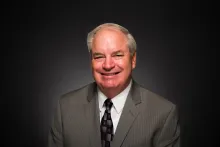
Robin Webber was born in Chicago, Illinois, in 1951, but has lived most of his life in California. He has been a part of the Church of God community since 1963. He attended Ambassador College in Pasadena from 1969-1973. He majored in theology and history.
Mr. Webber's interest remains in the study of history, socio-economics and literature. Over the years, he has offered his services to museums as a docent to share his enthusiasm and passions regarding these areas of expertise.
When time permits, he loves to go mountain biking on nearby ranch land and meet his wife as she hikes toward him.
