

Roy Holladay
This transcript was generated by AI and may contain errors. It is provided to assist those who may not be able to listen to the message.
One of the most oft-repeated admonitions that we find in the Bible is to remember God's blessings, and to thank Him for those blessings. God certainly blesses us, trying to set this clock up here. God has certainly blessed us as a people. There's not a one of us that I look around this room, that even though we may have certain problems and difficulties, still, when you look back and you think back, you realize that God has been with us and that He takes care of us. I want you to notice in Psalm 103, beginning in verse 1, here's a psalm that is dedicated to acknowledging God, and it talks about some of the blessings that God gives us. Actually, a very good Bible study would just be to go through the Bible and look up the word blessing, or blessed, and find out exactly everything that God does for us. Verse 1 here, Psalm 103, says, Bless the Lord, O my soul! All that is within me bless his holy name. The NIV translates this, Praise the Lord, my soul! All my inner being praise his holy name. And so we discover that the word bless, in a sense, also has to do with the word praise. When you praise God, you bless God, you thank God, you acknowledge Him. Going on in verse 2, it begins to talk about the blessings that we have. It says, Bless the Lord, O my soul! Forgive not all of his benefits. So there are many benefits that God gives to us.
Notice the first thing mentioned, who forgives all your iniquities. If you just look at the verbs as we go through here. Who heals all your diseases. Who redeems your life from destruction. How many times has God intervened on our behalf when we, maybe, were going to have a wreck, or something really bad could have happened. Jim could have gotten up to that door and slipped, and the door would have fallen on him. Perhaps he was preserved from that. We never know that there are so many times that the angels of God are there to help us. Then it goes on to say, Who crowns you with loving kindness and tender mercies. Who satisfies your mouth with good things. We have food to eat, clothes to put on, house to sleep in, so that your youth is renewed like the eagles. We truly need to reflect on what God does for us, how He deals with us, how He looks on us. Let's take a look at some of the characteristics of God's blessings. There are a number of characteristics when you begin to look at how God blesses us that we want to look at. The first thing is what God does for us. There are a number of things that God does for us, and there's no way that I could, in an hour's sermon, cover all of the things that God says that He will do for us. We could add a long list of what I've already read in Psalm 103. Let's go over to Psalm 91. Psalm 91, beginning in verse 1.
Let's notice some of the blessings that God extends to His people.
Verse 1, He who dwells in the secret place of the Most High shall abide under the shadow of the Almighty. I will say of the Lord, He is my refuge and my fortress. Again, it's talking about how God is there to protect us, to look after us. My God in Him, I will trust. We know that faith is not faith unless we truly put our trust in God. It says, Surely He shall deliver you from the snare of the fowler, and from the perilous pestilence. He will cover you with His feathers, and under His wings you shall take refuge, talking about the angelic hosts that God would send to protect us. His truth shall be your shield and your buckler. You shall not be afraid of the terror by night, nor the arrow that flies by day, nor the pestilence of walks in darkness, nor the destruction that lays waste at noonday. A thousand shall fall at your side, and ten thousand at your right hand, but it shall not come nigh unto you. And of course, some of the scriptures, we think, are prophetic, things that will happen in the future, and how God will be near us. He will protect us. And even though thousands might die around us, God said, He will look after us. Only with your eyes shall you look and see the reward of the wicked, because you have made the Lord, who is my refuge, even the Most High, your dwelling place. So you discover that you and I have a responsibility to look to God for our protection, for our safety. How often do you find people who have pistols under their bed, the drawer next to them, shotgun, ball bat, machete? Who knows? If somebody's going to come into the house, they're armed and they're ready. Well, I think that we need to realize that we have a God who says that He will take care of us and look after us. He says, No evil shall befall you, nor shall any plague come near your dwelling. And He shall give His angels charge over you, to keep you in all your ways. In their hands they shall bear you up, lest you dash your foot against the stone. And you shall tread upon the lions and the cobra and young lions and the serpents, and you shall trample underfoot, because He has set His love upon me. Therefore, I will deliver Him. I will set Him on high, because He has shown my name. And He shall call upon me, and I will answer Him, and I will be with Him in trouble, deliver Him, and honor Him. With long life I will satisfy Him and show Him my salvation. So God promises protection, safety, to be with us during difficulties, trials, and tests. None of us know what we're going to be facing here in the future. As verse 16 shows, God's blessings extend even beyond this life, and that God will give us, or extend to us, salvation.
Romans 6.23 is a scripture we're all familiar with. I'd like to quote this from the New Living Translation. New Living Translation, Romans 6.23. For the wages of sin is death, as we know. But the free gift of God is eternal life through Christ Jesus, our Lord. All of us sitting here today have been given the opportunity of the free gift from God, which is eternal life. And God wants to give it to us. It is a free gift. It's not something you can earn. It's not something that you go out and if you do so many physical things, God will give it to you. It's a free gift. God wants to share His life, His existence with us. And so, this is something that God will do for us. God provided Jesus Christ as a Savior for us. And God gives us all kinds of good gifts. Let's notice back here in John chapter 14. John 14, beginning in verse 1. Again, reading from the New Living Translation concerning this particular scripture. John 14, beginning in verse 1. John 14, beginning in verse 1. Don't let your hearts be troubled, we're told. Trust in God. Trust also in me. So God tells us not to be troubled. We're to put our trust, our reliance, our faith in Him. There is more than enough room in my Father's home. If this were not so, would I have told you that I'm going to prepare a place for you? When everything is ready, I will come and get you, so that you will always be with me where I am. Now, you and I are waiting for Christ to come back, are we not? To come back and get us, so to speak. And there are some who are dead that He will come back and get, and we're hoping that maybe we might be alive when He returns to the earth. So, one of the things that Christ has promised to do for us, for God's people, is that He was going to go away and prepare a place for us. Now, when He says a place, He's talking about positions of responsibilities, duties, and service for us that you and I would be able to carry out. So, again, I could read you dozens of scriptures that talk about what God is doing for us right now. We know that God blesses us. He says He will provide food, clothing, and shelter, all of these physical things. One of the things that all these benefits or blessings have in common is that they're all things that God does for us. And so, when we thank God, we should thank God for what He does for us. And, you know, the cars we drive, the homes we wear, you know, everything that we have, these are things that God has blessed us with. But there are two other ways that God blesses us that are just as important, and we also need to be thankful for. Not just for the things that God does for us, but the second thing that God does is what He does in us.
First thing was what God does for us, but also what God does in us. Notice here in John chapter 14, beginning in verse 15.
Verse 15 says, If you love me, keep my commandments, and I will pray the Father, and he will give you another helper, that he may abide with you forever. The Spirit of Truth, whom the world cannot receive because it neither sees him nor knows him, but you know him, for he dwells with you, and will be in you. And I will not leave you orphans, I will come to you.
So Jesus Christ promised His disciples that He would dwell in them by means of the Holy Spirit. If you put verses 16 and 17 together, Christ said, I'm going to send you a helper. And then He said, I won't leave you as orphans. Verse 18, I'll come to you. So Christ lives in us. Now, when Christ dwells in us, what does He do for us? Well, let's notice, first of all, verse 28, this same chapter, says, You have heard me say to you that I am going away, and coming back to you.
If you love me, you would rejoice, because I said I'm going to the Father, for my Father is greater than I. Now, Jesus Christ was going to return to the Father, send the Holy Spirit to dwell in His Church, in His disciples, in His sons and daughters, in us, and that He would by so doing be able to do much more by dwelling in us than just doing things for us.
And there is a difference. God does things in us. Now, what do I mean by that? Well, Galatians 2.20, again, Galatians chapter 2 and verse 20, Paul said, I've been crucified with Christ. It is no longer I who live, but Christ lives in me. And the life which I now live in the flesh, I live by faith of the Son of God, who loved me and gave Himself for me. So, I want you to notice again, Christ lives in me. Jesus Christ lives His life over again within us. Why does God give us His Holy Spirit?
Because that Spirit is our link with the Father, with Jesus Christ. It is through that Spirit that God is able to create Himself within us, that Jesus Christ is able to live His life within us. So, when a person is converted, when you have hands laid on you, you've been baptized, had hands laid on you, you receive the Holy Spirit. God comes to live within us. And living within us, He then is able to accomplish a transformation. Notice 1 Corinthians chapter 3. 1 Corinthians chapter 3 and verse 16. We read this, do you not know that you are the temple of God and that the Spirit of God dwells in you?
So, again, the emphasis is being on God's Spirit dwelling in us. Now, Romans, the book of Romans in chapter 8 and verse 5, likewise mentions this. Let's go back to Romans chapter 8 and verse 5. It says, For those who live according to the flesh set their minds on the things of the flesh, but those who live according to the Spirit, the things of the Spirit. So, what does the Spirit of God do? What does Christ do once He dwells in us? Well, before our conversion, our minds focused on the flesh. Now, is it wrong to be concerned about your flesh, about physical things? Well, certainly not, but that was our whole motivation.
And when it says here flesh, it's talking more about the flesh and the misuse of the flesh, the lust of the flesh, the lust of the eyes, the pride of life, those type of things. But once God begins to live within us, then we begin to think about the things of the Spirit, and we begin to focus on spiritual things.
Verse 6, To be carnally minded or fleshly minded is death, but to be spiritually minded is life and peace. So, having the Spirit of God dwelling within us gives us life. God imparts His very life to us, and we have peace.
Now, the carnal or the fleshly mind is enmity against God. This is what's wrong with the fleshly mind. It's enmity against God. It's not subject to the law of God, and nor indeed can be. So, the carnal mind, the fleshly mind, is not obedient to God. It's enmity, as we all know.
As verse 8 says, So then those who are in the flesh cannot please God. So, you and I cannot please God as long as we don't have God's Spirit. But you are not in the flesh, but in the Spirit, if indeed the Spirit of God dwells in you. And so, again, we see that the Spirit of God dwells in us. Now, if anyone does not have the Spirit of Christ, he is not His. So, if we don't have God's Spirit, then we're not His. We're not a Christian. And if Christ is in you, now I want you to notice again in verse 9, it says, the Spirit of God dwells in you. Verse 10 says, if Christ is in you. So, when we talk about the Spirit of God dwelling in us, the Spirit of God is the power of God, the very essence of God. And so, it is through that that Christ comes to dwell in us. So, if Christ is in you, the body is dead because of sin, but the Spirit is life because of righteousness. So, Jesus Christ again dwells in us.
Now, what all does the Spirit of God do in us? Well, we'll take a look at that as we go along. Let's go over to Philippians chapter 2. Philippians chapter 2 and verse 12, where we begin to get an inkling. In verse 12, it says, therefore, my beloved, as you have always obeyed, not in my presence only, but now much more in my absence, work out your own salvation with fear and trembling. For it is God who works in you. Notice what God does. He works in us both to will and to do for his good pleasure. You and I, naturally, normally, in the unconverted state, the fleshly state, we do not want to do God's will. So, God, through his Spirit, gives us the desire to obey, the will to do his good pleasure. Notice in you living translation how it translates this. Philippians 2.13, for God is working in you, giving you the desire and the power to do what pleases him. Now, I think that's an excellent translation, that God works in us. And what does he do as he's working in us? He gives us the desire. And rather than there are many times that we get discouraged, or we get despondent, or we get down, and we feel like just quitting. And yet, the Bible is very clear that God, we go to God and we ask him to help us. And God gives us, he renews within us, the desire to obey. And then he gives us the power to do what pleases him. Now, the word here for work is interesting. Back in verse 12, and in verse 13 also, for it is God who works in you. This is the Greek word intergail, from which the word energy comes in the original Greek, and it's translated energy in the English language. So we discover that it is God who energizes us to do what pleases him. That he's the one who gives us the energy, the drive, the power, the force, the strength. And where does that come from? Well, that comes because he lives in us. Now, Galatians chapter 5 and verse 22. Turn back here to Galatians chapter 5 and verse 22.
And again, I'd like to read this out of the New Living Translation. It says, but the Holy Spirit produces this kind of fruit.
So what does God in us do for us? Well, it says the Holy Spirit produces this kind of fruit in our lives. Love, joy, peace, patience, kindness, and goodness, faithfulness, gentleness, self-control. There is no law against these things. So, rather than having the Spirit of God, having God dwell within us, you discover that that Spirit produces fruit within an individual. And you and I should be able to look at our lives. Others should be able to look at our lives. And they should be able to see these fruits being produced. These are qualities of character that God develops in us by means of His presence within us through the Holy Spirit.
So God's very presence dwells within us.
One last scripture in this section, Romans 12, Romans 12, and verse 2, where we're given this admonition. And again, reading out of the New Living Translation, don't copy the behavior and customs of this world. So if you have God living in you, would God follow the customs of this world and the behavior of this world? And the answer is no. So don't copy the behavior and customs of this world, but let God transform you into a new person.
So what does God do when He comes to dwell in us, when His Spirit dwells within us? That Spirit is there to make a transformation. As verse 2 in the New King James Version says, do not be conformed to this world, but be transformed by the renewing of your mind. Or as the New Living Translation says, let God transform you into a new person by changing the way you think. How many people actually change the way they think?
You and I are to change the way we think. How does that happen? It happens because you take this book and you put it in your mind. You study it.
How many people study the Bible and come to different conclusions than we come to? How many people study the Bible and still think they should keep Sunday instead of the Sabbath day? They read the Bible and they know nothing about the Holy Days, and they still keep Christmas and Easter and these type of days. Well, that's because it takes the Spirit of God to understand the Scriptures. It's not just a matter of reading the Scriptures. You've got to read the Scriptures, but it takes the Spirit of God working in your mind so that as you read, you come to a spiritual awareness and understanding.
Again, let me read this out of the new Living Translation. Don't copy the behaviors and customs of this world, but let God transform you into a new person by changing the way you think. God's Spirit changes us. That's called conversion. We're to be a different person. If we're going to think differently, we've got to think the way God thinks, look on things the way God looks at them. And as Philippians 2.5 says, let this mind be in you, which was also in Christ and Jesus. Then, going on here in the New Living Translation, then you will learn to know God's will for you, which is good and pleasing and perfect. So, we find that God does things for us and that God does things in us. Now, there's a third category that we need to be very thankful for, and that is what God does through us. What God does for us, what He does in us, and then what God does through us. In 1 Peter 2, 1 Peter 2, and beginning here in verse 5, let's back up to verse 1. It says, Therefore, laying aside all malice and all deceit and all hypocrisy, envy and all evil speaking, as newborn babes, desire the pure milk of the word. So, this is again what we're talking about, God's word, that you may grow thereby. This is what we eat spiritually to help us to grow, to develop. So, if you're not studying the Bible, you're not studying the Scriptures, you're not going to grow. This is our food. It says, If indeed you've tasted that the Lord is gracious, coming to Him as a living stone rejected indeed by men but chosen by God and precious. You also, as living stones, are being built up a spiritual house, a holy priesthood, to offer up spiritual sacrifices acceptable to God through Jesus Christ. Therefore, it is also contained in the Scriptures, Behold, I lay in Zion, achieve cornerstone, elect and precious, and he who believes on Him will by no means be put to shame. So, we find that we have to be living stones. We are living stones, a spiritual house. Notice verse 9. Again, it says, You are a chosen generation, a royal priesthood, a holy nation, His own special people that you may proclaim the praise of Him who called you out of darkness into His marvelous light. So, you and I are made acceptable to God through Jesus Christ, as verse 5 says. You and I become acceptable. What that means is that we cannot do what God wants us to do on our own. We have to have help. It's through Jesus Christ that we're able to accomplish anything spiritual. I think sometimes we strive so hard, physically speaking, to do what is right, and we should. We should work as hard as we can that we forget that we have a power within us, that we have God dwelling within us to help us. Notice back in John 15 and verse 4. John chapter 15 and verse 4.
And I'll read out of the New Living Translation. Christ said, Remain in me, and I will remain in you. For a branch cannot produce fruit if it's severed from the vine, and you cannot be fruitful unless you remain in me. So if you and I are going to produce fruit, if we're going to have spiritual fruit, we have to remain connected to the vine. How many people do you know who've cut themselves off from the church? From Christ? They go out on their own, and they think that they should make it on their own. They don't need any help or any strength. Christ said, You cannot produce fruit unless you remain in me. And verse 5, he says, Yes, I am the vine, and you are the branches. Those who remain in me and I in them will produce much fruit, for apart from me, you can do nothing. So it's only through Jesus Christ that we can produce fruit, that we do a work, anything spiritual.
Jesus Christ, the Bible says, is the head of the church. The church is described as his body. One has to remain in that body in order to be able to do a work. Christ is ahead. He's not the head of some other body. My head resides on my body. Your head resides on your body. Christ is the head of the church, and he works through his church, through those who have his spirit, who are willing to follow him and to serve him. Now, in Matthew 5, verse 14, these are all scriptures that we know. Christ said, You are the light of the world, and a city that is set on a hill cannot be hidden. Nor do they light a lamp and put it under a basket, but on a lampstand, and he gives light to all who are in the house. Let your light so shine before men that they may see your good works and glorify your Father in heaven. So, we are the light to the world, and the only way that we can be a light is if light dwells within us. Notice what the daily study Bible by Barclay says about this section. I thought it was interesting. Of one thing, the Jews were very sure that no man could kindle his own light. Jerusalem was indeed a light to the Gentiles, but God lit Israel's lamp. The light with which the nation or the man of God shone was a borrowed light. It must be so with the Christian. It is not the demand of Jesus that we should as if it were to produce our own light. We must shine with the reflection of his light. The radiance which shines from the Christian comes from the presence of Christ and within the Christian heart. So, basically what Barclay was saying is that if we're going to be a light, that light comes from God. God is, when Christ was on the earth, he said he was the light. In John chapter 1, John described Jesus Christ as being the light. That he came to the world. The world was in darkness, and he shone. Now, Christ has gone back to heaven, and we as his church are the light to this world. And the only way we can be a light is if God works through us. So what we need to understand is that anything that is accomplished, anything that we do spiritually has to come through God. Second Corinthians chapter 4, beginning in verse 6, explains this. Second Corinthians chapter 4 and verse 6.
For it is God who commanded light to shine out of darkness.
Now, when did God do that? Well, back at the very beginning. Genesis chapter 1 says, in the beginning, God created the heavens and the earth. And the earth was out of form and void, and darkness was over the face of the earth. And God said, let there be light. What occurred in Genesis chapter 1 is an example of what God is doing in the world today. The world is in total darkness spiritually. And God comes along, and He commands that light shine forth. And that light comes through His children by their example. For it is God who commanded light to shine out of darkness, who has shown in our hearts to give the light of the knowledge of the glory of God in the face of Jesus Christ. But we have this treasure in earthen vessels that the excellence of the power may be of God and not of us.
So God is working through the week of the world. Let's turn over to 1 Corinthians chapter 1. 1 Corinthians chapter 1, verse 26.
And we find why God has called the week of the world. God is not called the mighty or the great. Says, You see your calling, brethren, that not many wise according to the flesh, not many mighty, not many noble, are called. But God has chosen the foolish things of the world to shame the wise, and God has chosen the weak things of the world to put to shame the things that are mighty. And the base things of the world and the things that are despised, God has chosen things which are not to bring to nothing the things that are. Why? That no flesh should glory in His presence. We cannot glory. We cannot say, if it hadn't been for me, the work of God would not have been accomplished, or the church would not have grown or developed. Again, it's in spite of us so many times that God is able to do His work. So God has called us, and we realize that the excellence of the power may be of God and not of us, as we read in 2 Corinthians 4-7. Let me read that out of the New Living Translation. We now have this light shining in our hearts, so you and I have God living within us. But we ourselves are like fragile clay jars containing this great treasure. This makes it clear that our great power is from God, not from ourselves. That's something we need to remind ourselves of daily, that the great power God has given us, the power of the universe to dwell in us. And we tap into that power to grow and to overcome.
I'd like to read a poem to you.
It's titled, The Master's Vessel. The author of this poem is unknown.
It says, The Master was searching for a vessel to use. On the shelves there were many. Which one would he choose? Take me, cried the gold one. I'm shiny and bright. I'm of great value. I'll do things just right. My beauty and luster will outshine the rest. And for someone like you, master, gold would be the best. The master passed on with no word at all. He looked at his silver urn, narrow and tall. I'll serve you, dear master. I'll pour out your wine. I'll be at your table whenever you die. My lines are so graceful, my carving so true, and my silver will always complement you. Unheeding, the master passed on to the brass. It was wide-mouthed and shallow, and polished like glass. Hear, hear, cried the vessel. I know I will do. Place me on your table for all men to view. Look at me, called the goblet of crystal, so clear. My transparency shows my contents so dear. Though fragile am I, I will serve you with pride. Now I'm sure I'll be happy in your home to abide. The master came next to a vessel of wood, polished and carved. It solidly stood. You may use me, dear master, the wooden bowl said, but I'd rather you use me for fruit and not for bread. Then the master looked down and saw a vessel of clay. Empty and broken, it laid, or broken, it helplessly lay. Now hope had this vessel that the master might choose to cleanse and make whole, to fill, and to use. Ah, this is the vessel I've been looking to find. I will mend and use it and make it all mine. I need not the vessel with pride of itself, nor the one who is narrow to sit on my shelf, nor the one who is big mouth and shallow and loud, nor the one who displays his contents so proud, nor the one who thinks he can do all things just right, but this plain, earthly vessel filled with my power and might. Then gently he lifted the vessel of clay, mended and cleansed it and filled it that day. Spoke to it kindly, there's work you must do. Just pour out to others as I pour into you. And I think that summarizes what I've been talking about here, how God works through us. He takes broken clay jars, broken to earthly physical vessels. That's us. Ones who are not very great, he fixes us, he heals us, he pours out his spirit on us, he gives us of his very nature, of his fruits, and he tells us to then go and pour the same out on others. That when anyone sees you, they should see Christ. When anyone sees you, they should see a reflection of God. That God works through us. You might remember in Acts chapter 9 and verse 15, Acts the ninth chapter and verse 15, talking here about the apostle Paul.
The Lord said to him, Go, for he is a chosen vessel of mine, to bear my name before Gentiles, kings, and children of Israel, for I will show him how many things he may suffer for my name's sake.
All of us are vessels for God to use to accomplish his purpose. Didn't Jesus Christ, when he was on the earth, say, I have finished the work that you've given me to do? You read back in Acts 7, it talks about David, that David finished what God had given him to do when he was on earth. We're not all given the same duties and responsibilities. Each one of us has been called by God, and God has a purpose for each one of us. As the Bible says, he puts us in the body as it pleases him. Maybe not as it pleases us, but as it pleases him. He's given all of us responsibility. I see many of you who for years have obeyed God, said a wonderful example for your neighbors, for those around you. They may not understand why you do what you do, but they know that you've been faithful. They know you keep the Sabbath, and they know that you do various things. They begin to learn. This is something that Norm and I have learned moving where we are.
There are a lot of couples around us, and very nice couples. Slowly but surely, they begin to realize that you're different. We leave every Saturday, and we're gone. A few of them I've discussed that we keep the Seventh-Day Sabbath. You just mention that to them, and they say, oh, there are other Seventh-Day Adventists in here, and around you, and the condos where we live. They're aware of it.
God has called each one of us. Collectively, God has given us, as a church, a job to do. Collectively, we work together to preach the gospel, and we support that work through our prayers, through our service, our tithes, our offerings. God also has called each one of us individually to be an example. There is a work for us to do. We don't know exactly what that is, but God has put us in places where He wants us, and we can be assured that there is something that God is accomplishing through us individually and collectively.
As Jesus Christ said back here in the book of John, John chapter 14, John 14, and verse 12.
Now read this out of the New Living Translation again. I tell you the truth. Anyone who believes in me will do the same work that I have done, and even because I am going to be with my Father, you can ask for anything in my name, and I will do it so that the Son can bring glory to the Father. Yes, ask me for anything in my name, and I will do it. So Christ said that we will also do the same works that He did.
Christ went about preaching the gospel of the kingdom of God, healing the sick. There were so many things that He did. Well, there is a work that God is carrying on here at the end time, and He is going to do that work through His Church. Rather than when that work is done, the events that we see taking place around us prophetically are all going to come to a climax. So we have a part in that. We don't know exactly when that work is through. That's why we have to keep working. So, brethren, we need to remember and thank God for all of His benefits, for everything that He does. That includes what He does for us, what He does in us, and what He does through us. A good way to remember that is to take the first letter of each one of those, for, in, and through, and it spells an acronym, fit. You and I are being made spiritually fit by God.
We're made spiritually fit by what He does for us, what He does in us, the changes that He makes, and then what He's able to do through us. No Christian should ever think fitting himself out for honor like the gold vessel that I read in that poem, or the silver, and so on. But we should all be thinking about the fact that we are being prepared, fitted, for service. And that's why God has called us. In fact, it's the very destiny why Christ is preparing a place for us, so that we can serve in the Millennium the white throne judgment for all eternity. So we need to be sure to be receptive to what God is doing for us, in us, and through us, because that's what God's way of life is all about. So we should never forget His blessings.
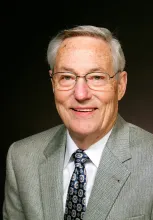
At the time of his retirement in 2016, Roy Holladay was serving the Operation Manager for Ministerial and Member Services of the United Church of God. Mr. and Mrs. Holladay have served in Pittsburgh, Akron, Toledo, Wheeling, Charleston, Uniontown, San Antonio, Austin, Corpus Christi, Uvalde, the Rio Grand Valley, Richmond, Norfolk, Arlington, Hinsdale, Chicago North, St. Petersburg, New Port Richey, Fort Myers, Miami, West Palm Beach, Big Sandy, Texarkana, Chattanooga and Rome congregations.
Roy Holladay was instrumental in the founding of the United Church of God, serving on the transitional board and later on the Council of Elders for nine years (acting as chairman for four-plus years). Mr. Holladay was the United Church of God president for three years (May 2002-July 2005). Over the years he was an instructor at Ambassador Bible College and was a festival coordinator for nine years.
