

Robin S Webber
This transcript was generated by AI and may contain errors. It is provided to assist those who may not be able to listen to the message.
I'm teaching some of you how it's affected you. There's something about when you put a message to melody. It really does make an impact. And I do appreciate that being given, because that really does bespeak to the fullness of the spring festival season that we're going through. Because we're here today, brethren, because we're not here to worship a dead Savior. He is risen, and we'll be addressing that in the course of the message that I want to bring you this afternoon. I realize that, again, we have a number of new people that are with us now in San Diego. This is going to be the first message that they've heard given on a high day during the Days of Unleavened Bread speaking to the subject. And it's an honor to be able to present it to you. And the question naturally arises, why would God desire a New Covenant Christian to observe this festival? And if so, what is the spiritual approach that one should have in observing it for seven days? And beyond that, then, I think what's really important is what is the takeaway? What is the takeaway as we move away from these seven days as to what we will do every day of the year? What are going to be the long-lasting spiritual results to rise to the full measure of Jesus Christ living in us every day? A key emphasis that I'm going to be using today, brethren, is the term rise. Because in one sense, we have just, in a sense, put away bread that rises a lot. And sometimes, in dealing with these days, we have it in a somewhat, shall we say, negative connotation. I'm going to use the term today, rise in a very positive connotation, because I think that is what these days represent. And that is what we're going to be talking about. To share that with you, join me if you would. I'm going to give you a few scriptures. We're going to kind of build a scriptural foundation, and then we're going to, do we dare say, launch. But if you'll join me, if you would, in Colossians. The book of Colossians. Join me, if you would, there for a moment in Colossians. And let's go to Chapter 2. Colossians 2, and let's pick up the thought, if we could, in verse 6.
In Colossians 2, verse 6, As you therefore have received Christ Jesus the Lord, and those that are baptized and are missed, whether it's been 50 years or 5 days, have indeed received Christ Jesus the Lord, then it gives us instruction, if so, then we are to walk in Him, root it, and build up in Him, and established in the faith, as you have been taught, abounding in it, with thanksgiving. Couldn't think about, couldn't help but think about that as we heard our young adults singing that song.
Because there's a melancholy tune to it, but then it builds, because, Were you there, and were you there, when they crucified My Lord? But you come to that last stanza, where it says, Were you there, when the stone was rolled away? And recognize what that means for each and every one of us, and the power of these days, that yes, we came up to the New Testament Passover. Yes, we were to reflect and to examine ourselves in relationship to where Jesus Christ is recognizing, of and by ourselves. We have no worth of and by ourselves.
The worth applied to us is the worth of Jesus Christ that God the Father grants. But then, now, now, we've recognized that. We accept that part of what Jesus did for us. We accept and have renewed our role in the New Covenant once again. And we rejoice today in newness, in life. We memorialize death the other evening. But today, this day, is about the living Jesus Christ, the Son of God, living and dwelling in each and every one of us. That's why the Scripture says to give thanks. Let's continue this thought, then, and ask ourselves even more so, thanksgiving again for what? Join me, if you would, in Colossians 2.
And let's take a look again a little bit further down in Colossians 2. And let's pick up the thought in verse 11. In Him you were also circumcised with the circumcision made without hands. You were, and using that analogy of circumcision that had been wrought for 1,500 years. God is saying, now, you are being molded and sculpted and shaped. But not with Levitical hands.
Not with the old guy that's been around forever that knows how to shh shh shh, willedcery the knife. I'm a little Ete-old Jewish boy. No, this molding has been done by the divine. Done by that which is uncreated to the creation. By putting off the body of the sins of the flesh. By the circumcision of Christ. Verse 12, buried with Him in baptism. And some of you were buried over the last two weeks.
And it looks like Mr. Miller and Mr. Clark did not keep you down. It looks like you got back up on all two feet. But notice the purpose of all that, because baptism is a beautiful thing. There's a dual focus here. It says that we were buried with Him in that baptismo, that baptism, that immersion. In which also then you were raised with Him through faith in the working of God, who raised Him from the dead.
And you and I have that belief and that understanding that the same God that raised His Son from the dead, and in which there is no stone too heavy that it cannot roll away, and that work of salvation is the same God that's working with you and me today.
And that we are buried and we are raised. And then you notice what again says here in verse 12. I love it. Buried with Him in baptism, in which you also were, you are raised with Him. You're not even raised alone.
Notice that you're not raised alone. You are raised with Him. Have you ever tied a knot so tight that you can't untie it? And dear brethren here in San Diego, this is what God is trying to anchor us in as we begin these festivals. That we have been tied so tight with the death and the resurrection, with the burial and the raising of Jesus Christ. It's tight, and that's how God wants us to think about it. Let's take it a step further, 2 Corinthians 5 verse 17. 2 Corinthians 5 and verse 17. Where does this lead in? What are we now? If we've gone through this process, what is it? Therefore, if anyone is in Christ, if anyone is in Christ, he is a new creation.
Old things have passed away. Behold, all things have become new. Now, this is very important to understand, and you've maybe never heard this explained before. And if you have heard it explained before, do I dare say something, brethren? We just have to keep on hearing it, because oftentimes we don't get it fully. Here it goes. It says that we're a new creation. That word, new, small word, comes from the Greek, which is kenos. And it's very interesting. This speaks to something utterly brand new. It's different. It's something that we're not accustomed to.
There is an illusion that it's from out of this world. And to recognize that it's not just simply new and improved, how often have you gone to a supermarket? You ladies, and some of you gentlemen, and you go to a shelf, and you're looking down, and you know we're creatures of habit. We're looking for that one little jug of detergent, or that one little tube of toothpaste, and you're looking for it, and you're looking for it. You know what? They changed the color of the box. Or they changed the type. And, or have you ever noticed that the box is smaller and the price is higher? Or I'm, or Susie and I, the only ones. But! Wow! It's worth it! You know what? Because it says, new and improved.
What God wants us to understand during these days of Unleavened Bread is, God is not calling us to be new and improved. He's giving us something special. He's called us to be a new creation. He's not just adding on to the old creation. He's not just putting a saddle on we, these creatures of dust. He says the body of Christ is a spiritual creation. It is not of dust. Even while we inhabit these physical tents, it's a spiritual creation. It's a new body. It is something completely different. And that's why it's important during the days of Unleavened Bread that we embrace reality that these days are not just simply a biblically based lint in which we give up something to do penance.
Oh, I've been a bad Church of God member. Oh, my! So you've got to do this, and you've got to do this, and you've got to work your way up to this matter. The Bible is not about penance. It's about repentance.
And there's a world of difference between appeasing God and pleasing God because you have repented. You've accepted Jesus Christ as your Savior, and you understand that He's giving us not just a new lease on life, but a new life in Christ. And that's very important to understand.
Now, the reason why I bring this up is simply this, and some of us have heard these messages for many, many years. That's good, so have I. I was just thinking about this morning that I believe this is my 49th days of Unleavened Bread going back to the old Long Beach Church. So I've heard a few sermons about the days of Unleavened Bread. And I'm saying, well, what's this guy going to tell me today that I haven't heard already before? Stick around. And to recognize that what we need to understand is that even as Christians, even as members of the New Covenant, even as spiritual veterans, too often we settle basically for trying to fix ourselves and to repair ourselves. And I'm sure you've done that from time to time. I want to show a few things that I brought up here. You know, when something breaks down and you have to fix it and you have your honey-do list, or if you don't have a honey, you do it yourself. How's that? But you know, we get out the glue. Maybe this will put Humpty Dumpty back together all over again. So, you know, we get out the old glue and, you know, especially here, try to mend this heart. Okay. And then, you know, that doesn't work. You know, that might not work. We get out the old staple. You know, we're going out into prime time, going to public, better staple it together. Let's get it together. What do people think if they really know what I'm like? And, you know, I'm going through the days I'm loving Brad and I've got to do a little dab here and a little dab there and kind of make these days kind of effective. Sometimes Scotch tape is good, you know, especially right here. Have you ever noticed? Have you ever noticed that the thoughtless are rarely wordless or am I the only one? And we are one because all of us at time or two or three or five or a thousand are thoughtless. I know sometimes when I'm preaching, people would like me just to do this. Be the best sermon they ever heard because it's the shortest. Isn't this fun? Paperclips, very handy to fix yourself, to kind of get yourself together to work off of, are you with me? The old man or the old woman? And all else tells, rubber bands, very helpful. I think the point that I want to make out of all of this, brethren, is that God is not calling us to work off of the old man. He's not asking us to fix ourselves. Let's remember that Jesus Christ came to this earth not to make good men better. He came to take dead men and give us life for the very first time. You've heard me say that. I've heard myself say that. But sometimes we go backwards rather than forwards. And so what we kind of do is we don't really realize that God wants us to have a new body. So we kind of keep on fixing ourselves up. And I have one more fix-it-here for you. And that is, no band-aids are very good. But have you ever tried to unravel a band-aid in public and have everybody watching you in how long it takes? And you know, we try to fix it. We try to do something here to where it will stick, and it's not sticking. So I'm going to take all of this time and all of this effort in front of you to unravel this band-aid.
And one thing I want to share with you is, you know what? It does take a lot of time and effort. I've got another one. And so, you know, we spend all of this time working on the old man, trying to, you know, trying to bandage him up and keep him going because it's all we've ever known as the old person. And we want to take care of him. Frankly, sometimes we're so comfortable with him, it's like an old shoe. We wouldn't know what to do if we accepted that God wants us to be the new man. We'd kind of miss that old man. So we put on another band-aid. Oh, see, I'm not ready. And see what happens when you put on band-aids in your life? It just takes lots of time and effort.
There we go. I've got one more. And if you're tired right now, you can kind of mentally relax because then we put on another band-aid.
But you know what? I have a question for you while you're listening to this because there's an object lesson to this. I'm an old teacher, you know. And that is, how often do we waste the sacrifice of Jesus Christ or don't appreciate it? It's because we're trying to put together and keep together the old man and all the time and energy it takes, like putting band-aids on.
When we haven't just simply understood where the energy ought to be and where our direction ought to be, and to be a people of thanksgiving and to have belief that God has invested Himself in us and called us to be the new man, well, that's what I want to talk about a little bit here for the rest of the message today.
I want to discuss with you a very simple point, that God doesn't want you to work off of the old man, but to grow and to be raised in Christ, in the new man. And that is what these days of love and bread are about. We have already memorialized death. Now we memorialize, during the days of love and bread, the living purpose and plan and pleasure of God in us, and experiences love and experiences joy, experience that pleasure, and give ourselves to them. Now, how do we then live this new life? How can we show God that we truly do believe that in that sense we have been risen together with Christ in baptism, figuratively? How do we do that? Here's the name of the message today. Three keys, three keys to sustaining the raised life. Three keys to sustaining the raised life. I'm not going to be talking about raising bread today. Somebody else might want to talk about that. I'm not talking about bread that's raising or de-leveling itself. I'm going to be talking about being raised into the full measure of the bread of life. And that's Jesus Christ. How do we do that? Number one, point number one. The raised life in Christ in you and me recognizes there's a difference between a change of heart and a change of scenery. Between a change of heart and a change of scenery. How often have we heard or we were taught by our parents or grandparents when our eyes got bigger than they ought to have been, and we're looking around and we hear this phrase, that the grass always seems greener on the other side. Somebody else is living life with a silver spoon. Somebody else is on Easy Street. Somebody else, you know what, really gets this stuff and it's just not near as hard for them as it is for me. And so we jump fence, thinking that a change of scenery and a few feet away is going to pull the trick. And it just simply doesn't. Because what happens when we jump the fence, we find out that where we land, that also becomes brown. That also dies.
Because the desert is within us. And have we noticed even in historical society that where you only, when you're dealing with urban renewal, when you're only dealing with buildings and you're not dealing with hearts and you're not dealing with education, that you can move people from one spot to another and you can give them a completely new environment to live in. And it looks beautiful. It looks like the Taj Mahal. But the hearts have not been changed. The education has not been given. And what was green turns desert.
No, the grass is not always greener on the other side. Israel, during these days, understood that. Join me if you would in Acts, or did not understand it. Excuse me. Stephen had a comment on this in the book of Acts. Let's go back there in Acts 7. In Acts 7 and verse 38. Let's take note.
This is he who was in the congregation in the wilderness with the angel who spoke to him on Mount Sinai and with our fathers, the one who received the living oracles to give to us whom our fathers would not obey, but rejected. And in their hearts, they turned back to Egypt. They went back to what they...they wanted to go back to what they were used to. You know, there's a powerful pull. There's that magnet inside of our hearts that draws us back to the familiar. To that same old stuff. To that old sight that we come from, that old person. And then we begin to... I want to do all of this. Patch Humpty Dumpty back together again. When God says, I've created a new creation. It's very interesting what it says here in Acts 7. Let's take a note a little bit further down here. Whom our fathers would not obey, but rejected. And in their hearts, they turned back and saying, Aaron, make us gods to go before us. As for this Moses who brought us out of the land of Egypt, we do not know what has become of them. And they made a calf in those days, offered sacrifices to the idol, and rejoiced in the work of their own hands. You can go to the book of the law, and you will understand that as they congealed Aaron to make that golden calf, that... Are you with me? They called it a feast to the eternal. A feast to the eternal. They syncretized idolatry and moved it in and tried to give it a cover that we're worshipping to the eternal. Interesting. They weren't operating on the newness that God wanted them to have. Well, we all tend to do this, and I'll share why if I may. And that is that as humans, we normally, humanly, try to work from the outside in, and not the inside out. We want to deal with the... what seemingly is easy, the outward man, the outward woman. And then we wonder why we aren't going somewhere in life. There's a lot of time, and there's a lot of energy. Just as Israel expended a lot of time and a lot of energy, but you know what happened? Because they tried to work from the outside in rather than the inside out. What should have taken... Are you with me? 30 days.
30 days as a people to move towards a Promised Land, they made into a 40-year trip.
Because they were fooling around with the Band-Aids like I was up here. They were trying to patch from the outside and not have their hearts changed and appreciate what God had given them.
I want to discuss a little bit how important it is to get right to the root of the problem and to work from the inside out. I'd like to share some comments from Stephen Covey's book on 7 Habits of Highly Effective People by him, pages 316-317. It's a remarkable story. It's the story of Anwar Sadat. And I remember it as if it were yesterday. It was on the Sabbath day, if I'm not mistaken. And it was historical for those of you that are old enough to remember, that when the Egyptian went to Jerusalem and addressed the Knesset, unbelievable. Never thought that we were going to see that in our day. But there's a reason why he's able to get there. And he speaks about how it changed. And Anwar Sadat left us this legacy. And as Sadat stood between a past that had created a huge wall of suspicion and fear and hate and misunderstanding that had divided Arabs and Israelis and had any hope of future for them in this increased conflict and isolation that just seemed inevitable. Efforts that negotiation had been met with objections on every scale, even to formalities and procedural points, that they would draw up documents and they'd draw up charters and they'd have kind of treaties just like they're still doing over in the Middle East with the summits that they have. And they would try to place some insignificant comma or period in the text of proposed agreements. Now if we just kind of dealt there, and or, you know, if we just kind of put a comma over here, it's going to change everything. While others attempted to resolve the tense situation by hacking the leaves, Sadat drew upon his earlier centering experience in a lonely prison cell and went to work on the root. And in doing so, he changed the course of history for millions of people. He records in his autobiography, it was that it's when I drew almost unconsciously on the inner strength I had developed in cell 54 of Cairo Centro Prison. He was a political prisoner during World War II because he was an Egyptian, and many Egyptians sighted the Germans because the enemy of my enemy is my friend. And so he was incarcerated during World War II and he was stuck in a prison cell. And it's there that he gained this inner strength, a call. You might even call it a talent or a capacity for change. I found that I faced a highly complex situation that I couldn't hope to change until I had armed myself with the necessary psychological and intellectual capacity. My contemplation of life and human nature in that secluded place had taught me that he who cannot change the very fabric of his thought will never be able to change reality and never, therefore, make any progress. Now, as Covey goes on to say, change, real change, comes from the inside out. It doesn't come from a hacking at the leaves of attitude and behavior with quick fix.
Types of techniques. It comes from striking at the root, the fabric of our thought, the fundamental, essential paradigms which give definition to our character and create the lens through which we see the world. Brethren, what I want to encourage you to do during this, the Days of the Eleven Bread, is to ask God, I'm going to ask God as well, help me to work from the inside out.
Help me to get down to the very root of where I might not be rising and raising to the full measure of Jesus Christ in me. Ask him for that revelation. Ask him for that insight. I ask you to challenge God. It's okay to challenge God. Notice a lot of people challenge God in the Old Testament, even the New Testament. Challenge God. Ask God to show you where you are for some of us to say, you know what, I've been looking for love in all the wrong places and I have been trying to patch up this body over here with staples and with rubber bands and with paper clips and with such tapes and with this and that.
When you want me to work on the new man, the gift, the spiritual creation, and you've given me all the tools that I need to do that, I challenge you, brother. You just want this to be another series, another festival that you go through. Festival. Oh, we had a really good night. The New person's the full ingredients of the Unleavened One. The Unleavened One. And to understand that and to do that. Let's go to point number two. What I want to share with you is simply this.
When we do that, when you do that and you take that challenge and you understand what God is doing with this new creation and that there's a difference between a change of scenery and a change of heart, you know what you get to do? You can take this little puppy because you're not going to use him anymore. You're not going to fix yourself up. You're going to allow God and the Christ to do their work in you, and you're going to respond to it.
There's going to be a miracle. There's going to be a rising and a raising of the love of Christ, the example of Christ in you. You're going to be a different person. You're not going to be working off of that old man. Do you ever just get tired of looking at the old man in the mirror sometimes?
Mirror, mirror on the wall. There's that old man again, warts and all. And you just start staring at yourself. Ugh. But you get transfixed. And you're not seeing what God has seen. He's given us His Son.
We just heard about it in melody and in lyrics, and performed even far greater miracles than even opening up the Red Sea. But opening up a tomb that I know we're going to be hearing about more in the course of this festival. Let's go to point number two. The raised life in Christ that you accept it voluntarily accepts God's correction, rather than rejects His correction.
Oh, no. Some of those moments on correction. We've got enough of that over the last 50 years. We're going to talk about correction. We're going to talk about correction. Because it's kind of exciting when you really recognize how God wants us to perceive it. Join me if you would in Ezekiel 36, 26. Ezekiel 36. Verse 26. I will give you a new heart. Remember how I said it can't just be a change of scenery, but also a change of heart? But there's even more in here.
Now follow with me, please. I will give you a new heart and put a new spirit within you. And I'll take that heart of stone out of your flesh and give you a heart of flesh. And I will. I know recently Susan's been doing a Bible study, and just her eyes keep on falling on the Bible on just these two little words of what God says He will do. Have you ever noticed how many times God says, I will? And I will? But sometimes we get stuck on, I can't, talking about us. I can't.
I can't. Rather than hearing the voice of God and responding to the new heart and responding to the new spirit, when God says that I will and I will. See, we came up to the New Testament, Passover, in full acknowledgment that we can't. It wasn't about our worth or what we've done in the year, but it is the worth that God the Father has assigned to Jesus Christ. And because He's assigned that and we believe in that, thus then we are granted that state of grace and that ability to come within the very presence of God Almighty.
I'll put my spirit within you and cause you to walk in my statutes and you will keep my judgments and do them. Jesus, on that last night of His life, said that, you know what, disciples? I'm not going to leave you as orphans. You can go to John 14. He says, I'm going to send you a comforter. And by the way, one of the qualities of that comforter, John 14, 26 through 27, and there it says, and He will teach you all things.
Now, when God says that, let's understand something very important. It's a new spirit that will that new spirit that is within us. Remember how we, stay with me, remember how we read in Colossians 2? That we would be circumcised, but not without hands? That we would be molded and we would be shaped? Well, for those of you that were just baptized, that's not the end of the journey. You just started, and the rest of us are on it just a little bit ahead of the game. God continues to mold. He continues to shape. Now, how many of us remember we were in high school in graduation and we thought, we made it!
High school graduation. I can finally relax. I made it! Folks, wrong goal post! Or college. You got that diploma. Ah! Now there's life, work, and taxes.
Or you finally got married to that wonderful guy or that beautiful gal and thought, got her! Life's just beginning. We had been married, know that. Life was just beginning. The shaping and the molding. And that's ongoing. This circumcision, this molding, this shaping, even with the new man and even with the new woman continues. Again, let me take you to Psalm 25 and verse 4. Psalm 25 and verse 4. And again, it's going to kind of build upon the challenge that I gave you a moment ago. Psalm 25 and verse 4.
God says, the psalmist says, Show me your ways, O Lord, and teach me your paths.
Lead me in your truth and teach me, for you are the God of my salvation. On you I will wait all the day.
I'd like to ask you, brethren, here in San Diego, to really think about this as a scripture to meditate on during this, the Festival of Unleavened Bread.
Show me your ways, O Lord, and teach me your paths.
Last night we were gathered around in Himmett, and we were in a square, and we were asking about what God had shown us this year, or a miracle, or a blessing. And I had the opportunity to share a blessing, and I think a miracle in my mind of God opening up my spirit and my heart and being able to understand Him more than ever. And I'm not going to go off into that right now, because that'd be a long time.
But that, to show me and to teach me, not teach us what's convenient, but to teach us what is needed to rise and to raise within this new creation called the New Man. I want to show you another verse here. Now we're going to go a little bit deeper. Psalm 19 and verse 12. Psalm 19 and verse 12. Let's notice what it says here. Teach me what?
Even as a New Covenant Christian, even as this new creation, we're still in this physical tent. Notice what the psalmist says. Who can understand His errors?
A lot of us can't. How often have you been on the highway, and you thought you could turn over to the right or turn over to the left, and you thought you had empty lanes on either side of you?
Hope you have a good insurance company. Because in our vehicles, there are blind spots.
You're trying to be conscientious. You're trying to be a good... I know none of you want to drive by me now. I'm watching your eyes, so I'm a little nervous here, but that... Susan gets to drive with me all the time. So anyway, that... what I'm saying is this, that... if that pertains to vehicles, let's understand that we have blind spots. We think the lanes of life are open. And I think God is telling something that we can really get into during these days of Love and Bread, where it says here in verse 12, Who can understand His errors?
Who can see the blind spots, even in a person whose desire is towards God, and who in... is bent towards God, and is not desirous of practicing sin, but we still have those blind spots? Cleanse me from, notice, secret faults. Faults that I don't see. Areas of where I am lacking in the ingredients of the unleavened one. And then be ready for His answer. Be ready for His answer when it comes. And recognizing that, as the book of Hebrews says, no correction for the moment is joyous.
And it may... that shaping and that molding, it may be, do I dare say, vigorous. So vigorous that it may take us down to our very knees and take us to a spot where none of the good old answers are working anymore. The scotch tape isn't working. The rubber bands aren't working. The paper clips sure aren't working. The glue can't keep my heart together. And we just have to go down on our knees and say, Lord, I have no remedies. I need your grace. I need your favor. You see, grace is not only unmerited favor.
Past. But grace is God's favor moving forward. His blessings, His pleasure, His promises, and the provisions down here below that make it happen. But we've got to, brethren, be in that state of surrender. And then be willing what comes.
It might be from somebody that you don't even know that's going to help you. A comment that's made in church. A comment that's made over a phone. Sometimes we hold away the divine hand of God, just like Pharaoh did. You know, the guys around him, the think tank, the wise men, they were getting nervous as those plagues began to mount and mount and mount.
And they finally got to him. They got the guts to go to him and say, Pharaoh, this is the finger of God. He just ignored it and says that his heart was hardened. When we ask God during these days of Unleavened Bread, which is only a diving board into the rest of the year to give a spring in the spring, will we receive the shaping and the molding and the forming and the correction of God by whomever he sends our way?
Are you prepared? If you pray that prayer, you have got to be ready. So be ready to ask. It might come by somebody that you've not expected, somebody so close to you that you get mad at them. But you know that a friend will always stab you in the front, not in the back. Right? A friend will come to you directly.
And it may even come out of the mouth of babes. Such is a pastor I have learned over the years from young people and little people that have come up to me after church. Mr. Weber? And it's frozen in time. Some of the lessons that I've learned from them never diminish the tool that God is going to use to allow you to be raised in the spiritual stature of Jesus Christ. When you're ready to pray that prayer, when you are ready to understand that God corrects those whom He loves.
And when I say that, I realize that some of us have been through abusive situations. I realize that may be abusive with a parent or a grandparent or with a mate. Or it just runs through a family like a plague. And so when you say, correction, you say, boy, this church is into correction. I'm out of here. It's not what I'm talking about. Because you've got to add something very important. It says that nothing can separate us from the love of Jesus Christ. And to recognize, because so many of us have not experienced corrective love and moving towards everything that we can be in the right way, that we get a little leery.
So please understand what I say in this. You say, how can I trust God if I ask Him to mold me and to teach me? How can I trust God? I come back with the same answer that the Apostle Paul did again in Romans. I gave my son. You want to know that I love you? Even with the correction, I gave my son. How often do I have to repeat that? Paul says, God says, and I say to my friends here in San Diego, if you get that lesson, you know what?
Get the peel off another band-aid. It's much more real to work with the Spirit of God. Let me take you to point number three here. Point number three will conclude. The raised life in Christ differentiates trials wrapped in pain versus trials wrapped in purpose. Allow me to repeat that. The raised life in Christ differentiates trials wrapped in pain versus trials wrapped in purpose.
It's an important concept to understand. I realize that for you that are just newly baptized, again, you say, I made it! Go post! Touchdown! And you do your little dance like they do anymore on television, you know? You do your little baptismal dance. And you're excited. No, it's only beginning. It's only a moment in the journey that moves forward. What I want to share with you is simply this. Christianity is not a time-out from humanity. Christianity is not a time-out from humanity. The truth is, when God's molding his new and beloved new spiritual creation called the body of Christ, trials are a part of the package.
Trials will be a part of the package. Join me if you would in 1 Peter for a second. 1 Peter 4. 1 Peter 4 and verse 12. Beloved, do not think it a strange thing concerning the fiery trial, which is to try you, as though it is some strange thing that happened to you. I must be doing something wrong. What's going on here? I thought I was worshipping the God of Abraham, Isaac, and Jacob. I'm getting thunderbolts down here. Maybe it's Thor. I wasn't ready for this.
Notice it, but rejoice to the extent that you partake of Christ's sufferings, that when His glory is revealed, you also may be glad with exceeding joy. And if you are reproached for the name of Christ, blessed are you, in the spirit of glory and of God, rest upon you.
On their part He is blasphemed, but on your part He is glorified. Verse 16, yet if anyone suffers as a Christian, let him not be ashamed, but let him glorify God in this matter. As we begin these festivals in 2014, let's get something straight here, friends, and that is simply this. God's festivals begin with a fiery trial. The New Testament Passover is about the suffering. It's about the death of Jesus Christ, both the suffering and the death, and the full elements of what His sacrifice were about. That process that He went through for you and I, and why we observed the New Testament Passover on the eve before, because it then encompasses the sufferings afterwards, allows our Savior then to be the spirit of experience.
He went through suffering. I hate to break it to you. The head of the church suffered and died, went through an illegal trial, castigated by both His own people and the conquerors in Rome. The festivals actually start. But that suffering that He went through was not wrapped just simply in pain, but wrapped in purpose, as it says in Hebrews 12 and verse 2. And you can jot it down. For the joy that was set before Him, He endured the cross.
You know, it's interesting that when the apostles were taken and they were beaten just months after that, that they came into the household there in Jerusalem and they were rejoicing. They were rejoicing because they had suffered. Now please understand, I don't want to enroll you in suffering 301. That's not my point in this. But suffering is going to come to Christians. It's not a matter if it is going to come, it's going to be a matter of how we deal with it and how we package it and what is going to be the end result.
I know so often people will read Romans 8, 28 and say, All things work together for the good. It doesn't say that all things are good. It says that all things work together for the good. And we need to understand that, and that's very important. Join me if you would in 2 Corinthians 4. In 2 Corinthians 4 verse 16. This will be my final scripture today. I don't know how often I've turned to this verse to give me encouragement, to allow me to rise towards that full stature of Jesus Christ. I can say, probably like you can say, that, you know, I have not obtained, and yes, I have fallen and I have stumbled.
But I press forward towards the high calling that Jesus Christ has invested in me and in you. And one of the reasons why God has assembled us today, to hear today in San Diego, is specifically stated here in verse 16. Because He knows that even His new creations, He knows that the body of Christ, because we're still in these human tents, and because sometimes we spend the last 60 years of our life getting over the first 20, that we can lose heart, that we can feel like we're all alone, and that nobody cares.
God cares. Jesus Christ, our Passover, cares. We have dedicated elders in this congregation that care. And they are but a phone call away, or an email away, or even today, a text away. I am not a text away because I don't know how to text. I already lost heart trying to text. I pushed one button and I said it was too complicated.
I believe in the millennium, but I'm not millennial. Isn't it good to smile? Good to have cheer as we end this sermon, recognizing that God really wants us to succeed. Therefore, we do not lose heart, even though our outward man is perishing, and yet the inward man is being renewed, that inward man, the inward man, not from the outside in, but from the inside out, that new creation inside of us is being renewed day by day. For our light affliction, you say, light? You've got to be kidding me.
Charles Atlas could not bear on his shoulder, or Atlas could not bear on his shoulders the weight of the world that's on me. Well, you need to sit down with Paul because we've all read his story and we know what he went through, and he called it light affliction, which is, but for a moment, is working for us a far more exceeding and eternal weight of glory. So whatever you think you're going through that is heavy, Paul says is light. Whatever you think seems like is forever, Paul says is but for a moment, because it's working for a far more exceeding and eternal weight of glory.
And while we do not look at the things which are seen, but at the things which are not seen, for the things which are seen are temporary, but the things which are not seen are eternal. I remember as a young boy coming to the Church of God community in 1963, and God was good to me because he helped me to lodge into my heart and into my mind at a very early age that I'm just passing through. I'm just passing through, and you and I are just passing through. So often we look at things that seem to be an end, or that's where the goal post is. The goal post is eternity. The goal post is worthwhile eternity, experiencing the intimacy and the immediacy of God Almighty and Jesus Christ in worthwhile eternity. I know some of us with the life that we've lived for 40 or 50 years, we say, if that's this, why would I want eternity? That's why I call it worthwhile eternity. And I can't fully describe it to you, but I know it must be really neat. And it must be very, very special because somebody came down from above to below to be a door, who said, I am the door, and I am the way, and I am the life. And I'm not a fly on the wall in eternity yet. So I can't dare describe what it's like, but oh my, my, it must be really great. It must be really wonderful. And as we begin these festivals in 2014, therein lies the goal, eternity with the Father and the Son. God will ask us to do things in the course of this year as we keep the festivals, because faith is demonstrated by obedience. But in whatever we do, whether it's putting out bread during the days of Unleavened Bread, dwelling in a temporary dwelling during the Feast of Tabernacles, let us never mistake that the substance, the substance is Jesus Christ. He is the door. He is the way. He is the life. And when you and I understand that, that it's not just a change of scenery, but a change of heart. And then when we finally recognize this, that it's not just suffering for suffering's sake, but for a purpose, we can take this last Band-Aid off, recognize that we're not going to try to fix the old man, that God has called us to live with the new man, with Christ in us. And you know what? If you've got that, this sermon can conclude.
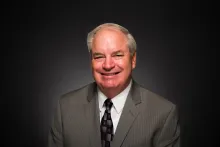
Robin Webber was born in Chicago, Illinois, in 1951, but has lived most of his life in California. He has been a part of the Church of God community since 1963. He attended Ambassador College in Pasadena from 1969-1973. He majored in theology and history.
Mr. Webber's interest remains in the study of history, socio-economics and literature. Over the years, he has offered his services to museums as a docent to share his enthusiasm and passions regarding these areas of expertise.
When time permits, he loves to go mountain biking on nearby ranch land and meet his wife as she hikes toward him.
