

Robin S Webber
This transcript was generated by AI and may contain errors. It is provided to assist those who may not be able to listen to the message.
We want to welcome everybody today, whether you're here present or those that are watching on the webcast, or those that are going to be viewing this in the weeks, maybe years to come. I hope that this will be a blessing to all of us, especially during the days of Unleavened Bread. I mentioned in the announcements that sometimes lightning does strike twice, and I always like to build upon the message before me, and I think this will be a good fit to be able to do so.
I'd like to give you the title of my message just up front so that you will have no mistake in thought about what we're going to be speaking about today. And I do have to tell you something. I'm kind of excited, but there's going to be a lot of action in this message today. The action being really the words that God puts in his Bible. This way of life demands action. It demands the work of God and the work of God's Spirit in us.
But then that we come alongside as well, and that we do our part and do what we can do, then allow God to do what only God can do. But there is that partnership. There's a partnership. Christianity is not just philosophy. It's not just theory. It's you and myself, as Mr.
Star Wars was mentioning, getting down in the trenches and grabbing a hold of those things that God has put before us. Here we are. Again, the message that I'm going to be giving you today is setting our minds on things above. And I want you to just think of that first word and jot it down. I'm going to be sharing some words with you today that I would hope that you'd be inclined to jot down.
Just grab a piece of paper. Take it out. Because there are just certain words. We are going to be doing some carving today, basically on ourselves. Because the chapter that we're going to go to is so graphic. You might even say it's sensual in that sense. It's dealing with a sense. It's dealing with you being an active participant in the work of God in you. It's not about you being on the bench. It means you coming off the bench and you being on the court as well, with God as our coach, with Jesus Christ as our star player, and then the new life that is going to be in us by doing that. So setting our minds on things above.
What I'd like to do here on this seventh day of the Days of Unleavened Brad, we are, in that sense, as we think of that great activity that occurred this day with the opening of the Red Sea and going through. As was mentioned, why we are here is not just an event, but a springboard to the existence, the ongoing existence.
That even as Israel went through the Red Sea, the wilderness lay in front of them and they were directed towards the Promised Land. Well, that's the same with us. God is the God that opens doors, he opens seas, he opens hearts.
But we've got to be understanding of his activity in us and what he would ask us to do. So what I'm going to be doing today, in a moment, we're going to be basically focusing on one chapter. But here's the point I want to share with you. I'm going to give you some homework.
And sometimes the homework I give from the lectern is heart work. But what I'm about to give to you, I'm going to practice what I preach. Isn't that novel? Okay, no. It's simply this. That I'm going to review the chapter I'm going to give you on a steady basis. Most of you have a GPS and you get from one place to the other.
This is one of the great GPS's in Scripture. You know how you get this GPS and it says, you know, 900 feet ahead, or car on the side, left, right, left, right. It sounds like you're in the military. You get these voices and so you follow that. Well, this is a scriptural and spiritual GPS that is going to guide us towards the ultimate promised land. Not just Canaan, but the kingdom of God. Because those types and those anti-types, they're in the Bible, but they're for a purpose.
One of the things that, one of the go-to scriptures of this festival is in 1 Corinthians 5. Join me if you would there for a second in 1 Corinthians 5 to set the stage.
In 1 Corinthians 5. And it's interesting that 1 Corinthians 5 written by Paul, an apostle of God, a messenger of God. 1 Corinthians is written in the context of the spring festivals, of the New Testament Passover, of the days of Unleavened Bread. This is to a Gentile audience, not a Jewish audience, but new believers. Kind of puts your mind to thinking about that for a moment of why we do what we do today. And notice the dynamism that we're about to talk about here. Your glorying is not good. Do you not know that a little leaven leavens the whole lump? Therefore purge out the old leaven that you may be a new lump since you truly are unleavened. For indeed Christ our Passover was sacrificed for us. Verse 8. Therefore let us keep the feast not with the old leaven, nor with the leaven of malice and wickedness, but with the unleavened bread of sincerity and truth.
Something's supposed to happen here. The word that I'd like you to first write down if you want to do that. I'm an old teacher, so just be with me. Okay, the first word I'd like you to write down that we're going to focus on, because these words are going to like, they just got power, they've got color, they've got action. Notice that word. Therefore purge out the old leaven. What's that mean? Purge means to cleanse out.
It means to cleanse thoroughly. At times it means to get rid of. Sometimes when we have health issues in our body, we take things to purge out the bad things in our body. It's not an easy process. None of this is easy, whether physically or spiritually, but you see the need to do it. You see the action, and sometimes it will take a toll for a while, but, and it's a toll on our human nature, ultimately, of what we're talking about, but God literally says to purge out. And sometimes it means just starting all over again. Sometimes if you're cleaning a carpet, I think of Suzy, I'm looking at the ladies are all alike, you know, men, they look at dirt. I've found over almost a half a century of life that women look at dirt differently than men, because we're kind of guys, we're kind of surface people, aren't we? A woman is like a domestic engineer. Tools and trade. Going in, going deep, getting into the, getting into the follicles of the carpet or whatever, the threads of the carpet going down, down, down, down. Nine times out of ten, they got it. They're like heart surgeons. They're like brain scientists, you know, they get right in there and do it. But sometimes that is not enough. Sometimes if it's a carpet, if it's a rug, if it's a sheet, you have to throw it out altogether and replace it. That also is purging. You purge out that which is no longer useful, and you replace it with something else. I'm trying to give you a feel of the work that's ahead of each and every one of us to deal with the leaven that still remains in our human sphere. We don't like it. We don't want it. But maybe we've just kind of been stroking it and petting it and keeping it around rather than, as the Bible says here, to purge it out. Our commitment during...excuse me. There you go.
Okay. Our commitment in renewal during the festivals of Passover and the leavened bread are not merely lent. That was brought out before. We're not doing lent. It's not just for a moment. This is an appointed spiritual huddle by God for us all to kind of come courtside with the coach to get prepared for that which is yet ahead of us. That we might ultimately, again, the days of the leavened bread is not just to show up in church once a year.
It is an appointed huddle with God the Father and Jesus Christ to prepare, to continue to practice righteousness, holiness that does come from God with His help, with His investment for all of our lives. So we're going to look at this, and I'd like you to turn to Colossians 3, please. Let's go to the book of Colossians. Let's get right into it. And as we do that, I'm going to kind of remind you, setting our minds on things above, setting our minds on things above and what it means.
Now let me do some backdrop here. Colossians 2 is about practices that Christians seemingly were, new Christians were actually denying themselves to be involved in. And the book tells you, no, you don't have to deny these things. But now that's why we have this turnaround in chapter 3 and verse 1 to, okay, these are the things that you are going to have to deal with now.
These are the real things that as people of God you have to deal with. Now notice this, if then you were raised with Christ, seek those things which are above where Christ is sitting at the right hand of God. There's a couple of words we're going to look at. Here's the jot time if you want to do this down, because this is just going to be the beginning of your study. There's a powerful word there. It's raised. You might want to jot that down. Another word that we're going to deal with here just in this one verse is seek.
Another word that we're going to deal with is above. Another word that we're going to deal with where Christ is. All of these are very, very important. This is what electrified people that were called into the early church. That here was this Jewish carpenter, rabbi, that had been crucified by the Romans. A man that the worst thing that he ever did was to be perfect. Think that one through for a moment. And yet they killed him. They killed this man of peace. He kind of keeps societal peace. And this galvanized the early church.
It galvanized him thinking that here's this Jew. These people that worship this one God. And he was crucified by the Romans. And all the Roman Empire knew what crucifixion was like. And then that he was laid to rest. And this is the key part. If you then were raised with Christ, seek those things which are above where Christ is. This is again, which we've been covering as we've been coming up to this, our baptism.
And here, Laurie was baptized two or three weeks ago, as I remember. That in baptism, we go down into the water in a symbolism of death. Death of the old man. But baptism is not just a watery grave. Baptism is the springboard to resurrection. Springboard to the new life. And it says, you were raised with Christ. Seek those things which are above where Christ is sitting at the right hand of God. Now, there's something I just shared in the, and I'm going to be passing this out later.
Something that I was sharing in the Redlands congregation so often, I find myself doing that sometimes kind of a trilogy, that Jesus lived. He died, and he was resurrected. Right? We all know that one. One, two, three. But this is telling us something different. Something more. Something wonderful. There are others that were resurrected. There are at least seven resurrections that are mentioned in the Scriptures. You can start in the New Testament just with Lazarus and Jarius.
And of course, in all those on top of those seven, all those that were resurrected on the day that Jesus died and came up out of their graves. But there's something else here that's powerful that should galvanize, electrify, as it were, our Christian existence. Jesus not only lived, he not only died, he not only was resurrected. Others have been resurrected. You know what happened? They died again.
Sometimes Jesus, that's his friends, died twice. Just think of, I think, once is enough. But think of Lazarus. But the difference in what we believe is that Jesus not only lived and died and was resurrected. But as we learn this past Sabbath, what we showed you in church is that he not only was raised from the dead, but we know that he ascended to heaven.
There's a difference. There's only one man that has ascended to heaven. He was raised, the wave sheath, he was lifted up. He was raised up. Two things, two key words if you want to jot this down. He was, in that sense, raised up.
But what's even more important is he was accepted. His offering, his life, his death, even the resurrection, he was accepted of God. You think of the first time when it says, this is my son in whom I am well pleased, which he said as he was coming down to the baptism in the Jordan. Can you imagine the roar, the roar of the heavenly court as his father embraced him? His father embraced him and said, well done, thou good and thou faithful servant.
So when we look at this, then you that were raised with Christ. This is talking about our Savior. It says, therefore seek those things which are above where Christ is. He's no longer in the grave. He's no longer walking around down here. And notice what it says. It puts the position at the right hand of God. So what this is telling us, are you with me a second, is that we need to move our hearts and our heads above that which is around us. Even though we have to walk on this earth, we have to look up.
To be very frank, sometimes as human beings, we're very earthbound, aren't we? If we want to be honest with ourselves. So we have to look up. And it says in verse 2, set your mind on things above, not on the things of this earth. Set your mind. Another word out of the old King James, you might want to jot this down, is set your affection. Set your affection. Know where your energy, know where your attention, know where your feelings, know where your loyalty and where your allegiance is.
It's not down here below. And to set, the word set it means to cause to stand. When you set something up, you set something up on furniture, you cause it to stand. To set. Now, I want you to just think about that word for a moment where it says to set. To cause to stand. For every cause there is an effect, and if there is an effect there has to be a cause. There is something that we have to do here. To cause to stand. Set your mind on those things above. Not on the things on the earth. That word is very important as we move back into the wilderness of the world after the days of 11 Brad.
The word set is often used. Another word that is used in Paul's analogies is the word to stand. This is a military term. We know of it where it talks about in Ephesians 6 about the armor of God. Therefore, stand. And that's a military analogy because to set, see this is very graphic. It's very, to set. That means you have to know where your grip is. You have to kind of get there and you have to lean forward. A Roman soldier that was on the front line had to stand. If he did not keep standing, he was Dennis Toast.
He was trampled on to death or spirit. You had to stay on your feet. So this is the first thing that I'm encouraging you as brothers and sisters as we leave tonight. Be ready to set your eye on things that are above and you're going to have to set.
You don't find your values in trial. You take your values into the trial with you and you are poised, recognizing that which is before. So set your mind on things above, not on the things of the earth. Why? Notice. For you died and your life is hidden with Christ and God. You died. That's what we said, right? We died at baptism. We gave our life over to God. We died. I have a question for you. May I?
Do you think anybody that's buried in a graveyard is worrying about what's happening up above the grass? I want you to think that through for a second. I have to share something with you. Susan's strapped down because I'm going to talk about her in a second. Sometimes when people die, she says, what a relief. They no longer have to worry. We're going to have to, you know, we've got to stand tall, but we don't, you know, they're not going to have to worry about the years they had. They're sealed. I think it's a positive way of looking at it with death. You've done your thing. You're dead. You no longer have to worry. People that are under the soil aren't worrying about what's going to happen in Washington, D.C. this weekend. They're not going to be worried about what's coming out of the Ukraine this weekend. They're not going to worry about whether the banks are going to rise or whether they're going to fall. They're not going to worry about this. They're not going to be worried about that. That's how we, the analogy here is that once we have accepted Jesus Christ as our Lord and Savior and responded to the call of our Father, and once we are baptized, it's like that world no longer exists. We don't worry about those things. That's not where our passions are. That's not where our energy is. So set your mind on those things above, for you died and your life is hidden with Christ and God. Hidden. Now, what does that mean? We have to understand a little bit about the Hellenistic world of that time and what that would have meant. The Hellenistic world basically would use the phrase hidden, of course, in the Hellenistic language. When people were buried and had the dirt around them, or they were entombed, it's as if they were hidden from the world. So they were hidden. Another way of looking at it is, again, with the, say, Gnosticism, that the Greeks would often talk about the mysteries. And the mysteries were special, special understanding that was only given to the initiated. So you have to punch in here, punch there, read this, read that, read that, read that. And so that's kind of where it was, the special, special group. There was another thought here that, when we look at that, is to recognize that, the aspect that, when you take that point, that, in that sense, God has granted us through His Spirit knowledge. And so some of these things are hidden. And it says, Now, I want to share a thought with you, and please don't raise your hand. I'm just asking a rhetorical question. This is one of the great phrases of Scripture. And only you can answer this question, answer it to yourself. This is not a showing of hands or jumping up and down. Simple question, only you can answer. This is something beautiful that Paul said, when Christ, who is our life, as we've come through the days of Unleavened Bread, as we took the bread, as we took the wine at the New Testament Passover, as we've been partaking of the bread of life, the Word of God, on this, the seventh day, before in that sense, we cross the Red Sea, and we move into the wilderness and keep on going towards the ultimate promise of God. Not Canaan, but the Kingdom of God. You can simply answer this question, yes or no. Is Christ your life? It certainly was to the Apostle Paul. Join me, if you would, in Galatians 2 and verse 20. In Galatians 2, let's pick up the thought in verse 20. This is what Paul thought about Christ.
I have been crucified with Christ. It is no longer I who live, but Christ lives in me. And the life which I now live in the flesh, I live by faith, in the Son of God who loved me and gave himself for me. I'm going to read that again for emphasis. I have been crucified. I have died. This world around me no longer matters in that sense. That doesn't mean we're a hermit from the world. We're to be a witness to the world. But our passion is now transferred from that which is below, up above. But Christ lives in me. He's down deep. He's embedded. That leaven of heaven, that holy one is embedded in me. And I now live, not like I lived before, not how my human nature would like to pull me. But I live in the flesh. I live by faith in the Son of God who loved me and gave himself for me. I want to share another scripture with you. Philippians 1. Just a few pages over. Philippians 1.
When Jesus Christ, and this is what God the Father planned, that's why He gave us Jesus Christ, who is our life. And when He's our life, we know that we are in His safekeeping. And no matter what comes, it will be towards His glory. In Philippians 1 and in verse 20. I think that's what I want. One second. Maybe I jotted it down wrong. One second.
One second. Yes, that's exactly what I want. Thank you. Notice what it says here.
Now, what do you think about that? For me to live as Christ and to die as gain.
You can't lose that way. To live in Christ is great. If I die in Christ, it's wonderful. I'm not an orphan. I'm not alone. I'd like to share a word that is popping out as I look at it, even here in verse 20. Here's a word to jot down. Magnified. Magnified. Remember when we were kids, in the second or third grade, you got those little magnifying glasses? In the little leather cases that pop out. Am I the only one? We did this in San Diego as a kid. And then you have the magnifying glass. And sometimes you could do... You know, life is a circle.
I find I'm using my magnifying glass more now at my age, reading the fine print. But you know, we used to kind of magnify the bugs and... Or we try to use the sun and try to burn a little paper.
Okay? We're all boys in that sense. But this says to magnify. Isn't that what the leaven of heaven is about? It's to be magnified and it's to expand in us. Less of self, more of Christ. Less of self, more of God the Father's righteousness. This is what we are to be about. So when Christ, who is our life, appears, then we will appear with Him in glory. Then notice verse 5. Therefore, put to death your members which are on the earth. Put to death. Okay. Are you with me?
Put to death. It doesn't say, kind of keep in your pocket. It says, put to death your members which are on the earth. Those things that are earthly, those things that are carnal, those things that are in our human nature. Put to death. You know, it's very interesting when we look at this. There's an interruption here. We're no longer to put up with ourselves as we were before God found us.
And Christ entered our life. Put to death. There's a certain, do I dare say this, there's a certain violence that is mentioned towards that which is ungodly. When you think of when Israel went into Canaan, once across the Red Sea, 40 years later, they were, God said, you go in and you clean it out. You purge Canaan. I have promised it to you. Now that's kind of hard.
I understand that. But I'm trying to wake us up to recognize that at times Christianity is not a mystic thought. It's not gnostic. It is hands-on. And the stuff that I'm talking about right now to put to death is hard. I remember Harold Jackson, a wonderful man, many years a minister up in the Los Angeles area. And Mr. Jackson, in his own inimitable, wise style, used to say this. He'd say, there must be something about human nature that we like.
Or we would have gotten rid of it a long time ago. There's a truth to that. But you recognize here, what it's saying here is that we are to do something. Again, Christianity is not just showing up on the Holy Days. Christianity is not just knowing. It's becoming. It's what you are as you allow the leaven of heaven in us, as it says. Jesus Christ dwells in me. Paul's quoting that. That it begins to expand. I know oftentimes we look at leaven like on, oh-oh, especially during these days.
And we abide by God's commandment to put it out. And there's a lesson there. Because we find that leaven can... Are you with me? And I'm not a cook, ladies. But that we realize leaven is basically baked into almost everything that we eat. And God tells us, here's an object lesson. It's everywhere. I won't tell you about one of my boo-boos. You ever had boo-boos during the days of leaven bread? Confession is good for the soul. I had a boo-boo, and I think it was the first night Susan smite... Oh, oh, oh, she's nodding. She caught me. Forget what it was. I think it was croutons and something. And you know, it was a wonderful lesson.
I'm telling myself, because sometimes you can be so busy that you forget. And habits. This goes with that. And I'll tell you another story. Want to hear another good story? We were about 19. Did I tell you a story before? And I was with her. It wasn't her fault. I'm not like Adam pointing to Eve in the garden. We were in college at the time. We'd gone over to Gwyn's restaurant, which is on Colorado Boulevard, and ordered a big meal.
And I got to tell you something. I loved what I ordered, because it's so good when it's hot, and there's powdered sugar on it, and the bread's just kind of yellowish, but it's toasted on the end. And they served warm, hot, Weber's-like things. Susan, hot, hot. Paul knows this, too. Hot, hot. And so, nice, hot syrup. I was leading her almost in the sense. She ordered something good. Then I looked down. I don't know if Susan caught it or I could. She's still catching it after 50 years. Okay, 52 years. And there it was. It's just beautifully laid out. It was wonderful. Wow, I'm about to eat it. You're kind of pushing the syrup into that nice, with the egg and the toast, you know, this and that.
And I stopped. I'm still finding that. That's a lesson, too. That when we get busy, when we get our minds off of things. I had my mind on Susan at the time. So, no, it's not your fault, no, it's that. But these things happen. And they're good lessons. If we'll take them. We don't have to beat ourselves up. Just learn from it.
I have to tell you what else. At that age, I was a little embarrassed to send it back with the waitress. So, I took a napkin. Can you imagine that all? If I put in something, tossed it out in the restroom. It's a lesson that stayed with me, and I bump into it every so often. The point of all of this, other than sharing my humanity, is to recognize that we need to recognize in overcoming, at times, what we're going to do takes real action. Join me, if you would, in Romans 8.13. In Romans 8.13, let's take a look.
For if you live according to the flesh, you will die. But if by the Spirit you put to death the deeds of the body, you will live. For as many as are led by the Spirit of God, these are the sons of God. And so, we are expected to put to death.
Our human nature is to die for the glory of God and His investment in us. Because of these things, notice, and therefore put to death are what your members, which are on the earth, fornication, uncleanliness, passion, where you're putting your affections, as it were, evil desire, coven-ness-ness, which is idolatry. Why is coven-ness idolatry? Because it consumes us. When we want something that is not ours, it consumes us like a fire. It becomes idolatry. And because of these things, the wrath of God is coming upon the sons of disobedience. When you look at these things, stay with me a second little historical survey. When you look at these things, fornication, uncleanness, passion, evil desire, coven-ness-ness, which is idolatry. You've been hearing me say this, and I'm going to continue to say it to you. It may be ad nauseam, but again, this is the point. For the last 10 years, we've all kind of caught on this term, and we think we're really spiffy when we use this term like, you must be teaching a class or something. You've gotten this. We talk about the post-modern world, the world after Christianity. Brother, I'm here to tell you, based upon what I'm reading here, that we are no longer experiencing the post-modern world in America. We are experiencing the pre-Christian world, the pre-Christian world. When a person was baptized, they gave their sole allegiance, their entire strength, their entire energy to God Almighty and to His Son. That is being evapored, that's being eviscerated in our nation. Once you take a God out of the picture, everything collapses. You think of Samson, you know, with the pillars, and how that just collapsed. We are finding America collapse day by day and week by week. I don't desire to be an harbinger of bad tidings, doom and gloom, because there's glory and there's wonderment on the other side of all of this. But we are beginning to witness the evaporation of a great nation. When you take God out of the picture, this is what you will have. You will go back to temple idolatry. You will go back to human beings, not know that God made a man and a woman, not a thing.
God chose the order of society. God created man and woman. This is where we're at. And when you start seeing this, you say, again, Susan and I, we were growing up 60 years ago in this way of life. We knew these things would happen. This is one I never figured out at age 11 or 12 of what we're seeing in society today. The total dismantlement of what God put into humanity, man and woman, husband and wife, father and mother, be fruitful, multiply, reduce the earth.
Today we have a narcissism society where people are becoming their own God. We are living in a world where there's a new religion. It's called the irreligious. And the irreligious have certain religious stepping stones that are familiar, but they're serious. They're proselytizing. They're converting in our universities, in our high schools, and down to four to five to six years of age in kindergarten, trying to pervert the mind of people. And also, at the same time, Satan attacking the church.
And going after our youth, going after the youth in the church that are in these schools and in these institutions.
And we need to be alert, and as parents and grandparents, we need to be setting an example. We need to be witnessing this new life in us. And in wisdom, and I say wisdom, to be able to be that witness as much as God allows us to be with our family.
It is time, brethren, that we wake up and more than ever set our affection, set our eyes, set our mind above. And again, while I'm at it, about the mind, let's understand what we're dealing with, and it says to set your mind. You and I are not animals. Schools would like us to think that we're animals. No, we are not an animal. We are a human being. When you believe in a God, He created man and woman on the sixth day. And He breathed His Spirit into the man. He breathed His Spirit into the man. See, when it says to set your mind, it's not saying to set your brain. A brain is an organ. It's something that is physical. When God breathed His Spirit into humanity, He was putting a part of His essence into us. A mind is a brain plus the Spirit in man. Are you with me? One, two, three. But then, at baptism, God implants, embeds His Holy Spirit in us. He leads us. He guides us. And this is what we need to know. And because of these things, the wrath of God is coming upon the sons of disobedience, in which you yourselves once walked when you lived in them. And during these days on Love and Bread, in this story of Israel of old and the Israel of God today, we were, God interrupted, He intervened, and He brought us into freedom. Brought us into liberty. No longer weighted down by the sins of the past, but we accepted Him as our deliverer. We accepted Him as our sustaining force to move us towards the Promised Land. But now, notice, now, you yourselves are to put off all this, these. But now, now, that's a big word. You might want to put that in all caps. Now. Be ready. Now. As it says in the book of Hebrews, now is the time of your salvation. And now, can I make a comment? It's a short word, but sometimes we drag on it, don't we? It says now. Do it now. We observe the New Testament Passover. In the Passover of old, in the Passover of old, they not only ate the burnt lamb, but they had to have their shoes on their feet, and they had to have a staff on their hand. Right? Are you with me? They had to be ready to move. When God interrupts, when God's Holy Spirit provokes our heart, provokes our spirit, we are to respond. We are to develop. We are to set our eyes on the things. Now, I'm going to show you something here for a moment. How important is now? I'm going to take off my coat a second. Now. It says, the now means to put off. Throw it away. Then he says, do something else, because God doesn't operate in a vacuum. Now, let's read the verse. Now yourselves are to put off all these anger, wrath, malice, blasphemy, filthy language, do not lie one to another, since you have put off the old man with deeds. Now, and have put on.
Brethren, I know this may get a member. I used to teach ninth grade, tenth grade, high school students. They liked a little change up in class. This makes the point. I'm hoping this is not too corny. This is real. This is the literality of what we are to be doing with our hearts and our minds, our words and our deeds. It is to be that drastic. Drastic and putting on now. Don't wait. And putting on something new. Notice what it says. Put on the new man who is renewed in knowledge according to the image of him who created him.
Yes, it's that drastic. Yes, it needs that kind of changeover. A difference. When God said, Behold, I create all things new.
That doesn't mean new and improved. It does not mean new and improved. You know, go down to market, you see something that's new and improved. Have you ever noticed that even though it's new and improved, that now it's a smaller quantity and it costs more? When God says new, this means something that's not from around here. When God says, Behold, what manner of love that God has spread abroad. The Greek behind all that says, it's not from around here. It is not earthly. It comes from above. It reminds me of the story long ago of a man that was going to build a building site and he thought he was selling his building. So he was taking the prospective buyer through the old warehouse, kind of broken down. It's pictured like 1900, 1905. Beams were coming down, rafters were coming down, junk. The man that was trying to sell the place said, well, you know, we can do this and we can do that and we can do this and we can do that. If you just do this, my caution. We've all been there, right?
The man finally just said, Excuse me, sir, you don't understand it.
I'm not interested in the building. I'm interested in the site. The building's coming down. I'm going to build a new Adaphisa here. Brethren, that is the story of the New Testament Passover and the Days of Unleavened Brad.
God's not here to just simply fix you up. He's not here just to simply fix me up. He's here to do a new thing by His Spirit, by His grace, by His love. And that love leads us to where there is neither Greek nor Jews, circumcised nor uncircumcised, barbarian, Scythian, slave nor free, but Christ is all and in all. Now notice verse 12. Therefore, as the elect of God, holy and beloved. Here it goes again. If God says something once, good, important. If He says it again, really important. Put on tender mercies, kindness, humility, meekness, long suffering. Let's go through that again. Notice not just mercies, but tender mercies.
Something that can be expressed, that people can, with you and me at times, feel the love of God, the concern of God coming through our attention and our affection towards our brothers and our sisters. Maybe our neighbors, maybe our co-workers, maybe our fellow students at work, that they notice that there's something different. This person is no... Our age is becoming so self-absorbed. Look at me. How many likes do I have?
I'm sorry I'm going to be beating that bush.
The world is turning inside, inside, inside.
The tune of human nature. Me, me, me, me.
Brethren, it's really time to wake up. I speak to myself. We've had a wonderful day of love and bread, but we've got more territory to cover going towards the Kingdom of God. Bearing with one another and forgiving one another. And if anyone has a complaint against another, even as Christ forgave you, so you also must do. But above all of these things, here we go, above everything, put on love. Which is the bond of perfection. And let the peace... Oh, let's put that word down in your paper. Let. I was going through this this morning and said, I'd left this one out before. And let the peace of God rule in your hearts to which you also were called in one body and be thankful.
That let is a very, very important word. Have you ever thought of this when you let somebody into your house?
Let is something that you've got to do. It's something that you have to do.
To let means to loosen. To let go. To lower the wall. To create a bridge. That is so important, that word. And to let.
Sometimes you say, no, I've done enough. No, no, no. God's still working on us. There's more. And let the peace of God rule in your hearts to which also you were called in one body and be thankful. Notice what it says here. To rule in our hearts.
We literally, in a sense, if you're with me, and there's a lot of literality in this Colossians 3, we have to, in a sense... I don't have one up here. Yeah, I do.
You didn't know it, but this is a throne. Before God called us, we were sitting on our throne.
Long lived the king. Long lived the queen.
But to let, at baptism, we said, I'm no longer going to sit on my throne. I'm no longer going to rule myself. There's only one in heaven and in earth that is justified and made himself ready to be on that throne. And then what you do, this is your heart.
Father, through your spirit, dwell on me along with your son, the Lord Jesus Christ. You give up being your own master. You're no longer Lord of your life. You've surrendered your life. You've given your life. You've found that... whoever you are.
Only one should sit there, and he rules our heart. And that's where peace comes. I know I'm doing a lot of ninth and tenth grade high school stuff here.
But I want you to see what it's like that you've got to incorporate in your life. I say that I... and I'm your pastor. I am still on this journey. I'm glad I've got to help meet down here who helps me to love God.
Who at times just tells me, are roppin'. Not these words. But if she doesn't do it, who will? Get off your throne. It's not about you.
I go, more homework, more heart work. And let the peace of God rule in your heart, to which also you were called in one body, and be thankful. To be thankful. When you go to Romans 1, you can look at this later, Romans 1, 21, 26. The slide into depravity is when you stop giving God thanks. Because they were not thankful. God gave them over too. You know the verse. You can recite it. That's why it's so great that on this feast day that we gather the family, we break the bread, we tell the story. I am exhilarated by the thankfulness and by the activity of you, God's people. And even when you can't be here, at one with one another, you're tuning into services. You're calling one another during the week. You're calling one another on the Sabbath. You have the love of God towards one another. Just don't keep it with the brethren. Spread it out there. That's what the feast days are about. To gather the family, to break the bread, this loaf of God, and to tell His story and not ours. And we're one body. And let the Word of Christ dwell in you richly, in all wisdom, reaching and admonishing one another, in psalms and hymns and in spiritual songs, singing with grace in your hearts to the Lord. Let the Word of God dwell in you richly. This is...we worship the Living Word. He gave the spoken Word. We have the written Word. Here's what I want to encourage all of us. I'm talking to myself up here, brethren. That every day, in the Bible of this Word, make that compact now. Don't make a vow. Just compact is fine. That you are going to read the Word of God every day. Little dab is not going to do you. It's good for grill cream. It's not good for converted people. When God granted the manna to ancient Israel, Exodus 16, He didn't say, show up in the wilderness on Monday and get all you can eat for the week. Are you with me? He didn't lay it all out in one big bag. He gave it day by day by day. Remember what it says? The same one that was working with Moses said in his prayer, give us what? Our daily bread. That's more than just the vittles that are on your plate. This is the Word of God. Get excited about the activity that God is calling to you on this day. Get excited. Get turned on. We're moving together towards the Promised Land. But God expects you to do your part. When Israel was on the Red Sea, God said, tell the people to stop. So He said, stop. Stop shaking in your boots. Something big is about to happen. And all through that night, the wind came from the north. All through the night, God was already working, even though they didn't see it. They might have felt it, but they didn't see it. All through that night. And then, in the morning, the ocean opened up. The sea opened up. And they went through on dry land. Okay? Are you with me?
There's a time in your life, in the days ahead, when God is going to call you to stop. And there's going to be a time when He tells you to go. And it's going to be now. Stop and go. He's going to interrupt by His Spirit that's prompting you. In whatever you're dealing with, as you are dealing with yourself, glorifying God, striving to have that leaven of heaven that is inside of us. Not the bad stuff until sunset tonight, but the leaven of heaven. To allow Jesus Christ and His Spirit and His example and the Spirit of the Father expanding in you, getting baked in really good so that we can be His witnesses here on earth. I'm going to conclude just with this. And whatever you do in the Word or deed, do all in the name of the Lord Jesus. Lord, curios, soter, the Lord, the King that God the Father has appointed in our lives. As I said in the operator that greater Moses, the greater Moses, the divine Moses, our deliverer that leads us to God the Father, that creates that bridge from the world that was to the world that is. As we set our eyes on things above.
I'm excited. Did you notice? Because I'm talking to myself up here. Will you join me this coming year?
Homework assignment. Not every day. Here's the assignment. Go down Colossians 3. Once a month.
Take a road check on the pilgrimage towards the Kingdom of God. Put off. Put on. It's not going to be easy. Jesus Christ never said that it was going to be easy. He said that it would be worth it. And watch God go to work in each and every one of you who he loves so very, very much. Look forward to seeing you after services.
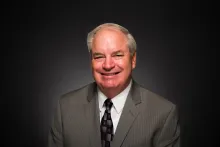
Robin Webber was born in Chicago, Illinois, in 1951, but has lived most of his life in California. He has been a part of the Church of God community since 1963. He attended Ambassador College in Pasadena from 1969-1973. He majored in theology and history.
Mr. Webber's interest remains in the study of history, socio-economics and literature. Over the years, he has offered his services to museums as a docent to share his enthusiasm and passions regarding these areas of expertise.
When time permits, he loves to go mountain biking on nearby ranch land and meet his wife as she hikes toward him.
