
Robin S Webber
This transcript was generated by AI and may contain errors. It is provided to assist those who may not be able to listen to the message.
Beautiful praise to God, isn't it? For those of you that might be a little bit warm, you notice Mr. Coe well? Moving towards the fan over there. I mentioned to him, I said, Jim, look down the aisle. Your wife is fanning herself, and my wife is fanning herself. It's time for some air. Now, I want to ask what temperature everybody wants it set on, because you know what happens? We're not running a democracy around here. We'll try to make it pleasing for everybody. I think this is with the change in temperatures and everything. We don't want you to fall in the sleep out there during the sermon. That's not good. If you are, I presume you're only nodding in agreement. Okay. I do want to make one more comment about the subject that I brought up about the baptismal class, to ease everybody that may consider participating. Please understand that once you begin participating in the baptismal class, that doesn't mean that the minute after it's done, you're going to be baptized. That's more for information. Please understand that once you begin, hopefully we can move towards baptism. But if you're not ready for one reason or another, it's been a worthwhile scenario as well. You know what I'm going to do? Because my two witnesses are back there, and something's not happening. Punch it. I did. That's it. Oh, you have little faith back there. What are you doing? I'm okay. You're okay, too. Okay, good. Just checking. I wonder if Paul or Peter had these kind of problems, you know, just... Do we have a short in this? It sounds like it's going in and out, or am I mistaken? Can I tell you something? Let's just cut it for today. Because I have something else to tell you today. Okay, I'm going to give this off. Okay. As we say, scene one and take two. Are you all set? Well, today's message is entitled, and I hope you'll write it down, please, Timeless Choices Before the Sons of God. As I mentioned that title to you, I want you to know that each word used in creating this title is of no small significance. And it's put in place together. It spells out why you and why I draw breath. Before we go any further into the message, let's define the word choice. Because perhaps that's the paramount word that I would like to focus on in the course of this message. First of all, just what is choice? Just what is choice? Number two, who started the process? First of all, allow me to define choice. Choice is a word, it's a noun, that's attributed to the act of choosing. When you act to choose, you've made a choice. Thus, choice means to select especially after careful consideration.
And to make a final choice, or judgment, or to have a preference for and or simply to decide. Now, I've offered you a definition. Allow me now to come back and run the title of this message before you. Timeless choices before the sons of God. We're talking about the decisions that we make.
We're talking about choice being the power or the opportunity to making a selection based upon all of the above information. To draw all of us in to create an interest pattern in here, allow me to put it this way. It has been said that our lives are the sum composite of all of our choices.
Our life and its journey, our saga, our story, is all the choices that we have made up to this point. Thus again, choice and its definition are paramount in this discussion. With choice to find, let's move to the second question. Now that we know what a choice is, what does the Bible record as the first choice that impacts yours and my humanity? Some might say God's decision or God's choice to make the mosquito. That's impacted all of us. Even as we scratch on a summer evening, I'm sure sometimes all of us have asked ourselves, what is the mosquito good for? Especially as it's biting you and biting you and you can't find it in your tent. But in all seriousness, the answer is discovered in Genesis 1, verse 26 and 27. Join me if you would there. This was the first great choice, the first decision, carefully considered, carefully thought out and planted into the Scripture.
In Genesis 1, verse 26, it tells us that God made a choice. God said, let us make man in our image, according to our likeness, and let them have dominion over the fish of the sea, over the birds of the air, and over the cattle, and over all the earth, and over all the creeping things that, yes, creep on the earth. And so God created man in his own image. Choice! In the image of God, he created him. Choice! Male! Choice! Female! Choice! And he created them. And then he made one other tremendous choice. It says in verse 28, he blessed them. And God said to them, be fruitful and multiply and fill the earth.
Subdue it, and have dominion over the fish of the sea, over the birds of the air, and over every living thing that moves on the earth.
So the first choice was recorded in Scripture. And God made a choice. A choice that did not finish, but merely began a process, still very, very much in play. And this is what creates the difference in certain peoples of faith and how they perceive God. Many of us, at times, hearing a radio program or hearing a discussion on this or that, will often hear about God being a first cause. That God, as a creator, in a Newtonian kind of sense, wound up the universe like a top and let it go and got it spinning, then, in a sense, backed away.
It became an absentee cosmic landlord.
That is not the God that I choose to share with you today or to reveal. For I think that God is much more than a first cause and an absentee father. I think God is very, very involved in the choice that He made to make man in His image after His likeness is only partially fulfilled at this point.
He dealt with the exterior. The interior is still a work in motion. And all of humanity's, plus our own personal subsequent choices, since that initial choice either fulfills His purpose or not, as to whether or not we will be made in His image and after His likeness, not only externally, but internally. And that, too, is the choice. God gives us a choice based upon His choice. You're saying, Weber, when are you going to get tired of repeating that word? Choice! Have you noticed it? It's for a purpose. Because our lives are the sum total of our choices, as to whether or not we are going to be like God and or like ourselves.
The Bible is what I call a non-third option book. There are no options in the middle.
You are either being transformed into the image of God and or you are not. We'll talk about that a little bit later and make more sense of it as we go along. So today, let's understand more about God's initial choice and the same day-to-day choices that have been set before the sons of God from the time of creation. And they don't change the choices that are before you and me, as they have been before the other sons of God. And we're actually going to define those different sons of God in perhaps a way that you have never considered before.
And all of the choices that came before all the different sons of God were not different. Why is that? Because God doesn't play favorites. He shows no partiality. Be they an Adam, be they a second Adam, as known as Jesus Christ, and or we that are today called the sons of God. God's purpose stands seemingly on this earth.
The distractions never go away and humanly can get in the way and maybe God in your way today, maybe even as you were coming up the 15. They will get in your way tomorrow. It is not whether or not God's purpose stands for us to be made in His image and after His likeness, not only physically but spiritually. And the hurdles, the challenges are all there before us, and the timeless opportunity to choose Him over ourself never changes.
That's the title of this message, timeless choice before the sons of God. But before we talk about ourselves, let's learn more about God's initial choice. Let me tell you a story. In Genesis 1, Genesis 1, Genesis is a Greek word.
And guess what it means? It means beginning. And to understand the book, you've always got to read the beginning of the book. I know all of us with the book sometimes like to go to the back and see who done it and how it turned out. And is it all right? And if it is, then I'll read the book. But we go to Genesis. In the beginning, God created the heavens and the earth. Think about it for a moment. Many of us have studied the Scripture for decades. And if not decades for years, when we care about in the beginning, God created the earth.
And I don't want to get into the discussion of what level of beginning or the pre-Adamic world or the Adamic world. Let's just talk about beginning for the moment. Let's move into that world that you and I were not born into. A world that in one sense is glamorous, mystical, fantastic, wonderful, and yet, in a sense, unknown to all of us. It's the world of Eden. Oh my, what that must have been like. As God had created the heavens and the earth and the seas and the oceans and the streams. And yes, the mosquitoes and the butterflies, the sun, the moon, the stars. And God walked through Eden. And he looked at everything that was there.
And everything that was there was in perfect harmony. Perfect harmony. Nothing was out of kilter. And God gave a report card as he looked around his creation and he said, It is good. As he looked around that garden, everything that was there was in a harmony. Not simply with one another, but with him and with his purpose. And all that was created was not created for its purpose, but only to serve his purpose.
That's kind of hard to imagine in a discordant world. In a world that is not harmonious, a world that around us is frenetic at best. And we, even as Christians at times, add our frantic best to a world that is already frenetic. In a world that's opposed by and large to the ways of God.
And to the harmony of God that he wanted to bring about. Why is that? Because the majority of humanity has chosen to go a different way. They have forgotten the purpose of why they were created. They have forgotten that purpose from God's point of view. I'd like you to consider about that. Maybe put that down on your notes for a moment.
Maybe something that we haven't thought about for a while as we go back to the book of Beginnings. To understand our purpose. Not according to how we view God. But according to God's point of view. For in that brief change there is amazing difference.
As to what is God's point of view of why we draw breath and why we exist. Let's pinpoint a scriptural reality. That whatever God has created, he has created for his purpose. Join me if you would in, for a moment, Colossians 1. Colossians in the Pauline Epistles. Philippians, Colossians, Ephesians. Right in there. Colossians is kind of the twin epistle to the book of Ephesians. Colossians 1 and notice verse 16. For by him all things were created that are in heaven and that are on earth. They are visible and invisible. You and I so often think of the world that we see. The world that is ours.
And Paul, being of the Jewish culture, always understood that there were two worlds. Two kingdoms. Two differences. And he included it all as being under God. That everything was seamless before him. Whether thrones or dominions or principalities or powers. Notice what it says. All things, notice, were created through him. Yeah? I believe that God is a creator. We'd all raise our hands on that probably in this room. If not, we'll have a conversation afterwards.
Just teasing. But how often do we consider on Monday, Tuesday and Wednesday the last line of that? Not only created through him, but for him.
Everything, all things, are towards his purpose and towards his honor. Let's add one other verse to understand the impact of what I'm saying as we begin this message in Revelation 4, verse 11. Where the angelic hosts are saying, You are worthy, O Lord, to receive glory and honor and power, for you created all things. And by your will, your choice, your decision, your careful expectation of what you wrought by creation, they exist and they were created. So that puts a little bit different spin on things, friends, that God is not only a creator and thus backs away as a cosmic, absentee, landlord or father, but that everything that is here below was created to serve him and to honor him.
But allow me to take you to the next step now. We said that man, God, in a sense, proverbially, was walking through the Garden of Eden and everything that he saw, it was good. It was very good. He was delighted and all was in harmony. And then he made a decision. And I'd like to quote for a moment from a gentleman named W. Tozer, fine Christian author. He wrote a book, most fascinating read. It's called The Purpose of Man.
You might want to look that up. And it's from page 22 that I would like to quote. Tozer, in his writings, then describes the next step. After everything in creation is harmonious, then Tozer says this. After God had created everything else, he said, with a smile on his face, I'll make me a man. I'll make me a man. And Tozer goes on in that description of describing how, and of course this is figuratively, we were not there, we were not a fly on a wall, we were not even a gleam in our Father's eye, as the old expression goes.
But I'll allow a little bit of the word flow to go in. It's as if God leaned over to the earth into the mud of Eden. And Tozer describes it as much as a nanny bending over carefully and also sweetly over a little baby being taken care of, that in a genteel manner, God began to create and began to form a man. He says, I'm going to get me a man. Now, I'm not saying that the way that you women might have when you were young, I'm going to get me a man like out of Oklahoma.
But he says, I'm going to make me a man. And he further describes how God stood the man up on his feet. As much as you and I, in a sense, take a doll, and put the doll up there to stand upright. Can you imagine that?
Are you there? Are you in Eden? And God is carefully crafting and developing this new creation, made in his image and after it's like this, and then stands him up. But there's no wind up, like a wind up toy that we had when we were young, that we'd crank. No. No. Something else very special. The impact and the closeness. It says in the book of Genesis that God breathed the breath of life into the man. And then that man rose. And as Tozer says in his works, he says, God said, Look around.
This is all yours. And look at me. Look at me. I am also yours. And I'll look at you. And I'll see in your face the reflection of my own glory. That is your end. That is why you were created. That you might worship me. That you might enjoy me. That you might glorify me. And have me for yourself. Forever. Are you there in the moment? Do you recognize how special this was? What a beautiful, beautiful thing that God was doing. Tozer goes on to share God's purpose in creating Adam and Eve is summed up in what they could do for God.
That nothing else in the whole creation could do. They had an exclusive on God shared by none other in the creation. They could worship God. And Tozer says that God anticipated that worship. What do you mean by worship? A whole bunch of do's and don'ts and legalism and this and that.
And act just this way and act that way. No. Let's go back to what Tozer said earlier. What worship can include. Enjoyment. Glorification. Fellowship. To be with the Creator. Now let's think about another moment here. When the Scripture in Genesis 1 talks, Genesis 2 talks about God talking and walking in the garden with the first couple. That's kind of interesting. Have any of you done that recently?
I've seen people talking to themselves when I'm driving along. But can you imagine people talking and walking with God and God actually being there talking and walking with them. To what other part of the creation did God ever do that? Nowhere in the account does it say that God came down from Heaven above and came down to Eden and hugged a tree and got worship. It doesn't say that God came down and talked with the animals. Know that song? Talk with the animals. It doesn't say that He actually carried it to Him that time.
That's also a part of God's creation when I get it right. No, He didn't say that God came down and talked with the animals. It says that He came down and talked and says that He came and walked with none other than man itself. And it was only in our human parents, in all of the creation, that God could provide the fellowship and the worship desired by Him. And you can only imagine for that time that was spent in Eden before Adam and Eve rejected God. What the unfettered and direct communion with God must have been like.
The joy, the fellowship. Many of us are parents and grandparents in this room. We've had children. We know what it's like when that baby is born and placed in our arms. And you look at it and you look at it and you just stare into it and there's just such... Not it, it's a boy or a girl. You've got to get that right.
But you're just overwhelmed of recognizing the specialness of that. Is God our Father any less? And wanting for Adam and Eve, our human parents, any more, any less than what we want for our own children or our own grandchildren? A part of that communion God gave instructions in Genesis 2. In Genesis 2, join me there for a moment. For with relationship does come responsibility. And God said in Genesis 2 and verse 8, the Lord God planted a garden eastward in Eden and there He put the man on whom He had formed. And out of the ground the Lord God made every tree that is pleasant to the sight and good for food.
The tree of life also was in the midst of the garden and the tree of the knowledge of good and evil. Now I will share something with you that maybe you've never considered before. But when you look at things biblically, lists are important and the order that it is stated is important. It is of note, and maybe you've never noticed this before in verse 9, that it is the tree of life that is mentioned first, not the tree of good and evil.
Listings do show at times in the Bible preeminence and point to proper choices where where God does want us to go. We also notice in verse 15, then the Lord God took the man and put him into the garden of Eden to tend and to keep it. And the Lord God commanded the man, saying, of every tree of the garden you may freely eat, but of the tree of the knowledge of good and evil you shall not eat, for in that day you shall eat of it. You shall surely die. So God put humanity in the garden, not only to dress it, or just not simply to enjoy it, but to dress it and to keep it. There is responsibility. And said, you can have everything here. It is all yours. The tree of life did not have barbed wire around it. It had no moats. It did not have any pit bulls tied to the trunk to keep people away. Access to salvation, relationship, worship, fellowship, joy with God was indeed wide open. Amazing, incredible, stunning, and exciting.
God was saying, by directing humanity to the tree of life, take it. And as you take it, you will acknowledge through worship that I am enough, that I am all in all, that I am sufficient to myself, as are my ways, my pleasure, my joy, and my fellowship, that I desire with you. And you have a choice. And if you understand my sufficiency, if God is eternal, how do you... Can I ask you a question? Don't mean to snap the rubber band in your head. But if God is sufficient in all in all, how then do you add to all in all? How do you add to that which is already full?
I'm watching you work it out in your minds for a moment. If God is all in all and already fills all and is all, how do you then add all if you believe that God is all in all?
I just wrote a column. It's called Peeking into Eternity. So my mind has been on this recently as to what eternity is and what it comprises.
You either believe that or you don't. When you don't believe that, you sin. Sin is humanity's attempt to add to God's all in all. And you can't add to God.
You can't add to God. When we don't believe that God is all in all and that God is holding something back or God is less than what he proclaims himself to be, that is where we begin to get in trouble.
And that is where we come up with this said. We notice a choice. The first choice by a son of God made of dust.
Let's go to Genesis 3 and verse 1. God had said, it's all yours and I am yours. We recognize then that God withdrew for a while. God never does anything by accident. It's always by design. That's because why? Because he's God.
And he put within us as human beings, not a gene of being a robot, but he gave us free moral choice.
The freedom to decide and the decision had to be made. So he withdrew himself. And the serpent came into Eden.
The serpent, representative of Satan, the adversary, who is more cunning than any of the feasts of the field, which the Lord God had made. And he said to the woman, God indeed said, you shall not eat of every tree of the garden. And the woman said to the serpent, we may eat the fruit of the tree of the garden. But of the fruit of the tree, which is in the midst of the garden, God has said, you shall not eat it, nor shall you touch it, lest you die.
And then the serpent said to the woman, you will not surely die.
For God knows that in the day that you eat of it, your eyes will be opened, and you will be like God, knowing good and evil.
Now, notice what happens. So when the woman saw that the tree was good for food, that it was pleasant to the eyes, and a tree desirable to make one wise, she took of its fruit and ate. And she also gave it to her husband with her, and he ate it.
She basically said, honey, you know what's for dinner tonight? Come and get it.
Now, what is interesting in all this conversation, if you've never focused on Genesis 3 for a moment, there's a whole lot happening here that does not remove us, you and me, that is, too far from Eden, and every son of God that has to make a choice.
Simply this, we understand that we are a son of God, as was Adam, a son of God, which we'll conclude here in a moment on. We understand that also there is the adversary. Satan was there.
We also recognize that God was mentioned, and God was in the knowledge of that son of God and or that daughter of God.
All of that mentioned, God, Satan, and all that I have mentioned does not preclude that we do not have to make a choice.
What is very interesting in this, notice there are three things. You might want to jot them down if you want to stay with the message or stay awake. Here we go. It says that the tree was good for food. Point one, the tree was good for food. Number two, that it was pleasant to the eyes. Number three, that it was desirable to make one wise. Why do I say that? Because these are the very choices that are before you and me today that I'll get to here in a few minutes. It never changes. It is the same before the first Adam, the same before the second Adam, and before we, the sons of Adam, and the younger brothers and sisters of Jesus Christ.
The obstacles, the challenges, and the questions are always the same.
We see that Eve basically saw that, well, it tastes good. It looks good. It's in reach.
And after all, who doesn't want insider information? It will make me wise.
Now, what happened when this occurred? One of the most stunning moments in all of creation.
When Adam and Eve rejected the fullness, the wholeness, the allness of God.
You don't think that God knew that immediately? That when they had rejected what God was, rejected the tree of life, rejected the sufficiency and the fullness of all that God wanted of worship and fellowship and communion, joy and unity?
He felt it. He didn't have to go ask questions. He knew that line of communion, of fellowship, was broken.
As much as when Jesus Christ later on would say, my God, my God, why have you forsaken me?
God knew that the communion between He and His creation was broken.
He didn't have to be told. After all, He's God.
When you think about what occurred in Genesis 3, I don't have time to go into all of it. You can maybe look at it later.
Let's understand that there most likely was what we might call a terrific sense of disorientation.
Spiritual amnesia began to occur on the spot. Adam and Eve began to forget what their purpose was.
Have you ever run into somebody with amnesia?
Hi, I'm Robert Webber.
I don't know why yet.
I can't remember my name.
That is the profound scenario that occurred at Eden.
That when Adam and Eve rejected the sufficiency of God, the joy of worship and fellowship and relationship with Him, for every cause there is an effect.
And there became a spiritual amnesian as to their purpose and of why they were created.
For they had taken that upon themselves.
Fascinating. Incredible.
They forgot their purpose for living and why they were created.
They have union and fellowship and joy evermore.
And I don't mean that in some ethereal, kind of, lilty way of joy evermore.
Because joy never disappoints.
Joy when there's no more tears, no more sorrow, no more pain, no more death, no more darkness.
They made a choice.
And a moral fog enveloped them and closed them in.
And it's interesting that in their naked state, they grabbed four fig leaves to cover themselves outwardly, rather than shedding their inward sin.
They tried to do what you might call the first cover-up.
They went for the externals, rather than the internals.
A powerful lesson for all the sons of God, down through all of the ages, that so often we hack at the leaves, or we pick the leaves to put on our cover.
When God is wanting to work with us from the inside out, we go the way of Adam and Eve and try to work from the outside in, in some organized external matter or manner.
And beyond that, we get into the blame game that's mentioned here in this conversation.
You know the story, I know the story.
Eve was the first one to use Flip Wilson's line.
The devil may be doing it.
Adam said, God, it's the woman.
Like this, ladies.
Her!
What was Adam saying?
God, if you hadn't made Eve, things would be all right.
Might be boring, but I'd be all right with you.
We find two significant things coming up even.
External religion that does not satisfy the communion that is needed between God, God's heart, and man's heart.
When we work from the outside and we try to show things to God from the outside, rather than giving Him the inside, which is our heart.
At number two, we can never get to that point as long as we blame somebody else.
What is that expression?
That when a man's fight begins with himself, then he has begun a good fight.
But until that time, it is not worth a fight worth fighting.
Luke 3 and verse 38. One of the most fascinating verses in the Bible, even though it's in a genealogy.
Yeah, Luke 3.38. Luke 3.38.
All the genealogy is going all the way back, all the way back.
Did you notice something? It gets really exciting in verse 38.
The son of Enosh, the son of Seth, the son of Adam.
And then did you notice whose son Adam is?
I know the first time I think Susan pointed this out to me.
I just had chills go up and down my back.
To me, it was so profound.
So often we get into our little genealogies or family trees, and we can't get out of the treehouse.
We get excited going five or six generations back.
And do you know who I was related to? Benedict Arnold. Isn't that neat? No, just teasing.
Anyway, but can you imagine the son of God?
Timeless choices before the son of God.
And every choice has an effect.
Join me if you would in 1 Corinthians 15, 21.
For the choice that Adam and Eve made has affected humanity from that time forth.
1 Corinthians 15, verse 21.
For since by man, that is Adam, let's just put it in there. Let's get it over.
Let's stamp it with Adam. For since by man came death.
And I'm going to leave the rest of the verse out because we're going to cover that later. Verse 22. For as in Adam, all die.
For every cause there is an effect.
And when we choose to move away from the fellowship and the worship and the joy and the communion of heart to heart, relationship with God, the result is death.
But the choices and the opportunity never go away.
Let's move forward to another time, another place, another son of God.
And that's Jesus Christ.
And find how similar the choices before Him were as were with the first couple. Join me in Matthew 4, if you would.
Matthew 4 and verse 1.
It is interesting as Matthew 4 and verse 1 opens up that it says, Jesus was led up by the Spirit into the wilderness to be tempted.
It is better rendered test it by the devil.
Chapter 4 opens up with a powerful scene.
So often we ask for God, or may I say expect God the Spirit, to take us away from evil, to take us away from the tempter, to take us away from things that are not easy to face.
It is very interesting that here we have in direct words that at times God's Spirit takes us towards the challenge, takes us towards the test. Why?
So that God will know and knows that He knows that His sufficiency is understood by us.
And that we worship Him and glorify Him, and appreciate His allness, and appreciate all that He brings to us that we can have that.
All of us at times, man, woman, and child in this room, will have what we might call the wilderness experience.
If you haven't had one yet, just get ready. Put on your seatbelt and have your airbags deployed. It will come.
God takes each and every one of us, because He loves us and He cares for us, will allow us to move into the wilderness experience. Sometimes it is by His Spirit, sometimes it is by our human spirit that gets us there, but nonetheless, the wilderness experience will come with the same common company of God, of Satan, ourselves, and there will be one more thing in that wilderness experience.
May I give you the word? Choices. Choices will also accompany you in the wilderness experience, as to whether we proceed by God's purpose or with our own personal satisfaction.
What is interesting, at times, we will think that we are doing things that are pleasing God, that are not.
Therefore, we need to make our choices carefully. Notice what it says here in Matthew 4.
When He had fasted forty days and forty nights, afterwards He was hungry.
Now, when the tempter in verse 3 came to Him, He said, If you are the Son of God, command that these stones become bread.
Very interesting as the adversary approaches this, the Son of God, who also in that sense came from the dust because He was also the Son of Mary.
But here He is, the Son of God, Jesus Christ Himself. Notice what He says, if...
Did you notice that? You know what that is? That's a kneecapper.
That's just kind of a pushback even before you get there.
Kind of a blowback is a pitch. It gets you off the plate.
Kind of push you back, gets you off balance.
Have you ever dealt with people that ask you questions, but they're not really questions?
Are you with me? They're not expressing their questions, they're expressing their doubts.
And in the doubt is their answer. They are not looking to learn.
Here, Lucifer is pushing back Jesus, saying, If you are the Son of God, command that these stones become bread.
Now, that's very interesting that Jesus is out in the wilderness, because the Judean wilderness is known to be very rocky.
And there's all sorts of these little stones that are all over the bed, and the floor of the Judean wilderness. They're small and they're flat.
And when you look at it, they almost look like the loaves of antiquity, the way that they would make those small, flat loaves.
Just think of an inflated pancake. Are you all with me?
Kind of like something that you'd like to skip along a stream somewhere, or on a lake.
So here it is! Christ is out there! Here's these stones! They even look like loaves of bread!
He might be, hmm... This might not be too hard after all.
And you know, God, why did you make these anyway?
What's going on? Here they are. They're useful. They're right in front of me.
And by the way, as Eve reached for the fruit, these are very reachable. They're right here.
But Christ came up with a different answer. He said, It is written, Man shall not live by bread alone, but by every word that proceeds from the mouth of God.
Jesus, because he was serving the purpose of God, recognized that there was a greater hunger extent on the earth that was needed to be filled, other than simply his own tummy that had gone without food for forty days.
He recognized that basically, that the greatest famine, the greatest hunger on earth, is the hunger of learning what our purpose in life is all about.
It is the hunger of being cut off from God, and being in this moral fog, and having this spiritual amnesia that allows us to continue in our days.
And Jesus was willing to go hungry longer, because he had that purpose in mind.
He was tuned to the purpose of God, and not just simply to his own being.
And then notice what he did.
He looked beyond what he could touch, feel, and see.
He did differently than Adam and Eve, and he quoted God's purpose in verse, when he said, Man shall not live by bread alone, but by every word that proceeds from the mouth of God.
He quoted from the first Moses, as he had spoken to the people of God.
It wasn't that the stones didn't look good to the eye.
Absolutely. Let's look at verse 5.
Then the devil took him up into the holy city, set him on the pinnacle of the temple, and said to him, If you are the Son of God, throw yourself down, for it is written, He shall give his angels charge over you, and in their hands they shall bear you up, lest you dash your foot against a stone. And again, Jesus said to him, It is written, You shall not tempt the Lord your God. Interesting. When you look at that verse, it says in verse 5, Then the devil took him up into the city, and set him up. Notice verse 6, If you are the Son of God, If...
Sometimes we think that Satan just throws us one punch or one strike and goes away.
Ah! That little chap here. Ah! Ah! The adversary is a roaring lion. He's going to do a left or right and a left. Not just one punch, not just one for the gipper. He comes back again, and notice what happens here.
That kneecapping. Seeing if Jesus would go wobbly. Take that power. Be like God. Follow my advice.
Make yourself a little bit wiser, just like I had told Mother Eve. You know that you can be like God. And what's the big deal anyway, Jesus? Because the Scripture says that you are the wisdom of God.
You are the wisdom of God. You know the verse that you're about to quote to me.
Just do it. It'll feel good. It'll be for the moment.
Don't worry. Just jump.
It's like that story back in the Bay Area, the Butch Cassian Sundance Kit. Just seeing what the audience is watching. Remember when they're up on the cliff? And Paul Newman and Robert Refford are up there, and you know the guys are chasing them. They're going to have to make a choice. They're going to have to make a decision.
And I think it's Robert Refford that says, I can't swim. Looking down at the stream. Paul Newman says, don't worry about swimming. The fall will kill you.
With that story in mind, Jesus Christ was not worrying about swimming.
He did not want to fall away from God. He wanted to stay as close as possible to God. Oh, he could have reached for the stones and made them bread like Adam and Eve.
He could have jumped.
And then that accentuated the wisdom and felt more wise like Adam and Eve. But he had God's purpose in mind. Let's go a little bit further. Again, the devil came to him on an exceeding high mountain and showed him all the kingdoms of the world and their glory. And he said to him, all these things I will give you, if you will fall down and worship me. And then Jesus said to him, anyway, away with you, Satan, for it is written, you shall worship the Lord your God, and him only shall you serve.
Comes again. And notice something that's really interesting that maybe you've never taken out of the verse. And I will give you.
Sin, the adversary, always comes as a giver.
The adversary in sin is a taker. It wasn't Satan's to give.
When we think of some of the challenges that are happening in our life today where we're being pulled, when we know that we've been called to God's purpose, when we recognize that you and I have an opportunity to one day walk and even restore it, as mentioned in Revelation 22.
Satan can come to us as much as he did to this Son of God, this Son of God, and say, if... and look what I'm going to give you. It's all yours. Just look out there. Imagine what Jesus probably saw, that view that was out there, as they were both in that spiritual realm of looking at Rome, looking at the Byzantine Empire, looking at the domains of Charles V and 16th century, looking at the French Empire, looking at the British Empire, upon which the sun never set, looking upon the great empires of Asia over the years, the Mongolian Empire that stretched from the Sea of Japan to the plains of Hungary.
It's all yours. Just do it. But Christ was filled with His purpose. Matthew 3, verse 17. And suddenly a voice came from heaven, saying of the one that we've been speaking about, This is my beloved Son, and whom I am well pleased. Adam was the Son of God, he made choices. Jesus was the Son of God, and he made choices.
Wherein lies the difference? 1 Corinthians 15. Join me there for a moment, please. 1 Corinthians 15. I told you I'd come back to these verses. Let's read them in total now. For sins by man came death, verse 21. By man also came the resurrection of the dead. Both in that sense were of dust. But the outcome was different. For as in Adam all die. Even so in Christ shall all be made alive. Interesting. Let's go to the third portion of the Son of God as we begin to conclude.
For the timeless choice of what we reach for, based upon what we understand and whose purpose we serve, comes down to 2009. That timeless choice remains before the sons of God to our time and our day. Join me if you would in 1 John 2. 1 John 2. Let's begin, verse 14. Paul's in... Paul, excuse me. John, the Apostle John. I write to you, verse 12, little children, sons of God, little children, because your sins are forgiven you for His name's sake.
God wants the same communion with you, the same fellowship, the same expectant worship, the same bond as He had before the decision of man in Eden. And you're restored in that through the sacrifice of Christ. I write to you, fathers, because you have known Him who is from the beginning. You have the purpose and mind. You don't have that spiritual amnesia. You're no longer in that moral fog. I write to you, young men, because, well, you've overcome the wicked one.
Been there, done that. Had the serpent circled the tree. You've had the if questions. I write to you, little children, because you've known the Father. You know the purpose of life. You know who you belong to. You know that you're not an accident of evolution, but you've been created for a purpose.
But it hasn't come to total fulfillment. You're made in God's image physically. He wants you through and through in His image spiritually. And thus the test remains. I've written to you, young men, because you're strong and the Word of God abides in you, and you have overcome the wicked one.
An amazing set of encouraging Scriptures that we've been called to live by the Word, serve God's purpose. John, over in 1 John 3 and verse 2, again, talks about us being His children. You can jot that down in 1 John 3, 1 through 2. But allow me to bring in the significance of Romans 8, 14. Jot it down. I'll just tell it to you by memory. For as many as are led by the Spirit of God, the same are indeed.
What the sons of God! What amazing company that you and I have been called to! We're kind of in a crowded companionship. Adam was the Son of God. Jesus was the beloved Son of God, begotten from heaven. And we, too, though, are the sons of God. God, His purpose, His words, and Satan, and choices are there before us, just like Him.
Notice what He says. Do not, in verse 15, love the world or the things in the world. Now, when we talk about the world, we're not talking about the people in the world. We're not looking at them as the enemy. We're talking about society. We're talking about culture. The Greek word there is cosmos, with a K. We're talking about that which is a part and in confrontation to that which God desired in Eden.
And desires in the creation that He's planning to our heart. Different. Unique. Notice what He says. If anyone loves the world, the love of the Father is not in him. Now, this is what I want to share with you. It's very powerful, and it's not like the way of the world. John says, do not love the ways of this world. Here's the world's way.
I'm okay? You're okay. You and me. You and me, bro. You're okay? I'm okay. You're all right? I'm all right. Let's not get too distinct here. No. No. When you look at how the Bible, which is God's revealed Word, if you believe it is God's world, the Bible always sets a contrast.
It is either this way, God's way, or the world's way. It is either light or dark. It is either blessing or cursing. Have you ever had a semi-blessing? Or have you just had a little curse? No. It's blessing. You think that you're still awake. We're getting done here. Have you ever thought of that? Have you ever been half-pregnant? We know that one. Well, how do you have half a blood? No. John, especially with the Hellenistic thought circling the world in the world of antiquity around 80-90 AD, always spoke of things in either love or hate, light or dark, give or get.
There was no middled muddled in between. And this is what you and I, as Christians, are facing in this world today, with a middled muddle that has forgotten that you and I live to serve, to worship, to extol by our belief patterns, the sufficiency of God. And once that has been incorporated into us, once that fog is dissipated, once that compass is set, we do not look back. And we do not do what it says here to notice, where it says, for all of that in the world, the lust of the flesh, the lust of the eyes, the pride of life is not of the Father.
It's not of the Father. It's of this world. And this world is passing away in the lust of it. But he who does the will of God abides forever. Jesus could have jumped off the Temple Mount. What a thrill ride! What a sensation! But Christ wasn't into sensations, and he was not into thrill rides, being the Son of God. He was there to serve the purpose of the Father, and he was looking beyond the moment. How often do we as parents or grandparents dealing with our children, dealing with our grandchildren, go, They weren't looking...
what? Excuse me. They say, what were you thinking of? Am I the only one that's mentioned that to the kids? Sometimes I still mention it to them, and they're almost as tall as... taller than Susan, and almost as tall as me. Sometimes as adult parents, we have to back off from that, because they have to make their own choices, but sometimes it just still slips out. What were you thinking of? What has been said before us, friends?
We have that same incredible opportunity to have God walk and talk with us in a restored Eden in the future. You and I have that opportunity to not just simply get caught by the sensations, the momentary thrill rides of this lifetime, but we've got to have our purpose ever set before us. When you look at the different factors that occurred between the sons of God, the choices were all the same from the time when it was Adam and Eve, as they reached. It looks good. I want to be wise in all the accompanying things. The same challenges went to Christ. The same challenges, the ones that are mentioned here, by John, to those that have the privilege of walking in Eden, are still the same that flares before us. I hope that in the course of this conversation today with you, that I've been able to trigger some thoughts. We haven't talked about the Garden of Eden for a while. We haven't talked about some of the big lessons that can be derived from that.
Let's understand that from the very beginning, friends, that God wanted us to experience His love and joy uninterrupted forever. Have you ever had a good moment in your life that you never wanted to come to an end? I want you to think about that for a moment. Have you ever had a good moment in your life? Have you ever had a day that you wish there was no sunset to? Susan and I just had one of those up in the Columbia Gorge. We just wanted that day to go on. I did. She did too. She's nodding. Just checking. We just never wanted the sun to go down. We felt we were in Eden. We were just enjoying God. We were enjoying His creation. We were enjoying one another. We were enjoying the people that were coming into our life. We had a sense of millennial community that it's hard to put words to. You think about that most marvelous day in your life and then quadruple that in a way that we can't have experienced because I have not seen, neither has ever heard, the wonderful things that God has in store for we that are the sons of God. Don't let go of that purpose. Don't lessen the allness of God. Don't be like Adam and Eve. Be like the greatest Son of God. Be like the begotten Son of God. Be like the perfect Son of God and make the right choices. Timeless choices before the sons of God. What will be your choice as you walk away from this room? We'll see you in 45 minutes.
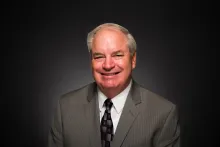
Robin Webber was born in Chicago, Illinois, in 1951, but has lived most of his life in California. He has been a part of the Church of God community since 1963. He attended Ambassador College in Pasadena from 1969-1973. He majored in theology and history.
Mr. Webber's interest remains in the study of history, socio-economics and literature. Over the years, he has offered his services to museums as a docent to share his enthusiasm and passions regarding these areas of expertise.
When time permits, he loves to go mountain biking on nearby ranch land and meet his wife as she hikes toward him.
