
Robin S Webber
This transcript was generated by AI and may contain errors. It is provided to assist those who may not be able to listen to the message.
In case you're wondering if this lecture is going to go along, I brought my lunch with me. I don't know what you might have out there for yourself. I will put it over here because I will be using this a little bit later on. We certainly want to welcome all of you today, our own church members, as well as those that are joining us today for the Kingdom of God seminar that the United Church of God is putting on around the world during these couple of weeks have now gone by.
I had an opportunity to meet a couple that came all the way down from Santa Barbara. There are others of you that are not normally with us that are guests today. We want to welcome you. We are in the third round of this series. If you'll join me in Mark 1, 14-15, because this is the core of what we've been talking about.
Mr. Garnett just left us there, but I'd like to center on that because this is the sentinel verse that we are using and breaking down, oh, ever so slowly to be able to gain the full meaning of Jesus' words. As you are turning there, I would like to say thank you to our lovely choir today for the beautiful presentation that they brought us. Talking about waiting on the Lord certainly fits in with the message that Mr. Garnett just spoke about regarding the abiding in Christ that God has given us to recognize that even while things are happening on this earth and all around us and sometimes thinking that all matters and all things and all events are out of control to recognize that when we have that relationship with God Almighty through Jesus Christ, that our position before His throne trumps any condition that is occurring on this earth.
Notice, if you will, in Mark 1.14, we notice it says, now after John was put in prison, Jesus came to Galilee preaching the gospel of the kingdom of God and saying, the time is fulfilled and the kingdom of God is at hand. Repent and believe in that good news. Now, what we've been doing over the course of the presentations before this, we've been breaking it down.
We've been talking about exactly what is the kingdom of God. At times, that is misunderstood or perhaps underwhelmed by individuals that don't fully understand the grasp of what that kingdom is all about. We brought that subject back again today through Mr. Garnett's message because we have people here today that were not with us before and we wanted to create that impact of really recognizing that there is an answer that truly is coming from above right down to this earth. And then we note what Jesus said, the time is fulfilled.
And we went through a session in which we talk about how God is not only the creator of time, but that He is the master of time. The master of time not only in what's going on through all the nations of the world, whether it be Russia or in Europe or North America or the Southern continents, but is the master of time in your life, in your world, in your orb, in your sphere of influence. What's been affecting you this past Monday and Tuesday or Wednesday, Thursday or Friday, that God is able to deal with things in a macro sense as well as in a micro and personal sense and knows exactly what we are going through.
And then He mentioned that the kingdom of God is at hand to recognize that wherever Jesus Christ is, there is that kingdom. Oh, not in total fulfillment, as Mr. Garnet brought out, but that we can experience it now. We can experience the blessings of it now as we come to understand what it is about. And then we come to that statement of repent.
We've read the statement here. We've broken it down. We see where the word repent is mentioned. And it is interesting that Christ's declaration here specifically delineates repentance as a necessary response to the calling of God, to the calling of the kingdom of God. Thus, this is our topic for presentation. It is here that Christ is basically saying, as He begins His ministry in the Galilee, that the kingdom of God is at hand.
Let's break that down into modern-day parlance to kind of get a sense of what Jesus is saying. He's basically saying this, the kingdom of God is at hand. It is here. It is now. I am bringing it to you. You need to get a mind.
You need to get a heart set that fits it. Because humanly, humanly, we're devoid of such a mindset, of such a heart set. And that's what we want to talk about this afternoon. What maybe you have never noticed before, very important to our own congregation, as well as those that are joining us today, the Good News subscribers.
Maybe as students of the Bible, we've looked at this before. We've read this before. But maybe we have missed an element that we need to understand. What is noteworthy is Jesus wasn't speaking to a convention of atheists here. He was not speaking to a convention of Jupiter devotees, but he was speaking to folks within a faith community that felt they had a working knowledge, felt that they had an adequate relationship about God.
This was the Jewish community of that day in the Galilee. And it is to that faith community, to those that understood the law, that he said, repent and believe this Good News that I am bringing you. Now, when he said that, now I've got all of your attention because you're a part of a faith community. It must have startled people because there's something about human nature where we say, you know, out of the 60s, I'm okay, you're okay. And just in case they didn't get it the first time, he said, I really am okay, and you're okay. Also, out of the 60, which is when I grew up, we used to have this expression, do your own thing.
So we are in a world and we're in a society where people are wanting to make sure that they're okay, you're okay, I'm okay, let's all kumbaya, and let's all do our thing. And my thing is as good as your thing, because after all, I'm okay, you're okay. Jesus came into this world in the 30 ADs, into a faith community, into people who thought they understood God and had a working knowledge of God.
Am I talking to anybody out there today? I'm talking to you, and I'm talking to myself. And he said, repent and believe the gospel. Why did he say that? Let's understand and appreciate something about Jesus of Nazareth. He didn't come to satisfy the spiritual status quo of his day. He didn't come to supply the spiritual status quo of humanity. Jesus plainly stated, being okay isn't going to cut it. Being okay only allows you to enter into, are you with me? The kingdom of the grave. Being just okay does not allow us to enter into what the Bible describes as the kingdom of God.
As we read this verse in Mark 1, 14 through 15, we come to understand that repentance certainly was on Jesus' mind, as he came forward as a herald and declared what his message was going to be about. But to understand what was on his mind, we have to go back to the beginning of time to understand what Christ was saying to that audience then, and we today that are in this room now, that mere presence, access, awareness, and knowledge are incomplete without unconditional surrender and without commitment to our Maker.
That's why Jesus said, if you'll join me for a second, Matthew 7. If you want to understand what Matthew 7 is about, and it's a verse that's familiar to many people that are Bible students. It's familiar to some of you that are taking the Good News magazine. We've all been through Matthew 7, but let's read it into the context of repentance. Enter by the narrow gate, for wide is the gate, and broad is the way that leads to destruction.
There are many who go into it, because narrow is the gate, and difficult is the way which leads to life. And there are few who find it. There are few that find it because they think just simply knowledge of God, being perhaps in God's presence, or having some access to God, or some working knowledge of God is enough, and it is not. That's what the message of Jesus was. And that gateway has got two frameposts on it.
One is repentance, and the other is belief. One is changing our ways, and the other is walking in a new way. Now, today, we're simply going to be covering the first, and that is changing our ways. But we have to go back to the very beginning of the story. Let's go to the book of beginnings. Join me if you would. Let's open up our Bibles. Let's go to the book of Genesis.
Genesis 1 and verse 26, and understand the story of God, and the story of man, and how they come together. In Genesis 1, 26, it says, God saying, Let us make man in our image, and according to our likeness let them have dominion over the fish of the sea, over the birds of the air, and over the cattle, and over all the earth, and over all creeping things that creep on the earth. And so God created man in his own image. In the image of God, he created him male and female, and he created them, and he blessed them, and said to them, Be fruitful, and multiply, and fill the earth, and subdue it. And have dominion over the fish of the sea, over the birds of the air, and over every living thing that moves on the earth.
And so as we go to this book of beginnings, at the very start of the story, not the middle of the movie, but the beginning of this story that God is revealing to us, we come to understand something that God's special creation was designed in his image, and it was for a purpose. If you're wanting to take notes today, this is a seminar. Please jot this word down, would you, friends? And it's simply this. God created us. We are not an accident. We are not the end result of two lovesick amoeba in a slimy pond that were awakened by photosynthesis way before the Pliestrian era, when the light just was right and the water was just right. And two little bugs looked at one another and said, we're in love, and the rest of creation began. Is that the world that you live in? Is that the world that you want to be a part of? To live a world, to live an existence that is just simply accidental, based upon a series of calamities or a series of accidents that come together, and thus that is your future? Or do you want to be a part of the kingdom of God, a kingdom that is based upon design and destiny? Not our destiny, not something that we could even begin to imagine, but a destiny and a design that has been put forward by none other than God Almighty. We notice then that God created us for a relationship and to worship Him, and that you and I, as our forefathers, were created to be the direct object of His love, of His concern, a love that just, well, it comes from Him because God doesn't have to read a book on love. He is love. That's His attribute. He is all loving, and He wanted to share what He has with the one that was formerly known as the Word. And they said, let us make man in our image and after our likeness. God's always desired that out of each and every human being.
So the kingdom of God started not in the future, but in the past. The kingdom of God, because wherever God is, His realm, His kingdom is, was established, begun in the Garden of Eden.
And there He gave man the greatest gift that he could give any living substance in His creation. He didn't give it to cows. He didn't give it to dogs. He didn't give it to cats.
He didn't give it to birds, but He gave it to man, and He gave man the gift of choice and free moral agency.
The gift of choice. You know, a cow doesn't think choices every day. You know, every single cow is going home to the barn in a line towards the evening tide. You ever see the cows kind of line up, they're going down the same path? A cow's not saying, well, I'm kind of Scottish today, and will I take the high road or will I take the low road? Cows don't go that way. Maybe yours does. The ones out where I live don't. A cat, when it sees a bird, is not saying, hmm, I wonder if I'm hungry or not today. I really wonder if I want to pounce on that bird. Animals don't think that way. Oh, their response is based upon stimulus. But a man has an ability, a woman has an ability to make a choice. Now, when God established that at the beginning, it was His greatest gift and yet our greatest challenge, this choice, this free moral agency.
And He placed a tree in the middle of the garden, two trees. One was called the tree of life. The other was called the tree of good and evil. Now, what is interesting, He basically gave two instructions at Eden regarding these two trees. He said, regarding the tree of life, He says, it's yours. You can have it. And as you have it, you will know how to worship me. You will know how to have relationship with me and relationship with one another. You'll be able to have a relationship with this environment that I put around you because you will not be predicating your existence based upon gift, like me, as I have for you. And you have access to that. And if you go to Genesis 2 and Genesis 3, and I'll let you look that up later, that's your homework, it's a class. You'll see that God put the tree of life right in the middle of the garden. He didn't put it in a thicket. It was not a contest to find out where the tree of life was. He didn't put a motor around it.
He didn't put barbed wire around it. He didn't have man-eating crocodiles in the motor around it. There was no moats, there was no crocodiles. Humanity had access to all that God desired to give. There's only one thing that God said, don't do. He says, this one thing I will ask that you do not do, do not partake of the tree of good and evil. For in the day that you do, you shall surely die.
Thus, in the beginning, an understanding of God that is so rich and so incredible that can be ours was made available to Adam and Eve. But they chose not the tree that was in the middle of the garden, but the one tree that they were told not to partake of.
They chose the tree of good and evil as something desirable.
Something desirable. Sometimes people make a mistake when we conjure up in our mind with that tree of good and evil that's mentioned here in Eden. Must have looked like people mistake it so, you know, so they'll draw a cactus or they'll draw poison ivy or they'll draw something that is got a negative imprint in them. The tree of good and evil did not look like cactus, did not look like poison ivy in the middle of the roses. It looked like the roses.
It looked like the evergreens. It looked like a palm tree, swaying in a tropical breeze. Now don't go away from this seminar and saying Mr. Weber said the tree of good and evil was a palm tree. I'm using that as an example.
But whatever it was, it was alluring. Because after all, it was good for food, as Eve would say. It was pleasant to the eyes and they even thought they could make one wise. Who could ask for more?
And it appealed to their pride in a world of sensuality. Something I can touch, something I can feel, something I can caress, something I can take in the aromas, something I can literally see with my own eyes, something I can experience. It's mine. I can experience it.
And they made that decision. Now why is that important for us today in this seminar when it comes to the topic of repentance? This is a cardinal point that I would like to share with you, that you will not hear in every seminary, that you will not hear in every congregation around the world. And it is simply this. You have to go back to the beginning to understand why repentance is so important. And it is simply this. You will be, at times, reading a book written by an author. They'll talk about the fall from grace. I'm here today to tell you, and this is a wake-up call for our Good News Magazine readers, for our own audience. And that is simply this. Man did not fall from grace. Man rejected God's kingdom from the beginning through the actions of the first two disciples, Adam and Eve. Why did they not fall from grace? Because they never climbed up on the rock to begin with, in Eden. They were never able to say no to self, and yes to God. So, wait a minute. Maybe I've been in Eden too, because I have that same challenge.
I had that challenge on Tuesday. I had that challenge on Thursday. When I was not able to say yes to God, but only yes to myself, because of what I could touch, and taste, and feel, and take in through my physical senses, they believed a lie. Adam and Eve fell for the big one. In Genesis 3, join me if you would there for a moment. In Genesis 3.
Verse 2, And the woman said to the serpent, We may eat the fruit of the tree of the garden, but the fruit of the tree which is in the midst of the garden God has said, You shall not eat it, nor shall you touch it, lest you die. So, she had a working knowledge of God's instructions, of God's rules.
She was in the presence of God in the garden of Eden.
She had access to God when He came a-walkin' in the cool of the evening. Verse 4, Then the serpent said to the woman, You will not surely die. For God knows that in the day that you eat of it your eyes will be open, and you will be like God, knowing good and evil. So, she saw it, and we knew that she took the bite. They believed a lie. And Eve, by partaking of that, then later Adam, succumbing to that and eating of that, said to themselves, Hear me, please, We will be our own God. We will make our own commandments.
We will make our own way, even as we are in the presence of God, even as we have knowledge of God, even as God will be imprinted on the coins in our pocket. In God we trust it's good for a coin, but it's not good for us, because we only want to partake of that which we can hold, see, smell, and hear with our own eyes. And they bit into it. They basically said that one plus three equals two. They basically said that one plus four equals two. They basically said that one plus five equals two. When God from the very beginning is that loving instructor said one plus one equals two. He's just like your first grade teacher. You see, your first grade teacher and God do not deal with fuzzy math. It's only our human nature that deals with fuzzy math that we think that we can compute a different way, do a different thing, do our own thing. I'm okay, you're okay. God will get over it. We do it. And then we expect God's blessings. Man's been doing that for 6,000 years. And as Mr. Garnett just brought out, we got a problem. I'll share some more math with you. It's been considered that over in 6,000 years of recorded human history, that there have only been about 350 years of peace.
Wow. What kind of report card would you give to humanity at large?
And we wonder why the kingdom of God needs to return to this earth. Some of us in this room today are still calculating with fuzzy math.
We think that perhaps because we know of God, perhaps because we're in the presence of God in a sanctuary facility, because we have a working knowledge of God, that we have repented before God. Let's understand something that's very important. 1 John 3 and verse 4. Let's go right to what Adam and Eve did. They sinned. They missed the mark. A lot of people write a lot of books, and they can't make a definition of what sin is when the definition of sin is right in the Scriptures. 1 John 3 and verse 4. Whoever commits sin also commits lawlessness, and sin is lawlessness.
It's the breaking of God's law. It's missing the mark.
It's missing the mark of what God desired for us, and as the Creator gave us guidelines, gave us rules, gave us boundaries, if you will, to keep us on the path of true worship, true oneness with God. For every cause, there is an effect. Ezekiel 18 and verse 4. Join me if you would there for a moment.
God's called us to life. That's why we're here today, to worship before He who is life.
But we also recognize that God cannot tolerate sin. In Ezekiel 18, join me if you would there, right? One of the major prophets, Ezekiel 18, again it tells us about people, persons that missed the mark. In Ezekiel 18 verse 4. Behold, all souls are mine, the souls of the Father as well as the souls of the Son are mine. The soul who sins shall die. Wait a minute! The serpent back in the garden said, you shall not surely die. Oh no, no, no, no, no, no, no. One plus four equals two.
God says in Ezekiel one plus one equals two. What you sow is what you reap. What you sow is what you reap.
And today we live in a society, dear friends.
Fellow Americans, to where we no longer live in a immoral world, but we live in a a moral world. A world that is without a compass, a world that is without a GPS, a nation that calls itself Judeo-Christian in background, by and large. But when I see the billboards that are on the street, when I watch the entertainment, or I do not watch the entertainment, but I can see it passing by me as I try to get to something worthwhile, as I see and sense the society around me, I recognize that we live in a nation that no longer trusts God, but is hugging onto that tree of good and evil. And somehow we think because God is imprinted on our coins, or because our founding fathers 250 years ago said that when in the course of human events it becomes necessary and they extol the creator, that we can get by upon what our founding fathers did, we cannot get by by founding fathers, we can only face God by ourselves. And he says, narrow is the way, but he does show us the way, and is through a repentant mind, a repentant heart, and a heart that is full of faith. Let me take it a little bit deeper here, and one thing that we want to consider. Man rejected God's love and purpose for their success. Adam and Eve strove to cover up their rejection of the kingdom of God and the king of that kingdom by putting on fig leaves, the proverbial fig leaves, as if that was going to do the trick. Probably scared the animals. But there's something that you and I want to learn from that, because as their progeny for 6,000 years, we've been doing the same thing, that we put on fig leaves.
We try to deal with the subject of relationship with God through our externals of what we look like on the outside. Cover ourselves—are you with me? Cover ourselves up well on the outside without dealing with the inside. How many of us in this room, perchance, are dealing with fig leaves, of trying to cover ourselves up from the outside so we'll look pretty to God, when God is not concerned about your outside at all? God is not into fig leaves. He's into hearts.
The power of Christianity, the message of the gospel that Jesus brought through the Galilee, the message of the kingdom of God is simply this—that God works from the inside out.
It's only man that works from the outside in. You know, it's kind of interesting. I've got my apple over here, and I'm not going to eat it because my mother taught me it's not polite to eat in front of company. I've got a couple hundred people out here, so I'm not going to do that. My wife reminds me of that, too. But so often we see an apple, and what we do is we look at an apple. You ladies, you know, ladies are the greatest consumers in the world. They'll go in there, and they're going to look over there. It's good for hubby. It's good for Janie, and it's good for Billy. Take it home. But what happens? What are you looking at for an apple? You know, you're looking for those worms. You know, the worms. Where are they? So you're looking for the worms that are in an apple, and you'll see, oh, I'm not going to get that one. There's a hole. That bug saw a great-looking apple, and you know what it did? It bored holes right through it. Didn't even care that I wanted that apple. Got there before I did. The thing that we need to learn about apples and worms. You thought this was going to be in the Bible, not a biology class, but it's simply this.
A worm does not go into an apple from the outside to the inside. It comes from the inside out.
When the blossoms come on an apple tree is when the larvae is put on the blossom. So the larvae is there all along, and then it begins to make its journey to the outside.
We get so excited about what's on the outside when it's been making all of this movement all the time on the inside to get out. We do the same thing as human beings, and that's why Jesus Christ came to this earth, and he said, I'm bringing you a new message. I'm even bringing a new message to the faith community. You've been dealing with fig leaves far too long, and they're not pleasing.
That's not what the kingdom of God is about, what you look like on the outside.
It's what you are on the inside as you give your life, as you give your past, as you give your present, as you give your future unconditionally to my Father. And you hand it over to Him, and you don't listen to the adversary with his lies. You don't look around what everybody else is doing. It's not going to be about a crowd. It's not going to be about taking a poll. It's going to be about that you've come to understand that in this moment in time that God is calling you as a first fruit, individual, into His kingdom, not because of who you are, not because of what you're doing, not because of the degrees that are behind your name, but because of His love, because of His divine will, that He's calling you. Some of you are here today as guests, and we welcome you, and we're glad to have you. Some of you say, well, I finally found a church that thinks just like I do. I have found it. Now, we use those human parlance terms, and that's a good start, but I want to understand, I want you to understand something. When it comes to the kingdom of God, you don't find the kingdom of God. The King finds you. It's not about a finding. It's about a calling.
It's about what you do now, because those two trees that were before Adam and Eve are still alive and well today in the 21st century. The choices are still there. The garden is still around us, and we have to make a choice with this gift that God has given us.
Why are you here today? Join me, if you would, in Romans 8, 14. In Romans 8, in verse 14. Let's notice what it says.
For as many as are led by the Spirit of God, they are the sons of God.
Led. It's about what God is doing. It's not about what we've done.
It's about His purpose. It's about His glory. It's about His grace that we might come to understand something very fundamental about our human nature and what is offered to us. That we can be led to such scriptures as Jeremiah 17.9. Join me, if you would, there for a moment.
Jeremiah 17, verse 9.
Fundamental. We have got to, in a sense, dear friends and those that are with us today.
We have to take a look at ourselves in the mirror and understand what God is doing and where He found us. We didn't find Him. He found us. Began to work with our mind, began to work with our heart, began to take the blinders off us to this stage that we might be able to confront ourselves and look at Jeremiah 17.9 and see where it says, the heart is deceitful above all things and desperately wicked. Who can know it? This flies in the face of modern evolutionary thought that man-given time will become better and better and better. Social Darwinism, at the end of the 19th century, spilling the 20th century, said that war is going to become obsolete because man is getting better. Man is evolving.
Social Darwinism said that we were going to leave the plagues of the past behind because man is noble. He is the noble animal and he is no longer in need of religion.
No longer in need of make-believe as the rationalist of the German universities would bring out.
But their students and students of other nations, given time in a few years, would lead us into the blood baths of World War I and World War II.
Some of you are still alive from those experiences and parents of yours in those experiences.
God says here, who made humanity, who was there at Eden, knows what we are about.
It's not just that humanity by itself is well... Are you with me?
Well, we're just a little itty-bitty bad.
Mankind can be, well, sort of naughty. We can get a handle on it. It's okay. We understand ourselves.
I'm okay. You're okay. It's okay, right? We'll do it together. No, no, no.
The Divine One, His revelation, if you take it as His revelation, says the heart is desperately wicked. It's deceitful. Who can know it?
Join me in another verse, if you would, for a moment. Romans 8.
Romans 8.
Again, a diagnosis of God, who was there, who offered everything. See, God is not down on humanity. God is up for this special creation. Gave humanity at Eden, at the commencement of His kingdom on this earth. Gave humanity every leaning edge of opportunity to have relationship with Him, to experience Him, to feel His joy, to feel His pleasure, to know Him as He desired to be known in His fullness.
He was there, and He's here today through His Word, and He tells us where we are, because we have to know where we are and where we start before God can start helping us.
In Romans 8.7, it says, the carnal mind, that carnal, carne, latin, meaty, fleshly mind, is enmity against God, for God is not subject to the law of God, neither indeed can be.
The carnal mind is enmity against God. This is God's diagnosis through the Apostle Paul.
What does that mean to you and me? What does the word enmity mean? It's interesting that out of the same Greek root word comes the word enemy.
The fleshly mind is the enemy of God. Another definition is it's hateful. It's opposite.
It is the very opposite of agape. Some of you might be familiar with that Greek word, agape.
You might pronounce it a different way. That Greek word is so unique that when Christianity came around in the first century AD, there wasn't really a word. They had to go back into the Greek to find this word, which seemed to be extra earthy. There were words like philia, there were words like aerois, there were words like saurage, family. But there wasn't a word to define what God was all about. They began using this word called agape, which is outflowing, an outgoing concern away from self without any shoestrings, without any attachments.
It says that the carnal mind cannot understand the love of God, this fleshly, meaty mind that rejected the kingdom of God on this earth. That's where all of us start. But I want to share the good part of the story. That's not where we end. You know how Adam and Eve reject it? You know how Adam and Eve reject it? The word, the one that later on became Christ, the one who pre-existed and was the one that dealt with Adam and Eve, dealt with Israel in the wilderness, that one, the one, the word. He who would later on become Jesus of Nazareth, the one that now is at the right hand of God the Father, that one, that one that came to earth, that one that as much as Adam and Eve rejected that one at Eden, their ancestors would reject him once again when he came to this earth. They rejected him. God's gift to this earth. They didn't recognize him, and they crucified him, and they killed him, God, in the flesh. Fascinating that they rejected God at the beginning of time, and God was once again rejected 2,000 years ago. And it came to a point, join me if you would in Acts 2, that something profound happened, because what happened is they came to understand through the teaching of Peter at Pentecost that we're going to be celebrating in the United Church of God and a weekends, and those that are visiting with us today are welcome to join us as we celebrate the Feast of Pentecost, the time of the giving of the Holy Spirit to the body of Christ.
And we observe that every year. But when it first came, Peter got up and let him have it. It wasn't his words, it was God's words. And then it crescendoed so much that they said all of a sudden, oh no, we have killed God. We killed him, Messiah. How do you recover from that?
How do you go back and live? And then comes something very incredible. In Acts 2, now when they were cut in the heart, not on the surface of an apple, but cut in their heart, no longer fig leaf religion, not relying on who they knew or who their daddy was like Abraham, or how much knowledge they had of the Old Testament, but to really recognize what they were capable of, of and by themselves, apart from God. And having thought that they were doing God a favor, killing his son, when they heard this, they were cut to the heart and said to Peter and the rest of the apostles, men and brethren, what shall we do? Then Peter said to them, repent, and let every one of you be baptized in the name of Jesus Christ for the remission of sins, and you shall receive the gift of the Holy Spirit. Now, why is this so important to this audience here today, our congregation in Los Angeles, and you that are visiting with us today, those of you that'll be hearing this message over the computer in the days, the months to come, Acts 2, 37, 38, and 39 are the core of what Christianity is all about. That makes it different. Here were people that became helpless and hopeless, and there was no line of lifeboat left to them. There was, remember that show that was on a couple, the Millionaire, whatever that was, where you got a lifeline when you could call somebody to help you. Now, I'll take a lifeline. No lifeline, dead in their tracks, no hope, only darkness settling in. And it is then that the words of God came through Peter to the helpless, to the hopeless, to those that recognize that it wasn't how much you know about God. It's not how many scriptures that you memorize out of the book. It's not just simply being in His presence, but it is unconditionally surrendering yourself to God Almighty. That's something that is lost on us today, dear friends, because you know what? Today we have wars. Have you noticed, or am I the only one? They just kind of keep on going on and on and on and on. And then we pulled the troops and the flag comes home, but there's never a parade anymore down Wall Street, and just kind of evaporates, and the problem is still continuing in those countries to get worse.
For those of you that are a little bit older, you'll remember that during World War II, that the Japanese Empire and the German Reich were conquered, and they unconditionally surrendered themselves to the Allied powers. They had no rights. They had forfeited their rights. They threw out all of the lists, all the constitutions that made them what they were, and they said, we know we are conquered. We are yours. You do with us what you will do.
We know where we've been. We do not want to go back there. We want to take a different walk into the future. Some of you were there. Some of you were over in Japan. Some of you were over on the continent in Europe. Many of us will remember that. Unconditional surrender. That is exactly what repentance is. It is unconditional surrender to God Almighty. Here we are today, and it's our time to make a choice. The two trees continue to be in front of us.
The trees are always there before us. We know that they are, but God asked us to do differently than Adam and Eve, than the men that were in Jerusalem at the time of Jesus' sacrifice.
And we can ask for forgiveness. We can have a new way of life. We can begin to abide in that confidence. You know what Mr. Garnett brought out today? I'm just going to take a minute or two more.
This abiding. All of us at times, perhaps in our church or the church that you belong to, have often sung that song, Abide in Me. I will not break out in song right now, but abide in me. And so often we think that abiding is kind of, well, that's kind of like what little old ladies do. Where little children, as they hold their hands, or little mellow marshmallow men, they just kind of abide. Just kind of be, just kind of quiet.
There is nothing quiet about abiding. There is nothing still, in that sense, I'm going to come back to Mr. Garnett's thought about still. Abiding is still. What is abiding and still is this, that when you have unconditionally surrendered your life to God, and when you then turn and repent and change and begin walking a new way, and you say that I'm going to throw the keys out of my life. I'm going to hand those keys over to you, and I want you to be the master of my life.
That's the most important decision that God's special creation can make. Because dear friends, I can only tell you, you heard Mr. Garnett talk about where this world is going. It's not going to get any prettier. So I would really suggest put on your seat belt, deploy your airbag, get ready. We are going into a time that is incredible. But what I want to share with you is that as we repent of not only what we have done, but who we are, going right back to the factory of our heart and recognizing it apart from God, we are nothing, and then begin to believe in His promises, unlike Adam and Eve, unlike those people that heard the parables that Mr. Garnett was talking about, and crucified the man that spoke the parables. Instead of doing that, we believe in Him, and we repent of where we've been, and we follow His example. Not my will, but your will be done, Father. You can have a peace then that passeth all understanding. That's fancy Pauline language for simply this. When you repent and say, I am tired of going my own way and making all my own choices that only give me the kingdom of the grave, and you have promised me the kingdom of God, that I am not only going to hate sin for what it is, but because it is separated from you, O Father, that has every opportunity ahead for me. That loves me so much that you gave your son for me.
When you do that, and then when you recognize that you have true access to God, true position before His throne, true communication through prayer, you can abide. You can be still. When I say still, that doesn't mean that our knees aren't going to shake, but our heart doesn't need a flutter. We know exactly who and what we represent as ambassadors of that kingdom of God today.
What I want to share with you as we conclude is simply this. Jesus came into the Galilee, proclaiming the kingdom of God. He said the time is fulfilled, and the kingdom is at hand.
Repent and believe the gospel. I challenge you to think of this. He was not speaking to a convention of atheists. He was speaking to people of the book, people that knew the book, people that knew the messianic prophecies. And He said, you've got to go a step further.
Throw off those fig leaves. They look funny anyway.
Deal with your heart. Go to the factory.
Hand it over to me. And turn and walk a different way.
When we begin to do that, we begin to step forward in confidence through that gateway, through that pathway, which is narrow. While everybody else goes that broadway, God never said that it would be easy. Jesus Christ came to this earth, and His words and His example set the bar so high that it could be set no higher.
But that's why we come to Pentecost in a week, to recognize that's why God gave us His Holy Spirit.
That we could, with confidence, go before the throne of God. And in that spirit, and when we say, Father above, I know where you found me. I know that I am washed. I know that I am clean through the blood of Christ. And I know that I will keep on sinning. But you know that my heart is now bent towards you. It's not bent towards this world anymore. It's bent towards you. Help me. Forgive me. Allow me to use and internalize the example of Jesus Christ. And thank you, Father, that I can imitate you as a Christian. Can there be any higher calling than to be able to the calling of practicing to be like God? That's what it means, imitate me, to practice like being like God, being like our Father, rather than our biological human Father, Adam. The choice is ours. It always is. But you've heard the Word of God today. You've heard about the coming kingdom of God and its need through Mr. Garnett. I hope that I have illustrated further the subject of repentance. Mr. Garnett, myself, will be up here afterwards. We'd like to meet anybody here that is visiting with us today. We will make ourselves available to you. Mr. Schimmet.
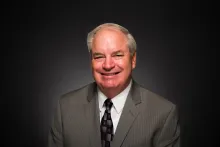
Robin Webber was born in Chicago, Illinois, in 1951, but has lived most of his life in California. He has been a part of the Church of God community since 1963. He attended Ambassador College in Pasadena from 1969-1973. He majored in theology and history.
Mr. Webber's interest remains in the study of history, socio-economics and literature. Over the years, he has offered his services to museums as a docent to share his enthusiasm and passions regarding these areas of expertise.
When time permits, he loves to go mountain biking on nearby ranch land and meet his wife as she hikes toward him.
