

Don Ward
This transcript was generated by AI and may contain errors. It is provided to assist those who may not be able to listen to the message.
Some of the physical education classes would be out there and help in griping and complaining, much like the Egyptians and bondage in Israel. They had to put out a few pieces of sod and what was this for, anyhow. So people passed by and asked, what are you doing?
So, I'm building a baseball field. You might have seen the movie. If they build it, if you build it, they will come. Finally, we had a team composed of students and faculty. We had a field. Upchur Rule donated the post for the backstop. We had a nice backstop and a really nice field. I mean, you could hit a ball 500 feet, it could roll over to the Ms. Armstrong's home there at the entryway. I always remember the first game in Gladewater one night.
We were playing some kind of semipro team from Henderson, Texas. Dark clouds and thunderstorms came up before the game. This was sometime in the summertime, probably July, might have been June. I was praying it wouldn't rain there, and it didn't. The cloud went around, so we came up to bat in the top of the first inning. Someone got on base, and I hit a ball far over the wall and right field into the black of night. I thought, man, this is God's will. This is providential. I knew what baseball could do for a kid. I knew what it had done for me.
I wanted every kid in the church to have a glove and a ball, to have some kind of gold, something they could shoot for, something they could identify with, and still, at the same time, be in the Church of God. You know, back then, people did a lot of talking about what you would do in the kingdom. And a student, too, had seen me build this field, and we got this team going. He said, well, are you going to be in charge of baseball in the world tomorrow?
I said, well, I don't even know if they'll have baseball in the world tomorrow. Eventually, I moved into a new job, and baseball seemed to die there. Someone took a road machine out to the field and scraped the grass off the infield that I had sided with my own hand. I think the buildings and ground guide gotten out there before I knew it. But I still had not given up on baseball after I became academic dean, and I helped the program get started again.
And we had a man by the name of Eric Williams, who coached the team. And the ambassador team played in the national playoffs of the national Little College World Series or something like that. I forget where they placed. You know, I could tell other stories about the things that happened. In the spring of 1977, Ambassador College Big Sandy was closed, and the students and the equipment was shipped off to Pasadena.
In the spring of 1978, I was shipped off to Pasadena as executive vice president. In the interim, I had started the church in Piler, was pastoring there, living in Big Sandy. And then, after two or three months in Pasadena, about the second or third week that I was out there, they were in pursuit of accreditation.
Garnet had Armstrong called a meeting up in the little anti-room off where he did the radio broadcast. And we had there Bray Wright, Wayne Cole, Robert Kuhn, Randy Dick, who was Garnet Ted's assistant. John Robinson, who was over the publications and worldwide news. Mike Germano, who was academic dean and myself. And the big question was a library.
Where can we have a library? Because the Western Association said the building you have, that old three-story building you have the library housed in, is not sufficient. So we did a search on campus and we came up with about the only place was they had bought the old parasol restaurant across from the administration building on across Colorado there. Well, actually this was Green Street, across Green Street. And I said, well that's about the only place. Somebody spoke up, well that's where you're going to put the welcome center, isn't it?
And somebody else said yes. And Garnet Ted said, oh we were in Big Sandy, just toss a rock over your shoulder, whoever it is, build a building and so on. You know, really what we need to do is to to have the college in Big Sandy and church headquarters here.
And it was like a setup and everybody chimed in. Oh yeah, that's a great idea. So who will go down to Tucson? You've heard the country song, Take Me Down to Tucson, but that's where Mr. Armstrong was at that time. We'll go down to Tucson and sell this to him. And they began to talk about how they would sell it to him. And I was the only one that spoke up and said, hey we have just spent thousands of dollars, a great human expense, misery, suffering, and all of that, across the burning sand 1500 miles from Texas to Pasadena.
And we're moving back. Yeah, we're moving back. And so Mr. Armstrong was convinced, made a tape praising his son how wonderful this is, comparing himself to David and he and his son to David and Solomon. And we went home for unleavened bread and someone got to Mr. Armstrong and said this is a terrible idea and so on and so on. And he called the move off.
That's when Mr. Armstrong wrote this letter that said, and my son is named a man to be president of Ambassador College that I don't even know, Don Ward. Of course, that was not true, but that's what it said. And nobody else knew the difference. I mean, you didn't know the difference. And you would never know the difference unless I told you probably. But anyhow, I came back from unleavened bread and Governor Ted called me in his office and said, now Don, I'll have a seat here and curl your toes in real tight. He said, my father has called off this meeting, this movement, this move to Big Sandy.
And so I guess you can go back to Texas and pastor the church there where you were. And so I did.
So I was shipped back to Big Sandy help reopen the campus again in 1981. After that, it had been closed for about four years. Then in 1982, I was shipped back to Pasadena. Then in 1983, we were shipped back to Big Sandy. Then in 1987, we were shipped back to Pasadena to be president of both campuses. The 1990s decided to consolidate the college. This idea that Governor Ted and Company had in 1978 to have the college in Big Sandy. So we consolidated 1990 back in Big Sandy. And so I was shipped back to Big Sandy in 1990.
In four years, we led the college to full regional accreditation. And the doctrinal wars really began in earnest. It already started by 87, but in earnest in 1993 with the nature of God realms. And by 1995, those of us who loved the truth, as you heard, in the first sermon, knew we could not remain there. And since then, I've been on the council. I've been off the council. And the story goes on and on. We all have our stories to tell. Yet, compared to some of the great men and women in the Bible, and our forefathers who helped shape and build this country, our physical and spiritual investment is probably quite small. So let's briefly catalog the history of some of God's people. Enoch walked with God for 300 years and was taken away. 300 years! Noah saw the whole world destroyed after preaching for 120 years. Abraham left Ur of the Chaldees, his home, his kin, his friends. Please turn to Hebrews 11.9, the faith chapter, Hebrews 11 and verse 9.
Abraham left Ur of the Chaldees, which is modern-day rock. That after Ur of the ancient Mesopotamia, Ur of the Chaldees, various names. It's also the area that Syria is located in, and the city of Babylon. In Hebrews 11 and verse 9. Hebrews 11 verse 9, By faith he sojourned in the land of promise, as in a strange country dwelling in tabernacles with Isaac and Jacob, the heirs with him of the same promise. For he looked for a city which has foundation, whose builder and maker is God. It's not some kind of physical edifice, whether you're talking about some edifice, like the Golden Gate Bridge in San Francisco, or the Brooklyn Bridge, or any other great bridge you want to name, or any great skyscraper or building that's made by hands. He looked for a building whose builder and maker is God. A city which has foundations, it's not the kind of physical foundation we think about. Spiritual. And through faith also Sarah herself received strength to conceive seed, was delivered of a child when she was past age, because she judged him faithful who had promised.
Now let's go to Hebrews 13 verse 14. Forward a few pages, Hebrews 13 verse 14.
For we have no continuing city, in this world we have no continuing city, we have no continuing tabernacle.
Now, for some of you, you have had the great blessing of never having to pull up stakes and move. You know, Abraham, Isaac, Jacob, the 12 tribes, pulled up stakes and moved many, many times.
Because they understood that the city that we're bound for, the city of promise, is not of this earth, it is not earthy.
It is the city to come.
But we have no enduring city, but we seek one to come. By him, therefore, let us offer the sacrifice of praise to God, continued, that is, the fruit of our lips, giving thanks to His name, but to do good and to communicate, forget not, for with such sacrifices, God is well pleased.
Isaac was forced out of his homeland, into the land of the Philistines, into the Gaurar because of a famine.
Jacob worked for 14 years.
Before he was able to get the wife, he thought he was getting, after the first seven years, Rachel.
Jacob prospered, but eventually a famine came, and he came to nothing.
But his son Joseph, who had been sold into slavery by his brothers down in Egypt, rescued Jacob and the family. Israel waxed rich in Egypt, but went into slavery and had to leave it.
Moses gave up his royal status and the pleasure of Egypt to suffer affliction with God's people.
The nation of Israel was eventually taken into captivity because of their sins.
Judah was taken captive into Babylon, and about 70 years later allowed to return, and had a type of restoration, but they never had a king again.
And the main reason that Judah was restored was because of the promises that God had made that out of the seed of Abraham, Isaac, Jacob, and out of Judah would spring forth the Messiah. Now, Jesus warned us to count the cost when we came on board in this church in that building not made with hands, but has the pillars spoken of in the sermon before this one.
All of the apostles suffered martyrdom.
Hundreds will suffer martyrdom in the future.
The history of God's people is replete with building up and uprooting.
Our forefathers who came to America gave up in a physical sense what it had taken them a lifetime to build in other countries abroad.
The settlers who pushed across this country were willing to give up what they had built and start over. And who knows what sacrifices that various people have made in today's era of the church in order for you to sit here today. And some people take that so lightly. It's as if, oh, we now have a smorgasbord! We can just, you know, choose wherever we want to go, wherever we want to go.
The real dedication and responsibility is on the ministry.
Well, we are free to shop around because of sacrifices and because of advances in technology that were out of our control. Maybe God arranged for this to happen some way. The gospel can now go around the world.
And hopefully we'll go around the world in great power.
The point is, people start over many times in this life. The difference between winners and losers is oftentimes very slight. I know, having been an athlete myself, from grade school through college and some in the pros, and coaching at a high level. Oftentimes, the difference between winners and losers is very slight. Oftentimes, the difference between the great and the near-great is also oftentimes quite small. The difference between those who make it into the kingdom of God and those who don't. At times for us, it may be hard for us to discern who's with it and who isn't. But one of the common characteristics of great men and women is the fact that they are builders.
All their buildings may be destroyed or whatever, but they build again. Sometimes on the same site, and sometimes somewhere else. But they keep on building. In Matthew 24 and verse 46, you know the Olivet Prophecy well. The apostles came, disciples said, show us the sign of your coming in the end of the age. Christ gave the various signs.
He also gave powerful warnings. Matthew 24 verse 45, who then is a faithful and wise servant, whom his Lord made ruler over his household to give them meat and deuces them.
Brother, and that's one of the responsibilities of the ministry is to give meat and deuces them, and especially in the world in which we live. Blessed is that servant whom his Lord, when he comes, shall find so doing.
Brother, and that is our challenge. Are we going to so do?
You know, trials and uproutings are necessary in the refining process that God puts us through. Let's look briefly at Job, who was a builder, in Job chapter 1. Job chapter 1, Job chapter 1 before the Psalms.
Some people have speculated that Job was key ops in ancient history and perhaps built the Great Pyramid. I've never been absolutely convinced of that. I don't know for sure, but some think there is evidence for that. But Job was a great man in his day in his land.
In Job 1-1, there was a man in the land of us whose name was Job.
That man was perfect upright and one that feared God, eschewed evil.
There were born unto him seven sons and three daughters, ten children. His substance also was great, so that this man was the greatest of all the men of the east.
He was the greatest of all the men of the east.
And his sons went and feasted, along with his children and the three sisters, quite often. In verse 5, and so it was when the days of their feasting were gone about, the Job sent and sanctified them, rose up early in the morning, offered burnt offerings according to the number of them all. For Job said, it may be that my sons had sinned and cursed God in their hearts. Thus did Job continually. And then along came Satan. Satan, given access. He is the accuser of the brethren before the throne of God. Nighting day, Revelation chapter 12 and verse 10. So he appears before God and God says, if you consider my sermon Job, none like him. Satan says, let me add him and see what he does. See, Satan believes that man is principally motivated by physical things.
Satan doesn't really understand spiritual things. So God agreed to let Satan take everything from Job except don't touch him. Don't do anything to his physical body. And thus he did.
In verse 20, then Job arose and rent his mantle and shaved his head and fell upon the ground and worshiped. And said, Naked came I out of my mother's womb, and naked shall I return there. Oh, they may put a nice suit on you or I when we die, whether we be male or female. We may look nice, as they say in the coffin there. Some say, well, he looks so natural. Or some say, I don't look like him at all. Sure has on a nice clothes. Those clothes are going to rot and decay pretty quick, and so is the flesh.
Be left with some bleached bones.
Naked came I out of my mother's womb, naked shall I return there. The Lord gave, the Lord takes away.
Blessed be the name of the Lord. In all this, Job sinned not, nor charged God foolishly. Then Satan goes back, and he says, in essence, well, you didn't let me get at his physical body. Let me at his physical body. He'll curse you to his face, and God allowed that to happen. So Job was smitten from the crown of his head to the sole of his feet with some grievous kind of sores, speculating that might be boils, which are very painful. I remember back when I was playing high school football, I had two big boils come up on the inside of my, just on the medial side of my kneecap, about where the knee bends, where the meniscus or cartilage is. And one time we were still in practice, preseason practice, and I came down hard on these knees, and this old core popped out. I know you want to hear this. And it left a big old hole about like my thumb.
The point is, it was very painful what Job had.
In the next 30 chapters of Job, he and his friends try to figure out why this happened to him.
The friends insist it was because of some hidden sin. Oh, Job just confess that everything would be alright. Job insists that he is righteous and that God really is unfair. He doesn't deserve this. And finally, Eli-Hugh speaks to Job. Turn please to Job 33. Eli-Hugh was the youngest there, and he had held his peace. And finally, he speaks. Eli-Hugh is, according to Job's wish, a man speaking for God. Job had said in earlier chapter, oh, that the Almighty would speak to me.
And Eli-Hugh was that man, according to his wish. Eli-Hugh was there to speak to him. Job 33, verse 8. Job 33, verse 8. Now to get there. In Job 33, verse 8, Surely you have spoken in mine hearing, and I have heard the voice of your words, saying, I am clean without transgression. I am innocent, neither is there iniquity in me.
Behold, he finds occasion against me. He counts me for his enemy.
He puts my feet to the stocks. He makes all my paths. Behold, in this you are not just.
I will answer you that God is greater than man.
Recently, we had people send us two gifts from, I know, the former student. I guess he's some kind of roving on his own independent preacher now to give the great story about the lessons of Job. Now, the lessons of Job is very simple. It ties in with Passover in that you have to judge yourself, and God has to be justified. By justified, I mean, in whatever God allows to happen to you or I, he is justified in allowing that to happen.
You don't blame God for what happens.
In verse 27 of this same chapter, 33-27, he looks upon men, like he's speaking to Job, he looks upon men, and if any say, I have sinned and perverted that which was right, and it profits me not, he will deliver his soul from going into the pit, and his life shall see the light.
Though all these things works God continually with man to bring back his soul from the pit, to be enlightened with the light of the living. Mark well, O Job, listen unto me, hold your peace and I will speak. If you have anything to say, answer me, for I desire to justify you. If not, hearken unto me, hold your peace, and I shall teach you wisdom. Finally, they get Job's attention. Now we go to chapter 42. Eventually, in chapter 38, God begins to speak to Job, and then in chapter 42, the last chapter, Job finally gets the message.
You know, in trials, God is trying to speak to us. Sometimes we think that God is trying to speak to everybody else but us. The things that are happening in the church and in the world.
The salvation is now for us. Judgment is now on the house of God.
Job 42, verse 1, Job answered the Lord and said, I know that you can do everything, and that no thought can be withheld from you. Who is he that hides counsel without knowledge? Therefore, have I uttered that I understood not, things too wonderful for me, of which I knew not.
Here I beseech you, and I will speak. I will demand of you and declare you unto me.
I have heard of you by the hearing of the ear, but now mine eye sees you. Wherefore, I abhor myself and repent in dust and ashes.
And you can read the last few verses which I'm going to summarize.
God takes to task these three friends who had spoken the wrong thing about Job. God says, I'll ask my servant Job to pray for you.
And after Job prayed for his three friends, this captivity that Satan had put upon Job was removed from Job, and he had everything restored to him and much more.
What goes around comes around, and for all these things, God will bring you into judgment.
So how do we look at trials, and how do we view testing?
In James 1, James 1.
In James 1, the point that so many of us would like to come to, in James 1, verse 2, I judge myself, have mercy on me, O God, as sinner.
You know the story of the Pharisee and the publican, which man went down to his house justified. Why do we have trials and difficulties? So, look at Romans chapter 5. Romans chapter 5.
In Romans chapter 5, in chapter 4, Paul had given the example of the faith of Abraham, and he says that it was not counted for him alone, but for us.
Romans 5.1, Therefore, being justified by faith, we have peace with God through our Lord Jesus Christ, by whom also we have access by faith into this grace wherein we stand and rejoice in hope with the glory of God. And not only so, but with glory and tribulation, that James says, counted all joy, knowing that, see, there is a formula, as it were, that we go through, so that the love of God can be shed abroad in our hearts.
We talk about developing character.
Actually, we obey God, do the things that he tells us to do.
And through his Spirit, he creates within us, he writes on our inward parts, his laws.
And he gives us a new mind, a mind to rule over death of the flesh.
Yes, it requires self-discipline, and it requires obedience.
And we have to do our part.
Verse 3 again, And not only so, with glory and tribulation, also knowing that tribulation works patience.
Remember, we read from James, let patience have its perfect work.
And I said, what do we mean by that? We know, and we know that we know God will deliver, and patience works experience. And this word, experience, in the Greek is dokime, D-O-K-I-M-E, and it means proof testing.
And patience works proof testing. We're being proved, we're being tested.
And hope makes us not ashamed, because the love of God is shed abroad in our hearts by the Holy Spirit, which is given unto us.
By the Holy Spirit is given to us. The love of God. In other words, when we go through it, as God commands us to, and instructs us to do, then the love of God is shed abroad in our hearts.
Oftentimes, in trials, we want to compare ourselves with someone else.
And one of the fundamental questions of the ages is, why did the wicked prosper and the righteous suffer?
Well, as we know, this is not the only day of salvation.
God is calling everyone to repentance at this time.
God wants us to fully participate in life. If we were spared trials and tribulations, then we wouldn't be able to fully participate in all the dimensions of life. You know, it says in Hebrews that Christ Himself learned obedience through the things which He suffered. That is, it doesn't mean that He learned obedience in the sense that He was disobedient, but that no matter what the trial was, He would obey. Even if it meant giving His life, which He did, and He was faithful unto death.
I'm sure that God is grieved. You know, He was grieved with the flood world.
You know, remember it says in Genesis 6-7 that God was sorry that He, or grieved, that He had created man because of the evil. The thoughts and intents of the heart of man was continually uneven.
Sometimes I ask God, Father in heaven, are you grieved with me?
And sometimes you tend to think, well, He must be, because I prayed and I prayed that certain things would happen and they do not happen.
And it's easy to think, oh, lowest me, and that somehow God is against you.
You see, with Job, who was the enemy?
The enemy was Satan.
And when Job prayed for his three friends, those who were really spiritually his enemies, then Job was healed and Satan's captivity was removed.
One time I had the experience in which, time after time, this young man was dying of cancer.
He had this horrible melanoma that spiraled out his ear, where this tumor thing was almost as big as his head. And quite often I had been called to anoint him because he was hemorrhaging. And time after time, we would anoint and it stopped.
Now, at times, he was given transfusions.
And finally, one night, when his body was a little emaciated, hulk of about maybe 75 or 80 pounds, we were there praying and watching. And he called me and he said, Dr. Ward, hold me.
And I put my arms around him.
And I prayed the prayer, essentially, that, and I had been reading these last verses in Job, of the captivity of Satan. God is not the author of cancer. If God be for you, who can be against you? Now he lets it come at times.
And I prayed that prayer, take Satan's captivity away.
And within a minute or two, he was dead, in my heart. See, Satan is the great enemy.
You know, most of the severe trials oftentimes come from family and friends and not from the outside.
And so many of the trials through the years, my years in the church, they have not come from the outside. They've come from within.
They have come from within.
You know, as we face the crisis that we faced, which came to a head on Christmas day here in Houston, and we met for that first time up in the North Hall combined, and I said, if you're here because of me, you are here for the wrong reason.
Because that's what some of the people in the Breakaway Group say, they blame me for all of you not being together with them.
One person wrote me the week before that service.
When I came to Houston, I thought Mr. Chavideo was soft and would fold like a cheap chair.
I thought that was because he was gentle and kind. I thought you would be strong and brave in adversity. I mean, Dr. Ward was Dr. Ward. Well, I was wondering about you, Dr. Ward.
How can you cry for the sins of the Council of Elders, sign the letters, and even write a luchar yourself asking for them to show some love in Christianity, and then agree to stay with the pack of wolves? Well, that's distorted to begin with, but I don't necessarily want to. I did everything that I possibly could with regard to writing and pleading that we would have reconciliation.
But that should not have been misconstrued as a proving of splitting the body of Christ.
The only way they let people stay, if they agree with 100%, do you?
I need to decide where I will attend Sabbath. Yeah, right. Either you are naive and too set in your ways to change. Totally uninformed, not enlightened like I am, but because it's easier that way and you need a paycheck. Or have been promised something may be a teaching job and is soon to be bankrupt spiritually and monetarily school. I don't know how someone can change and do a 180 overnight. I hope you haven't sold your soul. Let me know what happened to you if you feel I deserve an explanation that is. When I read that to my wife, she cried.
Inside, I was sort of amused. You say, well, you...
And I wrote back, Hi, at my age and stage in life and experience in the church and having gone through more spiritual battles than you can imagine, I'm amused at such accusations. You have to be kidding yourself with regard to wondering whether or not I have accepted a bribe or as in being promised anything. My wife and I sacrifice our bodies and beings every day just to keep on keeping on in our present state of health. I do it for the love of God and the brethren. I have not been promised anything but a crown of life if I am faithful. It is you who have caved into the spirit of slander and revenge. Christ states that vengeance is His and He will repay you. You can read about that in the Word of God. I now understand where you stand. No, I haven't been asked and neither has been insinuated to me that I must agree with everything the council administration do. You are apparently naive and gullible as to believe everything you hear. Both sides are wrong and to some degree in this sad saga.
Neither side was willing to yield themselves to the spirit of God and accept God's way of reconciliation. Of course, some would argue with that. Maybe Mr. Sagley would, but neither side could justify tearing the body of Christ apart as you are doing. I would fear to be in your shoes. Read 1 Samuel 8. Read John 10. Read 1 Corinthians 6. And then pray to God that He grant you repentance in Christ's service. Donald Ward. See, we have to leave vengeance to God. Satan is responsible. He is the accuser.
With God's suffering as a means to an end, with Satan, when he causes you to suffer, it's for the purpose of destroying you.
Some of us can become much too Protestant-ish in our approach to our trials and testing. We can develop the martyred, myrtle, complex. Enduring and living with trials and suffering becomes our point of righteousness. Here's what I mean. We almost take the attitude that we're doing God a favor, and we get the idea that it is His will that we suffer. Yes, God allows trials, but He is not the perpetrator of these great, sinful kind of actions that come on the sons of men to try them. And God doesn't want penance from us. He wants us to truly repent. He wants us to develop the kind of character that His Son Jesus Christ has. You see, character cannot be taken away. I want us now to turn to Romans 8, verse 31. What shall we say to these things? If God be for us, who can be against us? He that spared not His own Son, but delivered them up for us all. How shall He not with Him also freely give us all things? Who shall lay anything to the charge of God's elect? It is God that justifies. But in today's world, you see, the things that happened in the church probably would not have happened without Facebook and MySpace and some of those things. They're now saying that part of the activity in the Middle East, the revolutions there, has to do with people being able to network with Facebook and those social networks. So when we speak evil of dignities, we better know where in we stand. Because God is the ultimate judge. Who shall lay anything to the charge of God's elect? It is God who justifies. Who is He that condemns? It is Christ who died, yea, that is risen again. Who is even at the right hand of God, who also makes intercession for us. Who shall separate us from the love of Christ? Shall tribulation or distress or persecution or famine or nakedness or peril or sword? That is, it is written for your sake, we are killed all the day long. We are counted as sheep for the slaughter. Anything we get above death is a gift. We are worthy of death, but God has made it possible to have life through Christ. Know in all these things we are more than conquerors through Him that loved us. For I am persuaded that neither death nor life nor angels nor principalities nor powers nor things present or things to come nor height nor depth nor any other creature shall be able to separate us from the love of God, which is in Christ Jesus our Lord. The physical things we built here on earth over the past years may cease to function. I've seen nearly everything that I put my hand to do to build in a sort of a program way or other kind of way in the church. Basically been destroyed. Sometimes it's been raised up again, and it comes and it goes, as I say. The trials we're currently undergoing are minor compared to what lies ahead, and we must successfully handle this as we hope to grow. Character is a sequential process, much like child development, creeping, crawling, walking. If a sequence is missed, there are generally problems, and those stages must be recapitulated in order to move up the ladder of neurological development. I hope and pray that whatever the trials that are upon us right now, whatever they may be, we will be able to pass the test. We will, if we trust and have faith in God. God is a winner. God is a builder. God is our deliverer, and I trust that we will follow his example. I believe this poem written by Horace Greeley in 1848 summarizes and illustrates why trials and upreadings and what we should be building in our lives. Greeley writes, Fame is a myth. Popularity is an accident. Those who cheer you today will curse you tomorrow. Only one thing endures, character.
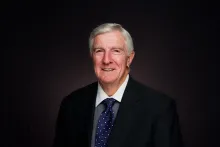
Before his retirement in 2021, Dr. Donald Ward pastored churches in Texas and Louisiana, and taught at Ambassador Bible College in Cincinnati, Ohio. He has also served as chairman of the Council of Elders of the United Church of God. He holds a BS degree; a BA in theology; a MS degree; a doctor’s degree in education from East Texas State University; and has completed 18 hours of graduate theology from SMU.
