
Don Ward
This transcript was generated by AI and may contain errors. It is provided to assist those who may not be able to listen to the message.
The title today, Can You Take It With You? What is the Greatest of All Gifts? I would say that life is the greatest gift. We did nothing to bring ourselves into the world. So life is a gift of God. Because of God's love, mercy, His care, concern, He wanted to share who He is, what He is, with other beings. So at some point in eternity, He, in the Word, planned out this great plan of salvation whereby a person could be born as flesh and blood, receive God's Spirit, and eventually be born in the very family of God as a spirit being. And we came naked into this world, and even though they will dress you to bury you, hopefully, you will in essence be naked. Your coffin, your clothes and flesh, and eventually your bones will rot and decay and return to dust. Let's look at Genesis chapter 2, verse 7, where it clearly says that God formed man out of the dust of the ground. Then, of course, God, I guess, is the first surgeon that He took a rib, and I guess He is the inventor of anesthesiology, took a rib out of Adam, and He created a woman. In Genesis 2.7, it says, And the Lord God formed man out of the dust of the ground, and breathed into his nostrils the breath of life, and man became a living nafesh. Nafesh is used for life.
Animals are called living souls. Some places where you see a living creature, the word is nafesh, or soul. Soul means, in its ultimate sense, life potential. Only God can take away your ultimate life potential. As it says in Matthew 10.28, fear not him who is able to kill the body, but fear him who is able to kill both body and soul. Even if you die, God has the power, of course, to resurrect you from the dead. Now, notice further here in Genesis 3, in verse 19.
In the sweat of your face shall you eat bread till you return unto the ground. Of course, this is what God said to Adam and to Eve after they had sinned, and He is now expelling them from the garden because of their sin, of deciding for themselves what is good in Eve, instead of looking to God. For out of it were you taken, out of the ground, out of the dust of the earth, as we just read, for dust you are, and unto dust shall you return. Now, let's look at Job 1, chapter 1, verse 21. You know, Job was a man of means, one of the great men of the east. He had many riches, had a large family. I guess you could say you had everything going for him, and this great God allowed Satan to bring this great affliction upon him, and when that great affliction occurred, Job was basically left with nothing, and he says here in Job 1, 21, naked came I out of my mother's womb, and naked shall I return there. The eternal gave, and the eternal has taken away, blessed be the name of the eternal. So, Job verifies what we just read there in Genesis, but there's more to the story. You can take something with you when you die, but what can you take with you when you die? In view of the fact that rich and poor return to dust, Solomon asks the question as to why all this striving for riches, for fame and fortune that we see on the face of the earth. Let's look at Ecclesiastes chapter 5 verse 13, where Solomon talks about this.
In Ecclesiastes 5, in a sense, this is another way of asking what is the purpose of human existence. In Ecclesiastes 5 and verse 13, there is a sore evil which I've seen under the sun, namely riches kept for the owners thereof to their hurt. Riches kept for their hurt.
But these riches perish by evil, travail, and he begets a son, and he is nothing. I'm having trouble with these glasses. And he begets a son, and there is nothing in the hand.
I don't know what's happening. Some days I can get up here and don't even need glasses, but right now must be the glasses interfering. As he came forth of his mother's womb, naked shall he return to go as he came, and shall take nothing of his labor which he may carry away in his hand.
So very similar to what we read in Job chapter 1, naked came I into the world, and I'm going to go away, and God gives, God takes away, and when all is said and done, there is nothing that you can take with you in the physical sense.
And this also is a sore evil that is, in points, as he came, so shall he go. As he came, how did he come? He came naked. How shall he go? Maybe he had the clothes on his back. And what profit has he that hath labor for the wind? I mean, what good does it do? If you're the richest man on earth when he comes that time, and you die, it'll be basically as it was the day that you born.
Naked came I into the world, naked shall I return. The Lord gives, and the Lord takes away. But is there something that you can take with you? God gives us physical life. This physical life is temporary, and we're all subject to sin and death. And, of course, Romans 6 and 3 says, and the wages of sin is death. But the gift of God, the gift of God, is eternal life through Jesus Christ our Lord.
So is this physical existence all there is to the thing we call life? That was basically what Solomon was asking. God gives us physical life. This physical life is temporary. And as we've noted, we're subject to sin and death. And as surely as we have lived, we're going to die. It is appointed, and a man wants to die. And after that, the judgment. That's what Paul writes in Hebrews chapter 9. So Job asked this question also, this question about what is life all about? What is the purpose of human existence?
The greatest minds of all time have grappled with this question of the purpose of life. And is there life after death? Let's go back to the book of Job in chapter 14. Job 14. Job 14. Of course, after Job had everything taken away from him except his wife, he might have been better off without her. According to what she says, she said, Job just cursed God and died. Job had these three friends that converse with him, and they missed the boat entirely as to what Job's problem was.
They thought there was some great secret sin in Job's life, and he would just fess up, confess, and admit that he was a sinner. It would be healed, and that would be the end of it. In Job 14 verse 14, if a man die, shall he live again? All the days of my appointed time will I wait till my change come. You shall call, and I will answer. You will have a desire to the work of your hands. Now look at Job 19, forward a few pages.
And so there's a question of life and death. What is life all about? Is it just to strive here on earth for your three score and ten, or is there more? What can you take with you when you die? In Job 19 verse 25, Job 19 verse 25, For I know that my Redeemer liveth, and that he shall stand in the latter days upon the earth. Job says, I know that God exists. See, that is the first article of faith.
If you don't believe that God exists, obviously you're not going to be able to do or accomplish anything in the spiritual realm. I know that my Redeemer liveth, and that he shall stand at the latter day upon the earth. And though after my skin worms destroy this body, dust you are, and unto dust you shall return. The worms destroy the body. Yet in my flesh shall I see God. So Job had this assurance that there was life after death. David, who was a king and also a prophet, posed this question as well. If we look at Psalm 8, and we'll see that Paul quotes this later in Hebrews 2.
So let's look at Psalm chapter 2. You can imagine being in the Middle East in those days, at the time of David, circa 1000 BC, and I said circa 1000 BC, 3000 years ago, how clear the sky must have been out there, as you said, on a, you might call it mountain or hill in the Middle East. And you look up into the starry sky, and it's almost like you could pluck one of those stars out of the sky and hold it in your hand.
David looked up there, Psalm 8, verse 3, when I consider the heavens and the work of your hands, the moon and the stars which you have made, what is man that you are mindful of him, and the Son of Man that you should visit him. I mean, you look at creation and its magnificence, especially 3000 years ago before humankind spoiled the earth in the way that they have.
Yes, we have polluted the earth greatly. And one of the reasons I'm not going to turn there, this is sort of a side point in Revelation 11, it talks about when Christ comes again to judge those who have set about to destroy the earth. There are a lot of different ways you can destroy the earth. Now, you look at Hebrews chapter 2. Paul quotes from this Psalm here, Psalm 8, concerning this and asking this question about man. What is the purpose of the human existence in Hebrews chapter 2?
In Hebrews chapter 2, beginning in verse 6, you have put all things in subjection under his feet, for in that he put all things in subjection under him, he left nothing that is not put under him. Now, you look, I read a different verse. Verse 6 is the one I want first. But one in a certain place testified saying, what is man? We just read that from Psalm 8 verse 4. What is man that you are mindful of him and the son of man that you visit him? We're made a little lower than the angels at the present time, but yet God created us to have dominion over the whole earth.
But now we see not yet all things put under him, that is, under Christ and eventually under God, Christ and the saints. In verse 9, we see Jesus, who was made a little lower than the angels for the suffering of death, crowned with glory and honor, that he by the grace of God should taste death for every man. So Jesus Christ came on the scene and paid the price. Remember the Romans 623, the wages of sin as death, but the gift of God as eternal life through Jesus Christ our Lord. For it became him for whom are all things and by whom are all things, and bringing many sons to glory to make the captain of their salvation perfect through sufferings. Jesus Christ suffered, and as we shall see later in the sermon, we are going to suffer in this life. Scripture makes it very clear that it is through much tribulation and trial that we enter into the kingdom of God. We're going to be tried and tested on many fronts to make the captain of their salvation perfect through sufferings. Now some people read that and they get confused and they tie it in with Hebrews chapter 5, where it says, and he learned obedience through the things which he suffered. That is, Jesus Christ had to remain perfectly obedient to the point that he gave up the breath of life. Just before he did, he said, Father, into your hands, commend I you my spirit. And so he placed his life essence then in the hands of God the Father, and he was faithful all the way. And he learned he was tested in every point as we are. So that's how he learned obedience through suffering. Would he remain obedient under those conditions, even though he was without sin, falsely accused, a mock trial, the people turning him over to the Roman authorities, releasing Barabbas, a murderer. And through all of this, he remains faithful. So that's what it is meant by. He learned obedience through the things which he suffered and made the captain of their salvation perfect through sufferings, tempted in all points, tested, tried in all points as we are. Verse 11, For both he that sanctifies and they who are sanctified are all of one. There is one spiritual essence. The same spirit that is in God as in Christ is in each one of us, for which cause he's not ashamed to call them brethren. And sometimes people, I don't use this terminology, but some people do of our elder brethren. And he is spiritually our elder brother in that he is the firstborn among many brethren. So we see here that, in essence, the purpose of human existence is to be in the kingdom of God. That's the answer to the question of what is man, that you are mindful of him. And very often I refer to what I'm about to refer to what I call the seven greatest questions of life. And here you are in Big Sandy, Texas, which some people would call isolated. I remember when some of the accreditation teams came to the campus to evaluate the school. He asked me, is there a pizza place within 500 miles of here? I said, sure, there's one right there in glade water just 10 miles down the road. So, but anyhow, we are viewed, obviously, as being in the backwoods and out of it. Yet in this congregation we have some very intelligent, highly educated people. And even if you aren't highly educated in the sense of degrees, some very intelligent people, and you could do most anything that you set your mind to do. It's a matter of setting your mind to do it.
So here we are where we live, and we know the answers to the great questions of life. Does God exist? Well, according to the scripture, He exists. And if you had no other proof other than common sense, I think you would almost come to the conclusion that God exists because nothing else makes sense. Look at Hebrews 11. So this first question of life is, God exists, which we've already referred to two or three times. Hebrews 11 verse 6, but without faith it is impossible to please Him, for He that comes to God must believe that He is, that He exists, and that He is a rewarder of them that diligently seek Him. You've got to believe that God has our best interest at heart. And see, this is a very critical point with regard to belief, to believe that God always has your best interest at heart. See, Job came to the point to where he didn't really believe that God had His best interest at heart because eventually Elihu got Job to see that he was accusing God and justifying Himself.
So this is a critical point to believe that God always has our best interest at heart. He is a rewarder of those who diligently seek Him. What is His purpose?
We've already talked about that. What is God? God is spirit. That's John 4.24. God is spirit. That's His essence. We are flesh. That's what we're made of. God is a spirit being. Who is God? God is our Father.
Look at Isaiah 63. I believe it is. I didn't put this in my notes, but I think we'll go right to it. In Isaiah 63, verse 16, Doubtless you are our Father.
Doubtless you are our Father. Though Abraham be ignorant of us, Doubtless and Israel acknowledges us not. You, O Eternal, art our Father our Redeemer. Job says, I know that my Redeemer liveth. Your name is from everlasting. Then you look across there at Isaiah 64, verse 8, But you now, O Eternal, you art our Father. We are the clay. You are our potter, and we are all the works of your hands. So we are made of the dust of the ground and given physical life, but there is much more.
So what is God? God is spirit. Who is God? He's our Father. What's His purpose? To bring sons and daughters to glory in His family. And the corollary to that is what is man. Man is made from the dust of the ground, which we've thoroughly explored.
Who is man? Well, man is made in the image of God with faculties akin to God, with the potential of becoming an heir of God and a joint heir with Jesus Christ. And man's purpose is to be in the family of God, to be in the kingdom of God. The answers to all of these questions are spiritual in nature, can only be answered by revelation. I don't care how many books the intelligentsia writes, the greatest so-called minds, from Stephen Hawkins to whomever it might be at MIT, the great answers to the questions of life are given by revelation. You look at 1 Corinthians 2, 1 Corinthians 2, verse 9 talks about, The eyes not seen, the earth not heard, neither has it entered in the hearts of man what God has prepared for those who love Him. And we can have somewhat of a glimpse of that through the words of revelation, that is, through the words of the Bible. The Bible is God's revelation to us. And we'll read here in verse 10.
But God has revealed them unto us by His Spirit. For the Spirit searches all things, yea, the deep things of God. For what man knows the things of a man, except by the spirit and man, which is in him, even so, the things of God knows no man but by the Spirit of God. So it is through revelation.
When Jesus Christ asked the disciples, apostles in Matthew 16, said, well, who do men say that I am? And they gave various answers. But then He said, but who do you say that I am? And Peter answered and said, you are the Christ, you're the Son of the living God. And what was Jesus' response? He said, flesh and blood has not revealed that to you. But my Father who is in heaven. So we know the things of God through revelation. So what are the most important things in life? There are two categories of life, of course. There's physical life and spiritual life. Physical life, temporary existence. Maybe you live to be a hundred. So what? I've read articles in recent times. Almost every week, here's the oldest person on the earth. And it varies from about 110 to 115 or so. Most people, the average life expectancy now is about 78. And a lot of people are living now into their 80s. And the life expectancy of women is about five years more than of men.
So most women are left widows, unless they remarry for, in some cases, several years. But on the average, five or more.
So there is temporary physical life. And there is eternal life. That is a life that never ends. You live in eternity. You don't go through eternity. You live in eternity. There are two kinds of sons of God. If you'll turn to the Gospel of John now, John chapter 1.
I had a call. I listened to one of the sermons I gave on the nature of God from somewhere up in the Midwest. Yesterday, in fact, with regard to the family of God begins when Jesus Christ is begotten in the womb of Mary. So he is begotten son of God at that point. And then, after crucifixion and resurrection, he is the son of God by the resurrection from the dead. In John chapter 1, and I want to start in verse 8. Speaking of John the Baptist, he was not that light but was sent to bear witness of the light. And of course, the light is Jesus Christ.
That was the true light, that is Jesus Christ, which lights every man that comes into the world. He was in the world, and the world was made by him, and the world knew him not. He came unto his own, and his own received him not. Basically, the Jews rejected him, but not all. But this verse, But as many as he received him, to them gave he power to become the sons of God. Now, these sons of God are not sons of God through creation or physical birth. These are sons of God through spiritual begettle and birth. Even to them that believe on his name, which were born not of blood, nor of the will of the flesh, nor of the will of man, but of God. So there are two categories of sons of God. There are sons of God by creation. The angels are called sons of God by creation. But which of the angels said he at any time set you on my right hand? This day have I begotten you? Well, he never did. Angels were created to serve as ministers to the heirs of salvation. So we've been given this gift of physical life, and God gave us that gift so that we might receive this ultimate gift, the gift of eternal life.
The Word of God reveals to us how we may receive the gift of eternal life. Peter in his inspired sermon on the day of Pentecost, when the Holy Spirit was sent to the New Covenant Church, he preached this inspired sermon, and they were pricked in their hearts. They were convicted, and then in Acts 2.37, they say, men and brethren, what shall we do? And Peter gives answer in verse 38, repent and be baptized in the name of Jesus Christ, and you shall receive the gift of the Holy Spirit. So we must repent, exercise faith in the sacrifice of Christ. Be baptized, receive the Holy Spirit of Begettled by the laying on of hands.
When we go through these steps, we enter into the covenant of sacrifice. Now we're getting down to, as they say, where the rubber beats the road. Now we can know all these things I've already said, to a large degree, and it'd be head knowledge, as they say. But what is this all about? So when we go through these steps of repentance from dead works, faith in God, baptism, and laying on of hands, we're entering into the covenant of sacrifice. Is that in the Bible? Look at Psalm 50. Psalm 50 oftentimes overlooked this very important prophecy.
Psalm 50 depicts Jesus Christ returning God in Christ.
Look at Psalm 50, verse 1. The mighty God, even the eternal, has spoken, and called the earth from the rising of the sun until the going down thereof, out of Zion. Remember, Zion is a physical place in the environs of Jerusalem, sometimes used synonymously with Jerusalem, and it is symbolic of the church, Hebrews 12, 22, 23. Out of Zion, the perfection of beauty, God is shine. Our God shall come, which shall not keep silence. A fire shall devour before him. It shall be very tempestious round about him. He shall call to the heavens from above and to the earth that he may judge his people. Gather my saints together unto me, you that have made a covenant with me, by sacrifice. See, the old covenant was basically a national covenant, and the way to righteousness was through keeping the law, of course, to enter into the new covenant. As Jesus told the rich young ruler in Matthew 19, who said, good Master, what must I do to be in the kingdom? I'm paraphrasing. And Jesus said, if you would enter into life, keep the commandments. And of course, he said he had done this from his youth. What else do I lack? And Jesus said, well, if you'd be perfect, go and sell what you have and give it to the poor. And the young man went away sorrowful because he had great riches, so he could not rend his riches, much less his heart. Those who have made a covenant of sacrifice by me. Now, we've read from Isaiah 64 verse 8, which says that you aren't our Father, you aren't the potter, we aren't the clay.
And so when we enter into this covenant of sacrifice, we're to become living sacrifices. Let's go to Romans 12. We read this verse last week talking about, similar to what you heard in the sermonette today with regard to how do you overcome those who would do you wrong, vengeance's mind says, the Lord, I will repay. We're to become living sacrifices. Romans 12, when I beseech you therefore, brethren, by the mercies of God, that you present your body as a living sacrifice, holy, acceptable unto God, which is your reasonable service. Be not conformed to this world, but be you transformed by the renewing of your mind that you may prove what is that good and acceptable and perfect will of God. And baptism symbolizes what is required of us as we enter into the covenant of sacrifice. So you turn back there a few pages to Romans 6. We call Romans 6 the baptism chapter. Romans 6.
What shall we say then shall we continue in sin that grace may abound? It really shouldn't be a chapter break there because you look at verse 21 in chapter 5, where Paul explains that it is through Jesus Christ that we can have our sins remitted and that we can enter into this covenant. We'll read 21, that as sin has reigned unto death, even so might grace reign through righteousness, that is the righteousness of God and Christ in keeping their word and Jesus Christ's perfect obedience, suffering unto death, through righteousness unto eternal life by Jesus Christ our Lord. So what shall we say then shall we continue in sin that grace may abound? Well, grace is divine favor. Grace includes pardon of sin. But God does not, through Christ, forgive sin that is not repented of. God forbid, how shall we that are dead to sin live any longer therein? So in baptism, if you draw the line there on the paper, put a stick man under it, that's the old man. That old man is buried and he's supposed to stay under the water. Then he comes up a new man to live a new life, the resurrected life. Know you not that as many as us as were baptized into Christ were baptized into his death, and that is symbolic, that you go under the water to bury that old person, put it to death. Therefore we are buried with him by baptism unto death, that like as Christ was raised up from the dead by the glory of the Father, even so we also should walk a newness of life. For if we've been planted together in the likeness of his death, see it's symbolic, we shall be also in the likeness of his resurrection. We come up out of that watery grave to live the new life, knowing that our old man is that our old man is crucified with him, that the body of sin might be destroyed, and henceforth we should not serve sin. So that is what the covenant of sacrifice is about. At baptism we're in essence saying that I'm surrendering to you, Father. I am submitting to you. I will live the rest of my life in service to you. I will surrender, submit, and service, and serve. We're no longer our own. In 1 Corinthians 6, verses 19 and 20, verse 19 says, you're not your own, you're bought with a price. It might be 20, but 1 Corinthians 6, 19 and 20, you're not your own, you're bought with a price. What price was it? Well, it was the death of Christ. Our citizenship is now in heaven. We've been figuratively translated into the kingdom of God to live under God's government. We have entered into the covenant of sacrifice. God and Christ and the Word are now our masters.
Where they lead, we will follow. The great men and women of the Bible, and the great men and women, to the present day, we are pilgrims, we're strangers, that Peter talks about in Peter chapter 2 here on the face of the earth. And they're willing to go where God leads. They're willing to build, to uproot, to move, to build again. I know we have had 38, 39 different addresses in our short 60 years of marriage.
Many times uprooted, many times have seen what was built go up in smoke and start over again. Not literally, that we've not had a house to burn. A lot of people have. We take a brief look at what people have gone through, the people of God through the ages. Enoch walked with God 300 years, and he was translated. Noah was 500, probably, when he was called. He preached 120 years, at least. He saw the whole world destroyed. Abraham left his homeland, Ur of the Chaldees, came down into what we call now the Promised Land. Isaac was forced out of the homeland at one time in the land of the Philistines into Girar because of famine. Jacob worked 14 years for two women, then prospered, then came to nothing because of the famine. And he and his family were forced to go down into Egypt. Israel waxed rich in Egypt, but went into slavery. They had to leave it. Moses gave up his royal status and the riches of Egypt to suffer affliction with the people of God. Israel was taken into captivity. Judah was also taken captive and restored and taken again. Jesus warned us to count the costs. All of the apostles, according to legend, suffered martyrdom. And hundreds will suffer martyrdom in the future, yay, even thousands, pictured in Revelation 5 and Revelation 7. The history of God's people is replete with building up, uprooting, moving, building again. Our forefathers who came to America gave up, in a physical sense, what it had taken a lifetime to build in England. And they got on what I would call a rackety old sailing ship and made the long trek across the Atlantic. The settlers who pushed across this country were willing to give up what they had built start over again.
So many people have given up so much through the decades, even those who gave their lives in order for the Bible to be translated in the language of the common people. People who didn't really know the answers to the great questions of life died for what they believed was the truth. How much more should we be committed to our covenant of sacrifice?
We've already mentioned that Job was a great builder, and Job understood that he was going to live again than his Redeemer liveth. But he had to learn a great lesson. What was that great lesson? Let's look back at that just briefly. In Job chapter 40, just behind Psalms there, after going through the test, actually I want 42, in Job 42, Job went through all these things with his three friends, and there was a fourth person there, Elihu, a young man, who finally got Job's attention. And then God began to really take over and question Job. In Job 42, then Job answered the Lord and said, I know that you can do everything and that no thought can be withheld from you. Who is he that hides counsel without knowledge? Therefore have I uttered that I understood not. See, Job came to the point that he said, I'm being treated unfairly. I don't deserve this. In essence, God is unjust. Things I have uttered things too wonderful for me, which I knew not. Here I beseech you and I will speak of a demand of you and declare you unto me. I have heard of you by the hearing of the ear, but now mine eye sees you. We have heard the story. We've heard it for decades. Does our eye really see God in his plan and purpose and what it's all about? Wherefore I abhor myself and repent in dust and ashes. And so it was that after the Eternal had spoken these words unto Job, the Eternal said to a life-laz, the Temanite, my wrath is kindled against you and against your two friends. For you have not spoken that which was right to my servant Job. And so, after Job prayed for his three friends, I guess praying for God would grant them repentance, God restored unto him more than he had in the beginning. He had a great lesson to learn, that is, man must be judged, God must be justified. So how do we look at trials and testing? How do we look at death as we will be staring death in the face tomorrow, especially in a funeral?
When the trials come, do we take the approach that all, everything is on the verge of collapse?
Yet we sing the song, kingdoms rise and wing, but the word of Jesus constant will remain. Do we believe it? In trials, oftentimes we want to compare our state with someone else. Oh, I'm suffered more than they have ever suffered. Why aren't I blessed? And see, to ask that very question is to not understand the covenant of sacrifice. Remember the Apostle Peter? When Jesus appeared to them on the seashore there, they were out fishing, hadn't caught anything all night. He told them to cast the nets over, and they caught a great number of fish. Eventually they had a meal on shore, and Jesus began to question Peter if he loved him. And then he got to talking about what's going to happen, and talked about John, talked about Peter. He told Peter that in your old age, men are going to carry you about. You don't know where you're going. In essence, they're going to nail you to a stake or a cross, and they are going to carry you about, and that's how you're going to die. I don't care how faithful you are in this life. At the end, you're going to be crucified. Now, how would you like to live your life knowing that? So I would call, and I think some commentators do call Peter, the apostle of hope. Peter lived his life knowing that no matter how he lived his life, he would die and martyrdom. Would we want to compare our trials with that of Peter? Peter always pointed people toward God and Christ. If it were not for trials, we would not be able to fully participate in life. If we were spared trials and tribulation, look at Ecclesiastes 7. God doesn't view death, nor does he view trials in the same way that we do. And God, Satan tries, he tries us, he tempts us, tests us to destroy us. God tries us to refine us or allows us to be tried. God does not tempt us with evil. Satan is the great tempter of evil. But God does chasten every son that he loves.
In Ecclesiastes 7, verse 1, a good name is better than precious ointment in the day of death than the day of one's birth. You find that hard to believe. It's hard to take, I guess. It is better to go to the house of mourning than to go to the house of feasting, for that is the end of all men, and the living will lay it to his heart. Sorrow is better than laughter, for by the sadness of the countenance, the heart is made better. So through trial, tribulation, difficulty, we're tried and we're tested. And we learn to take it by heart. Now it says in the last part there of 1 Corinthians 11 that we should judge ourselves. And it goes on to say, if we don't judge ourselves, then it says God is going to step in and judge us. And my quote oftentimes is, God would rather see us dead than to miss out on his kingdom. So if chastening eventually results in your death or a trial or difficulty, if it results in you or I turning to God and really coming to understand, as Job did, what life is all about, it would be worth it, wouldn't it? Verse 4. The heart of the wise is in the house of mourning, but the heart of fools is in the house of mirth. God himself experiences grief and sorrow. He experiences a full range of emotions. In Genesis 6, we look down and saw the condition of the earth during the days of Noah, when Noah was preaching that the thoughts and the intents of the heart of men were continually on evil. Remember, it says in the New Testament that as it were in the days of Noah, so shall it be at the end of this age. And that's just about what we see everywhere we turn. The thoughts and intents of the heart of man continually on evil. And just these roaming interviews kind of things that you see do on Waters World and Bill O'Reilly and other programs like that shows how woefully ignorant human beings are, yet proclaiming to know, proclaiming to be offended by the election of this person or that person, and they have not the slightest clue as to what life is about or what is needed to really bring peace to this world.
With God, as we mentioned earlier, suffering is a means to end. It has a constructive purpose. With Satan, suffering is an end result, and he wants that end result to be your eternal death. God wants the end result to be your eternal life. So yes, God does allow trials, but it is for the purpose of refining us and bringing us to our senses.
In Romans chapter 5, we see a brief, what I call, recipe or process or steps of this process of refining us and bringing us and creating within us holy righteous character. I tried to make this distinction through the years, and I think I basically failed. Self-discipline is required. You have to control yourself. He talks about a fruit of the spirit being temperance. Having self-discipline and will. Now, some people can will themselves to the point that they fast themselves to death. Does that bring righteousness? No, it doesn't. So don't get the idea that saying that self-discipline is not necessary. It is. But in and of itself, it will not get you there. There is an understanding that needs to go with it. Everybody has sinned, according to Romans 3.23, and comes short of the glory of God. And therefore, the death penalty is on everybody's head. And the only way that you can be justified is through Jesus Christ. So we look at Romans 5.1. Therefore, being justified by faith, we have great peace with God, great peace with God through our Lord Jesus Christ, by whom also we have access by faith into this grace wherein we stand and rejoice in the hope of the glory of God. In other words, to be God as God is in the kingdom of God, heirs of God, and joint heirs of Christ, Romans 8.17. But not only we glory in tribulation. Glory in tribulation? Knowing that tribulation works patience. Now, in James 1, it says, let patience have her perfect work. And a lot of people understand that well, we just grit our teeth and bear it. That's part of it. But to understand that patience have a perfect work means this, that regardless as to what happens in life, you're assured that God has your best interest in heart and He will deliver you. Tribulation works patience and patience. King James says experience. The word is dokeme. It means proof testing.
See the trial and the tribulation. It may involve having to bear it a long time. You may have to bear it all of your life. The Apostle Paul had a thorn in the flesh. He besought God three times to be removed, and it wasn't. Then he said, when I am weak, I'm strong. You see, spiritual strength, wisdom and spiritual strength and truth does not depend upon age, and it does not depend upon health, per se. It depends on the Spirit of God within you and whether or not you are a recipient of that Spirit and willing to exercise what God has given you. Hope makes us not ashamed. See, experience works hope. See, hope is a helmet of salvation.
And help is a part of the armor of God. Now, in Ephesians 6, where the armor of God is described, it says, and above all, taking the shield of faith, whereby you'll be able to quench all the fiery darts of Satan. So that, once again, is the knowing, knowing that you know that God will deliver. And take as a helmet hope. See, hope helmets permeate the whole head. We often hear this term, or I know I use it, the big picture burning brightly in your mind. You hope. What is the greatest hope? You hope for the kingdom of God. You hope to be in it. And hope makes us not ashamed because the love of God is shed abroad in our hearts. How? By self-discipline. Now, self-discipline might play a role. But see, holy righteous character is a creation of God. So, if you obey and do the things that God says to do in your tribulation, it works proof-testing. It works hope. And eventually, the love of God is shed abroad in your hearts by the Holy Spirit. See, we are to become new creations.
The physical things that we've built over the years may cease to function. Your field of dreams may collapse. You may build it, and no one comes. Yet, you must never give in. You must never quit.
This poem is titled, Don't Quit. When things go wrong, as they sometimes will, when the road you're treading seems all uphill, when the funds are low and the debts are high, and you want to smile, but you have to sigh, when care is pressing you down a bit, rest if you must, but don't you quit. Life is funny with its twists and turns, as every one of us sometimes learns, and many a fellow turns about. He might have won had he stuck it out. Don't give up, though the pace seems slow. You may succeed with another blow. Often the goal is nearer than it seems to a faint and faltering man. Often the struggler has given up, when he might have captured the victor's cup, and he learned too late, when the night came down, how close he was to the golden crown. Success is failure turned inside out. The silver tint in the clouds of doubt, and you never can tell how close you are, it might be near when it seems afar. So stick to the fight when your heart is hit. It's when things seem worse. You must not quit. The character of God that is created in you and I can only be lost by losing sight of the purpose of life.
So when we pose the question at the beginning of the sermon, what can you take with you? Well, we have made it very clear from Scripture that naked came you into the world. Naked you're going to go, you're going to turn to dust. But yet we can say with Job, I know that my Redeemer liveth. I know that I shall stand upon the earth. So you can't take any material thing with you. It all goes back to the dust. But that does not apply to salvation and righteous character. God gave you physical life so you might receive the greatest of all gifts, eternal life. If God has given you the earnest of the Spirit, the down payment on eternal life, the only thing that can take it away from you is you. As Paul writes in the last several verses of Romans 8, and he lists many things, were more than conquerors through Jesus Christ who loved us and gave himself for us. If God be for us, who can be against us? When you die, you will not take any material things, but character will be needed. 1 Corinthians 13, 13 tells us that there are three things that endure. Those three things are faith, hope, and love. And love is in reality to become as God is. So, character is the thing that we can take with us. I hope and pray that whatever the trials that are pulling us now might be whatever they might be, we will be able to pass the tests. We will not quit. We will trust and have faith in God all the way through. See, God is a winner. He's a deliverer. He's a builder. I trust that we will follow his example. I believe that Paul Emmeritt, by Horace Greeley in 1848, summarizes to a large degree what we have said here today. Fame is a myth. Popularity is an accident. Those who cheer you today may curse you tomorrow. Only one thing endures—character. You can take it with you.
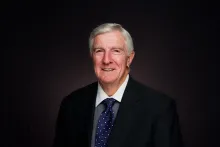
Before his retirement in 2021, Dr. Donald Ward pastored churches in Texas and Louisiana, and taught at Ambassador Bible College in Cincinnati, Ohio. He has also served as chairman of the Council of Elders of the United Church of God. He holds a BS degree; a BA in theology; a MS degree; a doctor’s degree in education from East Texas State University; and has completed 18 hours of graduate theology from SMU.
