
Roy Holladay
This transcript was generated by AI and may contain errors. It is provided to assist those who may not be able to listen to the message.
Thank you so much, Greg. Very nice. It sets the tone of this season. We only have it once in a year that it comes across. And so, of course, we are preparing for that Passover tomorrow night. And it's so vital to realize its importance. So this is the second part of the message that I gave. And both did this for me. Part two. So we're going to be going over some of the key points in the Bible, primarily, though, in the New Testament. As we know, it's God's revelation from Genesis all the way to Revelation. And so God has His truths that go through the entire Bible. So the first point is that predetermining of Christ's sacrifice, the predetermining of Christ's sacrifice, begins God's plan of salvation. So God and God the Father, who became the Father in Christ, who was the Word, they both decided to do this. Even before the creation of the universe of all things, we went over two of the Scriptures last time. Revelation 3.8 is one of them. The other one is in 1 Peter 1. And so the Passover symbolizes that decision made by God, who became the Father and Jesus Christ. Let's go to Genesis chapter 1.14 again to see how important it was when God set up the rotation and the orbits of the planets around the Sun and the Moon. All of that was also predetermined. It says in Genesis 1 verse 14, then God said, let there be lights in the firmament of the heavens to divide the day from the night and let them be for signs and seasons and for days and years. And there are two key words here which are not brought out by the translators. The first one is the Hebrew term auth, O-T-H. It does mean a sign, a beacon, a great event, something important that astronomically it happens. Tomorrow night is that time. And so we're going to have the full Moon at that time. There are 235 full Moons between the first of the 19-year cycle and it repeats itself. So we've had a hundred 19-year cycles, basically from the time of Christ up to here. And it's always these Moons that go almost monthly in this way. And so auth is the sign that it's going to show us the full Moon on the first month of the 14th of the month. And the second is where it says, and we'll mark religious festivals. This is from the God's Word version. It says, and they will mark religious festivals days and years. The term religious festivals, mordim, which has to do again with the setting up of the feast day. So we have the biblical calendar. God set it up. We're going to see it in a moment what it's based on. And the last time we talked about this topic, we discussed the parallel between Abraham's willingness to obey and sacrifice Isaac and God's willingness to sacrifice his son. So there's a parallel here between the Old Testament and the New Testament. Notice in Exodus 12, we begin talking about the Passover. This isn't a Jewish phenomenon. This is an event for all who have God's Spirit, because we know through God's Spirit, we become those spiritual Jews. We become part of Israel. It says in Exodus 12 in verse 14, it says, so talking about the Passover, this day shall be to you a memorial. It's a sign.
And you shall keep it as a feast to the Lord, not to any false gods. No, this is to the Creator God, our Father. You will keep it throughout your generations. This doesn't stop. Human beings have tried to change these feasts and really absorbed pagan feasts instead, but this has continued on generation after generation of those who are faithful. You shall keep it as a feast by an everlasting ordinance. Everlasting means it doesn't end.
Verse 15, seven days you shall eat unleavened bread. On the first day you shall remove leaven from your houses. For whoever eats leavened bread from the first day until the seventh day, that person shall be cut off from Israel. Now, if you were part of God's people in the Old Testament, if you didn't keep this, cutting off means death. So this wasn't some suggestion. Now, in the New Testament, being cut off means being spiritually cut off. So again, first we keep the physical and then we keep the spiritual. But a person can say, oh well, I accept the sacrifice of Christ in my heart and he's my Savior. Well, you see, that's fine as far as an attitude, but you better keep physically when that sacrifice of Christ has been applied, when that happened. And it's a memorial. It's an anniversary that you keep from year to year. See, this is the way Satan has confused the whole world. Don't worry about keeping it physically. Keep it in your heart. Keep it by praising him. See, that's Satan talking because it talks here, this is an everlasting covenant with God that you have done. He goes on to say, verse 16, he says, on the first day there shall be a holy convocation and on the seventh day there shall be a holy convocation. God sends out his appointed times. He expects us we are being invited by God on his appointed times. When you have something important, you have an appointment. Boy, you come in early. You make sure you do it. Well, God has these days of appointment and dates.
It says, no manner of work shall be done on them. That's why we ask permission. And by the way, I have letters for any type of employer that needs to be talked to or school. You just ask me if you need that. But we do ask for excuse on that day.
But that which everyone must eat, that only may be prepared by you. So again, you can't prepare your meals on that day. And this is by extension the rest of the Sabbaths and Holy Days that we have. We are able to prepare what we eat, but that's as far as the labor goes. So you shall observe the feast of Unleavened Bread, for on this same day I will have brought your armies out of the land of Egypt. Therefore you shall observe this day throughout your generations as an everlasting ordinance. This is talking about the night to be much observed. So there's one evening when you keep the Passover. And there's one evening that marks the leaving of Egypt at that time. Verse 18, in the first month on the 14th day of the month at evening, then this is at the end of the 14th, you shall eat unleavened bread until the 21st day. You see the seven days of unleavened bread. They start at the end of the 14th, beginning the 15th onward. Let's look at Leviticus 23, because here you see the feasts clearly defined.
This is a place where all the seven feasts are in one chapter, and it says, verse 1, And the Lord spoke to Moses, saying, Speak to the children of Israel, and say to them, The feasts of the Lord.
Again, if you believe in the Lord, He doesn't have other feasts. These are the ones He established, which you shall proclaim to be holy convocations. These are my feasts, God says. So we don't have a right to say, well, we have a holy convocation at a certain time that is not established by God in the Bible. This is the only time we have it. It says, verse 3, Six days shall work be done, but the seventh day is a Sabbath of solemn rest, a holy convocation. You shall do no work on it. It is the Sabbath of the Lord in all your dwellings.
So again, we first have to be obedient to the physical law, to keeping it. And then, spiritually, we keep it with the right attitude, being close to God. He says, verse 4, These are the feasts of the Lord, the Mo'adim. Remember in Genesis 1.14, it talks about these are the days that God established when He reordered the orbits of the earth, the moon, the sun, the rotation.
I don't know how many have read an astronomy with that eclipse that we have, how exact everything is. And by the way, these types of eclipses, total eclipses, happen when at the beginning of the new moon as it begins. That's why it started right there at the beginning of ABIB. We're 15 days into it. So all these things have astronomical support. It says on the 14th, verse 5, day of the first month at twilight is the Lord's Passover. And on the 15th day of the same month is the feast of unleavened bread to the Lord, seven days you must eat unleavened bread.
So you have the 14th, that's the Passover. We begin at the beginning of that Passover day. That's when we celebrate the Passover. There's no one that has the authority to change that date. Or they'll have to show it to me in the Bible where the Apostle Paul or Jesus Christ said, okay, now we can change the time of the Passover. Now it says at twilight is the 14th.
That's what keeps us united. That's what keeps us following God's way. And it doesn't matter. We're always going to have somebody say, oh no, but I think this. Well, show it to me in the Bible where the Passover should be kept at any other time than this.
Continuing on, now in the New Testament. Again, we're going to just cover briefly, and both did this for me. First, the type of death that Christ had to suffer, it was predetermined, is important. It wasn't going to be just any death. Notice in John chapter 1 verse 29. John chapter 1 verse 29. John the Baptist saw Jesus Christ.
It says the next day John saw Jesus coming toward him and said, behold the Lamb of God who takes away the sin of the world. This was way before Christ's death. John already knew why Christ had come and testified to it. It was a lamb that had to shed its blood. Couldn't be just a regular death. Notice in John chapter 18 in verse 31. Perhaps you hadn't noticed this, but in John chapter 18 verse 31, when Christ was before Pilate, it says, then Pilate said to them, you take him and judge him according to your law.
In other words, there's a Jewish way of doing executions, but it could not be with this type of shedding of blood. Therefore, the Jews said to him, it is not lawful for us to put anyone to death. That the saying of Jesus might be fulfilled when he spoke signifying by what death he would die. So it couldn't be just any death. He couldn't be put to death by the Jews because they didn't have the authority to put him up in a stake and crucify him. Now, there is a law in Duraami 21 verse 22 that talks about a stake. Duraami 21 verse 22. It says, if a man has committed a sin deserving of death, and he is put to death, and you hang him on a tree, his body shall not remain overnight on the tree, but you shall surely bury him that day, so that you do not defile the land which the Lord your God is giving you as an inheritance, for he who is hanged is a curse of God.
So they would first put the person to death, but then they would hang him as a symbol and a warning to people who wanted to murder other people or do horrible things. So they did not have the authority to put Christ to death as the Romans did.
Continuing on here in John 18 verse 33. It says, then Pilate entered the praetorium again, called Jesus, and said to him, Are you the king of the Jews? Jesus answered him, Are you speaking for yourself about this, or did others tell you this concerning me? Pilate answered, Am I a Jew? Your own nation and the chief priests have delivered you to me. What have you done? Jesus answered, My kingdom is not of this world. If my kingdom were of this world, my servants would fight so that I should not be delivered to the Jews, but now my kingdom is not from here. Pilate therefore said to him, Are you a king then? Jesus answered, You say rightly that I am a king, for this cause I was born and for this cause I have come into the world, that I should bear witness to the truth. Everyone who is of the truth hears my voice. Pilate said to him, What is truth? And when he had said this, he went out again to the Jews and said to them, I find no fault in him at all. So Pilate is trying to get away from this sentencing. And in this book, The Crucifixion of Jesus by Joseph Bergeron, page 12, it covers this very important point. It says, Even in the midst of Roman legal proceedings on trumped-up charges of sedition, Jesus made no attempt to seek a pardon from Pilate or to correct misunderstandings about accusations against him. Pilate's interrogation of Jesus found him innocent of any capital offense under Roman law. Interestingly, when Pilate heard that Jesus claimed to be the Son of God, it startled him. John 19.8, it says, When Pilate heard what they said, he was more afraid than ever. Pilate again went to speak with Jesus. And after he spoke with him, Pilate sought to release Jesus from that point on. But the Jewish crowd shouted, If you release this man, you are no friend of Caesar. Everyone who claims to be a king opposes Caesar. John 19.12. Pilate would not accept the political risk of accusations of disloyalty to Caesar. He was cornered. Pilate had no recourse but to order Jesus' execution. And so it was all set up in that way because of the way Christ was going to have to die. Shed his blood in this way, suffering torture, agony during six long hours. John 19.8, it says, Therefore, when Pilate heard that saying, he was more afraid. And so he went ahead, verse 13, when Pilate therefore heard that saying, he brought Jesus out and sat down in the judgment seat in a place that is called the pavement, but in Hebrew, Gabatha. Now it was the preparation day of the Passover in about the sixth hour. And he said to the Jews, Behold your king. But they cried out, Away with him, away with him, crucify him. Pilate said to them, Shall I crucify your king? The chief priests answered, We have no king but Caesar. Then he delivered him to be crucified. So they took Jesus and led him away. So this was all part of a plan. God allowed that for every one of us to pay for our sins. Notice in Philippians chapter 2, Christ's attitude. Philippians chapter 2, Christ's attitude.
It says, verse 3, Let nothing be done through selfish ambition or conceit, but in lowliness of mind let each esteem others better than himself. Let each of you look out, not only for his own interests, but also for the interests of others. Let this mind be in you, which was also in Christ Jesus, who being in the form of God did not consider it robbery to be equal with God, but made himself of no reputation, taking the form of a bondservant and coming in the likeness of men. And being found in appearance as a man, he humbled himself and became obedient to the point of death, even the death of the cross. Therefore God also has highly exalted him, and given him the name which is above every name, that at the name of Jesus every knee should bow of those in heaven, and of those on earth and of those under the earth, which means living in caves, and that every tongue should confess that Jesus Christ is Lord to the glory of God the Father. So that's part of the plan. Either a person will accept it one day or will perish.
And of course, during the Garden of Eden, it was so terrible of an ordeal that Christ sweated to the point where his capillaries on his face broke out and blood came out. There's a certain condition that produces that. Notice in Luke chapter 22 and verse 44.
Luke 22 verse 44.
In the Garden of Gethsemane, it says, "...and being in agony, knowing all that he was going to go through." It wasn't going to be a swift and easy death. It would be six hours of being there, hanging, being spit upon, watching his whole body just become this bloody mess.
And so it says, "...and being in agony, he prayed more earnestly. Then his sweat became like great drops of blood falling down to the ground. When he rose up from prayer and had come to his disciples, he found them sleeping from sorrow. Then he said to them, Why do you sleep, rise, and pray that you enter into temptation?" So Christ suffered for each one of us in this way. And to finish, let's go to a few verses. So what did Christ want us to do? First of all, is to have the right attitude when we go before God during the Passover. Notice in John chapter 13 verse 6. This is the Passover ceremony described by John. And by the way, this is almost a fourth of the whole gospel of John based on this Passover night. John chapter 13 verse 6, it says, Then he came to Simon Peter, and Peter said to him, Lord, are you washing my feet? Jesus answered and said to him, What I am doing, you do not understand now, but you will know after this. Then Peter said to him, You shall never wash my feet, because he felt so embarrassed. Jesus answered him, If I do not wash you, you have no part with me. So that's why the foot washing ceremony is part of it. He says, If you don't do this, you have no part in me. You're not obedient. You're not doing things as Christ has commanded. Simon Peter said to him, Look, Lord, not only my feet, but also my hands and my head. He said to him, He who is bathed needs only to wash his feet, but is completely clean, and you are clean, but not all of you. Not everybody had a clean spirit, for he knew who would betray him. Therefore, he said, You are not all clean. So when he had washed their feet, taken his garment, and sat down again, he said, Do you know what I have done to you? You call me teacher and Lord, and you say, Well, for so I am. If I then, your Lord and teacher, have washed your feet, you also ought to wash one another's feet. For I have given you an example that you should do as I have done to you. Most assuredly, I say to you, a servant is not greater than his master, nor is he who is sent greater than he who sent him. If you know these things, blessed are you if you what? Do them. See, it's not a matter of whether you have a right attitude. Just do it first, and then worry about the attitude. But the attitude is not going to compensate if you don't do it. It's that simple. And so Jesus Christ as the Lamb of God, all through the book of Revelation, when he appears, he appears as a slain lamb. In other words, a lamb with all of these wounds with blood, because it's a symbol of the Passover that he's trying to show us. And finally, in John, famous scripture, John 3 16, I'll conclude here.
So much more to give you, but that's the way it is. My time allotted to me. John 3 verse 16, it says, For God so loved the world that he gave his only begotten Son, that whoever believes in him should not perish, but have everlasting life. For God did not send his Son into the world to condemn the world, but that the world through him might be saved. So this is the plan started way before the time of the creation of the universe, before angels were created, from all we can see from scripture. And the Passover is always a great privilege. It is not a right. We should be so grateful that despite all our sins that need forgiveness, despite all of our shortcomings, God invites us. And we are to do it physically first, and secondly, spiritually, with the right attitude. Remember tomorrow, and remember the words, and both did this for me? Yes, they certainly did.
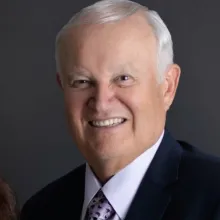
Mr. Seiglie was born in Havana, Cuba, and came to the United States when he was a child. He found out about the Church when he was 17 from a Church member in high school. He went to Ambassador College in Big Sandy, Texas, and in Pasadena, California, graduating with degrees in theology and Spanish. He serves as the pastor of the Garden Grove, CA UCG congregation and serves in the Spanish speaking areas of South America. He also writes for the Beyond Today magazine and currently serves on the UCG Council of Elders. He and his wife, Caty, have four grown daughters, and grandchildren.
