

Robin S Webber
How do you explain the unexplainable? How does one make sense from the senseless? It doesn't come by wishful thinking or momentary inspiration, but rather reaching deep into a core understanding of the rhythms of life deposited in one's heart. This message focuses on the rhythms of life, death, and resurrection etched into the fabric of the Gettysburg Address by Abraham Lincoln to give hope to a nation in times of crisis to give purpose in suffering and to move towards a brighter tomorrow. The same hope-filled understanding that can motivate our "dedication" towards the eternal Kingdom of God.
This transcript was generated by AI and may contain errors. It is provided to assist those who may not be able to listen to the message.
Well, once again, good afternoon, everybody, and not only those that are present, but those that are watching from afar today, and those that may be hearing this message in the weeks, the months, and sometimes the years ahead. I have a question to begin this message to all of you, and it's very simple, but perhaps one of the most important questions that I can ask you as a servant of Jesus Christ. And it is simply this, how do you explain the unexplainable?
Not somebody else, but how do you explain the unexplainable? How do you make sense out of the senseless? Because in our lives, at times, things will come in our life's journey that interrupts it, brings it almost to a halt. What do we do with that? How do you, how do I move beyond those moments? When such times come, and come they will, you had better know what truly comprises the fabric of your being. What stitches you together? To move beyond the moment. To move forward as a servant and as a disciple of Jesus Christ.
A look back in history can be instructive and provide answers for what lies ahead. And it's a part of the history that we experienced while Susie and I were back in Pennsylvania. It's a part of the history that I actually wrote about 21 years ago when I wrote an article on this episode in American history. But it's one thing to write about it from afar, and then it's actually something else to actually be walking in that environment where this event helped. So part of what I'm going to be sharing with you this afternoon is a part of what I shared with a worldwide audience 21 years ago, 2004, when some of you will remember that most of you are old enough to remember this, it's only 21 years, when I used to write a column called This is the Way that would appear on the back page of World News and Prophecy.
So I'm going to borrow from that. I'm going to borrow from what Susan and I learned back in Pennsylvania. And hopefully we're also going to stitch together what we can glean from the Scriptures themselves to allow us that when that moment comes into our life, we will keep on standing. It's one thing to stand. It's another thing to keep on standing. And it's another whole other realm of experience of standing together. Allow me to repeat that.
It's kind of been a theme I've been thinking about recently. Number one is simply to stand. Number two is to keep on standing. And number three is how do we stand together? And the episode I'm going to share with you comes after another episode where people didn't stand together, but were on different sides of an issue. Nearly 160 years ago, in the midst of the American Civil War, one man had to, do I dare say, reach deep to inspire his exhausted countrymen to move beyond the weary moment of frustration into that bright hope of tomorrow.
His message lasted only, and some of you will be familiar with this, that are history buffs, the message that he shared in all of this lasted only two minutes. Skip is working on it, as you noticed. I have a lot of work to do on that, but to recognize it only lasted for two minutes. But in that two minutes that he shared, it's incredible that within that time, the entirety of his life's work and the stated purpose for his nation, our nation's existence, was summed up in 266 words, encased in a mere ten sentences.
What may be considered to be the greatest speech in American history was offered as a dedication to the dead, but not only to the dead, but to those that remained alive to hear the words, the dead were dead. They had done their service. They had given their full devotion, as he would later on say. But what about the living? How do we go on as living people? And this is what Lincoln would deal with. It would be a dedication. Dedication comes off of a fancy word dedicato, dedicato, which basically means setting apart in a sacred manner.
And so let's discuss that. My question is, if you were to discuss, are you with me? If you were to discuss what sows your spiritual and emotional and cerebral, I think I put it all together, life's being, how would you put that down in 266 words? Not only for yourself, but how you might be able to help others to be that son, to be that daughter of encouragement. What would you say? And that leads me to the title of this message today. Two minutes dedicated to eternity. Two minutes dedicated to eternity. What events led to Abraham Lincoln's speech on that November day?
And as we move to that, I'm going to share something that is going to tie in that we need to prepare now. Having such fabric to sew yourself together, much less maybe family members, maybe less the community or church, the congregation, the community, whatever, takes more than just dawdling and thinking about it every so often, but takes focus.
Allow me to share it. It was the summer of 1863. The Civil War, sometimes known as the war between the states, as is commonly called in the southern part of the nation, had gone on for two years. But now in that summer of 1863, eight great armies were moving up to a spot. The southern armies were moving up from Virginia through Maryland, coming through the mountains of Maryland, and they were coming into the very southern part of Pennsylvania. A great army, and I'll give you the numbers in a moment. And then there was a Union army, but they didn't know where one another was at that time.
So you had this surge of armies moving about, moving forward, ready for engagement. They didn't know where they were. But finally they bumped into one another. They knew where one another was by the time they came to a small town called Gettysburg, and the conflict would eventually begin. Why were the southern troops going up? Southern troops were going up under Robert E. Lee, the commander of the south, what Lee was going to try to do was he wasn't going to try to win the Civil War.
What he wanted to do was to get into the north, just into their territory. He wanted to claim a victory, and what he wanted was the north to sue for peace. Let the south go. Two years.
Over 100,000 people already killed by that time through some of the great battles in the south, Antietam, etc. So what Lee's moment, he knew, the south knew that they could never win the war against the north. The industrial might of the north, the railroads of the north, the population of the north, it just was not going to happen. So he was kind of going to go in for a blow and see if the north would leave them alone. Go your way, let us go our way. So that's why Lee was moving up there. So both armies had lost a sense of one another's movements. They knew they were out there. You ever done that before? You know something's out there, but you don't quite know where it is and when you're going to encounter it. And then they came to this little small town called Gettysburg, which was an intersection of five roads. So in that sense, in itself, it could be important. Now I want to share something that's very important that is actually going to come down to you later on. We want to make history personal, make history real. Is to remember when these battles were. You might want to write this down. I'll probably send out my notes later anyway, but if you want to, it is significant when the Battle of Gettysburg occurred. Anybody know when it occurred? But you can help me. Anybody? Very important. The Battle of Gettysburg, the engagement began on July 1st, one battlefield. Then it went to July 2nd, another battlefield. And then it went to July 3rd, the final battlefield. What you would often know as Pickett's Charge. What's the date that follows July 3rd? Help me. July 4th, Independence Day. These men that were facing one another in those meadows, that farmland, those valleys, those woods, those rocky ridges around Gettysburg, their fathers, Robert E. Lee's father, Richard Henry Lee, their fathers or grandfathers had all, in a sense, not all, but you know what I'm saying, they had been there in Philadelphia. They had signed the Declaration of Independence. They had bonded together because they were against something. They were against what they considered a foe, which was George III. And we're going to find two things out of the story of Gettysburg. It's one thing to be against something, but once you've dealt with it, it's almost as just as difficult of being united for something. Very important, sometimes with Christians, sometimes with churches, that it's easy to go up against something that you're all against. But then how do we move beyond that and stay united? And also be able to expand in grace and knowledge and understanding, whether it be the Declaration of Independence, where it mentioned that, again, all men are created equal. But that was just the starting point, not the ending point. More had to occur. And as we've come to understand, some were slow learners. So we're going to look at that. Beyond that, the men, the generals that were on both sides of which there wasn't just George Meade and Robert E. Lee, there were generals and generals and generals. And guess what? Many of them had gone to school together.
Many of them, as young men, see young gentlemen here, 18, 19, 20, 21, 22, they were at West Point. They knew one another. They were Americans. Later on, they would be in the Mexican-American war, fighting together against the Mexican under Zachary Taylor. They remembered one another.
They remembered Robert E. Lee as in the Corps of Engineers of the Army. They would have known a grant. They would have known a Meade. But now they were divided. They were separated.
And the rest is the story that I'm going to tell. By the second day of the battle, by the second day of the battle, there were 85,000 Union troops squared off against 65,000 Confederate troops, anxious for a knockout blow against their one-time fellow countrymen. My quick math tells me 85,000, 65,000 means 150,000 people in the Dells, the valleys, the meadows surrounding Gettysburg. What would that mean? How do we make that wheel to us? Think of Escondido up here, up the road. 150,000 people. But think of them as 150,000 soldiers that are ready to knock off one another to claim victory over the other side. Think of Oceanside. For those of you that are on Oceanside, Oceanside has about 150,000 people.
But they are not senior citizens, not kids, not women. These are soldiers, and their goal is victory. Let's go a little bit further to share the story. It was on that third day that would seal the fate of one side or the other. Significant, as I said, as three days were leading up to July 4th. You get the hiss? Things just don't happen. I think God is telling us something here of what we do. That here, this God, the unseen hand of history, that unmovable mover of history, touches down on America, touches down on England from time to time, moving the course of history. Perhaps not every day, but this was a touch. And now this was a challenge to the entire nation that Lincoln was going to have to talk about. And I'll tell you about that in a moment.
Here there were—I already mentioned all that. On this day, the Southern military leadership on the third day misread the North's continuing capabilities to battle. Now, I want you to think about it. Are you ready to stretch your mind a little bit? Here we go. On that third day, and Susan and I stood on the the southern side looking towards the North over the the meadow, on that day there was a human wall. I want you to think about this for a moment. Are you with me?
There were 13,000 men standing shoulder to shoulder to shoulder to shoulder.
For one half mile in length. Try to wrap your mind around that. Are you with me?
Okay, let's go a little bit further. Spread over a line of one half mile, and they surged forward across the farm field towards their foe's elevated position. And it was elevated.
Bruce Canton captures the moment as the Confederate infantryman came on steadily and quietly nearing the awful climax of the wars of this war's greatest battle. And might I add, the greatest battle that has ever been fought in the Western Hemisphere in human history. The Union artillery fire shook their ranks with deadly accuracy, and then both sides exploded in a tremendous clash of musketry. He goes on to describe in the eyewitness account as to how—now listen to this, please—the battle noise was strange and terrible, a sound that came from thousands of human throats, like a vast mournful roar. And that's from the American Heritage's picture history of the Civil War, 1982. Now, of the 13,000 southern troops who initially marched forward, in just a matter of minutes, half would be dead and or captured.
Pickett's charge, as it came to be known, would seal the fate of the day. Pickett was a Virginian general. Three days of battle would end and nearly—stay with me now—51,000 total casualties that were nearly equally distributed both between the North and the South.
A staggering one-third of all men engaged in this epic clash would be wounded or killed.
The North had won, but at such a cost, the South would never recover its position.
And even after the war, the results were still there. The people of Gettysburg, the citizens, would go out and bury the dead both of North and South. And for months after the battle, months after the battle, the Earth was still moving, not from cannon fire, not from the running of men upon it, but of the maggots that actually were allowing the Earth to rise and fall because there were no graves. And the field was a field day to dispose of corpse. I have a question for you. How do you make sense out of that?
Maybe it's in that moment of understanding that Robert E. Lee was able to say, it is well that war is so horrible, lest we should grow fond of it. But now, four months later, and thank you for your patience, now we're going to get to Lincoln. Now, four months later, Abraham Lincoln gave voice to that vast, mournful roar of battle. How could he do it? How could he make sense out of the senseless in responding to an invitation to make a—listen to me—a few appropriate remarks? Because he was not—here's the president of the United States—he was not the main speaker. The main speaker would be a gentleman, the governor of Massachusetts, named Edward Everett. Now, what would the man from Illinois say? Because Everett spoke for two hours.
You thought my messages were long. I've never done one for two hours.
But there's always a possibility today's the day. Just joking. And to recognize then, what did we learn from this? First came that two-hour oratorical. So what would the man from Illinois say? What could he possibly say that had already been said? One legend says that he wrote his Gettysburg—and you've heard this before—one legend has said that he wrote his Gettysburg address on the back of an envelope as he wrote to Gettysburg. That simply didn't happen. And James and those that are helping, if you'd like to pass out the next piece of material here for a moment as they finish, that simply didn't happen. And it is in that lesson right there to break down that myth. Are you with me? These things don't happen overnight. We have to be forearmed. We have to be prepared as you and I step in life and at times we'll come up against the senseless.
How do we make that sense? How do we keep on standing? How do we keep on—not only standing, but keep on standing and at times with family, with congregants, with communities stand together.
How is that done? It doesn't happen by fiat. It doesn't happen in a minute.
This was something that was deep in this man from Illinois, and it's a very valuable lesson.
Allow me to share something for a moment. The 266 words were incredibly well crafted and organized in a theme almost spiritual in nature. I want to share something. Gettysburg is a really cute town. It's all 1850, 1860, and there's a roundabout right there in the Sanoook town. That's really roundabout, B for a town about that size. And we actually saw the hotel that—or the residence that Lincoln stayed on in the night before as he was finishing up touches on his speech for the next day. We saw the train station where the train pulled in and let Lincoln off about a block away from this residence in which he stayed. It is spiritual nature, and that's why I think it's important enough that we can discuss it in church today. Only the phrase, under God, would be added at the podium, as Lincoln knew he needed all the help that he could get at that time.
Lincoln's intended thrust was to move their moans from the cry of death to the collector cries of the birth of freedom. And freedom does not come painlessly, whether it's national freedom or spiritual freedom. The spiritual freedom that you and I experienced does not come painlessly. Our Savior died for us. He was crucified for us. That we might in that sense have a rebirth ourselves.
And the Christian life does not come painless. Jesus himself never said that it would be easy, but he said that it would be worth it. He said, if they've crucified me, if they've attacked me, they'll attack you. And he says, if any man's going to follow me and women going to follow me, he too must bear his own cross. So let's take this a step further. William Sapphire used to be a speechwriter on pages 49 and 50 of his 1992 book entitled, Lend Me Your Ears, offers great thought to the construction of this national treasure. Susie and I have had the pleasure a couple years ago when we were in northern Virginia on another historical odyssey. When you go up into the Lincoln Memorial and you see that very famous statue inside this almost temple-like structure, and it's looking across the National Mall, you have Washington right in the middle, or you have the Washington Monument, and then you see the state capital. But when you go in there, it's almost like holy small age, holy ground, because here's the statue of Lincoln, and on one side you have the Gettysburg Address, etched in stone. Some of you are nodding, you've seen it, etched in it. And on the other side is the second inaugural. You say second inaugural, what was in that? Mallows towards none, charity for all. Interesting. So let's take a look further than as we go further here.
And what we do is that he suggests that Lincoln's famous, and now you're looking at it.
And if you could do me a favor, James or somebody, give me a copy of what I copied off where we are. I need one here right now. Okay? Thank you. Thank you very much.
And that is simply this, is that when we look at this, is that Sapphire, what happens here, Sapphire suggests that he starts out the four score and seven years ago, because that immediately sets a biblical tone. It sets a stature and a grandeur that somewhere in this, God is going to be involved. And you know, if I can make a comment, US presidents kind of know how to tap into religion when they need to. And in the United States for the last 250 years, there's been what we might call a safe, secular religion in that sense, to bring people together. And we're going to see that in this sense as we go through this.
So he suggested that the introduction of four score and seven years ago offers a biblical solemnity to the number 87. Doesn't that sound better? Four score and seven years ago, rather, 87 years ago. And then he goes on to say this, he goes on to suggest the speech may be best understood by focusing on the metaphor of birth, death, and rebirth, with obvious overtones of Christ's triumph over death. Got that? Life, death, and birth. Is that not the rhythm of Scripture?
That Jesus came amongst us and dwelt amongst us. He lived. He was here. He died the Creator, died by the creation, and yet he was resurrected. So this is what Lincoln is drawing upon, very important. And as you look at this, Sapphire illustrates how four images of birth are embedded in its opening sentence. Notice what it says here. If you're looking down the line here, the nation was what? Conceived in liberty. It was brought forth and or born. It says, by our fathers. Fathers are a sire. Fires begin the process of the birth. Yes, comes through a woman in that sense. And then you notice again it says, with all men created equal. So there was a creation that was going on here.
He then focuses on how Lincoln touches on images of death with thoughts of a final resting place.
Who gave their lives. Brave men, living, and dead. These are his words. He talks about these honored dead. And by verbs of religious purification, he says, thus this land is consecrated. This land is hollow. Lest we forget. What's coming up on Monday? May I ask a comment?
Are you sure? It's Memorial Day. And it's honor those men and women, young and old, that have given their life over 200 years of our American history. I'm looking forward probably tomorrow morning to put some flowers on my dad's grave. And if you've never been to a national cemetery, it's like Disneyland on steroids, on Veterans Day or Memorial Day. People put their tents up, they bring in their chaise lounge, they're all gathered around their family. They're remembering.
Am I saying I'm an advocate for war? No, stay with this sermon. I'm not. I know my own father, World War II. Some of you have World War II dads. Some of you might have been in Korea. Some of you were in Vietnam. Understood. Thank you for your service. I have no problem in saying that. My dad, and many of you knew my dad, Jack Weber, three landings. Some of the names you'll know. It's not Valley Forge, but it was Guadalcanal. It was Palaloo. It was Boganville. And the Solomon Islands. And whether it's in Gettysburg, or whether it's in those islands in the Pacific, or Normandy, or Omaha, when you're in that kind of battle, that kind of war, you are never the same.
You cannot be the same of what you've said. And so that's what we need to remember, that these young, vigorous men and or women at times in the wars, they gave their all. And that's what that is what Lincoln is trying to suggest. Sapphire finishes evaluating the metaphor of existence by moving beyond that niche, niche and symbolic birth and death to focus on rebirth.
That is resurrection. As Sapphire so eloquently defines, out of this scene of death, this nation under God shall have a new birth of freedom, and thus shall not perish. In other words, there's a sense of immortality. There's something that's beyond death. Lincoln does not leave America with simply a distant past, or a troubled present, but the hope of a bright and renewable future.
He recognized that the recipe for democracy has been brought forward in 1776 and placed into the fiery oven of reality. Just in that sense that when you look at the Declaration of Independence 1776 or the U.S. Constitution 1787, those are only recipes. That's only paper. That's only print on paper, and it has to be given the the heat and the temperature of life. A lot of people can sign off on something, but once it comes about, they have different thoughts of what those words meant.
In the North, it was federalism with certain given states' rights. In the South, it was because of basically more states' rights, more agrarian, distrust at the industrial North, worried about the maritime states along the New England seaboard. And so there was a difference, and so they took that contract that was given amongst people, the Declaration of Independence and the Constitution.
They read it differently. Have we ever experienced that in our own church life?
With people that we went to school with? Am I talking to the right audience?
That we labored in the field with serving the brethren?
And yet we went forward in a different way, not recognizing that we are going to be simply stilled by the past, be it 1986, 1985, or that before, that we are to grow in grace and knowledge.
When you look at the American experiment, it will always be an experiment. It's a daily basis. Have you noticed, reading the headlines, is to recognize that what happened here was that it said, all men are created equal. That's in the Declaration of Independence. And yet they didn't get it at that point, what that meant for those that didn't look like you at that point. They could not deal with it back in 1776 into the 1780s because they needed to stay together, and the issue of slavery would have brought everything down. So that was going to have to be left to another generation.
Much like Paul's eloquent words, and we're going to read those before this is done, that Paul addresses slavery in the Gospels, in the Epistles, but it's not something he could deal with it. Slave master, be good to your slaves. Slaves, be obedient to your masters.
But if they dealt totally with that at that point, there is already enough going against believing that Jesus was king and lord that that was going to have to be dealt with later.
We need to recognize as individuals, as a congregation, as a fellowship with the United Church of God, we can't stand still. We need to continue to look at the scriptures, allow them to expand. Sometimes live them anew because we have not understand fully what they fully mean, and we will come to that if we are patient. So let's take a look back here, then it's simply this. I want to set this for a moment. Beyond the powerful metaphor of life cycles, life, death, and registering, it is the use of the one word to dedicate. That gives a constant rhythm to all Lincoln says and ties the three metaphor, metaphorical parts into the ongoing existence of rock solid purpose. As sapphire indicates, Lincoln uses the word six times in it. Let's notice now life, death. Now it is for us the living. It is for us the living.
Those that are in the battlefield are dead. Their time has come, they rest. It's for us the living, then. What do we do? Rather to be dedicated here to the unfinished work which they who fought here have thus far so nobly advanced, it is rather for us to be here dedicated to the great task remaining before us, that from these honored dead we take increased devotion to the cause for which they gave the last full measure of devotion. That famous line, that we here highly resolve these dead shall not have died in vain, that this nation under God shall have a new birth of freedom. There's a rebirth, there's a newness, and that the government of the people, by the people, for the people, shall not perish. After the speech, Lincoln was displeased with this presentation. Some of the audience just thought it was beginning, it was all over. What did he say? Is that it? Is it over? But it was the gentleman before Edward Everett, the other speaker, who said it best when he wrote the president, I should be glad if I could flatter myself that I came as near to the central idea of the occasion in two hours as you did in two minutes. Yet sometimes even when we don't see immediate results, our words and actions can touch others, and that's important.
Sometimes we're with somebody, maybe here in church, maybe on the telephone, maybe writing something over the internet. You never, never, this is the point I'm trying to make, never underestimate how God is going to use you. It's not how much you say, it's what you say, and that your communication is poignant to the moment. And you never know when somebody's going to bring that up. Sometimes a month, a season, years, and it'll be a motivating force of goodness in that life to prod them forward. I want to share one other story. I tried to share this story with Susan this morning, and it actually touched me when I was in the battlefield because I knew the story. I've written about it 20 years ago, but I knew the story, and I want to share it with you, because we've dealt with some pretty tough stuff. Jeffrey C. Ward picks up the story in 1913 at a 50th anniversary reunion in Gettysburg. Thousands of old veterans, now 50 years older, they'd been men that were probably 16 to 25 to 30 back in the 1860s. Thousands of old veterans came to be a part of what one man called a radiant fellowship of the fallen. The climax was a reenactment of Pickett's Charge. Thousands of spectators, and I can see them lined up, Susie, you know, off to our left as we were up there watching this ceremony going on. Thousands of spectators watched the Confederate veterans emerge from the woods of Seminary Ridge and once again advance. One Union veteran said, we could not see rifles or bayonets. All we could see were canes and crutches. We soon could distinguish the more agile ones, aiding those less able to maintain their place in the ranks.
As they neared the northern line, they broke out into one fight. You could hear the senators, one defiant rebel yell. And at that sound, after half a century, a moan, a gigantic gasp of unbelief, rose from the Union veterans. And it was then, said an observer, that the Yankees, unable to restrain themselves any longer, burst from behind the stone wall and flung themselves upon their former enemies, not in mortal combat, but reunited in brotherly love and affection.
I'm reading this to you today, brethren, because that had only happened in the past.
That's going to happen in the future. That's why we are here experiencing the Gospel of Jesus Christ and the Kingdom of God. And that Kingdom of God is going to come. It says in Isaiah 2 and verse 9, there is going to come a time when they will be taught war no more. Can you imagine that day?
Some of you that have uncles, perhaps parents, grandparents, many of us with relatives going back in American days that died in war, there's going to be no more war. Can we wrap our mind around that when we think of what's happening right now in the Middle East with the Israelis and the Arabs and Gaza? There's going to be no more conflict to think of what's happening in the Ukraine, thinking of what's happening in Russia. Over 600—no, while we're here in America, you know, sometimes complaining about life—600,000 combined Ukrainians and Russians have died.
They're cousins. They're Slavic peoples. Their cultures are intermingled, going back to 1100 years with Kiev. Kiev was the birthplace of Russian culture. It just moved north.
Just like the north, just like the south. Sometimes it's not north, south. Sometimes it's not east, west. Sometimes, perhaps, it's in our homes. It's in our lives. That somehow we forget what we have in common because the uncommon takes over the common and is worth going to war. What did the book of James say from whence come wars and rumors of wars amongst you?
Join me for a moment. We're going to finish up with some scripture. Isaiah 19. Would you join me there, please? This is what we look forward to beyond the fields of Pennsylvania.
Beyond the woods of the Ukraine, this is what we believe with all of our heart and all of our mind, that this is going to happen one day, and you and I are going to be able to be a part of that. Notice what it says here in verse 19. I say, In that day there will be an altar to the Lord in the midst of the land of Egypt and a pillar to the Lord at its border. And it will be for a sign and for a witness to the Lord of Hosts in the land of Egypt, for they will cry to the Lord because of the oppressors, and He will send them a Savior and a mighty one, and He will deliver them. And then the Lord will be known to Egypt, and the Egyptians will know the Lord in that day. These are the same people that had tortured and imprisoned and caused slavery upon the tribes of Israel in history 3500 years ago. Notice what's going to happen. They're going to know the Lord, and He will strike and heal it, and they will return to the Lord, and He will be entreated by them. Then out lower—that's not enough. There's more in verse 23. In that day there will be a highway from Egypt to Assyria, and the Assyrians will come into Egypt, and the Egyptians into Assyria, and the Egyptians will serve with the Assyrians. But that's not enough. Verse 24. In that day—in that day means not today, we'd love to have it. Thy kingdom come, but there is going to come a time. In that day Israel will be one of three with Egypt and Assyria, and a blessing in the midst of the land, whom the Lord of Host shall bless, saying, Blessed is Egypt, my people. Assyria, the work of my—you know, those Assyrians were mean—I'll use some vernacular—mean dudes. You didn't want to have the Assyrians come into your part of the world. Whom the Lord of Host shall bless, saying, Blessed is Egypt, my people. And Assyria, the work of my hands, and Israel, my inheritance.
As incredible as that field experience was in 1913 of the North and South coming together.
Why is it sometimes too old, too soon, too smart?
Sixty years later you wish that that had occurred, but there were reasons for it.
I wrote this 21 years ago as I—I'm going to finish up with two things—I wrote this 21 years ago in the conclusion of that. Would you join me in Revelation 21?
In Revelation 21. And as you turn there, I will just mention what I wrote.
I wrote this is younger then. While not as eloquent as a Lincoln, the staff of World News and Prophecy is equally dedicated to a bright tomorrow and the rebirth of humanity and the bonds of brotherly love. All of our articles—and now today in the Beyond a Day magazine, in the Beyond a Day telecast, all of them are dedicated to this cause.
All we say points to one galvanizing hopeful conclusion crystallized in Revelation 21.1-5. Join me there. You're there. Let's read it together.
You were away from a safe shore. You were away from port. That's where the Leviathan was. That's where the monsters were. That's where scary things happened. That's where storms came up.
No more buffer. No more terror. Then I, John, saw the holy city, knew Jerusalem, coming down out of heaven from God, prepared as a bride, adorned for her. And I heard a loud voice. When God says a loud voice, always recognize, it is loud. He's saying something, now hear this, now hear this, put this into the fabric of your being. Tighten that knot in your heart and keep it in there. When, how do you make sense out of the senseless? And I heard a loud voice from heaven saying, behold, the tabernacle, the dwelling of God is with men and he will dwell with them and they shall be his people and God himself will be with them and be their God. And God will wipe away every tear from their eyes. There shall be no more death. There shall be no more sorrow. There shall be no more crying. It almost sounds like Lincoln's that and that and this and this and this, just like hammering a nail down into a board. Put it in deep. Put it into your heart. You hold on no matter what comes your way. And there shall be no more pain for the former things of past. And then he who sat on the throne said, behold, I will make all things new. And he said to me, right for these words are true and faithful. Join me if you would in Philippians 3. This will be the last thing we'll read together. I'm going to ask you, you know, I'm was a teacher. I like to give homework, which I like to call heart work. We know that Lincoln and his address is 266 words. It's what he was about. When you think of, and you've seen this all sometimes, how often Lincoln failed in life. You've seen his list of failures of what would happen. It's only failure if you don't learn from it. We need to stand. We need to keep on standing.
When things come to our lives, God is allowing it to mold us, not to destroy us, because we're never going to be alone. Jesus Christ is going to be with us. That's the promise. Here's what I'd like you to do. Lincoln did it in 266 words. Why don't you have your own Gettysburg address?
What is sown deep down inside of you that will allow you to stand because that time will come?
In Philippians 3, I'm going to show you an example of what you can do.
Because you can come, you can go, Weber's over. Let's have cookies, donuts, and coffee.
Or you can do something about this. Because it is going to be at times that we're going to have to handle those things that seem senseless and make sense out of them. This is my verse at this point. I'm going to borrow from Paul. And in Philippians 3, 7 through 16 are 242 words. I counted them. I went like this this morning. I want to show you something. 1, 2, 3, 4, 5, 6, 7, 8, 9, 10, 10.
I did another one, but I want to keep you later. Let's just read this. This is always spoken to me as a compass and as a sail, following the words of the apostle Paul. But what things were gained in me? These I have counted lost for Christ. Yet, indeed, I also count all things lost for the excellence of the knowledge of Christ. Jesus, my Lord, my King, Soder, Koryos, and the Greek, he is Lord, not Caesar, the Christ. For whom I have suffered the loss of all things, and count them as rubbish that I might gain Christ, and be found in him. How are we found in him?
Not having my own righteousness, which is from the law, but that which is through faith in Christ, the righteousness which is from God, by faith, that I may know him, and the power of his, what?
resurrection, and the fellowship of his sufferings being confirmed to his death.
So you see the cycle that is mentioned in the Gettysburg Address? Death.
There's life. There's resurrection. If by any means I might attain to the resurrection from the dead, not that I have already attained, we're not there. None of us are. God is patient. God is merciful.
He says, but I press on that I might lay hold of that for which Jesus Christ has also laid a hold of me. This is the double hold. We hold on to Christ. He holds on to us. He loved us first.
He touched us first. The Father, his Father, touched us first. Now, in turn, there's a relationship, and as they lay a hold of us, we lay a hold upon their word, upon their spirit, as we're going to be talking about at Pentecost. Then notice what it says, brethren, I do not count myself to have apprehended, but one thing I do, forgetting those things which are behind, it's moving forward, just like Lincoln said, let's move forward that and that and that. Let's learn from the past. Let's learn the lessons.
Let's build upon them.
I press towards the goal for the price of the upward call of God in Christ Jesus. Therefore, let us, as many as our mature, have this mind, and if anything you think otherwise, God will reveal even this to you. As I leave, a simple question that only you can answer, if you'll take up this artwork assignment, what will your two minutes, dedicated towards eternity, look like, feel like, wrap it around your heart, hold on to it.
It's God's gift to you.
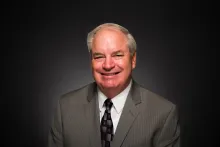
Robin Webber was born in Chicago, Illinois, in 1951, but has lived most of his life in California. He has been a part of the Church of God community since 1963. He attended Ambassador College in Pasadena from 1969-1973. He majored in theology and history.
Mr. Webber's interest remains in the study of history, socio-economics and literature. Over the years, he has offered his services to museums as a docent to share his enthusiasm and passions regarding these areas of expertise.
When time permits, he loves to go mountain biking on nearby ranch land and meet his wife as she hikes toward him.
