

Robin S Webber
This transcript was generated by AI and may contain errors. It is provided to assist those who may not be able to listen to the message.
Be to God. After this morning, I heard the first message. I told Susan, it's time to go home.
Then after I heard the second message, I said, it's really time to go home. Then after I heard the third message, I said, let's get out of here.
And yet it gets better and better, doesn't it? God really knows how to put the high in the high days. And it's to his credit, and it's to his glory and honor. I want to say thank you on behalf of Susan and I. We're so thrilled to be with all of you this afternoon and share this entire day.
I want to say thank you to all of those that have worked behind the scenes, from those that have been out in the parking lot, to our ushers, to those that were setting up the tables in our refreshment rooms, to those that brought these beautiful flowers, to the choir, to the gentlemen that are up there on the sound stage, etc., etc., because it really is a whole church effort.
Got to thinking this afternoon as we were walking in that today, the second day of 11 Brad, will always be a very, very special day to members of the Church of God in Southern California. Can I take you back a few years? It was 17 years ago that the people of God in Southern California, along with their sisters and brothers around the world, stood up for God's holy and righteous law. And many of you came down to this city, to this location, not this location, but another facility called Orange Wood Academy, because you loved God, and you loved the ways of God, and you could count.
There were ten commandments, not nine, but ten, and you loved God, the God of Sabbath, the God of festivals, that that was a time when people were telling us that we were somehow in bondage. Now, after what I've experienced from morning to right to this moment, if this is bondage of what you and I are experiencing today, let's make the most of it, and let's allow have more of this kind of bondage. I think you know I just, and I'm very, very sincere.
What a gift and what a beauty that God has given us by His graciousness to be able to assemble together and to be able to experience His revelation, to know His ways, to rejoice in His Son, to know that He has set forth a pathway of salvation, and to recognize that each and every one of us continues to walk through that sea on dry land towards that sure shore of salvation and eternity, and we just all have to make it together.
I want to ask how many of you were here 17 years ago to meet Mr. Luca and I at the door. Can I see a show of hands when you came out of that Egypt at that time? Let's wave them for a moment. And there are many that are with us today, not with us today, that we miss, and that we long for, and that we wish were here, but to recognize that we'll be seeing them once again, and that there are many that are yet going to come to understand the entire full revelation of God because of your courage and your devotion and your dedication.
I was thinking, as I was coming down today, it's always deja vu to come to Garden Grove, to think that, you know, it's been 11 years since Susan and I pastored, but what a blessing that you have a fine shepherd and Mr. Maro Seagly, as well as his lovely wife, Cottie, who's there in the back row, and how they have continued to shepherd you. You know, in those years, long ago, because I knew that I ultimately had to go up to Los Angeles and deal with different things.
Different names would come up, and different names would come up, and different names would come up, and we keep on batting them away. It just didn't seem to be a good fit. It didn't just seem to be the solution, and it wasn't the answer. And then, when they mentioned to Mario, I said, that's the man. He's a... He loves the Bible. He's a good teacher.
He'll keep him straight in the Word. And imagine now, Mario and Cottie, I think, have been here longer than either Mr. Luca and or myself, along with our wives, were here. And you're not working him over like you worked Mr. Luca and I over. He's got good shelf life. This is Garden Grove! And it is a joy when I think about it, when I think of two very special congregations. And like all children, we love all the congregations I've had.
But to think of my hometown church being here, Los Angeles, Pasadena, and then all of you dear, dear brethren here in Garden Grove, it just doesn't get any better. And God knows how to put the high in the high. I want to share something with you.
God has a different kind of math than we do down below. You know, we learn in early on that one plus one equals two. But when you put two congregations of God together, it's not one plus one equals two. Three comes out of it. It's more. There's more energy. There's more spirit. There's more hope. There's more encouragement. And that's why we're meeting here today together. Well, allow me to bring you a message that I hope is going to help you this afternoon.
I'll just give you the title up front. It's called, God's Victory is in the Details. God's Victory is in the Details. The two festivals that we have been observing this last week symbolize two different but seamless aspects of God's personal involvement in our lives. A week ago, we observed the Passover. The Passover symbolizes the covering up of our sins and the passing over of the judgment associated with our sins that formally enslaved us.
We were in a helpless estate, and God said, I have a home for you. I have a future for you. And thus, Passover, that festival, pictures redemption to make good that which was not. It pictures reconciliation, that which was afar, now drawn near. It pictures total and complete restoration to those that had no hope and no future. The best news that I can bring to you today and just amplify and echo what all of the speakers have said before to me.
And what I want us to go away with this afternoon as we move back into Southern California is with this reality. Because of God's gift to humanity, because of Jesus, the Christ, Messiah, you and I are accepted and we are approved before God Almighty. And that you and I, at any time, when we call upon that name, and when we say, Father above, and we come to Him in Jesus name, that whatever the case is, this coming year, that you and I have a position before God Almighty, no matter what the condition is on the ground.
But now, here we are during the Days of Unleavened Bread. And these days picture the expansion of a new lump, a new man, a new way with Jesus Christ Himself living in each and every one of us. It pictures a time of breakthroughs and new horizons because of what God has revealed to us, because of what God has freely given to you and to me. And thus we come forward back to Him in a response, in a living and total sacrifice, because of what He has done up front, that we echo back, that we understand, that we believe, even in our humanity.
We want to please Him and allow His Son to grow inside of us. This new that is mentioned in the New Testament, whether it be a new and living way, whether it be a new lump, whether it be a new man, is not just something that's new and improved, like a some toothpaste that Procter & Gamble is trying to advertise, but it is something completely different than ever before. Never seen, never done, never known, new. And this is the power, and this is the dynamism of what Christianity is all about. To make that point clear, it is during these days of 11 Brad that God's greatest saving works occur during these days, these seven days.
And there are many, many, many, and I know you're all converted, but I don't want to keep you here until the moon rises, as to what has occurred during the days of 11 Brad. And thus, I'm only going to share three of them. But in sharing them, I'm not only to describe God's victory and what He has done, but what He has asked His people to do down through the ages. God's victory is in place. Jesus Christ lived. He died. He was resurrected. But as Mr. Garnet brought out this morning, He has also been accepted.
He is that ultimate wave-shaped sheep which is risen to the right hand of the Father, forever our Savior, always our Savior, and now our high priest. So the victory is in place, but there are some details.
This is where it gets personal. There are some details that have to be worked out down here below with you and me. That's the way God works. And so what we want to talk about today to you that are people of faith is simply this, to understand the details that we yet have to do. God does His part. We do our part. And then we obey Him and leave the consequences to Him. So I want to talk about three great saving acts of God performed during this time. And I want to look at the details because once we understand what God is doing, and once we understand that there are things that only He can do, because we can only be saved by His grace. And there is no amount of earthly works down here below that we might be accomplished that merit salvation. Nonetheless, God asks us as we follow Him to do some things along the way so that we can worship Him. So that He knows that we understand what He is doing and striving to accomplish in our life.
Thus, let's move forward. Let's go to point number one. Join me if you would in the book of Exodus. For it is during this, the Feast of Unleavened Bread, that Israel crossed the sea as we just heard in the music before this message. In Exodus 14, let's go here for a second and notice what it's spoken of. It is our traditional understanding that the children of Israel were guided through the sea on this, the seventh day of Unleavened Bread. Let's understand some of the details along the way as we too move forward through the sea of life. In Exodus 14 and verse 1, let's read it together. Now the Lord spoke to Moses, saying, Speak to the children of Israel, that they turn and camp before Piharioth between Migdal and the sea opposite Beel Zephon. You shall camp before it by the sea. For Pharaoh will say of the children of Israel, They are bewildered by the land, the wilderness has closed them in. Then I will harden Pharaoh's heart so that he will pursue them, and I will gain honor over Pharaoh and over all his army, and that the Egyptians may know that I am the Lord. And they did so. Now it was told the king of Egypt that the people had fled in the heart of Pharaoh and his servants returned against the people. And they said, Why have we done this, that we have let Israel go from serving us? So he made ready his chariot and took his people with him. And also he took six hundred choice chariots and all the chariots of Egypt with captains over every one of them. Now let's understand something, because this is not only going to be Israel's story, this is going to be our story today as we continue to move. This was not an accident. It was not a mistake that God had made. He had not somehow thrown out his divine GPS and messed up and put Israel in a spot in which he might not be able to handle. But it was a lesson in molding people then and now. And the lesson is this again in verse 4. And the reason I center on verse 4 is it's going to be our lesson as we move forward out of these days of 11 bread. He says that he will harden Pharaoh's heart and he will pursue my people and I will gain honor over Pharaoh and over all his army that the Egyptians may know that I am the Lord. There are things that God is going to allow in our life, or is allowing in our life now, and where our backs are up against a sea, where there is a gulf of no deliverance, seemingly, in our human mind. And we've got to understand that if we have committed our spirit to God and we are his children, he is using us as his instruments to give him honor, to give him glory, to give him witness to the nations, to the people, to the families. What are you going through right now in your life? As a pastor, I'm involved with many of you. Even as I'm in Los Angeles and Redlands and San Diego, I, at times, hear things come from Garden Grove because many of you are dear friends. Have you noticed that we're all going through life together?
Have you noticed perhaps, humanly, it's not getting easier as life goes on? Or am I the only one? Do any of you feel like your back is up against the Red Sea? And you say, where's God? And what's he doing? I've been doing this for 10 and 20 and 30 years, and I have been faithful to God. Where is he? He's with you. And your Red Sea may be today. What is it? Maybe it's in marriage. Maybe it's in finances. Maybe it's in health. Maybe it's in the loss of a loved one. And you're saying, God, did you lose your spiritual GPS when it comes to guiding me towards eternity? So often, humanly, we get entrenched with, it's all about us. The story of Passover and the story of the Days of 11, Brad, friends, are you with me? It's really all about God.
And giving him honor and giving him glory, and to recognize that what he has begun in your life, are you with me? He will finish it to his honor, to his glory, because there are still more pharaohs and there are more Egyptians out there along the way that need to understand that there is only one God. Let's continue with the story in verse 13, because here's Israel. Their back is up against the sea. And Moses said to the people, Do not be afraid. Stand still and see the salvation of the Lord which he will accomplish for you today. For the Egyptians, whom you see today, you shall again know more see forever. The Lord will fight for you and you shall hold your peace.
Now, I want you to understand something as we're going through this story. We're not just doing a Old Testament story. There are principles that are living today for New Covenant Christians, because we're worshiping that same God. We need to understand something. There are times when we don't understand necessarily what God is doing above with us down here below. And the one thing he says is simply this, Stop. Stop. And be still.
He said, Who me? Who me?
You're like that... what? That wore me out. No, it's that you're like that hamster.
On the wheel in a cage. And there are times that we need to reflect, dear brethren, that because we've committed our life to God, because we know that we have been accepted and approved to Him through Jesus Christ. And we have committed our lives into His hands.
Even so, we're still in this human flesh. And there are times when our knees are going to be shaking. But we need to stop. And we need to be still. Why is that? David long ago answered that in the Psalms. He said, Be still and know that I am God. You can't really know who and what God is going to do in your life. That you can be a vessel. That you can be an instrument. That you can give Him glory. That it can be His answers and His perfection, rather than your human best.
Until you are still. Until it's no longer by your works, by your hands, by your imagination. But you have come to complete spiritual rest in you. I have a question for you. May I?
And this is the beauty of the festivals as we come together and we are here in God's presence.
How many of you were still, how many of you felt still before you came to church today? Before you came to the Feast of God? Even during these days of 11 bread? How many of you were wrestling with what seemingly is your Red Sea?
Seemingly where there is no solution, there is no escape. Your back is up against the wall.
That's why God calls us together as His people to reflect on His great saving acts in history for His people. It says that God will fight for you, but you've got to hold your peace. You mean I can't just squawk a little bit? You mean I can't just murmur a little bit? You mean I can't run around like a chicken with its head cut off just a little bit? Clock, clock.
Maybe for a second. Hold your peace.
Now what I want to share with you is simply this, a very powerful lesson in this great saving act. God says, first of all, be still and you shall hold your peace. But now let's notice verse 15.
And the Lord said to Moses, Why do you cry to me? Tell the children of Israel to go forward, to go forward, to get to moving. Get up, get out, get to moving.
What are the details you and I can learn as the Israel of God today?
That we can learn so that His victory can be in us. The over-lighting lesson that I want to share with you today. Let's get down to some details. Are you ready? Number one, you've got to be attentive. You've got to be attentive. You've, number two, have got to be listening.
And number three, you've got to be flexible. Remember, I've said so often over the years, blessed are the flexible, for they shall not be bent out of shape. You thought I was just saying that to give you a little glimmer of humor. No, there's a truth to that. Because did you notice that as God was dealing with Israel, they're on the Red Sea? One moment He says, stop, and then He says, go. Too often we're going when we ought to stop, and too often we're stopping when we ought to go. I've got you really confused, don't I? Don't mean to. There is a time to be still, to be attentive, listening to the words of God, coming to full focus that the victory has already been won. It's just that the details have to be worked out down here below. And then we have to move beyond that stop sign of fear, that stop sign that holds us back. Some of us are being held back from our full godly potential, because you know, and I know that humanly we get paralyzed with fear.
And love cannot be perfected in fear. It's like my good friend Marcus was talking about forgiving today, and the importance of forgiveness. So often we don't forgive because we're afraid. And fear, are you with me? Fear imprisons love. Love cannot be perfected in fear. And why do we have fear? Because we feel that God has somehow lost his divine GPS for us, and thus we have our backs against a wall that God cannot deal with. We need to be attentive. Oh, brother, may I share something with you? This morning there was so much to glean from, so much instruction, so much information, so much encouragement, so much to take home, and munch of unleavened righteousness that should motivate us to be different people, to be attentive, to be listening, to be flexible. The lesson is simply here, that God will ask us to perform different things at different times to perform his will, and we have to be ready. We have to ask God's Holy Spirit. Here you are. You want details? This is going to affect your life this year. Sometimes you'll say, give me something to do. I'm going to give you something to do. Number one, ask God. Ask God to help you know when to stop. Just stop and be still.
And know that he is God. That's the first step. That's the first detail. See, I thought it's going to be more complex than that. Well, how good have you been doing that recently? I've got some homework on that myself. Be still. Stop. Know that he is God. Then, number two, by the lead and the guidance of the Holy Spirit, know when it's time to go. Because God doesn't work in a vacuum. God does his part. We do our part. God who concedes, we have to walk through. Stop and go. And to recognize that when we stop, we're not alone. And when we go, that we follow the Good Shepherd. And he will never leave us nor forsake us. The second saving act that I would like to talk about for a moment is found in the book of Joshua. Join me if you would please in the book of Joshua.
It's interesting that we find that this was during this time, during the time of Unleavened Brad. In Joshua 5, and let's pick up the story here, in verse 10. Joshua 5 verse 10.
Joshua did so. Use some fancy Greek language. This was what we call biblically a theophany. It was the appearance of the one that would ultimately in human form become Jesus, because the ground was holy. Now, wow, that sounds good. He's on our side. We can go home. We don't have to do anything. No, let's go to chapter 6. Now Jericho was securely shut up because of the children of Israel. None went out and none came in. And the Lord said to Joshua, See, I have given Jericho into your hand its king and the mighty men of Allor. See, are you with me? The victory was already established and done in God's mind. God, by His divine grace, had determined that Jericho was going down. Fall.
Oh, we can go home. Oh, we don't have to do anything. No, not at all.
Here's the rest of the story. This is where it gets interesting. It says, verse 3, You shall march around the city, all you men of war. You shall go all around the city once, and this you shall do for six days.
And seven priests shall bear seven trumpets of ram's horns before the ark, but the seventh day you shall march around the city seven times, and the priest shall blow the trumpets. It goes further, and it shall come to pass when they make a long blast with the ram's horn, and when you hear the sound of the trumpet, that all people shall shout with a great shout, then the wall of the city will fall down flat, and the people shall go every man straight before him. Now, let's understand something. Let's put ourselves in Israel's... what shall I say? I won't say boots, sandals. Can you imagine, after 40 years, the Promised Land is in sight? They've been marching for 40 years, and there it is.
Remember that old expression of any girl performing, you know, about leading a horse back to its oats after? You know, you don't... you know, they're ready to chomp. They're ready to go after those Canaanites. They met their cousins. They didn't like the cousins. They knew about Canaan, and they were ready to go into the land. They were men of war. They were valiant. They were determined. God had said, I'm going to give you the land. We're ready to fight. We're ready to use our own hands, our own arms, our own means, our own intelligentsia. God says, no, I've got a different idea for you. You're going to have a rose parade. You're going to march, but you're not going to march towards the walls. You're going to march around the walls with the priest guys, with the instruments, and you're going to do this every day the way I tell you to. And then on the last day, which by tradition would be this day, then you're all... talk about a whole church effort. You're all going to march around together. And then another instruction, if you'll look at it, if you look down, says, and you are all going to shout.
Now God had said that the victory was going to be His, and that in His divine realm it was already accomplished. God was going to do what He was going to do, and those walls were going to come a tumbling down. But He partnershiped with Israel. He said, I will do what I am going to do, but you've got some details down here below. Why does God give details to the people of God, whether it be in the Old Covenant or whether it be in the New Covenant? To save us? To somehow earn salvation by our works and by the details? Not at all. It's done so that He will know that we get it. That we obey Him in response to what He has shared with us. That obedience is the shadow of faith. Now I have a question for you. I like to ask questions because that makes you answer. And that is simply that. How are you doing with the details that God has given you in your life?
Or have you thrown them out the door? Do you look at the Scriptures?
Do you look at the Word of God, how to live and how to abide, and observe them jealously and carefully and succinctly? Or are you the only one out? You know, it's kind of interesting. It said that after you go around Jericho seven times on the last day, it says, everyone is to shout. That would be man and woman and child. What further do we learn about this when we look at it? When he discussed this facing the walls of Jericho. Number one, it wasn't about them. It was about God. This year when we read Scripture or hear a message about how to trust God or are given prompting by God's Holy Spirit, here's what I want to share with you. Don't second guess him. Wonder if Joshua and the Israelites had second guessed God during the days of Unleavened Bread and said, well, we'll do this, we'll do this, and we'll do this. But we won't do this and this and this. Because after all, we've been in the wilderness for 40s. And by the way, we are so mature. And by the way, we're kind of bigger than that now. What part of God's law we've been going through this series in LA, what part of God's law don't you like? What part of God's law don't you think is holy? When you hear something, let's obey God's laws. Let's obey His teachings.
I think one of the things that we need to be challenged about, because so many of us have been on the journey for so long, so long, is that sometimes we can say, yeah, comma, but.
Why am I the only one? Am I the only one? You're looking at me like I'm the only one.
That always makes me nervous that the pastor is the most carnal person in the room. Yeah, comma, but.
Brethren, it's time for we that are in the body of Christ to throw out our yeah, commas, but. And as Jesus Christ did, on that day of days, on the altar of Golgotha, as God in the flesh was being sacrificed on a piece of wood, He said, dear Father, into your hands I commit my spirit. There were no yas, no commas, no buts. It is He with a capital H that now lives in us, that spirit of God, that spirit of Christ, that spirit that says, not my will, but your will be done. And to recognize that as we move forward this year, let's allow the work of patience and quiet run its course, even when we might have to go that extra mile like ancient Israel. Obey God! Obey God! He alone can open seas, He alone can open holes and walls, but He gives us something to do. Not to save ourselves, but to honor Him with our faith and with our belief that we worship a good God, and He allows us to have a role in it. It takes me to the third point that I'd like to share with you today. Again, one of the great saving acts done during this, the Feast of Unleavened Bread. It's the third saving act I'd like to share with you. It is the ultimate act, and that is simply this, that during these days of Unleavened Bread, we come to understand that there is no stone too heavy. There is no stone too heavy to hold back God's plan. God's greatest breakthrough, greatest new, never been done, never been there, never happened before, occurred during this, the Feast of Unleavened Bread. For it is after three days and three nights that the perfect one, Messiah, the one that had led Israel through the sea, as we heard sung today, the one that was that captain of salvation, that one that had created wood, worked with wood as a human being, was sacrificed on Golgotha, on wood, along with nails in his hands, the one that the worst thing that he ever did in his life was be perfect. Think about that. The worst thing was perfection, and yet there was a beauty in him, our Savior, that made all the rest of us look so ugly. He lived, he died, he was resurrected. And so often we can get in that threefold rhythm of he lived, he died, and he was resurrected. There are others that have lived and have died and have been resurrected.
My classarists. But as Mr. Garnet brought out this morning, I was listening, John, because he talked about the wave sheets. He lived, he died, he was resurrected, and he was accepted. He was risen, and it was during this, the days of Unleavened Bread.
That's why this festival is unique from Passover. It's not a memorial of death. The festival of Unleavened Bread is a memorial to life. It's a memorial to new possibilities. It's a memorial that you and I are going to leave these feast days renewed and encouraged that we are God's vessels, God's instruments to give him glory and to give him witness to our family, to our neighbors, to our community, to our co-workers, and to our fellow members.
We remember that this festival of Passover and these days of Unleavened Bread are, in a sense, at first looked to go back to remind us that it is not Moses that led Israel out of Egypt. He was a tool. He was a human. He was a head of the pack. But the reason why the Passover is so special is because it was the angel of the Lord that went through Egypt and crushed the greatest empire that had ever existed. It wasn't Moses. It was the agent and the instrument of God. And he did it so quickly, and they had to leave so quickly, that that's why we partake of Unleavened Bread during these days, to remind us how quick it is when God puts his will into play, that it happens overnight. And there is no empire too great, and there is no stone too heavy.
You say, you know, Mr. Weber, that sounds good. But right now you don't know what I'm going through. You don't know my dilemma. Well, each and every one of us is in that same human goldfish bowl. We're all swimming together, and we're bumping into one another. And, dear brethren, I realize that many of you have challenges beyond the challenges that Susan and I have in our life, and we are challenged right now. I'm not challenged, but Susan and I have other challenges. There is no life that has a silver spoon.
All of us are going through it together.
And God, in his wisdom, says, you come together, and you assemble where I have put my name. And I want you to hear my words from my servants. And we come together because God has set his name here today in Garden Grove, and we've read his holy word, and we are reminded that we read the end of the book, and God wins. The victory is already in place. We just have to work out the details. Now, some of those details are like a Red Sea. Some of them are like the walls of Jericho. They look impregnable. They look like you can't cross over it. But that's why we're here today to remember that there is no stone that is too heavy. There's a lesson to be learned here today. And I want to share something with you, even as God is knocking down walls and opening up oceans, because I hope that as a communicator of the gospel, that I will always be honest with the word. As I said to obey God and to follow the details that He gives us to do to honor Him, perfect obedience to God, and following every detail in the Spirit and the letter doesn't mean we will always have immediate openings here and now. It does not mean that we will always have, do you hear me, safe crossings here and now, or walls come coming down in front of us here and now. Mr. Garnett this morning talked today about the aspect that Jesus was obedient unto death.
Christ fulfilled every detail that His Father ever put in prophecy and every iota of God's law He accomplished in this human tent.
And even in that last moment of His life, He said, not my will, but your will be done.
Here's what I want to share with you and some of you today that are going through challenges and struggles, because we've got to set our course together as brothers and sisters in God's way of life. Let's fully realize this, the new life in Christ. And I do not say this in a cavalier manner. I do not say this as if I have ice water running through my veins, because I recognize some of you are truly dipping into that red sea and it's not opening. I recognize that some of you have your back against the walls of Jericho and I recognize that some of you too do face death. Can we talk? We are one and we need to understand this. And I'm here to remind you of something. The new life in Christ is not about this world. It is not simply about this age. It is not simply about being fed well, feeling warm, feeling happy in this realm of time and space. The new life in Christ is about eternity and that God will answer your life to his honor and to his glory at the right time and in the right way and never be late. Now some of us can spell late D-E-A-T-H.
But you see, you and I understand, are you with me? That we worship a God who owns both worlds, through one to him, life and death. Jesus said, I am the resurrection and I am the life. And even as I tell some of you this today, and as we might have our Red Seas, homemade, homegrown, in our time in the chapter of life, as we have our Red Seas, as we have our walls of Jericho, as we face death in the face, I want to share a prayer that a man gave long ago and ask that you will consider it and ask God to help you this evening when you go home and talk to him. And that is simply this, Lord, I believe, help thou my unbelief. That's why we come to the festivals of God, dear brethren. We don't come because we're full of knowledge and we're puffed up with our own intellectual ossity. We don't come because of what we have done.
We've come to understand we're flatter than a pancake. We're flatter than an unloving pancake. We're flatter than whatever Mr. Garnett had in his mind today.
Flat is spelled flip. It's so flat. F-L-I-T. I'm looking in the audience, it's like my family.
And I realize that you are here because you love God.
And I realize that you are here because you have been a faithful people for as long as I can remember some of you since I was a boy, which really tells me how old some of you are. Just look at Ralph Helge. And I know you love God. And I know you love his ways. I know that you are saved by his grace. And I know that you know that in response to that grace you observe the words of the Bible to honor and to glorify him. And I know that you believe. But if you're a little bit like me, we have this quotient in us of unbelief. That's why I wanted to share these stories of the great saving acts of God today with you. Because we're going to go out to the high desert this evening and live and face our challenges. We're going to go into the metropolis of Los Angeles. We're going to go down the highways of Orange County. And we are going to be in Egypt.
What I want you to realize, dear brother, and it's simply this. The victory has already been won. We do have to work out the details. It is my encouragement to you that even as our knees shake, and they will because we're human, that our hearts will remain firm. Why is that? Allow me just to conclude for a moment to encourage you with these thoughts. To remind you, I may not see you again for a long time. Some of you in Garden Grove or Los Angeles or whatever. But I want to share these thoughts with you today. That your position before God is firm. Whether you're 20 years old or 30 years old or 80 years old. Whether you're in good health or you're not in good health.
Your position before God is firm. And it trumps any condition that you have on the ground. Why is that? When we think of the resurrection during this festival, what does Jesus the Christ, not being held by the bonds of this earth, mean to you and to me? What's God doing down here anyway?
Number one, it proclaims the kingdom of God has broken into human history and your personal story by design, once and forever. And that humanity is no longer headed for disaster, but for redemption. No longer headed for disaster, but redemption.
What does that mean by, as we work out the details? Your unleavened life that will move beyond these days of unleavened bread, testifies to that. The actions of your life, our faithful response to God's gift, bears witness to that. That we stop we believe, that we listen, and that we move in the ways of righteousness.
We do the details that God above has given us and leave the consequences to him. Number two, the resurrection of Christ gives us great hope and perspective that no matter what happens, no matter how severe the trial, no matter how heavy the stone, the smile of joy on our heart, the firmness of our purpose stands steady and firm. And to recognize whatever is heavy in our life will ultimately be removed in God's time, not our time, that his perfection is always more than our best. And number three, and finally, the same spirit that raised Christ from the dead is afforded to you and to me today to look beyond our human walls, our human breakdowns, and wait confidently for God's victory in our lives as we go to work on those details.
There's one last thing that we have to do. Turn to Revelation 3 and we'll finish here. Revelation 3. God opens seas, he opens holes in walls, he opens the grave.
But there's one thing that he asked us to open that only we can open. And maybe we've had a closed mind. Maybe we've had a closed heart until we came here today. Maybe we've been doing that Hebrew chant of yah, comma, but. God is speaking to you today through the words and the stories and the examples of Scripture. Notice what it says in verse 20. Behold, I stand at the door, and I knock. If anyone hears my voice and opens the door, I will come into him, and I will dine with him. And he with me, there'll be relationship. There'll be the breaking of bread, the unleavened existence. God can open up all of that. Seas, walls, graves.
But he asked us to open up one more thing that only we can do, and this is the detail left to us. Open. As the book of Joel says, rend your heart. Open it up. Stretch it wide and allow your spirit, allow your victory, allow your ways to come into me so that I might give you glory, that I might give you honor, that I might be a witness, that I might be your vessel and instrument to all of those that are around me. That spirit that comes into us when we open up the doors of our heart will be the next festival, as we'll be gathering together once again at Pentecost. I will probably not be with you on that day, but I know God's Word will be with you, and until that time, may all of your God, may all of God's blessings be richly visited upon each and every one of you.
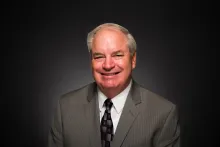
Robin Webber was born in Chicago, Illinois, in 1951, but has lived most of his life in California. He has been a part of the Church of God community since 1963. He attended Ambassador College in Pasadena from 1969-1973. He majored in theology and history.
Mr. Webber's interest remains in the study of history, socio-economics and literature. Over the years, he has offered his services to museums as a docent to share his enthusiasm and passions regarding these areas of expertise.
When time permits, he loves to go mountain biking on nearby ranch land and meet his wife as she hikes toward him.
