

Jorge de Campos
This transcript was generated by AI and may contain errors. It is provided to assist those who may not be able to listen to the message.
Brethren, as we prepare for the feast, it feels like it's taking so long for the feast to come. And I think some of you, I was talking to some people yesterday, they said, Well, we're already looking forward for next year's feast. You know, it just was such great spiritual uplift. Really, it is a spiritual uplift. I usually refer to it as God's adult education for eight days. It's God's faculty for God's people. But then, as we go to the feast, time flies. You go there and the next thing, the feast is finished. This is what's happening. You know, time moves at different speeds. So one wonders why, before the feast, time just seems to drag. And then after the feast, it just flies. And at the feast, we learned various lessons. Whatever feast site you've gone, you had very specific sermons, learning, teaching you very specific lessons. But basically, you all probably heard the webcast on the Sabbath from Mr. Kubik about suffering and how that leads to a far greater joy and glory in the end, even though we all have to suffer temporarily. We also continuously call ourselves how we also join us on this earth. We have to persevere till the end. And we also saw that a feast of tabernacles is a temporary way of living. We live in a temporary environment. But interesting enough, as it was mentioned at the feast site where we attended, it actually points to eternity in the end. So in a sense, even though it's temporary, it points to eternity. While this life, which is kind of permanent for us, our permanent homes, it's actually temporary, because it's a temporary boat. So the whole thing just flips in a sense. And we also saw during the sermons at the feast that there is hope for all of mankind in due time. God has a perfect plan which ensures a maximum success to have the most people that will be able to be in the kingdom of God forever. But now, the feast is gone and we enter what we call the post-feast season. It's like the post-feast season blues, you know? And it becomes a long period of time. Between now and the next holy days, which are only going to be right about March, wow, it's like a winter. But what are we going to do with this time? Are we going to let it go by? And are we just going to get back into our usual, quote, spiritual rut? And not going to grow? Or are we going to make a change now? Because of how we have been encouraged and built up at the feast, how are we going to make a change? To take those messages we heard at whatever site you attended and develop an action plan, a spiritual action plan to change. Here it was. Are you going to make a post-feast resolution? And so today, using some of the messages at the site that my wife and I attended, we're going to look at certain principles. Because indeed, as we know, God's festivals simply rehearse or shows God's plan for us. They show us God's plan, as we know, in Colossians 2, 16 and 17. You're going to have to turn there, but you know it says, Let no man judge you regarding the Holy Days, all the Sabbath, or the New Moon, which basically pointing to the Day of Trumpets, because it's the only high day that is on a New Moon. Let no man judge you with those things, because they are shadows of things to come. But the Church of God is to judge you. It was the Body of Christ. And so these festivals are merely shadows of things to come. And so, let us know that we have received this spiritual injection of rejuvenation. Let's move on forwards and look forwards to the days ahead. Turn with me to 2 Peter, Chapter 3, please. 2 Peter, Chapter 3.
2 Peter, Chapter 3. We're going to start reading in verse 10.
We're going to start reading in verse 11.
But the important thing is what manner of persons you and I ought to be in holy conduct and Godliness. We really got to change ourselves and become holy in our conduct. As we heard in the sermon, we have to be holy. We have to be separate. We have to be different than the world. We really have to be separate, set apart by God for holy use.
And therefore, that is holy conduct, holy use, and Godliness, which basically means being like God, acting like God, behaving like God, being a child of God. And so we look for and hastening the coming of the day of God because of which the heavens will be dissolved, being on fire, and the elements will melt with fervent heat.
Nevertheless, we, according to His promise, look for new heavens and a new earth in which righteousness dwells. We look forward to a new world, new heavens, new earth. God will make it all new. And He says, in which righteousness dwells. There will be no wickedness there, no wickedness. What a wonderful time that will be. And you probably saw a little bit of that discussed during the feast, particularly during the last day. And then continue, therefore, beloved, looking forward to these things, be diligent, work hard, study hard.
It's very interesting, the word diligent. I'll go a little bit more into the word diligent in a moment. It says, be diligent to be found by Him in peace without spot and blameless. In the words holy, sit aside without spot and blank. And consider that the long suffering of our Lord is salvation. Yes, there is the suffering period of time now, and God is very patient allowing it.
But the outcome is salvation. You know, it's like if you are a gardener, you're going to prune a tree. Why do you prune to be a bit of more fruit? You know, if you maybe visit some vineyards, and one of my son-in-laws went to France and visited a vineyard in a very hardy ground, and he's got the sweetest, most delicious wine.
And they said, the vineyards wherein they are in an environment that is very difficult and hardy, they have the best, produce the best wine. In other words, yes, we do have to suffer, but the fruit of that is a better fruit. We become better people. When we have compassion for others that suffer, we become more compassionate and become better people. So it says, consider the long suffering of our Lord in salvation, as also our beloved brother Paul, according to do wisdom given to him, has written to you.
Because he also suffered a lot, as you know. As also in all his episodes, speaking in them of these things in which are some things hard to understand. Sure, the way Paul wrote things, certain things are hard to understand. There's no question about it. Which untaught and unstable people twist to the own destruction. Indeed, people twist the Scriptures, add things, change all this word means that, that, come out of certain things to change the Bible.
As they do the rest of the Scriptures, not just of Paul's writings, but of the rest. Verse 17 and 18, these are very important verses. So what? So what, that verse? It says, so that you therefore, beloved, since you know, brethren, these things, first, beware, be careful, lest you also fall from your own steadfastness, being led away with the error of the wicked. Beware, don't be deceived, don't let go of the love for the truth. Practice, do. And then verse 18, but grow in the grace and knowledge of our Lord and Savior, Jesus Christ. That's what we're going to do. We're going to grow in the grace and knowledge of our Lord Jesus Christ.
As I've said before, it's not in the knowledge of science, of cosmology, or whatever it is, or of financial things. It's actually in the knowledge of our Lord and Savior, Jesus Christ. And not only in the knowledge, because then if it's just knowledge, it's intellectual. It's just kind of intellectual vanity in the end. It can become intellectual vanity, we've got to be careful. But it's in the grace of using that knowledge, of having Christ living in us, of us learning, getting to know what Christ is like, how God's mind is, the mind of love and outgoing care and compassion for others. And we grow in that, because that knowledge, knowing the Lord in reality, means now we put it to practice.
And when we put it to practice, that is that gracious way of working with people. And that's the growth that you and I need to have. And that's what we learn from the Scriptures. Yes, we acknowledge from the Scriptures so that we make growing grace. And in the inspiration, we go from this annual cycle every year. Annual annual cycle. And is it just a repetition of the same cycle back to the same thing? Yeah, in a way it is. But in another way it isn't, because as you apply what you've learned, you now have a better perspective, a better view of what you learned.
And now you're practicing it with a better view. It's as if you're going up on the building, on a skyscraper, and yeah, maybe the first year you're on ground level. The second year you're on the second floor, and so on. And when you get to the 20th floor, you're still seeing the same streets, but you have a better perspective from a different angle, from a better overall view. So we are to grow year by year to produce, to mature, to increase.
That's what we've got to do. But regrettably, we live in a time, brethren. We live in a time which is hard. Turn with me to 2 Timothy chapter 3. We live in a time that really is hard, because the time we live in, which is these are the lost days, are very dangerous days and years. And in 2 Timothy chapter 3, starting in verse 1, we know that in the lost days, perilous times will come. Preferably, the days are dangerous, or perilous.
For men will be lovers of themselves, lovers of man's money, boasters, proud, blasphemous, disobedient to parents, unthankful, unholy, unloving, unforgiving, slanderous, without self-control, brutal, despises of good, traitors, heads from haughty, lovers of pleasure, rather than lovers of God. Having a form of Godings, oh yes, they appear very spiritual. Oh yes, people can talk with very sounding spiritual terms, but deny His power to change, to overcome, to become very people.
And from such people turn away. From such people turn away. It's hard, but that's what we're going to do. From such people turn away. And, brethren, that's what we're going to do. In verse 6, for of this sort are those who creep into households and make captors the gallable woman, loaded down with sins, led by various lusts. Wow! And that affects others. And you know what? Always learning and never able to come to the knowledge of the truth. Always learning. And we've got to be careful, because are we learning and are we coming to the knowledge of the truth? During the feast I presented a slight presentation showing what we call a virtuous circle.
I think I may have shown it to you before. Not sure. But basically it means what I call a virtuous circle. But it's basically a play on a vicious circle. But it's just the other side of the coin. So basically we come to, we fear God, as we fear God, we learn of His ways. Therefore we realize that what He says is true. Therefore we believe in what He says, we have to have faith in what He says.
And therefore He's the rewarder, but He's also the Punisher. And because of that, we need to repent. We need to change. And as we repent and change, we make a commitment to change, which could be baptism, or it could be even after baptism. We just say, well, I better change this and become a better person.
So then, as we do that, we ask for God's Holy Spirit. We receive God's Holy Spirit, and then we're going to practice it. Put it to practice. And therein lies the problem. Because I've seen so many people I've talked to, and instead of practicing, that becomes like a slipping path. They just, they don't practice. So it's just like, they slip there, keep there. So what happens? Every year I see them, they're back to the same question I had, because they're just going around this little level, and they're not moving forwards. Because it's the same problem, the same questions.
The same year after year, they haven't moved forwards. But had they practiced, it's like they've gone up the steps from level one to level two. Now, with the fear of God, they realize, oh, I see this, I see it better, I've got to practice it better, I can see that God is showing me more things to change, and therefore I need to repent, I need to ask for more of God's Holy Spirit to help me, I need to commit to live this, and now I need to practice it.
And as we are practicing, now you go up to the third level, and so you go on. And that's what I call the virtual circuit. You're just growing and seeing, but some people, they get to a point which becomes a sticking point. You know, have you ever seen a sticking point? Like sometimes in a car, you've got something that the clutch stinks, and it's just kind of a sticking point. And maybe you've been growing, and now you get to a third or fourth or sixth level, and now you realize there is a problem in your life or in my life that I need to overcome. And you just don't get through.
It just becomes a sticking point. And you know what? You're not going to grow. You're just going to set in that level, back and forwards, until you gather enough strength to admit to God that I don't have the strength to overcome. And you pray in a new and living way. You approach God's throne as it says in Hebrews 10, in a new and living way, through Christ's blood.
And you say, please help me. Give me your spirit, and God will give you a free spirit. And if your spirit can be with you or in you, but he will give you a free spirit. And then you go and practice it. And strive to overcome. And then you overcome that. Occasionally, you kind of slip back. You know, but oh, I've got to get back to this. This is so important. You see, some people have, for instance, three years of experience of being at the feast.
Ten years, or twenty years, or forty years. Is it just three years of experience? Or in which they have more skill? Or is it just one year, three times? Or thirty times, where they're just doing the same thing, but there's been no growth. So, brethren, we've got to grow. Look with me to Ephesians chapter 4. Ephesians chapter 4. Ephesians chapter 4 verse 13.
And that section actually starts in verse 11, saying that Christ gave the church some leaders to help us to equip us, verse 12, to serve for the work of ministry. In other words, the work of service of the Econyias. It says in Greek, to be like a deacon, to serve. It's the work of service for the edifying, for the building, for the edification of the church of God. Yeah, the body of Christ, the church of God.
So, for the edification of the church of God. And then verse 13, till we all come to the unity of the faith, till we all reach a stage where we really are united. And really, indeed, it's lovely to say, well, we are the United Church of God. But you know what?
Maybe we're not all there yet. We need to be more like that. We need to come to that unity of the faith and to the knowledge of the Son of God. Like we read early on in 2 Peter, grow in the grace and knowledge of our Lord and Savior Jesus Christ. You know, it was the knowledge of the Son of God. So what? So that you and I become a perfect man, a perfect person.
Not just man, a woman too. It's just a perfect person, a perfect person to the measure. In other words, I'm not comparing myself with somebody else. You are not comparing yourself towards me. No, I'm not a measure. The measure is Christ. So we need to look to the measure of the stature, of the fullness of Christ. That's our standard is Christ. That's who you and I... I'm in the same shoes as you, brethren. I'm also striving to overcome. I'm no better than you. I'm just a human being. So are you.
So we all are. But we all striving to become perfect, to be holy as we are in the sermon. To be set apart. And the standard is the measure of the stature of Christ. That is the standard. That we should no longer be children tossed to and fro. We mustn't be children going around to and fro, carried about with every wind of doctrine. Just getting confused with trickery of man and ideas and things like that in the cunning craftiness of deceitful plotting.
But speaking the truth in love. You know, sometimes we've got to be careful. I'll speak the truth. Yes, we've got to speak the truth. But sometimes we can speak the truth with a knife. And we need to speak the truth in love. There is a way of speaking the truth. The truth in love. May grow up! May grow up! Grow in the grace and knowledge of our Lord Jesus Christ. Grow up in all things and to Him and to Christ, who is the head. That's who we've got to grow to.
We've got to grow to the knowledge of Christ. So brethren, are we going to look back and say, oh, I've done good this past year. So I'm just going to do good again the next year? Or, I'm going to improve. I'm going to really work over the next year to actually become a little bit more like Christ. And you know, brethren, we've got to work towards the truth.
You know, if you are a person that identifies fake currency, one of the things about those people that identify fake currency, they study what? The fake currency? No. They study the real money. They study the real money, the truth, as far as that money. Not the counterfeit. And then when they see the counterfeit, they identify it straight away because they know what the real looks like. And so likewise, we need to study the real truth, which is God's Word. Right here. That's what we study. That's what we study. So, as we go forward, are we studying? Turn with me to Colossians 2. Colossians 2. We'll start in verse 1. For I want you to know what a great conflict I have for you and those in Laodicea. Or, interestingly enough, brethren, keep that in mind. The letter to the Colossians. The letter, the epistle, to the Colossians is also the epistle of Laodicea. Think about that. When you read about the church in Laodicea, there it is. I'm writing also to Laodicea. So that's an interesting point for you to think about. And for as many as have not seen my face in the flesh, that their hearts may be encouraged, be knit together in love, in genuine, outgoing concern for one for another, and attaining to all riches, all the foolishness of understanding, to the knowledge. So that we come to the knowledge of the mystery of God, both of the Father and of Christ. The mystery of God, which is both of the Father and Christ. And what is that? It's God in us. And has to be like they are. So, brethren, there is a mystery about God, about the nature, the nature of love and outgoing concern and compassion. And you and I have to grow in that. Continue in verse 3. In whom are hidden all the treasures of wisdom and knowledge? Now this I say lest anyone should deceive you with persuasive words. For though I am absent in the flesh, yet I am with you in spirit, rejoicing to see your good order and the steadfastness of your faith in Christ, as you therefore have received Christ Jesus in the Lord, so walking in, rooted and built up in Him, and established in the faith, as you have been taught, abounding in it with thanksgiving. Beware lest anyone cheat you through philosophy. Philosophy. An empty deceit according to the tradition of man, according to basic principles of the world. Of the world. It's not God's word. It's things of the world, paganism, and not according to Christ. For in Him, in Christ, dwells all the fullness of the Godhead, Fatherly. In Christ dwells all the fullness of God. And you are complete in Him, who is the head of all principality and power. Christ is the head of all power. Have no doubt, Christ is the head of all power. Nowhere to be, besides, of course, the Father. Nowhere to be. No demon, no false prophet has power compared to Christ. Now, He has all power, all principality and power. Obviously, He is under the Father. So, by no means am I downgrading the Father. Please don't misunderstand me on that. But the question is, are we using this power to grow? Are we tapping on this power? And so, back to my question. Am I going to do better this year? This new year, in a sense, this festival year is now finished. And so now we're looking towards a new festival year. So, in a sense, it's like a post-peace resolution, that's what I'm talking about. To actually have active plans to make a difference in our spiritual life.
And you know what? If we don't have plans, time will fly away and you'll do nothing. Because you might have a goal, but it's just a wish. Because you don't have a plan to execute. We need a plan. You know, one of the sermons that the feast site attended, they referred about this. And they talked about a principle of having specific and measurable and achievable and relevant and time-based plans. Which the world calls it, an acronym called SMART. But it basically means you and I need to have a plan, spiritually speaking, which is very specific. Which you and I can mention, that you and I believe it's achievable. Don't make it to the field that you can't achieve it. Just make what you can for this year, next year, maybe you'll push it a little bit more. But make it achievable. And it's relevant to your spiritual growth. And thus, they have certain time limits. And you can do that, spiritually speaking. Look at Proverbs 21 verse 5. Proverbs 21 verse 5. Proverbs 21 verse 5. So this was one of the sermons we had at the feast, talking about making plans. And in verse 5 says, the plans of the diligent lead surely to plenty. Of the diligent. Now, we're going to talk a little bit more about diligent in a moment, as I said. But the plans of the diligent lead surely to plenty.
So it's not just a goal, but it's a plan to get there and to execute and get there. But those of everyone who is hasty, surely to poverty. Oh yeah, I've got a plan on Earth. But you know, you're too rushed up and you don't really get it down. And commit and be specific. You're just too busy with so many things. I'm so busy, so busy without taking some time and saying, I am going to work on this.
A goal without a plan is merely a wish.
A race without a finishing line, that could go in any direction.
But if you have a finishing line, you've got to go to that line. So, motivation without a goal is aimless and unproductive.
So brethren, we need to have a goal and a plan to get to that goal. Otherwise, the year will go by. We've had a feast, great sermons, great stuff. And then all the pressures of the world come in and phew! And brethren, I'm not just talking to you, I'm talking to myself.
I am committed to develop some action plans for myself. And so I'm going to share with you some of those post-krieg feast action plans that I'm considering for myself. So let's not waste this year ahead.
We need to continue to study ourselves, to show ourselves approved, to know what God desires from us, so that we are not led away by deception. And so the question is, what is your and my feast action plan? Now, obviously, you're going to develop your own. And I'm going to develop my own, but I'm just going to give you some ideas of areas that I want to develop some action plans. And again, we had a sermon, or was it a sermon head? I think it was a sermon head. That said, at the feast site we attended, they talked about, give God a tithe of your time.
Well, we heard on the sermon head, I think it was today, that when people spent about five hours on TV, I think that's what it was said, and two and a half hours on social media, that's about seven and a half hours. You know what? That's about 30% of your daytime! Well, just give God 10%. Well, take out of those 30% some of it, and give it to God.
In prayer, in public study, in meditation, and occasional fasting, as we heard in the sermon head, those are the whole marks of a Christian. And let's be smart about it. It would be specific, measurable, with a specific achievable plan, relevant, and with time limits. So we make it very specific. So Yah is the first one. Set a goal for personal prayer. Set a goal for personal prayer. Turn with me to 1 Thessalonians 4. 1 Thessalonians 4. 1 Thessalonians 4.
Verse 17. Pray without ceasing. Well, that's not a type. That's 100%. Of course it is. Pray without ceasing. But Yah is a principle. Yes, we always need to be in a prayer attitude. You go somewhere, you talk to some people, they ask you a question, you don't have to answer, and you quickly give a prayer people don't even know because you're close to God, and God answers and says, How do I answer that question? And then suddenly it pops into your mind, a nice, appropriate, loving way how to answer it. So we pray without ceasing. And prayers are very important. Look at another scripture, Yah, which is in Revelation 5. Revelation 5. Look at verse 8. Now when He had taken the stroll and the four living creatures and the twenty-four elders fell down before the Lamb, obviously those are angelic beings, each having a harp and a golden balls full of incense. Now, the golden balls full of incense. They have the golden balls full of incense. What is that in sense? Which are the prayers of the saints? God listens to our prayers. God listens to our prayers. And so have a prayer list. You know, we have prayer requests. We know different brethren. We know different brethren in church. They have different difficulties. You visit other areas. You go to a feast site, whatever it is, you get to know other people. You develop a friendship, some of them, others you communicate one way or another. And you pray for them. And you hear that certain people have problems, pray for them. So have a prayer list. Because if you don't have that prayer list, you're going to forget. I forget. I have a prayer list with all the names of people and I pray for people. And so it's a good thing. So set the goal for a personal prayer. Secondly, as an action plan, set a personal goal to do a Bible reading program of some form. Turn with me to Romans 10, verse 17. Romans 10, verse 17. Romans 10, verse 17.
So then faith comes by hearing and hearing by the Word of God. This is the Word of God. Now, if we don't hear it, if we don't read it, we don't know. And it does not increase our faith. We have to read the Bible and come up with a reading program. I'm not talking about Bible study. I'm talking Bible reading. I'll come to Bible study in a moment. That's two different things. But do a Bible reading program. Well, some people read the Bible through in a year. Well, that will be on average about 15 minutes a day. Well, that's a long way from the 10% of your 24 hours a day. So anyway, so it's only 15 minutes a day. Well, some people, what I'm doing this year is I'm using a cultural background study Bible. And so I want to read it in the context of the culture of that era. So yes, I'm reading, but I'm also reading the comments. But the comments in that one are specifically focused on the culture of that era. So it helps me to understand a little bit of a context, not just the context in the scripture, but the context of the society. And so I'm going to do that. That's going to be my challenge for this year for my Bible reading. If any of you want to know what bundle I'm going to use, etc., which let me know, and then I'll bring it next week and I'll show it to you. So, but, and obviously that might take longer than 15 minutes, but that's okay. So that is one way that you and I can get immersed in God's way of thinking. I mean, you can use a different Bible version. And maybe Brethren, we strongly recommend to use a good Bible version like the New King James Version, Old King James Version. Not perfect, but it's good. If you use other versions, actually some of them are easy to read, and good to get easy to read. But regrettably, many of them are paraphrases, which those translators thought they would help the meaning, and they put false ideas into it. And you've got to be careful with them. So you have to have more of a direct translation, which is like literal translation, rather than a paraphrase type or a hybrid of those. So I know other translations, like New Living Translation and the New International Version, they nice to read, and there are others like that. And I'm not saying don't use them, but always for accuracy, for doctrinal point of view, always go back to a more literal translation. So there's an opportunity, you read it, my view is an easier to read version, but when you read something, they say, this doesn't look right, well then look at it a more literal translation right there and then. So have the two next to each other when you do the Bible reading, and that will become a lot more significant or meaningful to you. So that's the second point. Do a Bible reading program. The third one is set for yourself a personal Bible study program. Now, I want you to turn with me, please, to 2 Timothy 2 Timothy chapter 2. 2 Timothy chapter 2. You know where I'm going now. Verse 11. 2 Timothy chapter 2 verse 11 through 15.
So it says, Brethren, it really frustrates me. It really frustrates me. People want to prove some idea of this, and they take a word from the Bible, and then they strive about that word with a weird little meaning coming out from some whatever it is saying, well, this word means that, and this means the word that, and therefore this justifies, and you can start a whole new doctrine based on that. Brethren, remember when we did a Bible study about degrees of authority with that triangle? And I said, what you base your fundamental beliefs is on direct statements from the Bible or direct implications from the Bible. That's it! What those people are using are things up there which have very little authority, which is injecting their own meaning into certain scriptures. Be careful! Well, they say, well, it's in the Bible! You see, I've proved it from the Bible! They're injecting, inducing their own meaning into scriptures. And that instead of being exegesis, which is drawing the meaning out of the scriptures, that is isogeses. That's inject or induce your own meaning into the scriptures. Be careful with that! That's how people, it says, yeah, they strive about words to no prophet, to the ruin of the years. But the point I want to emphasize is on verse 15 says, be diligent to present yourself the proof to God, a worker who does not need to be ashamed, rightly dividing the word of truth. Which means there is a wrong dividing of the word of truth. But looking up, be diligent. And I mentioned twice already, early on today, about the word diligent. You know the word diligent in the specific instance is spaldazo. From strong means to use speed, to make effort, be prompt, or earnest to do deep diligence, be diligent for word and ever labor study. When we are diligent about God's word to present ourselves, we are diligent. That means we make an effort to study God's word. That's what this diligent means. We have to study the Bible.
So, brethren, in the church we have a booklet which identifies 20 fundamental, basic beliefs that are so important. If you study those beliefs, and not only that, can you explain to them when people ask you?
When people ask you what is the reason of the hope that lies in you, are you able to answer it? Can you explain the nature of God? People ask you. Can you explain how Jesus Christ created everything as God's agent, as God's representative, as to whom the Father delegated the responsibility to do? Can you explain that? Can you explain the Spirit of God? The seed of God, the holy seed of God, the power of God, the mind of God? How is our helper? Can you explain that to people? Can you explain what the Word of God is? Can you explain why there is a Satan? Can you explain why there is man? What is the purpose of man? From the Bible. Using maybe, on these things, you study it and it will develop your own private set of chain, scriptures in a chain. And then maybe you develop some sort of thing at the end of your Bible, you've got a section of a few pages for notes. Have a set of chain, scriptures, to explain those basic fundamental beliefs. Just some ideas. Can you explain the plan of God? Can you explain why God allows sin for the time being? Can you explain God's law, that we've got to obey God's law? Can you explain three days and three nights? Can you explain what is all about repentance, baptism? Can you explain the food laws? Can you explain about military service? What is the church? Tithing? The resurrection? The return of Christ?
Now, there's a lot of study there.
Matthew is probably not going to do it in again. But maybe you do a three-year plan over the three years. But this year, or this quarter, let me just do a plan. And he says, well, I'm going to do this quarter. And if you haven't finished it, he says, okay, the timing was a little bit unrealistic. I need to make it achievable. You reset your timing, but you still have a plan. Make it practical to you.
So that's the third point. Set up a personal Bible study program, in addition to a Bible reading program. So a Bible reading program is not a Bible study program. They too are different. And then, number four, if you consider doing a scripture memory action plan to remember certain scriptures, you look at 1 Peter 3, verse 15. 1 Peter 3, verse 15.
But sanctify the Lord God in your hearts, and always be ready to give an offense to everyone who asks you a reason for the hope that is in you with meekness and fear. Well, if they ask you a reason, oh, I don't know, it's somewhere in the Bible. Well, it would be nice if you could quote something, even if you don't know the name of or the number of the scripture, at least quote it. Right? So that would be nice. So why, as an example, you set a goal to remember one scripture a week. One a week. Is that difficult? One a week? I mean, every day you just kind of reenact that. And the next week you get another one. Well, you keep remembering the first one, you know? So then just put it in a bucket and it disappears, because, you know, we're going to forget it. I'm a human being. I'm going to forget. We all forget. But now you have, the next week, you have two. We're doing one more. And then the following week we're doing one more. You've got three. You know, at the end of the year you've got 52 scriptures. That's not bad. At the end of two years you've got over 100. At the end of three years you've got 150. And you can pick up those basic key scriptures. Well, you're ready. You can be able to give, as it says here, to be able to give the reason of the hope. Just like that, when people ask you.
So maybe that's something we can do. Oh, is this all just to add intellectual knowledge? No, because we really need to take this one level further. And the fifth point is, get an action plan to think and live the way. To think and live the way. And this is what we call meditation, right? In other words, you do prayer and Bible study and meditate. And that's think. Think about it. How can I apply this in my life? How can I put it to practice? That's meditation. It's not sitting and looking at your navel and think about nothing. You meditate. How can I do this? So you pray about it, you study, then you pray about it. And ask God, help me to put this to practice and then think about it and discuss it with God. So, yeah, 1 John 3 verse 22. 1 John 3 verse 22. 1 John 3 verse 22. And whatever we ask we receive from Him because we keep His commandments. Full stop. Full stop. 1 John 3 verse 22. Whatever we ask from God we receive from Him because we keep His commandments. Full stop. Is that what's in your Bible? No.
So, if we keep His commandments, full stop, we might not get what we ask. We ask, is what? And do those things which are pleasing in sight. It's more than the commandments. It's go over and beyond. And things that are pleasing in God's sight.
So how do we know what's pleasing in sight? Because we meditate about it. We say, well, this is what I really am. Well, I better change my thinking process.
And do. Look at another one. Revelation 22 verse 14. Revelation 22 verse 14. Now, this is going to be interesting because it depends what Bible you're reading. If you're reading on a New King James Version, and I'm going to read it from a New King James Version, it says, 22-14, bless the radals who do His commandments. For they, that they may have the right to the tree of life. But you see, your Bible might say something else. It's like, well, that you wash your blood in the saints and whatever, whatever. Because they changed the... what's in the original. They changed it.
Why? Why would they change doing God's commands? I wonder why? Well, it's interesting, isn't it? So, you see, we've got to apply. We've got to apply. We've got to do what's pleasing to God. We've got to keep the commandments. We've got to apply. We've got to have an action plan. You know, brethren, another message we had at the feast this year was that God knows every thought you have.
Obviously, that's what we think about. Well, let's look at Psalm 94, verse 11. Psalm 94, verse 11.
Psalm 94, verse 11. It says, the Lord knows the thoughts of man, of every man, and woman, by the way. All of us, that they are futile. So God knows our thoughts. We're always, we're always in the presence of God. Ask John, you know, you thought you could go inside the fish and hide. It couldn't hide in there. You know, it couldn't hide inside the fish. So, you're always in the presence of God. So, it's not just what we do in front of others. It's not just what we do in private. It's what we think in private, that God knows. He's everywhere. He's everywhere. We're always in the presence of God. And that's why I can also your prayers at any time, whatever you are.
Therefore, meditate. Clean your thoughts. Because we're going to disseminate, be holy. Be holy in a mind. Get the clean thinking process. And then we've got Philippians chapter 4. Philippians chapter 4.
Philippians chapter 4. verse 8. Finally, brethren, this is what we've got to inject into our mind. You get wrong thoughts? Or you can't sleep at night? You are insomnia? Well, start with the first command. And then start saying, how can I apply the first command better? And then think about deeper things about it. Then think about the second command. And then the third. And probably by the time you get to the tenth, you'll already fall asleep. But then, think about it. But the point is you're putting good, positive things in your mind. Or think about the beatitudes. Or think about some sermon you heard and meditate. Get that in your mind when you go to bed, for instance. And think about it. Whatever is true, whatever is novel, whatever is just, whatever is pure, whatever is lovely, whatever is a good report, if there is any virtue, if there is any price worthy, meditate on these things.
So, if you've got negative thoughts that come into your mind, well, he doesn't love me. Oh, you know, he did that because it was to spite me. Or whatever. I don't know what it is. Whatever it is. Get that off and inject into your mind positive thinking process. Amazing how it will change your attitude. Amazing how it will change. So, have an action plan. That was the first point that I'm referring to. To think. And that thinking will lead to action. You know, out of the abundance of the heart, the mouth speaks. Well, out of the abundance of the mind, you actually end up doing the right things. And therefore, it leads to action. Therefore, you live the way. Number six. Have an action plan to practice the Beatitudes by being a peacemaker. There was another sermon, the editor of the feast, by being a peacemaker. If you look at Matthew chapter 5, and I'm not going to go through the Beatitudes now. I have a few sermons that are even covering that. But the Beatitudes started in Matthew chapter 5, where he talks about the Beatitudes. Starts in verse 2, in fact verse 3. There's humility, and then mourning, which is you humble, and then you mourn, and then it means you change your heart, you repent, and then you are teachable, in other words, you meek. And then as you meek, and you humble, and you change, then you hunger and thirst for God's righteousness, not your own self-righteousness, and then you realize that you need to be merciful, you need to have a heart which is pure, and now with all of that, blessed are they, they are not peacemakers. Because you cannot be a peacemaker unless you humble. You cannot be peacemaker unless you repent. You cannot be peacemaker unless you meek. You cannot be peacemaker unless you follow in God's righteousness. You cannot be peacemaker unless you be pure in heart. You cannot be peacemaker unless you are merciful. But by being a peacemaker, by practicing these beatitudes by being a peacemaker, you're not a peaceloader. It's a peacemaker. Then you'll be called a Son of God. Then you'll be called a Son of God. As we heard in that sermon during the feast, those that were there, it says, peace is not the absence of conflict. Peace is how we handle conflict. Yes, conflict will be. It will be there. But how we handle conflict, that's being a peacemaker. And then, the last that I want to mention today is the seventh, is have an action plan to be an example. 1 Timothy 4, verse 12.
Let no one despise your youth. But be an example to the believers in war, in conduct, in love, in spirit, in faith, in purity. So we need to study, to change, what we do to be an example, to model, so that people can follow example and live according to example. We had another sermon at the feast that said, to know well, you must teach. And indeed, I've taught many classes, and I tell you, you really know well when you teach. So, we all need to be teachers. But that doesn't mean that we all need to be preachers now. It's a different word. A teacher could be an example. When you are an example, you are a teacher. And that is probably the most important example that we all, as true Christians, need to be. That's why it says, be a light! Be a light! You all are light! Matthew 5, verse 14 through 16. Be a light to everyone. So, brethren, we had a sermon about that as well to you, the feast which said, be a model to be followed. I thought that was a cute one. A model to be followed. So, be an example. So, brethren, I don't consider the feast as a vacation. I consider the feast as a time to be taught by God. What a wonderful opportunity! But now that we've been taught, let us put that to practice and set some spiritual goals. I gave you seven examples of spiritual goals that you could consider. I'm not saying take these. You can create other ones. Book it. Go back home. Study the feast site you attended. Or use some of these and come out with some goals of things, looking at your own frailties and weaknesses and things that you want to change and come out with an action plan. It does not have to be seven points. It could be ten. It could be three. Whatever is right for you. The ones I gave you are related to prayer gods, towards Bible reading, towards Bible study, towards scripture, memories of scriptures, towards thinking, changing the way we think and the way we live, towards being a peacemaker, and towards being an example. Now, you may have your own, but make some sort of a resolution to put on the nature of God. And to be willing to offer spiritual sacrifices, to offer spiritual sacrifices, which are well pleasing to God. That's why we don't offer physical sacrifices. God doesn't want physical sacrifices. Well, you kill a bull or a cow. So what? What he wants is a spiritual sacrifice of you and I changing the way we are. And that's hard. That sometimes can be a sacrifice. That is what God wants. So plan to make a spiritual difference in your life.
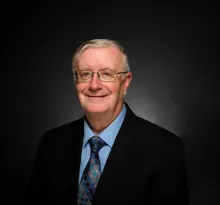
Jorge and his wife Kathy serve the Dallas (TX) and Lawton (OK) congregations. Jorge was born in Portuguese East Africa, now Mozambique, and also lived and served the Church in South Africa. He is also responsible for God’s Work in the Portuguese language, and has been visiting Portugal, Brazil and Angola at least once a year. Kathy was born in Pennsylvania and also served for a number of years in South Africa. They are the proud parents of five children, with 12 grandchildren and live in Allen, north of Dallas (TX).
