

Robin S Webber
This transcript was generated by AI and may contain errors. It is provided to assist those who may not be able to listen to the message.
I'd like to give you the title of my message, so you'll perhaps at least remember a little bit of what was spoken about for the next three hours. That was just to wake you up. It's just simply called this, Walk, Don't Run. For those of you that are baby boomers here, you'll remember that as an instrumental that came out of the 60s, instrumental by The Ventures.
And it was called Walk and Don't Run. And I hope to make some sense out of that phrase as we go along. Today I'd like to dedicate this message, first and foremost, to God, because that's why we're all here. And to all of you, because you're the children of God with living the life of Christ in you, and yet with the challenges that surround all of us.
And I also want to dedicate it to a friend and to a man that I deeply respected that died this last week, at the beginning of this week. You might have noticed that in the e-news. It was never down in Southern California very much. He was more of a Midwestern man. And he was a man that was a Texas gentleman. He was a man that all of us amongst the ministry truly admired, if you knew this guy.
He didn't say much. He wasn't a big talker. But when he said something, everybody leaned in, because he was full of wisdom. He'd been there ahead of all of us, and we all admired him. His name was Vern Hargrove. For any of you that knew Mr. Hargrove. And I know as one, I truly did respect him. I've often borrowed a phrase that I heard him use many, many years ago, and I'd like to begin this message by using this phrase, because it's going to be a part of what we're doing during this message, then a part of what, hopefully, God willing, you will do after you hear this message with one of the takeaways that I'll try to plant in your heart and in your mind as we leave.
Mr. Hargrove used to say this when it came to the festivals, to the appointed times of God. And we are on a feast day today. We are on the Sabbath. And it was simply this. He said that these times were to where we gather the family, we break the bread, and we tell the story. I think that is so concise and so wonderful because that's what we ought to be doing as people.
And so we are here today to gather as a family. We're here to break the bread. And let's remember, man shall not live by bread and or later on cookies alone. But by every word that proceedeth from the mouth of God. And thus that is what we will do. And we will tell the story. There's a story in this book. And there's a story in each and every one of us that has been given. That, as we heard from Bill, that needs to be shared at the right time and in the right place and in the right way. I remember growing up, it was not this church, but when I was a boy growing up, I was part of another fellowship.
And we used to raise the rafters, as it were, when we would sing a song, I love to tell the story. Now, I'm not going to have you all break out in an old Baptist hymn, okay?
That's not my point. But it does raise a point that we each and every one of us have a story to tell that God has given us. And we have the stories in the Bible to encourage us and to fortify us as we move into our Mondays and Tuesdays and Wednesdays and into situations that we wake up in the morning and are not prepared to necessarily handle even perfectly, that we have to move through it and deal with it and understand it. And that's why I want to bring to you today a story.
It's an ageless story. It's an ageless story as old as time and as current as now. It's the story of abiding, God abiding and working and loving a covenant people down through the ages. Whether it's Israel of old or whether it's the Israel of God today, the body of Christ. That's us. That's us. You and I who live on that current edge of that linear movement towards the kingdom of God.
We are on the edge. Others have come, been, gone. But we now are on that current edge of that linear movement. It's an ongoing movement. It's not a circular movement. The kingdom of God is assured and sure. But it's what we do now as God, as we look at the stories of old, as God intervened in other people's lives as to how He intervenes in our life today.
And with that thought, I'd like to share a thought about how God does intervene in people's lives and how He teaches them. I've got something here. I don't do PowerPoint. I'm not in computers, so you don't want to miss this because this is the PowerPoint.
Sorry. But this is the PowerPoint. You hear it? It's moving. Now you say, where is where we're going? Simply this. God uses the element of water, and sometimes moving water, just like you just saw move again and again through the story of the Bible, to shape, to mold, to develop, and to mature people. To recognize that He is not only sovereign, but He is loving. He is not only with them in their beginning, but He will be with them through their trials, and He will be there at the end.
And He uses this element of nature to bring that about. We think of some of the stories in the Bible about the Red Sea, water. We think of the story of Jonah, dealing with Jonah to get his attention.
Again, a lot of water. We think of the story of Jesus going down into the Jordan River to be immersed, to be there, to support His cousin and His ministry, to be there, washed as it were, as a high priest and qualifying for that, and to set us an example forever about what water does as an example. We think of the story of Peter, yes, on the Sea of Galilee, don't we? And we recognize that it is on that lake that's where the phrase came from.
He petered out, literally. He took his eyes off of the Master, and he had that yes, that sinking feeling, and went down, if but for a while. So we see all of these stories. We see the story of the lame man where Jesus could have just healed him, but he said, No, you go down to the pool of Celion, and you wash yourself this many times. So it's just interesting how often God uses the element of water to put a touch on us and to grow and to develop our faith in Him. Well, that's what I want to do one more time today.
I want to tell a story. It's one of my favorite stories I've been badgering Susan for the last couple of days. I just love this story. It's always been one of my favorite stories, and I've never given a message on it. So we're going to talk about it. Would you join me if you would in Joshua?
In Joshua, we're going to have a story about water, about God, and about His people. That's going to become our story. In Joshua 1, and let's pick up the thought in verse 1, After the death of Moses, the servant of the Lord, it came to pass that the Lord spoke to Joshua, the son of none, Moses' assistant, saying, Moses, my servant is dead. Now therefore arise, go over the Jordan, that is the Jordan River.
You and all of this people to the land which I am giving to them, the children of Israel, every place that the sole of your foot, that's going to be important as we go further, every place that the sole of your foot will tread upon, I have given you. As I said to Moses, from the wilderness and this Lebanon, as far as the great river, the river Euphrates, all the land of the Hittites and the great sea, toward the going down of the sun, shall be your territory.
Now verse 5, No man shall be able to stand before you all the days of your life. As I was with Moses, so I will be with you. We have a great generational turn here. Moses had a guided Israel for 40 years, now dead. And now Joshua is about to take over. And notice what it says, I will not leave you nor forsake you. Be strong of good courage. For to this people you shall divide as an inheritance the land which I swore to their fathers, and to give them. Now verse 7, Only be strong and very courageous that you may observe to do according to all of the land which Moses, my servant, commanded you.
Do not turn it from the right hand or to the left, that you may prosper wherever you go. I'd like you to take a look back at verse 3. Every place that the sole of your foot will tread upon, I have given you. I thought that I want you to stick with me for a moment. They've been in the wilderness going in circles for 40 years based upon what they brought upon themselves. But now God is going to fulfill a promise, and they are about to go over into the land of promise. But they've got to, as we say, cross river. They've got to go over to Jordan. And God says, I'm going to give it to you.
It's not necessarily you're going to take it. It starts with the engine. That's God. And I will give it to you. I'm going to fulfill my promise. I kind of wanted to use that as a beginning so that we're going to know where we're going to go a little bit later.
Now join me if you would in Joshua 3. And Joshua 3. And we're going to see what's going to happen here. Here they have been 40 years. They've heard about this. They're right on the edge. They're right on the edge. And now here it is. Chapter 3, verse 1. Then Joshua rose early in the morning. And they set out from Acacia Grove, and they came to the Jordan.
That is the river. And he and all the children of Israel, and lodged there before they crossed over. There's the Promised Land right across the river. But they stopped on this side of the river. So it was, after three days, that the officers went through the camp. And they commanded the people, saying, When you see the Ark of the Covenant of the Lord, when you see that Ark of the Covenant of the Lord, your God and the priest and the Levites, bearing it, then you shall set out from your place and go after it.
Notice who the Ark of the Covenant belonged to? Didn't belong to Moses. It didn't even belong to Joshua now. It did not even belong to the people. But notice who it belonged to. The Lord your God. They'd been resting. They'd been on this side, Jordan. Then notice what it says, Then you shall set out from your place and go after it. But first of all, the Ark of the Covenant has to be picked up and has to begin to be on the move by the priests and the Levites.
Verse 4, Yet there shall be a space between you and it, about two thousand cubits by measure. Do not come near it, that you may know the way by which you must go. For you have not passed this way before. They had never gotten this far. They'd been in circles in the desert for years. So we notice this that the instruction from God Himself is, Don't get ahead of me.
Be measured. Slow down. Don't hurry. You know, so often when you see movies, you see cowboy movies, old western movies, you know, where they've been out in the desert for a long time and all of a sudden there's some fresh water, everybody runs over the hill and they jump right in. God said, Stop.
You be measured. Slow down. This is not going to be about you. This is going to be about me. This is going to be about my glory, that you'll come to understand that I'm about to fulfill my promise. But you're going to have to follow my instructions. And Joshua said to the people, verse 5, Sanctify yourself, for tomorrow the Lord will do wonders among you. Tomorrow, but not now. You have to walk. Don't run. Don't push it. What is God telling Joshua? What is He telling Israel? What is He telling you and me today as the spiritual Israel of God?
David later said this, Be still. Be still and know that I am God. That's a challenge that all of us have today in a world that does not rest. A restless world. A world that we don't even have to go out and meet, but because of the technology, it comes and moves into our head, moves into our hearts, dominates our time.
It is so very, very hard to stop and to be still. But it's only when you stop, it's only when we are still, that we can come to know God, to know what He's about. And that's what we are to be about in His dead. Then it says, Joshua spoke to the priest, saying, Take up the ark of the covenant and cross over before the people. So they took up the ark of the covenant and went before the people. Oh, brethren, this is awesome! Here you have hundreds of thousands, if not more than a million people, and here are the chosen servants of God, the priests and the Levites. They pick up this ark of the covenant.
God is going to go before them. He's going to deliver on His promise. Wow! And there's this ark. And what is in the ark? What does it encase? It encases the stories of Israel over 40 years. It encases the real Ten Commandments, the mind of God, first on stone and to be in our hearts. It encases the budding rod of Aaron to show that God will select His leadership, that God will select His people, that God will be God and will use Him, He will use.
It also has a jar. I think it's called an omer, or the measurement is an omer. And what's in that jar? The manna. A little bit of manna. Can't get rid of that stuff. It's still on the ark of the covenant. But the manna was always there to remind us that God will give us our daily bread and to meet our needs and supply. So the priests lift up the ark, the Levites, the Poles, and they move forward. They're moving forward, and finally it says, it's time to go.
We're not going to run towards it. We're going to walk. And there they go, and they take off. And you can imagine the solemnity and the awe and the anticipation of what's going to happen next. And they went before the people. There's no hocus pocus here. There's nothing behind a curtain. The people are going to see God on display of what's about to happen. And verse 7, and the Lord said to Joshua, this day, I will begin to exalt you in the sight of all Israel. Joshua, this isn't about you. This is about me. I who am, the uncreated, the God of Israel, the God that rescued you out of Egypt.
And yes, their parents saw the Red Sea open, but one more time, as we go to the next chapter, I'm going to open up something else. So stand back and watch.
And he says that they may know that as I was with Moses, so I will be with you. Moses is dead, brethren.
We have had men of wonderful servants over the years in our own lifetime. And they serve while they are alive. And like all men, they die, and they wait their maker. They wait the resurrection. But God, the living God, is always there for us. God is always there. Men will come and they will go. And while we are here with you, like being your pastor, we do have a responsibility to point you up towards God and not ourselves. But like Moses, we will come and we will go, and others will come and they will go.
But the focus is here that I will begin to exalt you. This is about God. And notice verse 8, Now watch this. Some of you may... most of us are more familiar with the story of the Red Sea than the story of the Jordan. But there's a little difference, so stay with me, okay? This is really neat. You think about you being there. And it says that when you come to the edge of the water of the Jordan, you shall stand in the Jordan.
Now let's watch this little PowerPoint up here. So they're on the edge. I'm on the edge. And then the priest, the Levites, with the bulls, with the Ark of the Covenant, they're out now. Watch this. Have you ever been knee-deep in trouble as the old expression goes? Well, they are knee-deep in water. This is called up, close, and personal. And they're in the water. The water has not yet...
are you with me? The water has not yet moved, and the Jordan, as we're going to find in a few verses, is at Spring Peak. Why is it at Spring Peak? Because God never wastes a miracle. It wouldn't be anything if they crossed over in summer.
They could put a couple two by... I don't know if they had two by four. But you know, you could, like a Southern California pond, there's nothing there at the end of the summer. This is in the season of Passover. This is March. This is April. The water is rushing out of the mountains and coming down the Jordan. And here are the priests, and they are standing. This is different than the Red Sea, where Moses finally said, get to moving, get to going, get in there.
And so here they are. They are literally their knee-deep. And to actually put it this way, they are... have you ever said where you're soaking up an experience? They are literally soaking up the experience. So Joshua said to the children, come here and hear the Word of the Lord your God. And Joshua said, by this you shall know that... notice the Living God is among you. The Living God is among you. And that He will drive out before you the Canaanites, the Hittites, the Hivites, the parasites, what I call all the Ites, and the Gergeschites, and Amorites, and the Jebusites.
But notice the emphasis here. The Living God. We're going to go over this in a few minutes towards the end of the message. This term, the Living God, is incredibly important for our experiences, followers of Jesus Christ. We don't worship a dead God. We don't worship an artifact. We don't worship a theory. We don't worship... we don't worship something that's not moving. This is a phrase that pops out again and again from Leviticus all the way to the book of Revelation. That God wants every generation of believers beyond man, beyond Moses, beyond Joshua, beyond those that have been amongst us in this century. That we're not here to worship them.
We're here to worship God. We're here to worship the Eternal, the Everlasting, He who is uncreated, and His Son who is uncreated. And they are our head. They are the ultimate leadership. That you may know that they worship the Living God. Behold, the ark of the covenant of the Lord, of all of the earth is in Jordan. Now therefore take for yourselves twelve men from the tribes of Israel, one man from every tribe. Now we're going to cover this in chapter 4 verse 2.
And it shall come to pass as... Now watch this. If you blink, or you get distracted, you're going to miss all the neat things that are in this story. And it shall come to pass as soon as the souls of the feet of the priest who bear the ark of the Lord, the Lord of all of the earth and rest in the waters of the Jordan, that the waters of the Jordan shall be cut off.
The waters that come down from upstream and that shall stand, look as a heap.
But you don't get that if you don't go into the river. And you don't get to do that if your souls of your feet don't touch river bottom.
The same God, the Creator God. And that's what Genesis 1 is about.
Genesis is not written as a science book. It's written as an exaltation of God Almighty. The God that brought Israel out of Egypt was above all the gods of creation, that the Egyptians worshipped from grasshoppers to bulls, and everything in between.
In the beginning, God. And it says that He took the waters and separated them in Genesis, and the what? The dry land. What? Appeared.
God continues to create moments. He continues to, in our lives and in our time, create circumstances to build and to draw us into the faith that He wants us to have.
So it comes that the waters shall be cut off. So it was when the people set out from their camp to cross over the Jordan with the priests bearing the Ark of the Covenant before the people. Verse 15, And as those who bore the Ark came to the Jordan, and the feet of the priest who bore the Ark dipped into the edge of the water. I've got a question for you. Are you with me?
What was more challenging? Would you want it to be the Levites and the priests going into the water, into a rushing mighty stream, or been with Peter walking on water? See, God uses water for all sorts of reasons, doesn't He, to make sure that our eyes and our obedience is on Him.
And so it says, And the feet of the priest who bore the Ark dipped into the edge of the water, for the Jordan overflows its banks during the time of the spring harvest. That the waters which came down from upstream stood still, and rose in a heap far away at Adam, the city which is beside Saratan. So the waters that went down into the sea of Arabah, the salt, the dead sea, failed and were cut off, and the people crossed over opposite Jerusalem. Verse 17, we're going to go deeper. Then the priest who bore the Ark of the Covenant of the Lord stood firm on dry ground, as all of Israel crossed over on dry ground until the people had crossed completely over the Jordan. Here's the story that I'm looking for my... Oh, here it is. Good.
Are you with me? So here's the story. This is called a bank. And this is called a bank. Promised land over here. This is riverbed. Not river, because the river is upstream now. In a heap. And the high priest and the Levites, are you with me? They had to take... This is my little Ark of the Covenant. They had to take the Ark of the Covenant on their shoulders, and they had to plant themselves right here. They had to plant themselves right in the middle and not move. Any volunteers? They had to stay there, as hundreds of thousands of people moved by them. They were following God. They were following His selected priesthood, and those that served God in the tabernacle and the tabernacle. The one thing about when you study Exodus, Leviticus, Numbers, and the Deuteronomy is you always recognize that in this order, we had the pillar of the cloud, and then behind that we had the Ark of the Covenant, and then behind that we had the people. God is our guide. God has law. God has provisions. He will select His holy people, whether it be a nation and tribes of people, or whether it be servants within that, and then the people follow Him. That's how God always intended it. It's a representation even of what we see in the Garden of Eden. But think about this, and there are probably a lot of priests down there, too. And my question would be, are you with me? I wonder which way they were looking. I wonder if their eyes were looking up towards God, or they were looking up river, wondering when they were going to get washed away. It took courage, and it took faith. Just like today, it takes courage, and it takes faith to be God's people, and you've got to keep your eyes on God, and keep your feet on the ground, and to recognize that God's going to come through. And it came to pass, then, while all the people had completely crossed over the Jordan, that the Lord spoke to them, now take for yourselves twelve men, and command them, saying, take for yourselves twelve stones from here, out of the midst of the Jordan, from the place where the priest's feet stood firm, and you shall carry them over with you, and leave them in the lodging place where you lodge tonight. Then Joshua called the twelve men, whom he had appointed from the children of Israel, one man for every tribe. And Joshua said to them, cross over before the ark of the Lord your God, in the midst of the Jordan, and each one of you take up a stone on his shoulder, according to the number of the tribes of the children of Israel. So it was not only the priests, it was not only the Levites, but they had to get twelve brave guys to go back down to that river. And they were going to, they had to, are you with me? They had to, specifically, not like a daisy, she loves me, she loves me not, or like a soup plantation, multiple choice. They had to pick stones from right underneath, where the high priest and the Levites were, to where they stood in there, and God performed his miracle.
Do you think God's in the details? Yeah. They had to go back in, and they had to pick up these stones right here, underneath the soles of the tree, and then they had to take them up. And then that night, wherever they lodged, they had to create that, those stones, and build them up to be a memorial.
Now, the point is this, then. That this may be a sign, verse 6, among you, when your children, asking time to come, saying, What do these stones mean to you? Then you shall answer them, that the waters of the Jordan were cut off before the ark of the covenant of the Lord, when it crossed over the Jordan. The waters of the Jordan were cut off, and these stones shall be for a memorial to the children of Israel forever. And the children of Israel did, just as Joshua commanded, and took up the twelve stones from the midst of the Jordan, as the Lord had spoken to Joshua, according to the number of the tribes of the children of Israel, and carried them over with them to the place where they lodged, and they laid them down there, exactly as God had said. Obedience to the details. Then, Joshua set up twelve stones in the midst of the Jordan. This is Joshua. So, what he does, the twelve men, leaders of the tribes, one for each tribe, they set up stones over here. These are my stones.
As a memorial. But Joshua goes in, and he sets up stones right here. What he's doing is creating a double memorial. Why? Why does God command Joshua to tell the twelve to go and pick up stones, something that is sturdy, something that's not going to blow away in a desert wind, that will be there? Because, are you with me? Because humanity tends to forget. We remember to forget, and we forget to remember what God has done for us. And we get caught up in the moment, and we see what happens. So he sets us up. We're almost done. So the priest who bore the ark stood in the middle of the Jordan, until everything was finished, that the Lord had commanded Joshua to speak to the people, according to all that Moses had commanded Joshua. And the people hurried and crossed over. Then it came to pass, when all the people had completely crossed over, that the ark of the Lord and the priest crossed over in the presence of the people. Verse 14, And on that day the Lord exalted Joshua in the sight of all of Israel, and they feared him, as they had feared Moses all the days of his life.
And then the Lord spoke to Joshua, Command the priest to bear the ark of the testimony, to come up from the Jordan. Oh, yeah, they're still down there. You can come up now. Mission accomplished. And it came to pass, when the priest who bore the ark of the covenant had come from the midst, and the souls of the priest, feet touched the dry land, that the waters of the Jordan returned to their place, and overflowed all of its banks as before. Verse 21, Then he spoke to the children of Israel, saying, When your children ask their fathers in time to come, saying, What are these stones? Then you shall let your children know, saying, Israel crossed over this Jordan on dry land, for the Lord your God dried up the waters of the Jordan, and before you, until you had crossed over, as the Lord your God did to the Red Sea, which he had dried up before us, until we had crossed over. Chapter 5, verse 1. And so it was, when all the kings of the Amorites were on the west side of the Jordan, and all the kings of the Canites, who were by the sea, heard that the Lord had dried up the waters of the Jordan, from before the children of Israel, until we had crossed over, that their heart melted, and there was no spirit in them any longer, because of the children of Israel.
What can we learn from this story? As Bernhard Grove would say, if he were alive today, and I'm looking forward to meeting him again one day, we gather together as a family, we break bread, and we tell the story. Brethren, what I want you to know is that Joshua 3, Joshua 4, and the beginning of Joshua 5, that's our story. It's our story. It's the story of covenant people down through the ages, that are on the leaning edge of what God is doing with his servants. Whether it be Israel of old, or whether it be the Israel of God today, what can we take away from this story, and apply in our lives today, and on Sunday, and on Monday, and on Tuesday, and on Wednesday? And we'll throw in Thursday and Friday, just in case. What can we take away from this? What are the specific takeaways? Oh no, we can't necessarily carry the Ark of the Covenant, but we can carry away some points. Allow me to give you some very quick points to make sense of this story, and put it in 21st century terms. Number one, it is God who goes before us. It is God who goes before us. He is the living God. In Deuteronomy 31, join me if you would there, please, for a moment. Number seven, Deuteronomy 31. Then Moses called at Joshua and said to him, In the sight of all Israel, be strong and of good courage. For you must go with this people in the land which the Lord has sworn to their fathers to give them, and you shall cause them to inherit it. It is God who goes before us. It is God who gives us our inheritance. He is a living God. Hebrews 12 and verse 22, just to show you the length and breadth of this in Scripture. In Hebrews 12, because this relates to us, the same God that was spoken of by Moses and Joshua, we find over where the author of Hebrews mentions this. In Hebrews 12, join me if you would there for a moment. And it's not coming up against Mount Sinai, but it's coming up against Mount Zion. Notice Hebrews 12 and verse 22. But you, that's you, that's you, and that's me, we have come to Mount Zion into the city of, notice, the living God, the heavenly Jerusalem into the innumerable company of angels. Brethren, whatever you are going through today, whatever you have experienced this weekend, are experiencing today, as with some of our dear friends and family members here, where we can be jammed in the side with news that comes to us. God is not dead. John Lennon was wrong for us that are older, that remember what John said back in the 60s. The Beatles have come and gone. Our God, the God, he who is uncreated, sovereign, loving, generous, and beautiful, he is living today. Number two, God is true to his promises. This living God is true to his promises. There's a song out of the 60s, some of you will remember. You can see it. It's not just always listening to Bach, Brahms, and Beethoven when I was young. But there was a song called, Sign, Sealed, Delivered. For those of you that will remember a little Motown tune. That was very diverse. It hit all the music. Sign, sealed, and delivered. Well, that's what our God is. God is true to his promises. Genesis 12 and verse 7. Join me if you would there for a second. In Genesis 12 and verse 7.
This is the story of Abram.
Then the Lord appeared to Abram and said to your descendants, I will give this land. And there he built an altar to the Lord who had appeared to him. And he moved from there to the mountains of the east of Bethel, and pitched his tent with Bethel on the west and I on the east.
And there he built an altar to the Lord and called on the name of the Lord. God had made a promise to Abram that his descendants ultimately would have land. That God alone would give to this pilgrim family, this man that had turned his back on Ur of the Chaldees.
Had gone up the highway of antiquity when everybody else was coming into the cities. Had given up what he had in Ur, the very repository of human civilization at that time in the fertile Mesopotamian river valleys by the sea. He gave that all up. God says, I'm going to give you something better. I'm going to give you a land of promise and I promise that to your children.
Brother, and that's our lot. God has promised you and me something as the spiritual Israel of God. You and I too are on an exodus out of this world. You and I have, in that sense, crossed river along with that greater Moses, that second Moses, Jesus the Christ. A river whose banks are not just banks of soil but from life to death because we've accepted his sacrifice.
And we know that he is not dead. We know that he is risen. We know that he has ascended and he is now at the right hand of God. That is our living God. That is the living Word and they are true to their promise. Isaiah 46 verse 8. Join me if you would there for a second to gird you as we go into this week. Isaiah 46. God is true to his Word. In the book of Titus it says that God can't lie.
In Isaiah 46, let's pick up the thought here in verse 9. Remember the former things of old for I am God. There's none other like me declaring the end from the beginning and from ancient times of things that are not yet done saying, My counsel shall stand and I will do all of my pleasure. It pleasured God to open up the Red Sea. It pleasured God to feed the people of Israel for 40 years with that bread that came from above. It pleasured God to lead them through the Jordan River. It pleasured God to see his son Jesus in his earthly ministry said, Your ancestors of old fed on this bread, but I am that bread of heaven that you might be able to abide of. And it pleasures God to see you in his picture already in the greater promised land, in the kingdom of God and all of its fullness. He's already got a snapshot of you. You're the only one that can take yourself out of the snapshot. He sure isn't going to. Why? Because his son died for us. So it's up to us to understand the importance of keeping our eyes on God, learning not to run, but to walk in faith. It's hard to walk with God when your life is on the run. Or am I the only one that's noticed that? Let's go to point number three. The same one that led Israel leads us today. The same one that led Israel led us today. Just jot down, if you would, 1 Corinthians 10, 1 through 4, where Paul writing says, Don't you know that we are drinking out of that same spiritual rock that Israel followed? Absolutely. The same one that said in John 14, 6, that I am the way and I am the life. I am the path. That way is not always easy for us to determine. And what we have to understand of Jesus, if we're going to follow that ultimate pillar, and that greater Moses, that second Moses, that glorified Moses, it's not always going to be ways of our choices, just like Jordan didn't wake up one morning, said, you know, we've got a really good idea. Let's put our feet into the Jordan and we'll cross. No, that wasn't their idea. That was God's idea. Here's what I want to share with you, a phrase that I've used for many years. When we follow the way, when we do follow that ultimate pillar, come to expect the unexpected and put on your seat belt, deploy airbags, spiritually speaking, and be ready because God's way and His ways are not our ways, as it says in Isaiah 55, 7-8. But His ways are better. His ways are for eternity. Our ways are for time and space. And now His ways are to mold and to shape us to exist in eternity with Him forever.
And we're not always going to make sense of it. We're going to understand God. Did you really mean that? Maybe I've shared this story before, but it's like the guy that his plane came down over in the jungles of Africa and he got out of there. All right. And where am I? I'm here in the bush. And then all of a sudden, one of the natives came out of the bush and he said, who are you? He said, in impeccable English, he said, follow me. I know how to get out of here. The guy said, okay, we'll do that. Well, got out there and you know, they're going through the bush, you know, kind of like the old Tarzan movies, got the machete going, boom, boom, boom. And it's all jungle. And finally, the guy said, hey, buddy, I thought you said you knew how to get out of there. And I thought you said, you know, I thought you said, you knew the way out. You had you had you knew where the path was. Man turned around and went like this and said with a big smile, I am the path. I am the path. And that's what we signed up for when we were baptized into Jesus life and death and resurrection.
We said that you are the way, you are the life, you are the path. You will guide me and be with me and help me to move towards the promises of God ultimately into eternity.
Number four, God is in the details. God is in the details. That's why we need to walk and not run.
It's hard to walk with God again when our life is a big rush. Being an old ball player, let me share a thought with you. You know, here was Israel. They'd been out in the wilderness for 40 years and there's the promised land, the golden land. You could just see them making a dash for it.
In basketball, most accidents happen in the fourth quarter.
Most accidents happen in the fourth quarter because you see the goal at hand, but you're tired and you really want the goal. You really want to win.
God, who has wisdom, purposefully had them slow down on the other bank of the Jordan and was preparing them for the rest of what's going on.
Did you notice all the details that occurred in this? All the details. The Levites, the priests, the Ark of the Covenant being used.
You will wade into the Jordan before it backs up. You'll choose 12 men.
Those 12 men will come and they will ultimately take 12 stones. They'll put those stones where they lodged that night. Then you, Joshua, will go down and you will take 12 stones and you will put 12 stones right in the middle of the river where the souls of the feet of the priest and the Levites were.
And on and on and on and on.
Brethren, sometimes people can believe that, well, you know, Christianity is just a theory. Christianity is just a philosophy. No, God is in the details.
We all want the blessings of God. We all want the benefits of what God has to offer. But we also have to do what God asked us to do in this book.
From Genesis to Revelation. You don't get something for nothing. And we've got to go by the details. Very important.
Number five. God, we're only one more point after this. God seeks a people. Are you with me?
And it's a little bit like what Bill, I'm going to build on Bill's message that will step up, step in and step out.
That will step up, step in. And now you know that with River Jordan. And again, step out at his calling and his bidding.
Isaiah 16 verse 8 says this, he says, There are going to be circumstances in this coming week, this coming month, into the rest of our life. To where it's not how he planned it, but God gives us through his word, a prompting by his spirit of how we are to serve and to go to the next step.
My question is this, just like Bill said about the gentleman that he'd met down in LA. Was it Old Town or in LA? Old Town here? Okay. And that next time, and Bill's confession is good for the soul, Bill said next time, he's going to step up. You're going to step in.
And God will tell you when to step out. That doesn't mean a mass conversion of that gentleman, but you'll have more to be able to share with him.
Rather than simply say, nice seeing you, hope you're well, Godspeed.
We noticed that it was the priest of old that took the Ark of the Covenant into the Jordan.
We sang a song today in the hymn service from 1 Peter 2 and verse 9 that we are a priesthood dedicated unto God.
And we not only carry the law on our shoulders in a box through poles, but the law of God is written in our hearts and in our minds.
All of us, whether we be young, whether we be older, whether we be whatever, man, woman, young person, all of us are of the Israel of God.
All of us are covenant people. We all have to be willing in our way, with our personality, with our own particular gifts, with our own particular heart steps, be able to respond to God when His Spirit prompts us to be able to cross river.
And to do things that are unusual and not of us.
Point number 6, and I'll conclude with this quickly.
Vern Hargrove, my friend and a man that I respected, said that when we come together on appointed feast days, whether it be a weekly Sabbath or what be the festivals, that we gather the family, we break the bread, and we tell the story.
I've just told you one story today. One story. A story of our spiritual forebearers.
Here's what I want to share with you, dear friends, family here in Los Angeles. We all have a story.
We all have stones that we have collected, if we'll think about it, that are a memorial to how God has been in our life.
Perhaps in our parents' lives, in our own lives.
We need to tell our stories. Here on the Sabbath day, in our refreshment periods, tell stories.
Not about the Lakers. Not about the Dodgers. Not about stocks.
But about God and about your story.
I don't know if I have a story. Well, you think about it. You stop like Israel did on the banks of the Jordan.
You think about how God visited you in your life in a time of need, and did more than open up a sea, but opened up a way that you were able to maintain, sustain, and grow in your relationship with Him. Perhaps your wife, perhaps your children, perhaps an employer, perhaps a situation that looked really bleak.
But you leaned on His promises, the Living God, and He came through for you.
We all have a story.
I think people need to hear much more of our stories than our complaints. We all have those, too, don't we?
We all have the aches, the ouches, and the bruises of life.
But I'm inspired by this story, and I've tried to inspire you by just sharing one story today out of Scripture.
Over the years, I've had the opportunity with my own life, a story that I've shared with you before, and I'm not going to go through it all.
But as a teenager, I was divinely healed of spinal meningitis.
A few of you remember that when I was a teenager, like the Helgies and a few others.
And I've had that story to share with people all of my life.
When I'm bedside in a hospital, and somebody, you know, the wind's going out of them, I said, I'm here because I'm a believer.
I'm here because God gave me a story. He may not have given that same person, another teenager, or another baby, 1967, that story.
And their story will yet be fulfilled, God willing. And we know that because we worship a living God.
But He gave me a story to encourage others that I don't forget, that I am grateful that God intervened in my life.
And I've been able to share that story now because it's not about me, it's about God.
Nobody knew if I was going to make it through the night.
And I woke up, and I've told you this story before. I heard a mockingbird. It's the best mockingbird I ever heard at five in the morning.
My eyes were closed, and I knew that I was alive. That's all I could think about.
Normally, you know what you want to do with mockingbirds? You want to throw stones at them? Sorry, ladies.
Or pull their feathers out. I wanted to kiss that mockingbird on the beak once I opened up my eyes.
What is your story? What is your story? And share it. Share it.
See, every generation, every generation of believers have to be renewed and come to an understanding that it is their God, not just their parents' God, not just their grandparents' God, that He continues to open up seas. He continues to open up rivers. He continues to march toward that Promised Land. Be ready. Be able. Allow the Spirit of God to galvanize us, to galvanize you, and to galvanize me.
Not to be shy in that moment when we're able to give testimony, when we're able to share ourselves like an Andrew and bring people a little bit closer to Christ than they were before.
Whether they continue to follow, that will be their step. That will be their decision. But your decision is to tell your story.
Let's go out this coming week, then. Let's be galvanized by this wonderful opening that God gave our forefathers of old.
Let's take these takeaways and place them and put them into our Mondays and Tuesdays and Wednesdays.
The word of God is not just theory, it is concrete. There are pieces of this puzzle that we can put together by God's Spirit this coming week.
To do what? To glorify Him.
Look forward to seeing you in about fifteen minutes after the Amen, for those that want to join us in message chat.
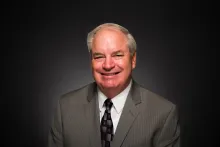
Robin Webber was born in Chicago, Illinois, in 1951, but has lived most of his life in California. He has been a part of the Church of God community since 1963. He attended Ambassador College in Pasadena from 1969-1973. He majored in theology and history.
Mr. Webber's interest remains in the study of history, socio-economics and literature. Over the years, he has offered his services to museums as a docent to share his enthusiasm and passions regarding these areas of expertise.
When time permits, he loves to go mountain biking on nearby ranch land and meet his wife as she hikes toward him.
