
Robin S Webber
This transcript was generated by AI and may contain errors. It is provided to assist those who may not be able to listen to the message.
Well, good afternoon, everybody, and we want to welcome you to the Kingdom of God seminar here at the United Church of God in Redlands. While it was advertised as a seminar, we do have a church. We are here every Sabbath, every Saturday. We meet at 2 p.m. and as Christians, when Christians ever gather, we do sing. So we have somewhat of a modified church service today. But again, what you were showing on the Internet as far as the Kingdom of God seminar is what we are about and what we are going to be talking about today. I am going to be presenting the first seminar lecture, and that is going to be entitled, Just What Is The Kingdom of God? And then we'll have some special music related to the Kingdom of God. And then Mr. Larry Sharp will be coming up and he'll be talking about why the Kingdom of God is needed now. Two thousand years ago, Jesus Christ came to this earth delivering a personal message from the throne of heaven. That's what we're going to talk about this afternoon. It's interesting that in his lifetime, many people asked the question, who is this man from Nazareth? But they weren't the only ones asking the questions. Oftentimes, Jesus Christ would return a question to his followers and he would ask, who do they say and or who do you say that I am? Many have come to answer that question in their time and in their way, but many have not answered another question. And that's what we're talking about today at the Kingdom of God seminar. That is simply this. What was the message that Jesus Christ brought with him? Some understand perhaps a part of it. Some might understand parts of it, plural, but many, many people do not understand the full scope of what the literal second coming of Jesus Christ is going to be like. And or if they do understand, are you with me? They don't act and they don't live as if they believe that.
Let's come to appreciate the what about his message was never too far from his heart. In fact, it constantly rolled off his lips. And I'd like to share a thought with you. We're in lecture here, even though we've started with hymns. This is going to be more like a class two degree. And let's understand something. You might want to jot this down if you're students of the scriptures. Simply this. The term the kingdom of God is mentioned 86 times just in the Gospels. 86 times.
And there are other references or other implications of it in the writings of Paul and the other writers of the Bible. I've often heard that if God mentions something once, it should cause us to come to attention. But here, this is mentioned 86 times this term, the kingdom of God. When he did speak about it, two things. Almost two contrasts. In one sense, he spoke about it with incredible joy and incredible exuberance. At the same time, on the other hand, he spoke about it in a tense and a somber term. Almost dire. Almost with a sense of urgency for those that would hear him to understand. Because when it was all said and done, the mention of this kingdom of God, three words, kingdom of God, was to create a change in the life of the hearer. Let's ask ourselves a few questions for a moment to bring us into the seminar, and in particular, this lecture. Jesus was asked, what was the kingdom of God like?
And there were many things that he referred to. He spoke of the kingdom of God as if being a farmer going out to plant seed to gain a harvest, being those that would enter into that kingdom. He also spoke of the kingdom being like a costly pearl. Also, other analogies that he used of this kingdom that we're going to be discussing this afternoon is, he said it's just like a tiny mustard seed. A mustard seed is infinitesimal. Just kind of roll it around. And yet he said that same seed will grow up to dominate all of the landscape that is around it. He was asked, well, how can you obtain this kingdom? Incredibly, he says to gain it, you must lose everything.
You must let go. He also said that if you're an adult, you've actually got to go back and have the mind, the interest, the heart of a child. He was asked, how important is it to be in that kingdom? And his answer was stunning. He said, it'll be far better that you enter the kingdom of God. Even if you're maimed, that means without an appendage, without a limb. It'd be better to enter that way rather than at all. Join me now because we're going to be using the Bible. That's our, shall we call it our class book for the seminar. Join me if you would. Let's go to the book of Acts. Matthew, Mark, Luke, John, and the book of Acts. And let's notice what was on Jesus' mind. I go here because it's very interesting. Let's remember that Jesus came and his earthly ministry was approximately three and a half years. You can say a lot in three and a half years.
At the end of his ministry, he was taken. He was tried unjustly. He was crucified. He was in the grave three days and three nights. And then he was resurrected. Now, you would think that after three and a half years, he would have exhausted himself. Are you with me? On the subject of the kingdom of God. But I want to show you something. Join me in Acts 1. Let's pick up the thought in verse 1. The former account I made O Theophilus of all that Jesus began both to do and to teach, until the day in which he was taken up after he through the Holy Spirit had given commandments to the apostles whom he had chosen, to whom he also presented himself alive after his suffering by many infallible proofs, being seen by them during 40 days. Now, notice the last part of the verse. And speaking of the things pertaining to the kingdom of God. Now, if you think this seminar is going to be long as it goes about two hours, we could keep you 40 days. The point is this. Are you with me? He never exhausted the subject. It was always near to his heart. It was always rolling off his lips. And even as he was going up and ascending to heaven, he probably still had more to discuss about the kingdom of God, of what you did through the writings of Paul and, of course, John with the revelation. Interesting. Let's take one more verse. It's called Let's take one more verse. Let's go to the end of the book of Acts. We're going to do a bookend effect.
Acts 28. Here's Paul, end of his life, in prison. Indications are that he was in house imprisonment. Most likely, he was bound to a Roman soldier so that he would not escape. Notice what it says here in Acts 28 and 30. Then Paul dwelt two whole years in his own rented house and received all who came to him. What was he talking about? What was in his heart? What was rolling off his lips?
Preaching the kingdom of God and teaching the things which concern the Lord Jesus Christ, with all confidence, no one forbidding him. Now, let's put this picture together. Let's think of it this way. Some of you that are a little bit older will remember President Bush, Sr., a very famous phrase that he used during a campaign.
We are non-political as a church, but I'm addressing the right for a moment because you'll remember the phrase. It was simply this. Remember, at his campaign, he said, read my lips. Oh, you're good students. You were already doing it. That's great. Read my lips. But we also know historically he broke his promise. Now, with that stated, if you were to watch Jesus during his three and a half years and or if you were to follow the Apostle Paul around Asia Minor, you could read their lips. They were talking about the kingdom of God and what it is and also to those things pertaining to the Lord Jesus Christ. In other words, they coupled together.
You might want to jot this down because this is a seminar. They coupled together the fullness of the equation, the kingdom and the king. A kingdom without a king is not a kingdom. So, they took the realm and they took that great personality, the one who is the king of kings, and that is what they were talking about. Now, let's understand something before we proceed any further. Allow me to read, because this is a class, so we're going to go a little deeper. Allow me to read the thoughts of two biblical writers that are going to set the stage for the rest of my lecture. One is from Michael Grant from a historian's review of the Gospels.
Here's what Mr. Grant says, every thought and saying of Jesus was directed, subordinated to one single thing, the realization of the kingdom of God upon the earth. That's an essential consideration. We're going to come back to that, the kingdom of God on earth. And this one phrase, that is the kingdom of God, sums up the whole ministry and his life's work. I'm trying to develop some framework for our discussion here. Second author John Bright wrote in his book, The Kingdom of God. Here, Mr.
Bright mentions, had we to give that book, that is the Bible that's on your laps, a title we might with justice call it, the book of the coming kingdom of God. That is indeed the central theme everywhere, Old Testament and New Testament. Thus stands together as two acts of one great drama. In our congregation and in our church, we don't look at competing works of man in this book.
It's one book. God breathed from our heavenly Father above. Yes, indeed, there are two Testaments. Yes, indeed, it speaks of two covenants, but it's not two stories. It's one story that develops, that grows, that blooms, that the Old Testament is the gospel in bud, and the New Testament is the gospel in full bloom.
But they come from the same seed, which comes from the heavenly throne of God. With this date, where we see this ongoing developing story, when you put the entire Bible together, let's think about it for a moment. From the time when the man Abram leaves Ur, leaves the world behind, and what he is doing is that he is moving towards that city, whose builder and maker is God, one that is not made with hands.
We think of the Israelites on the shady side of Sinai, as God is speaking to them. And what did God say before he offered the Ten Commandments? It is my desire that, as a people, you become a kingdom, a kingdom of priests unto me, one of the first mentions of the kingdom. And then we recognize, as the Bible unfolds, we come to the end of Revelation. We think of that heavenly Jerusalem descending down from heaven above to the saints to the body of Christ.
Something literal, something real, something that you can put your hands on, something that you can give your heart to. With that stated, let's take a deeper look at the kingdom of God. And what this seminar is designed to do for you today, this afternoon, is help you to understand it, just as Jesus Christ explained it, and as the Apostle Paul and the other disciples did.
When we today mention the term kingdom, many of us are challenged at that term. We no longer live in a world of empire. We no longer live in a world, quote-unquote, of kingdoms, except every so often when we see the royal British family get married, and they bring out the horses and all of the knights. When I was growing up as a young boy, and that's not that long ago, we remember that we would see a map that was either in red or dark pink that represented the British Empire, the kingdom, the realm of the king or the queen of England. But today we operate in a different world. We operate in cyberspace, where there are no walls, where there are no boundaries, where it's somewhat ethereal. So we're somewhat at a disadvantage in this. So we need to understand kingdom as Jesus was talking about it when he was talking to those that were listening in the first century AD. The original audience understood a kingdom is no less than an empire. A kingdom meant no less than sovereign entity, which was composed of four parts. Here we go. Number one, that a kingdom has a king. You said you already knew that, king and kingdom, but a kingdom has a king. Number two, that kingdom has a realm. It has territory. Number three, it has subjects. It has people. And number four, then, it has laws that bring those people together, unite the ruler with those that are ruled, and where there can be harmony within that kingdom. Those that were hearing the words of Jesus were living in the time of Pax Romana, the Roman peace. We could spend three hours on that about how the Romans were not always peaceful, and that's why there was peace under Pax Romana. But that's a different topic, different time. But the four parts, ruler, territory, laws, and subjects, is essential to the discussion.
To the Jewish audience, let's take it a step further. To the Jewish audience that first heard these words, they would understand it in a very literal sense, not figuratively, for they looked for a restoration of the Davidic line to fulfill the Davidic covenant, that, yes, Messiah was to come. So the original audience, and that's how you always want to understand the Bible. For those of you that are just beginning to open up the pages of the Bible, you must first always ask this question, what did it mean to the original audience? Now, we can build upon that and bring it to the 21st century, but if you're going to be a student of the Bible, you've always got to first ask the question, what did this mean to the original audience? Very important. Let's understand how Jesus talked about it. Join me in Mark 1 and 14. Now, that is a framework to move further. Mark 1 and verse 14. Let's understand that it's been said that oftentimes that Mark was, in a sense, written to a Roman audience. Again, Rome was the major empire at that time.
Mark might have been one of the younger followers of Jesus Christ, so it was a matter in his mind of action and having experienced that Roman empire. And it's interesting what he says here in Mark 1 and verse 14 with the thought of Rome. When a Caesar or a great Roman general was about to enter a city and make an appearance, there was a tremendous celebration. The whole city turned out. The mayor came out. The mayor's always come out for the celebrations and the ribbon cuttings. The Roman Caesar or the Roman general come, and there was great celebration. There was great triumph. There was what we call heraldry, as in a sense, the trumpets ascending and going off. That is the sense that we get in Mark 1 and 14. Now, after John was put in prison, speaking of John the Baptist, Jesus came and or entered into Galilee. Preaching, notice, the gospel or the good news of the kingdom of God. And saying that time is fulfilled, the kingdom of God is at hand, repent, and believe in the gospel. Let's understand something. When he says, the kingdom of God is at hand, key words, there is an immediacy to his words. This is up close and personal. The audience understood the implication of his words. His words were, it is at hand. It was a bold declaration that his presence, that his life before them, his personality, his heart, his spiritual essence, his message that he was delivering through how he would talk was representative of this impending kingdom. It was yet to come and yet it was present. That's what the kingdom of God is about. Let's notice John 14 and verse 1. John 14. Verse 1. On the last night of his earthly existence as a man, Jesus was trying to cheer up his followers. Little did they understand what was about to transpire that evening. Let not your heart be troubled in verse 1. You believe in God, believe also in me, and in my father's house are many mansions. If it were not so, I would have told you, I go to prepare a place for you. Oh, he's going to go and get the Motel 6 ready for us.
Leave the lights on. No, there's more to the story. And if I go and prepare a place for you, I will come again and receive you to myself that where I am, there you may be also. He speaks of going someplace to repair not just simply many rooms. It's talking about positions of responsibility, offices of authority, things to do within that kingdom of God. Let's understand something. When Jesus said to those early followers, let's remember the original audience, he said, I'm going, but I'm coming back again. They took that literally, and there was an immediacy to what he was saying. Join me in 2 Timothy 4. 2 Timothy 4, and let's pick up the thought in verse 6. 2 Timothy 4 and verse 6. The last recorded message from the apostle Paul, he says, For I, already am being poured out as a drink offering, the time of my departure is at hand. I fought the good fight, I finished the race, I've kept the faith. That faith, by and large, was about the kingdom of God and those things pertaining to the Lord Jesus Christ. Finally, there is laid up for me the crown of righteousness, which the Lord, the righteous judge, will give to me on that day, and not to me only, but also to all of those who love his appearing. Now, let's understand something. That love his appearing. What does that word appearing mean to you and me as we're here on a Saturday afternoon at a kingdom of God seminar? What do we mean appearing? Was he talking about an image on a stained glass window? Oh, there's an appearing. Was he talking about going to one of the great museums of one of our great metropolitan cities and seeing what Renaissance painters thought of the return of Jesus Christ? Is that the appearing that he's talking about? Is he talking about an appearing coming out of the print that is in your Bible? Oh, there is the appearing. No, no, not at all. The Apostle Paul understood what Jesus meant, that Jesus Christ is literally going to appear and bring his kingdom with him.
Now, with all of this stated, when you put all these scriptures together that we just read, Mark 1, we notice that there was an immediacy. In John 14, we notice that it was literal. He's coming again. We noticed in Paul's writings about an appearing. So what changed? What changed? Because today, many, many people out there, sincere, wittingly or unwittingly, don't understand about the kingdom of God and what that appearance is about. What happened? Because the original audience that was in the Bible, those Bible days, when they were in togas and or robes and wearing sandals and doing a lot of walking, when Jesus said that I'm bringing a kingdom and I'm going to appear, they took that literal. What happened? Time went on, and by the third and by the fourth century AD, three to four hundred years after Jesus Christ walked this earth, there began to be philosophy that came into the Christian community through individuals like Origen, through individuals like Augustine of Hippo that were affected by Neoplatonism, were affected by the sway of Hellenism.
And they began to take that which was literal, something that you can put your hands on, a king, territory, laws, subjects, coming again. They took that which Jesus had said is to be, and you will know when it comes, they moved it to what we call allegory.
Kind of a story to make us feel good. Beyond that, with the current events that were happening, as pagan Rome was beginning to go down around 400 AD, that Rome had seemingly been there forever, going down and down and down and down slowly through the through the challenges by both the Germans in the north and the Persians in the east, that they began to think of the church as the kingdom of God on earth. As pagan Rome sank, thus a new kingdom would arise on earth. And that very earthly and very temporal church that grew up in the Roman Empire took on many of the auspices, many of the ways and many of the manners of imperial Rome. Thus, the kingdom of God was either shelved to be an allegory, kind of to be a mystical story to make you and me feel good, and or was replaced by men on earth in the place of Christ, taking on the trappings of empire and imposing thought on the people. Since that time, may I be frank, the kingdom of God, the message of that kingdom has so often been misunderstood or marginalized and, frankly, not heard by all. In some cases, there's been what we call a substitute for the kingdom of God, for the kingdom of the heart. Now, let's understand something. The kingdom of the heart, that's where God begins. He begins to plant his kingdom of ways in your heart and in my heart, because God deals with relationships, and relationships are about the heart. But just like that mustard seed, that's where it begins, but it does not end there.
The kingdom of God that Jesus spoke about is going to be more than just about your own heart. It has universal implications, dynamism that is going to affect every human being, and the government, the realm of God the Father, coming down upon this earth under the auspices of Jesus Christ.
Let's fully grasp and understand a very important thing when we talk about the kingdom of God and what it is. God is not just simply looking for new and improved people, and that is a part of the mission. Absolutely. Jesus Christ said in Luke 19.10, I have come to save and to seek after the lost.
That is a part of the work of the kingdom and the king of that kingdom, but it has grander implications than even just you and or me. Join me if you would in Isaiah 46.
Let's understand that the kingdom that Jesus Christ came to introduce has been planned from the very, very beginning of time. You know, a lot of people today are trying to make a lot of plans for you and me, and let's just talk about the economic world and the global society that you and I are living in. People have a lot of thoughts and a lot of plans. You know, we live in a pretty tough world right now, don't we? Even as Americans, we are being challenged more than ever.
And whether to the left or to the right, you take your political spectrum, everybody's got a thought. Everybody's got an idea. Everybody's got a solution. Everybody wants to bring out their theoretical rubber bands, paper clips, and glue to try to fix Humpty Dumpty that has fallen. Standby, we'll find out. But that's not who I worship.
God says something different about what he brings about. Look at what it says in Isaiah 46 and beginning in verse 9. Remember the former things of old, for I am God, and there is none other. I am God, and there is none like me, declaring the end from the beginning, and from ancient times things that are not yet done, saying, My counsel shall stand, and I will do all of my pleasure.
Most of us were not alive in this room when Babe Ruth called his shot, except for maybe Sil. Silvio, talking about you. Yeah, and the Babe Ruth. Maybe my dad. I'm not sure. Remember that famous story where Babe Ruth pointed to left field? Remember that? Most guys will remember that. Basically saying, the Bambino said, It's going out right there. Only a Babe Ruth could do that.
He called his shot, and the legend goes, it went out.
But only one other individual can do that besides the Babe. That's God. How's that? And the Babe isn't God yet. God called a shot from the beginning before time. And he said, I am, and I'm going to declare the end from the beginning and the beginning from the end, and what I say is going to happen is going to happen. Let's understand something. We live in a topsy-turvy world right now. It's crazy out there. Mr. Sharpe is going to speak to that why the Kingdom of God needs to come now. And everybody keeps on saying, well, you know, in on the news right now, well, bring forth your plan. Bring forth your plan. What's your plan? We've got a plan, but your side doesn't have a plan. I want to share something with you. The Kingdom of God is about the plan and the purpose of God. Number one, God has a purpose. He says, I'm going to make man in my image and after my likeness. He has a plan to back up that purpose. He has promises that back up that plan, and he has provisions. He has details on the ground to make it happen. God not only works, God not only loves, he not only has a loving working plan, but he knows how to bring it to pass.
You know, today, too many people in America are satisfied. Think about this for a moment with acknowledging God. We know where American society is going. More and more, the Judeo-Christian ethic is eroding all around us. Just look at this world around us. It sure isn't where the pilgrims were. It sure wasn't where George Washington was. It sure wasn't where I started. 60 years ago, we see an erosion. And yet, even with that stated, America remains one of the most religious nations in the Western world. After all, we've got in God, we trust on our coin, don't we? And yet, let's think about that for a moment. Many people will acknowledge that God is a first cause. They like that. After all, someone had to get the engine going. Somebody had to twirl the top to get it moving. A lot of people want today to recognize that, oh, I believe in a first cause. And they'll say, well, I believe in God as a benevolent force. And that satisfies a lot of people until an emergency strikes, and they have to take God off the shelf. God, where are you? Where did I put you? And they have to go find him.
That's not what the kingdom of God is about. Let's understand something. That's not what the kingdom of God is about, whether it be for an individual or for the church that has proclaimed that message. I want to share something from the Interpreter's Bible, Volume 7, Speaking to the Kingdom of God. Speaking of why it is so important as students of the scriptures, we understand this seamless thread that runs through the Bible. If the Bible is about the gospel of salvation, it is underscored with the kingdom of God. It is underscored with the kingdom of God. Interpreter's Bible, Speaking of the Kingdom of God. This was beyond all question the main subject of Jesus' teaching. The changing climates of opinion have passed over this theme. What theme? The kingdom of God. What Jesus meant by the kingdom of God, more almost than any other subject in the Gospels. Thus then, remember what I said this lecture was about? What is the kingdom of God? What? What? Like a reporter. Who, what, where, when, why, how? The what? Here's the what. The kingdom of God is the reign of God. It says sovereignty over mind and will. And in the world, it is sonship to God and brotherly relationships with men. That main theme that Jesus brought must be the main theme of his disciples and messengers. This is from the interpreter's Bible. If they are to truly be his messengers, the great tragedy of church history has occurred in those periods when Jesus' theme of the kingdom of God was made secondary or was forgotten entirely. Yes, when people simply went to lip service rather than surrendering their lives to that kingdom of God. When an individual is healthy, spiritually speaking, he is going to be focused on the coming kingdom of God and surrendering their life now. To our congregation that's here today and the other congregations that I pastor, a congregation is healthy when it focuses on the kingdom of God and the same mission that Jesus Christ had and Paul had and all the disciples had.
When we are not focused on that, we become focused on one another. Hmm, right. When we forget what God is calling us to. Join me, if you would, in Matthew 6, verse 33. Matthew 6 and verse 33.
Again, let's notice Jesus' own words out of the Sermon on the Mount. Let me read them, then we'll amplify them for a second.
But seek first the kingdom of God. There's one of those 86 mentions of that kingdom. The kingdom of God and His righteousness and all of these things shall be added to you. There's the target. It says, seek first the kingdom of God. Don't get to it. Don't say, well, when I have time, when earthquakes come, like Euchipa the other day, friends, that woke us all up, or when there's a typhoon, or when there's a death in the family, it says you seek the kingdom of God first.
It's a priority. It's a goal. It's our hope. It's our desire. But that kingdom of God, stay with me. There's a lot here in Matthew 6, verse 33. That kingdom of God is more than just simply a destination. Sometimes, even within the body of Christ, we simply think of the kingdom of God like Disney World in Florida. We'll get there someday. Are you with me? The kingdom of God is not just simply a destination. It's an existence. It's an experience. Jesus said the kingdom of God is at hand now. And that's why it's so important to read all of Matthew 6, 33. Seek ye first the kingdom of God and notice and His righteousness. What did we learn from that? The kingdom of God is not just a destination. It's a way of traveling. We are to live like the king. The king came and said, repent. Believe the gospel. In other words, Jesus is saying it's at hand. More is coming. It's not all here yet. And by the way, you'd better get a mind. You'd better get a heart that fits it because it's coming. Ready or not. Are you with me? Ready or not, it's coming. So I'm coming ahead of time to tell you that it's coming. You have an opportunity to be in it. Remember how important it is. Christ said it would be better that you intermained and not totally whole than not to enter at all. Seek ye first the kingdom of God and His righteousness. It's a relationship. As we do that, it says all of these things will be added because sometimes being a pilgrim, seeking that kingdom can be lonely. You can seem isolated. And Jesus said, don't worry. Other things will be added to help you along.
Let's create now as we begin to conclude some scriptural framework for the full emergence of that kingdom. A bottom line is simply this. Jesus Christ, when teaching His disciples to pray, they asked. He said, this is how you ought to pray.
And then He said, Thy kingdom come. Again, what is that kingdom? Let's just look at three or four quick verses here to begin to fill in some of the color of what the kingdom of God is. John 1833.
This is where Jesus is coming before Pontius Pilate, the Roman curator. And then Pilate in John 1833 enters the Praetorium, calling Jesus and said to him, Are you the king of the Jews? Jesus answered, Are you speaking of yourself about this, or did others tell you concerning me? Old Jewish thing of answering a question with a question. There's a lot of wisdom in that. And Jesus answered, My kingdom, excuse me, Pilate said in verse 35, Am I a Jew? Your own nation and chief priest have delivered you to me. What have you done? Jesus answered, My kingdom is not of this world. If My kingdom were of this world, My servants would fight so that I should not be delivered to the Jews. But now My kingdom is not from here. Pilate therefore said, Are you a king then? Jesus answered, You say rightly Jesus answered, You say rightly that I am a king. For this cause I was born, for this cause I have come into the world, that I should bear witness to the truth. Everyone who is of the truth bears My voice. Here's My voice. Two thoughts that we get from here. The kingdom, while it is at hand, is not yet fully here. Jesus said that if My kingdom were of this world, then would My servants fight? So we have to understand something. Just like that mustard seed that Jesus alludes to in the parables, it starts small. It was proclaimed at His coming. It is going to develop. It's going to grow. It's going to expand. And yes, indeed, He is a king. Let's take another thought of what that kingdom is. Join me if you would in Matthew 24-23. Matthew 24, verse 23. Again, this moves right into the midst of the Olivet prophecy. We're certainly not going to read the entire prophecy, but I want to share with you what it's going to be like when that kingdom comes. The what? Mr. Sharp may add more of the details, but what we're adding is this. Number one, we know that Jesus is the king. We know that His kingdom is not fully come. That's what He told Pilate. That's what the Scripture tells you in me today. What happens when He does come? Well, He spoke to this because He was caught in the flesh, and He's giving us events ahead of time. And in Matthew 24 and verse 23, notice what He says here.
Then, if anyone says, Do you look here as the Christ, or there, do not believe it. For false Christ, false prophets, will rise, show great signs, and wonders to deceive if possible, even the very elect. Say, I've told you beforehand, therefore, if they say to you, Look, He is in the desert, do not go out, or look, He is in the inner rooms, do not believe it. For as the lightning comes from the east and flashes to the west, so also will the coming of the Son of man be. There are many people today, not here, not in this room, that believe that they have God in their back pocket. He is their private property, and they've got the GPS as to when Jesus Christ is coming back. In fact, they'll even tell you when.
They'll give you the calendar. They'll give you the time. They'll give you the date, even though they're saying they're not giving you the date. They're not giving you the time. It's a little foggy. It gets a little misty in there. They'll say, If you only just give all your money to me, I'll tell you more about it. You all come. They don't remember what Jesus Christ said. No man knows the day or the hour save the Father. Some people think, well then it'll just kind of happen. Just a few people will go up, kind of be taken away. The very clear implication of the what of the kingdom of when it comes is everybody's going to see it. How many of you are from Texas out there? Got any Texans? One. Just one. One Texan can be enough in a room run. How many of you from the Midwest? Original or Canada? Ever seen a lightning storm east to west? You know, here in California, to get amusement, you've got to go to Disneyland and pay for it. In the Midwest, every night can be amusement. The whole sky lights up. I mean, poor Californians, they are storm deprived.
I mean, everything opens up. You think everything is breaking loose. Jesus said, that's what my coming is going to be like. You're not going to miss it. So we understand he's the king. We understand that his kingdom is not quite yet, but we do understand that when he comes, everybody's going to know that there's a door knocking coming down from heaven. The kingdom of God is coming back. Join me in Zechariah 13. Zechariah 13. Let's pinpoint it. You know, touchdown. We can actually go to the Bible and understand where Jesus is coming back. Zechariah 14. Last book in the Old Testament. In the United Church of God, we do use both the Old Testament and the New Testament, because we look at it as God wrote it as to be one revelation. Zechariah 14. Let's pick up the thought in verse 3. Then the Lord will go forth and fight against the nations as he fights in the day of battle. That sounds pretty literal, doesn't it? Not too mystical, not too allegorical.
And in that day, his feet will stand on the Mount of Olives, which faces Jerusalem on the east, and the Mount of Olives shall split in two from east to west. Amazing when you look at this, and you see the implications. Jesus Christ is literally going to bring that kingdom and touch down on one of the mounts in the environs of Jerusalem. He's bringing his saints with him.
Remember what one of the writers wrote, the kingdom of God on earth. I want to share something with you. You'll know this. Your grandmother might have taught this to you bedside. Maybe she went over the Beatitudes with you. Remember what it said, God, blessed are the meek, for they shall inherit what? The earth.
Something's happening here. Not a cloud, not a harp, not just simply on the bleachers to partake of the beatific vision. I'm not saying that to diminish what it must be like to be on the other side of the light that comes from God. That's going to be awesome itself, but that's not it alone.
There's something happening here that you and I need to understand about the kingdom of God. We find that in Revelation 20 and verse 4. Revelation 20 and verse 4.
Speaking of kingdoms, realms, dominions, and I saw thrones. They sat on them, and judgment was committed to them. And then I saw the soul of those who had been beheaded for the witness to Jesus and the words of God, who had not worshipped the beast or their image, and had not received his mark on their foreheads or on their hands. And they lived and they reigned with Christ for, notice, a thousand years. This is where the term millennium comes from, which means a thousand.
That as the kingdom of God unfolds and unravels in God's time in perfect way, the age of man is going to pass. The kingdom of God is going to come to this earth under Jesus Christ. And we notice what it says in Revelation 5 and verse 10, just a few chapters over. Notice what it says.
Speaking to the saints, speaking of the saints, and has made us kings and priests to our God.
And we shall reign on the earth, not a cloud, not just simply a heavenly choir, reigning over the base section or reigning over the Sopranos, joining the angels. The kingdom of God is about a relationship. It's about God's rulership over man now and over the universe and the future, all things coming underneath God the Father and Jesus Christ. Today, Saturday, the seventh day of the week, in which God granted his holy seventh-day Sabbath is a type of that kingdom. From the very beginning, the early church understood that there was a type of the week of which six days represents the age of man, six days of man working, and all of the work of man when it's all said and done ultimately goes the way of the grass in the summer. But that seventh day, the end of the week, always in the picture of the Christian, point it to the kingdom of God. That's why here we are on holy time, the seventh-day Sabbath, which pictures the kingdom of God. I want to go just to one more verse we're going to conclude. Maybe two. Isaiah 2. Did I say Isaiah? Pardon me, folks. Daniel. Again, what is the kingdom of God? Daniel 2. Here, Daniel was called before Nebuchadnezzar to interpret a dream that he'd had. This gigantic image that was likened unto him that was 70 or 80 feet high actually came down, and it disturbed him.
I would probably be disturbed if I had a dream, and there was a statue like me, and it came down, and somebody was whittling at my feet, and I went over. He wanted to know the answer. What does this mean? And it spoke to Babylon that it would always be there. This Babylon, this system, would always be in confrontation with the kingdom of God. But there was going to come a time when the kingdom of God would come in all its fullness. In verse 44, notice what it says, and in the days of these kings, the God of heaven will set up, notice there's that word, kingdom, which shall never be destroyed, and the kingdom shall not be left to other people, and it shall break in pieces and consume all these kingdoms, and it shall stand forever. Inasmuch as you saw that the stone was cut out of the mountain without hands, and that it broke in pieces, the iron, the bronze, the clay, the silver, and the gold, the great God is made known to the king what will come to pass after this. The dream is certain. The interpretation is sure. Remember Babe Ruth? He was left-handed. He pointed to left field. He says it's going out. 2500 years ago, God inspired Daniel to tell the beast, Nebuchadnezzar, your system is coming down, and when it comes down, and when the kingdom of God comes to this earth, here it is if you want to take this down. Number one, the government will never again be left to man. Very important to interpret this. There will no longer be human government. That's fascinating. You think about what we learned in Western Civ. Remember Western Civ? Or has it been a while? Egypt, Babylon, Assyria, Chaldea, Persia, Greco-Macedonians, Romans, Byzantines, Franks, Turks, British, America. The world is always turned over to what? To the auspices of man. God says there's going to come a time when man is no longer going to be in charge. Number two, it says this kingdom will remain forever. Number three, it says the stone that brings down that image is a stone that was not made with hands. The stone that when it came to this earth there was no room at the end so that ultimately you and I might have room in that kingdom as we are invited. Therefore, we ask ourselves knowing about the kingdom, what then should we do? Thoughts can only go so far. Words are cheap. Turn with me, conclude in Titus. Titus 2 verse 11. I'd like to ask Mr. Frick if he can begin to get ready. Mr. Frick's going to sing a song about that kingdom to praise God and to inform us. I'm just going to read Titus 2, 11 through 14. Then ask yourself, having come to understand more about the kingdom, therefore then what manner of person ought we to be? Titus 2.
And verse 11.
For the grace of God that brings salvation has appeared to all men, teaching us that denying ungodliness and worldly lust, we should live soberly, righteously, and godly in the present age. Now, today, looking for that blessed hope and the glorious appearing of our great God and Savior Jesus Christ, who gave himself for us that he might redeem us from every lawless deed and purify for himself his own special people, that kingdom of priests, zealous for good works. Speak these things, exhort and rebuke, with all authority, and let no one despise you, especially when you discuss just what is the kingdom of God all about. We're going to have Mr. Frick come forward, sing a selection that matches the theme of the day. Then I'm very pleased to introduce a fellow elder here in the United Church of God, Mr. Larry Sharp, long-term minister, who is going to be bringing us the next message on why is the kingdom of God needed now?
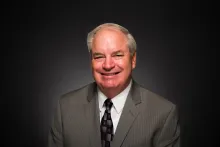
Robin Webber was born in Chicago, Illinois, in 1951, but has lived most of his life in California. He has been a part of the Church of God community since 1963. He attended Ambassador College in Pasadena from 1969-1973. He majored in theology and history.
Mr. Webber's interest remains in the study of history, socio-economics and literature. Over the years, he has offered his services to museums as a docent to share his enthusiasm and passions regarding these areas of expertise.
When time permits, he loves to go mountain biking on nearby ranch land and meet his wife as she hikes toward him.
