
Robin S Webber
This transcript was generated by AI and may contain errors. It is provided to assist those who may not be able to listen to the message.
Well, good afternoon, everyone. It's good to see all of you, and we want to welcome you to the Kingdom of God seminar. As you've noticed, for those that are visiting with us today, that we have a modified church service format. As Christians, we always like to gather together to be able to sing, to be able to praise God, and to be able to open with prayer. Much of the remainder of the service will be a seminar, will be in lecture format, because it will be going at length. If at any time you feel that you need to get up, take a break. You are welcome. The only deal is that you come back to hear the rest of the story, because there's a lot of story to be able to talk about today and to share. I will be presenting the first subject this afternoon, and for those that are note-takers out there, because in a sense this is a seminar. It's a class. It's an ability for us to be able to discuss God's Word. My topic will be simply this, just what is the kingdom of God? Just what is the kingdom of God? For some of you, that might have come today and don't have a Bible with you. That will be our textbook in the course of this seminar. And there are some Bibles, actually, in front of you there in the pew, if you look, if you do not have one. I will be followed by Mr. John Garnett, and Mr. Garnett will be addressing another subject, why the kingdom of God is needed now. So that will be following the first presentation.
And it's interesting that his presentation will address, in stark contrast, what we explore today versus also what we as Americans commemorate this day. Man's inhumanity to man, and a time, and a place within God's purpose, in which there will be no more tears, there will be no more sorrow, there will be no more death, and God himself will be in the midst of his people. But my subject for you to begin with is simply this, just what is the kingdom of God. Two thousand years ago, Jesus Christ came to this earth, delivering a personal message from the throne of God in heaven.
In his lifetime, many people pondered exactly who is this man, who is this individual, and Jesus Christ himself kept on responding with an inquiry for them. Just who do you say that I am? Over the course of two thousand years, many people, to one degree or another, have sincerely striven to answer that question. But far too many have not been able to grasp what that messenger brought to this earth and what he was conveying, as to just what is the kingdom of God. It is to that which I would speak to you in this first presentation. The what of that message was never far from the heart and the lips of Jesus Christ. Anyone who does even a casual reading of the Gospels will come to understand that that term, the kingdom of God, continually rolled off the lips of Jesus Christ. In fact, if you just take the four books, Matthew, Mark, Luke, and John, the kingdom of God, those three words are mentioned over 86 times. It's kind of interesting that, as a preacher and as a teacher, have often said that if God mentions just something one time, how important is that to us to consider? But to recognize that the term, the kingdom of God, is mentioned 86 times in Scripture.
As it was mentioned, as it was proclaimed by Jesus Christ, it was not only proclaimed in a festive or a joyous or a celebratory manner, but equally it was mentioned in a sobering sense of urgency, of dire urgency, demanding a life-changing response once that announcement was heard and took root and took seed in the heart of the hearer. In the course of Jesus' three and a half year ministry on earth, Jesus was asked, what was the kingdom of God like? And he spoke of a farmer who goes forth to plant and seed to gain harvest. Further, he mentions it was like that of a costly pearl, speaking of its value. Amazingly, he spoke of an object that the people in the Middle East would have understood, which was the mustard plant. And he talked about the infinitesimal, the little tiny speck of a mustard seed, that no matter how small it is in the hand of the receiver, that one day it was going to spread, it was going to expand, it was going to encompass all of the world. He was asked how one might obtain it. Incredibly, he says, to gain it, you must lose everything. To be able to receive it, you must give all to God. More than that, which almost confronted the reasonable listeners of his time, he said that if you are to enter, you must change yourself. You must have the heart. You must have the mind of a child to be able to enter the kingdom of God. Most importantly, and perhaps this will bring to bring you into full gauge of what we're talking about, Jesus was asked how important is it to be in the kingdom. Jesus said in a very stunning fashion that it is so important to be in the kingdom that it would be better to be maimed to have loss of limb, to have lack of appendage than not to be in that kingdom.
That was recorded in scripture of his words over 86 times.
It's interesting, let's open the Bible now. Join me if you would in Acts 1. It's interesting, maybe you've never noticed this before, as students of the scriptures, that Jesus could never stop talking about the kingdom of God. Very interesting, as we open our Bibles together, as we look at as students of the Bible at what God says, let's take Acts 1 and verse 4 and notice what it says. And being assembled together with him, he commanded them not to depart from Jerusalem, but to wait for the promise of the Father, which he said, you have heard from me. And so he was talking to his followers about that even after he was crucified, that the mission was going to go on and that they were going to be a part of proclaiming that kingdom. Notice up top verse 3. Now, stay with me a second. We want to understand this. Jesus has lived. His ministry has been three and a half years. He was taken. He was killed by crucifixion. He is resurrected. This is on the other side of the resurrection. And notice what he says in verse 3, to whom he also he presented himself alive after his suffering by many infallible proofs, being seen by them for 40 days and speaking of the things pertaining to the kingdom of God. Maybe you've never seen that before. As much as Jesus talked about the coming kingdom of God, even after he died, after he is resurrected, he is still talking about it. What I want to share with you is that if he had not assumed it, he would still be talking about it right now and does to us today through his scriptures. Bottom line that I want you to consider, the subject of the kingdom of God is inexhaustible. It is never far from the heart, the mind, the lips of God the Father and Jesus Christ. They think about it without hesitation, without reservation. So if this seminar seems perhaps a tad long at two hours, remember Jesus kept his disciples 40 days.
And we're not going to do all of that with you this afternoon. We are going to open the doors after this seminar and you can leave. But it shows that we just simply can't talk about it all today. But this is a beginning. It's also interesting in Acts 28 and verse 31. Join me if you would there for a moment to see what was on the mind and the heart and the lips of his disciples. In Acts 28 verse 31, this is called the Acts of the Apostles. This is what they were about. This is what they were doing. This is what they had been taught and trained by none other than Jesus Christ. And the very last verse of the book of Acts that disciples and followers and ministers of Jesus Christ are to be focusing on. Here's Paul. He is in house imprisonment. He probably has a Roman soldier bound to him in house imprisonment. And that Roman soldier is probably getting an earful about this subject. Here's Paul preaching the kingdom of God and teaching the things which concern the Lord Jesus Christ with all confidence, no one forbidding him. Now we've looked at the example of Jesus Christ. Are you with me? We've also seen what the Apostle Paul was dealing with. I remember some score of years ago. Remember President Bush the Elder when he made that famous or unfamous campaign promise that became a part of American lexicon when he said, read my lips. If you were to read the lips of Jesus Christ, if you were to read the lips of the Apostle Paul, you would know what the first letter starts with. K. You could hear them mouthing it. It filled their life. It changed their life. It was their mission. It was their goal to announce and to pronounce what that kingdom of God was about.
Reading my lips would have left us with no other conclusion, and it was not no new taxes. It was the kingdom of God.
Let's continue, then, and see what this kingdom of God is about, that Jesus Christ and the Apostle Paul laid down their lives for. Allow me to share the thoughts of two biblical writers, which will set the stage for the remainder of what I want to share with you in this first presentation. I'd like to draw from the work of Michael Grant first, his work as a historian's review of the Gospels. Please listen carefully. His book was in 1995.
Just allow these words from a scholar to impact and to envelop your understanding of where I want to take you in this class.
Michael Grant. Every thought and saying of Jesus was directed and subordinated to one single thing, the realization of the kingdom of God upon the earth. We'll come back to that later on. That's an essential consideration, not just the kingdom of God, but the kingdom of God upon this earth.
This one phrase, that is, the kingdom of God, sums up his whole ministry and his life's work.
Further now, let me bring in some words from another scholar, John Bright, who wrote a book entitled The Kingdom of God. John Bright mentions, had we to give that book, that is, the Bible, a title we might with justice call it, The Book of the Coming Kingdom of God. That is indeed the central theme everywhere. Notice what he says now, both Old Testament and New Testament thus stand together as two acts of one single drama. In the United Church of God, we look upon the Bible as one book between two covers, one revelation that expands, one revelation that develops, that the New Testament does not contradict the Old Testament.
The Old Testament points to the New Testament, and the New Testament completes that which was promised in the Old Testament. One revelation from the God who changes not by the word who it is said is the same yesterday, today, and forever. And what is on their mind? What is on their lips? What is on their heart? The coming kingdom of God. When you take a length and a breadth of what the Bible shares about here, you consider for a moment that from the very beginning you have this story of a Brahm leaving Ur of the Chaldees, a man who turns his back on his homeland. All that he knows, all that he is familiar with, all that he's comfortable with, to journey forth towards a city whose builder and maker is God. You further thumb through the Bible and you come to the story of ancient Israel on the shady side of Sinai where God tells him that I have called you to be a kingdom, interesting word, kingdom of priest. And then thus you go to the end of the book, in the book of Revelation, you come to recognize the fulfillment of all of that story of the March of Abram from Ur of the Israelites standing in the shadow of Sinai and hearing that you might be a kingdom of priest in the same call, the same story to the Israel of God today, the body of Christ, and to recognize that one day God's kingdom is going to come to this earth. And you and I, by God's purpose and by God's grace, can be a part of that kingdom. That's the story that we're talking about during this seminar. It's not a foreign story to the Bible. It's not apart from God the Father. It's not apart from Jesus Christ. It's not something that we're putting into the Bible. It is the framework of the Bible. It is the basis of the story. Now let's talk about the kingdom of God for a moment. Let's take a break here. You and I are, to a degree, disadvantaged.
You didn't know that until you walked into this building. You and I are disadvantaged because we don't have a lot of kingdoms around us today, do we? When I was growing up, the world math had still a lot of pink on it. For those of you that are 60 and over, that will remember that the British Empire was still somewhat extant, but we don't have empires today. And it's hard for a modern generation, X, Y, and in between. And I'm sure they'll come up with another phrase sooner or later, because we operate in this realm called cyberspace, where there are no walls, where you don't have to have a bridge, where there is no immediate impact, everything is expanded, there's just simply no confinement. So different from the world that Jesus spoke to, because when Jesus was speaking to that original audience of his time, it was a time of empire, it was a time of the Roman Empire.
And to them, a kingdom would have meant a sovereign entity that had boundaries, that had a certain confinement, and basically was comprised of four major elements. You might want to jot these down. I'll roll them off as we go along. If you're a student of the Bible, you might want to jot these down to develop a foundation that you can then go find scriptures and build upon each of these points. Number one, that every kingdom has a ruler. A kingdom has a ruler, at least it did in Jesus' time. A kingdom also has territory. We might call it a domain. Number three, a kingdom has subjects, has citizens. And number four, a kingdom has laws, rules to bind the subjects one with another and with the ruler and the ruler to the subjects.
This is how the early receivers of the Gospel would have received it. They would have understood Jesus' words in the term of empire or realm. The Jewish audience that was first listening to the words of Christ in the Galilee would have considered it no less, are you with me, than something very literal, hands-on, nothing ethereal, nothing mystical about it. When Jesus, as a rabbi, as that is what he was considered, would speak of the kingdom to come, the original audience, the Jewish audience that heard him, would have considered what he was talking about as a fulfillment of the Davidic covenant, that a kingdom was going to be raised that fulfilled the prophecies of Isaiah and Jeremiah and that of what we call the minor prophets. With that background now, join me in Mark 114.
Actually, this verse is the foundational verse of all the kingdom of God seminars that are going to follow because we can't talk about it in one afternoon.
Jesus wasn't through after 40 days. Are you with me? After 40 days, he was still talking about it, but something happened. He had to go up. It was time to leave, but he was still talking about it. But this is where he began in Mark 114, and let's notice what is going on. In Mark 1, verse 14, let's understand that Mark is basically writing to what we might call a Roman audience.
He introduces in tone what a Roman audience would have understood, the heraldry.
That was proclaimed when either a king or a general was approaching the city, and the entire populace came to attention. Thus, in Mark 114, we have in a sense heraldry. It is almost as if the trumpets are blowing.
Now, after John was put in prison, Jesus came to Galilee, doing what? Preaching the gospel of the kingdom of God and saying the time is fulfilled, the kingdom of God is at hand. Repent and believe the gospel. Gospel is just a word if you go back into the Greek, which means believe the good news.
Now, you've got to recognize when Jesus was on this earth, and he came at that time, that to hear that another kingdom was coming to lift the boot of the Romans was indeed good news.
The audience understood the implications of when he said that the gospel of the kingdom of God is at hand. What you want to jot down if you're a student of the word is simply let's jot this word down. There was an immediacy, an immediacy. He wasn't talking way off in the future, but he was talking then and there as the one that proclaimed it. That is, he came into their midst. The kingdom of God was indeed at hand. Now, we're going to come to understand that the kingdom of God is both immediate and, yes, it is in the future. It comes now as that seed of the mustard plant, and it's going to bloom ultimately into its fullness in the future when Jesus Christ brings that back. But let's understand a few things here.
He boldly declared that it was at hand. How could he do that? This Jewish man from Nazareth, born in Bethlehem, how could he do that? Because he was God in the flesh. And he proclaimed that it is at hand. And he said, you see me, I am the personification of all that that kingdom is.
My heart, my words, my essence, all that I am represents all that the kingdom of God is.
Because, as we'll find later on, he would say that he is the king of that kingdom.
So there was an immediacy. Not only that, let's go to John 14. John 14, verse 1.
In John 14, 1, on the night that he was betrayed, on the loneliest night of his life, when everything seemed to be crumbling down around him, and it was just hours away before he was taken, John 14, 1, let not your heart be troubled. You believe in God, believe also in me. He was sharing this with his disciples. And in my father's house are many mansions and or many offices.
If it weren't so, I would have told you, I go to prepare a place for you. So he was going somewhere.
But now the good news, verse 3, and if I go and prepare a place for you, I will come again and receive you to myself and where I am that you might also be.
Now, when he said I was coming again, he wasn't talking about in a song. He wasn't talking about in a movie back made in the 1960s, the greatest story ever told. He wasn't talking about what you might watch on a video somewhere on your computer, that I'll come again through your computer screen or I'll come together. I'll come to you through a song no matter how inspiring it is. That's not what Jesus was talking about. He was talking about a literal kingdom that he was going to bring to this earth that goes so far against the modern mind, the modern concepts, to recognize the tangibility that Jesus says, I go up and I will return and I will bring a kingdom to this earth.
What incredible news when we think about the weekend that we're commemorating with the loss of 9-11. To recognize the contrast between the kingdoms of this world, the nature of this world, what man can do of and by himself, lack to himself, and what God the Father and Jesus Christ are planning right now to bring down to us. When Paul spoke in one of his final words about it's time to go, I fought the good fight, and he said that I know for me that there is a crown of righteousness that is laid up, and for all of those who love his appearing.
Again, that appearing is not on a computer screen. It's not in an old flick from the 1960s. It is the literal appearing of Jesus Christ coming back to this earth. Now, the early audience understood what Jesus was talking about. He said, I come to proclaim a kingdom. I am the king of that kingdom. The early audience understood that a kingdom has what? Four things. It has a king, it has land, it has subjects, and it has laws. So what happened in between the last 2,000 years? Because a lot of people don't think that way. They don't perceive the kingdom of God as coming into their life. Let's understand that what occurred is that by the third and the fourth century, under the Hellenistic tutelage of some of the early church fathers, like Origen, like Augustine of Hippo, all you have to do is read his own manifesto called The City of God, that the construct of a literal kingdom was either diminished and or it was placed on an allegorical, mystical shelf that may or may not exist and or was replaced in the theology of that day that as the old and ancient city of pagan Rome, which was still extant even after Constantine's moves regarding Christianity, that as the old pagan Rome was descending, that the city of God, the kingdom of God on earth, the church on earth, taking on the mantle of all that was the Roman Empire, would continue.
So either the kingdom of God to many was shelved as something allegorical or mystical and or it was replaced by an earthly church and thus people stopped looking up rather than looking into their scriptures and seeing what God had to share. Since that time, the kingdom of God has sadly been misunderstood. At times, it's been marginalized. Perhaps some have never even heard or looked into the Bible.
That's why you're here today in this kingdom of God seminar. Not to hear what a pastor says about it or grandma, gotta bring grandma into this because everybody loves grandma and grandma could do no wrong. But maybe grandma also didn't understand or didn't quite look at the scriptures the way that they really are. So we got to give grandma a little talk. She might have loved God, might have understood Jesus Christ, but it's the kingdom of God that we're talking about right here. And in some cases, we need to understand that there has been a substitute for the kingdom of God for simply the kingdom of hearts.
The kingdom of hearts versus the full truth and impact of a universal kingdom that has no bounds. Now, let's understand something. While the kingdom of God, yes, in that sense, and just like that mustard seed, the seed of that kingdom is indeed planted in our heart as our citizenship is in that kingdom of God. Absolutely. But it can't be confined there.
That's only where it begins. You see, His purposes that are backed by His plans, that are backed by His provisions, that are assured by His promises, is bigger than just any one individual heart.
It is the realm. It is the existence. It is the extent of God Almighty, who is everywhere, Creator of all things, and is going to bring that kingdom to this earth. Join me in Isaiah 46.
Isaiah 46. Let's notice what it says here.
Remember the former things of old, for I am God, and there is no other. I am God, and there is none like me, declaring the end from the beginning, and from ancient times the things that are not yet done, saying, My counsel shall stand, and I will do all of my pleasure.
God can declare the end from the beginning. That's what makes Him God. And He's told us that He is bringing a kingdom. How important is that kingdom? And why do we need to discuss this today in America about the kingdom of God? Because we're a democracy. Why are we talking about a kingdom? Let's understand something. Are you with me? We're Americans, by and large, in this room. And America is, most amazingly, still one of the most religious countries in Western civilization. That's shocking sometimes because of what we see out there, but the reality is most Americans still do believe in God. They believe in Him as a first cause, that somebody had to wind up this universe and let it go. They also, secondarily, do believe in Him as a benevolent God and perhaps a distant force that at times visits upon this earth.
But that's not the kingdom of God that we need to talk about today. The kingdom of God that we're talking about is more than first cause. It's more than just simply being a benevolent friend up above. Allow me to read the words from the interpreter's Bible about the kingdom of God, and please just sit back a moment and listen to this. And ask yourself, is this how I approach and I understand the kingdom of God? Speaking of the kingdom, this was beyond all question the main subject of Jesus' teaching. The changing climates of opinion have passed over this theme, what Jesus meant by the kingdom of God, more almost than any other subject in the Gospel. The kingdom of God. Now here we go. And you supply the answers. The kingdom of God is the reign of God, His sovereignty over mind and heart and will and in the world. It is sonship to God and brotherly relationship with all men. That main theme, the main theme that Jesus brought and the main theme of his disciples and messengers is that theme of the kingdom of God, if indeed they are truly His messengers.
The great tragedies of church history have occurred. Listen to this. The great tragedies of history have occurred in those periods when Jesus' theme of the kingdom of God was secondary or was completely forgotten.
Now we've heard what man says. Join me in Matthew 6.33.
This is taken right from Jesus' initial teaching. It was the Sermon on the Mount was at times called the Constitution and or the Manifesto of the kingdom of God.
And notice what it says in Matthew 6 and verse 33.
But seek first the kingdom of God and His righteousness, and all those things shall be added to you. Jesus, in His earthly ministry, gives His followers a target.
X marks the spot. Seek you first the kingdom. That is to be our goal. That is to be our hope. That is to be our desire. Remember what Jesus said. If you go back to His words, He says, it is better that you enter the kingdom of God manged without a leg, without an arm, than not to be there at all. Thus it becomes our goal.
But it's more than a destination. It's more than a destination. It's an existence, and it's experiencing God now because it says, seek ye first the kingdom of God. Notice then, friends, comma, and His righteousness. Thus the kingdom of God is not just a destination. It's a way of traveling. It's an experience that you and I can engender in our lives now by God's grace. And then He says, and all of these things shall be added to you. You know, when today in this world when people seek the kingdom, and when they strive to have the same righteousness as Jesus Christ did, you can be in a lonely minority. The world is not going to supply the tools that we need to continue that focus on the kingdom of God. The world is going to increasingly impugn people as followers of Christ. You know, today you can mention this, and you can mention that. You can talk about God in kind of a nirvana state, but you can't mention the word Jesus Christ.
The very same word that says that under no other name, under heaven, can one be saved.
Today in New York, or tomorrow in New York, they will commemorate the tragedy of 9-11, but there will be nobody there in the official ceremony to speak the name of Jesus Christ.
Religions are not invited. Where is America going?
Thus our focus must be on this kingdom to yet come in all of its fullness.
And the relationship, the relationship, that that kingdom offers, not just facts, not just names, not just place names, not just a rolodex of knowledge, but experiencing God now, experiencing Jesus Christ now. That, like that mustard seed, is going to develop and grow until the resurrection, when we are in the fullness of that kingdom, and that kingdom comes to this earth.
Let's create some framework for the remainder of this message. I want to get to it.
Because Jesus Christ said in his prayer to his disciples, when they said, well, Master, teach us how to pray. And we know the prayer, our Father, which art in heaven, hallowed be thy name. Thy kingdom come, thy will be done on earth as it is in heaven.
Thy kingdom come. One of the great phrases of Christianity, thy kingdom come. Got a question for you. So what's coming? What is the kingdom now that we recognize it's not just ethereal, it's not just mystical, it's not just an allegory? What is that kingdom going to be? Let me give you just some very brief points. Let's go to John 1833.
John 18, Gospel of John.
Some of the final words of Jesus Christ. He's facing the representative of the empire of the world at that time. He's standing before Pontius Pilate. And notice the conversation that commences here. John 18, verse 33. Jesus, in this conversation with Pilate, Jesus answered him, verse 33, then Pilate entered the Praetorium again, calling Jesus and said, Are you the king of the Jews? And Jesus answered, Are you speaking for yourself about this, or did others tell you this about me? And Pilate answered, Am I a Jew? Your own nation and the chief priests have delivered you to me. What have you done? And Jesus answered, Now notice, my kingdom is not of this world. If my kingdom were of this world, my servants would fight so that I should not be delivered to the Jews. But now my kingdom is not from here. Pilate goes, Hmm.
Then he came back and said, Are you a king then? And Jesus said, You have said rightfully that I am a king. And for this cause I was born, and for this cause I have come into the world, that I should bear witness to the truth. Everyone who is of the truth hears my voice.
So there's two things that we learn from here. Number one, Jesus Christ Kingdom in its fullness.
Number one is not yet here. It is not in some church. It is not in some hierarchical sense land it yet. It is yet to arrive. Number two, He is to be the king of that kingdom, appointed by His Father. He's a king! We need to wrap that around a little bit, because so often we think of the baby Jesus. We think of Him being in a manger in Bethlehem, or we think of a 33-year-old man nailed to a piece of wood. Because this is what we've seen in drawings, or this is what people have told us. And all of those are very important to the ministry performed by Jesus Christ for His Father above. But we must expand the equation. He is coming back literally to this earth to be the ruler, the ruler of the entirety of the earth. Turn with me to Matthew 24. Matthew 24. Let's pick up the thought in verse 23. There's a lot of people today that will tell you that you follow me and I'll let you know when and where and how Jesus Christ is coming back.
I'll give you the spot. I'll give you the road map. You can make your hotel reservations. You can bet on it. We know that people make these predictions. There are people that think that somehow perhaps they have God the Father and Jesus Christ as their own private property. They've got it tucked safely in their own pocket. And that's it. Just me and God. It's not how the kingdom of God is coming back to this earth. Matthew 24. Let's notice verse 23. Matthew 24 verse 23 says this, Then if anyone says to you, look, here is the Christ, or there, don't believe it.
So what do people do? Being human beings, they believe it today.
They follow somebody out in the wilderness or in the desert, or they think it's only them and one other person and God. That's not what's going to happen.
For false Christ, false prophets will rise, show great signs and wonders, to deceive if possible, even the elect. See, I have told you beforehand, therefore, if they say to you, look, he is in the desert, don't go there. So what do people do today? They go to the desert. Or he is in the inner rooms, don't believe it. For as the lightning comes from the east and flashes to the west, see also, will the coming of the Son of Man be? So would you notice? He says east to west, everybody's going to see it now. We kind of have a problem here in Southern California because you and I, well, we don't experience good lightning storms. How many of you from Texas can see a show of hands? The other kingdom, okay. The independent kingdom, as I remember. Lone Star. How many of you from the Midwest? We'll get a little group gathering here. Is that it? From the Midwest?
I am too. When you're in Texas or you're in the Midwest and there's a lightning storm, you don't miss it. It's better than going to the movies. It's better than Disneyland.
It takes up the whole sky. It rumbles, it thunders, it rolls, right, lives down in Texas.
Boom, boom, from left to right. Jesus isn't coming back on a picture postcard.
Christ gives the postcard in the message here. It's going to fill the whole sky.
This is literal, folks. This is not just simply a kingdom of God in a heart.
It's the kingdom of God coming to this earth in majesty, in fullness, once and forever.
Very tangible. What did Jesus say when he was talking to his followers? He said, blessed are the meek, for they shall inherit the clouds.
Blessed are the meek, for they'll get to play on a harp with a celestial choir.
Blessed are the meek, for they will be able to have a front row seat at the beatific vision. Blessed are the meek, for they shall inherit the earth.
Have you ever noticed that? Consider that.
Where is that kingdom going to land? Zachariah 14. Let's go to the Old Testament. Again, remembering that the Bible is one book. It's the only man that has divided it up. It tells us very clearly where Jesus Christ is going to come back, in a place that needs peace more than any spot on earth. Zachariah 14. Notice what it says.
Verse 3, Then the Lord will go forth and fight against those nations.
As he fights in the days of battle, and in that day his feet will stand on the Mount of Olives, which faces Jerusalem on the east, and the Mount of Olives shall be split in two, from east to west, making a very large valley.
Half of the mountain shall move toward the north, and happen to the south.
That's why following what's happening in the Middle East, following what's happening in Jerusalem is so very important.
Jerusalem, if you want to jot this down, please do as the student of the Scriptures, Jerusalem is the bullseye of biblical prophecy.
Jerusalem is the bullseye. You might have thought it was Azusa, or Monrovia, or Kukamanga, or Altadena, or Hollywood.
Jerusalem is the bullseye, the bullseye of prophecy. And what does prophecy talk about? The coming kingdom of God. I want to share one more prophecy with you, then begin to conclude. Join me, if you would, in Daniel 2. Daniel 2 is Daniel's answer to a troubled monarch who'd had a vision, and he couldn't quite understand why the pedestal that resembled him fell over. Nebuchadnezzar of Babylon. And I just want to spotlight Daniel 2, verses 44 and 45, because they're essential to understanding the reality of the kingdom of God and just what it is.
Daniel comes back with an answer before this king, Nebuchadnezzar, a type of the beast.
You might say the first beast, that golden head of that image. And he says, and what does this mean, Daniel? And in the days of these kings, when this all rolls out, and Babylon is still here, and confronts the heavenly Jerusalem, in the days of these kings, the God of heaven will set up a kingdom, not on a shelf, not in some mystical thought of some early church father that was swayed by Neoplatonism and Hellenistic thought. But this shall set up a kingdom, which shall never be destroyed, and the kingdom shall not be left to other people, and it shall break in pieces and consume all these things, and it shall stand forever.
And as much as you saw, the stone was cut out of the mountain without hands, and that it broke in pieces that ironed the bronze, the clay, and the silver, and the gold, the great God has made known the king will come to pass after this. The dream is certain, the interpretation is sure.
Three things that we understand from this verse. You might want to jot it down if you're a student of the scripture. Number one, that a kingdom is coming to this earth that is replacing humanity.
Mankind is dismissed once and forever. This kingdom is not given over to mortal man. Thank God! And I say that in all sincerity. This kingdom is not of man. It is of God.
Number two, it is forever. That's mind-boggling. You and I learn in western civ, Egypt, then Babylon. Then we go back to the restoration of Babylon under the Chaldeans. Then we talk about the Persians. Then we talk about the Macedonians. Then we talk about the Romans. Then we talk about the Byzantines. Then we talk about the Arab Caliphate. Then we talk about the Frankish Empire. Then we go on and on. And there's just a rolodex. And it goes and it goes and it goes. And when we understand what the kingdom of God is, it's the interruption of God in human history, once and forever. Man is dismissed from rulership. Christ is now king. He claims that which he told the pilot, this kingdom lasts forever. And he is that stone which was disallowed by man, the stone that's cut out without hands, the divine hands of God the Father. And God the Father implants Jesus Christ in Jerusalem to begin a reign of a thousand years of world peace. And that's your destiny, to be a part of that. God is calling us to be a part of that. Revelation 5 and verse 10. Jesus Christ isn't going to be there alone. He loves a crowd.
Remember he had the twelve? Well, he's preparing now saints to rule with him in that thousand years over the kingdom of God. And we notice in Revelation 5 and verse 10. Speaking of those that are in the body of Christ today that have surrendered and subordinated now to the kingdom of God at hand now in their life. This is their reward. And he has made us kings and priests to our God.
And we shall reign on earth. Kings are builders. Priests are teachers.
God's not just up whistling Dixie, up in the heavens. When Jesus Christ came to this earth, friends, remember what he said in John 5.17. My father works and so do I. There is such activity and energy and ability and thoughts and wonderment and ecstatic happenings that God wants to bring that Jesus couldn't tell it all in 40 days. He had to go up, but he's coming back down.
And I think during those thousand years he's going to tell us the rest of the story.
So what do you and I do? Once this announcement of the kingdom of God comes into our lives, because it's more than an announcement. It's a pronouncement. It's an announcement for the world, but it's a pronouncement to those that will accept it. Allow me to finish with one verse, join me if you would in Titus. Let's go to Titus and let's pick up the thought in verse 11. Titus in the New Testament. Titus 2 in verse 11.
I will just read it. I will conclude. I'll let the words fall on those that now know just what the kingdom of God is and that you are invited to it. And then we'll have the Him Choir come up. For the grace of God that brings salvation has appeared to all men.
Teaching us that denying ungodliness and worldly lust, we should live soberly, righteously, and godly in the present age, because the kingdom of God has not yet come in all of its fullness. What then do we do? Looking for the blessed hope and the glorious appearing of our great God and Savior Jesus Christ, who gave himself for us, that he might redeem us from every lawless deed and purify for himself his own special people, zealous for good works. Speak these things, exhort and rebuke with all authority. Let no one despise you, because the words, the message, rolled off from the lips and out of the heart of Jesus Christ over 2,000 years ago. And those that are the true ministers and the true servants of Jesus Christ, stay with that. Keep the focus. Know where God has marked that X and what it is about to exhort the people of God, to exhort new people to this understanding of the kingdom of God, a world not just simply with new rules, but a relationship with God the Father and Jesus Christ forever. Friends, it simply can't get any better. And that's again why Jesus Christ spoke about these things 40 days before he went up. And now you have heard it.
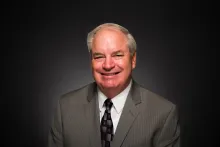
Robin Webber was born in Chicago, Illinois, in 1951, but has lived most of his life in California. He has been a part of the Church of God community since 1963. He attended Ambassador College in Pasadena from 1969-1973. He majored in theology and history.
Mr. Webber's interest remains in the study of history, socio-economics and literature. Over the years, he has offered his services to museums as a docent to share his enthusiasm and passions regarding these areas of expertise.
When time permits, he loves to go mountain biking on nearby ranch land and meet his wife as she hikes toward him.
