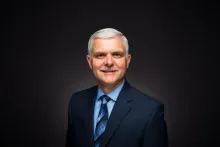

Chuck Smith
This sermon was given at the Branson, Missouri 2016 Feast site.
This transcript was generated by AI and may contain errors. It is provided to assist those who may not be able to listen to the message.
Good morning, everyone! It's nice to see you, and I can see you. Thank you to our festival choir, very beautiful. I very much appreciate all that you do. It is not easy to have to get up early and to put in extra time of service. It's a sacrifice, but it's one that we definitely all enjoy. And I know our Father in Heaven enjoys hearing your joyful noise as well. I am from East Texas, Hawkins, Texas. I'm here with our sister congregations. East Texas is Big Sandy, and then we have a congregation in Texarkana, Texas, and in Ruston, Louisiana. There are around 35 or 36 of us, but we're not all Texans, and we're not all like Howard Baker, whom we dearly love. And if you haven't met his wife, Sarah, please be sure to meet her. They're a very beautiful couple, and I'd like to extend a warm welcome. If you'd come down and see us in East Texas, we have a regional family weekend. I'll put a plug in for that in February. We'd love to have anyone that'd like to come to come. We'll show you what Texans are really like. I don't know why I hear all these terrible things about Texans, but I know that's all been fun. And we do invite you, though, if you'd like to come down and see us. And we may not say howdy, because not all of us say howdy, but we'll greet you. Well, we are here in humble and willing obedience to celebrate God's feast of tabernacles, and very soon the upcoming eighth day. We would not be here were it not for God calling us or inviting us to develop a relationship with Him. We remember that in John 644, Jesus Christ said, no one can come to me unless the Father who sent me draws Him, and I will raise Him up at the last day. Without the Father's calling, we would not understand His plan of salvation for us and for all humanity pictured by His festivals. Unless God had opened our eyes to see His light, we would still be living in darkness. And I hope, especially during the feast, we think about that and realize what a blessing it is to receive God's light. Please turn with me to John 1, and let's be reminded of what true light is. In John 1, we'll read a few scriptures here as part of a backdrop, background to my message today.
In John 1, verses 1 through 5, we read, In the beginning was the Word, and the Word was with God, and the Word was God. He was with God in the beginning, and through Him all things were made. Without Him nothing was made that has been made. In Him was life, and the life was the light of men. And the light shines in the darkness, and the darkness did not comprehend it. Then down in verse 9, That was the true light which gives light to every man coming into the world. He was in the world, and the world was made through Him, and the world did not know Him. He came to His own, and His own did not receive Him. But as many as received Him, to them He gave the right to become children of God, to those who believe in His name, who were born, or better word here, begotten, who are begotten not of blood, nor the will of the flesh, nor the will of man, but of God. Jesus Christ is the Word, the Creator, and the true light. And we're here in grateful celebration of God's light and life that is true. Now, the Bible also relates the account of a man who once never knew about light. Why did God inspire the Apostle John to write a lengthy account about a blind beggar whose name we never learn? This man did not travel with Jesus or His disciples. He seems to have known very little about the teachings of Jesus or about Jesus Himself. In fact, from what we read, Jesus and this blind man exchanged but just a few words with one another. Yet, one whole chapter, the entirety of John 9, concerns this blind man. Why? Why is that?
The account of this one truly amazing day in the life of this blind man provides us valuable spiritual insights about blindness and about sight, about God's astounding ability to heal blindness, and about believing and obeying God, the essence of faith. Who was this blind man? And what did the blind man see? And that is the title of my sermon, What Did the Blind Man See? What Did the Blind Man See? Let's turn to John 9. We are going to spend most of our time in John 9. John 9. At the beginning of this chapter, we find the setting as Jesus is at the temple, and at the temple it was not unusual to find beggars begging for alms. These poorest of people depended upon the generosity of the many pilgrims entering and leaving the temple area. On this day, Jesus gave special attention to one beggar in particular. Let's read John 1-2.
Now as Jesus passed by, he saw a man who was blind from birth, and his disciples asked him, saying, Rabbi, who sinned, this man or his parents, that he was born blind?
How did the disciples know this man had been born blind since birth? Well, perhaps the beggar himself announced the fact day in and day out. Perhaps he said alms for a man born blind from birth. Or perhaps this man had begged at the temple for so many years that his plight had become common knowledge to everyone that was familiar with the temple in Jerusalem. Now it's quite possible that the blind man's sensitive ears may have heard the disciples' question. But whatever the disciples said about him, he had probably heard it many times before, and perhaps even believed himself, that he or his parents had sinned, and his blindness was God's punishment. Most Jews of the day held that belief. They held that belief based on the law of Moses. Back in Exodus 34.7, you do not need to turn there, but in Exodus 34.7, the statement that God punishes, quoting, the iniquity of the fathers upon the children and the children's children to the third and the fourth generation. They believed that if one were born in such a terrible affliction as his blind man had been, then the parents or the grandparents had sinned terribly against God. According to the Expositor's Bible commentary, some Jews also held the erroneous belief that the blind man might have sinned before birth. Sounds strange. That the blind man himself might have sinned before birth, whether as an embryo or in some pre-existent state. That is not biblical, but that it does appear in some of the rabbinical writings of the time. But Jesus rejected such views. Verse 3, Jesus answered, Neither this man nor his parents sinned, but that the works of God should be revealed in him. I must work the works of him who sent me while it is day. The night is coming when no one can work. As long as I am in the world, I am the light of the world. The man's blindness was not God's punishment for sin, but it was an opportunity to show God's mercy. Healing the blind man would provide a powerful witness that Jesus Christ was and is the light of God, the true light of God. Now, the blind man, for his part, had lived every moment of his life in darkness. Concepts of light and vision would have been incomprehensible to him. For his part, the blind man concerned himself as usual with begging for alms from the passers-by. But then, Jesus did something unusual and quite unexpected to him. Verse 6, When Jesus had said these things, he spat on the ground and made clay with the saliva, and he anointed the eyes of the blind man with the clay. And he said to him, Go, wash in the pool of Siloam, which is translated, sent. So he went and washed, and came back seeing. These scriptures indicate no dialogue. The blind man apparently did not ask Jesus to heal him, and Jesus did not say that he would heal him. Jesus acted first. He smeared on his eyes salve made of spittle and clay. Believe it or not, that was a common medical practice of that time for disorders of the eye. And then he told the man to wash. And without a word, the blind man simply obeyed and walked to the pool of Siloam. The pool of Siloam was actually a large mikvah. That's a ceremonial bath the Jews used for ritual cleansing or purification prior to entering the temple. Jesus didn't tell the blind man to wash his eyes. He didn't say that. He said, wash in the pool. To wash according to custom, the blind man would have gone in at one side of the mikvah, entered the water, become fully immersed, and then proceeded to leave the pool by the other side.
And as the water washed the clay from his eyes, the blind man realized he could see.
He would have arisen from the water a changed man.
Verse 7 provides no details, only that he went and washed and came back seen. But that's such a profound understatement for a truly extraordinary miracle. Nothing like this miracle is found anywhere in the Old Testament. And although Jesus had healed many blind people, never before had he healed anyone blind from birth. You know, even our own technologically advanced age, with all our technology and know-how, restoring vision to normal is most difficult. And for adults who are born blind, it is humanly impossible.
What Jesus Christ did that day was truly miraculous. Before moving on, I would like for us to understand what makes this miracle so very astounding.
Now, we don't know the exact cause of this man's blindness, but we can surmise. We can identify several causes of congenital blindness or blindness at birth that is known to our researchers and doctors today. It's possible that man could have been born with cataracts, clouded corneas, or even microthalmia, which literally means small eye. Now, each of those is a variety of blindness that causes limited vision or light perception, limited light perception.
Or he may have suffered absolute blindness, no light perception whatsoever. That could be caused through deformities to the eyes of the optic nerves or even to the brain itself. There is one rare condition. It's called anothalmia, anothalmia, wherein no visible ocular remnant exists. In essence, it means being born without eyes. About one month ago, there was a report from China of a baby girl being born with anothalmia. You could probably google it and you'll see a picture of her, a beautiful little girl with just eyelids, depressions where her full eyes should be. It still occurs. It's rare.
Now, we don't know what his blindness from birth was caused by. Those are possibilities. But the point here is that healing only the mechanisms of eyesight would not have given him sight.
Vision requires more than eyes that function properly. In research and case studies over the past 20 years, confirmed that eyesight loss in early childhood cannot be fully restored to normal. For example, in one case study, a man identified as SB, his initials. He lost his eyesight at the age of 10 months and regained it at age 50 through cornea transplants. SB regained two perfectly functioning eyes, but he had very limited vision. Although he could see objects, the eyes were working. He couldn't see them as someone with normal vision can. To him, a painting of a countryside landscape was simply a collage of colors, and a drawing of a cube simply a series of lines on a page. He couldn't quite make it out.
In another case study, a man named Mike May lost his eyesight at age 3.5, and at age 43 he regained perfect functioning in one eye through surgery. But 15 years after regaining his sight in that one eye, Mike still couldn't recognize the faces of his wife and children. He could see their hair, but he couldn't detect their faces.
He could see colors and motion. He saw simple two-dimensional shapes, but was incapable of more complex visual processing. The problem was not physiological, and it's this fact that it was the brain. The brain wasn't wired for vision. It hadn't received input, visual input, for over 40 years.
The case studies of Mike May and S.B. and others indicate that there exist critical periods for acquiring vision, and some of you know this. If children miss a developmental stage in learning to see, then normal vision cannot be achieved. Researchers have also learned that once a critical stage for learning to see has passed, one cannot go back when older and learn what was missed. That explains why Mike May and S.B. had eyes to see, but still could not see. They had missed learning to see at critical periods of small children, and they could not go back and learn it as adults. The outcome, however, is different for those who lose eyesight when they're older, after early childhood. So people who become blind after their brain has already learned to see, they may regain normal vision with proper treatment and therapy. But as one researcher states, for some people, the cure for blindness will have to include the brain as well as the eye. And that may take a bit more doing, humanly speaking. And so we should understand from all of this something I didn't quite grasp before I did some research. We should understand that healing blindness is not as simple as removing a blindfold. I think sometimes that may be the way we see these miracles. Can we begin to grasp the miracle that Jesus did for this man born blind? Because he had never experienced sight, the blind man had never learned to see. So along with healing the biological mechanisms that make vision possible, today we might call it the hardware, Jesus also had to accomplish numerous and incredibly complex psycho-motor, psychological, and cognitive changes, the software, we might say, for this man to see. In order for him to walk into the pool of silo and blind and come out of it with normal vision, he must have received complete sight instantaneously. The changes in him would have been unmistakable, all instantaneously. The appearance of his face would have likely changed. The eye sockets and eyes suddenly healthy and full, the eyes clear and engaging. His facial features and manner of expression would have changed dramatically. The way he moved, his gait, his posture, his body language, all would have been noticeably different. But the most miraculous changes would have been unseen within the intricate workings of his brain and his mind. The centers of vision would have appeared instantly, and the other sensory centers of hearing, touch, smell, and taste would have readjusted, realigned, and synchronized immediately with his new sense of sight. His entire body would have adjusted instantly to vision. Think of that. He would have instantaneously then comprehended and utilized countless complex visual signals he had never before experienced, things we take for granted, those of us who see. Suddenly, he would have understood what color meant, brightness, what shapes were, what is contrast, what is dimension. He would have understood motion and distance. He would have had immediate depth perception and hand-eye coordination.
And much more. More than I've been able to understand, but much more. And then, this is the kicker for me, and then for this man to experience these changes without traumatic psychological vertigo, is what I would call it, this miracle must have also affected his intellectual and emotional responses. It's amazing that he didn't go insane with this sudden change. But Jesus took care of that, too. And so, I do find it wonderful and inspiring. I hope you do, too. Not to mention mind-boggling the countless things Jesus Christ did so this man who had never before seen light could see it and comprehend it and live with light.
Live in light. And Christ's miracle was as much creative then as it was restorative because he had to create what the blind man never had. And using clay, I think reminds us that Jesus Christ was and is the Word and our Creator. It's not far-fetched to say that Christ created in the blind man a new way of perceiving, of understanding, and of responding to his world.
So when the blind, once blind man emerged from that pool of Siloam, he truly was a new man in a very real way. We should be reminded that to see and comprehend light is truly miraculous. And even more so, can we and do we grasp the miracle in parallel of our calling and the spiritual sight God has given us through the help of his Holy Spirit?
I think there's meant to be a parallel there. Now, let's go back to reading in verse 8. Let's pick up the story. After the blind man returned from Siloam, those who knew him were struck with wonder. Verse 8, therefore the neighbors and those who previously had seen that he was blind said, is this not he who sat and begged? And some said, this is he. The other said, he is like him. He said, I am he.
Again, this miracle of receiving sight had changed his looks the way he walked. He wasn't quite, he didn't quite look the same. He didn't act the right way the same way. And they couldn't believe their eyes, those who saw him. Verse 10, therefore they said to him, how were your eyes opened? And he answered and said, a man called Jesus, he made clay and anointed my eyes. And he said to me, go to the pool of Siloam and wash. So I went and washed and I received my sight. And then they said to him, where is he?
He said, I do not know. The blind man answered their questions as best he could. Some he could not answer, not because he had something to hide, but frankly because he could not explain it. He couldn't explain it. And he did not know where Jesus was. He must have moved along. And in any case, he did not know what Jesus looked like. He had never seen him. The blind man's healing was so peculiar and inexplicable that the people took him to the Pharisees. Quite possible to the Sanhedrin. Let's read now in verse 13 through 15. And so they brought him who formerly was blind to the Pharisees. And now it was a Sabbath. That's not good.
Now it was a Sabbath when Jesus made the clay and opened his eyes. Then the Pharisees also asked him again how he had received his sight. And he said to them, He put clay in my eyes, and I washed, and I see. With this brief testimony, no scant testimony, many Pharisees immediately condemned Jesus because he healed on the Sabbath. They did this over and over again, didn't they? Verse 16, Therefore some of the Pharisees said, This man is not from God, because he does not keep the Sabbath.
For these Pharisees, that was it. There's nothing more to consider about this man and his miracle. But not all the Pharisees felt the same way. Some were less quick to condemn. Asking in verse 16, they asked, Well, how can a man who is a sinner do such signs? A really great question. And so there was a division among them.
But unable to reach a consensus among themselves, the Pharisees then looked at this former blind man and asked him for his opinion about what happened. They were divided. Let's get a third opinion in here.
They asked him, verse 17, What do you say about him? Because he opened your eyes. And notice how he answered them with the tone of conviction. He said he is a prophet. At first, he said he was a man named Jesus. Now he says he's a prophet.
The blind man's answer is rather insightful. God had often sent prophets and had often worked great miracles through them. And if Jesus had performed an irrefutable miracle, then that would prove that he must have been sent by God and could heal if God directed him to, as a prophet, on the Sabbath. But the Pharisees were not convinced that a miracle had happened. They didn't really listen to the blind man. Who knew? They found his credibility suspect. They needed witnesses to prove that he was who he claimed to be, a man born blind who had miraculously received his sight. Without such proof, the Pharisees would immediately reject his claim of a miracle. So they called upon his parents. And in verse 20, we read, his parents answered them, the Pharisees, and said, We know that this is our son, and that he was born blind. But by what means he now sees we do not know? Or who opens his eyes we do not know? No. He is of age. Ask him. He will speak for himself. Their answer seemed rather guarded, rather careful. Their testimony was very brief and direct, but enough to prove their son's credibility. And as verse 22 tells us, their carefully chosen words reveal their caution not to antagonize the Pharisees. Verse 22 tells us, His parents said these things because they feared the Jews, more specifically the Pharisees. For the Jews had agreed already that if anyone confessed that he was Christ, the Messiah, he would be put out of the synagogue. Therefore, his parents said, He is of age. Ask him.
People feared the Pharisees' authority to excommunicate anyone from the synagogue. It was one of the worst things that could happen. Perhaps the worst thing. To be put out of the synagogue severed or cut off uncooperative Jews from social contact with the larger Jewish community, including their family and their neighbors. Cut off from their society, those who are excommunicated would not have the ability to earn a living. Who would want to hire them? Who would want to buy anything from them? Who would have made their lives nearly impossible? And those cast out became as abhorred as Gentiles to other Jews.
Although the blind man was left alone now to fend for himself, his parents had confirmed that he had been cured of blindness. The Pharisees could not deny that a miracle had occurred. He had been born blind, and now he could see. But still, the Pharisees stood by their first position. It was against the law to work on the Sabbath. Jesus had healed on the Sabbath. Therefore, Jesus was a sinner. Based upon their logic and the power of their authority, the Pharisees now commanded the blind man to speak the truth as they saw it. And so in verse 24, the Pharisees again called the man who was blind and said to him, give God the glory. We know that this man is a sinner. Now, give God the glory is a command to speak the truth.
The Pharisees demanded that he confess that he lied in saying that Jesus had healed him. They demanded that he accept their authority as truth, that Jesus could not have healed him since he is a sinner. How can this formerly blind man give God the glory by denying the truth and telling a lie? That's the predicament he was in now. In verse 25, whether he is a sinner or not, I do not know, he said. But one thing I know that though I was blind, now I see.
He refused to lie. He clung tightly to the truth.
Now, the Pharisees, of course, became increasingly exasperated with this stubborn, once blind man who refused to see the facts of their logic. So they resorted to badgering him with the same questions over and over again, trying to break his resolve, it seems. Verse 26, what did he do to you? How did he open your eyes? Now, could any human being adequately adequately answer that question? No! How could this blind man answer their question?
Then, I think perhaps out of his own exasperation, the blind man responded in a way that they did not like. It did not go over very well with the Pharisees. Verse 27, the blind man answered them, I told you already and you did not listen. Why do you want to hear it again? Do you also want to become his disciples?
Turning around the motive for their questioning, he suggested that they also want to become disciples of Christ. Now, isn't his wording interesting? I don't know if you've noticed this. He says, also want to become his disciples. It reveals that the blind man wanted to be Christ's disciple. When did he come to that realization? When did he come to see that's what he wanted? He must have come to this conviction during this process of the Pharisees' interrogation.
He came to see and accept the facts that the Pharisees rejected.
He came to see and believe to become convicted that Jesus was indeed sent from God. But his suggestion that they might want to become disciples infuriated them and their hatred erupted. Verse 28, and then they reviled him and said, you are his disciple, but we are Moses' disciples. We know that God spoke to Moses. As for this fellow, we do not know where he is from. Fellow is kind of an English way of saying this lowly nobody. They were rabbis, teachers of the law, leaders. They prided themselves on obeying God's law. But this nobody named Jesus is a sinner, a breaker of God's law. How dare this man suggest such apostasy?
But then, rather masterfully, I believe, this once blind man declares his own statement of belief, his own statement of conviction. Verse 30 and 33, the man answered and said to them, why, this is a marvelous thing. This is a marvelous thing that you do not know where he is from, yet he has opened my eyes. Now we know, we know, that God does not hear sinners. But if anyone is a worshipper of God, he believes God, and does his will, he obeys God. God hears him. Since the world began, it has been unheard of that anyone opened the eyes of one who was born blind.
If this man were not from God, he could do nothing.
Quite a statement of conviction, wouldn't you say?
To his quiet, sound argument, the Pharisees have no good answer. So what do they do? What do people do when they can't attack your logic? They attacked his character. It's a common tactic against truth when nothing else works. Verse 34, And they answered and said to him, You were completely born in sins, and you are teaching us. They throw in his face that same old accusation and lie he'd heard all his life. How dare he, a sinner, school them in the ways of God? Then, as one final act of very, very violent, very violent, hateful spite, like a diseased evil, and probably accompanied with lots of curses, kicks, blows about the head, they seem to be good at that, disagreeing with people. With great violence, they cast him out. He is excommunicated from the synagogue. Let's pause here and think a bit.
What an incredible and unimaginable day this man must have had.
That very morning, he had been simply living out his life as normal, begging and eking out a meager existence. It wasn't much, but it's what God allowed him, and he accepted it. Then this man, this Jesus, approached him, smeared clay on his useless eyes, and told him to wash in the pool at Siloam. And then, for some odd reason, he got up, he obeyed, and he washed. And when he came out of the water, he could see, and he was not the man he used to be. And then he was standing before the Pharisees, and somehow his wonderful and awesome miracle was greeted with anger and hatefulness. They accused him of lying, condemned him, and refused to believe that Jesus had healed him, and they had ordered him to deny the truth. But he had heard this voice. He had heard these words. He had felt his fingers on his face. He had been healed. He knew the truth. He believed it.
He had refused those naysayers and remained doggedly true to Jesus, to the man whom he had come to see was not a man, but now he knows he must be a prophet sent from God.
But what now? He's cast out. This once blind man has lost all of the very little he had.
He had seen light but for a few hours. And already, his future must have looked rather bleak. What had he done? What had he done to deserve all this terrible trouble?
Any of us might have wondered the same thing if ever we had once been blind but now could see.
Perhaps it was then, perhaps it was then when he felt most dejected and alone, that Jesus Christ approached him a second time that day. Let's read verse 35.
Jesus heard that they had cast him out and when he had found him he said to him, Do you believe in the Son of God? Do you believe in the Son of God? This second visit marked the very first time the blind man saw Jesus. And in response to his very direct and very personal question, verse 36, he answered and said, Who is he, Lord, that I may believe in him? And Jesus said to him, You have both seen him, and it is he who is talking with you. And then he said, Lord, I believe. And he worshipped him. Immediately, without hesitation, the blind man called Jesus Lord.
Kyrios, the word used for Messiah in Greek, Lord. And he fell down at his feet, worshiping. He saw that this man was so much more than a prophet. He believed and gladly received the Messiah, the Son of God, who had given him eyes to see and to know the true light that shines in the darkness. And the once blind man gladly received the light of Christ. But what are the Pharisees? No.
Not so the Pharisees, because the story continues after this, verse 39 through 40.
Jesus said, For judgment I have come into this world, that those who do not see may see, and that those who see, or rather think they see, may be made blind. Then some of the Pharisees, verse 40, who were with him, heard these words and said to him, Are we blind also? They deeply resented the insinuation that they were blind. And Jesus said to them, If you were blind, you would have no sin. But now you say, We see, or rather, you claim that you see, but you don't. Therefore your sin remains. The Pharisees, in their arrogance and pride, believed that they could see. They believed that they already had the light of God. But their lack of humility and resistance to Christ made them spiritually blind. The true light of God was standing right there, right there before their very noses. But they could not comprehend Him, and they remained in darkness.
The once blind man saw the flesh and blood face of Jesus Christ, and he recognized and gladly received God's true light. Brethren, can we see how the blind man's experience parallels our own experience?
It parallels our own experience in the process of conversion in a very broad way. God approached us. He reached out to us first, didn't he? We are out eking out our own little existence, holding our hands out for more. And God approached us first. And then God worked an awesome miracle, an awesome miracle, a miracle that allows us to see and to comprehend the light of His truth.
And as we remain committed to practicing living faith, believing God, and obeying God, our sight and acuity of understanding grows and improves, just like this man's sight, spiritual sight, was improving by the minute, apparently, during his trial. And like the blind man, we have been, in Christ's promises, we will be despised and persecuted for the truth. But Christ is with us, especially through the indwelling of God's Holy Spirit. Brethren, what did the blind man see? What did he see?
He saw the need to believe and obey God, and he did. Do we?
He saw the need to remain committed to God, and he did. He saw the need to revere and worship God, and he did. Do we?
He saw the face of Jesus Christ, the Son of God. Will we? One day soon, in God's kingdom upon earth, a blind man and all others who choose to receive the light of God will see with spirit eyes the glorified face of Jesus Christ and other Heavenly Father. Let's turn back to 1 John 3, verse 1 through 2. Beautiful scriptures here, 1 John 3, 1 through 2.
All those who are once blind look forward to these scriptures. 1 John 3, verse 1 through 2. Behold, that means take note, listen up. 2 Behold, what manner of love the Father has bestowed on us, that we, we should be called children of God. 3 Therefore the world does not know us, because it did not know him. They are still blind, but they will get their chance too one day. 4 Beloved, John writes, Now we are children of God, and it has not yet been revealed what we shall be. We're still physical. But we know that when he is revealed, we shall be like him, for we shall see him as he is. This glorified state.
God our Father has called us, and our spiritual blindness has been removed. We can see, we can see. We can see and live according to the true light of his Son, Jesus Christ. And one day, when Christ has returned, and we and all first fruits have been resurrected, and when Satan and his demons have been put away for one thousand years, and then later forever, we will have our part in healing blindness. We'll have our part in bringing light to those millions, and then those multiple billions of people who have only known darkness. It's all they ever have known.
We have got to see that. We have got to see that. We've got to be there. And may God hasten that day.
