
Robin S Webber
This transcript was generated by AI and may contain errors. It is provided to assist those who may not be able to listen to the message.
That was beautiful. Thank you, Mrs. Windling. Over the years in Southern California, back in Pasadena days, we were always able to enjoy the whole Peterson family's ability to sing. Many of them came through Pasadena at Ambassador College. That's Mrs. Windling. She was a Peterson, for those of you that know that. So it's nice to be able to hear one of the family members again. You know, looking behind me, I feel at home with all these ferns and palms.
I'm from Southern California. This is how we live all year long. So anyway, so warm greetings from your fellow members out there in Southern California, but I always enjoy coming back to the Midwest. My wife is a Buckeye, and Midwest is a great place to be. Just love always coming back with all of you. I do want to make a couple comments here, saying that our colleague, Mr. Kiefer, warmed up a little bit before he started. I do want you to realize that he was the main message. I am simply the dessert. And also, I have something in common with most of you here. After hearing Mr. McNeely's statement and policy about phone numbers, I don't know the number either. So, what can I say? It's good to be here. It's good to be with our friends. Variety is a spice of life. I always enjoy it when we have speakers come in. So, Mr. Kiefer and I are all being children of the 60s. We're going to do what the Beatles did, a little help from my friends. So, we're going to be able to speak to you. But we're not here to talk about us. We're here to talk about God's Word. I'd like to lead you into a thought. Would you please join me by opening your Bibles to Matthew 16. And let's consider the words and the story that is found in the Gospel of Matthew. Matthew 16 and verse 13. As we read these scriptures, let's come to understand, friends, that this is not just something of old, but this is something that is happening every day around this world and is also happening in our life. And I hope to make the connection in the course of this message. When Jesus came into the region of Caesarea Philippi, he asked his disciples, saying, Who do men say that I am? Who am I? What are the people thinking?
So, they said, some say John the Baptist, some Elijah, and others Jeremiah, or one of the prophets. Now, as we enter this discourse, we understand one thing. The first question is a very broad question. It's kind of thrown out as a wide net. What is everybody saying about me? But now, let's notice how it narrows. And then he said to them, But who do you say that I am? It comes down one on one. As Jesus is asking the disciples that are around him, I'm concerned about out here, and that's all right. But what about you? And Simon Peter answered and said, You are the Christ.
You are the Son of the Living God. And Jesus answered and said, And blessed are you, Simon Barjona, for flesh and blood has not revealed this to you, but my Father, that is in heaven.
Now, let's understand what we've just moved through for a second, friends. Okay? Number one, there was a broad question. Then there was a personalized question, a question that demanded an answer. And upon receiving the answer, the last thing that was gained, did you notice?
This was a blessing. Let's understand that this is not just fossilized in Scripture, though.
This is something that is happening every day around the world, that God, through His Son, asks us, Who do you say that I am? How many of you remember your baptismal ceremony?
Good. Little show of hands. The whole congregation is baptized. Where did he go? Okay. And the minister, whether it was Mr. McNealy or Mr. Key, or myself, or one of your elders, or somebody said, and have you accepted Jesus Christ as your personal Savior?
The question was, have you repented of your sins? But one of the questions was, have you accepted Jesus Christ as your personal Savior? And if you were baptized, that means you said, I do, before you were baptized. Each and every one of us was asked that question, in a sense, Who do you say that I am? The one thing that I'd like to share with you on this afternoon is simply this. That question is not just simply a one-time event. That question will come up to you again, and again, and again, in your lifetime. That question is not an event, it is an existence that you and I go through to understand. And over the years that we experience this way of life, God will mold us, He will shape us, and He will continue to challenge us as to one thing.
Who do you say that I am? Because He wants us to establish a reality. And I'd like to give you five thoughts, and then we're going to move into one simple story. The reason why He asked us this question, and the answer that we supply, brings us to these five points. Number one, that God has entered our life by design. Our Father above has entered our life by design. Number two, each and every one of us were at one time blinded to His ways.
But now you and I are offered by a miracle, a new vision. Number three, mankind around us, as we strive to answer that question, will turn that blessing into a burden, humanly, and challenge us, and want us to come up with a different answer, want us to go a different way. Number four, even with all of that said, God said, God promised that He will never leave us nor forsake us. And number five, God never said that it would be easy.
But our Father above said that it would be worth it. But that is just so many words. Let's put a story behind it. Join me, if you would, to John 9. And John 9 is a beautiful story that shows how this came into the life of one individual and may come into your life. And I really appreciated Mrs. Windling's message because she talked about the glory of God and seeing that glory.
And that's really how John, the Gospel writer, delivers the message that he received from Jesus Christ. John speaks in his Gospel of the works of God or the glory of God as if it is a window that is opened up through Christ being on this earth. And by what Christ did, the miracles that he performed, the sayings that he offered were, in a sense, opening heaven up above so that we can glimpse into it and understand what God wants to bring into our life every day.
But that's enough staging. Let's enter the story. Not only this man's story, it's your story. It's my story. And it's the story that God wants us, along with the message that Mr. Kiever brought today, the story that God desires us to internalize. Now, as Jesus passed by, he saw a man who was blind from birth. Now, it's always interesting when either Luke or John or the others write now, as Jesus passed by, as if it was just a time sequence, God never does anything by accident.
God never does anything by accident. There is a design going on here. It's not just as, you know, Jesus walking by and he goes, oh, what's over here? No, there is a purpose that was being worked out here to understand. Because when we read through the Gospels and we understand the stories of the Gospel, there's two things that we come to understand. Number one, God never wastes an individual.
Your life is for a purpose. God did not just happen by with this guy or with you or me. There's something working out here below. And number two, God never wastes a miracle. God never wastes a miracle.
There's something happening here. So Jesus passed by and he saw a man that was blind from birth. And there is a purpose, as was mentioned in the story by Mr. Kiever, that the gentleman, and he mentions the gentleman that was lame, that there is a specific reason that was occurring here. Because when Jesus Christ would heal this individual, it wasn't like, well, you know, this guy was just poked in the eye last week.
Or maybe he'd fallen down just a few hours before. Everybody knew that this guy had been blind since birth. There was a history that was going on here. And his disciples asked him, saying, Rabbi, who sent this man or his parents that he was born blind? The religious community was going to try to move him into a situation to try to trap the Christ into giving an answer that might dissuade the public that was around him. Who sent? Because at that time, basically any physical ailment or any weakness or perhaps the loss of a body part was looked directly as a matter of an individual and or a family having done something wrong.
Simply cause and effect. They did this, so they got that. So obviously, this man must be a sinner. But notice, and here's a part of why Jesus is called the wisdom of God.
Jesus answered, neither this man nor his parents sinned, but that the works of God should be revealed in him. He didn't dodge the question. He gave an answer that moved beyond what had occurred or what was and was trying to move the audience to a greater arena of understanding what God was doing. How often as individuals, even as the people of God, we can kind of beat our gums, as it were, and say, how come? Just as these folk were doing. Rather than understand what God is doing and yet wants to perform in each and every one of our lives.
Verse 4, I must work the works of him who sent me while I stay. The night is coming when no one can work. And as long as I am in the world, I am the light of the world. And when he had said these things, notice what Jesus Christ did, which is quite astonishing. It's very earthly. It's very graphic. I don't know if Mr. McNeedy has ever done this on stage before, what we're about to talk about to give an object lesson. But notice what our Savior did. After he'd said this, he spat on the ground and made clay with the saliva. And he anointed the eyes of the blind man with the clay.
Now, when you understand this, is that God often uses tangible physical items as the master educator to bring us to a spiritual point, doesn't he? Because we're children of his.
And we're entrapped or encapsulated in this world of time and space. We often know, and maybe we've read, that in a sense, clay does have what? Some forms of healing elements in it. Also, what does a cat do when it gets wounded? It licks itself. The saliva has a certain sense of healing power. That's not what healed the man. Christ was using those as elements to bring the audience along with him. And notice what he said. He spat on the ground, made the clay with the saliva, and he anointed. He literally put it on the eyes of the blind man. That's very graphic, isn't it, when you think about it? You know, all of us at one time, we've ever gotten a little clay and a little water. Or you ladies in the kitchen, a little baking soda, a little dough, a little water. You're mixing it around. Can you imagine what's happening here? You know, you kind of go like this, you know, like that. Then just imagine having your eyes dabbed with clay. And that's what he did. This is the story that's unfolding before us. And then he gave the man a specific assignment. He said, go wash in the pool of seleum, which is translated, scent. So he went, and he washed, and noticed he came back seeing. Interesting. It's often interesting that one of the first things that God does when he begins working in our lives is He asks us to do something. He asks us to perform something. He asks us to understand by where He sends us, by what He asks us to do. Because obedience is simply a demonstration of our faith, isn't it? Obedience. And just doing it. You know, I always marvel at this verse about this gentleman known as the blind man, because I look at this, and this just happened in one verse. I've normally noticed... Now, this rule doesn't always apply, but normally one-verse guys are usually good attitude people, or one-verse women in the Bible are good. They just do it. It's not like Naaman the Syrian that the prophet wanted to heal back in the Old Testament. Remember when the prophet told Naaman, now I want you to go down to the Jordan River, and you're going to go down there, you're going to dip yourself. And remember what Naaman... Oh, no. Are you... Who are you kidding?
Me? Do you know what the rivers are like up in Syria? I mean, they gush, and they rush out of the 10,000-foot peaks up there, and you're asking me to go down to that waterhole with the camels?
You've got to be kidding. On, on, on. On, and on. Have you ever been a little bit like Naaman? When God just asked us to do something through His Word, through the example of Christ, maybe something that your local pastor, Mr. McNeely, has said, you know, I really recommend that you... And verses and chapters of your life go by. I'm just pinpointing a little example, just a little exercising, this little verse out here saying, it's always interesting how often, sometimes when people just say, yes to God, yes, Sir God, notice what happens. Now, end of story. Man goes and washes himself, comes back. That's it. Miracle done. Oh, everybody is so happy. You know, Ma and Pa are just going to be thrilled. I'm going to go to church and I'm going to tell everybody what this guy did for me.
Let's notice the story. No, it's not the end, friend. It's only the beginning.
Now, notice what happens. Verse 8 begins to go deep.
Therefore, the neighbors and those who previously had seen this man, excuse me, I went on, had seen that he was blind, said, is not this he who sat and begged. And some said, this is he, others said, well, kind of looks like him. And he said, I am he. You know, it's kind of interesting that because the person's eyes open and they can see, does that mean that all of a sudden they had a lot of hair and they're bald or they shrunk six inches or did they gain 50 pounds? Did they lose 50 pounds? I mean, what is going on here? What are the neighbors doing to the gentleman that's been healed by Jesus Christ? Let's understand what is happening here is that the neighbors are greeting him with surprise and skepticism. And they're asking questions that are not really questions. Have you ever talked to somebody that's asking a question and it's not a question, it's really an answer. It's not a question, it's really expressing doubt that what has occurred has really truly occurred. Notice what goes on. Therefore, they said, how were your eyes opened?
And he answered and said, notice, a man called Jesus, made clay and anointed my eyes, and said to me, go to the pool of Selahum and wash. So I went and I washed and I received sight. And then they said to him, well, where is he? And he said, well, I don't know.
Now, there's something that begins at this point that we can all learn from on this, the Sabbath day. God had intervened in this man's life. God had performed a miracle. God had given the man that was blind. He gave him a story. Didn't give him too much more and didn't give him all the information.
But what God did give him, he was the true custodian. What we begin to see and hear that I challenge you, my friends here in Indianapolis, to think about as we move through this story, is what about the story that God has given you. So will you stay with me on that, please? What about the story that God has given each and every one of us? God gave this man a miracle and gave him a story and gave him an entrance into a relationship with Jesus Christ. The man has integrity. He does not change his story. He tells the story as he understands it to that point. And what do we understand that he understands at that point? Let's notice again what he says about Jesus. He says, a man entered my life and did this. He starts at the level that Jesus of Nazareth is a man, and reporting basically that he is a good man. He tells the story. He does not change the story. He tells the story as he understands it. The first thing is to recognize this. You're going to see the opening of this man's eyes, but more than his eyes, his heart, and he's going to deepen into a relationship of understanding of who Jesus Christ is. Then they brought him former... then they brought him who was formerly blind to the Pharisees. And now it was the Sabbath when Jesus made the clay and opened his eyes. That means, uh-oh, when you understand how the Pharisees approached things.
And then the Pharisees also asked him again and how he had received his sight. And he said to them, well, he put clay on my eyes and I washed and I see. Therefore, some of the Pharisees said, this man is not from God because he does not keep the Sabbath. Others said, how can a man who is a sinner do such signs? And there was a division among them. Now, these are the good church folk of the day. Here we have the Pharisees. Those that felt that they were very, very close to God, and sincerely so. And thinking that they were worshiping God rightfully and responsibly, and doing everybody else a favor by the rules and the dictates that they were placing on the community around them. We need to recognize that Jesus was continually challenged on this matter of the Sabbath and healing on the Sabbath because basically the rules and the road and the policies that had been established in that day by the community of Jews in those different areas of the Jewish community is basically what you could do if you found somebody that was really in a bad spot. Let's even say somebody that was on the road and really maimed and really injured. What you could do is you could take care of him. You could at least stabilize him. Are you with me? You could at least stabilize him, but you could not make him any better than simply stabilizing him. I want you to think that through for a moment. I'm seeing some heads turning there. Here's somebody over there. They're down and out, and you know they are troubled because they're groaning. You could go over and you could kind of stabilize them, but you could not further alleviate that towards a progression in health. Then they said to the blind man again, what do you say about him because he opened your eyes? Now, I want you to notice something. How the story progresses. That's why it's always so important, friends, to read the stories in the Bible. Sometimes, as ministers and speakers, we'll take you into a point. We'll take you into the Scripture. But the way so much of the Gospel is laid out, it is a series of stories. You must find the beginning of the story and move towards the ending of the story. Yes, to understand the story. We notice that, first of all, the man says the first understanding that he has of this Jesus of Galilee is he's a good guy. He is a man, and he did something wonderful to me. Now, notice how it progresses as he stays with the story and in the message that God has given him. He says he is a prophet. Well, this just got their goat, as we say. But the Jews did not believe him in verse 18 concerning him that he had been blind and received a sight until they called the parents of him who had received the sight. And they asked him, saying, is this your son? Who do you say was born blind? How then does he see?
And his parents answered them and said, we know that this is our son, and we do know that he was born blind. But by what means he now sees, we don't know, or who opened his eyes. We don't know. Look, he's 21 and older. Ask him. He's an adult.
He will speak for himself. What we sense in the story, friends, is a disengagement.
Basically, get us out of here. We don't want to be involved with this. Why is that?
Notice, because the Bible provides the answers. Verse 22.
His parents said these things because they feared the Jews.
For the Jews had agreed already that if anyone confessed that he was Christ, he would be put out of the synagogue. Therefore, his parents said, he is of age.
And ask him.
The church folk of the day, those that thought they knew God, and all of his policies, and all of his rules, and all of that, were the ones that honed in on this man that had a wonderful, wonderful thing happen to him. So much so that the parents wanted to disengage themselves from their own son, because in that sense, to be put out of synagogue, to be put out of the church community, meant that they were put out of society. So they again called the man who was blind, and said to him, give God the glory. We know that this man is a sinner.
Now, it really gets interesting, and I hope you'll stay with me a moment. Because what begins to happen now is our buddy, the ex-blind man, is, well, how do I put it?
Kind of fed up. And he's going to go tae-to-tae with the big boys. And he answered and said, whether he is a sinner or not, I do not know. And then one of the great lines out of the scripture is, one thing I do know, that though I was blind, now I see. A little bit like the equations that Mr. Kiefer was offering. I'll make him a little bit simpler, seeing I didn't do well on algebra.
I won't go to the equations, just simply this. One plus one does equal two.
Then they said to him again, because you see what happens is, those that don't believe in the saving power of our Father, and those that don't believe in the saving power of his Christ, will come back again and again and again to diminish what God has done with you and for you. Whether you're in Judea of old, or whether you're in Kokomo, or whether you're in Greenwood, or whether you're in Indianapolis, the adversary does not just give one blow. He wants to diminish. He wants to wear us down.
He wants us to change our story. He wants us to circumscribe it to, perhaps, coincidence, rather than that the glory of God and his works have visited us.
And he answered them, I told you already you did not listen. Why do you want to hear it again?
Do you also want to become his disciples? About 25 years ago, there was a term called cheeky. Our friend says that God will allow the righteous to be as bold as a lion, and he will give us the words, and he'll give us the thoughts that we need, and he does it right here.
And then, of course, that's no way to win friends or influence people, of course. Then they reviled him and said, you are his disciple, but we are Moses' disciple. We know that God spoke to Moses, asked for this fellow. Well, we don't know where he's from. And the man answered and said to them, why is this a marvelous thing that you do not know where he is from? And yet he has opened my eyes.
This discourse is going back and forth. Now, we know that God does not hear sinners, but if anyone is a worshipper of God and does his will, he hears him. And since the world began, it has been unheard of that anyone opened the eyes of one who was born blind. And if this man were not from God, he couldn't do anything. There is an equation that is going on that good soil, good seed, will bear good fruit. And if God did a good thing through this man, now that I've ascribed to him being a prophet second stage, is that the equation is true and fair and equal. Thus this man, whom only I know as Jesus, is a good man. And they answered and said to him, you were completely born in sin and you're teaching us, and they cast him out.
Interesting.
Where are we in this story? Because the story is not over.
Let's go back a moment. We'll rewind. We'll pause. We'll go forward.
Christ initially said that this man, neither he nor his parents, had sinned. That God at times allows things to occur in preparation that his glory might be shown on earth, sometimes multi-generationally before. That's incredible. That's the God that we worship. Isn't that neat? That's the God that we worship. That God was reaching back and moving through He enters this world of time and space and shapes and molds the situation that people might understand his glory. Through what he does with people just like you and just like me. And he gives each and every one of us a story.
And it's a story that we must have, and Darris and I are friends, as is with Paul, and I know Darris and I often talk about, and I know a key word that, as a minister, that Darris often shares with those that will hear his voice. He speaks to integrity. He speaks to integrity. To be the true man, to be the true woman, to be the true teen, to be the true child before God.
And what you see in this blind man who can now see is incredible integrity.
God has given him a story, and he will not change that story, and he will not change those values, and he will be true to that man that entered his life that he knew not. He will be a man and a person of integrity. And what we understand, and many of you that have even been in this way longer than I have, recognize that when you come to God, when you accept Jesus Christ as your Savior, it is not always a smooth highway into the kingdom, is it? There will be bumps, there will be bends, there will be man-made events out there to make you trip and make you fall and make you go back and make you in some way say that God did not really do what he did with you in your life when he called you.
Take heart from the man that was blind. Why does God give us the Bible, friends? He gives it to us that we might read to know that we are not alone. And this gentleman is then excised from the spiritual community of that day. He's kicked out. But then one of the beautiful, great stories of the Bible, this just, whenever I read this and I give this message, which is probably my favorite message to give to a congregation, the story of this man, it encapsulates what the gospel is all about. Because notice what it says, and they cast him out. They kicked him out of the house of the Lord.
Then notice, Jesus heard that they had cast him out. And when he had found him, he said to him, do you believe in the Son of God? I know oftentimes in this day and age, people talk about Christianity being but one venue, one highway, one avenue to God.
In this era of moral relativism, no, I'm okay, you're okay. We say that a lot out in California, as you know, California. Anyway, that I'm okay and you're okay. But there are not a lot of okay ways to the sovereign God of the heavens. There is only one way. And what is beautiful about understanding the message of the gospel and what Jesus came to convey is this. He came to convey a beautiful thing to you and me on this Sabbath day, that we worship a God that seeks us out.
We worship a God that we do not have to climb the mountain to, but at times will come off that mountain and look for us, search for us, seeks for us, or let's just take it a deeper step because he is divine. He knows exactly where we are. He knows exactly what you're going through right now. And this community of old that cast this man out of the house of the Lord, the Lord of the house, seeks him out as the one who is the good shepherd. And now let's notice the conversation. And he says this, as he did to Peter, as he does to this man, as he does to you and me, do you believe in the son of God? And he answered and said, the blind man speaking, or the ex-blind man speaking, who is he, Lord, that I may believe in him? And Jesus said to him, you have both seen, and it is he who is talking with you. And then notice verse 38. Then he said, Lord, I believe, and he worshipped him.
Here's what I want to share with you as we begin to develop some concluding thoughts to one simple phrase out of Matthew and one beautiful story out of John that we bring together. As God invites us into his family and into his kingdom, it doesn't come all at once.
At times, it comes in stages. What I come to understand through this one story in the book of John is that as we are loyal to the one that has given himself for us, loyalty brings revelation.
And it's not always all at once, or maybe we couldn't receive it. Notice the stages that this one individual goes through. Number one, Jesus is a good man. But the more he discusses it, the more he considers the story, he moves from simply a good man to one that's sent by God. Indeed, he is a prophet. Thirdly, then, we come to understand that his understanding of what is occurring expands to the very point that Jesus is not just simply a man. He is not just simply one more in the line of prophets. He is confronted with the question, who do you say that I am? Who has come into your life? And as Christ explains it, he answers it and he says, yes, you are the son of man.
What do we learn from this, friends? God gives each and every one of us a story that are in this room today. Maybe you have forgotten your story. Maybe you have forgotten the good God that has intervened into your life. When God gives you a story and has touched your life and opened up that we might understand the works of God as this person, be loyal to that God who has given you that story. And as you stay with that story, it will be more allowing me to share a story that occurred to me in a healing when I was a young boy who's 16 or 17 in this room.
Anybody 16 or 17? How about good? Thank you. How many of you would like to be 16 or 17 again? Okay, okay. When I was 16 or 17, I played ball. When I was a typical teenage guy, chased the gals and dribbled the basketball. All-American guy loved it. And I was struck with the disease. And I was struck with spinal meningitis. And I was given up for dead. I went to bed after being worked on all night long by all that could help me, not knowing if I would wake up in the morning the next day. I was 16 years old. I had a whole lot of life ahead of me.
But I remembered when I closed my eyes at night at 16 and a half years of age, as to whether or not my eyes would ever open again.
And the most amazing thing happened, which I really appreciated. And now I have the opportunities minister do that. A minister came over to our house knowing that I had a very contagious disease like spinal meningitis. And in full faith, just came into that room, knelt down beside me, and anointed me with oil, laid his hands on me. And brethren, I am here today to tell you I was miraculously and divinely healed. And I know that healing came from God Almighty above.
And he gave me a story that I share with everybody now. Whenever I have the opportunity, somebody says, do you think that God can really heal me? Do you think that God is really answering?
That morning went by, and I remember at five in the morning that my eyes were closed.
And I'll never forget it. Do you have mockingbirds here in Indiana? Or no, I'm not sure. You know what a mockingbird is? They will drive you nuts, because they mock every other bird, and they're always chirping at five in the morning. A mockingbird was just chattering and chattering. It's the first thing that I remember after that night. My eyes were not even open. I said, I am alive. I made it through the night. Whenever I hear a mockingbird now, I give glory to God. I know I was healed, and I know it was for a purpose. There is no coincidence. There is no incident. It was the event that began to open my heart to go through those same stages as the blind man, to understand when Jesus asked me, who do you say that I am?
What do you say? Being 16 and a half, even though I've been brought up in this way of life, shall we say I wasn't necessarily always practicing it? Perfectly, like some of you teens out there.
Some of you older people out there, you recycle teenagers. I remember God had put a story into my life. I have a question for you, friends, and it's just a personal question, but I hope it's one that you'll contemplate as you go home this evening. What is the story that God has given you to share? I've just shared a simple story. It's true to the bone, true to the fact, because I want to be a person of integrity from you. I have not embellished it. I have neither diminished it or embellished it. It's just how it happened.
And it was the beginning of God dealing with me and showing me the works of God. You know, it's one thing to grow up in this way of life and to hear about things.
Just like Job said, I've heard of you by the hearing of the Word, hearing of the ear, but now my eye sees you.
God, through Christ, was trying to have these men see more than that, because notice what it says. And Jesus said, For judgment I have come into this world, that those who do not see may see, and that those who may see may be blind. And then some of the Pharisees who were with them heard these words and said to him, Are we blind also? And Jesus said to them, If you were blind, you would have no sin, but now you say, We see, therefore your sins remain. What is interesting in the story, friends, as we complete the story, is those that would be judged became judged by He who is the judge. I'd like to quote from Barkley commentary on John, Volume 2, page 50, because it is in this that we find that Jesus is not just simply the good man, or the prophet, or merely the Son of God. He also becomes the magistrate.
He does become the judge. He is the ultimate judge. Please hear this. Then we'll conclude. Jesus came into this world for judgment. Whenever a man is confronted with Jesus, that man at once passes a judgment on himself. If he sees in Jesus nothing to desire, nothing to admire, nothing to love, then he's condemned himself. If he sees in Jesus something to wonder about, something to respond to, something to reach out to, then he is on the way to God.
For the one that is Jesus is but the messenger from the Father, to open up the glory of God that we might understand that better kingdom.
The man who is conscious of his own blindness and who longs to see better and to know more is the man whose eyes can be opened and who can be led more and more deeply into the truth.
The man who thinks he knows it all, the man who does not realize that he cannot see, is the man who is truly blind and beyond hope and help. Only the man who realizes his own weakness might become strong. Only the man who realizes his own blindness, like our friend, can learn to see. Only the man who realizes his own sin can be forgiven. Long ago, about 100 years ago, Helen Keller of Americana fame was asked a simple question, and it wasn't, Who do you say that I am? But she was asked another question. What is the greatest calamity? And she answered, To have eyes and not be able to see. I hope I've opened your eyes for but a few moments today on this dessert side of the message, after the main message.
To ask you simply to consider, but for a moment on this Sabbath day, what is the story that God placed into your life that you might handle with integrity? With everything coming at you, with people coming at you, with family coming at you, with good religious folk coming at you sometimes that think they're doing God a favor.
I simply say this, hold on to the story that our father above has given to you.
And as you do, even though you don't understand everything, you will understand the story and the entrance into your life that he performed at one time. And as you do, your understanding will grow and grow and grow, just like our good friend, the blind man, who after all was not blind indeed. Really great being with all of you, like Mr. Kiefer, looking forward to seeing you after church.
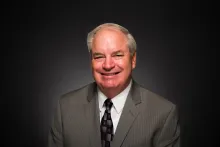
Robin Webber was born in Chicago, Illinois, in 1951, but has lived most of his life in California. He has been a part of the Church of God community since 1963. He attended Ambassador College in Pasadena from 1969-1973. He majored in theology and history.
Mr. Webber's interest remains in the study of history, socio-economics and literature. Over the years, he has offered his services to museums as a docent to share his enthusiasm and passions regarding these areas of expertise.
When time permits, he loves to go mountain biking on nearby ranch land and meet his wife as she hikes toward him.
