

Steve Nutzman
This transcript was generated by AI and may contain errors. It is provided to assist those who may not be able to listen to the message.
Well, tomorrow is Father's Day, as we realize. And as I have mentioned, a while back in ancient Hebrew, a father spelled aleph bet, the first two letters of the Hebrew alphabet, is pictured as being the strength in the head of the household of the family. Of course, a family is the very, very fabric of any society. Without additional family structure, society, at least to some degree, will break down or at least be weakened. Both fathers and mothers are extremely important to a stable family structure. But, of course, a lot of one-parent families now, and they do quite well, some of them. But it's more difficult, obviously more of a challenge. But God intended fathers and mothers to make up a family, be the fabric of a family. Let's just look at that real quickly in Genesis 2. Genesis 2, beginning in verse 18. The Lord God said, it is not good the man should be alone. I will make him a helper comparable to him. And then out of the ground, the Lord God formed every beast of the field and every bird and brought them to Adam to see what he would call them. And so whatever he called them, that was the same. So Adam gave names to all the cattle and the birds and the beasts of the field. But then it was this before Adam that was not found to help or comparable to him. And the Lord God caused a deep sleep to fall on Adam and he slept and took one of his ribs and he closed up the flesh in his place. And then the rib which the Lord God had taken from the man he made into a woman. And he brought her to the man. And he said, this is now bone of my bones. Adam said, I should say, this is now bone of my bones and flesh of my flesh. She should be called woman because she was taken out of man. Therefore a man shall leave his father and mother and be joined to his wife and they should become one flesh.
So that was a basic family structure that God established right from the very beginning to have a family be have a father and mother be dedicated to that family and so on. And as my margin says there, a man shall leave his father and mother and cling to his wife. Unfortunately, you look at our society today, not too many fathers cling to their wives or to their families. You can almost say, where have all the fathers gone today?
Far too many fathers today are no longer no longer cling to their wives or to their family. Marriage takes place today. This is not right now. Today, if a marriage takes place today, there is probably about a 50% or better chance that it will end in divorce. Marriage takes place today. I think the divorce rate is like 40% or 30% or something. But if it takes place today, there's a 50% chance that it will end up in divorce. So today, then, as we think about Father's Day, I want to take a look at the roles of a man, the roles of a father and a husband.
And what it means to be a real man and what it means to be masculine in the right way and the right sense. And what qualities that person should have and display. Also, I want to show what it doesn't mean. Today, you know, you look at the roles of mothers and fathers and husbands and wives. Those roles are all confused today. They've been confused. Why? Because God's word today, God's instruction manual, is ignored for the most part. Instead, everyone does what is right in his or her own eyes.
Hi, my sermon here this morning is, what does it mean to be a real man? What does it mean to be a real man? Now, I want to start off by just giving a brief history of Father's Day. The nation's first Father's Day was celebrated on June 19, 1910, in the state of Washington, actually, which is very liberal today, but the state of Washington, way back before the outbreak of World War I. It was observed as just a one-time event back then.
It wasn't initiated for the nation, just one time again in the state of Washington. At the urging of a woman by the name of Sonora Dodd, D-O-D-D. So, the question comes up, why did she want the state of Washington to have a day to honor fathers? Because she wanted to honor her father. Her mother died, and she had five siblings. There were six children. She had five brothers and sisters total, total of six children.
And her father, then, after her mother died, raised those six children, caring for them and providing for them in a very loving and meaningful and sacrificial way. And she very wanted to honor her father for what he did, and staying with the children and raising them, as the mother would have if she'd been alive. But it was not until 1972, or 62 years later, that actually President Richard Nixon signed a proclamation making Father's Day a holiday.
In contrast to that, President Woodrow Wilson, back in 1914, approved a resolution that made the second Sunday in May a holiday to honor mothers. Now, why did it take 58 years longer to set aside a day to honor fathers than it did to set aside a day to honor mothers? Well, as one florist put it, fathers haven't the same sentimental appeal as mothers do. Also, many men didn't want a Father's Day when they first started. Look at the history.
A lot of men didn't want a Father's Day. As one historian wrote, they scoffed at the holidays' sentimental attempts to domesticate manliness with flowers and gift-giving, or they derided the proliferation of such a holiday as a commercial gimmick to sell more products, which are then often paid for by the Father. Here's the interesting thing, though. World War II changed that sentiment. And celebrating a day to honor fathers became a way to honor American troops and a way to support the war effort after World War II, because so many fathers were losing their lives in the war.
So that's a brief history of the origin of Father's Day in the United States. Now, from this point on, this is not going to be a typical Father's Day sermon. And I'm going to demonstrate that by asking what may seem to be a rather strange question. Do you think, what in the world does it have to do with Father's Day?
I want to ask this question. Have you ever had a wake-up call? I'm not talking about alarm clock going off to wake you up in the morning or someone coming into your bedroom telling you it's time to get up. I'm talking about a life-changing experience or to what should have been a life-changing experience. Actually, I thought, I'm not going to go into it in detail, but I've had more than one wake-up call.
A couple of them were where I was forced to realize if I didn't change the course of my life, the course of my life was going to change. Not in the way I wanted to. A couple of other times, it was actually escaping certain death. That happened a couple of times, but one particular time I remember in particular that I'll never forget. I was driving home by myself. I'm not too far from home. A little pickup truck like in this tent. All of a sudden, I looked up and I'm in the right-hand lane here and there's traffic here in this lane.
I'm going about 50 miles an hour. I'm thinking about something I was thinking about, but all of a sudden, here's a car coming right for me, two seconds away from collision. We're both going 50 miles per hour and there's no way to go in this lane because this lane has got traffic in it. It's a two-lane road. I knew I had about two seconds to live. I was dead. I don't remember what happened next. It's like a forest took hold of a wheel and I can't even remember what happened over the next five seconds. I just know that a few seconds later, I'm still on the road.
It had gone off over here like it was in the ditch and came back and we were back on the road and we didn't collide and I'm still alive. That's all I remember. But I was so shook up. Never going to tell you this because she remembers. I got home about ten minutes later and I walked into the house and I was shaking like crazy. I had tears in my eyes and I gave her one of the biggest hugs I ever gave her because I knew somehow by God's grace, He spared my life.
And I don't know why. But that was a wake-up call for me. It was a very personal wake-up call. I had to ask myself, why did God spare my life? What I didn't deserve it? Why does God want me to learn from that? Why has He given me more time?
Because I knew I was a God. What changed in my life does He want me to make before I die? Have you ever had a wake-up call? Did it change your life when that happened? Or did you ignore it and just go on as you were? Sometimes God gives all of us wake-up calls so we can continue to make progress in changing our lives so we can be made into God's spiritual image and likeness so we can become more like Jesus Christ and God the Father.
Because God wants all of us to change, doesn't He? That's part of this calling we've got. Conversion. Change. We call that change that God wants is becoming converted. But what is real conversion? What does it take to become truly converted? What does it take to have to do what it means to be a real man? How does that tie together? How does that play into this and anyone whatsoever? What does conversion have to do with being a real man? You know, God began the same way with just about every one of us in one sense.
He began by opening our mind to the truth, or in the case of those who grew up in the church, by opening our minds to truly see the truth, if we were raised in the church to truly see it, who all of a sudden becomes real to us, becomes something we want to devote our lives to.
But does understanding the truth make you converted? No, it doesn't. It's only the first step in the process of becoming converted. He wants to begin to see the truth and what is the next thing we need to see, which can then begin to lead to real conversion.
We have to come to see ourselves, don't we? We have to come to see ourselves as God sees us. What if we don't? If we don't come to see ourselves, then we will remain spiritually blinded. And we won't really make the progress and changes in our life that God wants us to make. Because we have to see ourselves as, wow, here's where I am, and here's where Jesus Christ is, here's where God the Father is. I've got to try to get from here to here. I don't know how to do it. I need a lot of help. But if we can't see that, it will mean that we will not be able to grow spiritually.
That we won't have the spiritual vision to discern where we might be heading. You know, it's very interesting to read the story of Helen Keller. We all know who Helen Keller was. Actually, she was born a normal, healthy child in 1880. But at the age of 19 months, she developed an unknown illness that, as we know, left her deaf and blind.
Both. Not just deaf or blind, but deaf and blind. And she then became wild and unruly as she grew into childhood, as you might imagine. Because she could see, to start with, and she could hear. Then, about seven years later, in 1887, Anne Sullivan came into her life and became Helen's teacher.
Because nobody knew how to get to this child. How can you communicate with her? How can you communicate with someone who's deaf and blind, who can't hear and can't see? But Helen Keller's then, or I should say Anne Sullivan, came into her life and became what was called a miracle worker. There was a movie made about that, Miracle Worker. By learning how to communicate her through touch. Tremendous patience. Worked with her for many, many years. But learned to communicate through touch. And even develop language so she could actually communicate thoughts and expressions while you were talking to someone over a period of many months and years.
So later in life, Helen Keller was asked of what she regarded as her worst handicap. Who doesn't blind? What's your worst handicap? She was asked, is there anything worse than blindness? Here was Helen Keller's answer. She said, oh yes. A person with sight, but no vision.
A person with sight, but no vision. Whereas the old saying goes, there are none so blind as those who cannot see. Why is spiritual blindness so dangerous? Because God wants us to change and we can't change if we are blind and spiritually. As Robert 29, 18 says in the Old King James, I'm just going to quote it here. It says, where there is no vision, the people perish. And that is especially true when it comes to seeing ourselves.
Let's turn to Revelation 3. Revelation 3. Let's begin. This is, of course, the Christ message to the seven churches. And verse 14 is the beginning of the message to the church of Laodicea. Revelation 3, verse 14, And to the angel of the church of the Laodiceans, write, These things say the Amen, the faithful and true witness, the beginning of the creation of God. It says, I know your works, that you are neither cold. By the way, I just want to make this comment here. I'm not meaning this to be a corrective sermon.
I'm meaning it to be an instructive sermon. I hope we all take it that way as instruction because that's where I'm taking it. I know your works that you are neither cold nor hot, and I wish you were cold or hot. So then because you are lukewarm and neither cold nor hot, I'm going to, and I'm the old King James Hasen, which I like that from burning back to you better, I will spew you out of my mouth.
Now, the question I ask myself when I read this and think about it and think, well, what can I learn from this? Why would they lukewarm? In what way would they lukewarm? You know, obviously, this is a message to God's church. So these messages here are to the churches of God, the people of God.
So they are part of God's end-time church. So we'd have to say then, if they're part of God's end-time church, they were converted to the truth. They knew the truth because you can't be a part of God's church without knowing the truth, at least to a pretty large extent. If they had not known the truth, they would have been cold, which would have mean they wouldn't be accountable, because you can't be accountable until you understand.
Once we know the truth, we're no longer cold. So then once you're no longer cold, you've got two choices from there on out going forward. You're either going to be lukewarm or you're going to be hot. So what makes the difference between being hot and being lukewarm? And what leads to being hot? I'm going to give one scripture that I feel leads to being hot.
You can make an old sermon out of that, but I just want to give one scripture. I'm going to go turn there and read it. You're all very familiar with it. Philippians 2, verse 5. It says, Developing the mind of Christ and becoming like Christ leads to being hot. That leads to real conversion, becoming like Jesus Christ and having His mind in us. What then does it mean to be lukewarm?
Well, if we know the truth, but we're not being converted to the mind of Christ, then we would have to say that would be lukewarm. It would be then lukewarm in our process of conversion, because that's what we have to all be. We all have to be converted to the mind of Christ. Let's go back to Revelation, chapter 3. Oh, in chapter 3, verse 15 again, I know your works, that you are neither cold nor hot. I wish that you were cold or hot. In other words, I wish you didn't know the truth at all, or that you were truly being converted to the mind of Christ, we could say.
Verse 16, because you are lukewarm and neither cold nor hot, I'm going to spew you out of my mouth, unless you wake up. Again, why were they lukewarm? Verse 17, because you say, I am rich and have become wealthy and have need of nothing. So it would appear they felt they were spiritually rich, that they had wealth and knowledge, had a wealth of knowledge, so to speak. They understood a lot of things, and that they didn't really need much in the way of further spiritual instruction from others. That's, of course, a very dangerous position to be in, spiritually speaking.
Because we all fall very short of the glory of God, as it says in Romans 3, 23. We also have much to learn. We never stop learning. How long have we been in the church? Have we been in the church 40, 50 years? We live to be 90, 100. We always have things to learn, things to grow in, including myself.
We always need to develop more of the mind of Christ. It's a goal that we all strive for, but I don't know if we'll ever reach it. I don't know if I'll ever reach it before I die. I don't know if I'm striving for it, but will I get there? 100% I doubt it. I don't think so. But someone who is lukewarm can be blinded to that reality where they are spiritually.
Verse 16, again, of course, that's something we all have to struggle against, don't we? So what then would it take, if any of us are in that condition, if I'm in that condition, I have to look at myself and say, what could take them for me to become hot? Verse 18, then if that's the condition we're in, we'd have to say, I counsel you to buy for me gold refined in the fire that you may be rich, and white garments that you may be clothed, the shame of your nakedness, spiritual nakedness, may not be revealed, and not your eyes as I say that you may see.
Because all I was taking is spiritual message for all of us, including myself. Verse 19, for as many as I love are rebuked and chastened, therefore be zealous and repent, behold, I stand at the door and I knock. I want you to really become hot. I want you to change your condition, God. God looks at all of us that way. If anyone hears my voice and opens the door, I will come into him. I will dine with him. I'll help him.
I'll help you to grow. I'll help you make a change in your life. I'll come and dine with him, and he with me. And to him who overcomes, I will grant to sit with me on my throne, as I also overcame and sit down with my father on his throne. He who has an ear let him hear what the Spirit says to the churches. Now, I have a question here. What does any of this have to do with becoming a real man? Well, I would ascertain that he has everything to do with it.
Because a real man has got to be honest with himself or with herself. And a real man will humble himself, and he'll be wanting to learn, and willing to receive instruction, and willing to receive correction. Because God wants all of us to be hot. He wants all of us to be changed into his spiritual image and likeness, and He'll help us in any way we ask Him to. We have to recognize that we need that help first, before we can get that help.
And a real man and a real father will lead his family in that direction, if he can. He will lead the way, and he will set the page when it comes to repentance and striving to change. The father should lead the way for his family to see.
What additional traits will a real man and a real father display? I'm going to look at four individuals. And it's interesting, I think about it because I asked about if we ever had a wake-up call. These first three individuals that I mentioned here all had wake-up calls. I didn't think about that until right coming down this morning. I'm thinking about it.
These three people had personal wake-up calls, every single one of them. I'm going to talk about three individuals. I'm going to ask this question regarding each of them. First of all, was Job a real man? We all know Job had a wake-up call. He lost everything. That was his wake-up call.
Well, what was Job's primary character traits that made him a real man and a real father to his family? Let's go to the book of Job.
I'm not going to go through the whole story. I'm just going to talk about traits that Job had that made him a real man. It's quite revealing.
Job 1, verse 1, There was a man in the land of Oz whose name was Job, and that man, here's how God describes him, That man was blameless and upright, and one who feared God and shunned evil. Well, right there in verse 1, there are three traits of a real man, right there. Number 1, he was blameless. No one could really find any fault in him to accuse him of. Not even Satan.
That's a trait of a real man.
Number 2, he was upright. He lived a righteous life before God and before man.
And Number 3, he feared God and shunned evil.
He had deep respect toward God and God's way of life to the point of always turning away from evil, or from anything that was contrary to God. That's the strength of character, isn't it? That's a real man. He's not going to be led in that direction. He's going to resist it. He's going to turn away from it. He's going to shun it.
So we all have to do in this society we live in, where that pole is there every day.
But that wasn't all.
Job 1, verse 2, he has seven sons and three daughters born to him.
And his possessions were 7,000 sheep, 3,000 camels, 500 yokel boxes, 500 female donkeys, and a very large household, including all of his many, many servants. We don't know how many, but he had a lot of servants. So this man was the greatest of all the people of the east.
And his sons would go and feast in their houses, each on his appointed day, and would send and invite their sisters to eat and drink with them.
So it was in the days of feasting, he had run their course that Job would send and sanctify them.
And he would rise early in the morning and offer burnt offerings, according to the number of them all.
For Job said, it may be that my sons have sinned and cursed God in their hearts.
And thus, Job did regularly like he did every day.
Now, stop and think about this. What does this tell us about Job? It tells us something amazing.
And what does it tell us about Job being a real man and a real father?
It tells us that Job carried his children's lives in his heart.
He carried his children's lives and his children's problems in his heart.
Even into their adulthood, it would seem, he never always was concerned about each and every one of them, no matter where they were or what they'd done.
He sacrificed and prayed for them every day.
Every day, his heart was deeply concerned about his children and on what might be happening in their lives.
He wasn't judgmental toward them, it appears.
And he wasn't accusatory against them.
He was only deeply concerned about them each and every day of his life.
And you could see by Job's attitude toward his children, he was never going to forsake them ever.
He was always going to try to be there for them, no matter what they went through, no matter what kind of problems they had, no matter what kind of trouble they got into.
He was always going to turn back to me and I'll help you.
Job was a real man.
He was a real father to his children.
He loved them unconditionally, which is the trait of a real man and a real father, unconditional love.
What happened next? Verse 8.
Then the Lord said to Satan, Have you considered my servant, Job?
And there is none like him on the earth, a blameless and upright man who fears God and shuns evil?
So Satan answered the Lord and said, Does Job fear God for nothing?
He couldn't make any accusations. He couldn't find any fault.
But he says, You have made a hedge around him in his household all around that he has on every side.
You have blessed the work of his hands and his possessions have increased in the land.
Stretch out your hand now and touch all that he has and he will surely curse you to your face.
And the Lord said to Satan, Behold, all that he has is in your power, only do not lay a hand on his person.
We all know what happened next.
Job lost all of his servants, all of his livestock.
His house was destroyed.
And then he lost all ten of his children. And it appears that all happened in one day.
Now, what if that happened to you? How would you respond?
As a result of that, did Job accuse God? Job 1, verse 20.
Then Job arose, he tore his robe and shaved his head, and he fell to the ground, and he worshiped.
Instead of accusing God, Job dropped down to his knees and he worshiped God.
And he said, verse 21, Naked I came from my mother's womb, and naked shall I return.
The Lord gave, and the Lord has taken away. Blessed be the name of the Lord.
And all this Job did not sin nor charge God with wrong.
Wow! Job was a real man.
And a real man will never accuse God. A real man will not have an accusatory spirit.
Then what happened? Chapter 2, verse 4. So Satan answered the Lord and said, Skin for skin, yes, all that a man has is a gift for his life.
Stretch out your hand now and touch his bone and his flesh, and he will surely curse you to your face.
And the Lord said to Satan, Behold, his in your hand, but spare his life.
So Satan went out from the presence of the Lord and struck Job with painful boils from the sole of his foot to the crown of his head.
Was any of this fair?
Did Job ever do anything to deserve this? No, absolutely not.
Then even his wife turned against him, verse 9, his wife said to him, Do you still hold fast to your integrity? Curse God and die.
See now, how should a real man respond to that?
How did Job respond to that? Verse 10, He said, Do you speak as one of the foolish women speak? Shall we indeed accept good from God, and shall we not accept adversity?
In all this, Job did not sin with his lips.
See, a real man accepts both good from God and adversity from God.
Then Job's three so-called friends tried to convince Job he must have done something to deserve this. You had to do something wrong. God wouldn't bring this on an innocent man who was blameless. You had to do something, Job. You had to be guilty of something.
So now Job faced false accusations from his former friends.
I mean, how bad can it get? Even his friends turned against him.
So here's a question before Job and before all of us. When real adversity strikes and when we lose everything, when everything turns against us, including our friends, how are we going to deal with that if that ever happened? Will our character survive?
Will we become better? Will we accuse God? Will we lose heart?
Will we cut and run as Job's wife wanted him to do?
Or will we continue to stay on course and continue to live by faith, trusting God?
You know, when we were baptized, we made what? What were we doing when we were baptized? We made an unconditional promise to God, didn't we?
Unconditional commitment before God to stay the course no matter what.
And as brought out in the sermonette, it was a marriage commitment. A marriage commitment for better or for worse, for richer or for poorer, in sickness and in health, until death do us part.
And that was Job's commitment. He was going to be committed no matter what.
We could say one thing about Job. He had staying power.
Nothing was going to discourage him to the point of giving up. You know, that's what we have to have. We have to have staying power no matter what happens. In society, in the church, in our own lives, we have to have staying power like Job did.
And trust God as brought out in the sermonette.
Trust God.
Job was going to endure to the end no matter what.
Job was a real man, and a real man had staying power.
Now, let's go to the opposite side of the spectrum of the next individual.
I mean, I've asked this question, this person has asked it, because this is kind of really on the opposite side here.
And let's ask this question. Was David a real man?
Big contrast between David and Job.
David had lots of faults and sins and shortcomings.
It could be said that he wasn't a very good father to his children either, as he didn't have much time for them.
A lot of them didn't turn out too great.
Well, why was David then chosen to become the king of Israel?
Let's go to Acts 16.
Excuse me, not Acts 16. Let's go to Acts 13.
Acts 13, beginning in verse 20.
Acts 13, verse 20.
I'm going over the history of Israel.
He says, after that he gave them judges for about 450 years until Samuel the prophet.
And afterward they asked for a king.
So God gave them Saul, the son of Kesh, a man of the tribe of Benjamin, for 40 years.
And when he had removed him, God had removed him, he raised up for them David as king.
Toom also he gave testimony and said, I have found David, the son of Jesse, a man after my own heart, who will do all my will.
David was a real man.
Because God knew that deep down inside David had an obedient heart.
That desire to do God's will. He knew he fell short, so short, so many times.
But he's going to pick himself up and he's going to continue striving to do God's will and striving to obey God, even though he fell short, as his life shows. But David in his heart desired to do what God told him to do, even though he often fell very short of that, as often we do too sometimes.
But David had faith and confidence and courage, even as a youth. Even as a youth, David was a real man.
Let's go to 1 Samuel 17. 1 Samuel 17. Let's begin in verse 19. 1 Samuel 17.
1 Saul and they and all the men of Israel were in the valley of Elah, fighting with the Philistines.
So David arose in the morning, and he left the sheep with the keeper, and took the things, and he went to Jesse, or as he went as Jesse had commanded him.
And he came to the camp as an army was going out to the fight and shouting for the battle.
For Israel and the Philistines had drawn up in battle array, army against army.
1 Samuel 22. And David left his supplies in the hands of a supply keeper, ran to his army, and came and greeted his brothers.
Then as he talked with them, there was the champion of the Philistines of Gath, Goliath by name, coming up from the armies of the Philistines, and he spoke according to the same words.
So David heard them.
And verse 26. Then David spoke to the man who stood by him, saying, What shall be done for the man who kills this Philistine, and takes away the reproach from Israel? For who is this uncircumcised Philistine that he should defy the armies of the living God?
See, David, even as a youth, was a real man.
A real man stands up for God, even in the face of overwhelming opposition and threats, as David did here.
Dropping down to verse 41.
So Philistine came and began drawing near to David, and the man who bore the shield went before him. This man was burning the shield before Goliath. And when the Philistine looked out and he saw David, he disdained him.
He was like, Who's this kid coming at me? He doesn't even have a shield or anything.
And he's only a youth.
Ruddy and good-looking. So Philistine said to David, Am I a dog? Will you come to me with sticks?
And the Philistine cursed David by his gods. And the Philistine said to David, Come to me, and I will give your flesh to the birds of the air and the beasts of the field.
And then David said to the Philistine, You come to me with a sword and with a spear and with a javelin, but I come to you in the name of the Lord of hosts, the God of the armies of Israel whom you have defied.
This day, David said, This day the Lord will deliver you into my hand, and I will strike you and take your head from you.
And this day I will give the carcasses of the camp of the Philistines to the birds of the air and the wild beasts of the earth, that all the earth may know that there is a God in Israel.
Then all this assembly shall know that the Lord does not save with sword or spear, for the battle is the Lord's and He will give you into our hands.
So it was when the Philistine arose and came and drew near to meet David. What did David do?
He hurried toward the Philistine. He didn't run away. He ran toward him.
David hurried and ran toward the army to meet the Philistine.
See, David was a real man, and a real man doesn't run from his enemies.
He runs toward them with courage and faith and conviction.
He faces opposition head-on, trusting courageously on God and standing up for God.
What else made David a real man?
He had a repentant heart when confronted by God's prophet.
Let's go to Psalm 51.
Psalm 51, the heading first, the chief musician, he saw him of David.
When Nathan the prophet went to him after he had gone to Bathsheba, he told him this story and finally he said, David, you are the man. That was David's wake-up call.
I am? You are the man. A wake-up call for David.
How do you respond?
Verse 1, he said, Have mercy upon me, O God, according to your lovingkindness, according to the multitude of your tender mercies, blot out my transgressions, wash me thoroughly from my iniquity, and cleanse me from my sin.
For I acknowledge my transgressions, and my sin is always before me.
And against you, you only have I sinned and done this evil in your sight, that you may be found just when you speak, and blameless when you judge.
See, a real man has a humble, repentant attitude, and will acknowledge his faults and sins and shortcomings.
David was a real man.
Let's go on to the Apostle Paul.
Was the Apostle Paul a real man?
We know he had his wake-up call, didn't he?
On the road to Damascus, he was blinded. That was a wake-up call for Paul.
But during the entirety of his ministry, it appears, at least, that Paul was not married, that he had no children.
He may have been married at one time. I don't know. We don't know all that. We just don't know. But at least during his ministry, it appears he wasn't married, and didn't have any children.
Can someone who was not married, and who has never been a father, be a real man?
Let us note two contrasting characteristics of the Apostle Paul, the medium of a real man.
But these are kind of opposite sides of the coin.
On the one hand, the Apostle Paul was a fighter, who would not allow any obstacle to stand in his way. I'm just going to go to one passage for that. Let's go to 2 Corinthians 11.
2 Corinthians 11, beginning in verse 23, are they ministers of Christ?
Talk about these other ministers who claimed to be of Christ, who are not real ministers.
He said, of any minister of Christ, I speak as a fool.
I am more, in labors more abundant, in stripes above measure, in prisons more frequently, in deaths often.
From the Jews, five times, I received forty stripes minus one.
Three times I was beaten with rods.
Once I was stoned.
Three times I was shipwrecked.
A night and a day I had been in the deep, on the sea.
In journeys often, in perils of waters and of robbers, and of my own countrymen, and of the Gentiles.
In perils in the city, in perils in the wilderness, in perils in the sea, and in perils among false brethren.
I was in weariness and toil, with sleeplessness often, in hunger and thirst, in fastings, in cold, in nakedness.
Beside the other things, what comes upon me daily, my deep concern for all the churches.
You know, Paul was a fighter, wasn't he? Look at what he went through.
They continued to hold fast.
See, a real man is a fighter who will not allow any obstacle to stand in the way, and is willing to suffer wrong in striving to serve God's people.
And a real man also has deep concern for all the churches, for everyone in God's church, as Paul did.
The Apostle Paul was a real man.
But on the other hand, Paul says this to the Church of Thessalonica. Let's go to 1 Thessalonians.
1 Thessalonians 2. There are two verses here. 1 Thessalonians 2. This is what is possible in verses 7 and 8.
1 Thessalonians 2, verse 7 says, But we were gentle among you.
Just as a nursing mother cherishes her own children.
Affectionately longing for you, we were well pleased to impart to you not only the gospel of God, but also to impart our own lives, because you had become so dear to us.
And it's those words that are used here to describe Paul.
Gentle among you.
Just as a mother cherishes her own children.
As a nursing mother cherishes her own children. That was a quality Paul had.
So gentle as a nursing mother cherishes her own children.
Affectionately longing for you, because you had become so dear to us.
Does that sound like a fighter?
Are those words we could expect from a man's man?
See, Paul is saying here that all he was willing to go through and suffer, as we just read in 2 Corinthians 11, was ironclad proof of his tender love for all the brethren.
He had a tender love for them. He loved them as a mother who loves her own children, and she's nursing.
So a real man is a fighter who will suffer all things for the sake of God's people.
Because of all God's people, it had become so dear to him.
Because he cherishes them, even as the nursing mother cherishes her own children.
So Paul was a real man.
This is one more example.
Finally, was Jesus Christ a real man? We all know he was.
Let's just take a look at two passages that reveal qualities that made Christ a real man, again, as we all know he was.
Let's go first to Luke 4.
Luke 4, verse 17.
And he, Christ, was handed the book of the prophet Isaiah, and when he had opened the book, he found the place where it was written, The Spirit of the Lord is upon me, because he has anointed me to preach the gospel to the poor.
We know Christ was a real man, don't we?
See, a real man reaches out to the poor, to the poor in spirit, and to those who are poor financially, who don't have much.
He'll reach out to all people, regardless. He'll reach out for him, he cares for them, wants to help them.
Verse 18 also, he goes on, he says, He has sent me to heal the brokenhearted.
A real man will strive to comfort, and to try to bring healing to all who are brokenhearted, gone through something that just breaks your heart, because of a loss or a trial you're going through.
A real man will try to be there, and try to comfort that person, help them.
He goes on, to proclaim liberty to the captives and cover your sight to the blind.
A real man will strive to help all who have been held captive to Satan's false teachings, by helping them to understand the truth, and by helping all who have been blinded to the truth through Satan's lies.
He says, also, to set a liberty to those who are oppressed, a real man will strive to encourage and give hope to all who have ever been weighed down and burdened by all kinds of heavy trials and troubles.
He'll say, yeah, I understand what you're going through. I've gone through that as well.
You help them to hang in there and remain faithful. God will see you through.
There's light at the end of the tunnel.
A real man will strive to encourage and give hope to all who have been weighed down and burdened by all kinds of troubles and cares of this life.
And then verse 19, to proclaim the acceptable year of the Lord.
It's interesting here, this past year is quoted from Isaiah 61 verse 2.
He's quoting here in verse 19 from Isaiah 61.2, which adds, to also proclaim the day of the vengeance of our God to comfort all who mourn.
So a real man will help people realize we don't have to worry about how things are now.
I know things are not very good. Things are bad. It's very difficult. It's troubling.
Not to worry about that, because God is going to bring retribution. He's going to make all wrongs right. He's going to square everything up.
He's going to right all wrongs. He's going to bring retribution.
Christ is going to right all wrongs. He's going to comfort.
All who are mourning now are going to be comforted by Jesus Christ in the future.
So just leave in God's hands. It's going to be okay.
That is the tender side of Christ and the tender side of a real man, to bring emotional healing and to give comfort.
But then there's also another side to Christ as well. There's a warrior's side, which also demonstrates Christ as being a real man.
Let's go to Revelation 19.
Revelation 19, verse 11.
I saw heaven open and behold a white horse, and he who sat on him was called Faithful and True, and in righteousness he judges and makes war, describing Christ when he's going to return to the earth.
His eyes were like a flame of fire.
On his head were many crowns, and he had a name written that no one knew except himself.
And he was clothed with a robe dipped in blood, and his name is called the Word of God.
And the armies in heaven clothed in fine linen, wide and clean, followed him on the white horses, and out of his mouth goes a sharp sword, that with it he should strike the nations.
And he himself will rule them with a rod of iron, and he himself treads a winepress of the fierceness and the wrath of Almighty God.
And he has on his robe and on his thigh a name written, King of Kings and Lord of Lords.
See, Christ was a real man, and a real man is also a warrior.
In conclusion, then, as we think of Father's Day, let us also think of what it means to be a real man.
As we think of what it means to be a real man, think of the qualities and characteristics of Job, of David, the Apostle Paul, and of Jesus Christ, all of whom were real men, because they all answered the question, what does it mean to be a real man?
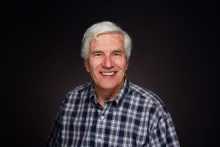
Steve Shafer was born and raised in Seattle. He graduated from Queen Anne High School in 1959 and later graduated from Ambassador College, Big Sandy, Texas in 1967, receiving a degree in Theology. He has been an ordained Elder of the Church of God for 34 years and has pastored congregations in Michigan and Washington State. He and his wife Evelyn have been married for over 48 years and have three children and ten grandchildren.
