
Roy Holladay
This transcript was generated by AI and may contain errors. It is provided to assist those who may not be able to listen to the message.
Thank you. Please be seated. Now we'll have the main sermon brought to us by our pastor, Mr. Randy Delisandro. Further, I use the following resources to prepare the sermon for today. There was an article entitled, 8 Leadership Lessons from Bad Politicians by Tom Rayner, published on August 6, this year. Berkeley's Daily Study Bible and the Preachers Outline and Sermon Bible Commentary. Those are all used in the preparation of today's message. I forget how many days we have. I don't know if it's 90 or 89 or 88, but that's about what time we've got left between now and November. We will be electing a president, or maybe re-electing a president. We'll be electing 435 members of the House of Representatives. We're going to be electing a number of U.S. Senators, thousands of state and local politicians. Let's be fair. Some politicians do a good job for their constituents. Some are good and strong leaders, is the way the world will look at that issue. Some have a high ethical standard, again, using the world's standards. Some truly seek to be public servants. On the other hand, I find...and again, I don't know, maybe this age thing is taking hold in my life, but I find myself talking to my TV set more than I want to these days. I find myself talking to Republican ads, Democratic ads. I find myself talking to Republicans running for office, Democrats running for office. And basically, anybody having anything to do with Washington these days. My point today, the question I want to ask, and hopefully answer to some degree, is what can you and I as Christians learn from the political climate we're in? What can we learn as Christians? Now, on the outset, I understand that some in this room vote. Some of you vote Republican, some of you vote Democrat. I'm sensitive to that. I realize that you're passionate about your beliefs. You feel strongly for why you do what you do. But, brethren, as a minister of the Gospel, as a minister for United Church of God, I'm also passionate. I'm passionate for what the church teaches, what the church has taught and has never varied from over the generations on this subject about voting. I'm not going to give a sermon on that topic, although I do want to touch base with that just for a moment to kind of get our bearings. But I do want to go through some of what that man wrote in his article about lessons to be learned. I thought he wrote very clearly. And as Christians, as we're taking a look at what's happening in the world stage, we have to be better. We've got to set a higher example than what we see around us.
Now, some of this I'm taking directly from our study paper. You can go to our website. You can access that study paper about Christians and voting. When the United Church of God was established, it was agreed that we retain the long-held teaching that members should refrain from participating in secular political systems. We do not call that a sin, if you do. We don't try to any way stigmatize, but we do have a feeling. We have a belief. We've got a teaching. We back that up with God's Word. If you have a other feeling and you want to back it up with God's Word, I'd be more than happy to look at your write-up, your study paper on why you feel we should, biblically, be people who enter into the political arena. Let's take a look at 2 Corinthians 5.
Hopefully my message is a come-let-us-reason-together message. In some ways, it may be corrected, but that's part of my job, too.
2 Corinthians 5 and verse 20.
2 Corinthians 5, now then we are ambassadors for Christ. As though God were pleading through us, we implore you on Christ's behalf, be reconciled to God. The Bible says very clearly here, very explicitly here, that we are ambassadors for Christ. What does that mean? An ambassador is to show the lifestyle and speak for the government of the country he represents. He is not to involve himself in the politics of that country. The country he represents would strongly disapprove if he aligned himself with the causes and the politics of the country he was then living in. He's supposed to represent another entity, another country. He is an ambassador. Of course, the country we represent is something Ken talked about in the sermonette today. We represent the world tomorrow. We represent the kingdom of God.
Let me flesh this out just a little more. If we have, and we do, an ambassador of Britain, the ambassador of Britain is a Brit and a foreign land. He spends his life in that foreign land. The people there normally speak a different language, so he'll learn that language. They have different traditions of what he grew up with. They follow a different way of life. But, brethren, that's also true for us. We live in Satan's world. We have to understand the goings-on of Satan's world, but we must be apart from Satan's world. We must be different than Satan's world. Much like an ambassador must be different than the society he lives in. He must be true to the country he represents. The second thing an ambassador does, not many things, but just something that came to my mind, is there are times when the ambassador speaks for his country. Just as there are times when we, as Christians, must speak for the kingdom of God. And everything we talk about, everything we speak, everything we represent, should mean something to us. So, again, I ask a question, again, not trying to just simply put it out there. Do we want to represent ideas and beliefs and a political stance that is pro-war? Do we want to vote for somebody who is pro-abortion? Do we want to vote for somebody who is a champion of the LGBT group? We have that in this country, and frankly, we've got that on both sides of the aisle. We've got that on both sides of the aisle. We've got the Democrats and Republicans both supporting to varying degrees. And you can go to the websites, which I'll give it a little bit later, where you can find the various people who support that, who are elected officials. And yes, for you conservatives, yes, Republicans too. Now, when you put your vote behind that person, you're putting your vote behind everything that person stands for. Everything, not just some of the things, not just things that are of interest to you, but everything that person is going to do. You put that person in office. As I mentioned a moment ago, in terms of the LGBT group, you've got the Stonewall Democrats. You can visit that site at stonewalldemocrats.org. And for the Republicans, you've got the Log Cabin Republicans at logcabin.org. And I knew people would say, well, certainly not. The Republicans, they're conservative. They wouldn't be anywhere near this. Well, you can go to that site, logcabin.org. Click on a button, see the various Republican candidates, very Republican people in office right now, who stand behind that issue, the LGBT.
Brett, let me make a point. When you and I are being evaluated by God, when we're being judged by God, does God only judge us by the things we select, or does He judge everything we do? He judges everything we do. We are to be like God. We are to think like God. We are to think, okay, now here's a politician, I kind of like him. I really don't like the other guy. And in this room, we've got people who view that, you know, we're in conflict here in this room with some people. And yet, what does God say? That's the important thing. What does God say on the subject? What God says is, leave it alone. Leave it alone.
When people see you and I, as they see an ambassador, when I see the ambassador, the ambassador, if he's doing his job properly, should be a representative of his government. People should view that person, man or woman, and say, you know, if everybody in that country is like that person, I want to live in that country. And that's the way it should be for us as Christians.
Again, I would just simply ask, do you stand for abortion, for war, for gay rights, and so forth?
Policies, brethren, do make a difference. They do make a difference. 2 Corinthians 6.
I've given similar messages over the years here, and I have had people come up to me and say, Mr. De Los Andros, I just don't agree that, you know, when I vote for somebody, my vote goes for everything. I want Mr. So-and-so to do A, B, and C. But he did, you know, X, Y, and Z instead. Or maybe he did A, B, and C, but also did these other things. Well, you put them there. Brethren, don't we just cringe at a society that will not take responsibility? We cringe at a society that won't take responsibility for their actions. We, as Christians, need to take responsibility for what we do, whether we vote or don't vote. There is responsibility that we have, and we should make sure we understand that. 2 Corinthians 6, verse 14, Personally, I read that Scripture, and I say, you know, I'm not voting. I don't care how much I may not like one of the candidates. I'm not voting for the other guy, just because I like one much, you know, I don't care for one.
And as we've said so many times, brethren, and again, as Christians, we always want to do what God's will is. And to be honest, you and I simply don't know who God wants to be the next president, or a representative in our district, or a United States senator, or a Michigan politician. We don't know what God wants. And my feeling is I don't want to be presumptuous to say, well, God, step aside. Let me roll up my sleeves. Let me do what I feel needs to be done here.
Now, that being said, let's take a look at a few Scriptures, not all of them, but a few, that shows that God is in charge, and God does put people where He wants them.
Jeremiah, chapter 27.
In Jeremiah, chapter 27, in verse 5, verse 5, I have made the earth, the man and the beast that are on the ground, by my great power and by my outstressed arm, and have given it to whoever seems proper to me. The context is the giving of power. And God says He gives it to who seems proper to Him.
To Him. There are several in the book of Daniel. Let's go to the book of Daniel.
Chapter 2. These are all fairly close together here. Daniel, chapter 2.
Daniel, chapter 2, and verse 21. And He changes the times and the seasons. He removes kings and raises up kings. That's God's job. He removes kings and raises up kings. He gives wisdom to the wise and now to those who have understanding.
Let's go through these and I'm going to make a comment here. Chapter 4 of Daniel. Daniel, chapter 4, and verse 17.
This decision is by the decree of the watchers, and it says by the word of the Holy Ones, in order that the living may know that the most high rules in the kingdom of men.
And He gives it to whomever He wills. And so it's over at the lowest of men. So this knocks in the head this idea, well, I want so-and-so to be elected. I've got to vote for so-and-so. Because the other guy is just not qualified. The other guy is just not right at this time. Well, maybe that's what God wants. God says here He'll sometimes give it to the lowest people. The people who are least qualified.
I remember a number of years back, where a number of people came to me and said, Mr. De'Alessandro, we just simply can't have so-and-so, this individual getting into the office. And I've never voted in my life, but I'm voting this time, because I want the president to be this person, not the other guy. Well, the conservative did get in. Four years later, people came to me, those same people said, boy, I don't know if I want to vote again. They were talking about President Bush. Got to get Mr. Bush in there. We don't want the other guy in. After four years, boy, Bush, you know, he's really left. He's left his, the principles, the conservative principles. He's got the country on the road to ruin. I didn't vote for him.
He says here, God sets people where he wants people to be. Lastly, here in Daniel 5, verse 21, Then he was driven from the sons of men. His heart was made like the beast, talking about Nebuchadnezzar. His dwelling was with the wild donkeys. They fed him with grass like oxen, and his body was wet with the dew of heaven, till he knew that the Most High God rules in the kingdom of men, and appoints over it whomever he chooses.
Whomever he chooses. Now, let some of you think, well, those are all Old Testament Scriptures, Mr. D. Let's go to one over here in the book of Romans. Romans chapter 13.
Romans chapter 13 and verse 1.
No. Authorities that exist are appointed by God. That is the message of the Bible from beginning to end. Now, again, if you have another point of view, and you can back that up scripturally, I'd be happy to take a look at that.
I chair our Fundamentals of Belief Amendment Committee. You know, the things we hold most dear. If anyone wants to amend those, it's got to come through yours truly. I'm also on the Adoptional Advisory Committee. I'm on both of those committees. I run one and I'm on the other. I love, if you can back up why it is you feel we should, from the Bible, why we should get involved in politics, love to read it. Love to see your point of view scripturally.
Now, brethren, as members of the Church, by taking this stance, are we not civic-minded people? People talk, I've got to do my civic duty. Well, if we are Christians, if we are good Christians, that civic duty comes naturally to us. In terms of we pay our taxes, which Christ told us to do, we are law-abiding citizens, we do the things that, you know, as long as they don't go contrary to God's law, we are good citizens. No problem. By not voting, are we isolationists? That has never been the Church's position. The Church's position is that we, I, don't vote as an act of faith. I've got faith that God's going to put in the positions, the people He wants, when He wants them. At times He might want the very best person, at times He might want the very worst person. But I don't know that. I don't know what God wants in a particular circumstance. And I don't presume to know. So I, as a matter of faith, I stand down and don't get into those situations.
I would ask the question, again, I'm not trying to be hard on anybody, but it's my job to ask the questions. When we vote, are we saying we don't have faith that God will put the person in? He should. Is that what we're saying? Republican or Democrat or Independent? I don't care which way you vote. Are we saying we don't have faith that God will do His job?
Because over and over God says, that is His job. Now, the Bible does say we are to do for ourselves. Well, we can. That's a far cry from getting involved in a system that endorses war, immoral lifestyle, will not defend as we have in this country today. You know, there's DOMA, the Defense of Marriage Act. If you're aware of the Defense of Marriage Act, that act states that marriage between one man and one woman. That's the Defense of Marriage Act. Currently, our Department of Justice will not enforce that.
Again, do we want to vote for something like that? Again, as a matter of faith, I'm not going to be any part of that. So, that's just to kind of get our bearings. Okay, then all that having been said is background. What do you and I learn from what's going on right now? And again, I've been talking to my TV set, both Republican and Democrat, the Super PACs, if you've been following politics and know what those are.
The Super PACs are the groups that are not officially aligned. They're supposed to have no real say with the politician they represent, but they'll go to war for that politician. They'll put out ads and so on and so forth. And the politician is not supposed to be in direct contact with them and so on. As you've watched the news, you've seen, as the pundits have said, that this is probably the most dirty political presidential campaign in our nation's history. And it goes both ways.
It goes both ways. So much so now that they've got what they call the Pinocchio Scale. You know Pinocchio's famous for. He tells a lie and out goes a nose. And so now people hear a position statement, a policy statement, they listen to a debate, and then, well, what do the fact checkers say? What's really true? Did this person get four Pinocchios or three Pinocchios?
Point number one. What should we learn as Christians as we watch what's happening in our country? Brother, let me interrupt my point. We have been saying, the pundits have been saying, I think it is very true, that this country is at a crossroads. This country is at a crossroads. More so than at any time in our history. For Republicans, hold out a traditional view of this country, where this country should be going, what this country should be doing.
The Democrats have a much different point of view. Mr. Obama said he wants to really change, you know, foundationally change this country. And the position he's taking would actually do just that. Now, it's up to Americans to vote which way they want to go. And I think because everyone realizes this is such a divergent path that the two parties want to go on, that they want to win so desperately that they're doing almost anything in their power to get their guy in office.
And some of the things that have taken place on both sides have been shameful. Number one, what do we learn? Tell the truth. We shouldn't have to have fact checks. Now, people can misspeak. I understand that. I can be mistaken. You can.
But to purposely distort something, to purposely leave certain things out, to put a spin on something, that's not telling the truth. Christians should be all about the truth. True leaders tell the truth. And we are supposed to be the leaders of the world tomorrow. We're supposed to be the ambassadors today of a new world order. Tell the truth no matter what, no matter what cost. Tell the truth. As ambassadors, we represent God's government.
Let's take a look at a couple of Psalms here. Psalm 119. Psalm 119, verse 160. The entirety of your word is truth. Every one of your righteous judgments endures forever. So notice here, in talking about God, all of His words, the entirety of His word, the spoken word, everything, the written word, everything is true. God stands for truth. Don't have to have fact checks, don't have to have how many Pinocchios with God. We go back to Psalm 33. Psalm 33. Psalm 33, verse 4.
For the word of the Lord is right, and all His work is done in truth. All His work is done in truth. So we see in just these two scriptures in the Psalms that what God says is true, what God does is true. All of it. All the time. Is there anybody in this room who really believes that either the Republicans or Democrats are always telling the truth all the time? I mean, we snicker at that. We understand that's not the case, and yet why would we as ambassadors for a government that stands for total truth back something where we know shenanigans are taking place? Because one tells less untruths than the other?
Is that what we taught our kids when they were growing up? Just be less evil than the person next to you? So point number one was tell the truth. Something we should learn from what we're saying here in this election. A second thing, and I've only got five. The article I read gave eight. I'm only giving five. Number two, don't deflect responsibility. Don't deflect responsibility. I get so tired, and maybe you do as well, of watching people on either side of the aisle point to the other side of the aisle and say, you know, you guys are the cause for all these problems.
It's Mr. Bush. Everything is Mr. Bush. Or it's, look what Obama's doing now. Brethren, it is both Mr. Bush and Mr. Obama and many administrations going into the past. We're not here because of two men back to back. We're here because of a choice we've made as a nation. It really goes back to ancient Israel. We're God, we want to have a king.
God, step out of the way, please. Let us have a king. Then they had a king. Went from one kingdom to two kingdoms. Then they started fighting between each other, and then they both went into national captivity. How'd that work out for them? Don't deflect responsibilities. There's a lot of discussion today, and this is why I started talking to my TV. All this discussion about leadership. Real leaders take responsibility for what they have done. They don't point to the previous administration. They don't say, well, look at the current guys doing. They take a look at what they themselves have to offer and what they themselves are doing.
The blame game. Unfortunately, this has trickled down to the rest of society. I put some quotes down that I've seen in other areas that are very representative of other aspects of our society. See, the leadership, in the way the leadership in this country acts, it does trickle down to the rest of our society. Quote, if I get into financial trouble, it's not my fault. It's because of easy credit, and the government needs to do something to protect me. Quote, if I develop lung cancer from smoking, it's not my fault. I blame the cigarette companies. They need to pay. Quote, if I go into a rage and grab a gun and start shooting people, I'm not responsible.
It's my family heredity. Quote, if I practice sexual perversion, it's not my fault. God made me this way. Quote, it's not my fault. I'm not to blame. It's the church's fault. They aren't friendly enough. The church doesn't meet my needs, and that pastor needs to be fired. That last one really caught my eye. What does God say about personal responsibility? Again, we're living in an age of finger-pointing, going toward everybody else. Romans 14. The government we respond to, God's government, says this. Romans 14. Verse 12. So then, each of us shall give account of himself to God. Each of us shall give account of himself to God. Of himself. No finger-pointing. It's our responsibility. It's our actions.
It's our words. It's our thoughts. It's our motives. It's our plans. We've got to give account to God for it. Matthew 12. Matthew 12. Verse 36. Matthew 12.36. But I say to you that for every idle word men may speak, they will give account of it in a day of judgment. For by your words you will be justified, and by your words you will be condemned. There's a whole host of words going on right now in the political arena. There's a lot of toxic words going on right now in the political arena.
So here we see God says you're responsible for your actions, you're responsible for your words. And oh yeah, let's add something else. Since we're in the age of the great super PACs, both candidates would like to distance themselves from the super PACs. They would say, you know, I can't control those guys. They're going to do what they're going to do. But do the candidates go and say, you know, what that super PAC said in that commercial, that was wrong, it was vile, and I disavow it?
Do they do that? Psalm 1, very first Psalm. Psalm 1, verse 1. Blessed is a man who walks not in the counsel of the ungodly, nor stands the path of sinners, nor sits in the seat of the scornful. See, I can't be a part of the political system because of what it says right here. What it says right there. I don't care how much good either party who says they want to do for the average American, and I'm sure that there are plenty of good points for both major parties in this country. But then you've got to look at the whole thing. Everything they do, everything they say, not just look at the good things, look at the whole thing.
When I look at the whole thing, I just can't be a part of it. Verse 5. Therefore the ungodly shall not stand in a judgment, nor sinners in the congregation of the righteous. For the Lord knows the way of the righteous, but the way of the ungodly shall perish. The way of the ungodly shall perish.
So, number 2, don't reflect responsibility. Number 3 of the 5. Number 3. Be willing to sacrifice yourself. Be willing to sacrifice yourself. Do we see a lot of that in our political climate today? Or do we see people who are willing to sacrifice the people, the folks, the average Joe, the average Jane? Do you see people in politics who just simply want to get elected?
You don't have to be in politics very long at the national level to have a very cushy retirement. Very cushy retirement. Benefits, all sorts of money coming in for just a very short number of years in service to the country. Are people really willing to sacrifice? Are people today willing to tell the American people the truth? Or are people saying, well, you know, and both parties are guilty of this. I'm going to give you this.
You vote for me? You know, the old temptation song. You vote for me, I'll set you free. You vote for me, and here's what I'm going to give you. Both parties are guilty of that. Very guilty of that. And yet, we're broke as a nation. We can't keep on giving anymore. There needs to be a real discussion from both, you know, I'm going to stop talking in my TV set. Both Republicans and Democrats have got to say, you know, folks, this country is in a horrible state of affairs.
And if we don't really cut back, then it's not going to be good for any of us because our whole nation is going to go down the drain. But people won't say that. There are several examples in one chapter of the Bible that talks about being willing to sacrifice. It's over in the book of Philippians. Philippians chapter 2.
Now, here are servants, real servants, real ambassadors, people who are truly willing to sacrifice for the good of the other God. The first is the one we call Jesus the Christ. Philippians chapter 2, verse 3.
Would any of us really put politician in that line there? Selfish ambition or conceit? I've got to be the president, or I've got to be the VP, or I've got to be a U.S. Senator, or I've got to be a congressman because I know the way. Let nothing be done through selfish ambition or conceit, but in lowliness of mind. Let each esteem others better than himself. Let each of you look out not only for his own interests, but also for the interests of others. Again, are we seeing this on the political stage today? Let this mind be in you, which was also in Christ Jesus, who, being in the form of God, did not consider robbery to be equal with God, but made himself of no reputation, taking the form of a bondservant and coming in the likeness of men. And being found in appearance as a man, he humbled himself and became obedient to the point of death, even the death of the cross. Jesus Christ put his money where his mouth was, so to speak. He believed in giving and serving and loving and being a true public servant. No matter what it cost him personally, it cost him a great deal. Same chapter, dropping down to verse 19.
For all, seek their own, not the things which are of Christ Jesus.
But you know his proven character, that as a son with a father you serve as me in the Gospel, with his proven character.
So, Timothy is an example of tremendous selfless service. Dropping down to verse 25. Yet I consider it necessary to send to you Epaphroditus, my brother, my fellow worker and fellow soldier, but your messenger and the one who ministered to my need, since he was longing for you all and was distressed because you had heard he was sick. For indeed he was sick almost unto death, but God had mercy on him, not only on me, lest I should have sorrow upon sorrow. The church here in Philippi wanted to send somebody to Paul to encourage him. Paul is in jail. So here we've got Epaphroditus that goes to encourage Paul, and on the way, or while there, he gets literally deathly sick, almost dies. And yet God revived him. As Paul said, because if he would have died, I would have had not only the sorrow of his death, the sorrow of knowing that you sent me somebody and he ultimately died, but the sorrow that he still had of being in jail. But here's the man who said, you know, forget it all. I'm going to go and do what God wants me to do. I'm going to go and encourage Paul. Verse 28, Therefore I send him more eager, that when you see him again you may rejoice, that it may be less sorrowful. So Paul sends him back home. So don't think ill of this person. He'd fulfill this commission.
Verse 29, Receive him therefore in the Lord with all gladness and hold such men in esteem, because for the work of Christ he came close to death, not regarding his life, to supply what was lacking your service toward me. He said, all of you couldn't just simply pack up and come visit me. So you designated one person to do it and he did that.
Here's somebody who was willing to sacrifice himself. You've got Christ as the example. You've got Timothy. You've got Epithrofriditis. Be willing to sacrifice yourself. Unfortunately, we live in an atmosphere where I think both parties are quite willing to sacrifice the good of this nation, so they retain power.
Number four.
Number four. Lead by conviction, not by popularity.
Lead by conviction, not by popularity. One of the things that is prevalent in our political atmosphere today is, again, remember where we are in society. We've got the mainstream media, ABC, CBS, NBC, to some extent CNN, certainly Hollywood, certainly the New York Times, a very liberal stance on a great many issues. And many times now, the editorial op-ed page of the newspapers or of the various networks will run how they cover news. It will dictate what news stories are covered and what aren't covered. I subscribe to the USA Today newspaper. I like it because it gives you news in brief, but I'm talking to my newspaper now. I'm really going nuts. I read so many articles, and I say, you know, this really has a liberal bent to it.
Just a real liberal, you know, just simply accept that lifestyle. Accept this as being okay. I will not accept that as being God. God says it's okay. It's just simply not the case. But issue after issue, you see a driving force that is a liberal force. And because of that, too many politicians, and what is the word we're hearing today? His position is evolving. His position is evolving. He used to believe in X. Now he used to believe in A. Now he believes in Z. Now he'll practice A, but he'll let all people practice Z that want to. Their positions are evolving. And why are they evolving? Because who's going to vote for who? What's the port a person gets from what media? You know, leaders lead by conviction, not by popularity. Again, let's turn our attention to Jesus Christ, 1 Peter, chapter 2. As I go through and study what the Bible says on this issue, to me it's crystal clear that we must be a people apart.
On the Feast of Trumpets, most of you will be here in the Ann Arbor area. Mr. Murray will have one service. Mr. Murray will be conducting that service. He'll be conducting the sermon down here. I'll be going up to Flint. I'll be giving the morning service up in Flint. Then Mr. Murray will be going from here up to Flint for the afternoon service. We were talking the other day, and suddenly, please be praying for Mr. Murray. There was a wedding last Sunday, and Mr. Murray conducted the wedding. I went to Bay City to be a part of that, but found out that he was hobbling and limping along, and so I walked up and said, What gives? He said, Well, Francie and I were hit by a car. I said, You were hit by a car? The Murrays own a gold wing. If you know bikes, this is a monster-sized bike. Beautiful, beautiful motorcycle. Large. It weighs about 800 pounds. Gorgeous thing. Anyhow, they were stopped at either a stoplight or stop sign. A person who had been... They had seen earlier in the day, driving very erratically. Unfortunately, it was a person who was suffering dementia. They were all over the road. They came up behind the Murrays. They had their stop there, and they pushed into the Murrays, knocking that cycle on the two of them, and then dragging the cycle forward. Not very far, not very fast. Francie was not hurt at all. But poor Malcolm had, I think, all of his toes sprained and his foot sprained.
So, you know, he was good sport about all of it, but... And he'll still ride that bike. They love their bike.
But pray for them. But anyhow, Mr. Murray will be down here for Trumpets to speak to you. Those of you who go up to Flint will see me in the morning. I was thinking about what... And I've said some of this in the past. When you take a look at the photos of the Church of God at the end of the age. Matthew 24. People betraying one another.
Christ says, when it comes, will you find faith? The Laodicean Church? The snapshot of the Church at the end of the age is not very pretty. And so my topic for the Trumpets, at least that's what I'm thinking of right now, is... What do we do to avoid that? What do we do to avoid that? And certainly, brethren, we've got to be people of conviction. If we're going to be people of conviction, then we can withstand all the storms that are becoming our way. Why is it at the end of the age Christians are fighting one another, turning one another over to the authorities, hating one another, having a lack of faith, being complacent, as the Laodicean... Why is that at the end of the age? And brethren, we may well be living then. We may well be living then. Does any of us want that to be said about us? Of course not. What do we do to fight that? Well, I'll be giving that up in Flint. But notice what Christ says here at 1 Peter... 1 Peter 2. Notice what it says about Christ being a convicted individual, a person of conviction.
1 Peter 2.19. For this is commendable if because of conscience toward God one endures grief, suffering wrongfully. Notice, conscience toward God. Not conscience toward our party or toward the world. Conscience toward God. For what credit is if, verse 20, you are beaten for your faults, you take it patiently? But when you do good and suffer, if you take that patiently, this is commendable for God. For to this you recall, because Christ also suffered for us, leading us in an example that we should follow in His steps.
You know, explicitly here, we always want to follow Christ's example in all things, but explicitly, this is talking about us, regardless of the circumstances, we're going to follow what Christ says to do. We're not going to be evolving what our feelings are about things, not about the core issues, not about the Ten Commandments or what is right in God's eyes, regarding the laws of God. We're not going to be evolving what's popular. Verse 22, who committed no sin, or was deceit found in his mouth, who when he was reviled, did not revile in return, when he suffered, did not threaten, but he committed himself to him who judges righteously, who himself bore our sins in his own body in the tree, that we, having died to sins, might live for righteousness. Notice what the Christ way was. He didn't point fingers, he didn't revile, he committed himself to live a certain life. He was convicted. And we need to be doing the same thing.
2 Timothy 3, verse 12.
2 Timothy 3, 12. And yes, all who desire to live Godly in Christ will suffer persecution. Get used to it. That's the lay of the land. That's the way it's going to be.
So, number four was lead by conviction, not by popularity. And lastly, number five. Number five. What should we be learning from this political atmosphere we're in today? Don't sacrifice the needs of the future for the convenience of the present.
Don't sacrifice the needs of the future for the convenience of the present.
And brethren, hasn't that been taking place on both sides of the aisle? When it comes to Social Security, when it comes to welfare reform, when it comes to Medicare, Medicaid, when it comes to all these issues, all these entitlements, both Republicans and Democrats who don't want to anger their constituents, kick the can down the road. We've been doing it for generations now. No one is innocent with this. We have been sacrificing the needs of the future for the convenience of the present. And that's now what a man or a woman of God does. One chapter I want to turn to, and that's Hebrews 11, the faith chapter. Boy, if there's a group of people who didn't do what was convenient, there was a group of people we see here.
They themselves sacrificed. They were looking for a beautiful future, but they weren't going to put what's best and kick the can down the road. Hebrews 11, verse 24. By faith, Moses, when he became of age, refused to be called the son of Pharaoh's daughter. He had a maid. Living in a very wealthy nation, we believe that Moses probably was somewhat similar to a prime minister. Very much could have been a very famous general, a military man, tremendous acclaim, fame, wealth, everything. But he refused that convenience. Verse 25. Choosing rather to suffer affliction with the people of God than to enjoy the passing pleasures of sin. Stealing their approach of Christ's greater riches than the treasures in Egypt, for he looked to the reward.
This is a lesson we must learn from what's happening in our country today. We know what prophecy says about our nation. We know we're going down. And there's a reason for that. And it's our political system. It's not the Democrats only. It's not the Republicans only. It's the whole system. Now, I love my country. You love your country. We love this land of ours. It's the best system in the world. But it's still a very flawed system. And it's not the kingdom of God. It is not the kingdom of God. So we look forward to that kingdom of God. So here we got Moses. He didn't make wrong sacrifices. He made good sacrifices. He wasn't just caught up in the present. Dropping down to verse 30. By faith the walls of Jericho fell down after they were encircled for seven days.
You know, we're going through the book of Deuteronomy right now. Right now the nation of Israel is on the other side of the Promised Land. The side of the river that's the other side of the Promised Land. They look across the river, the Jordan, into the Promised Land. The very first thing they see is this tremendous citadel, Jericho. Oldest city in the world. And so Israel had to have faith that God would give them victory when they faced what they thought were insurmountable odds.
Now remember something. This is a people who came out of slavery. These weren't a people of war. These weren't a people who had all sorts of weapons of war. They didn't have these big battering rams and catapults and all the things you see, let's say, with the Roman Empire. These are fairly simple people. They're facing these walls. I'm sure very thick walls. Formidable. Looked impossible. Had been for generations for people to overtake that city. God said, if you have faith in me, what may seem insurmountable is doable.
So don't sacrifice, just do what's convenient now. They weren't saying, okay, this is what's ahead of us, this is what we're with God's help, this is what we're going to do. Verse 31, By faith the harlot Rahab did not perish with those who did not believe when she had received the spies with peace. She believed that God was going to save the nation.
She didn't look to anybody but God. And she realized in faith that God would deliver. And God did deliver.
Verse 32, And what more shall I say, for a time would fail me to tell of Gideon and Barak and Samson and Jephthah and David and Samuel and the prophets, who through faith subdued kingdoms, worked righteousness, obtained promises, stopped the mouth of lions, quenched the violence of fire, escaped the edge of the sword, out of weakness were made strong, became valiant in battle, and turned to flight the armies of the aliens.
Now here's a listing of people who accepted responsibility. They were facings of tough times. Didn't kick the can down the road. Didn't say, well, maybe there's someplace else we can go for help. No, they looked to God and they were able to overcome the situations they faced. They were heroes of faith. Of course, as you read the very end of the chapter starting in verse 35, women received their dead race to life again. Others were tortured, not accepting deliverance, that they might obtain a better resurrection. Others had trial of mockings and scourging, yes, of chains and imprisonment. These people weren't doing the convenience. They were looking to God. They were stoned, they were sawn too, they were tempted, they were slain with the sword, they wanted about in sheepskins and goatskins, being destitute, afflicted and tormented, of whom the world was not worthy. They wanted in deserts and mountains and dens and caves of the earth. But the people don't do that unless they're dedicated. These were people who were very dedicated. And the bottom line for all these people in this chapter, they never accepted defeat, therefore they were never defeated. They never denied God, therefore they were never denied by God. They never lost hope, therefore they never were hopeless, even under the most trying of circumstances.
In less than three months, this nation will elect or re-elect a president, the entirety of the House of Representatives, a number of U.S. Senators, and thousands more state and local officials, politicians. There are things we should learn from all of us as Christians. Number one, tell the truth, all the time, no matter what the cost. Number two, don't deflect responsibility. Number three, be willing to sacrifice yourself. Number four, lead by conviction, not by popularity. And number five, don't sacrifice the needs of the future for the convenience of the present.
One last scripture, and it'll be done for the day. Remember, those of you who want to help with the mailing, please see Bob Dunham immediately after services at the piano. Those of you on the tables, on the wings, if you can evacuate those or leave those, take your belongings up as soon as you can after services. That would be appreciated. Second Corinthians 6, final scripture.
I'm going to revisit something here. Verse 14.
Therefore, and I ask that you think about these words. Come out from among them and be separate, says the Lord. Do not touch what is unclean, and I will receive you. I will be a father to you, and you shall be my sons and my daughters, says the Lord Almighty. Come out from among them. Be the ambassadors of the world tomorrow that God has called us to be.
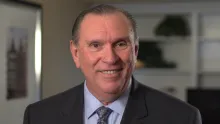
Randy D’Alessandro served as pastor for the United Church of God congregations in Chicago, Illinois, and Beloit, Wisconsin, from 2016-2021. Randy previously served in Raleigh, North Carolina (1984-1989); Cookeville, Tennessee (1989-1993); Parkersburg, West Virginia (1993-1997); Ann Arbor and Detroit, Michigan (1997-2016).
Randy first heard of the church when he was 15 years old and wanted to attend services immediately but was not allowed to by his parents. He quit the high school football and basketball teams in order to properly keep the Sabbath. From the time that Randy first learned of the Holy Days, he kept them at home until he was accepted to Ambassador College in Pasadena, California in 1970.
Randy and his wife, Mary, graduated from Ambassador College with BA degrees in Theology. Randy was ordained an elder in September 1979.
