
Deuteronomy 13
Given on
Given in
Downloads
Downloads
To download a file, right-click (or long press) a link above and choose Save As.
The Book of Deuteronomy is a series of messages preached by Moses as he seeks to prepare the second generation of Israelites to enter, conquer, and possess the Promised Land. The messages that the book conveys are critically important for God's people at all times. First, the book was written to teach God's people how to overcome all enemies, trials, and temptations that confront them. Second, the book was written to stir God's people to rededicate their lives to God, to review their commitment to obey God, and keep the covenant they had made with Him. This chapter deals with the dangers of being seduced into false worship and how God wants us to prevent that.
Transcript
This transcript was generated by AI and may contain errors. It is provided to assist those who may not be able to listen to the message.
Brethren, today I've used the Preachers, Outline, and Sermon Bible commentary, as well as the Life Application commentary, for the preparation of the material I'm about to give to you. For those of you who attend here on a regular basis, you know that approximately once a month we try to go through one of the books of the Bible, basically a chapter at a time. We're currently in the book of Deuteronomy, and we're going to go through Deuteronomy chapter 13 today. For the sake of those who are visiting, who have not been here in the past, let me give just a little bit of background. I think it's helpful for all of us as well. The book of Deuteronomy is a series of messages preached by Moses as he seeks to prepare the second generation of Israelites to enter, conquer, and possess the Promised Land. It was written at the end of the 40 years of wilderness wanderings, right before Israel crossed the Jordan River into the Promised Land. Two major reasons for writing the book. Deuteronomy was written to teach God's people how to live victorious lives. Certainly, we as Christians want to know how to do that, how to live victoriously, according to what God gives us as directions and guidance. Secondly, Deuteronomy was written to stir God's people to rededicate their lives to renew their commitment to obey God and to keep the covenant they made with Him. Certainly that's something that you and I would want to do at all times of our life, especially this time of the year. Passover season. Passover, the Days of Unleavened Bread, very much picture us rededicating ourselves to God, renewing our commitment to Him. On Passover evening, as you were past the tray of unleavened bread, you took a little piece of that unleavened bread, and that unleavened bread represented the fact that the body of Christ, and as you took it, you began to chew that unleavened bread. It represented the fact that that little particle of unleavened bread was going to be ingested by you. It was going to become a part of your system, a part of who you are. Just as you and I, we read the Scriptures, we pray, we study, and we need to have Jesus Christ become a part, very much a part, of who we are. And so when we were eating that unleavened bread, we were saying, we are now rededicating ourselves, we are renewing our commitment to God. And that's what the book of Deuteronomy is all about. I mentioned that the book of Deuteronomy was three major sermons that Moses gave. We went through the first one, which was the first five chapters of the book. The first sermon was, the theme of the first sermon was, What God's Done for Israel. We're now into the second sermon, which goes from Chapter 5 through Chapter 26. And that sermon deals with what God expects from Israel. Let me outline Chapter 13. Chapter 13 is a very straight from the shoulder discussion from God. He is pulling no punches here. He's going to use some very direct language here, because he's very concerned about what he's about to teach through Moses. Deuteronomy 13, if you were to write something across the top of your paper, would be that these are laws that protect a person from idolatry. Laws that protect a person from idolatry.
Certainly that is a Passover theme. That is a Days of Unleavened Bread theme. You want to make sure that we're getting all the idols out of our lives that are there. And brethren, you'd be surprised as we go through what God has to say that we may be guilty of. Breaking down the chapter, I break down the chapter in three significant portions. Verses 1 through 5 show the dangers of false prophets seducing us into false worship. The danger of false prophets seducing us into false worship. And don't poo-poo that.
Don't think, well, that's never going to happen to me because Jesus Christ said at the end of the age, the very elect could be deceived. So let's not just fall asleep on that one. The second portion goes from 6 through 11. And it shows the danger of a loved one or a friend. And it shows the danger of a loved one or a friend seducing you into false worship. Now, again, don't think that you can't fall victim to that.
How many times have I seen people leave the church because of a mate? How many times have I seen people alter what they believe because of their love for their children? We need to love our children, but sometimes our children go a different way. But we want to be so close to them we will begin to think like they think. And we can follow them out of the church by half degree. So, again, let's not think that that can't happen to us. In the last section of chapter 13, verses 12 through 18, where God warns against the danger of our community seducing us into false worship. And once again, let's not think that that can't happen to us.
I'm going to go from a little bit of preaching to meddling here. If you vote, there's a very good chance you've done just this. When you're voting, and of course, you know, I don't vote. The teaching of the United Church of God is that we don't vote.
But if you do vote, and we don't tell people they can't, but if you do, I understand where some people say, well, you know, I like this candidate because they stand for A and B and C. And those might be very wonderful things. But that candidate also would stand for D and E and F and other things that we find that God says are an abomination. And I don't care whether we're talking Republican, Democrat, Independent. When we place our vote behind somebody, then whatever that person in our party stands for, we've said, we want you.
And if they are four things that God says are abominations, then you will have to or I will have to answer to God for that vote. So let's not think that this couldn't be something that we're not guilty of. God says a great deal about getting into the politics of man and that sort of thing, but we won't go through all of that today.
So that's basically the three sections. The danger of false prophets, number one, the danger of our loved ones or friends, or three, the danger of our community. Any of those groups leading us, seducing us into false worship. So if you've not already turned there, let's turn over to chapter 13 of Deuteronomy. And you'll want to keep a marker there because we will use this as a launchpad for other scriptures.
But the first five verses here deal with the danger of a false prophet or a dreamer of dreams seducing you or I into false worship. Chapter 13, verse 1. If there arises among you a prophet or a dreamer of dreams and he gives you a sign or a wonder, so people will come. They will have their signs. They'll have their wonders. They'll have their miraculous works. And you know something? There are some of us in our church culture where we set ourselves up for this.
People say, well, we just don't see enough miracles in a church. And miracles are wonderful. We discussed a miracle today. I'm not against miracles. I've seen plenty in my own life. I've seen plenty of people that I've prayed for and miraculous things have happened. But that's not the case. The point here is when people use this as a litmus test as to where we need to be with God. The litmus test with where we need to be with God is always this. It's His Word. It's not some feeling.
It's not somebody who does a mighty miracle because back in the days of Moses and Aaron, you had Janus and Jambres who were doing mighty miracles on behalf of Pharaoh. Mighty miracles on behalf of Pharaoh. We've got to be very careful. Verse 2. And if He gives you a sign and wonder, verse 1, verse 2, and the sign or the wonder comes to pass.
It's not just somebody whistling Dixie here. It's actually comes to pass. Of which He spoke to you saying, Let us go after other gods which you have not known and let us serve them. Well, then people say, Well, you know, He did perform that miracle. There does seem to be some rationale here for following this guy. And here is the other part of the rationale that people are going to use. And again, it may be used in our age today. We want to be aware of it.
Down through the ages, the suggestion has been, Well, there's only one God. There's only one God. And maybe this God has got different names in different countries, different dialects in different languages, but it's just one God. And I'm going, the false prophet says, I'm telling you about the God that helped me do these miracles. Brethren, you know the true God. The true God has been very much a part of your lives.
The true God has called you to His truth. He's opened up your mind to His Word. Let's not get tricked into a dog and pony show, which we see is going to happen at the end of the age. Verse 3, You shall not listen to the words of that prophet or that dreamer of dreams, for the Lord your God is testing you. He's testing you to know whether you love the Lord your God with all of your heart and with all of your soul.
What's the test here? The test is, are these people, my people, are they going to be faithful to my Word? Or are they going to be knocked out of their game by some charlatan who has a really interesting dog and pony show to put together? The test is, we'll hold true to the Word of God, and as we do that, we'll gain strength. And as we gain strength, we gain more maturity. As you've got your marker here, let's go over to chapter 5 of Deuteronomy.
Deuteronomy chapter 5. Notice the 10 commandments here. Chapter 5 verse 7, You shall have no other gods before me. God's at the pinnacle. God the Father, Jesus Christ. There is room for none other, no other. God the Father, Jesus Christ. Deuteronomy chapter 6 and verse 5. Deuteronomy 6.5. You shall love the Lord your God with all of your heart, with all of your soul, and with all of your strength. This is what God wants from us. It's a direct violation of His will for us to go after some other God.
The standard of truth is not miraculous works. The standard of truth is not a sign or a wonder. The standard of truth is not somebody who can predict, even as it appears, accurately about world events. That's not the standard. You've got the standard, I've got the standard right in front of us. It's God's word. John chapter 17. John chapter 17 and verse 17. John chapter 17. John chapter 17. John chapter 17. John chapter 17. John chapter 17. John chapter 17. Where it says, sanctify them. Set them apart. How are you when I set apart by God? Is it by signs and wonders? Is that what it says here? By miracles? Is that what it says? No. Sanctify them by your truth and your word is truth. We are set apart by the Word of God. And that word is truth.
Let's go to a prophecy. I may have mentioned this a few moments ago. Matthew chapter 24. The Olivet Prophecy. Let's take a look at the words of Jesus Christ here.
As he's talking about our age today, he's talking perhaps of you and I today.
Matthew chapter 24.
Verse 4. And Jesus answered and said to them, Take ye that no one deceives you.
For many will come in my name, saying, I am the Christ and will deceive many.
Brethren, let's not think it can't happen to us.
As I remarked on several occasions this morning over in Ann Arbor, it used to be, and I look at some of you and I remember back in the good old worldwide Church of God days, some of us were a part of the Detroit East Church years and years ago.
It was a little church. 300 people. Back in those days, that was a little church.
In the Detroit metro area, when you had the East, the West, you had Ann Arbor, you had Windsor, Ontario, Canada, we'd get together on a holy day, we would have 1200 people strong.
Just in our little area here. Today, that's a feast site. Where have all those people gone?
Have they been deceived? You betcha. Good people. In many cases, people who knew their Bible had seemed real well. It seemed. And they're not here today. So let's not think that these things can't happen upon us. You know, we don't want any daylight to get between us and our God.
We don't want to be drifting spiritually. Because if we let daylight come between us and God, if we begin to drift spiritually, if we begin to become passive in our relationship with God, then we're a sitting duck. We're a sitting duck. Matthew 24, verse 11.
Then many false prophets will arise and deceive many. Now, yes, this is talking about the world as well. Dropping down to verse 23. Then if someone says to you, look, here is Christ, or there, do not believe it. For false Christ and false prophets will arise and show great signs and wonders to deceive. If possible, even the elect. So Christ himself says, don't be taken in by a dog and pony show. The truth is on the Word of God, not lying wonders.
Verse 25. See, I've told you beforehand, therefore, if they say to you, look, he is in a desert, do not go out. Or look, he is in the inner room, do not believe it.
For as the lightning comes from the east and flashes to the west, so also will be the coming of the Son of Man. It's not going to be this furtive, secretive thing. Every eye is going to see him.
So the test of a true prophet is one who teaches the Word of God.
And you know, there's going to be an antichrist sometime in the future.
And this antichrist is going to show signs and wonders, maybe great healings, maybe calling fire down from the sky, all sorts of things. And people, and you know, he may well be a charismatic man who seems to be a loving man, who seems to be a, you know, he goes into hospitals and heals everybody in a war, that sort of thing.
But if he doesn't teach the truth of God, then we know what he is. We know what he is. You know, brethren, it's up to God to teach us how to worship him. We can't teach, we can't tell ourselves how we're to worship God. That's up to God to teach us, and he does a really good job with that. I remember back the lighter stages of 1994, I remember getting this pastor's report, I forget what they called those things, Bulletin or whatever, and I read it and I thought, what? I read it again about where the Sabbath is really not something that we need to be doing. The holy days aren't what we need to be doing. I thought, what? And then in March, there was a ministerial conference. I was living in West Virginia at the time. There was a conference in Philadelphia. I remember going to this conference in Philadelphia, I remember the man who was running the conference, one of the leaders of the church at the time, was basically chewing out at this group of ministers, saying, what's wrong with you? We've got all these people who want to meet with us, all these Sunday-keeping, Christmas-observing Easter, we want all these people, and you guys won't let them. What's wrong with you? I'm sitting in the back of the room thinking, am I in some alternate universe? I'm scanning the back of these heads, and there's probably several hundred guys there and their wives, and thinking, what in the world? Being chewed out for keeping the law of God. And the continual comment from this person and people like him at the time was, well, we're New Covenant Christians, and as New Covenant Christians, we've made decisions as to what we could do. Oh, really? Where is that in here?
And I remember some of you contacted me when I was living in West Virginia, telling me some of the things were going on here, since my roots are deep in this area. How that the way a number of people found out what was going on is there was this annual Unleavened Bread dinner dance over in the Ann Arbor area. People came, and lo and behold, during the days of Unleavened Bread.
And what was the thing that was offered for dinner? Hoogies. Hoogies. And on the dessert table, there were little chocolate Easter bunnies.
That was an introduction to, well, here's where our theology is today.
So, brethren, don't think it can happen. It already has happened.
And when we take a look at scriptures and prophecies at the end of the age, Christ says, when I come, will I find faith on the earth? We take a look at Revelation and see a church that is so complacent, so lukewarm.
So let's not think these things can't happen. They already have. They already have.
If the Bible doesn't say... Remember what we talked about last on a holy day?
On a holy day, we talked about how great the Apostle Paul was and all of his writings, and yet the Bereans, somebody was a tremendous example to all of us. The Bereans, they didn't say, well, you know, if Paul says it, that's all I need. The Bereans said, well, okay, Paul said that that's wonderful, but let's get into the scriptures. Let's search daily. Let's search diligently. Let's search positively. Wasn't any knock on the Apostle Paul, but they realized what they're going to be judged by is this.
So with that in mind, let's turn to Matthew 28.
Matthew 28. Here in my Bible, it's almost all red lettering, almost all of it.
Matthew 28, the part of some red lettering I want to read is starting here in verse 18.
And Jesus came and spoke to them, saying, All authority has been given to me in heaven and on earth. Go therefore and make disciples of all the nations, baptizing them in the name of the Father, and the Son, and the Holy Spirit. Now notice, teaching them to observe, well, whatever they want to do. You know, they're now New Covenant Christians. They think it's appropriate. That's fine. Do we see that there? No. Teaching them to observe all things I have commanded you.
Christ commanded the Sabbath. Christ commanded the Holy Days. He set the example doing those things. He watched what He ate. He believed in tithing. Teaching them to observe all things I have commanded you. And lo, I'm with you always, even to the end of the age.
As we have been tested and will be tested in the future. Galatians chapter 1.
Galatians chapter 1 verses 6 through 9. You know, here, especially if you go back to Deuteronomy, we're going to get set in chapter 13. There's going to be several sections in Deuteronomy 13 where God is just not politically correct. He's going to put it out there and it's going to burn our ears. Paul's about to do the same thing here in Galatians. Galatians chapter 1 verse 6.
I marvel that you are turning away so soon from Him who called you in the grace of Christ to a different gospel. A different gospel. Which is not another, but there are some who would trouble you and want to pervert the gospel of Jesus Christ. But even if we or an angel from heaven preach any other gospel to you than what we preach to you, let Him be accursed.
As we've said to you before, so now I say again, if anyone preaches any other gospel to you than what you have received, let Him be accursed.
So here we see a very strong message about being cursed if we don't follow the Word of God. It's not about curse if we don't follow the signs and wonders or the slick preacher. Oh, he's such a nice guy. Well, that's not the point. It's not the point. We go back to Deuteronomy chapter 13.
And in this one verse, chapter 13 verse 4, there's a mouthful here that God says to us. You know, when we take a look at the Word of God, there's so much meat.
In just a verse, people say, well, I don't know what to study. There's so much to study. There's so much to meditate on. Deuteronomy chapter 13 verse 4. There are three things God says here in this verse. Three things that if we do these things, it will help us to avoid being seduced.
Verse 4, part 1. You shall walk after the Lord your God and fear him.
Part 2. And keep his commandments and obey his voice.
Part 3. You shall serve him and hold fast to him. Three very important things. Moses is charging the people because he wants them to be successful. Remember, Moses realizes he is not going into the Holy Land with these people. God is setting him up as an example because of his sin. He's not going in. He's staying behind. And so he is imploring the people. He says, don't do the things I've done that aren't allowing me to go into the Holy Land. Number one, he says, walk after the Lord your God and fear him. Now, what does that do for a person? That gives a person direction. It gives a person direction. It gives a person orientation. And that orientation is God-ward.
And that's what we want in our lives, a direction, an orientation.
Then it says, keep his commandments and obey his voice. So God says, okay, you've got some direction, but now you need to do something. It's got what we heard the sermon at today.
Spiritual action is defined. It's not defined. Do whatever you think is best because you're a new covenant Christian. Yes, we are new covenant Christians, but God will define what we need to do. And he says right here, keep his commandments, obey his voice. Don't keep your own commandments. Don't obey your own voice. No, keep God's commandments, obey God's voice. So we've got some spiritual action defined. And then at the very end of verse four, and you shall serve him and hold fast to him. You know, normally we think of this idea of being clingy as a bad thing.
Well, here it's a good thing. God wants us to cling to him. There shouldn't be any daylight between our God and ourselves. Hold fast to him. It's through him that we have our strength. It's through him that we have our lives. It's through him that we understand and grow and develop and mature. Verse five, Deuteronomy 13 verse five. But that prophet or that dreamer of dreams shall be put to death because he has spoken in order to turn you away from the Lord your God, who brought you out of the land of Egypt and redeem you from the house of bondage to entice you from the way in which the Lord your God commanded you to walk. So you shall put away the evil from your midst. Now, obviously here in New Covenant times, we don't go around executing people. But certainly we avoid people. We don't listen to people who are going to teach us things that are poisonous, things that are dangerous, things that are going to get us get a whole lot of distance between us and our God. So put a marker here. Let's go over to 1 Corinthians chapter five.
Here in 1 Corinthians chapter five, we see a unleavened principle. 1 Corinthians chapter five.
There's a lesson. You know, the first several verses here in this chapter deal with somebody who had their issues sexually. They were not repenting of their issues. The local church felt they were being merciful by allowing this individual to continue on. And, brethren, as I've said to you so many times, I've been your passion now since 97, July 97. There's a difference between being merciful and being permissive. These people were being permissive. Mercy is a wonderful, beautiful, positive thing. Permissiveness isn't. And these folks were being permissive here.
And they were told in verse five to deliver such a one to Satan for the destruction of the flesh.
Put him out of the church. Let him learn a lesson.
And, you know, you think, you think, well, that just doesn't happen these days.
Oh, really? I remember in my ministry, and it doesn't seem like that many years ago, where I had to put somebody out of the church.
A gentleman who felt he had the right to sample the women of the local congregation.
And when I said, you know, several of these ladies have come to me, and they've outed you, his initial response was, well, what business is yours? Well, what business is it of mine?
So I said, buddy, I'm the pastor here. And we don't live like that. We don't set that kind of example. And we don't go around hurting people like what you've been doing. Well, I'll just start going to another church. Another United Church of God. Oh, really? You think that's what you're going to do? I'll call that pastor, and I'll say, look, here's the deal with this guy. Basically, he stopped coming. I, frankly, view that as a positive, because he would not repent of what he was doing. So let's not think that these things we read in the scriptures, well, that never happens. Well, it happens all the time. It happens too many parts of the time. But notice the principle here. 1 Corinthians 5 and verse 6. 1 Corinthians 6. Your glory is not good. Do you not know that a little leaven, a little leaven, leavens the whole lump. And that's why God was saying to the people, look, if you've got a person who won't repent and they're going to preach wrong things, then that person's got to go.
And when God said go, he meant really go. I mean, wait for the resurrection. Go. Okay, so with chapter 13 verses 1 through 5 shows the danger of false prophets seducing us.
Let's move on down to the middle section of this chapter.
Verses 6 through 11. The danger of a loved one or a close personal friend seducing us into false worship.
I go back to that time in 1994, late 94, early 1995, a very, very close friend of mine.
We were talking on the phone. We'd read the various ministerial reports about, well, the Sabbath is not needed, the holy days and so on and so forth, and obviously very upsetting to us.
And we have our network, and I was calling various people, and one of the people I was calling and talking to was a man named Denny Luker and Victor Kubik. And there were some other people saying, you know, I want to be patient with God. God's always been patient with me, but I want to be patient with God. Maybe God's going to change what's happening here. Maybe people will come to see this is not right, and I don't know what's going to happen, but somehow maybe God will fix this.
Well, the way God fixed it was in late April, early May of 1995, a group of us got together. Mr. Wekkalee was there, Mrs. Wekkalee, myself. We got together, and we formed United Church of God.
That's the way God solved that problem. But back in March, I remember talking to a very close friend of mine in the ministry, and he was as upset as I was about what was going on.
And I said, well, you know, and I mentioned it was the name, I said, I understand there's going to be some meeting somewhere, we don't know where. It turned out it was in Indianapolis, Indiana, but we didn't know at that point.
He was just so upset. But then I called him at the beginning of April. A 180-degree turnabout.
The reason for that turnabout was because prior to talking to him on the phone, I spoke to his wife on the phone. Her background was very similar to mine.
She came into the church as a 15-year-old. No one else in her family had been called. She came in totally on her own in the South. Very wonderful person.
But she came to accept the new teachings of the Worldwide Church of God back in 94-95.
And I believe that the large reason why this gentleman, who was my, I think, my best friend in the church at the time, the reason he did what he did was because of the influence his spouse had on him. So once again, brethren, let's not think that a spouse, or a child, or a close, personal friend can't influence us because it already has happened. And it can happen in the future. So let's go back now to Deuteronomy 13. Deuteronomy 13, verse 6, If your brother, the son of your mother, your son or your daughter, the wife of your bosom, or your friend who is at your own, as in your own soul, secretly entices you, saying, let us go and serve other gods which you have not known, neither you nor your fathers, of the gods of the people which are all around you, near to you or far away from you, from one end of the earth to the other end of the earth, they're going to do that.
Don't listen. Don't listen. Verse 8, you shall, and notice the pointed language God uses here.
Again, not politically correct. God's going to talk straight from his shoulder through Moses. You shall not consent to him or listen to him, nor shall your eye pity him, nor shall you spare him or conceal him. Basically God's saying, look, we've got a bad apple in the barrel here. Don't walk away from it. Don't walk away. And, brother, I would tell you the same thing.
I've been your pastor long enough where you realize I don't get into your life. I don't get into your face just for the sake of doing it. I think I've proven that to you over many years of being your pastor. But on the other hand, if somebody's going to come into this room, and they're going to bring other literature, false literature, literature that takes people a different direction, things that are going to hurt you, sometimes I'm the last to know. I do want to know about that, because then I will. I will drop everything and get right to that person and say, okay, I'd love to have you. You're welcome to come as long as you come and you worship in peace. But if you're coming here to divide us, if you're coming here to take people away, and we've had that here in the Detroit area, if you were coming to do that, then you and I are going to have some words. One or two things. Either you're going to come quietly, worshipfully, and just be a part of the group, or we're going to have to ask you not to come back. It's as simple as that. Simple as that. And that's what God is saying right here. Don't conceal this person.
It's like the 1 Corinthians chapter 5 guide. Don't think that you're being merciful.
Don't think that it's none of your business. It's every bit a part of your business. And God says so right here. Don't spare them. Don't conceal them. But notice verse 9. Talk about hard.
But you shall surely kill him. And this is the person who first saw that this person was bad news. Talk about personal responsibility. But you shall kill him. Your hand shall be first against him. Your hand shall be first. Now, again, we don't walk into services with a spear, with a sword. We don't go around killing one another. But you understand the principle here.
If somebody comes to you and they bring false doctrine, they bring things that aren't, they do bring things that are divisive and hurtful, then it's up to you. You have got a responsibility to stand up to that person and say, you know, we don't do that here.
We don't live like that. We don't talk like that. We don't bring this kind of stuff in. We don't do that here. But you shall surely kill him. Your hand shall be first against him to put him to death, and afterward the hand of all the people.
So, you know, be very careful. Let's turn to, put a marker there. Go to Galatians chapter 1.
Galatians chapter 1. We read this a moment ago, but I want to focus on another aspect of what we've read.
Galatians chapter 1 and verse 7.
Which is not another, but there are some who trouble you and want to pervert the gospel of Christ. There are some that trouble us and want to pervert the gospel of Jesus Christ. As I was thinking about that, I was thinking about the various ways I've seen this done in my ministry over the course of my walk with the church of God.
Let me share with you very briefly some of the strategies I've seen people use, that I've seen Satan use to try to hurt the people of God. People will try to weaken the gospel message. They will weaken the gospel message. Well, you say the Bible says this, and I say the Bible says that. Everyone has their own taste.
Well, the Bible says what the Bible says.
Another strategy is people want to dilute what the Bible says.
Again, I've seen this, and again, it tends to be more with our young adults, this idea that, hey, sex outside of marriage. No problem with that.
We need to see if we're compatible, and this and that and the other.
That's not what the Bible says. That's not what the gospel says.
And yet, that's becoming too prevalent with a certain segment of our church culture.
Another strategy would be to distort the gospel, or what the Bible has to say.
Oh, you know, the Bible. It was written for people who lived thousands of years ago. We've got different situations today, so we need to take a different kind of a look at things.
Women really should be in the ministry. Women really should be preaching the sermons, and so on and so forth.
Or you've got people who want to distort, or to have a strategy of blending the gospel. Well, let's kind of add the gospel and we'll kind of throw in the Book of Mormon.
We'll go into some of these other, you know, new age, some of these other things that are kind of chic, you know, designer Christian ideas. So they have this blend which is just awful.
Or simply, they have a strategy where it's poisoning. Poisoning. Where, you know what, if you're not fulfilled with your spouse, just leave them. God's called us to have joy. Leave your spouse. Go to another group. Start all over again. But I've seen all of those. I've seen all of those over the years I've been in the ministry. And, you know, we have got to fight against that. Let's go back now to Deuteronomy chapter 13.
Let's reread verse 9. But you shall surely kill him. Your hand shall be first against him to put him to death. And afterward, the hand of all the people. You shall stone him with stones until he dies, because he sought to entice you away from the Lord your God, who brought you out of the land of Egypt from the house of bondage. So all Israel shall hear and fear, and not again do such wickedness as this among you. And this is one of the teaching tools God has. You know, the reason we do this in this sort of a public setting is for people to hear and fear. They don't want to have this outcome in their life. You know, in this country, we put people in jail. How well is that working for us? You've got communities now that think, well, hey, it's working pretty well. We've got, our jails are our, what do they call it, our cottage industry. We can do it cheaper than Uncle Sam. So we build a building, we have X number of cells, and you know, we get paid so much per person per day. I can do it better than Uncle Sam, cheaper, and we can make lots of money. It's ridiculous.
Psalm 1, verse 1.
Blessed is the man who walks, not in the counsel of the ungodly, nor stands in the path of sinners, nor sits in the seed of the scornful. That's how God wants us to be thinking. That's how God wants us to be walking, standing, and sitting with the proper people. Not that we're being self-righteous. God gives us the guidelines, and He wants us to follow those. Second Corinthians, chapter 6.
Second Corinthians, chapter 6. And verse 14. Do not be unequally yoked together with unbelievers, for what fellowship has righteousness with lawlessness, and what communion has light with darkness?
Here we're talking about situations where people would drag you down and put daylight between you and our Father, or you and our elder brother, Jesus Christ. We're not talking about how people might have differences of opinion. Well, I like chocolate ice cream, and you like vanilla. We're not talking about something like that. We're talking about real, deep spiritual issues that really matter.
Okay, so the second portion of the sermon today, this chapter, we saw how, verses 1 through 5, the danger of false prophets seducing people. And verses 6 through 11, we saw the dangers of loved ones, or close personal friends seducing us. And now something that, again, may anger some because I bring this up. But verses 12 through 18, the danger of being seduced by our community. The danger of us being seduced by the world around us, and how the world around us thinks. Go back to chapter 13 of Deuteronomy, verse 12. If you hear someone in one of your cities, which the Lord your God gives you to dwell in, saying, Corrupt men have gone out from among you, and enticed the inhabitants of their cities, saying, Let us go and serve other gods, which you have not known. So here Moses, through God, sets up the storyline. You've got a few people. They're going to really raise some cane. They're going to try to get followings after themselves and so forth. They may use politics. They may use all kinds of social injustice, or whatever. And they start getting people's ear. Verse 14. Then you shall inquire. You shall search out and diligently ask. And if it indeed is true that such an abomination was committed among you, well then you need to take action. So basically what we have here is people have to make a diligent inquiry. A diligent inquiry. Now put a marker here. Let's go forward just a few chapters to Deuteronomy chapter 17. And here's what God would have people to do.
Now we're talking on a national basis here. And so let's do what I think on a national basis here. Deuteronomy chapter 17 verse 8. If a matter arises which is too hard for you to judge between degrees of guilt for bloodshed, between one judgment or another, between one punishment or another, matters of controversy within your gates, then you shall arise and go to the place which the Lord your God chooses. Now notice to the careful the detail here. You go where God chooses you to go. So all from the very get-go here, the idea is we want God's blessing. We want God's guidance.
We're going to go where God tells us to go. Not just go where we want to go. It feels right to us. From the very beginning, we're going to do what God wants us to do. Verse 9. You shall come to the priests, the Levites, and to the judge there in those days. You know, God did set up a group of people who were to know the truth of God, the law of God, the Bible, the part of the Bible they had in their days, and that they were supposed to be people who dedicated themselves to God, who God would bless with wisdom, and they were to go to these people. And they were to inquire of them. They shall pronounce upon you the sentence of judgment. Now, of course, we understand, brethren, that people are people back in those days or today.
People want to today take this section of Scripture and rip it out and say, well, you know, people can be people that can give bad advice, they can be bad judges and bad priests, and that can be true. But what we're looking at is what God would like to see happen. Real men of God standing in the gap to give godly advice to people who need it. Verse 10, you shall do according to the sentence which they pronounce upon you in a place which the Lord chooses, and you shall be careful to do according to all that they order you.
God doesn't put this in such a way that, well, you know, listen to what they have to say, if it's good, five is not so good, then toss it out. No. You should be careful to do according to all that they order you to do, according to the sentence of the law which they instruct you, according to the judgment which they tell you, you shall do. You shall not turn aside to the right hand or to the left in the sentence which they pronounce upon you. Now, the man who acts presumptuously, a person who says, well, you know, I think I know as much as that, Levi. I know as much as that judge. I know much of that priest. I'm just going to do what I want to do. The man who acts presumptuously will not heed the priest who stands the minister there before the Lord your God, or the judge, that man shall die. You've got God being pretty strong here, isn't he?
So you shall put away that evil from Israel, and all the people shall hear and fear, and no longer act presumptuously.
You know, brethren, in this land of ours, this country that we love so much, we can be very passionate about the love of our country and how we want to see our country grow, and the path we want to see our country move along. And we can say, you know, I just need to get involved with this particular candidate. He's got these wonderful qualities, and if we get this guy in office, things are going to be so much better. And more and more, I'm seeing that in God's church. But as I said to you at the very outset of this sermon, sure, you pick an individual. I'm sure they've got different qualities that are fine. I'm sure they've got ideas that are fine, beneficial. But then you take a look at whether it be the Republican Party, the Democratic Party, the Independent Party, whatever party you want, Green Party, whatever party you want to listen to.
They all have something in their planks, in their statements of belief, that you and I simply wouldn't agree with. But if you give them your vote, you take the whole enchilada. It's not like, well, I'm voting for you because you are saying you're going to get the economy going. But maybe they have several other things that you really aloath. You put your vote behind that person, and basically God says, okay, okay, you don't like what this guy's going to do along these other lines. You put him in office. You are partially responsible for getting that guy or that woman in office. And make the mistake, God will hold every one of us accountable for our actions.
Every one of us. If I gave you the date of January 22, 1973, what comes to mind? What happened on January 22, 1973? What happened? Road Roe v. Wade, passed by the Supreme Court on January 22, 1973. The National Right to Life Committee estimates that from that day to this, 54 million, 559,615 abortions have taken place in this country. 54.6 million abortions.
And you know something? As much as we loathe that, we may have voted for an individual or a party who endorses that. I'm going from preaching to meddling here a little bit, but it's my job to give you some food for thought. Let's go over to Jeremiah chapter 32. Jeremiah chapter 32. God is pretty upset with Jerusalem, the kingdom of Judah. He's going to talk here to Jeremiah chapter 32 starting here in verse 29. And the Chaldeans who fight against the city shall come and set fire to the city and burn it, with the houses on whose roofs they have offered incense to bail, and poured out drink offerings to other gods to provoke me to anger. So one of the things I've been talking with you today about is this idea of staying close to God, no daylight between us and God, between us and Jesus Christ. Well, these people were seduced, and they went astray.
And their cities, the capital here, is about to be burned. You drop down to verse 35.
And they built high places of Baal, which are in the valley of the son of Hinnom, to cause their sons and their daughters to pass through the fire to Molech, which I did not command them, though it had come into my mind that they should do this abomination to cause Judah to sin. Now therefore thus says the Lord, the God of Israel, concerning the city of which you say, it shall be delivered into the hand of the king of Babylon by the sword, by famine, by pestilence.
So here you got a nation that was taking its children and giving them up as human sacrifice. They were burning these poor children to a false god. And yet, brethren, I don't think that in all of the southern kingdom of Judah, I doubt that they burned 54 million plus. We have done that.
We have done that.
So how is our legal system, how is our country going today? Can our country seduce us? And we bought certain things, saying, well, you know, I want to see the country go a certain way. I'm going to vote X, Y, or Z, Republican, Democrat, you name it. You're a party to these kinds of things. Gay marriage.
Gay marriage. We've got, as of January 2013, we've got nine states now who will allow that. Connecticut, Iowa, Maine, Maryland, Massachusetts, New Hampshire, New York, Vermont, and Washington, Washington State, as well as the District of Columbia. We've got three Native American tribes who have legalized same-sex marriage. This represents one person in six in this country, by the way, in terms of our population. One person in six. In addition, Rhode Island recognized the same-sex marriages performed in other jurisdictions in California, which briefly granted same-sex marriages in 2008. Now, it recognizes them on a conditional basis. And we could ask ourselves, well, if we voted for a party, if we voted for a candidate who believes this, we don't believe in that. We think this is loathsome. And yet, we may have put a vote in to put people in charge who got this through. We've got the DOMA, the Defense of Marriage Act.
This passed Congress in September of 1996. Large, both sides of Congress, the House and the Senate, passed this by large majorities. But now, our government will not defend this in court.
The Defense of Marriage Act basically states that marriage is a union between one man and one woman.
And now our government won't even defend that in court.
We've got the LGBT movement in this country, the lesbian, gay, bisexual, transgender community.
And here we have in this country now a history month that is devoted for this particular group.
We have had two different occasions in 2000 and 2009. Two different presidents have proclaimed June of those two years, 2000-2009, as LGBT Appreciation Month.
Is this something you stand for?
Is that something you voted for? Something to think about?
Let's go about Isaiah chapter 1.
Isaiah chapter 1.
Isaiah chapter 1 started here in verse 4.
A last, sinful nation, a people laden with iniquity, a brood of evildoers, children who are corruptors, they have forsaken the Lord, they have provoked to anger the Holy One of Israel, they have turned away backward. Why should you be stricken again? You will revolt more and more. The whole head is sick and the whole heart faints. Now notice verse 6. From the soul of the foot, even to the head, there is no soundness in it, but wounds and bruises and putrefying sores, they have not been closed or bound up or soothed with ointment. Verse 6. From the soul of the foot, from the common, everyday, ordinary person to the head, to those of the highest authority in government. The whole nation is sick. And so again, can we be seduced by a movement?
Sure we can. Some of us have been. Hosea chapter 4.
Hosea chapter 4.
Hosea chapter 4 and verse 6. My people are destroyed for lack of knowledge.
Because you have rejected knowledge, I also reject you from being priests for me, because you have forgotten the law of your God. I will also forget your children.
The biggest problem we've got in this country is the wrong kind of a ministry.
People who teach things that they don't know what they're teaching.
God's not called them. He's not called them to be in his church, nor much less be a minister proclaiming God's truth. And yet, our people are destroyed for lack of knowledge.
Okay, let's go back now to Deuteronomy, then to close up the chapter, finish up the chapter.
Deuteronomy chapter 13, verse 15.
You shall surely strike the inhabitants of that city with the edge of the sword, utterly destroying it, all that is in it and all of its livestock with the edge of the sword. And you shall gather all that's plundered to the middle of the street, and completely burn with fire the city and its plunder. For the Lord your God, it shall be a heap forever, it shall not be built again. Yeah, we see God here is pretty tough. You go contrary to what is best for your best interests and those around you. And God says, you know, I just a little leavened the whole lump. And we simply can't stand for this. Over here in 2 Peter, talking about fire, God is going to use fire in a very powerful way at the end of the age. We refer to it as the lake of fire. 2 Peter chapter 3.
2 Peter chapter 3, verse 10. But the day of the Lord will come as a thief in a night in which the heavens will pass away with a great noise, and the elements will melt with fervent heat, both the earth and the works that are in it will be burned up. After the millennium has come and gone, after the great white throne judgment has come and gone, you have the third resurrection. And in the third resurrection, you have people standing on the earth who were given the opportunity for salvation and who rejected it. And as we saw, I'm not going to turn over to the book of Malachi chapter 4, we see where all these people are going to be burned up. They're going to be burning forever and ever. It's going to be just an instant. The whole earth will become like the sun. The whole earth will be one molten mass. Why does God do this? Because we human beings have walked all over the face of the earth, and as we've walked all over the face of the earth, we brought our sins with us.
And this earth needs to be cleansed. And the entirety of the surface is going to be cleansed with fire. We saw a little bit of that back in Deuteronomy 13.
To cleanse the city, you bring everything into the middle of the city, you're in the middle of the street, and you burn it down. Genesis chapter 6, we see where God has used a different medium for destruction. Total destruction. We saw there in 2 Peter where he used fire here in Genesis chapter 6, we're going to see where he uses water. Both fire and water represent God's Holy Spirit, the power of God's Holy Spirit. Genesis chapter 6 verse 11. It says, The earth was also corrupt before God, and the earth was filled with violence.
Take note in verse 11 of the word corrupt. Verse 12, So the Lord looked upon the earth, and indeed it was corrupt, for all flesh had corrupted their way on the earth. And God said, And now the end of all flesh has come before me, for the earth is filled with violence through them. And behold, I will destroy them with the earth.
Note now in verse 13 the word destroy.
The word corrupt in verse 11 and the word destroy in verse 13 are the identical Hebrew word.
The exact same word. God is teaching us a powerful lesson. What is corrupt will be destroyed.
What is corrupt will be destroyed. And that includes you and I.
If we don't live an unleavened life, if we're not repentant, if we are corrupt and remain corrupt, then we too will be destroyed. And as a matter of fact, that brings us to a good segue to the very end of chapter 13 of Deuteronomy. Let's go there now and finish.
There's only two more verses in the chapter that will be done for today.
Deuteronomy 13, verse 17.
So none of the accursed things that shall remain in your hand, the Lord may turn from the fierceness of his anger and show you mercy, have compassion unto you, and multiply you just as he swore to your fathers. Because you have listened to the voice of the Lord your God to keep all his commandments, which I command you today to do what is right in the eyes of the Lord your God.
So basically what God is saying here through Moses is, I am a God who is not a respecter of persons.
As you go into the Holy Land, you are going to take certain tribes and you're going to obliterate them because of their severe lawlessness, the perverse way they are living their lives. You are going to obliterate them, which teaches a lesson about obliterating sin.
But God is also saying to the people here, says, look, make no mistake, I will obliterate you just like you're going to obliterate those other nations. If you don't follow me, then that's it. That's it. I will come after you.
So you better listen to what I'm saying here, God is saying to them.
So, brethren, we've not had a sermon like this in a while.
But God, you know, I deal with what's here. And here in chapter 13 of Deuteronomy, we've got God talking very straight from the shoulder, very pointed language.
You know, it's not all fuzzy and cute, but it's true. It needs to be thought and really meditated on what God wants for His people. And I thought it's interesting that over the years that we've been doing these Bible studies once a month during the sermon time, how many times have I gone through a chapter that really fits well with what's happening in the plan of God?
And this really fits well with the days of Unleavened Bread, past or in the days of Unleavened Bread. A time of self-examination, a time of rededication, a time of making sure that we are close to our Father and our elder brother. And this chapter does just that.
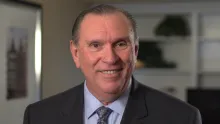
Randy D’Alessandro served as pastor for the United Church of God congregations in Chicago, Illinois, and Beloit, Wisconsin, from 2016-2021. Randy previously served in Raleigh, North Carolina (1984-1989); Cookeville, Tennessee (1989-1993); Parkersburg, West Virginia (1993-1997); Ann Arbor and Detroit, Michigan (1997-2016).
Randy first heard of the church when he was 15 years old and wanted to attend services immediately but was not allowed to by his parents. He quit the high school football and basketball teams in order to properly keep the Sabbath. From the time that Randy first learned of the Holy Days, he kept them at home until he was accepted to Ambassador College in Pasadena, California in 1970.
Randy and his wife, Mary, graduated from Ambassador College with BA degrees in Theology. Randy was ordained an elder in September 1979.
playlist
Related Sermons
