
Robin S Webber
This transcript was generated by AI and may contain errors. It is provided to assist those who may not be able to listen to the message.
The message that I have for you today is, I'll just give you the title up front, if I may, and get right to it. So you'll say, what is Mr. Weber going to be speaking to us about today? And that is simply this. Here's the title of my message. Whatever you ask in my name. Whatever you ask in my name. Now, there's the title. Now, I'll give you the rest of the story.
We live in a world of computers. We call it the technology age or the computer age. And one thing all of us have that are acquainted with computers is we all have two specific access items. Number one, you might want to jot this down. Number one, we have a username. And number two, we have passwords. Usernames and passwords. Now, I don't know if you're a little bit like me, but have you ever been away, traveling and traveling may be on the other side of the megalopolis or it may be on the other side of the state, or you're back east and you said, oh, I've got to get onto my computer.
I have this serious need. It's a banking account or it's an insurance account or it's a stock account or you've lost Aunt Tilly's address and you need to get in touch with her or you don't have Uncle Horace's phone number and it's all on this computer. And so you remember your username, but then you go, oh, oh no. Mmm, mmm, mmm. You've forgotten that password. You've forgotten the combination. All caps, low caps, mid caps, no caps. Throw in a number.
You know how it is. Do it with eight figures, do it with ten figures, and you start trying to create all these combinations, hoping that it's going to go bingo.
I have had non-bingo moments, especially when I travel to Ohio. And I think, oh no, I don't remember my password. Here's the reality in all of the... You're looking at me like I'm the only one that's ever done this. Do we have a little commonality going on here? The reality is simply this. To know your username without knowing your password is going to get you nowhere. Period. You're not going to have access to the vital knowledge that you need. Now, with this modern-day concept in mind and ever-present challenge before all of us, you can tell that I'm a challenged individual sometimes when it comes to the different passwords of my accounts, is to recognize there is an analogy here.
There are many sincere people that are trying to access God, that have serious needs. And like you and like me, they do have a username. There is a common username. It's called Christian. And so that first box, you fill in Christian. And we may be one of these. We have a username. But the username alone is not going to grant you access to what you are truly needing to meet your spiritual needs.
It's that all encompassing, powerful password phrase that will move you into something greater. And I'm not talking about cyberspace. I'm talking about coming before the very presence of God Almighty, our Heavenly Father in Heaven. And there is a powerful password phrase that allows us to move beyond Google and Yahoo and you throw in the rest.
I'm not talking about what's down here that seems so extant and vast. But I'm talking being directed to the source of all love, of all power, of all wisdom, of all knowing. And we need to have this powerful password. I'd like to give it to you right now. May I please have the first last four letters of your social security before I get out just teasing. I'm going to give it to you right now.
It is simply this, the password phrase, in Jesus' name, amen. In Jesus' name, amen. My question this afternoon and this message to you that we're going to strive to answer and that you alone can't answer is simply this. We're going to look at these four little words in Jesus' name, amen. And I need to ask you a question. What does it mean to you? What does it mean to you? Now, we're all users. We are all here this afternoon because, indeed, we believe that we are Christians.
But just saying that we are Christians and we put that username in does not of and by itself attract God's attention or open up His resources to us.
So what does it truly signify? Number one, to those that believe in Jesus Christ, to believe in Jesus Christ. And then number two, this is important, to follow Him. Because it's not enough to believe. You must be willing to follow. Incredibly important. Sounds very quick, very simple, but that's why I'm giving you this message today. So we're going to focus on that today because we're going to come to understand that in Jesus' name is not just something that you tag on to the end of a prayer. It's not just a postscript. It's not just a filler like, oh, it's not a filler.
It's not a magical potion either. It has real significance for the believer.
And it has real significance to our Heavenly Father above that each and every one of us understand that. So let's move right into it. What is the phrase? Allow me to give it to you again. Let's you lose it like you might lose a password. In Jesus' name, amen. To begin this message, let's begin by understanding that Jesus asked us to pray in His name. Join me, if you would, in the Gospel of John, John 14. In John 14, and let's pick up the thought in verse 12.
Again, recognizing that this is on the last evening of His human existence. And in John 14 in verse 12, it says, Most assuredly I say to you, He who believes in me, the works that I do, He will do also in greater works, and these will He do, because I go to my Father. And whatever you ask in my name, and that's where the title of this message comes from, whatever you ask in my name, that I will do, that my Father may be glorified in the Son. Then notice verse 14, if you ask anything in my name, I will do it. Interesting.
But what does that do when we ask in His name? For you that are young people out here, do you hear the prayers that are given perhaps at your dinner table? Perhaps when the minister comes over and anoints your family? Perhaps when you hear the opening prayer and the closing prayer of this service, you'll always hear the gentleman come up and say at the end of that prayer, he'll say in Jesus' name. And then, amen. And then the congregation responds with, so be it, and or amen.
What does that mean? Well, let's fully understand here now, before we go any further, what Jesus wasn't saying before understanding what He was endorsing that does grant us that opportunity to come into the presence of the Father and to be able to receive His love, that power, that wisdom.
Again, as I mentioned earlier, in Jesus' name is not a tagline. It's not just a filler.
Likewise, it doesn't have to be perfectly enunciated. Just like you have to perfectly do your password, all cap, new number, lower caps. It's not a magical, abracadabra, willa-kazam, however they say it these days. It's not like some tight fit that if you leave out something, or maybe sneeze or cough in between, that's somehow how it doesn't count. And it's like your computer, you have to start all over again. That's not what we're talking about. It's not something that you have to be superstitious about, but it's something that you really have to understand, because your life and your spiritual well-being depends on understanding what we're talking about.
Neither is it an ATM machine. Sometimes people approach prayer and, you know, God, I need this, I need that, and they get out what we call the want and the need list.
And before that, they punch in the numbers, 7777, just like when you go to your ATM machine.
Saying in Jesus' name does not open up the heavenly ATM machine, and God gives you exactly what you put into the machine and correspondingly comes out with it. If you believe that's what Jesus meant when he said, whatever you ask, ask in my name, you don't understand the context and the vast meaning of what this is about. Let's appreciate when we say, in Jesus' name, we need to understand something. Words, and not merely formulated alphabetical or numerical combinations, have meaning. Words have meaning. Remember what Jesus said when he was talking with the religious community? When he said, for out of the abundance of the heart, out of the abundance of the heart, the mouth speaks. And that's a very important linkage that you and I have to appreciate here for a moment, friends, is simply this. In Jesus' name is not something that's at the external tip of your tongue, but it reveals what is in our hearts, and it reveals the depth of our understanding of whose name that we are talking about. And so that's very important to appreciate, very important to understand. In our Western society, we tend to think of a name as a signature. All of us as Americans, or at least most of us are Americans in this room, and if not, you're a residing alien, you'll understand the the signature of John Hancock, the big one. And to recognize so often, we talk about, you put your John Hancock down. So in our Western mind, we often think of a name as being a signature, and it's just so, so, so big, and it's on a line. But in the Hebraic sense, in the biblical sense, a name is everything. It speaks to the qualities, it speaks to the attributes, it speaks to the reputation of the individual that is being mentioned, so much so that in the book of Proverbs it says, a good name, a good name is like apples of gold in trays of silver. So what we want to understand here in John 14, 12, and verses 12 through 14 is simply this. I'd like you to put this down if you're taking notes, and you can build upon this in your own personal study. What Jesus is doing when he says, ask in my name, whatever you ask in my name, he is introducing a new relationship between God and those that are seeking him. He's introducing a new relationship. Very important to understand, till now those desiring union with God, approached him through another man, approached him through a human high priest, had to appear at certain times and a certain location, whether it was Shiloh, whether it was Jerusalem, during the year to come before the presence. And a man, the high priest, would go in beyond, behind the veil, and make intercession for the people, speaking to, in that sense, Jehovah, speaking to God, as Israel understood him. But here, friends, let's understand something.
Here in John 14, the access code is changed forever. The access code. My wife and I were just speaking about it the other day, just, and you know and I know there are there are wonderments about internet, and there are downsides of internet in today's world, just like any any instrument. It can either be a tool, or it can be a weapon. It can be for edification, and or it can be for our moral destruction.
It can either be something that we use time wisely by, or it dominates our time.
It's not so much the instrument, but it's the user and how we use it. And here now we find that the access code to all knowledge and all love and all wisdom is given to those that will follow and be disciples of Jesus. Now we approach God, not because the mortal man's position or the location, but in the name of Jesus Christ, who has been accepted, accepted as our mediator, as the one that not only goes behind the curtain but now stands and sits on his throne at the right hand of God. Join me if you would for a second in Hebrews 10. In Hebrews 10, let's pick up the thought here, and of course Hebrews is about the exaltation of Jesus Christ on behalf of the Father. And we find this in Hebrews 10 if you'll join me here for a second, speaking of this priesthood, not an earthly priesthood but a heavenly priesthood and a heavenly priesthood that does not offer the blood of another but offers the blood of himself when it says in Hebrews 10 verse 19, therefore brethren having boldness to enter the holiest by the blood of Jesus. Boldness, access, confidence, knowing that we have entered beyond cyberspace but into the heavenly presence of God by a new and a living way which he consecrated for us through the veil that is his flesh and having a high priest over the house of God. Thus, let's take it a step further. Are you with me? Therefore, when we pray in Jesus' name, we're knocking on the door of God's throne room in the authority of his name, whose name? In the authority of Jesus' name. Just as much as an officer when an officer, and hopefully this hasn't been your case of recent date, but an officer comes to your door, open up. Open up in what? Open up in the name of the law. He doesn't say, open up under my auspices. So we don't knock on God's door underneath our auspices, per se, but just like that, officer knocks on the door under the authority not of himself but of the law, thus when we say in Jesus' name, we are coming before God with our praise and with our petitions and with our longings and our needs. Not in our guys, not in our human realm, but under the authority of Jesus Christ. That's very important to understand. And to recognize that when we do that, then we assert His name, then we have the access to our Father above. That our spirit, that our thinking, and that our motivation, we come to Him under the framework of Christ's magnificent existence, both in heaven and in earth.
When we say in Jesus' name, are you with me? It's not underlining a name. It's about coming to the Father in the full framework, the full framework, the full essence of this magnificent existence that the Father above has bequeathed upon us. And to understand it's under His authority. It's within His life. It's within His death. It's within His resurrection. It's within His ascension. And it's within the hope of His return to this earth that we are able to say in Jesus' name. Let's allow Scripture itself to define a proper biblical understanding on this matter, this powerful password phrase. Let's begin by discussing Paul. Join me if you would in Ephesians 1. Join me over in Ephesians 1. The epistle of Paul, which is, again, often called an epistle of prayer because it opens with two prayers in a row in chapter 1. In the epistle here of Ephesians in beginning, notice chapter 1, verse 1, Paul, an apostle of Jesus Christ by the will of God to the saints who are in Ephesus and faithful in Jesus Christ. Grace to you and peace from God our Father and the Lord Jesus Christ. Now, let's spotlight verse 3. Are you ready? Let's take a look at it together as a congregation. Blessed be the God and the Father of our Lord Jesus Christ. So the Father is extolled. And that's how we understand the Scriptures. The Father, we say, our Heavenly Father, when you pray, pray like this, our Heavenly Father, which art in heaven. Blessed be God and Father of our Lord Jesus Christ, who has blessed us with every spiritual blessing in the heavenly places. So far, so good. Then notice what it says, in Christ. In Christ. We're going to find through the writings of the early writers who were led by the Spirit of God, how they focused on that preposition of in and what it meant to them to emphasize the connectiveness of the believer to Christ and His authority over their lives, which then they share with the Father.
Again, join me if you would in Philippians 3, which I think really fills this picture out in Philippians 3. And let's pick up the thought if we could, Philippians 3. And let's pick up the thought in verse 8. Yet indeed I also count all things lost for the excellence of the knowledge of Christ Jesus, my Lord. Paul says I'm putting everything off to the side and away from me because of what has been revealed to me because of the excellence of the knowledge of Christ Jesus, my Lord, for whom I have suffered the loss of all things and count them as rubbish, that I might gain Christ. Now notice a powerful phrase. If you're daring enough, you might want to use your pen here. And be found in Him. And be found in Him. This is what I am enclosed in. This is the hedge that I exist in. These are the parameters of my walk on this earth having put everything else aside. There's nothing that even comes second best. That I might be found, notice, in Him, in Christ, in Jesus, in that name, not having my own righteousness, which is from the law, but that which is through the faith in Christ, the righteousness which is from God by faith, that I may know Him and the power of His resurrection, and at the same time the fellowship of His suffering, being conformed, being shaped, being molded, as it were, to His death. And if by any means I may attain to the resurrection from the dead. Let's understand what this is telling you and me, that when we petition our Heavenly Father, are you with me? When we petition our Heavenly Father, and then we conclude with prayer as the Bible instructs us to, in Jesus' name, we're saying, Father above, may you look down from your sovereign heights, and may you understand that this wretch, apart from your grace, is found in Him, found in Him, bolstered by His life, bolstered by His death, bolstered by His resurrection.
And as He walks, I strive to walk in His footsteps. Thus, Father above, look down, and in your mercy and in your love, answer this prayer. Again, Paul is not the only one that spoke like this. Join me if you would. Let's turn over to the epistle of 1 John.
In 1 John, and let's pick up the thought in verse 23. 1 John 3 and verse 23. Let's notice the words of one who was extremely close to Jesus of Nazareth, one that was, in that sense, a very, very close friend when Jesus was on this earth, the Apostle John. And notice what he says. And this is His commandment. Notice that we should believe on the name of His Son, Jesus Christ. That is a commandment. It's not a maybe. It's not a suggestion. It's not maybe a nice thing to do. And love one another as He gave us commandment. Now He who keeps His commandments, notice, abides in Him, and He in Him. And by this we know that He, notice, abides in us by the Spirit whom He has given us. It talks and speaks of abiding in Christ. What does that mean is that some soft, fuzzy, namby-pamby phrase? No. We're going down the wrong road if we think that.
This is a power phrase. The word there in the Greek, you might want to jot this down, is mino. I'm not talking about the fish. Mino. M-E-N-O. The Greek root. And it's rich with meaning.
When it says to abide with Christ, it is speaking of continuing to dwell in, to endure in, to maintain, to stand, to wait upon, to endure. There's nothing at all passive, what is being stated here. Really, rather, when we say in Jesus' name, it's a salvo. It's a broadside. It's a battle cry of resolve. Now, if that be the case, then, how then does this play out? Join me, if you would, in Colossians 3.
In Colossians 3, again, another epistle of the Apostle Paul. Notice what it says in Colossians 3 in verse 17. Because we offer and surrender ourselves to God. Not my will, but your will be done. Give us our daily bread. Forgive us our sins. And Father, by the way, this is happening down here. And then we say in your son's name, and right by his love or by his authority, we come to you. Notice then, as we get off of our needs, and sometimes we pray that prayer, maybe on the mid-lane of the 210 freeway out here, and or the 5 or the 15. But then what happens? Do we in confidence, knowing that we've come to the Father in his son's name, do we have the confidence then to go out and live up to that prayer and to meet those prayers? See, when we pray today as a congregation for our friends here, I'm not passing just words. I believe in what I said.
And I hope you said, Amen, and you believe that as a congregation, that when we say in Jesus' name that God's attention has been drawn to the Valenzuela's daughter, has been drawn to Camilo Reyes or Herb Vieira, or Lulu's brother or uncle. That is real. That is not just chant.
That we say a prayer and they go, no, we might say, oh my, you know what, that man, because sometimes no one may get up here, they're nervous because, you know, public speaking and public execution is like one and the same thing. And so have you ever heard somebody say a prayer and they say, they didn't say in Jesus' name. God's not going to hear that. No, we're not talking about a magical formula. God knows more than what perhaps the man for God in his fear. Am I the only one that's ever noticed that? No. Is that what God is looking at is the heart. What's being spoken down here.
And God knows whether or not what's being spoken down here is in Jesus' name, even if sometimes we can't verbalize it. So we need to understand that. Notice Colossians 3, 17, and whatever you do in word or deed, do all in the name of the Lord Jesus, giving thanks to God and the Father through him. So what happens, Paul's writing say, once you get up from your prayer life, which is really just coming out of the blocks into life, we are to do everything in word and in deed, not only believing in Christ, but following his example.
So what we come to understand in prayer, and when we say in Jesus' name, what we really have going on is there's a mutual transaction of giving ourselves away. You see, the Father in that sense, through the Word and through Christ, gave his Son away. God so loved the world that he gave his only begotten Son, that whosoever should believe in him. John 3, 16. So God, in one sense, has provided and shared that agape love moving away from him. He's given himself. Now, when we say in Jesus' name, and we understand what Jesus Christ did for us on behalf of his Father and on behalf of us, then we, in turn, we give ourselves away. In Jesus' name means that, Father, we trust you, we give ourselves to you, and we now give our lives away to you, into your hands, into your hands.
I give my past, my present, my future, my day, my moment. And sometimes, life is only moments. I told Susan one time, I said, you know, honey, I thought I was really...do I dare say...I thought I was on the mark with this. I said, honey, all we have is today. She said, no, Robin, you're wrong.
All we have is the moment. Life is made up of moments, especially when you get over 39.
Life is only made up of moments. I don't know about tomorrow. And thus, we think of the wisdom of Janes, if the Lord so wills. So, let's take a look at this and understand what's being spoken about here. We need to understand that there's a mutual transaction. Something's happening here. This is kind of covenant speak. God has shared Himself and given Himself to us, and we, in turn, give ourselves to Him. And we come to Him because we recognize that this magnificent existence. He who was the Word, He who is the beloved of God, He who is, in that sense, the door that allows the return to Eden, He who is Emmanuel God with us, that God the Father sent His Son to this earth so that you and I, in that sense, might be touched by God, and in turn, that the Father, because of Christ now being at His right hand as the Son of Man, as the Son of God, might in turn be touched by our humanity.
When you think of these prepositions like in Jesus' name, think of the word Emmanuel. Think of the word Emmanuel. God with, with, God with us. God walked this earth in human skin, and now stands at the right hand of God, sits at the right hand of God in glory.
Not only that, but we're reminded in the book of Isaiah that the Christ is our wonderful counselor to recognize that I'm looking over here, and I just spotted Larry Darden. And Larry, Patty, by the way, welcome to our congregation as a married couple. I notice they're still on the back row. Maybe the honeymoon's not over. I'm not sure. Okay, Larry, Patty, is that I saw Larry moving into about our wonderful counselor. We oftentimes call lawyers counselors. He's our advocate. He is the one that pleads our cause before the Father, recognizing that we have an adversary, recognizing that there's one that wants to tarnish our reputation, recognizing that there's one that wants to accuse us, to say that they're not really what they're made up to be. Look down, look at them, see them, look at them, look at them fall, look at them down there, look at them fall.
And Jesus doesn't hide his eyes and say, oh no, they didn't fall. He does not say that they didn't sin. He doesn't say that they're not guilty. What he does say is this. He says, Father, these are my followers. They no longer practice sin as a way of life, but they're going to stumble and they're going to fall. But, Father, remember that forever moment. Remember when I was on Golgotha. Remember when my blood ran down that piece of wood and they were redeemed and they believed and they understood what I did on their behalf and what you did on their behalf as you turned away as the sins of the world came upon me and that you could not confront sin. And you remember when I called out and I cried out, Father, Father, Father, why have you forsaken me? You ever have those moments throughout your life that you remember where you were at the time when something happened?
I always remember where I was when I heard about President Kennedy's assassination.
I remember where I was when I heard over the news about the challenger blowing up.
Can I tell you something, friends? God the Father never forgets where he was looking down from his sovereign heights when he gave his Son for you and for me as his sacrifice that you and I might be redeemed. And that again is one of the great attributes in the titles of Jesus.
It is that clarion call that comes out of antiquity from the book of Job nearly 3500 years ago when Job says, I know that my Redeemer lives. I'd like to share a story with you to make this point.
The note of conductor Bernard Raquel was taking his choir and orchestra through the final rehearsal of Handel's beautiful and inspiring Messiah. And when the soprano soloist came in with refrain, I know that my Redeemer liveth. She sang with flawless technique, perfect breathing, and clear enunciation. In a sense, she got that username and was trying to work that password as best as she could, trying to just kind of fit it all, you know, just so she could proceed with the song. After she completed her part, everyone looked at the conductor, expecting to see his responsive approval. With a motion from his baton for silence, he walked over to the soloist and said, almost sorrowfully, my daughter, you don't know that your Redeemer truly lives, do you? Embarrassed, she said, well, I think I do.
He then roared, sing it, then sing it, cried Raquel. Tell it to me so that I'll know that you have experienced the joy and the power of it. Then he motioned to the orchestra to begin.
And she sang the truth with a fervor that testified of her personal knowledge of the risen Lord. Those who listened wept and the old master, eyes filled with tears, said to her, you do know, you do know, for this time you have told me.
When we pray to our Father above and when we say in Jesus' name, the great conductor of the universe, the sovereign of all, does he look down and does he know in your heart of hearts, not in the external tip of your tongue by what you enunciate, but what you are and what you strive to be before him, that they know. They get it. They understand.
Therefore, friends, here in Los Angeles today, let's take three takeaways from this message that I hope has revolutionized by God's revelation of what it means to be in Jesus' name. Number one, praying in Jesus' name gives our prayer life, positioning focus. It positions us. It positions us. It sets Jesus' personal example of sacrifice and obedience and acceptance before us, allowing us to be in him by placing our own spirit and thinking in the right place under him, under him and in him.
A spirit that will understand that when sometimes God says no, it doesn't mean no way, it just means later. It means better that the time is not now, that even Jesus in Gethsemane, the one personal request that Jesus made in his human life was that, Father, if it be your will, take this cup from me. Take this cup from me. But nonetheless, whether you do or whether you don't allow your will to be done, Jesus understood that God's no did not mean no way and that even in his death, life would be the result for each and every one of us. Number two, it actively glorifies our Father above. When we say in Jesus' name, it doesn't take away from our Heavenly Father, it magnifies him. Join me if you would in John 14.13. Again, let's just center on this first for a moment. John 14.13. Notice what it says, and whatever you ask in my name that I will do that the Father may be glorified, praise and honor, esteemed and extolled when we use his name.
Just a page over in John 17 and verse 25. Again, notice what it says.
O righteous Father, Jesus speaking, addressing his prayers to God above, the world has not known you, but I have known you, and these have known that you sent me, and I have declared to them, notice not only my name, I've declared to them your name, your name. Jesus came to this earth to declare our Heavenly Father's name, his titles, his attributes, his love, his wisdom, his forbearance, his patience with us, that the love with which you loved me may be in them, and I in them. So number one, saying in Jesus' name gives our prayers positioning, life positioning, life focus, that we come to the Father in him. Number two, it glorifies the Father. Number three, it ultimately does something incredible. Join me if you would in John 16.
John 16. Notice what it says in John 16, which is somewhat parallel to John 14. John 16. We'll pick up the thought of verse 22. And in that day you will ask me nothing, most assuredly I say to you, whatever you ask the Father in my name, he will give you. Until now you have asked nothing in my name. Ask and you will receive that your joy—notice please—your joy. Remember what we talked about? What we want our congregation to be known as a joyous congregation? A spiritual body that is full of joy? Not to be mistaken with happiness. Happiness depends upon things happening the way that we want them to happen and that we perceive as good for us. God looks beyond that.
God looks beyond that. He's not stuck in the moment. He's ageless and knows that whatever he does, even his knows, mean no way. But to recognize he knows best and that we're moving through this life as pilgrims. Towards that glorious end that John and Paul and all of the early church understood. So much so that John nearly finished the epistle of 1 John with these words, these things I have written you who believe in the name of the Son of God, that you may know that you have eternal life, that you may have eternal life, and that you may continue to believe, notice, in the name of the Son of God. 1 John 5 and verse 13. The joy then of sharing eternity with not only the one that in which we begin our prayers with, our Father which art in heaven, and we conclude our prayers with the other part of the deity, with the other member of the Godhead in Jesus' name. And then when we understand that, and we not only believe in that name, but follow in those footsteps and abide, abide in that which God has given us, it is then that we conclude that password phrase, that we rise from our knees. We move into a new day as much as Jesus moved out of the tomb, because the tomb reminds us that we do not have a closed in existence, but there is a window on the future, and we see light at the end of the tunnel no matter what comes our way.
And because Jesus himself ascended, and as the scripture says, so as he is, so we will be, it is then that we conclude that password phrase in Jesus' name. Amen.
So be it. And, brethren, and young people that have been listening to me today, as you start out in the rest of your life, that's why as a Christian, we come before our father above, and we follow the example of his son, recognizing that when we say in Jesus' name, we not only have the first box right, username Christian, but we have filled in the rest that gives us access to the realm of God in Jesus' name. Amen.
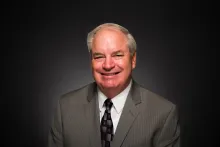
Robin Webber was born in Chicago, Illinois, in 1951, but has lived most of his life in California. He has been a part of the Church of God community since 1963. He attended Ambassador College in Pasadena from 1969-1973. He majored in theology and history.
Mr. Webber's interest remains in the study of history, socio-economics and literature. Over the years, he has offered his services to museums as a docent to share his enthusiasm and passions regarding these areas of expertise.
When time permits, he loves to go mountain biking on nearby ranch land and meet his wife as she hikes toward him.
