

Don Ward
This transcript was generated by AI and may contain errors. It is provided to assist those who may not be able to listen to the message.
Who is the angel of God's presence? Have you ever wondered what God looks like? Of course, in Revelation chapter 4, John is given a vision whereby he sees God on his throne, or at least in vision. You know, I've been puzzled for many years by Jesus' statement in which he said, he that has seen me has seen the Father. That's in John 14 in verse 9. He that has seen me has seen the Father. Colossians 1.15 says that Jesus Christ is the image of the invisible God. Hebrews 1.3 says something similar, that Jesus Christ is the stamped image of God. Of course, while Jesus is here on the earth, they didn't literally see the Father, but Jesus Christ is the image of the invisible God. What about Jesus' statement in which he said that no man has seen God the Father at any time? That's John 1.18. Only the son who is in the bosom of the Father, he has declared him. So one of the things that Jesus said that he came to do was to reveal the Father. So once again, John 1.18, no man has seen the Father at any time. And Jesus says in Luke 10.22 that he came to reveal the Father. He came to reveal the Father in many different ways.
So can the answers to these questions and many others be found in the Bible? Could it be that understanding the rolling significance of the angel of God's presence will provide us with some essential keys in answering the questions and many other questions? So in this sermon, we're going to examine the role and significance of the angel of God's presence.
How can Jesus make those declarations? No man has seen the Father. Whereas several times in the Old Testament, we read passages stating that Yahweh appeared in various ways to various people. Let's look quickly at Genesis 1.18. Not 1.18, but 18.1. In Genesis 18 and verse 1, Genesis 18.1, and the eternal Yahweh appeared unto him in the plains of Mamre, and he sat on the tent door in the heat of the day. And he goes on talking about Yahweh's visit with Abraham and Sarah. In John 5.37, if you'll turn there, in John 5 and verse 37, you'll see that Jesus says that no man has seen God at any time, similar to what I'm paraphrasing, similar to what it says in John 1 and verse 18. These preliminary scriptures are very important to the whole message here today in John 5 and verse 37.
In John 5, verse 37, and the Father himself which has sent me hath borne witness of me, ye have neither heard his voice at any time, nor singing his shape.
And there are other scriptures similar to this of no one has seen God at any time, but as we read from Genesis 18.1 that the eternal appeared to Abraham and to Sarah. And of course, there are many other theophanies in the Bible, in the Old Testament. A theophany, the meaning of theophany, is a God appearance.
So one can, through the process of deduction, conclude that since Jesus states that no one has seen the Father, seen his shape, or heard his voice, they can conclude that the one who appeared to the Fathers, Moses and many others, must have been the Word. And that is true. And by deduction, we can come to that conclusion. To come to a conclusion otherwise would be calling Jesus Christ a liar. Because that's what Jesus Christ says. No one has seen the Father at any time, except the Son who was in the bosom of the Father. He has declared him. He's never seen his shape, or he never heard his voice at any time.
Now some, on the other hand, and here's where the rubber meets the road in the present stream of affairs in the Church. Some, on the other hand, have disputed that and have dogmatically concluded that the name Yahweh always refers to the Father.
And this assertion has caused great confusion in the minds of some. Some have even left the fellowship at the United Church of God over this assertion. As we shall see from Scripture today, the title Yahweh is often used for the angel of God's presence, the one who became Jesus Christ. So what name does Scripture reveal as the forever name of God? Could you turn to that Scripture at this moment? Well, we will answer that question a little later, the forever name of God. So, the sermon today will provide you with essential keys for helping you to more completely understand the roles of God the Father and Jesus Christ in both the Old and New Testament.
Let's turn now to the Scripture that is in the bulletin to Exodus 23 and verse 20. Exodus 23 and verse 20, the Scripture that is in the bulletin. Exodus 23 and verse 20.
Behold, I send an angel, Malek, and as we said, it can refer to a human being or to a spirit being. I send an angel before you to keep you in the way and to keep you and to bring you into the place which I have prepared, the Promised Land. Of course, we're on a journey to, figuratively, the Promised Land to the kingdom of God. Beware of him, obey his voice, provoke him not, for he will not pardon your transgressions, for my name is in him. This verse definitely states that the name of God is in the angel, the messenger, that led Israel into the Promised Land. My name is in him.
God promises Moses that he will lead them into the Promised Land through the angel of his presence. The next two verses confirm that the angel went before them and led them into the Promised Land. So let's read the next two verses. Verse 22 here, But if you shall indeed obey his voice and do all that I speak, then I will be an enemy unto your enemies and an adversary unto your adversaries, for mine angel shall go before you and bring you into unto the Amorites, the Hittites, Perizzites, Canaanites, Hibites, Jebusites, and I will cut them off. So God says, indeed, if you will do that, I will bring you there. Of course, he had to practically drag them into the Promised Land, but they eventually made it into the Promised Land.
So there are several points in these four verses that need to be examined and explained. First of all, we need to understand that the angel is God's messenger. The angel is God's messenger, and as we have already noted, the Hebrew word malek, that is translated angel here, literally means messenger. It can refer to a divine being or to a physical being. This messenger is not just any messenger. He is the messenger of God's presence, and God's name is in him, and furthermore, he can forgive sin.
So if God's presence is in him, this is essentially saying his presence is the same as God's presence, for in fact, he is one of the uncreated God beings existing in eternity. He has God's name in him. He is God. God and Jesus Christ are both uncreated. Hebrews 7 tells you that the Son of Man, Jesus Christ, is without father, without mother, without descent, without beginning or end of days. So God the Father and Jesus Christ are uncreated, they are co-essential. They have the same essence in them. They both have the Holy Spirit.
Their essence is spirit, and as we read the last time or the time before in Ephesians, there is one spirit. By one spirit are we all baptized into one body. Geogentile, male-female, all baptized into one body.
And in addition to that, they are co-eternal. If they are uncreated without father or mother, they are eternal. It's absolutely essential to understand that the messenger has God's name in him, and that he is the angel or messenger of God's presence, and as we shall see, he is the one who became Jesus Christ. This being has the name of God in him. Later we shall see the primary name that the messenger had and has in him. And it's also critical, once again, to understand that this messenger can forgive sin. The only angels that are called by name in the Bible are the archangels, Michael, Gabriel, and Lucifer. Lucifer, of course, rebelled and drew a third of the angels with him that are called demons. So that leaves two angels, Michael and Gabriel. Both Michael and Gabriel have one of God's primary names in them because both names end in eel. There are three primary names for God the Father and sometimes are used for in compound for Jesus Christ, and that is eel, meaning the strong one, is one of the primary names of God. Adonai, meaning master, ruler, head, is one of the primary names of God, and Yahweh. So the angels, Michael and Gabriel, have one of God's primary names in them, eel. However, there is no scriptural evidence that angels have authority to forgive sin. Angels are created beings. They are created through the one who became Jesus Christ. So let's look at Colossians 1 verse 13. Colossians 1 verse 13. This verse here should show for sure that the angel that is referenced in Exodus 23 verse 20 in no way could be a created being because we shall see here that the one who became Jesus Christ created the angelic realm. In Colossians 1 verse 13.
Who had delivered us from the power of darkness, that is God the Father, has translated us into the kingdom of his dear Son. He did that, of course, through Jesus Christ as we shall see, in whom we have redemption through his blood, even the forgiveness of sins. How are sins forgiven by his dear Son, through the blood of his dear Son, who is the image, the stamped image. It's like you take molten metal and you pour it into a mold, and when you dump it out, you're going to get the exact shape image of that mold. That the Son is the exact image of the invisible God, the first-born prototikos of every creation. Jesus Christ is the first born from the dead, Revelation 1 and verse 5. Jesus Christ is the first born among many brethren, Romans 8 and 29. For by him were all things created, all things, not just some, that are in heaven, that are in earth, visible and invisible, whether they be thrones or dominions or principalities, or powers, all things were created by him and for him. Leaving no doubt, he created everything, including the angelic realm. And he is before all things, and by him all things consist. And he is the head of the body of the church, who is the beginning, the first born, once again, from the dead, as we noted Revelation 1 and 5, Romans 8 and 29, that in all things he might have the preeminence. For it pleases the Father that in him should all fullness dwell, and having made peace through the blood of the stake by him to reconcile all things unto himself. By him, I say, neither they be things in earth or things in heaven, no matter where it is or what it is.
All things were created by Jesus Christ. And once again, it says in verse 14, through his blood we have the forgiveness of sins. So that would eliminate angelic beings. Someone might want to argue that the angel of reference in Exodus 2320 is Michael. But once again, there is no evidence in Scripture that an angel has the power to forgive sin. And Michael, even though it has one of the primary names of God in it, and it literally means who is like God, there is no evidence that Michael is used for God in any place in the Bible. Angels would never promise sonship. You would turn to Hebrews 1.5 now. Hebrews 1.5. Angels were never promised sonship.
They were never said to be heirs of God.
So let's read what the Bible says concerning Hebrews 1 and verse 5.
And again, when he brings in the first born or begotten into the world, he said, and let all the angels of God worship him. And of the angels, he says, who makes his angel spirits and his ministers a flame of fire. But under the sun, he said, your throne, O God, is forever and ever a scepter of righteousness, is a scepter of your kingdom. So angels are created beings. They were never promised to be heirs. What is their role? You look at verses 13 and 14. But to which of the angels said, he at any time set you on my right hand, and I will make your enemies my footstool or your footstool. Are they not ministering servants which are sent to the heirs of salvation? Angels are not heirs to salvation. They are not born sons. They are created beings. It is not possible for a created being to die for the sins of the world, since none of them is a begotten Son of God. Jesus Christ is the only begotten, the monogacy, the one and only unique Son of God, first born from the dead.
Let's go ahead now. We're near Revelation 1.5. Let's turn forward to Revelation 1.5 and read it in Revelation 1.5. And from Jesus Christ, who is the faithful witness and the prototichos, the firstborn of the dead and the prince of the kings of the earth unto him that loved us, washed us from our sins in his own blood.
Mover is not possible for angels to be on the same plane of existence as God since they are created beings. You see, the great challenge when God and the Word made their agreement way back at some point in eternity, they wanted sons and daughters to be brought to glory. How are they going to do this? So this great plan of salvation was ordained in which the one who became Jesus Christ agreed to do what he did and make himself of no reputation, take on the form of a man. We'll read that later. Believers are recipients of the divine nature of God. The very essence of God is in them. They are begotten sons and daughters. Look at 2 Peter 2 and verse 4. See, angels are not begotten sons of God. They are created sons of God. They are called sons of God by creation. All human beings are sons of God by creation. But only those who have the Spirit of God and are born and son of God are obviously the spiritual sons of God. In 2 Peter, I think I said 2 and verse 4. I think it's 1.
In 2 Peter chapter 1 and verse 4, whereby given unto us exceeding in great promises that by these things we might be partakers of the divine nature, having escaped the corruption that is in the world through lust. And thus, and besides this, giving all diligence, add to your faith virtue and to virtue knowledge. And it goes on. If you add these things, you can make your calling and election sure. As noted above by the inspiration of the Holy Spirit from Colossians 1.14, it makes it clear that forgiveness of sin is only through Jesus Christ, the one who created the angelic realm.
No angel was ever given the power to forgive sin. Thus, the angel of God's presence in Hebrews 23 verses 20 through 23 and many other passages is none other than the one who became Jesus Christ. We have much more to go on this.
Now let's go to Acts chapter 7. Acts chapter 7, the great inspired sermon that Stephen the Deacon gave. After Stephen was ordained a deacon, he did many marvelous miracles and signs and wonders recorded there in Acts chapter 6. And because of that, he was asked to come before the Sanhedrin, before the council, and give testimony regarding what he had done.
So what he basically does in Acts 7 in his sermon, very similar to the sermon that Peter preached on the day of Pentecost, he recounts the history of Israel, especially from Egypt up to the time of Christ. In Acts chapter 7, and we'll break in on the thought here, verse 30, and when 40 years were expired, that is, Moses was out in the wilderness after he had fled, after he killed the Egyptian, buried him in the sand, he fled to the wilderness, and when 40 years were expired, there appeared to him in the wilderness of Mount Sinai an angel of the Lord in a flame of fire in a bush.
And we'll talk more about that later. But right now the focus is this angel and what he does, verse 35. This Moses, whom they refused, says, Who made you a ruler and a judge? The same did God send to be a ruler and a deliverer by the hand of the angel which appeared to him in the bush. How were they delivered by the hand of the angel that appeared to him in the bush? He brought them out after that he had showed wonders and signs in the land of Egypt. Of course, the ten plagues that came on Egypt.
And in the Red Sea, the Red Sea was parted and they walked through on dry land. The sea closed and killed the host of Pharaoh and in the wilderness 40 years, even raining manna down from heaven to feed him. This is that Moses which said unto the children of Israel, a prophet. So one of the main things that Stephen is showing here is that this prophecy from Genesis 15-18 regarding this prophecy that God would raise up a prophet, and that prophet is Jesus Christ. A prophet shall the Lord your God raise up unto you of your brethren like unto me him shall you hear.
There's Moses with the mediator of the old covenant, Jesus Christ is a mediator of the new covenant. This is he that was with this one that was prophesied. This is he that was in the church in the wilderness with the angel which spoke to him in Mount Sinai and with our fathers who received the lively oracles to give unto us to whom our fathers would not obey but thrust him from them and in their heart turned back into Egypt.
Of course, he eventually dragged them into the promised land, but in their heart they were unbelievers. Note carefully that Stephen equates the angel who spoke to Moses with the one who spoke the 10 commandments. Verse 38 again, this is he that was in the church in the wilderness with the angel which spoke to him on the Mount Sinai and with our fathers who received the lively oracles to give unto us. So Stephen equates the angel who spoke to Moses with the one who spoke the 10 commandments. See, once again, John 5 verse 37, no one has seen his shape or heard his voice at any time.
Stephen's equating of the angel or messenger, in this case, Angelos, who spoke the 10 commandments to the children of Israel from Sinai is verified by Moses in Exodus 20. Now look at Exodus 20. Now some might say, well, Exodus 20 is, that is, God the Father, but remember that his name, God's name is Enn, this messenger, and we just have read here the testimony of Stephen that he was the one that spoke the lively oracles.
Exodus 20 verse 1, and God spoke all these words, saying, I am the Lord your God which have brought you out of the land of Egypt, out of the land of bondage. You shall have no other gods before me. So these verses clearly reveal that the angel, the messenger who thundered the 10 commandments, is the same angel, Greek, Angelos, messenger, that Stephen refers to in Acts 7 and verse 38.
The messenger is none other than the one who became Jesus Christ. So one of the main points of Stephen's discourse is to show that this one, Jesus Christ, was the one who was prophesied by Moses, a servant or a prophet. Will God raise up like unto me? Now back in Acts 7, and please, Acts 7 and verse 52.
Which of the prophets have not your fathers persecuted, and they have slain them which showed before the coming of the just one? The coming of the just one. Of course, the leadership there in Jerusalem after the day of Pentecost read those first few chapters of Acts in which they were told not to preach in the name of Jesus Christ, and they probably would have been put to death if Gamaliel had not intervened. So after beating them and warning them not to any longer preach in the name of Jesus Christ, they let them go. But of course, they continued to preach in the name of Jesus Christ. Of whom we have been now the betrayers, or you have been now the betrayers and murderers who have received the law by the dispensation of or disposition of angels, and have not kept it. And when they heard these things, they were cut to the quick. See, on the day of Pentecost, Acts 2, 37, it says that they were pricked in their heart and said, men and brethren, what shall we do? Peter said, repent, be baptized, you shall receive the gift of the Holy Spirit. Here they're pricked in their heart in a different way, and they're ready to stone Stephen, and so they did. And they laid down the clothes of Stephen at the feet of one called Saul, who became Paul. The fact that the angel of God's presence brought Israel out of Egypt is further confirmed by Numbers 15 verse 41. So you read this, and you say, oh well, it says God. One of the great points here, and this has only hit me in like a ton of bricks so much, I knew it in some ways with regard to God working through Jesus Christ. For example, you read Hebrews 1 and verse 2, which says that through whom He created the worlds. And of course, I've read Colossians 1, 13 through 18 of how that Jesus Christ created everything. So in some cases you may be reading, you think, well, it's difficult to know which one you're talking about. Let's follow the chain right here. I've asked you to go to Numbers 15 verse 41. I am the eternal your God, which brought you out of the land of Egypt to be your God. I am the Lord your God. Now, which God brought them out? Well, both gods brought them out in essence, because God the Father working through Jesus Christ. But you look specifically at Numbers 20 and verse 5. Numbers 20 and verse 5, and then we'll read 15. In Numbers 20 and verse 5.
And wherefore have you made us to come up out of Egypt to bring us into this evil place? It is no place of seed or of figs or of vines or pomegranates. Rather, neither is there any water.
Now look at verse 15. In verse 15, how our fathers went down into Egypt, and we have dwelt in Egypt a long time, and the Egyptians vexed us and our fathers.
And when we cried unto the Lord, he heard our voice and sent an angel, and have brought us forth out of Egypt. And behold, we are in Kadesh, a city in the uttermost of the border. He sent the angel. Now look at Isaiah 63 and verse 9. The identity of the angel is very clear here. Isaiah 63 and verse 9. Much more to go. We've covered a lot of ground already. In Isaiah 63 and verse 9, the identity here is unmistakable. And you keep in mind what we just read. And he sent his angel. They were sore vexed, and he sent his angel. Isaiah 63 verse 9. In all their affliction, he was afflicted, and the angel of his presence saved them in his love and in his pity. He redeemed them, and he bare them and carried them all the days of old. Who did it? And in all their affliction, he was afflicted, and the angel of his presence saved them. Beware of him. Obey his voice. He will not forgive your sins. My name is in him. The angel of God's presence. The word, the one who became Jesus Christ, was the one who directly interfaced with Israel, and the name of the Father was in him.
God the Father continued to work through Jesus Christ in the New Testament. So we go to John chapter 1 and review what we've already said in essence already with regard to creating all things through Christ in John chapter 1 verse 1. In the beginning was the word. The Greek word for was, e-n, is equivalent to the English word to be, meaning to exist, to be. In the beginning existed the word, one way of reading it, and the word was with God, showing relationship with God, and the word was God, showing identity. So you have existence, relationship, identity. The same was in the beginning with God. All things were made by him, and without him was not anything made that was made. Of course, very similar to Colossians chapter 1 that we've already read. See, there's a pattern, the Hebrews 1-2, that through him, that is through Christ, he made the worlds. We oftentimes say, even in our prayers, we say, our Father who is in heaven, our God, our Creator, ruler, sustainer, that can also apply to Christ, in a sense, because God the Father, in one sense, is the Creator. How did he create? He created through Christ. There was a pattern that was set from the very beginning, and that pattern continues. Now look at John 10 and verse 25.
Now, giving a sermon, generally speaking, you're just hitting some of the very highlight scriptures. There's many other scriptures that could be used to support. We're trying to give in an hour or so the whole framework that we're talking about in John 10 and verse 25. Jesus answered them, I told you, and you believe not, the works that I do in my Father's name, they bear witness of me, the works that I do in my Father's name. Now look at John 14 verse 10. Follow just a couple of three pages in John 14 and verse 10. That same pattern from the time of creating the world through Christ. This is John 14.10, believe you not that I am in the Father and the Father in me. The words that I speak unto you I speak not of myself but the Father that dwells in me, he does the works. So it is the Father working through Christ doing the works. Now further proof about the the Messenger of the Covenant. We want to go now to Malachi chapter 3. In Malachi chapter 3, we have this great prophecy of a messenger that was going to come on the scene. This of course also shows clearly that Malach, messenger, can be used to represent Jesus Christ. So one of the best known messianic prophecies verifies the fact that Malach and Adonai can refer to Jesus Christ. So let's read Malachi 3 in verse 1. Behold, I will send my messenger, Malach, either human or divine. In this case, in the first case, it is human. This is John the Baptist. Behold, I will send my messenger and he shall prepare the way before me. John the Baptist did that. And the Lord the Adonai, whom you seek, shall suddenly come to his temple, even the Malach of the Covenant, whom you delight in. Behold, he shall come. And that's Jesus Christ, says the Lord of Hosts. Now go quickly to Mark chapter 1. Mark chapter 1 will see that Mark begins his gospel by quoting this prophecy.
In Mark chapter 1, the beginning of the gospel, the good news of Jesus Christ, the Son of God, it is written in the prophets, Behold, I send my messenger before your face, John the Baptist, which shall prepare the way before you. The voice of one crying in the wilderness, prepare you the way of the Lord, make his paths straight.
And so Jesus Christ came on the scene preaching the gospel of the kingdom of God. As it says, after John was put in prison, that Jesus came preaching the kingdom of God.
So the messenger Malach of the Covenant is Jesus Christ. Christ came and became the sacrificial lamb, the new covenant Passover. The new covenant Passover says in 1 Corinthians, let's turn there, 5 and verse 8.
In 1 Corinthians 5 and verse 8. Therefore, let us keep the feast not with old leaven, neither with the leaven of malice and wickedness, but with the unleavened bread of sincerity and truth. Why? Verse 7. Purge out therefore the old leaven, that you may be a new lump as you are unleaven, for even Christ our Passover is sacrifice for us. And without the shedding of blood, there is no remission of sins. Colossians 1.14, that we've read and referred to through his blood, there is forgiveness of sin. So the gospel of Mark begins with Malachi's prophecy, as we have read.
The messenger of the covenant is Jesus Christ. He's also our Passover lamb. The Lord, the add-on, is Jesus Christ, as verified by Jesus when he asked the question to the scribes. Let's turn to Matthew 22, Matthew 22, showing here Matthew 22, that Adam can, of course, refer to Christ. In one sense, this should be obvious that Christ is the messenger, the add-on, that is spoken of in Malachi 3, verse 1. In Matthew 22, verse 42, let's read, 41, while the Pharisees were gathered together, Jesus asked them, saying, What thank you of Christ? Whose son is he? And they say unto him, the son of David.
Of course, Jesus is going to make the point that he is also the son of God. He said unto them, How then does David in spirit call him Lord, saying, The Lord said unto my Lord? This is quoting Psalm 110, verse 1. The Lord said unto my Lord, Sit you on my right hand, till I make your enemies your footstool. If David then called him Lord, How is he his son? No man was able to answer him a word, neither dared any man from that day forth ask him any more questions. Quickly look at Psalm 110, verse 1. There are places, obviously, in the Old Testament where Yahweh refers to God the Father. This is one of those cases. Psalm 110, verse 1. 110, verse 1. The Lord said unto my Lord, The Yahweh said unto my Adonai, Sit you on my right hand, of course we know of them several scriptures in the New Testament, that Jesus Christ is sitting on the right hand of God. The Yahweh said unto my Adonai, Sit you on my right hand, until I make your enemies your footstool.
Look at Psalm 2, Psalm 2, to show here two or three places in which, for sure, the Yahweh refers to God the Father.
So it's not every place that Yahweh is referring to the Son, but it's more places than you might think. And to say that every time that Yahweh is used as referring to the Father, I think you can begin to see that is not the case. In Psalm 2, in verse 2, The kings of the earth set themselves and the rulers take counsel together against the Yahweh and against his anointed. His anointed is the one who became Jesus Christ. Now look at verse 7.
I will declare the decree, the Yahweh has said unto me, You are my Son.
The Father and the Son are referred to in Psalm 2, verse 7. The Yahweh said unto me, You are my Son. This day have I begotten you. The apostle Paul in his great sermon in Acts 13 quotes this verse showing that Jesus Christ was raised from the dead by the Father. This word where it says here, this day have I begotten you. The Hebrew word here is for begotten is yalad. It is the equivalent to the Greek genao which can be used for begotten or for born to bring forth. When used of the mother, it means to bring forth. When it's used of the father, it means to engender. In this case, it means to bring forth, to raise from the dead. As Paul shows, I'm not going to go there and get sidetracked on that, but you can read it in Acts chapter 13 verses 29 or so through about 35 with regard to that. Now we will further examine the declaration of Exodus 23, 21, which states that his name is in the angel of God's presence, the name of the Father. Understanding the significance of this declaration, my name is in him. My name is in him is the astounding key to answering Jesus' statement in the Gospel of John, in which he states, no man has seen God the Father or heard his voice. As we shall see from Scripture, the title, Yahweh, is often used for the angel of God's presence, the one who became Jesus Christ. What name does Scripture reveal as the forever name of God? Before we address that question, we should note an important fact regarding God's name before God called Moses to lead Israel out of Egypt. We need now to go to Exodus 6. In Exodus 6, I find this most interesting. I brought this to the attention of students in teaching fundamentals at Ambassador and at ABC for many, many years. In Exodus 6, starting in verse 2, when God spoke unto Moses and said unto him, I am the Yahweh.
And I appeared unto Abraham, unto Isaac, and unto Jacob, by the name of God Almighty, El Shaddai.
El is one of the primary names of God. Shaddai means nourisher, provider, sustainer. I appeared to Abraham by the name of El Shaddai, but by my name Yahweh was I not known to them. Abraham didn't know the name Yahweh, according to the Bible. Now, you may read other things that say differently. See, I find this most interesting. This provides a powerful witness against the notion that God must be referred to by certain Hebrew names for God. What language did Adam and Eve speak? Well, some say that they spoke Hebrew. We don't know for sure. The Book of Jubilees says that they did. We do know that until the time of the building of the Tower of Babel, apparently there was one language. So when God saw them building the Tower of Babel, and all the world was of one language, is what it says in Genesis 11, God intervened in the building of the Tower of Babel, confounded the language of the people, and the people moved from the Tower of Babel, speaking different languages. God, therefore, is the author of languages. However, when one reads the events recorded in Scripture before the time of Moses. Now, listen carefully to this. When you read the Scriptures before the time of Moses, you will note that the various names of God are listed throughout, especially, the Book of Genesis until God revealed this name in Exodus 3 of Yahweh, the Eternal, the one who was his to come. So when one reads the Scripture, you see those various names for God are listed. It is important to note that Abraham only knew God by the name El Shaddai. That's Exodus 6.3. You can believe it or not. So this obviously means that God revealed to Moses the appropriate name to place in Scripture as he revealed himself through his various names. It means that God revealed to Moses the appropriate name to place in Scripture as he revealed himself through his various names. After God called Moses to lead Israel out of Egypt, Moses asked God, whom shall I say sent me? So let's look at Exodus 3 and verse 13, back of page or two. In Exodus 3, 13. And Moses said unto God, Behold, when I come unto the children of Israel and shall say unto them, the God of your fathers has sent me unto you, and they shall say to me, what is his name? What shall I say to them? And God said unto Moses, I am that I am.
And he said, Thou shalt you say unto the children of Israel, I am have sent me unto you. And God said, Moreover unto Moses, then shall you say unto the children of Israel, the Lord God of your fathers, the God of Abraham, the God of Isaac, and the God of Jacob, has sent me unto you, this is my name forever, and this is my memorial unto all generations.
Remember now that the angel of God's presence had, My name is in him.
So that means that in many of the theophanies, the God appearances recorded in Scripture, that the angel of God's presence appeared to them. God's name, Yahweh, was in him, the angel of God's presence. So let's use a simple syllogism to show that God the Father's forever name is Yahweh. Look at Galatians 1.1.
You know what a simple syllogism is? A simple syllogism is the classic method of deductive reasoning. The classic method of deductive reasoning. Deductive reasoning goes from the general to the specific. Deductive goes from the general to the specific.
The syllogism has three essential parts. The major premise, the minor premise, and the conclusion. Perhaps the best known universal syllogism is, all men are mortal. Boy, did the world knew that. All men are mortal. John is a man, therefore John is mortal. That is logically correct. So let's develop a syllogism. When I'm teaching, I did this, an ambassador did it at ABC.
The first or second day of classes I assigned them, I used to assign five or six syllogisms from the Bible. They hardly could do them. So I reduced it to three. And some, even some of them brightest in a certain field of academics struggle with it. So, we look at Galatians 1, Paul an apostle, not a man, neither by man, but by Jesus Christ, and God the Father, who raised him from the dead. God the Father raised Jesus from the dead. Then we go to Acts 5 and verse 30. Acts 5 and verse 30.
In Acts 5 verse 30, therefore being a prophet, oh, I'm in too, and it won't work. In Acts 5 verse 30, the God of our fathers, listen to this, the God of our fathers raised up Jesus, whom you slew and hanged him on a tree. Who raised Jesus from the dead? The God of our fathers. Now we go back to Exodus chapter 3. Moses asks, whom shall I say sent me? God says, I am, that I am. Tell them that I am sent you. Now don't jump to conclusions until you hear all of it. In Exodus chapter 3, starting with 14 again, and God said unto Moses, I am that I am. And he said, you shall say unto the children of Israel, I am, have sent me unto you. And God said over unto Moses, you shall say unto the children of Israel, the Lord God of our fathers, the God of Abraham, Isaac, and Jacob, has sent me unto you. And what did we just read from Acts 5.30? The God of our fathers raised Jesus from the dead. Abraham, Isaac, and Jacob were the fathers. So the God of our fathers raised Jesus from the dead. Abraham, Isaac, and Jacob are of the fathers. Therefore, the God of Abraham, Isaac, and Jacob, forever name for God is Yahweh. However, you see, my name is in him. So that name is also in Jesus Christ.
My name is in him.
So let's read the sylloges. And the God of our fathers raised up Jesus, whom he slew and hanged on a tree. Acts 5.30. Abraham, Isaac, and Jacob are the fathers. Exodus 3 verse 15. Therefore, the one who raised Jesus from the dead, whose name is Yahweh, is the forever name of the fathers. But remember, and this is critical, but remember, as noted above, God said that his name would be in the angel of his presence. So God sent the angel of his presence that had his name in him to interface with humankind. And that name was Yahweh. This answers the many questions that surround the theophanies in which God appeared to humans and spoke to them. For example, what we've already read, Genesis 18.1, where it says, and the Yahweh appeared to Abraham in the plains of Mamre. And of course, that answers the question with regard to no man has seen the father at any time, nor heard his voice. So they, the one that was interfacing with them, was the one who became Jesus Christ. Remember, Jesus told Philip that if you have seen me, you have seen the father. Jesus said unto Philip, have I been so long with you and you have not known me, Philip? He that has seen me has seen the father. And how say you, show us the father? See, the father and son are so close in thought, in purpose, and action. And the father is working through the son.
The foregoing obviously means that the name Yahweh is used in Scripture, is oftentimes referring to the one who became Jesus Christ. So let's note an event in Scripture in which the angel of God's presence is equated with Yahweh. So we go back to Exodus 3 and verse 3. Exodus 3 and verse 3.
Well, we need to read... let's just start in 1. Exodus 3.1.
Now Moses kept the flock of Jethro, his father-in-law, the priest of Midian, and he led the flock to the backside of the desert and came to the mountain of God, even to Horeb, which is also Sinai.
And the angel of the Lord appeared unto him in a flame of fire out of the mist of a bush, and he looked and behold, the bush burned with fire, and the bush was not consumed. And Moses said, I will now turn aside and see this great sight, why the bush is not burnt. And when the Yahweh saw that he turned...
See, it says, angel in verse 2, then verse 4. When the Yahweh saw that he turned aside to see, God called unto him out of the midst of the bush and said, Moses, Moses, here am I. And he said... I'm sorry, God called unto him out of the midst of the bush and said, Moses, Moses, and he said, here am I. So here we see that the angel, the malak, appears to Moses in the burning bush. Then in verse 4 it is Yahweh who calls to Moses out of the midst of the burning bush. Yahweh commands him to pull off his shoes because the ground is holy. Holy things have God's active presence within them. The saints are called holy because they have God's presence in them. So thus God was present. So it is clear that the messenger, the malak, the angel of verse 2 and the Yahweh are one and the same being from the expositor's Bible commentary. Let's read what they say. By the comparison of these and many later passages, which is nothing but the scientific process of induction, induction is the opposite of deduction. Induction, you gather the facts and then draw a conclusion. With deduction, you go from a generalization to the conclusion. Scientific process of induction, leaning not on the weight of any single verse but on the drift and tendency of all the phenomena, we learn that God was already revealing himself through an agent, a representative, a distinct personality, whom he could sin, yet not so distinct that his name was in him, and he himself was the author, that is, God was the author of what he did, and he worked, of course, through the one who became Christ. The understanding of the significance of the angel of God's presence answers the questions why Jesus stated that no man has seen the Father and no man has seen his shape or heard his voice. Now, as we said earlier, we have historically written, and I wrote it in the paper that has been posted on the website for many years, the nature of God and Christ, that by deduction, just believing what Christ said in John 5.37, you deduce that this one, who appeared to Abraham and many others, must have been the one who became Christ. But here we see that his name was in him. We also see that the angel of his presence led Israel out of Egypt, as I read from Isaiah 63 in verse 9.
Furthermore, the one who led Israel out of Egypt and into the Promised Land was the angel of his presence as confirmed by the Apostle Paul. So we look at 1 Corinthians 10 and verse 4. As we wind down now, we begin to put the, as I say, the icing on the cake. You might want to quibble and argue about some of the things that I have said.
But what I have said is supported by Scripture. And you look at this one, who led them out of Egypt to the Promised Land in 1 Corinthians 10.4, and did all drink the same spiritual drink, for they drank of that spiritual rock that followed them, and that rock was Christ.
It is absolutely irrefutable.
Now let's close with and review briefly this agreement between God and the Word. When I sent this outline to the Council and some members of the administration, some didn't immediately see the connection, see the angel of God's presence. My name is in him, and that God works through patterns, and through Jesus Christ, he created the world, everything that is. And Jesus, as we read in the book of John, said, the work that I do is from the Father. Before time began, God, who became the Father and the Word, the one who became Jesus Christ, ordained the plan of salvation. And Mr. Bradford, in his sermon that we played here, the title of the Compact, covered much of this about the great unity between God the Father and Jesus Christ. This agreement was made, if you look at 2 Timothy 1, verse 8. 2 Timothy 1 and verse 8. 2 Timothy 1, verse 8.
Be not you, therefore, ashamed of the testimony of our Lord, Paul was in prison when he wrote this, nor of me, his prisoner, but be you, per taker, the afflictions of the gospel, according the power of God, who has saved us and called us with an holy calling, not according to our works, but according to his own purpose and grace, which was given us in Christ Jesus before time began. Now, your translation might say world, but the Greek word is chronos. It's the word from which we get time before time began. The agreement was made before the angelic realm and the physical world were created. The agreement called for the word, the one who became Jesus Christ, to be God the Father's active agent. My name is in him. Obey his voice. He won't forgive your sins.
His active agent in carrying out the plan of salvation and all things pertaining to the work of God, even dying for the sins of the world for you and I. So, as noted earlier, God created all things, both the angelic realm and the physical realm, through the word, the one who became Jesus Christ. The word was God's active representative, the angel, the messenger of his presence and the creation of all things and interfacing with humankind in the Old Testament. And when he came to earth, he manifested the Father by his life. If you've seen me, you've seen the Father because we are in one in thought and purpose and action.
The role of the one who became Christ continues in the New Testament, as we have said. That is God working through Christ. Look at Revelation 1.1. Here's an example of this in the New Testament.
Revelation 1.1. I find this because most people will say that the book of Revelation is a revelation of Christ and that terminology is used. But the revelation of Jesus Christ, which God gave unto him. See, the revelation came from God to Christ, to the angel, to John. That is the chain of revelation. The revelation of Jesus Christ, which God gave unto him, to show unto his servants things which must shortly come to pass, and he sent and signified it by his angel and his servant John.
So the revelation was initiated, came from God to Christ, to the angel, to John. This just shows how God working through Christ. Jesus Christ perfectly performed what he agreed to do before the foundation of the world. Look at 1 Peter 1.18. 1 Peter 1.18 1 Peter 1.18. For as much as you know that you were not redeemed with corruptible things as silver and gold from your vain conduct, received by tradition from your fathers, but with the precious blood of Christ as of a lamb without blemish, without spot, who verily was ordained before the foundation of the world, for ordained, proganosco means to know beforehand, who verily was known beforehand before the foundation of the world, but was manifested in these last times for you, who by him did believe in God, that raised him from the dead, and gave him glory that your faith and hope might be in God, the two of them working so perfectly together. Now let's look at a verse that somewhat summarizes this, the life of Christ.
1 Timothy 3.16. Not completely, but it shows us a lot of things. 1 Timothy 3.16. And without controversy, great is the mystery of godliness. God was manifested in the flesh. God was manifested in the flesh, justified in the spirit, seen by angels, preached unto the nations, believed on in the world, received up into glory, now sitting at the right hand of the Father, making intercession for us. So we can rejoice in God's great plan of salvation, be encouraged and strengthened by God's great plan, and through which God the Father and Jesus Christ are bringing sons and daughters to glory. That's you and I, brethren. Let's rejoice in it.
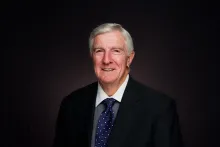
Before his retirement in 2021, Dr. Donald Ward pastored churches in Texas and Louisiana, and taught at Ambassador Bible College in Cincinnati, Ohio. He has also served as chairman of the Council of Elders of the United Church of God. He holds a BS degree; a BA in theology; a MS degree; a doctor’s degree in education from East Texas State University; and has completed 18 hours of graduate theology from SMU.
