
Don Ward
This transcript was generated by AI and may contain errors. It is provided to assist those who may not be able to listen to the message.
The title of the day, Who Was Married to Israel? So, who was married to Israel? Was it God the Father, or was it the one who became Jesus Christ? According to Jewish tradition, Israel entered into the Old Covenant, Marriage Covenant, at Sinai on the day of Pentecost in the third month of their journey toward the Promised Land. Before Israel entered into the Marriage Covenant, the Angel of God's presence, Yahweh, spoke the Ten Commandments directly to the children of Israel.
Let's identify, once again, the Angel of God's presence. You'll turn to Exodus 23 and verse 20. The understanding of the Angel of God's presence, that God's name is in Him, that is, the Angel of God's presence. Remember the simple syllogism that we gave in the sermon, titled, The Angel of God's Presence. God the Father was raised from the dead by the God of the fathers. I said, God the Father Jesus Christ was raised from the dead by the God of our fathers, Abraham was one of the fathers, so was Isaac and Jacob.
Therefore, the one who raised Jesus from the dead was the God of our fathers, and His forever name is Yahweh. You'll read that in Exodus 3, 14, 15, 16, 17 there. We also note here in Exodus 23 and verse 20 that God's name is in this Angel of God's presence.
Behold, I send an angel, Malek can be translated as a human being or for a spirit being, in this case, it's the one who became Christ. Behold, I send an angel before you to keep you in the way and to bring you into the place where I prepared, that is, into the Promised Land. See, God says, I have prepared them. I'm going to send Him. Beware of Him and obey His voice. Provoke Him not, for He will not pardon your transgressions. See, no angel, a created being, can forgive sin.
Only one who is on the God plane could forgive sin. And there were only two uncreated, co-eternal beings on the God plane. And so that one had to be the one who became Jesus Christ. He will not pardon your transgressions, for my name is in Him. But if you shall indeed obey His voice and do all that I speak, then I will be an enemy unto your enemies and an adversary to your adversaries. For mine angel shall go before you, my messenger, my Malak shall go before you. Remember, my name is in Him. Obey His voice, or He will not forgive your sins. And He will bring you unto the Amorites, the Hittites, the Persites, Canaanites, Hivites, Jebusites, and I will cut them off.
So that partially identifies Him. Then let's go to Acts 27 and verse 30. Before Israel entered into the marriage covenant, the angel of God's presence Yahweh spoke the Ten Commandments and gave the statues and judgments to Moses.
We'll see here some have doubted with regard to this. Stephen makes it quite clear here. Stephen was ordained a deacon, one of the ones that was ordained a deacon in the early church, the first of those who were ordained deacons. Stephen was full of the Holy Spirit, did many wonders, signs, and miracles.
He was called before the Sanhedrin to give an answer of what he was all about. He gave this sermon similar to what Peter gave on the day of Pentecost. It recounts the history of Israel. Basically, what he's doing is saying, you know, you've read in the prophets that you wanted a Messiah, and you've looked for a Messiah, this Messiah. I'm paraphrasing and adding here, this Messiah is the one you killed, and I'm here to declare him to you.
He rehearsed the history. So we'll speak it up here, which confirms what we have read there in Exodus 23, verses 23-23, verse 30. And when forty years were expired, there appeared to him in the wilderness of Mount Sinai an angel of the Lord. And we covered this in the sermon on the angel of God's presence, that this angel of the Lord also had the name Yahweh, an angel of the Lord in a flame of fire in a bush. When Moses saw it, he wandered at the sight, and as he draw near to behold it, the voice of the Lord came unto him, saying, I am the God of your fathers, the God of Abraham, the God of Isaac, the God of Jacob.
And Moses trembled and dared not look at it. Then said the eternal unto him, Put off your shoes from your feet, for the place where you stand is holy ground. I have seen the affliction of my people which are in Egypt, and I have heard their groaning, and have come down to deliver them. And now come, I will send you into Egypt. This Moses, whom they refused, saying, Who made you a ruler and a judge?
Remember when Moses saw the two Israelites fighting, one an Israelite, one the Egyptian, that he killed the Egyptian, buried him in the sand, and that was the reason he fled eventually. The same did God send to be a ruler and a deliverer, by the hand of the angel, by the hand of the malak, the messenger, which appeared to him in the bush. He brought them out after that he had shown wonders and signs in the land of Egypt, and in the Red Sea, and in the wilderness forty years. This is that Moses, which said unto the children of Israel.
So this, of course, introduces one of the greatest messianic prophecies in all the Bible, where Moses recounts and prophesies, The prophet shall the Lord your God raise up unto you of your brethren, like unto me him shall you hear. This is he that was in the church, in the wilderness, with the angel which spoke to him in the Mount Sinai, the angel which spoke to him in the Mount Sinai, and with our fathers, who received the lively oracles, and the Ten Commandments, the statues, and judgments, give to us to whom our fathers would not obey, but thrust him from them, and in their heart they returned again into Egypt.
Of course, you can go through the motion, and they were basically dragged into the Promised Land, but their heart was really not in it. And because of unbelief, as it says in Hebrews 3, they did not enter into the Promised Land. Now we look at verse 52.
We see here the identification of the angel of God's presence, the one who has God's name in him, the one who will forgive sin. Now remember that the angel of God's presence, you look back at Isaiah 63 and verse 9 for further confirmation of what we've just said. And we'll see this tie into something we'll be covering in just a moment here in Exodus. In Isaiah 63 and verse 9, in Isaiah 63 verse 9, In their affliction he was afflicted, and the angel of his presence saved them in his love, and in his pity he redeemed them, and he bared them and carried them all the days of old.
So it was the angel of God's presence. Of course, God the Father was directing it. He was involved, but the one who was interfacing directly was the one who became Jesus Christ. Now let's note Exodus chapter 19 and verse 17. Here Moses is receiving the instructions with regard to preparation to receive the Ten Commandments, the Judgments and Statues. In Exodus 19 and verse 17, they were to cleanse themselves and a lot of instructions with regard to preparation for receiving the Ten Commandments. In Exodus 19 and verse 17, Moses brought forth the people out of the camp to meet with God, and they stood at the nether part of the mountain, at the foot of the mountain, the mountain, the Sinai, all together filled with smoke, because the Lord descended upon it in fire.
And the smoke thereof ascended as the smoke of a furnace, and the whole mountain quaked greatly. And when the voice of the trumpet sounded, long and wax louder and louder, Moses spoke, and God answered him via voice. And the eternal came down, the Yahweh came down upon the Mount Sinai, and we just read Acts 7.38 for the identity on the top of the mountain, and the Lord God called Moses up to the top of the Mount, and Moses went up, and the eternal said unto Moses, Go down, charge the people, lest they break through unto the eternal to gaze, and many of them perish.
And let the priests also which come near to the Lord sanctify themselves, lest the Lord break forth on them. And Moses said unto the Lord, The people cannot come to the Mount Sinai, for you have charged this saying, Set bounds about the mountain and sanctify it. Set it apart. The eternal said unto him, Away get you down, and you shall come up, you shall come up then, and err with you, and let not the priests and the people break through, to come up unto the Lord, lest he break forth upon them.
So Moses went down unto the people, and spoke unto them, and God spoke all these words, saying, I am the Lord your God, which have brought you out of the land of Egypt, out of the house of bondage. And so we read Isaiah 63 and verse 9. It was Yahweh, the one who became the Son, Jesus Christ, who spoke the Ten Commandments directly to the people. Remember, Jesus said in John 5, 37, that no one had seen the Father nor heard his voice.
Now some questioned that with regard to after Christ was baptized, a voice from heaven came saying, This is my Son, in whom I am well pleased. Also, at the Transfiguration in Matthew 17, a voice came from heaven saying, This is my Son, listen to him. I'm paraphrasing that one. That does not mean that God the Father himself spoke it. It could have been in the third person. I choose to believe Jesus Christ. I've looked at this for many, many years, and so have many others.
That Jesus meant what he said when he said, In John 5, 37, no one has heard his voice nor seen his shape. The people were so frightened when they heard the voice from the mountain, they asked Moses to speak to them instead of Yahweh. Look at Exodus 20, verse 19. That's where we are right now. Exodus 20, verse 19. They said unto Moses, Speak you with us, and we will hear. But let not God speak with us, lest we die. Moses said unto the people, Fear not, for God has come to prove you.
And that his fear may be before your faces, that you will sin not. And the people, instead of far off, Moses drew near unto the thick darkness where God was. And then God began to instruct Moses, which really continued through the rest of chapter 21, 22, and most of 23. And after God had spoken this with the commandments, judgments, and statues in hand, Moses was now ready to present to the people the terms of the covenant. The terms of the covenant. Before answering the question of who was married to Israel, we need to understand how covenants were made in biblical times.
So let's briefly rehearse what we've just said. The angel of God's presence, according to Acts 7, verse 38, along with Exodus 23, verses 23-23, that the angel of God's presence, the one who became Christ, spoke the Ten Commandments, the statues, and the judgments. And after that was done, Moses was now ready to present the covenant because the terms of the covenant consisted of the commandments, the statues, and the judgments. And they were to enter into a covenant, which was also a marriage covenant.
Now how were covenants made in biblical times? Let's use the example of the covenant that God made with Abraham first, if you'll turn to Genesis 15, verse 1. I find this to be... I don't know, I just get excited about studying the Bible and having those aha moments kind of thing come with regard to understanding the Scripture and putting them together.
In Genesis 15, verse 1, After these things, the word of the Eternal came into Abram in a vision, saying, Fear not, Abram, I am your shield and your exceeding great reward. And Abram said, Lord God, what will you give me? Now remember, from Exodus chapter 3, verses 3, 4, 5, 6, along there, it says that, Abraham did not know God by his name Yahweh, but only the name El Shaddai, God Almighty. So when Moses writes this, he is inspired by revelation to put in the names that reveal the qualities, characteristics of God.
So, Abram said, Lord God, what will you give me, seeing I am childless, and the steward of my house is this Eleazar of Damascus. And Abram said, Behold, to me you have given no seed, and lo, one born in my house is mine heir. And behold, the word of the Lord came unto him, saying, He shall not be your heir, but he that shall come forth out of your own loins, your bowels, shall be your heir. And he brought him forth abroad, and said, Look now toward heaven, and tell the stars if these be able to number them. If you are able to number the stars, and he said unto him, So shall your seed be. So, Abraham promised that he would be the father of many nations, if you've heard many times. And he believed in the Lord, and it was accounted unto him for righteousness. Paul quotes some of this in Romans 4. Now we continue in verse 7. And he said unto him, I am the eternal that brought you out of Ur of the Chaldees, to give you this land to inherit it. And he said, Lord God, whereby shall I know that I shall inherit. So Abraham wanted proof beyond just speaking it this way that the promise would be fulfilled. And he said unto him, Take me an heifer of three years. Well, we're reading here is very important, because it has to do with how covenants were made in Old Testament times. And also, it will play into the Hebrews 9, 15 through 27. And he said unto him, Take a heifer of three years old, and a she-goat of three years old, and a ram of three years old, and a turtledove and young pigeon. And he took unto them all these, and divided them in the mist, and laid each piece one against another, but the birds he did not divide. And when the fowls came near upon the carcasses, a brahm shooed them away. And when the sun was going down, a deep sleep fell on a brahm, low, and a horror of great darkness fell upon him. During this deep sleep and dreamlike state, the promises were reiterated to him.
So we'll pick it up again in 17. And it came to pass that when the sun went down, and it was dark, behold, a smoking furnace, and a burning lamp that passed between those pieces. So in Old Testament times, they would take the sacrifices, divide them basically in half, one on one side, the other on the other side, and then the one who was confirming the covenant would pass between those two pieces, or those parts. So that which passed through was symbolic of God's presence. Behold, a smoking furnace and a burning lamp that passed between these pieces. This is like God's presence himself passed through those pieces. And in the same day, the Lord made a covenant with Abram, under your seed have I given this land from the river of Egypt, the Nile, under the great river Euphrates. Then it names the countries and the tribes that were in it. We want to focus now on the words in verse 18. In the same day, the Lord made a covenant with Abram.
In the Old Testament, the English phrase, make a covenant or made a covenant, is most often a translation of the Hebrew words, karat, k-a-r-a-t. And b-r-i-t. We have often heard the word b-r-i-t because of U.S., B.C., and prophecy and other writings. Karat b-r-i-t, which literally means cut a covenant. Cut a covenant. Today we have the expressions of let's cut a deal, let's make a deal, that kind of thing, perhaps dating all the way back to this.
It literally means cut a covenant. The verb karat means, or karat, literally means cut off, cut down, and the noun b-r-i-t means covenant. Cut a covenant. Once again in verse 18, And in the same day the Lord karat b-r-i-t, he made a covenant with Abraham. The smoking furnace of the burning lamp represented God's presence passing through between the halves that were divided there. And we read, The Lord passed between the divided animals, and in fact swore an oath that he would lose his own life if he did not give Abraham and his seed the land for inheritance. God is going to obviously keep his word, and when Israel is restored in fullness in the millennium, they will occupy all of that land. Right now, they by occupy don't mean in a bad sense. Today, Israel's presence in the Middle East, especially on the West Bank, is viewed as a bad thing. They call it occupied territory.
So this assertion, God saying that I am going to keep my word, is confirmed to Isaac, Abraham's son, and later to Jacob. You look at Genesis 26.
We'll read this one. We won't read the one with Jacob. It's very similar.
In Genesis 26, the promise, the oath, is repeated to Isaac 23. Genesis 26, verse 3, Now you look at Hebrews 6 and verse 13. The apostle Paul, by writing Hebrews and recounting the superiority of the Old Covenant to the New Covenant, and also the priesthood of Melchizedek, refers to this covenant. Hebrews 6, verse 13, So God said, I'm making this covenant. I'm walking between the parts here. And this is just as good as my life. I will keep my word.
So it is clear that the animals or victims that were sacrificed or killed, they were divided, as Abraham did. Then the confirming party passed between the divided sacrifices, a flaming fire and smoke, as God passed through. The same cutting of a covenant took place when Israel entered into the Old Covenant, the Marriage Covenant, which was also a marriage covenant. Now let's go to Exodus 24. Remember that God had spoken the Ten Commandments in chapter 20 and 21, 22, and most of 23. The statues and judgments were given. And with these in hand, He's now ready to present these to the nation of Israel. The Old Covenant was a national covenant. The Old Covenant was a national covenant. The New Covenant is individual and specific. We individually, personally enter into the New Covenant.
In Exodus chapter 24, as we said, Moses now has the commandments, the judgments and statues in hand. We'll pick it up in Exodus 24. Moses came up and told the people all the words of the Lord and all the judgments. And all the people answered with one voice and said, all the words which the Lord has said, will we do? The marriage ceremony of the United Church of God for a long time has been, do you in covenant with God and men take this woman, take this man to be your lawful wife or husband? And then, of course, you say, I do. Moses wrote all the words of the Lord and rose up early in the morning and built an altar under the hill and twelve pillars, according to the twelve tribes of Israel. And he sent young men of the children of Israel, which offered burnt offerings and sacrificed peace offerings of oxen unto the Lord. Now this, as we'll read from Jeremiah in just a moment, they also cut these animals. They divided these animals, and you had the parts on either side, halves on either side. I don't know how many marched through, but we'll read from Jeremiah that they did march through it. They being how many I don't know. And so, verse 6, Moses took half of the blood and put it in basins, and half of the blood he sprinkled on the altar. And he took the book of the covenant and read it in the audience of the people, the commandments, statutes, judgments. And they said, all that the Lord has said will we do and be obedient. So, here the whole covenant is being consummated. And Moses took the blood and sprinkled it on the people and said, Behold, the blood of the covenant, which the Lord has made with you concerning all these words. Today, the blood of Jesus Christ is symbolically sprinkled on our hearts. Now we go to Jeremiah 34 and verse 17. Jeremiah 34 and verse 17. And we'll see clearly here that indeed some of the animals were cut and divided, as Abraham had done when that covenant was confirmed. Jeremiah 34 and verse 17.
And I will make you be removed into all the kingdoms of the earth, and I will give the men that have transgressed my covenant, that covenant that we just read about. The Old Covenant, which is also a marriage covenant, which have not performed the words of the covenant which they had made before me, when they cut the calf in two and passed between the parts thereof. So we see that confirmation of what I just said. The princes of Judah, the princes of Jerusalem, the eunuchs, the priests, and the people of the land, which pass between the parts of the calf, which are repeated again. I will even give them into the hand of their enemies and unto the hand of them that seek their life, and their dead bodies shall be meat unto the fowls of the heavens and to the beasts of the earth. Of course, that is going to happen on a grand scale when Jesus Christ comes again, you read about, in Revelation 19. So we see that the covenant was performed in the Old Testament by dividing the sacrifices into the confirming parties going between the sacrifices. Of course, in one case of that with Abraham in Genesis 15, it was God who passed through. Then the Old Covenant, it was Israel. But sadly, after the covenant was confirmed, as we've just read here in Jeremiah, Israel played the harlot and forced Yahweh to give her a bill of divorcement. The first two chapters of the book of Hosea focus on God graphically describing Hosea's Hordim. So we want to go to Hosea 2 to a large degree. The Hordim are described in chapter 1, but we want to now emphasize this part about God put Israel away. In Hosea 2, verse 1, Say unto your brethren Ami, Ami means my people, and to your sisters Rohama, which means having obtained mercy. Of course, after he put them away, they became Lohama. Lo is the Hebrew word for English translation for not. Not my people and not having obtained mercy. Plead with your mother, plead for she is not my wife, neither am I her husband. I tried to say it wasn't really a marriage covenant, but this says I am not her husband. All of the terminology that we know regarding marriage between husband and wife are given with regard to this marriage covenant. Neither am I her husband, let her therefore be put away, that her hordim be put out of sight, and her adulteries from between her breasts, lest I strip her naked and set her in the day that she was born. In Ezekiel 16, you have a description of Israel symbolically as a newborn, with all the afterbirth and everything on it, and God cleaned them up and made them His, and make her as a wilderness, and set her like a dry lin, and slay her with thirst. Now we go back to Isaiah 50. So the point here is showing clearly that it was a marriage, that a member of the God family was married to Israel at that time. Even the family relationship between father and son did not exist until Jesus was begotten in the womb of Mary. But the two God beings, one of them entered into a covenant of marriage with Israel. Now we're at Isaiah 50 in verse 1.
Isaiah 51 verse 1, Where is the bill of your mother's divorcement which I have put away, or which of my creditors is it to whom I have sold you? Behold, for your iniquities have you sold yourselves, and for your transgressions is your mother put away. So the Bible speaks of it in terms of a marriage covenant. They were given a bill of divorcement. Now we come to this big question. If God the Father was married to Israel and put her away, how is he able to marry the Israel of God under the terms of the new covenant? Now we begin to answer that. We will go to Romans chapter 7, Romans chapter 7 in verse 2.
Romans chapter 7 in verse 2. No, you not, brethren, for I speak to them that know the law, how that the law has dominion over a man as long as he lives. For the woman which has a husband is bound by the law to her husband so long as he lives. So long as he lives, if you're bound. I don't want to get into the DNR arguments, but just reading the Bible and what it says.
And if the husband be dead, she is loosed from the law of her husband. So then if while her husband lives, she be married to another man, she shall be called an adulterous. But if her husband be dead, she is free from the law so that she is no adulterous, though she be married to another man. Wherefore, my brethren, you also are become dead to the law by the body of Christ. How so? Because upon repentance and the faith and the sacrifice of Christ, the death penalty which comes about as a result of breaking the law, the wages of sin is death. Upon repentance and faith, that law of death is removed from you, dead to the law by the body of Christ, his sacrifice, that you should be married to another, even to him who is raised from the dead, that should bring forth truth unto God, that we should bring forth truth unto God.
God the Father did not die for the sins of the world. Israel is not dead.
So which member of the Godhead is free to marry the Israel of God under the terms of the New Covenant? So Paul clearly says, and we read verse 4 again, Wherefore, my brethren, you also are become dead to the law by the body of Christ, that you should be married to another, even to him who is raised from the dead, which is Christ, that we should bring forth truth unto God. It is clearly revealed in Scripture that Christ is in the husband role to the church, and the church is going to marry him. So we go to Ephesians 5 and verse 22. Ephesians 5 and verse 22.
In Ephesians 5 and verse 22, Wives, submit yourselves unto your own husbands, as unto the Lord. For the husband is the head of the wife, even as Christ is the head of the church, and he is the Savior of the body. Therefore, as the church is subject unto Christ, so let the wives be to their own husbands, in everything. Husbands love your wives, even as Christ also loved the church, and gave himself for it, that he might sanctify it, cleanse it with the washing of the water by the word.
Also, in Revelation 19, verse 7, we see the marriage supper of the Lamb, where the church does marry the Lamb.
Right now, as we'll read in just a moment, we are in the state that the Bible calls, and spousal we call it in today's world, engagement period. In Revelation 19.7, Let us be glad and rejoice and give honor to him, for the marriage of the Lamb has come, and his wife has made herself ready. And to her was granted that she should be arrayed in fine linen, clean and white, for the fine linen is the righteousness of the saints. And he said unto me, Right, blessed are they which are called in the marriage supper of the Lamb. And he said unto me, These are the true sayings of God.
God does things in patterns, in duality, and in type, anti-type. The Word, the one who became Jesus Christ, was married to physical Israel, while God the Father was directing everything and fully participating with the angel of his presence. That same one who was married to physical Israel is now espoused to spiritual Israel. Look at 2 Corinthians 11. 2 Corinthians 11. That one is now espoused in what we call the engagement period. We'll be married, as we read from Revelation 19 and 11.2. 2 Corinthians 11.2. For I am jealous over you with godly jealousy, for I am espoused to you to one husband, that I may present you a chaste virgin to Christ. So we're in what is called the espousal state. The one who became Jesus Christ was married to physical Israel, and the one who died for our sins, resurrected, sits at the right hand of the Father. We're espoused to him. The Israel of God and the Israel of God and the Lamb will be married to the marriage supper of the Lamb. Galatians 6.16 says that we are the Israel of God. In the book of Hebrews, the apostle Paul further clarifies what was required for the dissolution of the Old Covenant marriage relationship. So now we want to go to Hebrews 9, and that scripture of the day will be the first scripture we read here. Hebrews 9 and verse 15.
Hebrews 9 and verse 15. For this cause, he is the mediator of the new covenant. The word there is diathakei, D-I-A-T-H-E-K. I think it's K-I-A, maybe just K-A, K-I-A, I believe. For this cause, he is a mediator of the new covenant, that by means of death, for the redemption of the transgressions that were under the first covenant, they which are called might receive the promise of eternal inheritance.
For where a covenant is, there must of necessity be the death of the covenant-maker.
Now, if you read it like it is, it makes it sound like it's a will. In just a moment, I'm going to read it from a literal translation that's taken from the Greek text itself.
For a covenant is of force after, and in the King James and other translations, men appears in the text. You can go to the inner liners, you can go to several sources. It will tell you clearly that the word man is not in the Greek text.
For where a testament is, there must of necessity be the death of the testator, for a testament is of force after are dead. Men is not there. This is what it says.
The word man is not in the Greek, nor is it necessarily implied unless it be in the use of the Greek word rendered dead. The proper translation is upon or over the dead. The use of the word men hereby our translators would limit it to making it a will, which it is not.
For a covenant is of force after men are dead, according to the translation, leave out men. Otherwise, it is of no strength while the covenant maker lives. Now, if you go back to how covenants were made in the Old Testament, it becomes clear. The covenant maker is the victim. The animals were killed, and they were divided. The death of the sacrifice is required for the covenant to be confirmed.
That is the animal part.
Those confirming the covenant pass between those two parts, as we have explained. I'm going to read now Hebrews 9, 15-17 from the literal translation.
9-15. Therefore, he is the mediator of a new covenant, so that at death occurring, for the deliverance of the transgressions of those under the first covenant, those who are called may be obtaining the promise of the enjoyment of the allotment. For where there is a covenant, it is necessary to bring in death of the covenant victim. See, you're confirming the covenant, and the animals were killed, and they were divided, and the confirming party went between the parts.
It is necessary to bring in death of the covenant victim, for a covenant is confirmed over the dead, since it is not availing at any time when the covenant victim is living. The animals had to be killed, had to be cut in parts. Jesus Christ had to die for the sins of the world, because the wages of sin is death.
For a covenant is confirmed over the dead, since it is not availing at any time when the covenant victim is living. Binds an expository dictionary of Biblical words provides the following comment. While the terminology in Hebrews 9, 16, through 17, as it appears in most translations today, has the appearance of being appropriate to the circumstances of making a will. There is excellent reason for adhering to the meaning, covenant making. We examine the meaning of the words covenant and test-hater, so we know that one of the definitions of test-hater is covenant making. The rendering, the death of the test-hater, would make Christ a test-hater of a will, which he was not. He did not die simply that the terms of a will might be fulfilled for the heirs. He is a mediator of a new covenant. He himself the victim whose death was necessary. Why? Because of wages of sin is death. The idea of making a will destroys the argument, as we'll read in just a moment in verse 18 and following verses. The idea of making a will destroys the argument. We may render somewhat literally this. For where a covenant is, a death is necessary to be brought in by the one covenanting, or making the covenant. For a covenant over dead victims is sure, since never has it forced when the one making the covenant lives. With Christ especially in view, in order for the covenant to be made. See, Jesus Christ is a mediator of the new covenant. According to Malachi 3.1, there's more about this. Now look at Malachi 3.
He is the messenger of the new covenant. He is the mediator of the new covenant.
In Malachi 3, verse 1, Behold, I will send my messenger, my angelos, in this case John the Baptist, a human being, and he shall prepare the way before me, the me being, the one who became Christ, and the Lord the Adonai, whom you seek, shall suddenly come to his temple, even the messenger of the covenant. Which covenant? The new covenant. Jesus Christ is the messenger of the covenant, the mediator of the new covenant, whom you delight in. Behold, he shall come, says the Lord of hosts.
Now to Mark chapter 1. In Mark chapter 1, Mark begins his Gospel account by quoting from Malachi.
And here we see that Jesus was the messenger of the new covenant. We'll see in just a moment that the new covenant was prophesied and how that comes to be. In Mark chapter 1 and verse 1, As it is written in the prophets, Behold, I send my angelos, my messenger, John the Baptist, in this case, before your face, which shall prepare the way before you, the voice of one crying in the wilderness, prepare you the way of the Lord, make his paths straight. So John, that is John the Baptist, did baptize in the wilderness. He baptized the baptism, which is called the baptism of repentance. Then after John was put in prison, verse 14, after that John was put in prison, Jesus came into Galilee preaching the Gospel of the kingdom of God, saying, The time is fulfilled, the kingdom of God is at hand, Repent you and believe the Gospel, the messenger of the new covenant, the mediator of the new covenant. Look at Jeremiah 31, 31. Easy to remember. Jeremiah 31, 31. Just as Hebrews 8, 8, as we'll see in a moment, it's easy to remember. Jeremiah 31, 31.
Hopefully you begin to see how beautifully the pieces of the Bible, the type, the anti-type, fit together, the duality.
Hebrews, in Jeremiah 31, 31. Behold, the days come, says the Lord, that I will make a new covenant with the house of Israel and the house of Judah, not according to the covenant that I made with her fathers in the day that I took them by the hand to bring them out of the land of Egypt, which my covenant they broke, although I was the husband, although I was a husband unto them, says the Lord.
But this shall be the covenant that I will make with the house of Israel after those days, says the Lord. I will put my law in their inward parts and write it in their hearts, and I will be their God, and they shall be my people. And they shall teach every man his neighbor and every man his brother, saying, Know you the Lord, for they shall all know me from the least of them unto the greatest of them, says the Lord. For I will forgive their iniquity and will remember their sin no more. So this new covenant was prophesied by Jeremiah. The Apostle Paul... Now look at Hebrews 8, verse 8. The Apostle Paul in Hebrews 8, verse 8 basically quotes what we just read here from Jeremiah 31, and applies it to those who are being called into the Israel of God today.
Hebrews 8, verse 8.
For finding fault with them, he said, Behold, the days come. So I'm not going to read all of that again. It is basically word for word what we just read from Jeremiah 31 through 35.
Now in verse 13, in that he says, A new covenant he has made the first old. Now that which decays and waxes old is ready to vanish away.
Now you look at Hebrews 10, and you'll see the fulfillment of the laws written on the inward parts.
In Hebrews chapter 10, verse 16. Hebrews 10, 16. This is the covenant that I will make with them after those days, says the Lord. I will put my laws into the hearts, and in their minds will I write them, and their sins and iniquities will I remember no more.
So today, through the Holy Spirit, the law of God is written on our inward parts. We have received the earnest of eternal life, the Spirit of God. We have a new essence and a new mind dwelling within us. Now, let's pick it up again in Hebrews 9.
We left off in 17, showing that Jesus Christ was the covenant maker, and it was necessary for the covenant maker to die in order for the covenant to be confirmed, because why? The wages of sin is death. So then Paul continues, and this shows you in context the validity of what we have said. Verse 18, Hebrews 9, 18. Whereupon neither the first covenant was dedicated without blood. He had the death of the animals and divided in parts. For when Moses had spoken every precept to all the people according to the law, he took the blood of calves and of goats with water, scarlet, wood, and hyssop, and sprinkled both the book and all the people, saying, This is the blood of the covenant which God enjoined unto you. Moreover, he sprinkled with blood both the tabernacle and all the vessels of the ministry. And almost all things are by the law purged with blood, and without shedding of blood there is no remission. It was therefore necessary that the pattern of things in the heavens should be purified with these.
That the things in heaven should be purified with these. But the heavenly things themselves, I misread that and I'll try it again, it was therefore necessary that the pattern of these things in the heavens should be purified with these. But the heavenly things therefore themselves with better sacrifices than these. For Christ has not entered into the holy places made with hands, which are the figure of the true, but into the heaven itself now to appear in the presence of God for us. Nor yet that he should offer himself often, as a high priest entered into the holy place every year with blood of others. For then he must have suffered from the foundation of the world. But now, once in the end of the age, hath he appeared to put away sin by the sacrifice of himself. So you see how all of this hopefully fits together. In summary, I think what I'm going to do with this is I'm going to send my outline out on email so everybody has a copy. Those who are not on email will make a copy for them, make it available next week at the information table. For those who do have email and a printer, don't be lazy and depend on that on the information table. Now, in summary, we note that in Hebrews 9, 15, through 17, the apostle Paul uses a play on words to convey a dual message. The Old Covenant marriage relationship was dissolved with the death of the Covenant Maker, the Old Covenant Maker, the one who was married to Israel. God the Father did not die. Israel did not die. But the one who became Jesus Christ, he did die.
Secondly, his death brought redemption and promise of eternal inheritance for believers. Furthermore, Christ is now free to marry the Israel of God under the terms of the New Covenant, which we read from 2 Corinthians 11.2 that we are now espoused to Christ. Ephesians 5, 22, 23, 24 that Christ is the head of the church. Revelation 19, 7, and 8 that we're going to marry the Lamb, the marriage supper of the Lamb. So furthermore, Christ is now free to marry the Israel of God, Galatians 6, 16, under the terms of the New Covenant. Thus, the law of God is perfectly fulfilled through his life, death, and resurrection. And of course, then Pentecost, the sending of the Holy Spirit, the Holy Spirit shed on us through Christ, proceeding from the Father.
So we see clearly, once again, the great wisdom of God the Father and his Son in planning and implementing the great plan of salvation. Remember, God works in patterns and duality.
The great plan that presents us with the awesome opportunity to rule and reign forever with God and Christ in the kingdom of God. There's no way to describe the awesomeness, the intricacies of this great plan. But once you get a grasp of really what is taking place within it, to me it opens up a lot of horizons for further study. There's also excitement about what you now have come to understand. Of course, as Paul writes in Corinthians, Knowledge Puffs, Charity Edifies, and as we sang the song, If I have not charity, but have not agape, love, I am nothing. So, brethren, I hope we will study these things and get them firmly entrenched in our minds. As I said, I will email to the list that you get the bulletin on Friday afternoon of the outline that I work from here today.
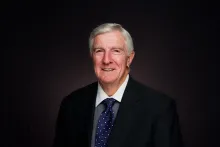
Before his retirement in 2021, Dr. Donald Ward pastored churches in Texas and Louisiana, and taught at Ambassador Bible College in Cincinnati, Ohio. He has also served as chairman of the Council of Elders of the United Church of God. He holds a BS degree; a BA in theology; a MS degree; a doctor’s degree in education from East Texas State University; and has completed 18 hours of graduate theology from SMU.
