
Robin S Webber
This transcript was generated by AI and may contain errors. It is provided to assist those who may not be able to listen to the message.
Thank you very much, Karen. Certainly must say thank you very much to Mr. Grinnell for the very enthusiastic song leading today, and also Robert for the first message that he brought all of us this afternoon. All of us at one time or another have been asked questions. Enquiries have been posed at us. We're used to being asked questions. We are oftentimes asked questions, such as, perhaps, we're buying a certain kind of beverage at a store, and we're asked, can I please see your driver's license?
We're being questioned about our age. At other times, we'll be asked about a question over the telephone, especially when we're dealing with the security issue. And the individual on the other side of the phone will say, could I please have the last four of your social security number? Sometimes we're also asked this question, oftentimes on highways or on the side of a highway, where a tall gentleman will come up to your window for some reason or another and can say, may I please see your driver's license and your registration?
They always say it was somewhat of a smile, so we're asked a lot of questions in our life. Hopefully not that last one too much. But what I want to pose to you this afternoon is to lodge into your minds and to lodge into your hearts perhaps the most important question of our human existence and the one that we'll have to come up with an answer to. And that is simply this. Who do you say that I am? Who do you say that I am? This question is famous in the Bible. We find it in the scripture in Matthew 16.
If you want to turn over there for a moment, there was a lot of banter about just exactly who is this Jesus of Nazareth. And we come to Matthew 16 and verse 13 and it says, And when Jesus came into the region of Caesarea Felipi, he asked his disciples, saying, Who do men say that I, the Son of Man, am? So they said, some say John the Baptist, some Elijah, and others Jeremiah are one of the prophets.
And then verse 15, he narrowed it down and he asked them, he said to them, Not what everybody else is thinking, not how everybody else is acting or responding, I want to know something from you and this is what I want to know. But who do you say that I am?
Simon Peter answered and said, You are the Christ, the Son of the Living God. Verse 17, Jesus answered and said unto them, Blessed are you, Simon Bar-Jonah, or Son of Jonah, for flesh and blood has not revealed this to you, but my Father who is in heaven. Friends here in Los Angeles, this question does not remain stuck in the book of Matthew. Neither is it lost on individuals 2000 years ago.
But this is a question that each and every one of us, man, woman, and child as we grow up and develop, must answer. The question comes to us. But who do you say that I am? And the answer is not only in the words. That's only a start. But it's how we live our life every day as to who we say Jesus Christ truly is in our life.
And again, it is an answer that we start out with, just as Peter did, but it is also an answer that grows and develops over our spiritual lifetime. It's often been said that the poem that is read by the man that is 80 years of age, or excuse me, the poem that is read by the individual of 20 years of age reads differently when you're 80 years of age. It's something that happens. It's something that grows into. What I want to do today, this is so much verse here, I want to give you a practical story out of the Scripture.
And thus, my text today is going to be John 9. Join me if you would in John 9. It's a wonderful story. It's a beautiful story. It's an action-oriented story, and I'm going to hopefully, in the course of this message, be inspired from above to call you to action, to hold on to something, to do something, to grow in something, and to be something for God the Father and for Jesus Christ.
For those that are wanting a title for this message, it's simply this, but who do you say that I am? I'll give you a second title as well, and that is simply this. Always remember God's story in you. Always remember God's story in you. And my encouragement to you, my dear friends here in Los Angeles this afternoon, is to remind you that God has given each and every one of us a story.
Every one of us a story. I'm going to tell you my story a little bit later on. I'm also going to share another story that just really inspired my wife and I this past week, based upon having given this message in another congregation a week ago, and how it caused an individual to step up and to be able to say, but who do you say that I am? We notice as we go to John 9, John 9 is an interesting passage that we go into. It's the story just to put it out there of Jesus and the blind man. But that story is not only the story of Jesus, it's not only the story of the blind man, it's not only the story of Jesus and the blind man, it's the story of you, you, and your life, and what you need to hold on to. Join me then in John 9 and verse 1, and it says, Now as Jesus passed by, he saw a man who was blind from birth.
And his disciples asked him, saying, Rabbi or teacher, who sinned here? This man or his parents, that he was born blind. And Jesus answered, Neither this man nor his parents sinned, but that the works of God should be revealed in him.
Now let's understand what was going on here. We look at that opening few words and it says, Now as Jesus passed by. I have a question for you, and it's simply this. Do you think that this was simply an accidental encounter? Do you think that Jesus just bumped into this situation?
Or did Jesus the Christ know exactly where that man was and came upon him for a purpose to teach you and me something in our lives today? I suggest, and I say it as the first, because the God that you worship and the God that I worship is a God of design. And our God, our Father above, does not have accidents and neither does his Christ. And as we're going to see what Jesus does with this individual is to recognize that God never wastes a miracle. God never wastes a miracle. He knows exactly what he is doing. Every, you know, the measurements that Mr. Lyons just gave us. God knows every second, every minute of his encounter with us. He doesn't bump into us. He doesn't have accidents with us. He knew who this individual was. God never wastes a miracle.
He chose that he was going to heal a man that everybody, everybody in the city knew was blind, and he'd been blind from birth. He wasn't just poked in the eye on Tuesday. He didn't get a black eye from somebody on Wednesday. This gentleman had been blind. Everybody knew he was blind and most likely was a beggar and was living based upon the almsgiving of the Jewish community. The Jews are very, very big on almsgiving. It was one of the big three of Judaism that they were to take care of those who could not take care of themselves. So what I'm suggesting, friends, is simply this. Jesus knew exactly what he was doing. Now the writer here said, well, he's passing by.
As he came that way, he encountered this man. And you notice the questions that came up from even his disciples. What did this man do? Why is he blind? See, back in that world and in that time in antiquity, not only in the Jewish community but in other faith communities, people looked at cause and effect and they looked at a God that cursed individuals. Obviously, there was something wrong with this man. And if it was not him, it must have been Mama and Papa that did something.
And thus, he was there as an example, in a sense cursed.
And the disciples, those of Christ, were doing the same thing that you and I do sometimes, which is the exact opposite of how God operates. The disciples were asking, how come?
Wrong question. Jesus Christ did not ask or answer to how come, but by what he said, that this man's situation is going to be the glory of God, that Jesus was looking at what could be done. How often do we, even as people of faith, as Christians, sanctified, redeemed, and set apart, still have an old thinking of the negative, of looking back, of the wondering, of trying to put together the jigsaw puzzle of a person's life and figuring them out as to why, rather than God being solution-oriented. Rather than how come, as the disciples were, notice what Jesus says here, he says, this man didn't do anything. It was done that the works of God should be revealed in him.
What a positive, upbeat, joyful, confident encounter with the situation that, yes, indeed, was humanly troubling. I must work the works of him who sent me while it is day. The night is coming when no one can work. And Jesus is saying, I must work the works of him, speaking of the Father, and speaking that this was going to be to God's glory. What is the work of God, other than God's glory is his compassion to be visited out upon individuals in his time, and in his way, and in his need. As long as I am in the world, I am the light of the world. Verse 6, when he had said these things, he spat on the ground and made clay with the saliva, and he anointed the eyes of the blind man with the clay. Now, I realize that Mr. Robert Lyons just got up here and did a lot of different things with measuring rulers and this or that. I might gross you out if I actually did what Jesus did. Get ready. Where's the spittoon?
Are you with me? See how far I can... No, just teasing. Just teasing. Aren't you glad I'm teasing?
But notice what it says. Jesus went immediately into action.
Not about how come, but what could be done. He got down, he spat on the ground, and he made clay with the saliva. And then what he did... You notice what he did? You see a couple things happening in this verse. In antiquity, people often looked at saliva. Still is. If you see a cat and it has an ouchie, a hurt, a wound, what does the cat do? It begins licking itself. There's a certain healant quality in saliva. And also at times, clay is very positive towards helping a situation get better. But it says, he spat on the ground and made clay with the saliva. Can you imagine? Think of our Savior getting down on the ground, as it were, and he begins working with clay to demonstrate the intentions and the direction and the work of God. Have you ever thought, when you look at this verse, this is not the first time that the one who is the Christ, the one who was the Word, the one who created all things, the one that shaped and formed Adam out of the dust of the ground, is used to working with the earth to demonstrate where God is going. And then he put that all together. The spittle, the dust, made it into a salve. And then you worry sometimes about where I'm going to put the oil on your head when I anoint you, or Mr. Garnett anoint you, or Mr. Helgi. Can you imagine all of that? And then they put, you know, can you imagine the blind man? He can't see a thing that's going on. And all of a sudden, he feels this fresh, cold, do I dare say, wet clay, and it's put on his eyes. This is what's happening, and it's for a purpose. We notice then that it said, notice what Jesus said, go and wash in the pool of Selium, which in translation is sent. So he went, and he washed, and then notice he came back seeing.
Jesus Christ had a rendezvous with this man to reveal something to him that was going to grow in the course of the story. And he gave him an instruction. He said, notice go and wash in the pool of Selium. Now the pool of Selium was outside the walls. It was down in the Valley of Kidron. It was by the spring of Gihon. And by that time, during the Herodian period, it could have even looked almost like an outdoor Roman bath scenario. It might have been a ritual washing pool. There's a lot of different thoughts about this, but we recognize that the man had to go a short distance to do this, and he did it. What's very interesting that we need to understand, and some of you are just new to the faith, new to the Word, beginning to develop a relationship with God. You just simply always remember this. When God begins working with you, He's going to give you something to do.
He's going to give you a task. It might be obeying His commandments. It might be obeying the Ten Commandments, but it might be something else, just as we heard today in the Bible study about learning to better honor your parents, that perhaps for one reason or another there have been challenges. When God gives us His revelation, there's something that goes out, and we have a responsibility. But we have to be open. We have to be willing. We have to be available. You know, when you look at this story, it says, Jesus said, here's what you're going to do. You go do this, then you come back. And He was seeing. And you notice one thing that almost puts a smile on your face when you read this. Why is it that in the Bible that most good attitudes normally happen in one verse and bad attitudes can spill over a whole book of the Bible when you think of the book of Numbers? And you think about a life that goes around in circles because we just simply won't ask or do what God asked us to do. This man was told to go to wash in the pool of Selium. You go, you wash, you come back, He sees. You go back to 2 Kings 5, which is the very famous story of Naaman, the Syrian general. And Naaman is asked by the prophet, you shall go down and you shall dip yourself seven times in the River Jordan. Now, is that too hard to do? Seven times, not 700.
And the Syrian general comes back and says, excuse me, wait a minute, please. Are you kidding me? You want me to go to that mud pit? You want me to go there? Have you ever seen what a river looks like? Have you ever been up in the mountains of Lebanon? Have you ever been in Syria? I mean, we've got real rivers up there. We've got real rivers. Susan was just back in Ohio and she saw rivers that flow. That's like us looking at the Los Angeles River in July.
You know what the Los Angeles River looks like in July? That's where they train people to be bus drivers down there about 55th and the Harbor Freeway. Susan would come back and say, we've got rivers in Ohio. They flow all year long. Becky could say the same thing if she's here. She's a bakai. The general says, no, no, no, no, no, no, no, no. And isn't that what we all do sometimes? No, no, no, no, no, no, no, no, no, no, no. And we bang our head against the wall rather than just saying, yes, Lord, in faith and that our obedience is the shadow of faith and thus we do it. Let's continue with the story here. Let's notice how available, how open, how willing this servant of God would be. Now, it says that he comes back and says, is everybody happy? Are we happy, folks? This is fantastic. He's got his sight. Therefore, the neighbors, when they saw this, who had previously seen that he was blind, said, is not this he who sat and begged?
They'd seen him beg since he was a little boy. And some said, this is he.
You know, they put on their glasses, you know, like some of us that are a little bit older put on our glasses to get a better look here or we get out with Robert, our measuring rod, you know, okay, when he left here, he was five foot ten. Let's see if he's still five foot ten. I can see Robert there, you know, kind of look, kind of, kind of, but is this really him?
And some said this is he, others said, well, it's like him. And he said, I am he. And therefore they said to him, how were your eyes opened? Verse 11, very instructive. He answered and said, a man called Jesus, made clay and anointed my eyes and said to me, go to the pool of Selahum and wash. So I went and I washed and I received sight. Now, that's a very short sentence, brethren, that speaks to you and me in great volumes.
Speaking of why this man was chosen by God for this miracle. This was a man, are you ready?
That had consistent integrity. He stayed with the story that God had given him.
And he did not forget it. He did not change it. He did not bend it under pressure.
He did not up it. You know, sometimes like the fish story where it was this big, but it gets this big. He told it like it is. He says, a man. And that's all he knew at that point. That was the beginning of the revelation.
Who do you say that I am? His first answer back, well, this man did this. Verse 12, then they said to him, well, where is he? She said, I don't know. And they then brought him, who formerly was blind to the Pharisees. You can almost see him being picked up by both elbows and rushed along in a crowd to the Pharisees that always had an opinion about something that either God was doing or, yes, God was not a part of. So they took him to the Pharisees, those that were separated, those that were set apart.
And verse 14, now, very important now, please notice this, now it was a Sabbath when Jesus made the clay and opened his eyes.
And then the Pharisees also asked him again how he had received his sight. And he said, he put clay on my eyes and I washed and I see. Is that not a simple story?
He put clay on my eyes, I washed and now I see. The story was not broken. You know, when you tell the truth, and kids, you might remember this, when you tell the truth, you never have to remember what you said.
This gentleman, this developing follower of Jesus, had consistent integrity. Therefore, some of the Pharisees in verse 16 said, this man is not from God because he does not keep the Sabbath. Others said, how can a man who is a sinner then do such signs? And there was division among them. See, back in that time, because of the rules that had been made, extra-biblical rules, traditions, and do I dare say the culture of the church, then? Not the explanation of the Bible, but the culture of the church. And sometimes we can get the Bible mixed up with culture. The culture said you could take care of a man to the point of making him rest and not get any worse. So if you saw like that, not an oxeniditch, but a man that was hurt, you could take care of him. You might be able to bring him up out of that ditch. You might be able to make sure that he was all right. You could stay the situation, but you couldn't, with Robert's measuring rod or inch, give him an inch more of health. Otherwise, that was work on the Sabbath. Now, you think about this for a moment.
I wonder if you had a healing. You were healed of cancer. You had been blind all your life and your given sight. And you come into the United Church of God Los Angeles congregation. You think of somebody coming through that door over there, and you are so excited. I was going to say you could spit, but somebody already spit in the story. You are so excited, and you want to share it with your church community. But your church community looks at you and says, oh, you can't do that. That's never been done before. And puts you on the ignore button. Jesus was not about just simply culture. He was about his father's business. And so you think, wow, that's kind of tough. But notice now, they come back again. The man had told his story. He had told it completely. It was a simple story. It was his story. And he tells the story, and you think, oh boy, I got through that one. I can rest now. I'm in the gold zone. Nothing else. No, number two. Then they said to the blind man again, what do you say about him? Because he opened your eyes. And then notice what he says. It's no longer that he's just a man, but he says he's a prophet. He's a prophet. He begins to move him up. Shall we say the food chain? And he says, he's not just a man. Because of what he did, he is a prophet. But the Jews did not believe concerning him that he'd been blind and received his sight. They began to strip him of his dignity. They called him a liar until they called the parents of him who had received his sight. Oh, good. It's like the guy dressed in white on the white pony coming over the hill. The folks are coming. Everything's going to be okay now. Mama and Papa will take care of this. And they asked him, saying, is this your son who you say was born blind? How then does he see? And his parents, verse 20, answered them and he said, we know that this is our son and that he was born blind. This is him. We know what his condition was, but by what means he now sees, we do not fear. We do not know. Or who opened his eyes, we do not know. He is of age. Ask him. He'll speak for himself. He's all yours. We're going to testify no further.
He said, well, that sounds okay because he's a grown man and these are parents, so they've done their duty. They kind of ID'd him, as it were. But so often things are done, but we have to ask ourselves then what is the underlying motivation of why things are done? Not only what is done, but underneath, why is it done? Notice what it says. His parents said these things because they feared the Jews. For the Jews had agreed that if anyone confessed that he was Christ, he would be put out of the synagogue. And therefore, his parents said, he is of age. Ask him. They were afraid. They were quaking in their boots. And may I make a comment? Humanly, if I had been there, if I had been in their position, yeah, I might have been quaking in my boots as well. And there are situations in our life when at times we're going to be quaking in our boots. Our knees will be shaking, but if we know the answer as to who Christ is, our knees can be shaking, but our hearts will be firm. And it will be our hearts that will ultimately triumph over our shaking knees. Let's take the story further.
So he stood up to all of this. But did they go away? No, they didn't go away. So they again called the man who was blind and said to him, give God the glory. We know that this man is a sinner. And he answered, that is the blind man or the man now who can see and said, whether he is a sinner or not, I do not know. One thing I do know, one thing I do know that though I was blind, now I see. This isn't complicated. Humanity makes things complicated. Many voices coming into our life can make things complicated and can take away God's glory in us and what he is doing.
Consuliate can diminish it, can make us confused, can create a wonderment. He said, one thing I know, I do know I was blind, but this I do know and I do not know much, but this is the story that God has given me. I was blind, but now I see. Oh, this is one of the great, great echoes that come down through the Gospels. But was that going to satisfy the community that was around him, the church of his time? And then they said to him again, what did he do to you? How did he open your eyes?
And he said, I answered them, I told you already and you did not listen. Why do you want to hear it again? Now he gets what we call a little cheeky. He begins to get a little sarcastic, as it were.
And he says, you want to become his disciples? Is that why you want to hear it again? I'll be happy to tell you the story. And then notice verse 28. Then they reviled him. That means they literally heaved abuse upon him and said to said, you are his disciple, but we are Moses' disciple.
We know that God spoke to Moses as for this fellow. We do not know where he is from.
The man answered and said to them, why then is this a marvelous thing that you do not know where he is from? And yet he has opened my eyes. And then, amazingly, in that moment, and here the man's eyes have just been opened, but he'd been hearing all of his life the words of God. And he says, now we know that God does not hear sinners, but if anyone is a worshipper of God and does his will, he hears them. He does not deal with culture. He does not deal with tradition. He just simply deals with the words that come from the Scriptures. Since the world began, it had been unheard of anyone, having their eyes opened, who was born blind. Verse 33, if this man were not from God, if this man were not from God, he could do nothing.
Now, the man was reading from the Scriptures.
He was reading from the Scriptures. He was paraphrasing Proverbs 15, 29, straight from the Scripture. But that wasn't good enough for these gentlemen, these people of that time of the covenant, these people that were actually his hometown church, because they were bound up in tradition, they were bound up in culture, they were bound up on what everybody else said.
And he quoted the Bible. The logic was perfect. Where does this take you and me, brethren? And this is what I want to share with you for a few minutes. I want to encourage you on this Sabbath day, and I hope you'll hear me. You see, they came back four or five times. They didn't just do it once. They came back four or five different times trying to rob this man of his story. And if they felt that if they did it long ago, long enough that they would break him. They would break him down. All of these voices coming at him, coming at him, coming at him. And I realize sometimes that can happen to you and me in our daily life, what the voices are coming at us. And, or then, creating a doubt or a disbelief in us as to whether or not God really in the form of Christ did pass by us, and we began to be called. You see, brethren, each and every one of us have a story where God made contact with us, where there was an intersection. I know my story began, probably, even though I had grown up in faith communities and came into the Church of God community at age 11, I know my story, probably the one that I go back to. You've heard it before, but I will share my story for a moment, seeing he repeated it thrice. I can repeat it once. See, I know that there is a God. I know that there is a God because at age 16, I was a strapping young teenage boy growing up in Pasadena, enjoying school and playing lots of basketball. That's why when sometimes when you see me walk up on these steps, you know I played basketball when I was young. And I had all of my life ahead of me. I was 16 years of age, and then I was stricken. I had spinal meningitis. There was no doubt that I had spinal meningitis. Spinal meningitis at that time had devastated the marine communities up north in what was Fort Ord at that time, which I don't believe exists anymore. There had been a number of men that actually died of at Fort Ord because spinal meningitis can be contagious. What happened then was it came to a point to where a man who is very brave and elder, and our elders are always brave, and they give no forethought of walking into any room or any hospital to be with anybody, no matter what they have. I can speak for Mr. Garnett. I can speak for Mr. Fish. I can speak for Mr. Helgi. Mr. Helgi knows the story because he was in Pasadena at this time.
And I know that night that basically while people were working on me and taking care of me in my home, because in that day and that age in the church we didn't go to hospitals that much.
That's not speaking about not going to hospitals or doctors. That's not my point. That was then, and this is now. But I think that was then for a very specific purpose and allow me to share it with you. And that was because it was not only about me, but to recognize that basically I was given innocence to God. And I remember that night I went to sleep with my eyes closed, recognizing that when I was getting so tired and I was getting so weak from the disease that I didn't know if necessarily I had been anointed by Mr. Guy Ames, some of you will remember Guy, and that he came over and I will always honor that man for what he did. And it wasn't he that healed me, but God admit he had the courage for coming in and laying hands on me. And that night I went to bed not knowing that I was going to wake up in the morning. I did wake up in the morning, but I didn't open my eyes like this guy did. You've heard me maybe say the story before, but it's my story. It's where I am. It's the one that I will continue to repeat for a purpose. And that was I lived up on a third floor apartment over on Orange Grove Boulevard, up where the trees are high and where the birds lodge.
And I remember that morning about 5 30 in the morning. And why is it that mockingbirds always start to chirp about 5 30 in the morning and sing every song that they know?
And most of them don't sound too good by the mockingbird. My eyes were closed, but I knew I was alive. You know what that means to a 16 year old boy? And that God had intervened?
Do you know what that means? And that you can never forget it? And God doesn't want me to forget it, but he wants me to share that with every human being that I come into contact with, that there's a God, and that he loves us, that he wants the best for us, that he wants to heal us. And that now, 45 years in the past, when I am able to go to somebody that is sick or ailing and ask for anointing, and I tell them my story and I share my story with them sometimes, they can have confidence that I am a fellow believer. I believe that God can heal. Why he doesn't heal everybody at once? That's up to God. I don't know. But I do know that God healed me at that time so that I could be a mouthpiece to his glory and his honor, and to share that with hundreds and thousands of people and write about it at times in articles that appear in magazines, so that people might know that it wasn't about Robin Webber, it wasn't about Guy Ames, but it was to the glory of God that this occurred. You see, brethren, that's my story. I have a couple more, but we're only going to go so long in this message today. That's my story. That's the story that God gave me. Your story is different. Our stories are going to differ. Not all of our stories are going to be as dramatic as Paul falling to the ground at the Road to Damascus. You say, why can't I have a Road to Damascus encounter and hit the dirt? Well, if you hit the dirt, you might not like it that much.
Or why can't I be like the jailer at Philippi with the angelic jailbreak and he says, I believe. Each and every one of us has a story. Each and every one of us has got to realize that contact point of where God began to deal with us and work with us. And sometimes it moves beyond an encounter with the church. It moves beyond an encounter of every aspect of the truth. I want to share a story with you that came from a gentleman that was in the congregation last week that I spoke. And it inspired him enough that he wanted to tell his story and share his story with me.
Bear with me for a moment a little bit about this gentleman. Sir, I found your sermon, Last Sabbath, extremely interesting, where you explained that conversion and events leading up to it are not just coincidences, but are deliberate acts of God. You also said that everyone has a story.
You see, I am consistent, just like the man that is blind. Everybody has a story.
This got me thinking about the events of my story, and I indeed have one which is interesting, and for this reason, I had absolutely nothing to do with it. It surely must have been the actions of God. Ten years ago, at the age of 67, and not having attended any church for many years, I went my own way, living the way I wanted to live it. Then something happened that I didn't understand. I had absolutely no plans or intention to do this. I didn't think about doing this for one second. The thought never even entered my mind, but here it is. I got up one morning, picked up... now listen to this, please. This is really fascinating. I got up one morning, picked up my Bible, got in my car, drove to our local Costco store, and parked at the far end of the parking lot where there were very few cars. Then spent the next hour reading my Bible. Then I continued to do this on a daily basis for the next 10 years. Never says whether or not he went to Costco or not to buy anything, but he was in the parking lot. Perhaps a better way to understand is that it was God working in my life. Every day I couldn't wait to get there to spend that hour in God's Word. Not tradition, not culture, but in God's Word, which by the way seemed more like 10 minutes. It says that the time just sped by. I learned a lot about what God had to say, which was a wonderful thing, but now I realize that this had to be only the first step in God's plan for me. Here's why I say this. During all of those 10 years of serious Bible reading, I must have read the word Sabbath literally hundreds of times, but I just didn't get it. It was just a word, to be sure, a very important word, but a word that didn't connect in my mind. I know now that this exact thing has happened and is happening to hundreds of thousands of Bible-reading people around the world. Then, seemingly out of the blue by email, I reestablished contact with an old friend, Mark Phillips, a longtime friend that I have known for many years as we once worked for the same company. However, we hadn't been in contact for a long, long time, and it turned out that he was a Sabbath keeper. I noticed that this conversation concerning his relationship with God was a whole lot different than mine. I heard words like Sabbath, Passover, the feast, etc. Words that were not very familiar to me at that time, in spite of the fact that I had, for those 10 years, the Bible reading under my belt, had experienced. He goes on to continue then, I now believe that reestablishing contact with my longtime friend, Mark, out of the blue. May I make a comment? Was it really out of the blue? Was Jesus just in that sense passing by? Or is there a God above that works by design in the life of every believer? I now believe that reestablishing contact with my longtime friend, Mark, out of the blue, was not just a coincidence, but as you pointed out in your sermon. I believe that this was God's second step in my conversion. It reminds me of the story told in Acts 8.30-31 about Philip teaching the eunuch. When Philip asked the eunuch, who was reading the Bible? Do you understand what you are reading? And the eunuch replied, how can I unless someone guides me? See, these miracles are not just in days of your brethren, but they're happening today. Stories are being created by God and people today.
It goes on to say then that at the end of this, I'm parceling a part of the letter, basically at the end, he says immediately, then I got on a Google and typed in Sabbath-keeping churches in San Diego. And of course, the UCG website was at the top of the list. I was amazed. I found the website to be extremely well done, and in my opinion, it is not lacking for anything.
I believe that this was God's third step in my conversion.
Writing this out was a very beneficial exercise. When I read it, it becomes very clear to me the events leading up to it were not just random circumstances and or coincidences, but were instead the deliberate and the carefully thought out actions of the Almighty God.
I see now that the 10 years of daily Bible reading were a part of God's plan. However, as I mentioned, I just didn't get it as difficult as that may be to believe it's true. More was needed, which brings me to Romans 10, 15. And how shall they preach? Unless they are sent. And as it is written, how beautiful are the feet of those who preach the gospel of peace, who bring glad tidings of good things. Isn't that wonderful? One man's story. And there are so many stories out there. I know this guy, Susan knows this guy. You've got to know that this guy could saddle up right by that blind man. Nobody's going to take his story from him. And, brethren, I'm just here for a few minutes today on the Sabbath day to remind you that God has a story for each and every one of us. We have to be open. We have to be willing. We have to be available. We have to do what God asks as the Spirit weighs on our heart, and we need to respond rather than to wonder. We don't want to be a naman. We want to be like this blind man. This is so encouraging, brethren. But what I want to share with you is we're not alone. It's not just down here alone. Jesus the Christ, God the Father, does not just simply bump into us. Notice what happens here after this man had explained all of this, told the story, quoted Scripture. Just because you quote Scripture doesn't mean everybody's going to say, oh, hunky-dory, I'm in. I'm with you. No, it's a revelation. Then they answered him and said, you were completely born in sin, and you're going to teach us? And they cast him out.
This was a church community that cast out a believer.
One who said, a good man came into my life. Not only is he a good man, but as you obey God, as you stay with the story that he gives you, your understanding and your appreciation and the dimensions of God's grace and love and mercy and intervention begin to move into your life, and you own it, you believe it. There's nothing that can unload you.
And they cast him out.
His life's over. Let him have his eyeballs. His life's over. We're not going to see him again.
And this is one of the great verses of the Bible that I'm so happy to introduce you to. Jesus heard that they had cast him out, and when he had found him, everybody else turned their back on him. His neighbors, his family, his church community of that time.
But the Good Shepherd, the loving God in the flesh, heard that they cast him out.
And when he had found him, which again magnifies that we do not worship a God that we have to appease, but a God that is seeking after us, wants the best for us, wants to have relationship with us. Wants to have relationship with us. Here, these people had cast him out of the house of the Lord, and the Lord of the house, the Christ. Who do you say that I am? The Christ finds him and ministers to him. And he asks a question, which he'll always ask us, just like he asked Peter, just like he asked this man, and just like he asked us again and again and again, because he wants to see if we have consistent integrity to stay with him as much as he stayed with us on the cross, and not flinch that he is our Savior and that we're his followers. And he says this, do you believe in the Son of God? And he answered, well, yes. Well, who is he, Lord, that I may believe in him? And Jesus answered and said to him, you have both seen him, and it is he who is talking with you. Verse 38, notice then, then he said, Lord, Lord, which can be translated into Greek, sovereign or king or master, I believe.
And he worshiped him. Jesus, not only as the Son of Man, but as the Son of God, was worthy of worship. And Jesus said, for judgment I have come into the world, and those who do not may see, and those who see may be blind. And then some of the Pharisees were with him, heard these words, and they said, well, are we blind also? Be careful of the questions that you ask, because they can come back, and the answer is in their question.
And Jesus said to them, if you were blind, you would have no sin, but now you say, we see, therefore your sin remains. Brethren, I just simply want to give you a few takeaways on this, as to what we can absorb and what we can learn, and take in all of this, and to recognize where we are with God Almighty. Number one, I don't have it in my notes, so hopefully it's on my heart.
Number one is to recognize that we do not worship a God that has accidents. You, brethren, here in the Los Angeles congregation, even if you are visiting here today, is not accidental. It is by God's design, and for God's time, that we come together and talk about God the Father, whose glory is loving us, and reaching out, and making our lives happen. We need to understand that. Number one, as we walk away this week, and as we go into Monday, Tuesday, and Wednesday, and Thursday, I'm here to encourage you by the very authority of Scripture, and by the example of Jesus Christ, that we do not worship an accidental God. Number two is to recognize that even as God begins to work in your life and to take care of you, and as you begin to see Him, and as you begin to grow in understanding of Him, be prepared for the growth. Don't let your spirituality be in concrete.
Understand where this man was in his faith journey. It is so cool to use the word out of the 60s, of which I grew up. It's so cool. The story starts that he's a man, but as he stays with the story that God gives him, it begins to swell. Oh no, he's a prophet, and by the end of the story, he is the Son of God. Brethren, what is coming our way and in our life is that you have to know the answer.
You have to understand when Christ says through the Bible or through the auspice of the Holy Spirit, who do you say that I am? That happens every day of our life by the decisions and the choices that we make. Not the words that we say, but the choices that may make. We validate who and what the answer is to that question by how we live our life.
Number three, we're not responsible for what we don't know, but we are responsible for what we do know. This man was probably not a Hebrew and Greek scholar, but what God did give this man, he acted upon. He had a story. It's not how much of the Bible you have memorized that is important.
It's how much of the Bible that you live out. It's better to live one verse out well in the Scripture than not live any of the Scripture at all. The other is a folly. The other is a folly.
And how encouraging point number four, sometimes say, I don't know if I could do this.
Let's have confidence, trust, and faith and encouragement, where Jesus says in Luke, don't worry about it when they're going to haul you before magistrates or judges.
I will put my answer on your tongue. You do not need to worry. You do not need to worry. You do need to study. Sure, you need to place God's Word in your heart. But when the time comes, at work, at school, in the home, between mates, whatever the situation, in an accident, in where somebody is asking you about faith. Last week I was moving down towards San Diego and I stopped at Coco's to Susan was gone. I thought I'm finally going to have a good meal after so many days. So I stopped at Coco's and I was kind of rustling through my notes and had my Bible out. And about a half an hour later, the waiter came up to me and said, can I talk to you? I see you have a Bible out. Just having the Bible out, he recognized that I was a believer. He says, I've got to talk. I've got to make a big decision today and can you help me? This is at a counter in Coco's.
And at the end, he was very grateful and very thankful. And I said, God bless you and God keep you. And I know he's going to help you make the right decision for you and your family. He had to make a very, very big decision that day, which I'm not going to go into. Was I just passing by?
Was that just accidental?
Or do we love and worship and give our lives to a God that lives by design? Point number five. Recognize that when we do all of this, not everybody's going to be happy.
Life is not about being happy. It's about moving towards the kingdom of God.
And number six, remember the promise of God. He will never leave us nor forsake us, but be with us. I hope this has been encouraging to all of you.
Many of the messages I've been in recently, I have felt that the body of Christ needs encouragement.
They need to know what the author behind these words that we read is really, really like, what he really, really wants for us. Let's individually, as disciples of Jesus Christ, speak these words of encouragement. Let's use these points that have been made.
And let's move into Monday and Tuesday and Wednesday and Thursday, that when the question comes to us and we are asked in our ears or in our hearts, but who do you say that I am, you will answer not only with an audible, but you'll answer with your heart, with your motives, with the actions, because you're open, because you're willing, and because you're available.
That's the story. That was the text for the today, John 9. Now you write the rest of the story.
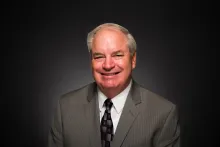
Robin Webber was born in Chicago, Illinois, in 1951, but has lived most of his life in California. He has been a part of the Church of God community since 1963. He attended Ambassador College in Pasadena from 1969-1973. He majored in theology and history.
Mr. Webber's interest remains in the study of history, socio-economics and literature. Over the years, he has offered his services to museums as a docent to share his enthusiasm and passions regarding these areas of expertise.
When time permits, he loves to go mountain biking on nearby ranch land and meet his wife as she hikes toward him.
