

Jim Tuck
This transcript was generated by AI and may contain errors. It is provided to assist those who may not be able to listen to the message.
Well, brethren, these days are here once again. I brought a loaf of leavened bread in here, but it's only a picture. These are the days that we are to purge out the home of leaven. And as we know, these are the days that begin these seven days. Recognize this, everybody? Good old matzo. I'll give you a title right now. We are keeping the Feast of Unleavened Bread, but who needs the Feast of Unleavened Bread? After many, many years, we have many old-timers here. Do we really need to go through this once again? And I want to show that yes, we do. How many of us still remember our first Feast of Unleavened Bread? We always remember the first in our lives. Mine was in 1959. I had just been baptized and kept the Passover, my first Passover. And 1959, 63 years ago. So this is my 64th Feast of Unleavened Bread. 63 years ago, way back in ancient history. It does seem like a long time ago. My wife's first Feast of Unleavened Bread was 1962, 60 years ago. We have many here that go back many, many long years, I'm sure, 25, 30 or more. Let's take just a few minutes, because we want to always be reminded of this. In 1995, when people were told they no longer needed to observe the Sabbath or the Holy Days, it was okay to work on those days, and the Holy Days were ceremonial. It was surprising how many people went along with that. If that were to ever happen again, could you be drawn into it? I don't think we would, but it's always good to be reminded of why we are keeping these days under God's command to do it. Where is the Feast of Unleavened Bread first mentioned? Let's get just a little bit of audience participation. Where in the Bible is the very first chapter in place that we find the Feast of Unleavened Bread? Okay, not everybody at once! Now, what book is it? Exodus, okay, and what chapter? Twelve. We do remember. Exodus 12 and 13 both. We won't read those verses, but God commanded the Israelites to eat unleavened bread and put out leaven for seven days. Where is the chapter that contains the Feast of Unleavened Bread? And all of the holy days, in fact, are in this one chapter. The only chapter in the Bible. The Biddicus 23. Okay, again, we will not turn to that, but you'll find those verses on the Feast of Unleavened Bread early in the chapter. Okay, where is the chapter that shows Jesus Christ at the age of twelve? His parents went to Jerusalem for the Passover, and it says, when they had fulfilled the days, showing they were there for the days of unleavened bread as well, when Jesus was twelve. Remember? He lingered behind when they returned home. They had to come back and find Him. But where is that chapter? You remember it? What book is it?
I see some eyes rolling. Alright, it's Luke 2, and beginning in verse 41, you'll read about that. You can do that later on. We might turn to these two chapters. Where are two chapters in the book of Acts that show the New Testament church was very much aware in keeping the Feast of Unleavened Bread. Anybody remember two chapters? What was the first one? Let's turn over to it. It's good to be able to be aware of these verses, just in case you ever need it. Let's go to Acts 12. There's the first one. Acts 12, and let's read the first four verses very quickly.
Hearing the days of unleavened bread. There it is, in verse 3. Let's read verse 4 also. When he had apprehended him, he put him in prison, delivered him the four squads of soldiers to keep him, intending to bring him before the people after... Oh, what does the King James Version say? Easter. That's a gross mistranslation. I think the King James translation is the only one that misses it there. All the others, including the new King James I'm reading from, has correctly passed on them. So after the Passover season, which would include the days of unleavened bread, he was going to bring him forth at that time.
Verse 3 does refer to the Feast of Unleavened Bread. It doesn't say them would have been the days of unleavened bread, but now they're done away, does it? Them were the days of unleavened bread. Okay, the other chapter in Acts, where is that? Anybody, real quickly, let's go to chapter 20, and we'll read about that here in verse 6. Here's the Apostle Paul, who went in Gentile territory, and here he is up in Greece. Acts chapter 20 and verse 6, we sailed away from Philippi after the days of unleavened bread. Obviously, they had kept the Feast of Unleavened Bread then in Philippi, and after the Feast was over, they sailed away.
So here are chapters in the book of Acts, certainly showing the New Testament church and the Feast of Unleavened Bread. Where is that chapter and that verse that is so clear that says, and referring to the Feast of Unleavened Bread, that let us keep the Feast? Where do we... and it's referring, obviously, to the Feast of Unleavened Bread.
And what book is it? Does somebody say 1 Corinthians? Okay. Now let's go to what chapter? 10 or 11, yeah. Okay, not quite that far. How about 5? Let's go to 1 Corinthians chapter 5. You know, these are verses that when those who said we no longer need to keep the Holy Days, they should have read these verses. Anyone that is firmly fixed on Bible scriptures will certainly have no problem seeing that these verses prove that Holy Days should be observed. The New Testament church did keep the Holy Days of God, and they continue to keep the weekly Sabbath as well.
We can see that. 1 Corinthians chapter 5 and verse 6, your glorying is not good. Glorying is never good. Boasting, wanting yourself is not good. Do you not know that a little leaven, leavens the whole lump, doesn't take much? Therefore purge out the old leaven, that you may be a new lump, since you truly are unleavened.
This, apparently, was being written during the Feast of Unleavened Bread, during their keeping of the Feast of Unleavened Bread. It goes on to say, verse 7, that indeed Christ, our Passover, was sacrificed for us. He made a way for our sins to be forgiven, for us to be cleaned up. And verse 8, therefore, once we're cleaned up and forgiven, therefore, what should we do?
Let us keep the Feast. And what Feast would that be, other than the Feast of Unleavened Bread? Not with the old leaven, nor with the leaven of malice and wickedness, but with the unleavened bread of sincerity and truth. Brethren, you know, we have just proved from the Bible that we should be keeping these days of unleavened bread.
You know, there is some additional proof from secular history as well. I've got a copy of that with me here. Many of us, I'm sure, are aware of a work that was done. I believe this man lived around 300 or so AD. I should have checked that out. But he wrote an early church history and included many of the things going on in the days of the apostles.
And so it'd be a profitable work to have if you ever wanted to, or could come across it. Eusebius, that's E-U-S-E-B-I-U-S, Eusebius, Ecclesiastical History. And in chapter 24, he writes about the Passover and the Feast of Unleavened Bread. There was a big dispute going on.
This was written around 200, roughly about 197 AD. And there was a big dispute over the Passover. And so one of the faithful members of God's church, Polycrates, went to Rome, or wrote a letter, rather, to the bishop of Rome. Rome was pushing for Easter and getting away from the Passover. But Polycrates, who was a disciple of Polycarp, who was a disciple of John the Apostle, stood up for the Passover and the Feast of Unleavened Bread. He wrote to this Roman bishop, We observe the genuine day, talking about the Passover, neither adding thereto nor taking from it.
And he mentions Philip, he mentions John, he mentions Polycarp. He says, all of these observed the 14th day of the Passover according to the Gospel, deviating in no respect, but following the rule of faith.
So, in other words, we keep the Passover on the 14th day. We don't deviate from that. We don't get involved in Easter worship, which was what the Roman Church wanted. And he goes on to say, concerning the Feast of Unleavened Bread, Moreover, I, Polycrates, and my relatives, always observe the day when the people threw away the leaven. So, like we did yesterday, we got rid of all of the leaven, because the Feast of Unleavened Bread began last night at sunset.
And we got rid of the leaven, and now we're eating the Unleavened Bread. So, Christians should keep the Feast of Unleavened Bread. It's so obvious. And it goes on in secular history, adds this additional proof. We should put away the leaven for seven days. We should eat the unleavened bread. But does it really make a difference? Does it really make us any different? Here I have kept the Feast of Unleavened Bread. This is my 64th one. Has it made any difference in me? I believe it has.
How about you? You've kept it 20, 30, 40 years, whatever. Has it made you any different? I believe so. The seven-day Feast of Unleavened Bread is actually an exercise unto holiness and righteousness. In the military, there are training exercises that go out and actually simulate warfare.
They try to find ways that they can destroy the enemy. Instead of themselves, they can destroy it. So, there are military exercises. Do these military exercises help the military personnel when they get into actual combat? Well, you bet they do. They already have shortened their shooting ability and their ability to outmaneuver the enemy. So, these military exercises make a difference with the military. Our military is very highly trained. They've been through a lot of exercises in preparation for battle. And it makes a difference. Same thing with us. It makes a difference if we keep these seven days.
And there are seven days of unleavened bread. If we keep them in spirit and truth, it does make a difference. There are two aspects of the Feast, very basic fundamental aspects of the Feast that I'd like for us to think about and zero in on for just a little bit. And they're brought out right here in verse 8. 1 Corinthians 5 and 8.
Let us keep the Feast. And how do we do it? These are two very basic elements or components of this festival. Not with the old leaven, nor with the leaven of malice and wickedness. So, the first aspect is that we are to purge out, as it says here in verse 7, purge out the old leaven that you may be a new lung. We are to purge out the old leaven. You know, what was the Apostle Paul writing this to the Corinthian Church? Wasn't they perfect already? No perfection is a process. It's not something we attain just instantly or overnight. And so, they were falling short.
Some of the people there were condoning sexual immorality. They were glorying. That word in the Greek for glorying means puffed up. They were exalted in their own minds. And Paul says that glorying is not good. He wanted them to purge out the leaven that they still had. Even though there were Christians, they still had some leaven around. The second basic component of the Feast of Old Leavened Bread is in the last part of verse 8. And that is, we are to keep the feast with the unleavened bread of sincerity and truth. That is, with the very holiness and the righteousness of Almighty God.
So, we are to put out leaven, the type of sin, and we are to take on the holiness and the righteousness of Almighty God. Let's go back on what's wrong with sin. Let's think about that just a moment. What is wrong with sin? What's so bad about sin? What is sin? Anyway, I'd like for the answer to that question on what is sin, let some children answer that question.
A child's eye view that I saved this article many, many years ago. And Tanya says that a sin is what gets you into more trouble than you know what to do with. That's not a bad definition, is it? Ruth, who is six years old, says a sin is what you do before your mother spanks you. And Mike, age seven, says a sin is a really bad mistake.
Your parents punish you. Sin is a really bad mistake. When you make a little mistake, your parents punish you. But when you make a sin, God punishes you. And I bet he can really spank. That's not too bad either. Eric, who is seven years old, says a sin is the very worst thing you can think of. Like when I put a fork between my teeth and turn it around and make my mother scream.
And Leslie, who is six, says, well, a sin is a bad mistake. Like when I take a fight with my brother, he's older and bigger than me. So if I take a fight with him, that's a sin, because I've made a bad mistake. And a couple more here. Molly says, age nine, a sin is when you disrespect the law of God. She's right on. There are big sins and little sins, like when you beat up on your sisters.
That's a middle-sized one. And David, who is six years old, says, well, there are these two kids down our streets, Stephen and Nathan. And they're bullies, and they're bad all the time. If you want to know about sin, you ought to ask them. So, kids, do you want our answer to what is sin? Well, we know that the Bible answer is sin is the transgression of the law.
Sin is breaking the law of God. That's 1 John chapter 3 and verse 4. We've quoted that many, many times. The King James Version has it that way, that sin is the transgression of the law. But let's think about this. Why is it sin, then, to break God's law? And the answer is that sin always results in pain and suffering and death. When we transgress the laws of God, then it is going to cause pain. It's going to cause evil and death. Every sin, every evil on the earth comes from breaking God's commandments.
If there were no breaking of God's commandments, there would be no evil and pain and death like we see down through history and continuing today. So, that's why sin is sin. Why is sin sin? The results are always bad. Sin can never result in good. Let me give us a challenge. If you can take a sin and a transgression of God's law and prove to God that it produces good and lasting results, joy and happiness, that it never causes any suffering or pain, then God would change his law to no longer condemn it, because there's nothing wrong with that law.
But, you know, don't hold your breath, because you're not going to find a sin that produces good results. Don't hold your breath. Sin is sin, because it always causes suffering, pain, and death.
Well, this Feast of Unliving Bread is an exercise to purge out sin. The Scripture says there to purge out wickedness and evil. Purge it out. Purge out malice and wickedness.
But, you know, it comes so easy. Sin comes so easy. It comes so natural. Let's read a verse on that in Hebrews 12 and verse 1. And we need to, you know, we recognize that it is so natural, in fact, so easy. And notice the way it's described here in Hebrews 12 and verse 1. He says, We are consumed by so great a cloud of witnesses. Let us lay aside every weight, and sin does weight us down. Let us lay aside every weight, and the sin which so easily ensnares us. It does. Sin comes so easy upon us. We can lose our cool, our temper. We can get into our wrong attitude. We can say something we wish we had not said. Have that happened? I have. I've learned about something here a few months ago, which I did not say it. I feel very bad about it. The sin that so easily ensnares us. It's there. Why is it there? It's because we have something called human nature. Let's go to Jeremiah 17 and verse 9. This is a verse that we have turned to many times. We have a nature that works against us. It's called human nature. In Jeremiah 17 and verse 9, the heart, and that's the human heart. That's your heart. That's my heart. It's deceitful above all things. Our human nature, our human heart, can throw us a curve. We can think we're doing okay, and we really are not. The heart is deceitful above all things, and desperately wicked. Who can know it? I, the Lord, search the heart. I test the mind. God will search us out, and He will help us to control that human heart. But as long as we're human, it does appear that we're going to have that heart that we have to resist. We have to fight against its deceitfulness and wickedness. Let's go to Mark 7. Sin so easily ensnares us. It just becomes so natural. In Mark 7 and verse 20, He said, Jesus, here, what comes out of a man? That defiles a man. It's not what He eats, whether He eats with unwashed hands, the context of this chapter. It's what comes out of the man that really defiles him. For from within, out of the heart of men, proceed evil thoughts, adulteries, fornications, murders, thefts, covetousness, wickedness, deceit, lascentiousness, an evil eye, blasphemy, pride, and foolishness. Wow, what a list! All these evil things come from within and defile a man. And we see this, don't we, in the world all around us. We ourselves, hopefully, are putting these things out, and we are having dominion over them and not involved in... But the evil thoughts can still, you know, the deceit. An evil eye would be lusting after something.
Today, advertising will put ill-clad women before us. I want to put men out there with this hairy leg hung over the front of a car. You know, they don't do that. You ladies, apparently, your body is more beautiful than us men. So, anyway, we have to resist that. When Mr. Herbert Armstrong told the ministry that when you do go and you see someone that's ill-clad like that, look the other way. He said he was in a drugstore buying something, and this ill-clad woman came in, and he said he just looked the other way. And he was giving that as an example of what to do. So when you see something on TV, an advertisement, or in real life, then look the other way. You don't have to continue looking at it.
Let's go to Romans chapter 7. Brother, we are, then, in a battle. We have to realize that. Paul was writing something to the Corinthian church that is included in the Scripture because it's good admonition for all of us as well. It's admonition that we all need Christians in the church purge out the whole living and to send it so easily besets us. Yes, it does. In Romans chapter 7 and verse 21, Paul wrote, I find a law that evil is present with me. Oh, boy. In fact, he brings out earlier, let's read that verse also, verse 13, that once we're in the church, we suddenly begin to see this human nature, and we think we're worse than we were before. No, we're not worse. We're the same. We've got the same human nature. We just now see it. And thus, verse 13 brings that out. Has then what is good become death to me? Certainly not. But sin, that it might appear sin, was producing death in me through what is good. So that sin through the commandment, when we came to really understand the commandments of God, might become exceedingly sinful. You really begin to see it in a way that you never did before. So, verse 21, he found us evil present with him, wanting to do good, but he said, I delight in the law of God according to the emirate man. But I see another law in my members. It's not a law that used to be there, still there. I see another law in my members, warring against the law of my mind. There's a battle of warfare going on, bringing me into captivity, to the law of sin, which is in my members. O wretched man that I am, we do come to see that about ourselves humanly. Just of ourselves, as human beings, we're just kind of wretched. Who will deliver me from this body of death? I thank God through Jesus Christ, our Lord. So then, with the mind, I myself serve the law of God, but with the flesh, the law of sin. That law of sin is still there to fight against. Chapter 8 goes on to say a bit more about it. Verse 6, to be carnally minded is death, but to be spiritually minded is life and peace. So this Feast of Unleavened Bread shows us this battle that is going on. We've got the law of sin that's there, just like Paul did. We've got to fight against it. We've got to resist it. He goes on to say in verse 7, the carnal mind, that's just a natural, fleshly human mind, is enmity against God. For it is not subject to the law of God, nor our carnal nature, our fleshly nature, is not subject to God's law, nor indeed can be.
So, as we go along in the Church, we see more fully this human heart that is deceitful above all angles, don't we? We do. We have to resist it, and through the Holy Spirit, and through Christ living in us, that's the real answer. Jesus Christ living in us is unleavened bread, coming within us through the power of the Holy Spirit. Christ in us, then, that's the unleavened bread of sincerity and truth. In Romans chapter 8, verse 12, brethren, we are debtors not to the flesh to live according to the flesh. For if you live according to the flesh, you will die. If we follow the carnal, natural nature, we will die. But if by the Spirit you put to death the dates of the body, you will live. As many as are led by the Spirit of God, they are the sons of God. So, during this phase, we are being reminded that we are in a spiritual battle. We have got a carnal nature that we are striving to purge, put out, bring under control. Let's just read a few scriptures real quickly here about our... further explain about our struggle, our battle. We really don't have time to read very many of these, but Colossians chapter 3 brings it out very, very clearly. Lists those things that we have to fight against and resist. Make sure that leaven is kept under control and doesn't control us. In Colossians chapter 3, verse 5, Therefore put to death your members which are on the earth, fornication, uncleanness, passion, evil desire, covetousness, which is idolatry. Because of these things, the wrath of God is coming on the sons of disobedience, in which you also once walked. And we did many of these things. We were involved in ourselves when you lived in them. But now you must also put off all these anger that can still cross opinion.
Malice, or wrath rather, malice, blasphemy, filthy language out of your mouth.
You know, members of God's church sometimes still fight filthy language about us.
Do not lie to one another, since you have put off the old man with his deeds. And they put on the new man, which is renewed in knowledge according to the image of him who created him. And he goes on to give the opposite things that are on the unleavened side. Verse 12, This is all part of that unleavened bread of sincerity and truth. Put on tender mercies, kindness, humbleness of mind, meekness, long suffering, bearing with one another, forgiving one another. If anyone has a complaint against another, even as Christ forgave you, you must also do. So, yes, we take on that unleavened bread through God's Spirit and through Jesus Christ living in us. That's the real key. The real key is to put, as they say, put water in the bottle. We all understand about that. But have Jesus Christ living in us. And the more of Christ living in us, the more unleavened we will be. But we still have that other nature there we've got to fight. The old man doesn't just go away. As long as we're human, we've got this struggle. Let's go to Romans 6. So it never becomes easy. It hasn't for me. I don't know if we have anybody that, you know, you just got it made. You don't have to resist or fight any longer. Anyone arrived? I doubt it. Let's go to Romans 6 and verse 12. Some verses here that show what we are to be busy doing. In Romans 6 and verse 12, do not let sin reign in your moral body, that you should obey it in its lusts. And skipping on down to verse 14, for sin shall not have dominion over you. This feast then underscores that we are to resist sin in every shape and form that it comes at us. It goes on down to, say, in verse 17, But God be thanked, that though you were slaves of sin, we all were. Yet you obeyed from the heart that form of doctrine to which you were delivered. And having been set free from sin, you became slaves of righteousness. Here's the contrast. Same contrast of this feast. Praising up sin, taking on the holiness and the righteousness of God. And he says in verse 19, I speak in human terms because of the weakness of your flesh. For just as you presented your members as slaves of uncleanness and of lawlessness, leading to moral lawlessness, so now present your members as slaves of righteousness for holiness. That's what this feast is all about. When you were slaves of sin, you were free in regard to righteousness. What fruit did you have in those things that you are now ashamed of? The end of those things is death. But now, having been set free from sin and having become slaves of God, you have your fruit to holiness and in the end everlasting life. For the wages of sin is death, but the gift of God is eternal life in Christ Jesus, our Lord.
So this feast pictures these things, no longer letting sin have dominion over us.
This feast pictures embracing God's laws, which produce only good results. We keep the laws of God. There are no bad results. They're all good. So these seven days, these seven days, are annual exercises. That's how I think we should consider these days. And we can meditate and study God's law and God's way of life. A good study would be chapter or fifth fundamental belief of the United Church of God. We believe that sin is the transgression of the law. The law is spiritual, perfect, holy, just, and good. The law defines God's love and is based upon the two great principles of love to our God and love to our neighbor. The Ten Commandments are the Ten Points of God's Law of Love. We believe that this fundamental spiritual law reveals the only way to true life and the only possible way of happiness, peace, and joy. All unhappiness, misery, anguish, and woe have come from transgressing God's law. And this world, you know, sin is getting worse and worse in this world, and suffering and pain also is getting worse and worse all the time. So this feast, we are to be exercised unto righteousness. We are to sharpen our spiritual warfare against human nature, and the way it wants us to go, the law of sin that's in our members, and the way that Satan would like for us to go.
We're to become, well, we should already be fed up with our sins and want to be putting them out and not to go that way anymore. So this feast, tomorrow morning when you wake up, it'll be what? Sunday morning. We've got the days right up kind of lost right before we are. It'll be Sunday morning. Second day of the feast. Don't wake up and think, well, this is just an ordinary day. It's not. It's the second day of the feast of unleavened bread. Monday, third day, right on through the week. Every day is a feast day. And it's a day to think about we're going through some spiritual exercises to purge out sin and to take on God's holiness and righteousness, the unleavened bread. As we eat that unleavened bread, we can meditate about it. So I asked the question, they get in the title, who needs the feast of unleavened bread? Do we need it? We've done it many years already. Is there anything more to learn? Is there any way to sharpen our spiritual warfare? I think so.
We all need the feast of unleavened bread. In fact, all of mankind needs it, just doesn't realize it yet. And the first step is eternal life. That takes care of the past and any present and future sins, too. You get a chance to have the death penalty removed, have a fresh start, be cleansed of all of our sins. The second step, the feast of unleavened bread, the second step toward eternal life, that's what these seven days are all about. Purging out evil and sin, seeing of what unleavened might still be there. Kind of hidden. There could be some hidden leaven. Think about that. Examine ourselves. So purge it out.
Who needs the second step toward eternal life? The feast of unleavened bread. We all do. So let's say, in conclusion here, let's use these seven days. There are seven days unto righteousness. Each day is a feast day. Keeping these seven days, each one as it comes along, in spirit and in truth, will make a difference. We will be better prepared to fight and win our spiritual battles all year long. See you on the last day next Friday.
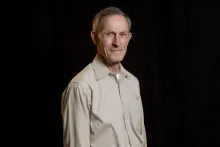
David Mills was born near Wallace, North Carolina, in 1939, where he grew up on a family farm. After high school he attended Ambassador College in Pasadena, California, and he graduated in 1962.
Since that time he has served as a minister of the Church in Washington, Florida, North Carolina, South Carolina, Oregon, West Virginia, and Virginia. He and his wife, Sandy, have been married since 1965 and they now live in Georgia.
David retired from the full-time ministry in 2015.
