
David Mills
This transcript was generated by AI and may contain errors. It is provided to assist those who may not be able to listen to the message.
Why is it that we keep the Sabbath and God's holy days? It is because we have seen that God commands us to keep these days, and in doing so, we are actually keeping an appointment with God. We come to honor Him and to worship Him and draw close to God and to love Him with our whole heart and mind, and to walk more closely with God.
Well, the lessons of the Passover and the Feast of Unleavened Bread, which we are now observing, certainly are very profound, aren't they? The foot washing, picturing humble service to other fellow humans, in the same way that Jesus Himself exemplified humble service toward mankind. Then the broken bread at Passover, symbolizing the broken body of Christ, broken for us, and the wine, His blood that was shed, so that we can have forgiveness of sins.
Then the delevening of our homes, we all were busy doing that on Monday, getting the leaven out of our homes, picturing putting out sin, and then eating the unleavened bread for seven days, learning to live by God's laws, which are holy and righteous laws. So the lessons of the Passover and the Feast of Unleavened Bread truly are very deep and profound. The supreme lesson of the spring holy days, then, is that we are reconciled by the death of Jesus Christ, but we are saved by the life of Jesus Christ, who lives in us through the power of the Holy Spirit.
And the Feast of Unleavened Bread shows that with God's help with His Spirit, we must remove and avoid all types of sin in all areas of our lives. And so we are challenged, this Feast of Unleavened Bread, to look at ourselves, to examine ourselves, and to see if there are sins and shortcomings that we need to be yet working on.
And with the power of God's Spirit, begin to overcome. So we learn by doing these things. We learn some very profound spiritual lessons. And we cannot be in God's kingdom unless we learn these spiritual lessons from the Passover and the Feast of Unleavened Bread. Well, today I'd like for us to also examine mankind as a whole, and mankind's need for the Passover and the Feast of Unleavened Bread. And to show that this time is coming, where God will bring the Passover and the Feast of Unleavened Bread to the world, and how it will resolve the world's problems in the same way that the Passover and the Feast of Unleavened Bread resolve our problems.
First of all, this world needs to be humbled, just as, of course, we had to come to the place that we were humbled, and begin to realize that we were wrong, and begin to realize we were going the wrong way. We were keeping wrong days during the year, and we had false beliefs that were actually not from the Bible. So we had to be humbled and see that there's truth in the Bible that we need to believe and accept, and not the ways of this world.
Well, the whole world needs to come to the truth in the same way, and the world desperately needs the Passover, the sacrifice of Jesus Christ. But you know, most people in the world don't realize that. But they need it, even so. They need it just as we do. And they need the Feast of Unleavened Bread. But most of the world doesn't realize it yet. The nations need the sacrifice of Christ for forgiveness of their sins. And they need to get busy de-leavening their lives. And that time is coming. That time is coming in the near future, because we're living near the end of this age.
God desires all men to be saved and to come to the knowledge of the truth. We read that in 1 Timothy 2 and verse 4. He wants all men to be saved and come to the knowledge of the truth. And in 2 Peter 3 and verse 9, we read that God is not willing that any should perish, but that all should come to repentance. Think of that. God wants every human being alive on the earth right now.
Every human being that has ever lived in the past, and every human being that shall ever live in the future, He wants them all to be able to come to repentance. That means they would come to the Passover. They would come to the point that they realize they need to be forgiven of their sins and to repent. Yes, it is God's ultimate purpose to have mercy, to extend the mercy of the Passover to every human being. Let's do turn to Romans chapter 11 and verse 32.
Romans 11 and verse 32. Here is a verse we can ponder, we can mull over, because it is rich in meaning as far as, well, the Passover and the Feast of Unleavened Bread and other of the Holy Days or events pictured by God's Holy Days. In Romans 11 and verse 32, think about this, brethren. God. God's the one that's done this. But for God has committed them all to disobedience. Think of that. You know, we understand the import of that verse, don't we?
We read history and we see a world that is deceived. We look at the world today and we see a world that is deceived. Oh, how evil this world is. Think of all the things going on in the world. Wars and corruption and violence and evils of all kinds are going on. And God has allowed it. He's allowed Satan to deceive the whole world. Revelation 12 and verse 9. But again, it's God that's in control. Satan has been allowed to do the deceiving, alright? And he's done a masterful job in deceiving the world. But guess who has allowed Satan to do that? God. God has committed the world.
Everybody, it says, all to disobedience. But that's not the end of that verse, is it? That he might have mercy on all. So I think we should ponder this verse often as we look at the world. That truly God has allowed the world. He's committed the world to disobedience. Ever since Adam and Eve were driven out of the Garden of Eden, God has committed this world to this very day. Everybody to disobedience. Except those few that he has called out of the world during this time.
But ultimately, his plan, his purpose is to have mercy on all. So, question, when will God have mercy on all? Answer is found in Revelation 20. Revelation 20. This shows the time in the future, beginning in the near future, in fact, when God will begin to have mercy on all.
It is at the second coming of Jesus Christ. It's at the resurrection of those that God has been preparing to reign with Christ. Revelation 20 and verse 4. I saw thrones.
Oh, that's rulership, isn't it? People will be ruling. I saw thrones, and they, and this is those who have overcome during this time, those who God has prepared and has helped them to prepare to reign with Christ. They sat on them, on the thrones, and judgment was committed to them. I saw the souls of those who had been beheaded.
Oh, judgment, notice, is committed. And in rulership and judgment, we will be judging and ruling as a king and priest. And those who had been beheaded had not worshipped the beast, or had his mark on their foreheads or their hands. They lived and reigned with Christ for a thousand years. So only the righteous are going to be resurrected when Christ returns.
That's also something that most of the world doesn't understand. They think everybody is going to be resurrected, and Christ is going to put the sheep on the left hand, they go to hell, and then he's going to put the goats on the left hand, and the sheep on the right hand, they go to heaven. But that's a false idea, totally false. The saints only are going to be resurrected when Christ returns. And what about the others? Verse 5, The rest of the dead did not live again until the thousand years were finished. And it goes on to talk about the first resurrection.
Blessed and holy is he that has part in the first resurrection. The second death has no power because those in the first resurrection will be immortal. They shall be priests of God and Christ and reign with him a thousand years. Well, we understand that very well, those of us who have been in the church many, many years.
But this is the time when God will begin to have mercy on all. During the millennium, during that one thousand years when Christ and the saints are reigning, everyone will understand. God will have mercy on everyone. The knowledge of God will cover the earth as the waters cover the sea. And during that time, they will understand the Passover. They will understand the Feast of Unleavened Bread. And God will have mercy on them. It will be a day. It will be their day of salvation, those who live during the millennium.
So all during the thousand years, God will have mercy on everyone. The time when people have been committed to disobedience will come to an end at the second coming of Christ. And the time when he will have mercy on all begins, all during the one thousand years. Then at the end of the one thousand years, we have the rest of the dead. Verse 5, who come back to life and God will have mercy on them. All those who have not understood during this age, God will have mercy on them. And they will be able to come to the Passover and be forgiven and be able to keep the Feast of Unleavened Bread.
And with the power of the Holy Spirit, they'll be able to begin living a righteous way of life. And verse 12 mentions these things. I saw the dead, small and great, little babies and infants. What happens to them? Well, they will be among the rest of the dead. I saw the dead, small and great, standing before God.
Tell you when this is a resurrection, isn't it? When dead people start standing up, that's a resurrection. I saw the dead standing before God and the books were opened. Another book was opened, which is the Book of Life. During this time, the rest of the dead have not had the Book of Life to be opened to them.
Instead, they have been committed to disobedience and evil during this age.
But they will have the Book of Life opened and the mercy of God made available to them.
The dead will be judged, then, by their works, by the things written in the books, by how they handle the truth that God will show to them.
And God will have mercy on all.
We read prophecies in the Old Testament about this, about the Passover and beginning to keep the Feast of Unleavened Bread. Let's just notice a few verses real quickly. Joel chapter 3.
Many, many prophecies about this time when God is going to have mercy upon all.
He's going to bring the world to the Passover, just as He has brought the first fruits at this time in the Book of Joel and chapter 3 and verse 17.
So you shall know that I am the Lord your God. You see, that time of being committed to disobedience has ended. You shall know that I am the Lord your God, dwelling in Zion, my holy mountain. Then Jerusalem shall be holy and no aliens shall ever pass through her again.
But skipping on down to verse 20, Judah shall abide forever and Jerusalem from generation to generation.
See, human life goes on generation by generation during the millennium, but it's different.
And God's truth now is the way of life on the earth. But notice in verse 21, I will acquit them of blood guilt. Well, that's forgiveness, isn't it? I will acquit them. I'll forgive them of their blood guilt whom I have not acquitted.
For the Lord dwells in Zion. This is the Passover being brought to people and they'll be able to be forgiven, have their sins acquitted. That's what happens to us when we repent. Our sins are acquitted.
They're cleansed of them. They're totally blotted out.
Turn a few more books ahead in the Bible to Micah, also here in the minor prophets. Chapter 7, Micah chapter 7, and let's see some verses that clearly show people coming to the Passover.
In Micah 7 and verse 16, the nations shall see and be ashamed of all their might.
They shall put their hand over their mouth. Their ears shall be deaf. They shall lick the dust like a serpent. So the nations are going to be humbled. They shall crawl from their holes like snakes of the earth. You know, God puts it very graphically, doesn't He?
They shall be afraid of the Lord our God and shall fear because of you.
Who is a God like you?
Pardoning iniquity and passing over. Oh, that's the word, the very name Passover. Passing over the transgression of the remnant of His heritage.
It's talking about the Passover coming to Israel, but we know that the Passover is going to come to the Gentile nations also. We'll read some verses on that as well.
It goes on to say, He does not retain His anger forever because He did lights and mercy. He's going to have mercy on all.
He will again have compassion on us, and we'll subdue our iniquities.
Part of that subduing is the Passover, the forgiveness of the Passover, and part of that subduing is helping us to come out of sin, which is pictured by the Feast of Unleavened Bread, overcoming sin.
He will cast all our sins into the depths of the sea. That's very graphic too, isn't it? God just can't take it all, all the sins of the world. When people come to repentance and they look to the blood of Christ, God will just take them all and just cast them into the sea.
You will give truth to Jacob and mercy to Abraham, which you have sworn to our fathers from days of old.
So in the millennium, a time of mercy will come to all of Israel and all other nations also.
In Zechariah 12, we have a very picturesque description of the Jewish people.
The Jewish people rejected Jesus Christ. They said, Crucify Him! Let His blood be upon us and our children.
Certainly there's been plenty of difficulties to come to the Jewish people down through the centuries.
But that time is coming where the Jews realize who Jesus Christ was. And they're not going to say anymore, Crucify Him. They're going to look to His sacrifice instead for forgiveness. Zechariah 12 in verse 10, I will pour on the house of David and on the inhabitants of Jerusalem, the spirit of grace and supplication.
God's going to open their hearts and minds. Then they will look on me, Jesus Christ, whom they have pierced.
They will mourn for Him as one mourns for His only Son, and grieve for Him as one grieves for a firstborn.
And that day there will be a great mourning in Jerusalem. And it describes the mourning in the next several verses. You can read that. A lot of mourning, the Jewish families mourning as they realize who Jesus Christ was.
And they beg forgiveness and are granted forgiveness.
By the sacrifice of the one that they said, crucify Him.
In chapter 13 in verse 1, In that day a fountain shall be opened up for the house of David and for the inhabitants of Jerusalem for sin and for uncleanness.
So they're going to come to the Passover. That fountain will be what is pictured by the Passover and the Feast of Unleavened Bread. A way out of sin, past and future.
Past, present, and future. It shall be in that day, says the Lord of Hosts, that I will cut off the names of the idols from the land and they shall no longer be remembered. I will also cause the prophets and the unclean spirit to depart from the land. No more false prophets and false teachers.
So, brethren, that time is coming where the Jewish people are going to turn wholeheartedly to the Passover and the Feast of Unleavened Bread. And all of Israel and all nations. Let's read in Ezekiel 20.
Ezekiel 20 shows just how this repentance is going to affect.
We're talking again about the Israelites here, but this is going to extend on to the other nations too.
It's going to go beyond Israel. It will go to all nations.
In Ezekiel 20, verse 33, As I live, says the Lord God, Surely with a mighty hand, with an outstretched arm, And with theory poured out, I will rule over you.
God is, Christ is determined. He will establish His rulership over Israel.
I will bring you out from the peoples, And gather you out of the countries where you are scattered, With a mighty hand, with an outstretched arm, And with theory poured out. Verse 38, I will purge the rebels from among you, And those who transgress against me. God's going to clean up the nation.
And look at verse 43 now. Well, verse 42 and 43. 42, Then you shall know that I am the Lord, When I bring you into the land of Israel, Into the country for which I lifted my hand, In an oath to give to your fathers.
And there you will remember your ways, And all your doings with which you were defiled. And you shall loathe yourselves. Boy, this is real repentance, isn't it? You will loathe yourselves in your own sight, Because of all the evils that you have committed, And you shall know that I am the Lord.
Do you know, when this is talking of modern day Israel, It's talking about the United States, It's talking about Great Britain and other Israelite-ish peoples. Of course, other nations are by extension Going to come to this same kind of repentance.
But I think Israel leads the way, Because we've had the money and we've had the finances. We spread a culture around the world, But it's not been a good culture.
And now we are at the very forefront of this gay movement. And anybody that doesn't want to go along with it, Has looked upon us as backward as being archaic In what they're doing and wrong. And so we are pushing things of this type. Homosexuality, gay rights, as it's called.
And so we're going to look back at all of this, And we're going to shake our head. Americans and British and other Israelites. And we are going to loathe ourselves. How could we ever have begun to think that way?
Because, you know, a husband-wife relationship, By the way, most people still want, They don't want homosexuality. They want a husband-wife relationship. It's just that more and more people are condoning. If anybody wants to go that way, that's their right. Well, it's not really a right. It's a wrong. That is, being somehow condoned by more and more people.
But God ordained that there would be a man and a woman in a family. And they would have children. And they would stay together and raise those children. How holy and righteous that is. We'll look back and just abhor and loathe What we have come to in our culture today.
I think these verses say it so well, especially verse 43. You shall loathe yourselves in your own sight.
We are going to do that. That will come to pass.
And God will be forgiving.
And He will have mercy on Israel.
And forgive them by the sacrifice of Christ. It's not going to keep them out of God's kingdom.
In fact, when they really understand, it's going to turn them to God's way so that they will want it with all their hearts and minds and nothing else. They won't want any of this evil way that is not working out today.
So let's turn also to Jeremiah chapter 50. And ultimately, God is going to turn things around in the world.
And He's going to turn it around in Israel first of all. And then He's going to turn it around in the other nations as well. And He's going to have mercy on all.
In Jeremiah chapter 50 and verse 4, In those days and in that time says the Lord, the children of Israel shall come, they and the children of Judah together, with continual weeping they shall come.
Brethren, blessed are they who mourn.
That is, blessed are those who come to see their sins and repent and weep. They'll come with continual weeping and seek the Lord their God. They shall ask the way to Zion with their faces toward it, saying, Come and let us join to the Lord in a perpetual covenant that will not be forgotten.
And look at verses 19 and 20.
But I will bring back Israel to His habitation, and He will feed on Carmel and Beshan. His soul shall be satisfied on Mount Ephraim and Gilead.
In those days and in that time, and this is right after Christ comes back to the earth, that this is going to happen all during the millennium, it will continue. In those days and at that time, says the Lord, the iniquity of Israel shall be sought and there shall be none. And the sins of Judah, for they shall not be found, for I will pardon those whom I preserve." So the Israelites who are brought out of captivity are going to come with weeping and mourning, and a repentant heart, a repentant heart. And God is going to forgive them, and He's going to teach them to begin keeping the Passover, as we do every year. He's going to teach them to put away the leaven out of their homes and keep the Feast of Unleavened Bread.
And that's going to be true for all nations. I'll turn over to Isaiah chapter 2, and it's not just Israel.
All nations are going to learn God's ways.
What does it say in Zechariah 14? All nations are going to keep the Feast of Tabernacles, and they will also keep the Passover and the Feast of Unleavened Bread.
In Isaiah chapter 2 and verse 2, it shall come to pass in the latter days.
It's going to come to pass in the time just ahead of us now. That the mountain of the Lord's house shall be established on the top of the mountains, and shall be exalted above the hills. And all nations, it's not just Israel, all nations shall flow to it. Many people shall come and say, come and let us go up to the mountain of the Lord, to the house of the God of Jacob. They will see what God has done in Israel, and they will want to begin to follow that example.
And let's go to the mountain of the Lord, to the house of the God of Jacob. He will teach us His ways, and we will walk in His paths, for out of Zion shall go forth the law, and the word of the Lord from Jerusalem.
So, you know, before too long, guess what? All nations will indeed be keeping the Passover. Can you imagine that in Russia?
Mr. Putin is still living. He will be one that will be beginning to keep the Passover, and he'll get down and wash feet.
He'll begin to have a whole different heart and mind, and all over Russia, people will be keeping the Passover, washing feet, taking the broken bread and wine, and down in the Middle East, and Syria, and in Egypt, and in India, and China, and all over the world, all nations will begin to wash feet, and take bread and wine, and put out the leaven for seven days, just like we have done our doing right now.
And they'll have the attitude, and the humility, and the repentance that goes along with it, just as we do, because God is going to have mercy upon them.
He'll have mercy upon all.
No longer will they be committed to disobedience, they will be committed to obedience, and keeping God's laws and commandments. And you know, just picture what a different world that's going to be. Turn to Zephaniah.
Zephaniah, just shortly before Malachi and Zechariah, and then there's Haggai, and then Zephaniah, about four books from the end of the Old Testament. You'll find this little book. Zephaniah, chapter 3, and we'll just read verses 12 and 13.
It's talking about Israel, but it's going to be true in every nation when God brings each nation to repentance, when God brings all nations to the Passover and the Feast of Unleavened Bread.
This is going to be the spirit and the attitude all over the earth. What a wonderful attitude it is.
Zephaniah 3, verse 12. I will leave in your midst a meek and humble people. That's what the Passover and the Feast of Unleavened Bread do to us. It does humble us, and it leaves us meek and humble.
I will leave you in your midst a meek and humble people, and they shall trust in the name of the Lord.
Trust God. Look to God for directions in which way to live.
The remnant of Israel, and by extension all nations, shall do no unrighteousness and speak no lies.
Nor shall a deceitful tongue be found in their mouth, for they shall feed their flocks and lie down, and no one shall make them afraid.
So, brethren, isn't that going to be wonderful? Can you imagine that?
All nations having a humble and meek spirit.
Just everybody really in the church.
Everybody just like we in the church.
A humble and meek spirit, and striving to live the way of the unleavened bread. Not puffed up, but humble and sincere, seeking the truth.
The opposite of this feast is a strong-willed, disobedient heart.
It's pride and vanity and human pomp and ego. The opposite of this feast is self-seeking, self-exalting, selfish ambition.
Seeking to be the greatest.
Seeking position or fame or status.
This feast means putting all these things out, out of our lives.
Picture the whole world putting these things out of their lives.
You have a different world.
So we can truly say the feast of, well, the Passover and the Feast of Unleavened Bread are the solutions to the world's problems, just like they are the solution to our problems.
And for a thousand years, when the world begins to keep the Passover and the Feast of Unleavened Bread, we'll have no more wars, no more murder, no more crime and violence, no more broken homes, no more sexual immorality, adultery.
Now, human beings will still be human.
And they'll have to...
They will still need the Passover.
They're rampant sin, just going out and murdering people and, you know, doing sexual acts, immoral acts will not be permitted.
But human beings will still need to learn godly character, and they will still need to be... They'll have their shortcomings, and they will still need the Passover.
And they'll still need the meaning of the Feast of Unleavened Bread.
So I don't think we should think that the millennium doesn't have... That the millennium is composed of perfect human beings. But instead, human beings that are on their way to word perfection.
And the same thing for the Second Resurrection as well. I'll tell you, when those humans in the Second Resurrection are resurrected, many of them having a lifetime of murdering and corruption and greed and evil.
And so they will be just like when they died. And we'll have to take them that way and begin to introduce them to... That they can be forgiven if they repent, if they change, and they can begin to live the way of the unleavened bread. We'll have to introduce them to that and guide them at that time.
And then they can begin to be under God's mercy as well. And God will extend His mercy to them.
You know, ultimately, then it's not during the millennium, and it's not during the Second Resurrection, but God does have in mind that ultimately there will be a world without sin. Let's read about that in a couple of verses in 2 Peter chapter 3 and verse 13.
Your God is going to ultimately produce a world that is without sin.
And wouldn't we all enjoy that? No evil thoughts, no evil motives, nothing in the human heart except goodness and righteousness.
No hatred, no lust, no sin, no evil, no greed, no wrong attitudes, nothing wrong.
That time is God has that in mind.
2 Peter 3 and verse 13, we, according to His promise, look for new heavens and a new earth in which righteousness dwells.
You know, righteousness, the world is not going to be completely righteous until the new heavens and the new earth come, and that is after the lake of fire. That's when God's plan with humanity has been brought to completion.
Read quickly in Revelation 21 and 22 about this new heaven and new earth.
And at that time, there will be a world and earth without leaven.
We'll have no leaven around at all.
In Revelation 21 verses 7 and 8, He who overcomes shall inherit all things, and I will be his God, and he shall be my son. So we do have to overcome sin.
But those who don't overcome sin, those who don't learn the lessons of the Passover and the Feast of Hunled and Bread, verse 8, the cowardly, unbelieving, abominable, murderers, sexually immoral, sorcerers, idolaters, and all liars shall have their part in the lake of fire that burns with fire and brimstone the second death. But that's already described in chapter 20 near the end as having occurred before the new heavens and the new earth even arrive.
So it will be the new heavens and the new earth where there will be no more sin. Anyone that wants to live that way just won't be there. Look at chapter 22 and verse 14. Blessed are those who do his commandments. That's what the Feast of Hunled and Bread pictures. Those who do his commandments that they may have the right to the Tree of Life and may enter through the gates into the city. But outside, and by that left out of God's city, left out of God's kingdom, are dogs and sorcerers and sexually immoral and murderers and idolaters and whoever loves and practices a lie.
So, you know, anyone that is disobedient to God and goes the way of leaven is just going to be left outside.
They're not going to make it to God's kingdom.
And so ultimately we will have a world with no leaven, no sin.
Won't that be wonderful?
Everybody with the same holy and righteous and perfect character that God has walking together in perfect harmony, perfect agreement, never a crossword, never anybody pulling another direction, everybody pulling the way of love and holiness and righteousness.
So God is going to ultimately accomplish his purpose to deliver a world that is without leaven and we will be able to live in such a world.
Brother, in many ways, the delevening process then is going to go on during the millennium for those people. The delevening is going to go on during the Second Resurrection in preparation for that world. But we today are involved in an unleavening process and the next holy day shows a firstfruits who already have started this unleavening process and that we are becoming unleavened now. That's our calling. Our calling is to be the first ones to go through the process of becoming unleavened. Ultimately, everyone has to be unleavened to be in God's kingdom.
But the firstfruits are becoming unleavened now. Let's go to Ephesians chapter 1.
Ephesians chapter 1. That's our calling. And I'll tell you what, it's not easy. The world is all around us and Satan is busy and we could let down. We could miss out. We could fail to put out the leaven if we're not careful. Ephesians chapter 1 and verse 3. Blessed be the God and Father of our Lord Jesus Christ who has blessed us with every spiritual blessing in the heavenly places in Christ. Just as He chose us in Him before the foundation of the world. Boy, so this firstfruits, that's who the us there. The us is further defined in verse 12. We who first trusted in Christ.
So He chose the ones who would trust in Christ first even before the foundation of the world.
But why? Well, that we, back to verse 4, that we should be holy and without blame before Him in love. Think about that. That's our calling then is to become unleavened, to become holy and without blame, to learn then the lesson of the Feast of Unleavened Bread. So the firstfruits are to come out and to be separate, as it says in 2 Corinthians 6 and verse 7. Let's go to that verse though because there's one right after it I want us to look at. In 2 Corinthians 7 and in verse 17 it does say, come out from among them and be separate, says the Lord.
Do not touch what is unclean. Oh, that's also unleavened the lesson of unleavened bread, isn't it? Do not touch anything that is unclean. You know, that isn't necessarily going to be just an easy thing in this world. We're not to touch anything that is unclean. Did you know that the world today is appealing that this advertising is appealing to the lust of the flesh and the lust of the eyes?
And if you begin to lust after something a little bit, then you have touched something that is unclean. And we have to be careful then in order to be received of God and to be really separate. But look at chapter 7 verse 1 now. Therefore, having these promises, beloved, let us cleanse ourselves from all filthiness of the flesh. That's what this Feast of Unleavened Bread pictures, cleansing ourselves from all filthiness of the flesh and spirit. Any filthiness of our hearts and minds, any little thing of this world that might be there. I'll tell you what, we should look at ourselves and examine ourselves, not just pat ourselves on the back and think that, well, I don't have any filthiness of the flesh and the spirit. We might be kidding ourselves, but our job is to ask God to help us to see it, to recognize it, if it is there. Any filthiness of the flesh and spirit. And then it goes on to say perfecting holiness. That's what the Unled and Bread pictures, perfecting holiness in the fear of God. So this is the process God has called us to now.
This feast then reminds us that we must remove and avoid all types of sin in all areas, every area of our lives, and that we are to purge out the spiritual leaven. Let us keep the feast, it says, not with the old leaven, nor with the leaven of malice and wickedness, but the unleavened bread of sincerity and truth. We read in the scriptures then that we must purge out spiritual leaven, and we should actively and vigorously look for and then resist the spiritual leaven.
One scripture also says in Hebrews 12 and verses 1 and 2, the sin that so easily ensnares us.
Brethren, you know this world is around us. Satan the devil is the god of this world. And yes, sin could easily ensnare us. Go to 2 Peter chapter 2 and verse 18. Could we ever be allured back into the world? Well, I hope not. In 2 Peter chapter 2 and verse 18, when they speak great swelling words of emptiness, they allure through the lust of the flesh. So this world is coming at us, and Satan is constantly alluring through the lust of the flesh, through licentiousness. Who is he alluring? The church. It goes on to say the ones who have actually escaped from those who live in error. Well, that would be the church. This world is alluring ones that God has called out of the world, who have escaped even from those who live in error.
In verse 19, while they promised them liberty, they themselves are slaves of corruption. For by whom a person is overcome, by him also he's brought into bondage. And so yes, it goes on down to say that, yes, Christians who have escaped the pollutions of the world and have been brought into the truth could again be entangled in them and overcome, and the latter end would indeed be worse than the beginning. So I'll tell you what, this Feast of Unleavened Bread, let's be alert that this world is coming at us. And just think, down through the years, have you ever known any people to be allured by the world and go back, leave the church, no longer be faithful to God's laws and commandments?
I think we all can say yes, we have known ones that have gone back into the slavery of corruption of this world. So there's a war going on. Look at, let's notice 1 Peter 2 in verse 11.
1 Peter 2 in verse 11. We're in a war. We need to recognize it. We're in a fight. It's against fleshly lusts. In 1 Peter 2 in verse 11. Beloved, I beg you, as sojourners and pilgrims, abstain from fleshly lusts, which war against the soul. So you think that's just, you know, speaking about people in the world? No. No, he's talking to brethren. He says, beloved, that's brethren, people in the church. I beg you then, and we are sojourners and pilgrims, abstain from fleshly lusts that war against the soul. Let's go to Titus chapter 2. Titus chapter 2 and verses 11 the 14. And this too shows that we're in a battle, and we need to say no to sin and leaven, and yes to holiness and righteousness of God. Titus chapter 2 in verse 11, for the grace of God that brings salvation has appeared to all men, teaching us that, that what? Denying ungodliness and worldly lusts. That's what putting out the leaven pictures.
Denying ungodliness and worldly lusts. We should live soberly, righteously, and godly in the present age, looking for the blessed hope and glorious appearing of our great God and Savior, Jesus Christ, who gave himself for us. There's the Passover. He might redeem us from every lawless deed and purify for himself, and that goes on to include the Feast of Unleavened Bread, being purified by Christ in us. Purify for himself his own special people, zealous for good works.
So brethren, we need to say no to worldly lusts and actively resist this world. There's a conflict, there's a battle going on. Galatians 5. I'm just reading a few of the verses that could be read.
Galatians chapter 5. We need to certainly recognize this battle that is taking place in our lives. In Galatians chapter 5 and verse 16, I say then, walk in the Spirit, and you shall not fulfill the lust of the flesh. For the flesh lusts against the Spirit, and the Spirit against the flesh. And these are contrary to one another, so that you do not do the things that you wish. But if you are led by the Spirit, you are not under the law. That is, the penalty of breaking the law. We're within the law, not under it. The works of the flesh are identified, and then the fruits of the Spirit are identified as we go on down. And in verse 23, if we live in the Spirit, let us walk in the Spirit. Oh, but verse 24, those who are Christ's have crucified the flesh with its passions and desires. But we have to recognize that we're in a battle against our own fleshly impulses and desires. Brethren, there's a conflict going on in the life of a Christian that people in the world are not having the same conflict. They're not in a struggle. They're not in the same struggle we are. They just give in to their impulses and desires. They're happy with the way they're living. But we have to resist our impulses and desires.
And so there's a battle and a struggle that is going on. The Feast of Unleavened Bread is a time to do personal reflection on ourselves. It's a time to meditate on our attitudes and conduct, to ask God to help us to recognize and overcome any shortcomings and sins. There are verses that say we are to examine ourselves. These seven days of unleavened bread are days of self-examination.
And they picture our eventual triumph over sin. Being unleavened these seven days reminds us to vigilantly watch for sinful thoughts and actions so we can avoid them. And again, the battle is from within. Let's read again a few other scriptures, Romans chapter 7.
But if we don't recognize this battle, we certainly cannot fight it. We have to recognize the enemy. We have to recognize our own thoughts, which can go in a wrong direction, our own attitudes.
In Romans chapter 7, verse 21, Paul wrote here, I find then a law that evil is present with me. I wonder if we also find that same law.
He said earlier in verse 18, I know that in me that is in my flesh nothing good dwells. I wonder if we see that as well. Verse 21 again, he found a law that evil is present.
The one who wills to do good. I want to do good, but I find a law that evil is present. Did we find that? Or do you just feel like, I don't have any in this law in me. Like Paul had that law in him, but I don't have it. Then you just don't see yourself. It's there in every human being. We have to see that in us dwells nothing good and evil is present and we have to fight it.
Verse 22, I delight in the law of God according to the inward man. I hope we all can identify with what Paul is saying. We do want God's law. We delight in God's law. But in verse 23, he says, I see another law in my members warring against the law of my mind and bringing me into captivity to the law of sin that's in my members. Oh, wretched man that I am. Do we feel that way about ourselves? We should, as we see ourselves more and more, that nature, that law of sin that is there, warring against the law of our mind that wants to do what is right. And so we feel, oh, wretched man that I am, who will deliver me from this body of death. I thank God it will be through God, through Jesus Christ, our Lord. So then with the mind, I myself serve the law of God, and so must we. But with the flesh, there's that law of sin that is there. We constantly are struggling and battling with it. It's a continuous and ongoing struggle. It won't end as long as we're human. We'll have to keep struggling. So overcoming will never be easy. We'll have to always keep working at it as long as we are human. We have our part in resisting and overcoming sin.
We cannot overcome our deficiencies and our sins and shortcomings without God's help.
God's Holy Spirit empowers us to recognize sin, this law of sin. It empowers us to resist and expel sin and to overcome. It empowers righteous thinking and deeds. And then result will be a new creation in the end. But we have to keep resisting and overcoming to the very end.
Well, brethren, we have a couple of days remaining in this Feast of Unleavened Bread. Let's think about these things, these final days of the Feast. Let's walk in the Spirit, stir up the Spirit, walk more closely with God, study and pray and meditate upon these things. Let us hate sin.
Hate the sin that, well, the law of sin in our own members, that we hate that and we want God's law so much. And look forward to the time we'll be totally delivered. Let's turn to Romans. Well, we are here in Romans 7. Let's go to Romans chapter 8. You know, one day we will be delivered from this bondage of corruption that we are. In chapter 8 and verse 20, it's talking about God's Spirit in this chapter. And it brings out in verse 20, the creation was subjected to futility, not willingly, but because of Him who subjected it in hope. So God made us the way that we are, but He gives us the hope of being delivered. In verse 21, because the creation itself also will be delivered from the bondage of corruption into the glorious liberty of the children of God.
And one day we won't have to resist sin. We won't have the law of sin in our members that tends to pull us down, create a wrong kind of thinking, wrong attitudes. We won't have that struggle. Won't that be nice? There will be no struggle. We'll just have the holy and righteous character that God has. There will be no pull in any other direction. So we can look forward to that.
So let's think about that and let's yearn for the time. Think of all the suffering that is going on in the world. Such pain. We hear about it in the news all the time. Our heart goes out to the world. We love the people in the world and we yearn for the time when God will have mercy upon them and when they will begin keeping the Passover and the Feast of Unleavened Bread.
It's going to change their lives. It's going to change the world just as it has for us.
After the feast is over, we'll go back to the puffed up bread. But I hope the lessons that we've learned during this feast will strengthen us to carry on refreshed and rejuvenated and spiritually revived. Going on forward to go toward God's kingdom with renewed zeal.
And just think that one day we will realize the fullness of the Feast of Unleavened Bread. The fullness of this feast is when there is no more sin. There is no more leaven. And we will be able to live in a world where there is only righteousness.
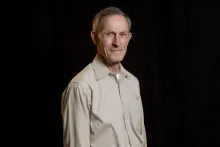
David Mills was born near Wallace, North Carolina, in 1939, where he grew up on a family farm. After high school he attended Ambassador College in Pasadena, California, and he graduated in 1962.
Since that time he has served as a minister of the Church in Washington, Florida, North Carolina, South Carolina, Oregon, West Virginia, and Virginia. He and his wife, Sandy, have been married since 1965 and they now live in Georgia.
David retired from the full-time ministry in 2015.
