
Gary Petty
This transcript was generated by AI and may contain errors. It is provided to assist those who may not be able to listen to the message.
You can't watch the news without eventually having a story of its world news about something going on in the Middle East. And everything centers around Jerusalem. Jerusalem is probably the most fought-over piece of territory in history. Today, you have Christians who say Jerusalem belongs to them, because that's where Jesus walked the earth. That's where Christianity started. Jews say, no, this is given to us. It was given to us by God. And this is the center of our religion. God gave this to Abraham. The worst Muslims say, no, it belongs to us, because God gave it to Abraham, but it went to Abraham through Ishmael. And so, this belongs to us. And there have been wars fought between Jews, Muslims, and Christians, and throughout history, Egyptians, and Assyrians, and Babylonians, and Romans, and Greeks, and Arabs, all fighting over who gets to own Jerusalem. Who really owns Jerusalem? Who owns that city? Who does it actually belong to? We're going to take an overview, a biblical overview of the history of Jerusalem. Actually, there's an amazing amount of information about the city of Jerusalem and its history of the Scripture, because it is the center of much of what goes on in biblical history. We're going to take an overview of the biblical history of Jerusalem, and then we're going to talk about the history of Jerusalem, the prophetic history of Jerusalem that ties into the Feast of Trumpets that we just observed this week, and looking forward to the Feast of Tabernacles, and what we will observe during the Feast of Tabernacles, and clear back into or ahead to the last great day, the eighth day of the Feast. How Jerusalem and that place on earth is central to many of the prophecies about the future. What are the origins of the city of Jerusalem? Now, we know that that city existed long before it was the capital of Israel under the kings. We have mentions of Jerusalem in Egyptian history. It goes clear back to almost 2000 BC, somewhere between 1700 and 1900. There's various mentions of a city there, the city of Jerusalem. Some scholars like to say, well, the origin of the name of Jerusalem is because there was a local god there named Shalem, and that's how they got its name. But that's not probable when you realize the importance of Jerusalem in the history of the Scripture. And the important God puts on why he names things the way he names them. In Hebrew, Salem means peace. And Jerusalem is the city or possession of peace. So here we have the great irony of the Scripture, or one of the great ironies of the Scripture, that you have the most fought over place on earth. In fact, there have been more battle spot in Megiddo, that valley than in the other place. They know that historically. It is the most fought over place in history, and yet it is the city of peace.
How ironic! In fact, let's look at Psalm 76. It's interesting. I just make a point here. In Genesis 14, we see Abraham being the king of Salem, Melchizedek. Melchizedek, the king of Salem, peace, the king of peace. Here we have a place that's the city of peace.
We're going to show you how this all ties in. Clear back to Melchizedek being the king of peace into the future. All has to be in the centers around this city. Psalm 76. This is important understanding, too, because when we talk about Jerusalem, we're going to talk about Zion. Zion and Jerusalem have a large amount of meanings in the Scripture. Yet, it's a place. It's important to know where that place is. But there's other meanings. Psalm 76. Look at verse 1.
And its dwelling place is Zion. In Salem, in this place of peace and in Zion is his dwelling place. It is a place. It is a city. But it is also God's dwelling place. Now, that's literal when it comes down to that city, but it also is figurative, and we'll talk about that, too, in a minute.
The biblical history of Jerusalem is fascinating, and we don't have time to go through the entire biblical history of Jerusalem. But under Joshua, the Israelites came to the Promised Land, and they destroyed Jericho and Ai.
And after they destroyed those two cities, these people came to them. They were envoys from a far country, they said. And they came and they said, look, we want to make a treaty with you so that you won't take our cities and destroy them like you did Jericho and Ai, because we know your God is with you. So would you make a treaty with us so that you won't bother us? We live a long ways off. And the Israelites said, okay, they made a treaty with them.
Well, they marched up to the next city, and these guys came out and said, you have a treaty with us? They said, you said you're a long way off. Well, we lied to you because we didn't want you to destroy our city. So the people of that city said, okay, what we will do is be your servants. And the Israelites agreed. They said, we made a treaty with you. You tricked us. So we will not kill you, but you must be our servants.
So they became the servants of the Israelites, subservient to them. Well, a bunch of other kings found out what had happened. They decided what we need to do is go destroy the Gibeonites. We need to go destroy those people who made a treaty with the Israelites. So let's look at that at Joshua 10. And here we begin to find our first references directly to Jerusalem.
Joshua 10. Now it came to pass, verse 1, that when Adam and I see the deck, the king of Jerusalem. So Jerusalem is a city. It's a major city. And they see the Israelites. They cross the Jordan. They're slowly crossing the land. It's only a matter of time until they get there. And now they made this treaty. So now they say, well, wow, there's Canaanites now that are making agreements with them, the Canaanite tribes.
So what we have to do is go destroy the Canaanites, the Gibeonites who made this agreement. That way we'll make sure nobody else makes a treaty with them. So you understand the political reasons they're doing this. But at an IV deck, king of Jerusalem heard how Joshua had taken Ai and huntedly destroyed it. And what he had done to Jericho and its king, and so what he had done to Ai and its king, and how the inhabitants of Gibeon had made peace with Israel and were among them.
And they feared them greatly because Gibeon was a great city, like one of the royal cities. And because it was greater than Ai and all its men were mighty. Wow! The one group of people that might have stopped Israelites have surrendered to become their slaves. Therefore, if you read verse 3, this Adonai Dedeck, king of Jerusalem, got together all these other kings. Verse 4 says, Come up with me to help me, that we may attack Gibeon, for it is made peace with Joshua and with the children of Israel.
So these five kings get together, and they launch an attack on Gibeon. But because the Israelites had made a treaty with them, the Israelites went out and destroyed them. And the people of Gibeon were saved and became the slaves of the Israelites. So here we have the first real solid mention of Jerusalem as a city. So it was a city, and it had been a city a long time, hundreds of years. You know, if this is in the early 1400s BC, and we have reference points, you know, in the 1800s, 1900s BC, I mean, it's four or five hundred years before this, Jerusalem is a city.
It's an old city. It's San Antonio, which is four to five hundred years old. Jerusalem was already an old city when Joshua shows up. So the Israelites took Jerusalem, but not all of it. There was part of Jerusalem that was held by a tribe of people known as the Jebusites. And they lived in the southern part of Jerusalem in a fortress. And so when the Israelites took Jerusalem, they never did drive out the Jebusites, at least under Joshua. In fact, all during the time of the Judges, the Jebusites control this fortress on the southern part of Jerusalem.
So David comes along, and David says, well, this can't be. Now, here we have a United Kingdom. United all the tribes. They finally have one king. And right in the center of their country, in the capital, is this fortress of people that have existed for hundreds of years and just refused to surrender. So we pick up the story in 2 Samuel, chapter 5.
I'm skipping all kinds of history here, but I just...we hit these high points. We begin to see not only the history of Jerusalem, but certain names that apply, and how that evolved throughout the Bible. We have a sitting note as Jerusalem, 2 Samuel 5, 6. And the king and his men went up to Jerusalem against the Jebusites, the inhabitants of the land, who spoke to David, saying, You shall not come in here, but the blind and the lame will repel you, thinking David cannot come up here.
Now, there's a reason for that. Let me show you a map that we have here. See if I can...hopefully you can see this. Actually, it's a drawing of...can you see that? It's a drawing of Jerusalem about the time of Jesus. Now, Jerusalem was much bigger than this, but this is the old walls. I mean, if you go to Jerusalem today, it's spread out all over the place, but you can see where the old walls were in the old city.
Well, by the time of Jesus, you know, Jerusalem had spread beyond its walls, but the old city still existed in the center of the bigger city. And if you look at it, that area right there is where the temple was. But see this part right here? See that? If you can read that, it says David City. This was the Jebusite fortress right there. Here you have the temple, and of course, here you have the bigger city.
At the time of David now, of course, the temple didn't exist, and Jerusalem was a smaller city, but this was there. It was easily defensible. I want you to see, there are two valleys that go on both sides. So except for one edge, you had to fight uphill just to get to the walls. Now, the Mount of Olives, by the way, is over right in here. The Mount of Olives looks down on Jerusalem. So that's the city of David. Well, before it was the city of David, it was the city of the Jebusites.
So here we go back now to where we're reading here. Yes, I can say it now. So of course they said, blind people and lame people could keep you from taking this city. Nobody's taken it. Now remember, the Israelites, all through the time of Judges, lasted hundreds of years. Saul was king for 40 years. And Joshua reigned for a period of time. Nobody had ever taken this fortress. And David showed up and said, Please surrender. I'm going to take it. And they said, Ah, blind people could keep this fortress. You'll never take it. Nevertheless, David took the stronghold of Zion. That is, the city of David.
This fortress was known as Zion. It was the fortress of the Jebusites, a place that nobody could take. Nobody had taken for hundreds and hundreds of years. And David took it. And David said, It's now called the City of David. But this is where the word Zion comes from. It comes from this fortress. Now, it needs a strong place, impregnable, a place that is easily defended. And it's the City of David. Now, just behind that place, let's go back to that map. Because there's an important place right behind us. We said, The temple is here. Mount of Olives is over here. This area, which was a raised area, it was a hill, higher than this. It was known as Mount Moriah. Mount Moriah. Let's go to 2 Chronicles 3. 2 Chronicles 3.
Now, Solomon began to build the house of the Lord, the temple, at Jerusalem on Mount Moriah, where the Lord had appeared to his father David at the place that David had prepared on the threshing floor of Ornon, the Jebusite. It's interesting, the Jebusites lived all over. And there's the Jebusite that lived on Mount Moriah. And God appeared to David on Mount Moriah. Mount Moriah, where the Solomon's Temple was built, was famous for two events that had happened. And these were very important events. So we have the city of David, which is south of Mount Moriah, which is also known as Zion, this fortress. Just north of there is Mount Moriah, where Solomon is told to build the temple.
And there's two events that have happened there that show that that is a very important place. The first one is in Genesis 22. We're skipping around a lot in terms of not staying in one passage very long because we're looking at these places. We read through these place names. You all know where Jerusalem is. If I get a map of the world, you can all figure out basically where it is. You've all know, well, okay, that's Zion. You've heard of the city of David. You've all heard about Moriah.
But it's very important to understand that the flow here of what God is doing has importance to us today. Genesis 22, verse 1. Now, it came to pass after these things that God tested Abraham and said to him, Abraham, and he said, Here I am.
Then he said, Take now your son, your only son Isaac, whom you love, and go to the land of Moriah, and offer him theirs, a bird offering, one of the mountains of which I shall tell you. Mount Moriah is where God told Abraham to sacrifice Isaac. It's on that hill that Abraham went and tied up his son, built an altar, tied up his son, and was ready to kill him. And God revealed Himself to Abraham. So that's that area right there. I could get a modern map of Israel, but it's actually much more difficult to see these places. It's easier to see them, you know, in the context of a map of what it would have been like 2,000 years ago.
So, of course, there's no... There's actually some kind of small village... Well, there's no record of a small village at the time Abraham would have come here. We don't have that. But we do know this was known as the land of Moriah, and this was one of the mountains in Moriah. So he goes to the mountain of Moriah, and that's where Abraham is told to sacrifice his son. Now, obviously, we immediately say, Oh, so God is going to sacrifice His son. It's got to be in the same area. It's got to be in the same area. Because Abraham sacrificing Isaac was simply a type of what God was going to do.
God didn't require Abraham to fulfill it. God Himself did fulfill the sacrifice of His son. Now, let's go to 2 Samuel 24 and look at how God revealed Himself to David on Mount Moriah. 2 Samuel 24. So God reveals Himself at this place.
2 Samuel 24. It is a very special place on earth. The whole plan of God, what God is doing with humanity, centers around this place. This little mountain. And the little mountain just across the valley there, called the Mount of Olives. 2 Samuel 24. Verse 18. And God came that day to David and said, Go up erect and alter to the Lord on the threshing floor of Arona, the Jebusite. Now, to the extent there is a Jebusite living there, just south of there is the city of the Jebusites.
So David, according to the word of God, went up as the Lord commanded. Now, Arona looked and saw the king and his servants coming. So Arona went and bowed down before the king with his face to the ground. And he said, Why has my Lord the king come to his servants?
And David said, Do buy the threshing floor from you to build an altar to the Lord that the plague may be overthrown from the people. God was striking Israel with a plague because of a sin David had made.
And God said, You wanted to stop? You go there. You go to Mount Moriah. You go to that place where Abraham was asked to sacrifice his son and you bring a sacrifice to me. And I will stop this. So this Jebusite said to David, Let my Lord the king take an offering and offer up whatever seems good to him. Look, here's an oxen for birth sacrifice and threshing implements, the yokes of the oxen for wood. All these, O king, I have given you the king. And Arona said to the king, May the Lord your God accept you.
But David says to him, No, but I will surely buy it from you at a price. For I will not offer burnt offerings to the Lord my God with that which has cost me nothing. Boy, that's an incredible concept. No, you're the king. I will give you everything. The wood, by far implements. This is a great cost this guy is willing to give all this. And here I'll give you the oxen. I'll give you the sheep. I'll give whatever you need. You sacrifice to God. He said, No, this sacrifice has to come from me.
How many people would have been quick to say, Oh, wow, God is provided by God, David? David said, No, this has to cost me something. I'm the one who did this sin. So I'm the one who has to bring a cost to God. It has to cost me something. It means something because I'm giving to God, not because I've taken a gift from you.
I'm taking a gift from you and giving it to someone else.
He says, verse 25, that David built there an altar to the Lord and offered up burnt offerings and peace offerings. So the Lord heard the prayers for the land. The plague was withdrawn from Israel. Now we know, from what we read earlier, this was on Mount Moriah. So God now builds, has Solomon build this temple. And this temple is in the city of Thessal. It is on Mount Moriah and it is his dwelling place. It is where he comes to live. When he comes to live with human beings, it is there.
First Kings 8. First Kings chapter 8.
Then verse 1, The Ark of the Covenant was in the Jebusite city of Zion, which was out called the city of David. It's got two names. Most cities have two names. There's a...San Antonio is called what? City of what? Has to be another name for San Antonio. River City, you know, Alamo... Wait, you say the Alamo, you think of San Antonio. What was the Alamo? It was a fortress. See how we do this today. This is an odd... If you were to ask someone where Zion is, they say, well, that's the southern part of Jerusalem. And they would have said, you just go up the road here, you know, and that's the southern part of Jerusalem. So it's called the city of David. It's called Zion. And the Ark of the Covenant was there because that's where David had put it. Solomon comes up because, you know, there wasn't a temple. There was just a tabernacle. Solomon comes along and builds the temple on Mount Moriah. And he goes and he gets the Ark from the city of David, which isn't that far away, and he takes it up to the top of the hill. Therefore, all the men of Israel settled with King Solomon at the feast of the month of Ephronim, which is the seventh month. And it talks about how they took this up, and they took it up to the Mount Moriah, and there God came to dwell. In fact, the glory of God filled the temple so that all the people had to leave. It is where God dwells. And the temple was Mount Moriah. But he's not dwelling there now. But he said, this is my dwelling place when I come to earth. Now, you have the city of David, you have Mount Moriah, you have Jerusalem, you have Zion. As you can see, they're all parts of the same thing. Over time, Jerusalem could be used to be all of it. You know, if you took a trip to Jerusalem and said, Oh, I went to Jerusalem and I went to the Temple Mount. See, we know that's part of Jerusalem. Or you could say, Oh, I went to the Temple Mount, and we would know you were in Jerusalem. They become interchangeable words. Well, Zion and Jerusalem, they all become interchangeable at times. They can refer to a part, or it can refer to the whole thing. Look at Psalm 48. Look how David used these words. He talks about, in verse 1, Great is the Lord, and greatly be we praised, In the city of our God, in His holy mouth, Beautiful in elevation, the joy of the whole earth, Is Mount Zion on the sides of the north, The city of the great king, God is in her palaces, He is known as her refuge. So here, he uses Zion as a reference to all of Jerusalem. Obviously, he's talking about more than just the little fortress that he took. And so, verse 11, he says, Let Mount Zion rejoice, And the daughters of Judah be glad, because of your judgments. If you go through, you start looking at how, through the Psalms, And later, after David renames the city of David, How Zion becomes synonymous with all of Jerusalem. Now, we know that, of course, that Solomon's temple was sacked by the Babylonians. It was rebuilt by Zerubbabel, and Nehemiah, and Ezra, And then sacked again by the Romans. God has not dwelt in a temple on Mount Moriah for a long, long time.
But, the prophecies of the Old Testament constantly talk about a time when God would again dwell in Zion. He would again dwell in a temple on Mount Moriah. He would again dwell in Jerusalem. Look at Isaiah 62.
You know, I look at the sermon given by Peter in Acts 3, Or the sermon given a few chapters later by Stephen, And they covered so much ground. You know, two thousand years of history covered in a ten-minute sermon. Well, sometimes you try to do that. You cover all these thousands of years of history centered in this one place To lead us up to concepts that we will be celebrating, Both already this week and throughout this week, In the day of Atonement and throughout the piece of Tabernacles. Isaiah 62, verse 11. Notice verse 1. For Zion's sake I will not hold my peace, And for Jerusalem's sake I will not rest.
Now remember, Zion is the fortress there. It's become the fortress of Jerusalem. So he's using these words to describe Zion and Jerusalem as this place. Verse 11. Indeed, the Lord has proclaimed, To the end of the world, say to the daughter of Zion, Surely your salvation is coming. Well, who's the daughter of Zion? It's Judah. Now this becomes very important too.
Because Zion and Jerusalem become synonymous with the people of Zion. And you're listening.
If somebody asks you, where do you live? You say, why? I'm San Antonio. You become identified with where you live.
I said, well how many of you here live in San Antonio? Probably two-thirds of you would raise your hand.
You now become synonymous with the place where you live. You are the sons and daughters of San Antonio.
So Zion and Jerusalem begin to become synonymous with the people who live there also.
He says, Say to the daughter of Zion, Surely your salvation is coming. Behold, his reward is with him.
And they shall call them the holy people, the redeemed of the Lord. And you shall be called sought out, a city not forsaken. Now he's telling the people, you're the daughters of Zion, and you're going to be called someday a city not forsaken.
This is why you cannot separate the Jewish people from the land.
You can't do that.
The land is part of the promise God gave to Abraham.
And they're connected with that land. That's why they can't... You can't fulfill the old covenant unless you're in the land.
See, but that's why we're not under the old covenant, we're under the new covenant.
You have to be in the land, you have to have a tabernacle, you have to have a Levitical priesthood. To do the old covenant, you have to have a lot of things that just do not exist.
That's why Christ came before Jerusalem was destroyed the second time. And so we're going to start a new covenant, which is in prophesied, because you can't keep that old covenant in its exact way because those elements don't exist. So the elements of the old covenant that still exist are now done under the new covenant. See, he didn't throw out... I don't mean to get into that. He didn't throw out the entire old covenant. But it couldn't be administrated anymore because its means of administration were gone. So there has to be a new means of administration. And that new means of administration is called the church. And Jesus Christ is the high priest. That's what we'll talk about. Jesus Christ is the high priest. A week from today, the day of the tomen. So, prophecies then talk about the Messiah coming to Jerusalem. They also talk about Him coming to Zion. Those aren't two different places.
They're the same place. Mount Zion simply means that elevated place where that Jebusite fortress was. It's a fortress. As you can see, it's elevated. It's called Mount Zion. Now, it's called Mount Zion for another reason, too. And we'll get into that. Mount Zion, Mount L'Oriah, the Mount of Olives over here. Okay? You see it? They're all three ways. You can't see the Mount of Olives.
And so, He's coming to that place. I only say that because sometimes people get off into where is Zion? Where is Jerusalem today? It's where it always was. Now, it does have some other meanings, but the place itself, physically on earth, is where it's always been. That's where it's always been. Zechariah 12. I read this in a Bible study recently, but I'm going to read it again, where we went to the book of Zechariah.
Zechariah 12, verse 1.
When we went to the book of Zechariah, we showed that there are parts of Zechariah that apply to the past, but there are many parts of Zechariah that apply to the coming of the Messiah. Some of His first coming, most His second coming. There's a few passages in here that apply directly to His first coming. But the whole last part of this book is about His second coming. Verse 1, The burden of the word of the Lord against Israel, thus says the Lord, who stretches out heaven, lays the foundation of the earth, and forms the spirit of the man within him.
Behold, I will make Jerusalem a cup of drunkenness to all the surrounding peoples, when they lay siege against Judah and Jerusalem. Jerusalem is the focal point today of hatred and warfare and fighting. It is not going to stop. In fact, before Christ returns, the armies of the world, the world, not just the Arab armies of the Middle East today, the armies of the world, Europe, Asia, China, they'll all be there.
Surrounding Jerusalem, from now to the day of Christ comes, Jerusalem's not going to really know peace. He goes on and he says, And it shall happen in that day, that I will make Jerusalem a heavy stone for all peoples, who would have heaved away, which surely will be cut in pieces, though all nations of the earth are gathered against it.
Now that hasn't happened yet, but it is going to happen. In that day, says the Lord, I will strike every horse with confusion, and its rider with madness. I will open my eyes on the house of Judah, and will strike every horse of the peoples with blindness. And the governors of Judah shall say in their hearts, The inhabitants of Jerusalem are my strength, and the Lord of hosts, their God. And that day, I will make the governors of Judah like a fire pit in the wood pile, and like a fiery torch in the sheaves, and they will devour all the surrounding peoples, on the right hand and on the left.
But Jerusalem shall be inhabited, again in their own place, Jerusalem. The Lord will say in the tents of Judah first, So that the glory of the house of David, and the glory of the inhabitants of Jerusalem, shall not become greater than that of Judah. And in that day, the Lord will defend the inhabitants of Jerusalem, the one who is feeble among them, and that day will be like David. And the house of David shall be like God, like the angel of the Lord before them.
And in that day, it shall be in that day, that I will seek to destroy all the nations that come up against Jerusalem. This is exactly what is described in Revelation 19. All the nations come together. They meet at the ghetto. The Euphrates River has dried up, so a huge 200 million man army can cross over from Asia. European armies have come down. Arab armies are there. They're all surrounding Jerusalem. If we try to make this definition of Jerusalem something different, where in the world is this going to happen? Verse 10. And this is the verse we spend a lot of time on in the Bible study, because it's very important.
And I will pour out on the house of David, and the inhabitants of Jerusalem, the spirit of grace and supplication. That hasn't happened yet. Joel prophesies it. Jeremiah prophesies it. Ezekiel prophesies it. A time when God will pour out His Spirit on those people.
It hasn't happened yet. But God's Spirit hasn't poured out on the people, but it hasn't been poured out on the people of Jerusalem yet. And they will look on me, who they pierced. Yes, they will mourn for Him as one who mourns for His only Son, and grieve for Him as one grieves for a firstborn. We won't let read the rest of this.
It showed how this is a reference to Jesus. They're waiting for the Messiah, and when they realize who the Messiah really is, they will mourn for what they did. Zechariah 14. This will be read. It's always read around the Feast of Trumpets. It's read during the days of the Feast of Tabernacles. Verse 1 says, Behold, the day of the Lord is coming, and your spoil will be divided in your midst.
And I will gather all the nations to battle against Jerusalem. The city will be taken, the house is rifled, and the women ravished. Half of the city shall go into captivity. But the remnant of the people shall not be cut off from the city. And the Lord will go and fight against the nations as He fights in the day of battle. And in that day, verse 4, His feet will stand on the Mount of Olives. And all the rest of this chapter is about the Messiah coming to be to dwell on earth.
The Son of God will dwell on earth. Where will He dwell? Where is the dwelling place of God on earth? Mount Bariah. Where is He coming to? The Mount of Olives, which is right over there. That's why I think that gate there is boarded up, and there's a cemetery in front of it. The Muslims have to keep the Messiah from being able to get into Jerusalem.
They'll just hop. They'll just jump in. I don't know, maybe He'll blow open the door and walk through the door. I don't know what He's going to do. But He's going to get from there to there. Blocking the gate and putting a cemetery in front of it, it's not going to stop Him from getting. From here to here.
Mount Zion. Mount Bariah. Mount of Olives. These four of these, these three hills, four of them. What God is doing in so much in the future. What He's been doing with humanity. Psalm chapter 2 is a great Messianic prophecy that talks about how the Messiah, the Son of God, will rule from Jerusalem. You want to do a really interesting study about this time period. Read Isaiah 66. Talk about Jerusalem and Zion and where He will gather people together, His people together. Isaiah 66, the last chapter of Isaiah, describes this time period. Now, so we see this. We know that there's a physical place known as Mount Zion.
There's a physical place known as Mount Bariah. There's a physical place known as Mount of Olives. These three hills form what God's been doing throughout, ever since Abraham. God's been knowing, ever since Abraham, where Christ is going to return and establish God's kingdom on this earth. There are scores of passages that add up to hundreds of verses to describe all this. But let's look at some of the symbolic meaning of Zion and Jerusalem. As I said earlier, what you will find as the earlier parts of the Old Testament, Zion and Jerusalem, Mount Bariah specifically mention his places.
But as time goes on, the people themselves get associated with that area. I mean, if you're the people of God and God dwells in Jerusalem, you are the people of Jerusalem. You are the people of Zion. You're the people of Moriah. I mean, that's because that's my God. That's where He dwells when He comes to visit us. That's where He goes. Look at Isaiah 60. I already showed you in one place.
Let's look at another. Isaiah 60. And you'll find other places, especially in the prophets. No, Isaiah, some of the minor prophets. Isaiah 60, verse 1. Isaiah 60 is all about Israel being restored. Not just Judah, but Israel. And it says, This is verse 1. This is verse 1. But the Lord will rise over you, and His glory will be seen upon you. And the Gentiles shall come to your light, and kings to the brightness of your rising. And this whole chapter is about how God's going to bring these people together under this Messiah, and how He's going to be a light to the whole world.
Because God wants all people to come to Him. He's not a respecter of persons. He works through people to achieve His ends. But everybody, everybody, He is created to be part of His family, children of His family. But look at verse 14. Also, the sons of those who afflicted you, He said, even the people who afflicted Israel, Judah, shall come bowing to you. And all those who despise you shall fall prostrate at the soles of your feet. And they shall call you the people.
So I can hear about the physical descendants of Abraham. And they shall call you the city of the Lord, Zion of the Holy One of Israel. You're the people of the city.
You're the people of Zion. And we want to be people of the city. And we want to be people of Zion. How do we be God like you? So see how the people get associated with the place? You will be called the city. You will be called Zion. Just like you're called citizens of San Antonio, or they have a citizen of the United States. There is a chance we may go overseas for the feast next year. So we're going to have to renew our passports. Keep them up to date. And when we go over there, someone will say, Can I see your passport?
You handed it to them. And it was only your citizen of the United States. You're associated with a place. We hear the descendants of Abraham are associated with a place, a physical place.
So we are the spiritual descendants of the church of Abraham. We're not necessarily associated with physical Jerusalem, right? No one comes up to you and says, Oh! So are you from Mount Moriah? We're associated with the different places we live. And of course, the church is scattered all over the world. It's supposed to be. God didn't want the church to stay in Jerusalem. He wanted it to be all over the world. He told His disciples, Go! Spread this out to everywhere. So how did the New Testament writers look at this? This is a fascinating passage in Hebrews. And of course, we'll be discussing Hebrews quite a bit next Sabbath, because we'll be going through Jesus' high priest and comparing that to the high priest of the Old Testament. But let's go to Hebrews 12. Hebrews 12. So I've covered 2,000 years of history. See if I can cover the next 2,000 years, 1,000 years into the future here, in the next few minutes. Hebrews 12. 1st 18.
The writer of Hebrews is talking to the church, specifically Jewish Christians who had converted. And they were having a hard time, because as they converted, they had to give up elements of Judaism. And as we know, you read through the book of Hebrews, one of the things He seems to be explaining to them, He says, it's passing away, that temple's going to go. Once the temple goes, and the people are scattered from the land, you can't do, you can't administer the Old Covenant.
You can't. It requires those things. That's why today, in the Jewish world, they don't sacrifice a lamb on Passover, even though they're commanded to do so. They have to be in the land, and there has to be priests. They can't administer the Covenant. And so, He's explaining to them, as Christians, you're under a new administration of God's law. God's doing things through Christ, which is the whole point of Hebrews, a new high priest. And I think we ignore, or we don't ignore, but we don't acknowledge, we don't understand that role of Jesus as high priest, like we should, because these people really would have zeroed in on Jesus as high priest.
Because they were about to lose their physical high priest, and it was appointed by God. And Paul keeps telling them, but don't know, we have a better high priest. So he says to them, You have not come to the mountain that may be touched, and that bird with fire, and the blackness, and darkness, and tempest. And the sound of a trumpet, and the voice of words, so those who heard it begged, that the word should not be spoken to them anymore. That they could not endure what was commanded.
And if so much as the beast touches the mountain, it shall be stoned or shot through with an arrow. This is right from Exodus. He says, You're not standing before Mount Sinai anymore. He's talking to people.
God made a covenant with us through Moses of Mount Sinai. He says, I know that, but you're not standing before Mount Sinai anymore. Now, he doesn't say, the commandments were done away with. That's not what he's saying. He's explaining to them, though, when you lose your land, and you lose your national identity, and you lose the priesthood, and you lose the temple, you can't do it anymore.
So you have to realize things are going to be done differently. Same law, but the administration of how things are done is going to be different. Done differently. He says, and so terrifying was the sight that Moses said, I'm exceedingly afraid and trembling. Now, he says to these Jewish Christians, you're not there anymore. But, verse 22, you have come to Mount Zion. You've come to Mount Zion? That's that Jebusite fortress there, that's part of Jerusalem, right?
You've come to Mount Zion, to the city of the living God, the heavenly Jerusalem, to an innumerable company of angels, the innumerable company of angels, to the General Assembly, a church of the firstborn who are registered in heaven, to God, the Judge of all, to the spirits of the just and made perfect, to Jesus, the Mediator of the New Covenant, and to the blood of sprinkling that speaks better than things that of evil.
He says, what's happening now? Way surpasses that. Paul argues that. He says, what was that? That was great. What now surpasses it? What does he tell them? You're standing before Mount Zion, but it's not Mount Zion in Jerusalem. See, the temple was going to be destroyed. It was the place they went, the dwelling place of God. What he's telling them is, you now have direct access to the heavenly Jerusalem. You are also citizens of Jerusalem, but not the one in the Middle East. You are all citizens of Jerusalem in Heaven. You go before Mount Zion and Mount Moriah every time you pray, but not physically, spiritually.
You go to Mount... that's what he said. You, the people of God, you go directly to the throne of God the spiritual Jerusalem. Revelation 14 talks about Jerusalem being the throne of God. If... how does that connect? Just think it through. If Jerusalem is the dwelling place of God when He visits earth, where does He live when He comes here?
Spiritual Jerusalem. It's His dwelling place. And it's His dwelling place. And it's called Jerusalem. And it's called Zion. It is called the Temple. It is called the Tabernacle. It's called all those things. Everything that happened in physical Jerusalem was a copy, if you will. It was a symbol of something that was happening in real Jerusalem. And so here the writer of Hebrews tells those people, you're coming before a mountain, but it's not the mountain in Jerusalem.
You're coming before Jerusalem every day. Because your citizenship is not the citizenship of Jerusalem in Israel. It is the citizenship of spiritual Judah, and you are spiritual Israel. See how it all fits. It's all copied, one thing of the other. So the church isn't made up of just physical Israelite. It's made up of all kinds of people. On purpose, it is spiritual Israel that goes to spiritual Jerusalem. It is unfortunate that physical Israel, and especially the spiritual Judah, is for the most part cut off from direct contact with God in the way that you are.
God has not abandoned the Jews of Jerusalem, but we just read how they're going to be destroyed and punished, and they were born when they see the Messiah coming, because they'll say, we fought against the Messiah all these years. And He was one of us, right? He was a Jew. The other tribes of Israel were born also, when they realized, we thought we got it, but we didn't.
Let's turn to Revelation 21. Let's just take a...as you go by, let's stop in Revelation 14, just for a second. Just as you go by. Just to show you something. Just a quick stop in Revelation 14. Revelation 14 is a prophecy and a vision that has to do with the throne of God. And I want you to notice what verse 1 says. John says, that I look to behold a Lamb...we know who the Lamb is, Jesus Christ, the High Priest, who is in the temple today.
The Church is called the temple because Jesus Christ dwells in the Church. The Spirit of God is in the Church, so we're called the temple. There's also a temple in heaven, in the Jerusalem in heaven. Look at it says, a Lamb standing on Mount Zion, and with Him 144,000, having His Father's name written in their foreheads. Mount Zion.
Revelation 21, though. Christ comes back to the literal Mount Moriah, and you have a direct link now. The Son of God is living in Jerusalem, physical Jerusalem. He is at Mount Zion. All people, it says, will go there. Zechariah 14 talks about how all people will flow there. There's other places that talk about all the nations will come to Jerusalem because the Messiah is there.
The law of God will go out from Jerusalem and be administered by Him as the great High Priest and Lord of Lords and King of Kings. So He's in physical Jerusalem. But the throne of God, the spiritual Jerusalem, is still in Heaven. According to Ezekiel, a new temple will be built in Jerusalem.
A physical temple will be built in Jerusalem at the beginning of the millennium. So they build a physical temple on the physical mountain, and the Son of God is ruling there just like all the Scripture says. But it's not the end of the story. And it's not until the eighth day of the feast that we get the end of the story.
Revelation 21. John says, Then I saw a new heaven and a new earth, the first heaven and the first earth had passed away, and there was no more sea. And then I, John, saw the holy city, look what it says, new Jerusalem coming down out of heaven from God, prepared as a bride adorned for her husband. And I heard a loud voice from heaven, saying, Behold, the tabernacle of God is with men, and He will dwell with them, and they shall be His people.
And God Himself will be with them and be their God. God now dwells in His dwelling place, His Jerusalem in heaven. A new Jerusalem is coming to replace the old Jerusalem. Where is it going to be?
It's hard to talk about a physical place when you're talking about God, but where is the dwelling place of God going to be at the end of the Great White Throne judgment? It's a new Jerusalem. What is ground zero of new Jerusalem? Mount Moriah, Mount Zion, the Mount of Olives. It comes right down to ground zero. When you read about this city, it's so imagined, it's so huge. It doesn't...it's not physical, because it doesn't apply. It can't be completely made of matter, because it would break all physical walls of this. It's too big. It would knock the earth right off its axis. In that regard, it just changes the physical walls, but you may do that too. Anyways, whatever he's going to do, it's pretty amazing. New Jerusalem comes to this earth. The Jerusalem in heaven that you and I are now citizens of comes, and the physical place where Jerusalem was, and the spiritual place where Jerusalem is, comes together. So, see, there's a spiritual meaning to all this that surpasses just being a citizen of Jerusalem today, because you are citizens of Jerusalem, but not the physical Jerusalem, but the spiritual Jerusalem.
This is our home. This is our home. We will finally be at home, for this is completed. This is what we are created for. This is what God wants to give to us.
The Jews, the Christians, the Muslims, the atheists, eventually the Hindus, the Buddhists. When you look at all the armies that will surround Jerusalem at the end time, there will be every religion you can imagine.
Everybody is going to say it belongs to me, because they're going to surround that city. And it will be so horrible. Remember what we read two days ago? Christ said if He doesn't intervene at that point, all human flesh will be destroyed. Everybody will die.
All the countries are going to come together, only to find out something amazing. He doesn't belong to any of them.
Zion belongs to God.
It's His Son that owns Mount Moriah. It's His temple.
And the real owner will show up.
There won't be anything to fight over anymore, because the owner is there.
He will take possession of His city, and He will set up the government of God on this earth.
And it will stop.
The most bloody place on the earth, there will be no reason to fight over it ever again. Although there is at the end of the Balaenum, but that's another story. There will be no reason to fight over it again. There should be. Take Satan once. That's Satan once Jerusalem. He was destroyed.
So as you keep these small holy days, remember, we need to be looking at what's happening in Jerusalem, because that is the center point of prophecy. We also need to remember that you and I are citizens of Jerusalem. Not the Jerusalem that's over there now, but the new Jerusalem.
The God the Father will bring, the very temple of God, the family of God, the kingdom of God, that He will establish and put there when all people, all people come to Jerusalem to worship the one true God and His Son, Jesus Christ.
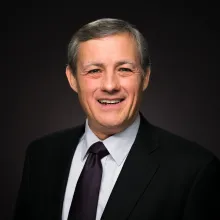
Gary Petty is a 1978 graduate of Ambassador College with a BS in mass communications. He worked for six years in radio in Pennsylvania and Texas. He was ordained a minister in 1984 and has served congregations in Longview and Houston Texas; Rockford, Illinois; Janesville and Beloit, Wisconsin; and San Antonio, Austin and Waco, Texas. He presently pastors United Church of God congregations in Nashville, Murfreesboro and Jackson, Tennessee.
Gary says he's "excited to be a part of preaching the good news of God's Kingdom over the airwaves," and "trusts the material presented will make a helpful difference in people's lives, bringing them closer to a relationship with their heavenly Father."
