

Robin S Webber
The recent tragedy of anti-Semitism at Bondi Beach, Australia brought forth a glimmer of light and hope as a Muslim man risked his life to take down the rifle-toting terrorist, thus sparing many lives. What can we learn by this unique and daring action fulfilled by "the other"--people that in our lives we humanly tend to marginalize and create distance. Jesus takes this "head on" in the Parable of the Good Samaritan and the startling conclusion of healing of the 10 Lepers. The most powerful sermon each of us can offer is not what we know, but what and how we enter one another lives in time of need.
This transcript was generated by AI and may contain errors. It is provided to assist those who may not be able to listen to the message.
Well, we want to welcome everybody here to San Diego, and looking forward to bringing this message, not only to the people here, but those that may be listening to it in the days, the weeks, and sometimes even the years ahead. I want to talk about a situation that happened a couple of weeks ago, and that was what occurred in the nation of Australia.
It's what occurred at Bandai Beach, which is a suburb across the bay from Sydney. Some of you may be aware of it. In this world, there's so much coming at us, sometimes maybe we did not hear about it. But I think most of us heard about it, and if not, we're going to hear about it during this message, and hopefully learn a lesson from it. But on December 14, 2025, there was a terrorist mass shooting that occurred at this Bandai Beach in Sydney.
It'd almost be like the Coney Island. I was talking to some an Aussie up in Redlands. It's like the Coney Island of the Metro Sydney area. It happened in the afternoon during the festival of Hanukkah, and it happened on the first day. What happened with this mass shooting is that the Jews had been there.
It's a festive time for the Jews. They're celebrating liberation that occurred many, many years ago. We'll talk about that a little bit in a moment. There were approximately about a thousand people that were in attendance. Then all of a sudden, the gunfire, the gunshots could be heard. The gunfire was happening. There was a father and there was a son, and they were terrorists, two terrorists that began to mow down people.
In that event and in that activity across the bay from downtown Sydney, there were 15 people that were killed, and one of them included a child. How many of you have heard about that event? Can I see a show of hands? Make sure I'm talking to the right audience. Okay. I think all of us were shocked, horrified, and we were saddened. Now, this was just 13 days ago, and you know how it goes anymore with this mass communication that we have coming at us at all times, that it comes and it goes.
The clickbait continues to drop on us to snatch our attention away from it, and the new cycle moves forward, and our minds can at times move on. But I'm going to take you back this afternoon to a cardinal lesson that I looked at when I was studying this and hearing about it, and I began to smile, and I began to learn, and I began to remind something very, very important that our Master Jesus Christ taught us as disciples of Him.
So what can we learn from this dark tragedy that occurred? What were the Jews doing? The Jews were celebrating Hanukkah. They were with their families. They were celebrating in their history that when a time of darkness, that light came. In a time of darkness, light came. I'm going to describe that a little bit to you in a moment. It was a very dark moment, not only thousands of years ago, but on that day.
But there's some light that came to me, and I hope will come to you as I explain what I'd like to share with you as your friend this afternoon, regarding the light that came into our hearts and into our actions and into our motives that is expected of a disciple of Jesus Christ. The title of this message is simply this, Who Then is Neighbor?
Who then is neighbor? And we will be exploring every facet of this question, which is multidimensional, comes personal, and it includes you, and it includes me. Allow me to go back for a moment before we get further into that question and just share a little bit about Hanukkah, and the relevance to us today, in a sense, it's not in Scripture.
It's not something that God commands us as the body of Christ to observe, but it is certainly important to the Jews and takes them back to a time of liberation. It creates light in a period of darkness, which I'll explain in a moment historically. And what can we learn from it? In the second century BC, about 150 years after Alexander the Great had died, I think most of us realize that when Alexander the Great died, that his empire that stretched from Greece all the way over to the edges of India was divided up three ways.
We've all heard of the Ptolemies in Egypt. We have heard of the Seleucids, and I'd like to just focus on them for a moment, because that's the remnant of Alexander's empire that we're dealing with, which was an empire on its own, which basically held the lands from Asia Minor, where the seven churches are, all the way down to Judea. And we had a person called Antiochus Epiphanes, who is the emperor.
And what had happened with Antiochus Epiphanes in the middle of the second century BC was that basically he had lost Asia Minor to the Romans. The Romans were beginning to go east, and they ran into this remnant of Alexander's empire, an empire in itself, large, populous. And Antiochus Epiphanes, who was the ruler, lost.
And it's interesting that sometimes when you lose to somebody bigger, you go back and you take it out on somebody smaller. And at that time, Antiochus Epiphanes came back. His capital was in Antioch. And you hear the word Antiochus in Antioch. It goes one in the same. And he began to persecute the Jews. He began to slaughter the Jews. He not only slaughtered the Jews, but he began to forbade the practices of what we would call the beginning of Judaism.
And not only that, but that he would go and desecrate the temple. The second temple, the first temple, was that of Solomon. The second temple was that which was constructed after the exile and the Jewish people coming back to the land. And he did just awful and horrible things. He even had them sacrifice pigs on the altar of the temple. You can just imagine it goes on and on and on. And then, enough was enough. And most of us have heard of the name of Judas Maccabeus of the Hasmonean line.
And the Maccabees, which were not only the family of Judah, but that it was an expanded group of people that came to be known as the Maccabees. They basically won and fought for their freedom and liberated themselves from Antiochus Epiphanes. And thus we go back and we hear of Hanukkah. That's where its roots are. And it's very interesting that when you think about it that somebody else also showed up during that time. Would you join me in the book of John?
It's very interesting because you may not be aware of that Jesus, in part, being a Jew, was in Jerusalem at that time, during that time, but it was given a different name. It was called the Festival of Dedication. And let's go to John 10 and pick up the thought in verse 22.
In John 10 and verse 22, and let's notice what's happening here.
John 10 and verse 22. Now notice what it says here. Now it was the Feast of Dedication in Jerusalem, and it was winter. And Jesus walked in the temple in Solomon's porch. And then the Jews surrounded him and said to him, How long do you keep us in doubt if you are the Christ? Tell us plainly. And Jesus answered them and said, I say to you, and I told you, and you do not believe. The works that I do in my Father's name, they hear witness of me. But you do not believe, because you are not of my sheep, as I said to you. Now notice this.
My sheep hear my voice, and I know them, and they follow me. And I give them eternal life, and they shall never perish. Neither shall anyone snatch them out of my hand. My Father, who has given them to me, is greater than all. And no one is able to snatch them out of my Father's hand. Now notice verse 30. I and my Father are one. It's the Feast of Dedication.
Jesus is no stranger to the Temple Mount. We recognize and we go back to when he was 12 years old, and he was there talking to the scribes and the wise men at age 12. We know that, obviously, he would come up, as many as you did, to the pilgrimage festivals. We know that here now we have something major, that he is right, in a sense, at the very core of God's attention, which would have been that temple. And he says that I and my Father are one. That he's God in the flesh, that he's Messiah, that he is Emmanuel, that they are like this. They are together. And of course, you know how that could set the Jews back. It's very interesting that Jesus, with the Temple Mount, comes. And remembering again that something very, very important is that in John 8, verse 12, and we've just been discussing John in the previous message that was given, that he says that he is the light of the world. He came to bring light into the darkness.
And it was right there on the Temple Mount that he made that. We also recognize that later on, on another visit, he would clean up the temple, wouldn't he? He would throw out the merchandisers. He would take down the tables. He would clean up his father's shop, as it were.
So it's interesting that Jesus in preliminary, because a lot has happened with from the Feast of Dedication, which every Jew would observe, and he being Jewish would come up.
But it has evolved with Hanukkah, and it's evolved, as we know, over the years with certain mythology and certain thoughts here and certain thoughts there, and has become more of a winter celebration, just like we have here in Christianity with Christmas, and you even have Hanukkah, Bushas, etc., etc. But at the root, it is very interesting with the Feast of Dedication, which is very interesting, that the Feast of Dedication lasted, are you with me, for eight days. Eight is a very important number in the Scriptures. It speaks of holiness. It speaks of a growth in God. It speaks of God's plan. And so during that restoration time, it's eight days. Interesting.
Now, I'm in no way, as I've just mentioned, I'm not espousing that we should observe Hanukkah. We should take note of it. We can take historical note of it. There are things that we can always learn from any source, just like Joel was just describing what he learned from going back of somebody looking at a chest and finding a a codex. But to recognize what do we gain from this, what I'd like to share with you is light versus darkness. Light versus darkness. And that's what I'd like to talk about. And even in what I want to share with you, even in that horrible tragedy at Bandai Beach, there was light in the darkness that maybe you're not aware of that I'd like to share with you that can increase God's light in you and me as we go out and meet our Mondays, Tuesdays, Wednesdays, Thursdays, and Fridays. And that is simply this. You might have missed it.
And there was that light that needs to shine in our hearts as well.
How many of you know the background of the hero of Bandai Beach?
Mary Ann?
Okay, that's a good start. We're going to build upon that. He was an individual, one man, and sometimes it takes one person to make a difference. What else about this gentleman?
Suzanne? He was a Muslim. He was a man of Islam.
Everybody knew what was going on in that park.
A thousand Jews, they're celebrating. When you have a thousand Jews celebrating and making song and making mirth, you know what's going on over there. And then the guns began, and people began falling. And here is one man, but it is so interesting his background.
Because we in our society today, you might say, well, he's the other.
He's not one of us. He doesn't know. Who picked him out?
I ask you a question. On that day in Bandai Beach, who was the best neighbor to the Jews on that day? And Christ has a lot to speak about this, and that's why the title of my message is Who Then Is Neighbor? All of us, let's just face it, humanly speaking, we at times, in just our humanity and our genes, we can distance ourselves from what we might call the other. They're not like us. We can say that sometimes just living day by day. We can talk about that racially. We can talk about that ethnically. We can talk about that gender-wise. We can just go right down the map and divide ourselves up and say, they're there and we're there. This created a different story. The light of the world, Jesus Christ, spoke about this, and I want you to join me in Luke 10. In Luke 10, and picking up the thought if we could, in verse 25, one of the great stories, and it is a story. It's a parable. Let's see how it begins.
And behold, a certain lawyer stood up and tested him, saying, teacher, what shall I do to inherit eternal life? And he said to him, what is written in the law, and what is your reading of it?
Think of ourselves walking in the shoes of this lawyer. He answers back. He knows his Bible to the degree that he knows his Bible, and knows what he says. So he answered and said, you shall love the Lord your God with all of your heart, with all of your mind, and with all of your strength, and with all of your mind and your neighbor as yourself. He was able to just come right back and quote scripture. And of course, what he's doing is he is listing out what we call the Shema, out of Deuteronomy. And he said to him, speaking of Jesus, and he said to them, you have answered rightly, do this, and you will live. But he wanted to justify himself and said to Jesus, notice, who is my neighbor?
Then Jesus answered and said, a certain man went down from Jerusalem to Jericho, and fell among thieves who stripped him of his clothing, wounded him, and departed, leaving him half dead. Now let's understand the road to Jericho. To go from Jerusalem, which is at 2,500 feet in elevation upwards, to go down to Jericho, which is like 2,500 feet below sea level, you're traveling a lot of space. It's a journey. It's arduous.
And at times there's not a lot of people on it, so you could see how you could be quote-unquote bushwacked and be robbed by some villains. Notice what it says. Now by... so he's there, there is this wounded individual, a Jew, wounded, and notice what happens. Now by chance, a certain priest came down that road, and when he saw him, he passed by on the other side.
He passed by on the other side. Watch this. This is the PowerPoint. He went, here's the man, half dead. Here's quote-unquote a man of God, and what does he do? He does the two-step, side-step. One, two, and leaves that man on the road. The story continues. It gets deeper. I don't say it gets better yet. It gets deeper. Likewise, the Levite, when he arrived at the place, came and looked and passed by on the other side.
He looked. He gave the man a good staring at, and he knew what he was doing.
Verse 33.
But, and remember, and John, you're visiting with us today, I always like to focus on small words, because small words set the stage for what is about to happen. But, then, and so. Here's a but.
But a certain Samaritan, as he journeyed, came where he was. And when he saw him, he had compassion.
Now Jesus is going back to the Shema, here, O Israel, the Lord your God, the Lord your God is one, and you shall love the Lord your God with all your heart, and all your mind, and all your strength, and all of your soul. And the second is like unto you, you shall love your neighbor as yourself. Notice what happens. The Samaritan, he had compassion, so he went to him and bandaged his wounds, pouring on oil and wine, and he set him on his own animal, brought him to an end, and took care of him. He had the human decency to go the extra mile for this man that had been robbed and beaten up to no fault of his own. Verse 35. On the next day, when he departed, he took out to Danerai, gave them to the innkeeper, and said, Take care of him, and whatever more you spend, when I come again, I will repay you. Now, the conclusion. This is powerful, and you have to remember how Jews teach and how rabbis teach, and Jesus as a rabbi, in that sense, would have taught this way. The answer is in the question. The answer is in the question.
So, which of these three do you think was neighbor to him who fell among the thieves?
You talk about a set up by Jesus for this lawyer, okay? And he said, He who showed mercy on him.
Then Jesus said to him, Go and do likewise. Now, let's understand something really important, this.
The lawyer, being a lawyer, and there are converted lawyers, but the lawyer being a lawyer wasn't going to go, he was watching his words. He never said the Samaritan. Did you notice that? He doesn't say the Samaritan. He simply gets it by by saying, the one who took care of him. And he said, He who showed mercy on him. Then Jesus said, Go and do likewise. A powerful story that we need to know and we need to understand.
One thing in our way of life, which we treasure so very much with what God has shared with us and opened our eyes to Scripture, and granted us the experience of living out how Jesus Christ and the apostles did, and all that we have that brings our way of life together. But to always remember that our example is the loudest sermon that will ever be given. It's not what we know. It's what we do when the moment comes to us. We can say, well, I know this, I know this, I know this, I know this, I know this, just like the lawyer. The lawyer snapped right out to Shema, which Adju would. But he didn't know how to put it in that sense, holding off the Samaritan, which the Samaritans looked like. Are you with me? Two words. The other. We basically know the problem that the Jews had with the Samaritans, and conversely, the Samaritans with the Jews. And yet Jesus reached out to both of them, and we take a look at this. And to recognize that, the one thing I want to share with you is this. I have a question for you. When you read this, what is one word missing that you think is normally associated with this verse? What do we call the individual that rescued the man that was on the road? And we use it in newspapers, we use it on television, we use it amongst ourselves. There's one word missing. Pardon? He's a hero in that sense, yes. Just simply this, for sake of time.
Good. Good. Whether you are an atheist, secularist, Catholic, Protestant, Church of God, remember, who do we talk about, and what example? Let's turn to the story of the good Samaritan.
Good becomes the obvious. Good becomes the obvious in this.
The example. The light and the darkness that people see, that people understand. Thus, with all of this state, what can we learn from this man, the other? And I'm going to share some thoughts with you. They're not long. I have about a page of thoughts, so we're going to get right into this. What I'd like to share with you, I'm going to give it just by points. And if you will utilize these points, you're going to find that your life is going to grow. It's going to develop. It's not going to stop with what you know, but what you do when it comes to you. And it's your moment to be a light in a darkened world. First point I'd like to share with you.
Never underestimate whom God might utilize to make a difference. Never underestimate who God will use to make a difference. And never underestimate how God might use you.
How God might use you to make a difference.
Recently, now this man made headlines.
The gentleman whose name is Al-Mood al-Ahmad. Again, Al-Mood al-Ahmad. We know his name. He doesn't know your name yet.
I recently gave a message that dealt with the roll call of the nameless. Of all of those that in their moment came up and made a difference. And we don't know their name. We know Noah.
We know Abram. We know Daniel. We know Bishak, Shadrach, and Abednego. And if you want to use the Hebrew, Michel, Hananiah, and Azariah, we know about Peter. We know about Paul. We know about Timothy. We know about Aetotus. But how many others in their moment stepped up? And we gave that message already. I'm not here to necessarily repeat it. I'd like to share a story with you. Maybe you'll remember that between 1998 and 2013, I wrote a column. It was on the back of World News and Prophecy. And it was called This is the Way out of Isaiah 30-21. This is the way. I actually wrote that for 15 years, 10 columns a year. And I go back and sometimes I look at them myself.
And my purpose was this, to draw upon a person like the gentleman in Bandai, Australia, that made a difference. Or this individual that made a difference. Or what about, I wrote about in 2001, about how they went up, speaking about the firemen that were going up the World Trade Center.
And that as everybody was rushing out of the building, they were going up those steps. And they, the work, the most dreadful thought in their mind always was battling fire in a skyscraper.
And yet those individuals, those boys from the Bronx, Brooklyn, and Queens, and Staten Island, and Manhattan, went up and became a living sacrifice in that sense to bring other people down.
If then, if they're doing that, we're therefore, what should we be doing? And to ask ourselves, who is neighbor? And the moment has come, and to meet that moment. And we're going to be talking about how to meet that moment in a moment.
It's interesting, the different individuals that were used by Christ to make a difference, that He took note. When we look at the story of the good Samaritan, the parable thereof, that was the Samaritan, and that was a story. It's called a parable. It was called, it's a, think about this for a moment, let me line it out, and you fill in the blank.
But there were others that Jesus used that were, are you with me? The other. In other words, if they showed up through the door, they'd say, what are you, what are you doing here?
Hello? Who invited you? And yet were used mightily by God. How about the Centurion?
Remember the Centurion and the servant? And his servant needed, he was near death, and the Centurion called for Christ. Christ said, I'll come, and what did he say? No, you don't need to come, just say the word. And what did Jesus say about that Roman Centurion?
What did he say about the conquering person, the man of Rome? He said, I have not found so much faith in all of Israel, and forever his example is used.
What am I trying to share with you?
We, as the people of God, need to be very careful about marginalizing others. By the grace of God, we know what we know and have been given what we've been given. And yet we can still learn off of other people. And note their example and say, if they are doing that, therefore what ought I to do?
It's interesting that Jesus, in choosing the disciples, chose a tax collector. Do you know how much tax collectors were reviled in Judea?
Collecting taxes for the conqueror? And yet we have Matthew, who gives us the first gospel.
What about the woman who washed Jesus' feet?
As she came in through the door, and this was just shortly before he was going to be offered up, she comes in through the door into a whole room of men.
And she comes up and she washes Jesus' feet, dries it with her hair, gives the spiknerd, the jar of spiknerd. And here are all of these men like this, going, you know, just underneath her breath, or just maybe talking at her, making her feel small. But nothing was going to distract her.
Nothing was going to convince that woman. And yes, the Old Testament, and how it treated women, it was so much higher above than the surrounding religions, because God made them male and female, both for a purpose, ultimately. But still, there was that marginalization. There was that marginalization. There was that you stay outside. We inside will take care of it. And yet, this woman was on a mission, and nothing was going to stop her. I have a question for you, just for sake of time. And you'll find this in Luke 9. In Luke 9, Luke 17.
We all know the story, I think, of the 10 lepers. Can I ask you a question?
We know the story of the 10 lepers, and Jesus sent them to be healed, to go to the Holy Spot, and then come back and see them. How many, I have a question, how many lepers came back? Do I hear five? Five? Five? Do I hear six? We're not at an auction. Did you say one?
It was one, right? I have a question for you. Was it a Jew? Was it one of God's people? It was a Samaritan, again. And this was not now a parable or a story to make a point.
This was reality. It was the other that at that moment made the right decision and did the right thing. We can learn from other people, and we can rise and do that with God's Spirit in us. Point number two. Life is what's happening that you haven't planned for. Number two, life is what's happening that you have not planned for. Some of it is accidental.
Some of it is incidental towards a purpose. Just ask Job.
Life is what's happening that you have not planned for. So what do we do when the darkness comes, and how do we proceed?
Not only for ourselves, but to help others. To be like the man that stopped the shooter in Bandai Beach. Can you imagine how many more people could have been killed if that man had not done what he did? So what are we going to do?
A point that I'd like to make is in Joel, seeing you spoke about the Gospel of John, in John 1.
About God, and in the beginning. And in the book of Genesis said in the beginning that he created light. He created light. Light does not just happen by itself. Think about that for a moment.
Think about that for a moment. Light does not happen by itself. It has to be created.
And when it is created, and when it is offered, it protrudes the darkness. It invades the darkness, and makes that which was dark, or could be dark, or even darker, and brings light in it.
Jesus himself said, You are the light of the world. A light that is hidden under a bushel can't be seen.
Our light is to be seen.
A light that is not just encapsulated in our brain, but is manifested in our heart and expands to others. Because again, most of you will never be up here giving a sermon. But you give a sermon every day by how you enter people's lives, and sometimes people that have challenges. And we're going to talk about that in a moment. Number three. You don't find your values in a trial.
Sorry to disappoint you. You don't find your values in a trial. You take them into the fray with you.
You don't all of a sudden come up with abracadabra and do the right thing.
You take your values into that. We say, well, Robin, how can you say that? Well, remember what the book of Ephesians chapter 6 tells us about putting on the armor of God.
And that is given as an outline. And it says, having done everything just to stand.
So you can't, when you see a challenge, and we're going to bring this down not to a thousand people, but yourself and maybe another person in a moment, you don't go making it up as you go along.
We're developing our values now to meet that moment, to meet our own Bandai beach, and do something for somebody else, because they are our neighbor. And it may not be a church member. It may be a co-worker. It may be a fellow student. It may be a neighbor.
Will we be prepared? Will we be open to serve? You don't find your values in a trial. Think of David for a moment. The young David, he took his values into that trial when he met his Goliath. And you might have said that Al-Amud, but dealing and taking out that terrorist, that was his Goliath, okay? Are you with me?
But, as I said, you don't take your values, you don't find your values in a trial, you take them in. You think, remember when David is talking to Saul? And he said, I've been down this course already.
God gave me the lion, and God gave me the bear. He had a track record. He remembered how God had worked with him before. Here's the lion, here's the bear, and the big guy is going to go down.
And his value was simply this, too. I love 1 Samuel 17. There's so much in there. He said that the battle is the Lord's. When he met his Bandai beach in the valley of Elath, he said, you're coming down. You have defied the armies of the living God.
And God is going to correct this right now, and I am his instrument. That's called the Weber parent phrase. And not only that, remembering the past, but he took some things into that valley with him. He took five stones. Not one, he took five. That tells me he was going to keep on firing, just in case. He took five. In other words, he did what he could do, and then was going to leave the rest up to what God can do, that only God can do. Point number four. We have not been called to be bystanders in this world. We're not bystanders. Yes, we do look forward to the kingdom of God coming in all of its fullness. But until then, as human beings and disciples of Jesus Christ, we have a work to do on behalf of God, to be an extension of his love and grace.
Even in trying times, we have not been called to be bystanders. You and I have been called to be activists, activists in the work of the kingdom that is in us. I'd like to share a story with you.
I'd like to share a story with you if I can find it. A little story. This is a story about four people. They're named everybody, somebody, anybody, and nobody. And there was an important job to be done. And everybody was sure that somebody would do it.
Anybody could have done it, but nobody did it. Somebody got angry about that because it was everybody's job. Everybody thought anybody could do it, but nobody realized that everybody wouldn't do it. It ended up that everybody blamed somebody. When nobody did what anybody could have done.
God the Father has called us to be His child while we walk this earth.
It's not everybody in this day and age.
You have been chosen by none other than God the Father to emulate the example of Jesus Christ. So it's not everybody.
But we're not a nobody either.
We have a name that's imprinted on us by God.
We learned that when the Aaronic blessing put my name on them.
You and I have been called to be somebody.
Not out of pride, not out of who we are, but who God is.
So we've been called to be somebody. Maybe we'll put that in lowercase. How's that?
Not all caps. Have you ever met some people that think they're somebody and they're all caps and you know it when you've met them? But we have been called to be somebody.
What I want to share with you, and I've leaned on this more and more over the last three to five years when I'm counseling people, whether it be a pastor, whether it be an elder, a fellow pastor, whether it be an elder, whether it be one of our members, I always go back to the book of Esther.
Mordecai's advice that is gotten to Esther in the palace. When there's going to be this genocide, this planned out genocide that's going to take place from the tip of India all the way up to northeastern Greece, in Thrace, the world-ruling Persian Empire, that in one day the Jews are going to be exterminated like bugs. And the message comes to Esther from her kinsperson, For who knows, but for such a time as now, the kingdom has come to you.
If you don't go through that door, others will rise up, but the door lies before you now.
Now, I don't know if that Muslim over there in Bandai Beach has read the book of Esther, but the door opened up to him. And can you just imagine what he's going to be like when he one day has God's Spirit? And yet, God's Spirit has been put in us.
Now, our entrance into others' lives may not alter kingdoms like in Esther, may not save a thousand people like the Muslim man over in Bandai Beach, but wonder if your entrance into somebody's life at a given moment, an important moment, makes all the difference. Wonder if you can, as a disciple of Jesus, Christ, come alongside somebody and walk with them and be able to show them a better way.
And they go away with that knowing that there was a concern and a love, and that what makes this person tick? We may not go after and face a man with a gun, but how do we preserve the life in others? After all, Jesus said, after all, Jesus said, blessed are the peacemakers.
I couldn't think. Join me if you would in Isaiah 6.
Isaiah 6 and verse 8. How open are we to this in 2025 going into 2026?
And I heard the voice of the Lord saying, whom shall I send? And who will go before us?
Then I said, here am I. Send me. And he said, go and tell this people. So the famous line from Isaiah, here am I. Send me.
In the story that Jesus shared about who then is neighbor, it's kind of interesting.
These men had read Isaiah, I'm sure, being a priest and being a Levite.
The moment had come, not stuck in a scroll, what was supposed to be stuck in their heart, that they missed an opportunity to be a person of God and make a difference in somebody's life. Point number five. How we approach crisis is vital.
How we approach crisis can be vital. Now we're going to go personal, because sometimes dealing with a whole crowd that doesn't know you is much easier than dealing with people that are very close to you.
And how to be able to help them.
And God has not called us just to simply stand by and watch.
If you saw, and I would recommend if you go back, watch the video again. It only lasts for about two minutes, if I'm not mistaken, if that long. If you've seen the video of Ahmed, he did not make a beeline. It seemed like a beeline, but he halted. He kind of went to the right a little bit by a trash can or a tree, as I remember. So think about this for a moment. It wasn't a straight line. He stopped for a moment and but a moment and thought about the next approach, which if you have not seen the video, he then tackles the man almost as a somersault with him, and he comes up with the rifle holding it on the terrorist. He is subdued. Ahmed goes further in, and he actually gets shot a couple of times by the man that's on the bridge. He's going to survive. But I thought, okay, when you see something, think before you act as well. Important.
It's in the approach. Join me if you would in John 15.8. In John 15.8, By this my father is glorified, that you bear much fruit, as you will be my disciples.
As the father loved me, I also have loved you, abide in my love. If you keep my commandments, you will abide in my love, just as I have kept my father's commandments and abide in his love.
These things I have spoken to you, that my joy may remain in you, and that your joy may be full.
This is my commandment, that you love one another, as I have loved you.
Greater love has no other man than this, and to lay down one's life for his friends.
See, this moves beyond the Old Testament. The Old Testament is, do unto others as you might have done unto others, as you might have done unto you. In other words, to put it in the commentary, I'll scratch your back if you scratch my back, and let's do it the same way. But, Joel, you just spoke on John. This is why John is written.
This is the beauty of the Gospel of John, because this is not just, I'm going to scratch your back, you know, we're just going to go back and forth, and no, no, this is sacrificial. This is given on the night before he's going to die the next day. And he's speaking about a love that knows humanity does not know of, and by itself, that is beyond the bounds of humanity, that comes from God. And it's sacrificial love, that you're willing to put your skin in the game. Here's this Muslim gentleman, Australian, I presume. He put his skin in the game.
Now, God willing, he's going to be called one day, what we call called. But, boy, can we learn a lot out of this person. This man, who is apart from our Father and the Christ, nonetheless did something that Christ did. Christ himself put his skin into the game. Christ, in that sense, made that same charge and that same drive down to this earth, that we might be rescued from the death penalty, that we might have a better way.
Interesting.
In sacrificing yourselves and taking time. Because, again, in one way it was more challenging for Ahmed, but also not as challenging, because the big challenges of stepping in, it's not always in a park.
With a big crowd. But sometimes it's in stepping in with people that are close to you. Your spouse, your children, your adult children that, John, you're visiting right now in San Diego.
My adult children, our grandchildren, people in our neighborhood, that you know you need, that they need help in one way or another, just like that man that's on the road to Jericho.
But we become like the priest, we become like the Levite, and we go around them.
And sometimes, even in congregations, here, maybe those that are listening, we go circles around people sometimes in congregations, because we don't want to meet up with them, because we don't want to deal with them. Perhaps something has come up amongst you and that person that has taken root for years and years, and it's like a corpse on the road to Jericho, and everybody skirts around it rather than dealing with it. It's called relationships.
Having grown up and passing in, hearing Mr. Armstrong again and again, sometimes people like to hear about Mr. Herbert Armstrong, so I'll mention that to you, is that Mr. Armstrong made it very simple. He was a simple guy with profound truth. That's why it was called the plain truth. He simply put it this, God has called us to relationships. God has called us to relationships.
And sometimes we avoid dealing with what's in front of us, only to see the matters that are maybe between us, fellow members in the church, fellow members in our families, neighbors in our neighborhood, workers on the job. We let it fester as if we think it's going to go away.
And we don't do anything about it.
We don't do anything about it. Let me just give you a few quick points and then we'll conclude.
It's not enough to know about something and willing now to deal with it.
It's in the approach, just like Ahmed. Before you run into it any further, think it through for a moment. Stop and then move. When you're dealing with a spiritual family member, you're dealing with a physical family member, you're dealing with issues at work that just need to be addressed.
You have to have courage. But here's the light I just shared with you. Number one, very quickly, seek first to understand before being understood. Get an approach and grasp what lies before you before you go any further. Seek first to understand fully what it is and ask God in prayer to give you understanding. Give you a specter of what is happening.
Maybe you've heard of something, but you don't have all of the facts. You know, in Proverbs 18, verses 15 through 17, it says, he who hears a person first without hearing others doesn't have the facts. Just don't take it from one source. In the mouth of two or three witnesses, let every fact be established. I'm going to give you my notes. These will all be down there. Don't think if there's a division between you and another, that it's going to get any better.
It's only going to fester. What is the message of the days of 11, Brad? A little 11 leavens the whole lump. Deal with it while it's smaller, but deal with it. James 1 in verse 19 says, be swift to hear.
Slow to speak. Slow to anger.
There's a time for patience, and there's a time for action.
There's a time of getting this together, what I've just mentioned in the last minute.
Normally, a lot of my time as a pastor, not a lot of my time, but a portion of my time that's probably more apt, is dealing with people that have challenges and are separated.
And the separation is even furthered because they didn't go to one another.
They didn't go to one another. They did not follow what Jesus said in the book of Matthew.
Go first to your brother. For you ladies, we're in the 21st century, go first to your sisters.
Go first. If we would learn these basic principles, not to found our understanding based upon hearsay, based upon one person, but in a multitude of counsel, get wisdom. And oh, by the way, the counsel coming from above asking God to grant you insight and love and fortitude, that helps too. And then go to that person and listen and hear them out.
And then make your determinations.
You have done your job.
Perhaps even the other party will not respond to what you have done.
But you, and let's pray that they would, right? We want the other party always to understand, you know, end up with a hug.
But if that hug does not come, then you have done your part. You have moved into uncomfortable terror. It's uncomfortable at times to deal with other people when there's no bridge between you and only a wall. And it seems like they're holding a gun on you just as much as that terrorist was holding a gun on that crowd. But perhaps for such a time as now, the kingdom has come. And we are citizens of that kingdom, aren't we?
How many of you are citizens of the kingdom of God? Can I see a show of hands? My hands up.
I'm a citizen of the kingdom. Good. For such a time as now, the kingdom has come unto us to make a difference, just like that man, just like the other. That at times, even we as the people of God, be it the Jews of yesterday or the spiritual Israel of God today, humanly we can marginalize people. Think that we're better than people. Yes, we're special to God, but it's only by His grace that we are, in that sense, involved.
Be ready this week. Be alert.
Know what you value. Be trained in your values. And always remember, life is what's happening that you haven't planned for. So prepare for it. And always remember, who then is my neighbor?
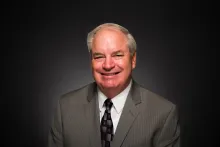
Robin Webber was born in Chicago, Illinois, in 1951, but has lived most of his life in California. He has been a part of the Church of God community since 1963. He attended Ambassador College in Pasadena from 1969-1973. He majored in theology and history.
Mr. Webber's interest remains in the study of history, socio-economics and literature. Over the years, he has offered his services to museums as a docent to share his enthusiasm and passions regarding these areas of expertise.
When time permits, he loves to go mountain biking on nearby ranch land and meet his wife as she hikes toward him.
