

Robin S Webber
This transcript was generated by AI and may contain errors. It is provided to assist those who may not be able to listen to the message.
To begin this message, I'd like to anchor ourselves in the scripture, in the Bible. That's why we're here, to hear the words of God the Father and Jesus Christ. So I would like to ask the audience to please open your Bibles. And as we do on this day, I pray that you will also open up your hearts as we go to Matthew 25 and verse 31. Matthew 25 and verse 31 is some of the concluding remarks that Jesus has to his disciples in his earthly ministry. And it's interesting the light that he puts on a very specific subject, and I'd like to read it to you. In Matthew 25 and verse 31, it says, When the Son of Man comes in his glory, and all the holy angels with him, then he will sit on the throne of glory. And all the nations will be gathered before him, and he will separate them one from another, as a shepherd divides his sheep from the goats. And then the King will say to those on his right hand, Come you, blessed of my Father, inherit the kingdom, prepared for you from the foundation of the world. Then notice verse 35. For I was hungry, and you gave me food. I was thirsty, and you gave me drink. I was a stranger, and you took me in. And I was naked, and you clothed me. I was sick, and you visited me. And I was in prison, and you came to me.
There's an incredible inclusion that Christ is making here about a very important subject. And then the righteous will answer him, saying, Lord, when did we see you hungry, and feed you, or thirsty, and give you drink? Or when did we see you sick, or in prison, and come to you? Verse 40. And then the king will answer, and say to them, and it's very important to recognize the solemnity then of the phrase that he uses, which means normally when Christ uses something big, it's about to be said, assuredly I say to you, inasmuch as you did it to one of the least of these, my brethren. And he claims them as my brethren. You did it to me. And then he will also say to those on the left hand, depart from me. You cursed into the everlasting fire prepared for the devil and his angels.
For I was hungry, and you gave me no food. I was thirsty, and you gave me no drink. And I was a stranger, and you did not take me in, naked, and you did not clothe me, sick and in prison, and you did not visit me. And then they also will answer him, saying, Lord, when did we see you hungry, or thirsty, or a stranger, or naked, or sick, or in a prison, and did not minister to you? Then he will answer them, saying, assuredly I say to you, inasmuch as you did not do it to one of the least of these, you did not do it to me.
And then he speaks of judgment.
It is very interesting as we look at this labor of message that Jesus gives, that both in verse 40 and verse 45 there is a message that is given. It is a double message. Allow me to repeat it again. Verse 40, and the king will answer and say to them, assuredly I say to you, inasmuch as you did it to one of the least of these, my brethren, you did it to me.
And then again in verse 45, then he will answer them, saying, assuredly.
That means it's going to happen. I say to you, inasmuch as you did not do it to one of the least of these, you did not do it to me. Now, what we have in this, brethren, let's kind of divide it out and then bring it back together. Can we please? We have two things that are happening here. Are you with me? And that is simply this. Number one, we do have a warning. It is a warning.
But it is a warning, number two, that has a positive direction towards those that Christ considers my brethren. And we're going to expand upon that, and we're going to talk about it. This is really a very gripping scripture. If I can make a comment. I'm sure many of us in this room have heard this read at one time and or another. But this is not theory. This is what... These are not just words.
And this is not just theory. This is telling us about the responsibility of those that have the mind and the heart of Christ and are truly involved in a way of life, of being open, of being available, of being willing. And not only do, as God said, to have the hearing ear and the seeing eye, but to have an eye in our heart for all people.
All people at all times and be ready to serve them. What we see in this verse is simply this. We plainly see here, and need to accept, that disdain and or indifference. And you might want to jot those two words down if you're taking notes to stay with me. Sustain and or indifference creates distance, not merely from others, not merely from others but from Jesus Christ Himself. For He says, if you've done it to these, you've done it to me. These are my brethren. This is my family. Now, why does He say that? And we're going to talk about that in just a few minutes. Now, let's expand upon this for a moment, because so often we think, well, but wait a minute, you know, there are occasions when I'll help a charity. There's occasions when I'll maybe help one person that is, you know, outside the 7-Eleven grocery store. And I go in and I buy him a sandwich or I buy him a cup of coffee, which is a wonderful and a beautiful thing. You've probably done that. I have done that. I don't normally give people money. I will take them inside a store. When God's Spirit moves me and I see that that's a very legitimate need, I will help then and in that way, because I think that's the best way of doing it. But we're talking about something, do I dare say that, is much grander and much greater than maybe we've given cause to think about these verses. Let's understand this as we expand upon this equation of Scripture.
We live in a starving and a naked world around us. We live in a spiritually, emotionally, and do I dare say mentally starving world around us. And it is naked as a blue jay and becoming more naked every day as it moves apart from God.
We live in a world that is on life support. It's cut off from God. And it thinks it's making it. It thinks it's okay. It thinks that the best day is yet ahead. And many of us grew up with the famous story of the Emperor that had the clothing that he thought was so grand and was on parade, only to recognize that he didn't really, when it was all said and done, have a stitch on him.
Rather, what I want to share with you, and I say this quite sincerely, the world has been famished since the Garden of Eden. It did not partake of the right fruit of that garden. And the world, and the cultures of this world, as they've extended and as they have expanded, are starving, are naked before our God. My wife and I, as we were coming in today, and we do have a little bit of time to talk as we come in from Riverside County, and we were just talking about the aspect of remembering when we were born and how we were raised and what a lot of people are faced with today. And we're thankful that we were born when we were born, and we were raised the way that we were raised, the way most people, not all people, would have been raised back in the late 1950s and the 60s. But even so, that is still like 5,800 years away from Eden. Mankind even then was starving. Mankind then was cut off from the kingdom, the culture of God, and thought that they were doing okay.
What I sense today, if I can share with you as we enter this message, is just simply this, that more and more, as much as man thinks that he knows, that we are experiencing an epidemic of that which is meaningless.
An epidemic of that which is meaningless.
I have a question for you. I'm sure all of us at one time or another have been by a beach. And we do the beach thing. You know what the beach thing is? Not just bouncing the ball, not just hitting the waves, but we make the sand castle. Have you ever made a sand castle that's maybe just 7 or 8 feet away from the shoreline? And you build all the moats. You build the best moats that have ever been built by an 11 year old boy.
You build all the moats. And you have different traps. And you have a moat in front of a moat to capture the water so it won't sink out the next moat. And you really, really pack in that sand, especially. And you know, you actually have two or three walls. It looks like a crusader castle on the top of a hill in Syria. Have you ever read the books?
And you say, boy, this is it. This will last for the ages. Last for the ages.
And that's how mankind is.
They have an epidemic of that which is meaningless. And they do not have the anchor.
And they are naked. And they are starving. And they are famished for the Word of God and the touch of God in their lives. And that's where you and I come in. And that's what this message is going to be about. What I want to share, I'm going to give the message title right up front so you know what I'm going to be talking about. And I'm not just giving this message, brethren, to share a few minutes with you. I pray and I hope that this message is going to galvanize not only your eyes and your ears, but it's going to grab a hold of your heart and that you will never look at another human being. Be it your wife, be it your children, be it your grandchildren, be it your neighbor, be it your boss who's giving you grief right now, or maybe your boss that you're giving grief to right now, or those that you shop with. Whoever crosses your path, you will never look at them and or respond to them or act towards them or react towards them in the same way. So the title of this message is simply this, Dignity Towards All Who Cross Your Path. Dignity Towards All of Those Who Cross Your Path. And that's not just a bumper sticker. We're going to ask why and how and what that is all about. One of the things that we need to be careful of in our way of life and at times where we speak of words as to the firstfruits and or as we speak to words of the elect, which is well and good and biblically true. But as Christians, we can also live and exist in a bubble of our own making, thinking that we're doing God a favor. We can live in a bubble of our own making and not necessarily God's design. Let's notice the instruction that's laid down in 1 Peter 2.17. In 1 Peter 2.17, which will be linked to what we read in Matthew about where were you when I had a need? Not when they had a need, but Jesus links Himself directly to the individual that you see that is in need. He says we are one. That's pretty sobering, isn't it? Can I ask you a question, please? Do you think Jesus just ran out of words and so He put those in there or does He really mean it?
See, He has some say, and do I dare say He has some flesh, He has some skin, and He also has some blood in this matter? In 1 Peter 2.17. Interesting statement here. Notice what it says.
And then let's ask ourselves, candidly and realistically, how do we stand in this? It says, number one, honor all people. Honor all people.
In other words, offer all people dignity. Give them respect. Love the brotherhood. Fear or revere and or respect God and honor the King.
You know, I look at verse 17 and I see two phrases that pop out at me, perhaps they do to you. It says, to honor all people. And that doesn't mean just simply people that are easy for us.
Did you hear me? To honor all people, not just those that are easy for us.
Be they family, be they neighbor, be they congregant. Honor all people. And it's linked with fearing God or respecting God, of revering God.
Fascinating connection here as we look at it.
The bottom line is simply this, friends. Here in Los Angeles and those that are listening today, the telltale marker of the converted mind, one that thinks like God and responds like Christ, here in the flesh, as he did also in the flesh, is to honor all people.
And to be willing, to be open, to be available, to meet the needs of that individual no matter who they are.
And frankly, sometimes it's easier to meet the needs of people that we do not know well, rather than those that are nearest and emotionally dearest to us. And we'll discuss that as well. So in all of this, we find that this is not theory. This is not something that's on a sidebar. This is, do I dare say, brethren, this is 101, Class 101 in Christian basics of what God through Christ not only expects of us, but do I dare say, demands of us, if we are going to be like the head of the church and the Lord of our life.
To have dignity towards others, to honor and to respect. And here's what I'd like to share with you. That in this, we're not just talking about a soul event because there's a target-rich environment out there for each and every one of us. There's two words that I'd like to share with you, may I? Number one is that we are to be consistent. And number two, we are to be persistent in what Jesus Christ asked us to open our eyes to. And we're going to ask, we're actually going to state now why we're going to get into why that is so important. Again, the title of today's message is dignity towards all who cross our paths. And the reason why I'm giving this message, do I dare say to each and every one of you? Because I'm talking to myself. A preacher preaches to himself. None of us have yet obtained, just like Paul says, I have not yet obtained, but that which I do, I press forward.
And so what is good for the goose is good for the gander. And so do I dare say all of us are in this together. But again, by the time I am through, it's been my prayer that you will never, ever look at another human being in quite the same way. And none of this is possible unless we begin with the beginning in mind and heart with the sovereign God. Join me if you would in Genesis 1. It's always good just go to right at the beginning of the book. Otherwise, you never want to walk into the movie halfway. And let's notice what it says in Genesis 1 and verse 1.
Because it is the whole story to a great degree is founded here in Genesis. So we've always got to go back to the beginning because for those of you that are just becoming acquainted by the Scriptures here or are watching us, Genesis means beginning. So we have to know where this snowball comes from as it expands and as it develops. In the beginning, God created the heavens and the earth. So in the very beginning, we develop a thought that God is the creator, not only of you, but of man, of everything that is. But after that, we notice something very profound here in verse 26. Then God said, let us make man in our image according to our likeness and let them have dominion over the fish of the sea. And it goes on that He would place humanity, this new creation, over the rest of the creation. And then God blessed them and God said to them, be fruitful and multiply and fill the earth. And it goes on to talk about that. What we notice here then in Genesis 1 verse 26 where it says, so God created man in His own image. He created him, male and female, He created them. This is the beginning of understanding, brethren, in case I lose you along the way. Are you with me?
This is why we are to honor and to respect every human being in whose path we cross.
Here in Los Angeles, with 18 million people around us, we cross a lot of people's paths, don't we? Well, we have a target-rich environment every day.
And to recognize then when we see this, this is what changes our life, brethren. Right here in Genesis 1, we do not believe in a world that was founded by accident. It is a planned creation. And God created everything. He created the cows, the birds, the fish.
But they are not made in His image.
And you don't hear about that today in our university. You don't hear about that in our schools.
You're taught another theory.
And you go back to Genesis and it says, man and woman together were created in the image and in the likeness of God Almighty.
And thus we start there, recognizing what God is doing for a purpose and recognizing that, and I'll just use this as an example, married couples. Susie and I, we've been married at least for a year, just teasing. But Susie and I are made in God's image.
And when I wake up in the morning, we have a marriage, we have a life. Two dynamic, two different personalities coming together. Most of you that are married understand that. But as I approach Susan and as she approaches me, I remember in whose image and in whose likeness. And for a purpose that she has been made and that I have been made.
That there's a purpose that's being worked out here below. That there's a God above that says, I am to respect that. That I am to honor that. And that I am to understand that as God is not done with me, and aren't you glad? That neither is God done with you, done with Susan, done with Ralph, done with Ted, and they could go around the whole congregation and to recognize that.
Evolution and secularism do not demand respect for one another other than the mutual benefit of making it through this swamp of life. Survival of the fittest. You make up your own rules. But it's not just in Genesis. I'm not sure I thought with you. Join me if you would in Genesis 9. It is in Genesis, but we're going to go to another chapter outside of chapter 1.
Genesis 9. Join me.
In Genesis 9, and let's pick up the thought, this is what we might call the Noatian Covenant. The ark has landed. Noah has come out. And God is speaking to Noah. And how it's going to be. Notice verse 5. Are you with me now? We're all together. Open Bibles. I presume that's why we brought them to church, to open them. Because we don't open our Bibles. How can we open our hearts? It says here in verse 5, Now what this is telling us is it's almost like listening to one side of a telephone conversation. And this is on the other side of the flood. But it basically tells you what was happening before the flood. There was absolute disdain for humanity. And it must have been a very warring and vicious society. So much so that God said, I've got to put an end to it. Other than these eight people that I'm going to put on an ark. There was no respect. By the time that Noah entered the ark, are you with me? By the time Noah entered the ark, this tells me that there was no respect. And or understanding of what man was about and what woman was about.
There was disdain, there was distance, there was no respect. Interesting.
But again, we find a story in Psalms. Join me if you would in the book of Psalms. Because again, in the Psalms were anchored to a purpose that's being worked out here below. In Psalms 8 and verse 5, the words of David, actually in verse 3, pardon me, When I consider your heavens, the work of your fingers, the moon and the stars which you have ordained, what is man that you are mindful of him and the son of man that you visit him? In other words, David is facing you saying, well, what's going on down here below?
What is it that draws your interest in actually, when you go back to Matthew 25, the son of God on earth, you recognize that he is very interested and very mindful. Of what we do for others whose path we cross, and it all comes together. And the son of man that you visit him. For you have made him a little lower than the angels, and you have crowned him with glory and with honor.
And you've made him to have dominion over the work of your hands. So we see that there is something very, very, very special about mankind. Now with all of this, let's ask ourselves a question. And you might be making a comment in your head to me, right? Well, Mr. Weber, this is going a little bit overboard. I haven't killed anybody recently. I haven't murdered anybody.
I haven't drawn blood off of anybody. I don't think I've stomped on anybody. I don't think this. I don't think that. So let's wrap it up so we can go into the hymn sing. Well, please don't go away. What we see here in the Novatian Covenant, we see a foreboden statement about the taking of human life. And let me say this, brethren, if I might. We can extinguish life.
We can take human life without somebody actually stopping to breathe. We recognize in the words of Jesus out of the Sermon on the Mount that it says that, you know, in the olden times it said that you shall not murder, but it says that he that calls another a fool and puts judgment on that individual, diminishes that individual, judges that individual, that in a sense a type of murder. We remember what the words in Job 19 and verse 2, you might jot those down, where Job says, you crush me, you extinguish me, you cause me to lose life by your words.
Your words that you use against me. Interesting. During World War II, it's interesting that there was a promo that went around through the different factories saying that loose lips can sink ships. Loose lips can sink ships. Let's ponder that one out for a moment. Loose lips. And we live in a society, we live in a culture, because it's not anchored in God, where the conversations, the innu windows, the slams at every level of America. On a moment by moment basis, all you have to do is take out your smartphone, read the latest words from a politician and another politician, no matter what party, from different people on the Facebook that you read, where you put something out that is with your heart and somebody else just pops the balloon, crushes you by their thoughts, pierces your existence.
That's not the world that Jesus Christ died for that we might exist in today. Oh yes, we can extinguish life without slicing somebody's throat. And unfortunately, in this world, and even amongst some of us, wittingly or unwittingly, are you with me? Wittingly or unwittingly, we can diminish, we can distance, we can crush life around us. And we forget, we forget that that one that we are sending that message to, whatever message it might be, is made in the image of God, in the likeness of God. And God is working with that individual in a different way than maybe He's working with you and me.
But we are to show every man and every woman that walks respect and honor. We may not agree with Him on everything. I understand that. That's a whole not a conversation. But this is the starting point. And brethren, I think some of us sometimes, even in this way of life, because of the culture that we are immersed in, that begins to sink into us, we therefore distance ourselves from the words of Jesus, that if you've done it to the least of these, my brethren, your wife, your child, your grandchild, your fellow member that's here, your neighbor, your co-worker, the person that's on the freeway that's giving you grief with the other 18 million that are on the freeway with you on a Saturday afternoon.
You say, well, Mr. Weber, you can't really be serious about this. This is getting a little fanatical, isn't it? No, it's not. It's biblical. It's biblical. Is it easy? No, it's not easy. But Jesus never said that it would be easy, did He? You tell me one place in the book where Jesus said following Him would be easy. Please. But He did say that it would be worth it. And that makes all the difference. He who offends a brother, join me if you would in Luke 17.
In Luke 17, verse 1. Then He said to His disciples, Jesus speaking, it is impossible that no ill offenses should come, but woe to Him through whom they do come. It would be better for Him if a millstone were hung around His neck, and He were thrown into the sea, than He should offend one of these little ones. None of us, in a sense, strive to offend, shall we dare say, on steroids. Sometimes we can take a meter and we can go over here to love, and we can go over here to despise your hate, choose your word. But there's something in between that is just as bad. It's simply called indifference.
Indifference. Not caring at all. Indifference. And we live in a world, brethren, that more and more is becoming indifferent to other individuals. And God has called you, in this day and in this age, brethren, to light a candle in the darkness. Not to join the darkness. Not to join the darkness. Not to be like them. And not for you and me to cater to what would come easy in our own human nature. But to emulate. To strive. To be inspired by the example of Jesus Christ when He says, They are my brethren. And He claims them even if He does not know them, even though they do not know Him themselves at this point.
Because He sees things as if they already are and what's going to happen in the future. Remember there's a song that was extant when I was growing up. I remember Ed Ames singing it. For those of you that remember Ed Ames. For those that you don't, I've just dated myself. He used to sing a song called, Try to Remember. I will not break out in song. I'll wait till the hymns sing. I almost did. I was close. I thought that was almost the prayer. I was ready to go. That was going to be the blessing on me being able to get through it. But I'll save it for another time. Try to remember. We want to remember, but we forget.
For you and me that are here today, do I not dare say that we want God to love us, to honor us, to not distance Himself from you and from me? But what about the other guy? What about the other gal? Sometimes what happens is we forget where God picked us up along the way.
When we go back to the Old Testament, we recognize what God chose. We're a people that were not a people. He could have chosen the Hittites. He could have chosen the Syrians. He could have chosen the Babylonians. He could have chosen the Assyrians. And He chose a confederation of twelve tribes. Kind of one big family, but they were divided. And they were the the the descendants of Jacob, of Israel. And they were slaves in Egypt. But He did not distance Himself from them. He did not disdain them. He took those slaves and bottom line, He made them His children. He made them His children. If we were to start, you know, it kind of reminds me of that message I gave some time ago about how Jesus started the church through the twelve that He chose. And remember that story I shared about the Jerusalem Better Business Bureau saying you don't really want these guys. Well, if you go back 1500 years before that, if you were starting something that was going to spread down through the ages and even into the millennium, because God has unfinished business with the nation and the people of Israel, you would never have chosen slaves to be your children. But that's exactly who God chose. He chose slaves. He chose a people that were not a people.
And to recognize that beyond that, beyond the children of Israel, to recognize that He even in the family of Christ later on, it's interesting some of the people that He had in the line of Christ, the different individuals that He said, you know, normally when we talk about our family heritage, we'll talk about all the this and the that and this and the that. We don't talk about the bankruptcies. We don't talk about the horse thieves. We don't talk about the this, the that. Do you read the line of Jesus? It's all in there. And do I dare say that there are some unsavory characters, both men and women, that are in that line? And yet that is the line that God chose to bring forth that child that was born of the Virgin Mary, that would indeed be the Son of Man. And so we recognize, bottom line, are you with me? Bottom line, bottom equation. It says that God's ways are not our ways. Are you with me? His thoughts are not our thoughts. And what happens is, in this world, in this twirl of the 21st century, where everybody's going to and fro, and knowledge is increasing, and we have our eyes fixed on our smartphone more minutes of the day than really it ought to be, that we're missing something that is out there. We're missing something in this age, in this culture of world and twirl. And I understand it as best as anybody, as you, being Angelenos, being mixed up in Southern California culture, with the 18 million other people that are here, with freeways that are jammed, with go, go, go, go, go, go, that God wants us to do something different, because His ways are not our ways. And we cannot miss that aspect of Jesus asking us one day, when He separates the sheep from the goats. He's not going to ask you what you know. Now, what we know is important, and God's basic truths are important. Absolutely. But He's not going to necessarily only ask you what you know. He's going to ask you, what did you do?
Sometimes Christians get puffed up with what they know, rather than what they do for their fellow man. How important is this? Join me if you would in Leviticus 19.33. Leviticus 19.33. Let's take a peek here.
Sometimes God has to remind us, as I'm reminding you, hopefully, on behalf of God, because He loves you, and I love you as your pastor, to remind us where we've been, to where we can help others that are not yet where we are. But we've got to remember where we've been before we can move into the future. Leviticus 19.33.
And it says this, Remember how Jesus said, The stranger who dwells among you shall be to you as one born among you, and you shall love him as yourself. And we're pretty good humanly at loving and taking care of ourselves.
For you, you were strangers in the land of Egypt.
And I am the Lord your God, which takes us right back to the first commandment. The first commandment, that I and the Lord your God which brought you out of the land of Egypt. That same God, brethren, let's create a connection, that same God that is mentioned in Genesis 1, in the beginning, God.
Genesis 1, 27, 28. And God made man and he made woman after his likeness and after his image. If for no other reason that we focus and deal with those that are around us and look them in the eye and give them our ear and watch our words, and how we reach into their lives, if but for a moment in this life, it all goes back to that.
Romans 5, verse 5, to remember where we were.
Now hope does not disappoint because the love of God, which is outflowing and outgoing concern, away from self, poured out in our hearts.
We are those recipients, and the deposit is in us by the Holy Spirit who has given to us.
For when we were still without strength, when we were naked, spiritually, when we were famished, spiritually, when we were on the curb of life going nowhere, it says this, In due time Christ died for the ungodly, for scarcely, for our righteous man will one die. Yet, perhaps for a good man, someone would even dare to die. But God demonstrates. That means in the Greek, He just lays it out, just lays it out, His own love toward us, in that while we were still sinners, naked, famished, outside the camp, Christ died for us much more now. Having now been justified by His blood, we shall be saved from wrath through Him. For if when we were enemies, we were reconciled to God through the death of His Son, much more having been reconciled, we shall be saved by His life.
God called you and He called me when we were messy, when we were rudderless, when we were on the curb of life and others were passing us by, God, by His grace, intervened in our life, gave us life, gave us purpose.
Now, some of those that we come into contact with, whether it's Ted over in East L.A., County Hospital, or some of you that are working in the Wilshire District, some of you that are working in Hollywood, some of you that are working downtown, remember, I used to be an insurance inspector, so I've been on every block of where you might work. Or over there on Ventura Boulevard, on Sherman Oaks or Encino, you're going to bump into and you're going to run into people that they do not know what you know.
Yeah. Yeah.
It's just not their time.
It's not their time yet.
But their time will be coming. Because, see, Christ has already died for them, just as He's died for you and for me. And God, our Father above, is so anxious for calling them in their time and in His way to give them the best womb of existence to come to understand His love through Jesus Christ. And that's going to be wonderful.
But even though perhaps they are not, as we say in the Scriptures, called now, they have a calling, it's just not now. And I know you know and I believe that. But what kind of a light are you now? What kind of a light are you now as you come into contact with them?
The Bible has an interesting phrase. It's an equation. It says that the last shall be first and the first shall be last. You know that one. I don't always like to bring it up, but it's a little spooky around the edges. It's kind of a warning there that some of those that are out there that don't even know yet about God the Father and Jesus Christ says they're going to be coming up first. Or did I read that wrong?
Hmm.
I'll tell you something really interesting. It says that confession is good for the soul. So here it goes.
I have been a minister now for, hmm, 43 years.
And sometimes, whether it was in the auditorium PM, the East PM, the San Gabriel Valley Church later on, the East PM, Garden Grove, Redlands, San Diego, Bakersfield, over the years, because I don't necessarily have an opportunity to reinvent myself because you already know this. I've always been here. I've had to grow up spiritually and pastorally in front of all of you in the auditorium, in the different gymnasiums, in the different facilities that we've had over here.
And sometimes somebody will call me, or I'll bump into somebody at a feast site, and they'll say, I remember you.
And I go, when they say, I remember you, I go, which Robin Weber did they meet at that moment?
Was it a young Robin Weber at age 28? Was it a busy, busy Robin Weber at age 38? Which Robin Weber did they meet? Did they meet the man that was so busy trying to make things happen that he ran over somebody that was famished and naked and hungry?
Or maybe they met the Robin Weber, just like all of you, that sees somebody all alone in the middle of an aisle no matter what's happening on stage, goes over and sits down and says, hey, I'm Robin. So that kind of comes up to me sometimes, and I go, I'm sure you've been, I'm sure you've had that experience. I say, oh, I hope it was this Robin Weber. I hope it was like what God and Jesus Christ would do. I hope, I hope, I hope, I hope, I hope.
Most of the time it turns out good.
But other times, and that's a part of the life of a minister, I have it coming.
That's the challenge and that's the opportunity I have, being in one spot now for 43 years and serving you and serving the others in Southern California.
See, I'm going to have to one day have that discussion with Jesus Christ and he's going to say, Robin, where were you?
Where were you when this happened?
I'll share another story with you, may I? And that's simply this. I know over the years, I'll be very candid, there's been times when maybe I was over here, something was happening over there. And there are times, and I hope that there would always be these times when I would drop everything.
The man that mentored me early on in my ministry was the very best at this.
And he would drop everything. Nothing was more important than being with the individual that was in duress, that was in trial.
And when that individual was with Susie and I, or came through the door, or was with us when our daughter was in a hospital, I kind of knew that everything was going to be alright, and everything was going to be okay. It was a great confidence.
And I tried to emulate that through my life, that if there is an emergency, if somebody is famished, if somebody is in need of nurturing, whether spiritually or emotionally, if somebody is dying, I want to be there. Many years ago, about 20 years ago, I had one or two people, quote-unquote, die on me. They didn't die on me, but you know what I'm saying. And I said, I'm never going to have, God willing, I'm never going to have another person die on me without me being their first to visit them. And that's when all the other stuff has just got to be put aside.
Right? And all the other stuff in your life has got to be put aside, because there's nothing more important than life to life, heart to heart, to be there for people that when they are famished, when they are challenged, that we are looking them in the eye, we're listening with our heart, and maybe if they do no longer have an eye or heart, that we are holding their hand and that we are embracing them and sharing with them the love of the Father and the love of Christ.
See, this world pulls us away from that. Our busy lives pull us away from that. And I don't want to be pulled away from that any longer. Sometimes I can't make it because of the responsibilities I have today, but that's why we have wonderful servants. I see all of you here. I'm in touch with you all week as an extension. But we're making sure that it's flesh to flesh, heart to heart, eye to eye, person to person. See, what we do, brethren, is historically in the Church of God, we tend to, do I dare say this?
And I know it'll be out on video around the world. But we tend to prize what we know. We call it the truth. It's very interesting, God says that we are to worship in spirit and in truth, right? Spirit and in truth. But there's this prize of, when we meet one another at the night to be much observed, we don't say, well, when did you come into the Spirit?
The phrase is always, what? When did you come into the truth? But the truth is that God has called us, and Christ has called us, to meet the needs of people. Just the needs of people. And people that you may never come again into contact with the rest of your life. But by your eye contact, by your heart contact, by your word.
Let me share something with you. May I? Can I? That's when you're supposed to nod. I've kind of gotten into a habit the last year to two years, Susie knows this, that whenever I'm purchasing something, whether it's at that window at McDonald's, or I'm doing that less and less, okay? Window at McDonald's, or I'm in a department store, I'm at Rite Aid, or I'm here or there, and I'm dealing with a clerk. You know how often people pass a clerk, pass a clerk at McDonald's, or a cashier at Burger King, or a cashier at Rite Aid, or Walgreens, or this or that.
And you notice, they just put their money down, put their money down, and nobody's making eye contact. Nobody is making eye contact. Interesting, right? Interesting. I've made a habit, it's simply this, no matter where I go, I always say, and how are you doing today? And it's like a gopher, boing! They go up. They have been recognized as a person. They exist. They're not an ATM machine.
But I've punched them in a way that you can't punch an ATM machine. I've talked to them. I've respected their existence, and I've actually asked, how are you doing? Now, I don't have an hour in a fast food line to get the whole story. Please understand. But it adds respect. It lifts an individual. You see, Jesus was always that way.
Jesus, when Jesus entered the villages of Israel and Judah and Samaria, there was a joy. And he would come in, and people would reach out and touch him, and he would also touch them. And he was touchable so much that he could feel a touch and a crowd of that one woman that had the issue of blood. He was open. He was willing.
He was available. And he touched people's lives, all the religious people that were in their bubble. He touched those that the religious people of his day, because of who they were, lest they be polluted.
He touched lepers. He touched Samaritans. He talked to tax collectors. He thrived being in the company of women. He was touched so much by one who had a reputation of ill-repute before she became a disciple, that she was the one that witnessed his resurrection first.
He was available. He was open. He was sensitive. And his disciples followed his example. Acts 3, join me if you would for a moment.
In Acts 3.
I want to show you biblically how it works.
Verse 1, He entered the temple.
Who, seeing Peter and John about to go into the temple, asked for alms.
Now, let's understand something as I've often shared with you over the years. God never wastes a miracle.
Everybody knew that this guy here was the real deal.
That he had to be carried to that position. They'd remembered him since he was a little kid.
This was going to be so important to validate the teaching of Jesus and the power of God, both the teachings of Jesus and the power of God, that there could be no mistake here.
Who, seeing Peter and John about to go into the temple, asked for alms. And one of the greatest lines to me personally, at a personal level, in verse 4. Let's look at it together.
And fixing his eyes on him.
With John.
Fixing his eyes.
Now, this is the PowerPoint. You want to look up here for a moment, please. Okay? Typical thing. Don't have it. Let's see if I've got some over here. Don't have it here, but it's going to be a pretend coin. Now, how often do people go up through the gate? Beautiful. We know the guy that's over here. He's always over there. He's just...it's like the sunrise. Sunrise, sunset, he's always there. It's going to happen.
And people would be in the hubbub like this, and they would just, you know... They just had to move down, you know. On this step, my hand goes in the pocket. This step, I reach for the coin. This step, the coin goes out of the pocket. This step goes like this. And you never look at the guy.
See, Peter and John here, the acts of the disciples who were taught by our master, wanted to emulate that example. Where were you? Who were you? What were you like? Were you too busy? And they fastened their eyes on that man, and would not go. And they said, Silver and gold have I none, but what we do give, we will give to you. Rise up and walk.
Brethren, I'll conclude with this.
Just saved you about two pages of notes.
Simply put, how good are you fastening your eyes on another individual that is made in the image of God and in the likeness of God?
Well, I know I'm made in the image of God. I know I'm made in the likeness of God. But so is that other individual.
My wife, our three daughters, our seven grandchildren, the 300 people that are in this circuit that I serve.
Those that I come to contact constantly over the phone, they call me long distance as a minister, sharing their lives, sharing their hopes of knowing more about biblical truth.
Those that I go into a hospital to visit. Those that you go into hospitals to visit.
I think that many of you here in Los Angeles get it, because I constantly hear about how you are serving your fellow brethren in your lives that are already very, very, very busy.
I'm just here to remind you to keep it up.
To remember Jesus' words.
Where were you? What's your name? Where are you? Who are you?
We do not know who will cross our path.
Somebody came to Jesus one time and said, well, tell us about the law. And what is that great commandment?
And Jesus said to him, Hear O Israel, the Lord your God, the Lord your God is one.
And you shall love the Lord your God with all of your heart and all of your mind and all of your soul.
And the second is likened unto it, that you shall love your neighbor as yourself.
Why?
Because he's made in the image of God.
And because Jesus Christ gave his life for that neighbor, even though that individual does not even know yet about Christ.
He's already given him worth, and he doesn't know it yet. But that's going to be coming.
And so the man comes back and says, well, who then is neighbor?
And that opens up the tremendous story of the Good Samaritan.
Little did those religious people, those church people of that day, know that as they went down to Jericho, that they would run into that man that had been beat up by a bunch of brigands.
And yet it was the one man that is least expected, the other, the other, the people that we don't like to associate with, it was the Samaritan that hated the words of Jesus.
I was famished. I was naked. I was hungry.
We can tell when I was beaten up. Where were you?
We know where the Samaritan was.
When you go to that story in the Bible, and I know all of us call it the story of the Good Samaritan, right?
The Good Samaritan.
But you will never see those two words together in the Bible. Good Samaritan. Did you know that? You will not find the words Good Samaritan together.
That is something that the rest of the world, for all times, has pinned on that individual.
Because he embodied, as we are to embody, the example of Jesus Christ, to be open, to be willing, to be available, and to have all men and all women to be our neighbor.
Jesus, at the end of that story, that he shared that parable, simply said this, Who then? Who then is neighbor?
And the question, the answer was in the question.
Brethren, let's heed the instructions of Holy Scripture, of the words of our Lord and of our Master, the Head of the Church, and the Lord of our life, as He asks us, Where were you?
And I'm not saying, Where were you? But where was I, as we heed His example, to be open to all people, all times, and ready.
Because when it's all said and done, we have this lens on us that reminds us, constantly, the lens on our heart, that those that we come into contact, if but for a moment or for a lifetime, on the freeway or in the mall, in our house or in our backyard, that they are made in the image and the likeness of God.
And that's our starting point.
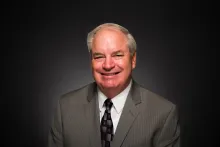
Robin Webber was born in Chicago, Illinois, in 1951, but has lived most of his life in California. He has been a part of the Church of God community since 1963. He attended Ambassador College in Pasadena from 1969-1973. He majored in theology and history.
Mr. Webber's interest remains in the study of history, socio-economics and literature. Over the years, he has offered his services to museums as a docent to share his enthusiasm and passions regarding these areas of expertise.
When time permits, he loves to go mountain biking on nearby ranch land and meet his wife as she hikes toward him.
