
Anthony Wasilkoff
Opening the Feast of Tabernacles, this message presents five principles for a meaningful Feast: experience God’s Spirit, express godly joy, build fellowship, serve others and treasure each day. Discover how making someone else’s Feast memorable enriches your own experience.
What a joy to be together on this opening night of the feast, to have sowing hymns together with such enthusiasm, and to have a full house if you look across from where you're sitting just to survey the entire ballroom. This is a peak capacity and much more than usual a forest-borne opening night. So welcome to you, and in particular if you are a transfer, we who are regular attendees are used to this hotel. They treat us so nicely. We are familiar with most of the staff. Most of the staff is familiar with most of us, and as a transfer collectively we welcome you and encourage you to come back every second year or so, whatever is possible under your circumstances. We have already received some feast greetings. Of course, we saw on the two screens brethren in different parts of the world last year keeping the feast. It is a little warm. I see people are fanning themselves. I think the air conditioner kicked in a little bit, so it's feeling a little bit better.
Feast greetings, some I think deliberate and some by accident, but one from India where the pastor there is Mr. Scriber. Some of you know who he is. Newfoundland sent their feast greetings, and our 11-year-old grandson phoned us from Greece. We think that was an accident. We don't mom and dad find out. We're not sure what the roaming charges are going to be over there, but he was asking grandma what time it was. It was 2.30, 3 o'clock, and she asked what time it was there, and he wasn't sure, but he did say it was dark. So we're not sure how that's going to turn out. But what a joy to be here with one another for the opening night of the Feast of Tabernacles 2026 here in beautiful, beautiful rural Midland, Ontario. Among other things, once life, long or short, is the Chronicle of Firsts. And by way of preamble, I wanted to have us review any number of firsts that we experienced in our lives, respectively, as you were growing up, in particular, your first day of school, what that was like, and what kind of trauma it may have caused you. I've seen mothers crying as they put their infant on the bus for the first time, and the infant may be crying, maybe not. True story of a young man in the Monroe congregation in Louisiana, who had been long the anticipating school during his preschool years. And finally, it arrived that his first day of school occurred, and he could hardly wait to go to school, an unusual child. And he went with so much enthusiasm, and his mother was so pleased. And then the next morning, she woke him up to say to her son that it was time to go to school, and he said he didn't want to. And she asked him why, and he said, because I went yesterday. That was his inventive, innovative answer, but eventually he got back into the stride of how school should be. Your first pet, perhaps, that you were allowed to have by your mom or dad, and you said, please, please, please, please, please let me have a dog, or a cat, or whatever it might have been. And eventually, you persuaded them because you said, I'll take care of it, and I'll look after it. You know how long that lasted, and it became mom or dad's pet. But that may have been another first that you have filed away in your memory bank. Your first tricycle. Oh, if I could just have mobility, I could have propulsion. A tricycle. You will remember those that have wooden blocks on the pedal, so you could reach and then turn the wheel, how exciting it was, and then your first bicycle. Perhaps that falls onto your radar screen, and how much enjoyment that was, and learning how to actually... I can still remember weaving that bicycle. How hard could it be? It was really hard to have balance on that bike. But once you learned how, with mom's help or dad's help, skinned knees, skinned elbows, was a consequence sooner or later.
I think, too, of the first horse ride. I went to a farmer's friend on the farm. I grew up in a small town, small town Saskatchewan. Most of my friends were farm boys, farm girls, and this particular farm. Distant relatives, but relatives, I think, had horses. Real horses. I mean, Christ comes back on a horse. Angels also come on horses. And so, I'm not sure, maybe 10? And they said, you can ride this one. Never trust a friend when it comes to something of this nature. And they said, you can ride this one. Bear back. No reins. Because that's the way you did horseback riding on this particular farm. And so, they put me on the back of this horse. No saddle. Nothing to put your feet into. No reins to hold on to. Their instructions were... That's all the instructions they gave were, hold on to the mane and don't let him put his head down. So, I got on. I'm trusting my friends. The first thing that happens, the horse puts his head down and he lit out of that corral. Cross country. With thunderous hoofbeats, over hill, over dale, and I was holding on for dear life, and I thought, this is the end of my short career. Eventually, the horse stopped. Mercifully, the horse stopped. And I did what any sensible person would do in that person's place, which was me, is jump off the horse. Whereupon, the other riders caught up to me and said, why did you jump off the horse? Because the horse then ran back home without me, which was my plan.
I wanted to get back alive. And they scolded me for not having because I just finished taming the horse, as it were. There are other firsts that you can think of in your Rolodex of memories, and it leads me, of course, sort of a circuitous course, to your first feast of tabernacles. As you think of where it was and what it was like and what adventures you had at your very first feast of tabernacles. Whoever it was, whenever it was, whoever it was with, you still have it probably filed away, and it's indelibly keyed so that you can retrieve those memories. For me, 1966, Squaw Valley, California, Blyth Arena. Some of you may have been...was anybody there in 1966? Anyone been to Squaw Valley? Some have been to Squaw Valley, thank you. It was the Winter Olympics. It started there, held there in 1965, I think, and we were able to use the facility, the arena. It was several thousand people. Remember, we enjoyed sitting in the press gallery, which was way, way up high, and you had a surface to write on. And then the second year, 1966, they had a...they had canvas back the year before it opened air and was cold. And that year, there were many people from the Western USA, Western Canada, snowed a time or two, and that's part of the charm in Squaw Valley. In September, October, where it snows, but it melts. And two services a day, sometimes three services a day. And it was such a joy to be with one another, and hear sermons that lasted on and on and on. But we didn't know any different. Two hours in the morning, two hours in the afternoon, a quick meal. And I remember Dr. Zimmerman spoke for nearly four hours. He covered Hebrews 11, each of the heroes that are summarized at the end of the chapter he went through. Nevertheless, by the end of the feast, eighth day in the afternoon, when we sang, God be with you till we meet again. God be with you, tears flowing down, because we didn't want to go home just yet. We had a taste of the wonderful world tomorrow. One of the references Mr. Antion makes, Gary Antion, who with his wife is attending the feast locally in Cincinnati this year. But one of the sermons he's given is entitled, See the Kingdom at the Feast. And so we saw the video this evening of brethren around the world singing and the, of course, special music at the conclusion of the video about every mountain and what is awaiting us. This year's Feast of Tabernacles. What kind of feast will it be for you? Some people say, every feast, every year should be our best feast ever. Well, that occurs as God grants it. We aspire for that. But nevertheless, we should aim for a blessed feast, a memorable feast, a momentous feast, as God grants it. What I want to cover in the time remaining is five imperatives, five imperatives for keeping the 2026 Feast of Tabernacles here in Midland, Ontario. And as said in the opening prayer, we would have seen either directly or indirectly the sunset and the moon rise. And be sure as you go home this evening and look up at that magnificent, gorgeous, full moon God's digital clock. So, five imperatives. Imperative number one for a memorable momentous feast this year, as God grants it, as he chooses to grant it to each one of us. Step one, or point one of the first imperative is, feel the Holy Spirit at work. Feel the Holy Spirit at work. Acts chapter 2, please. God's Holy Spirit is not dormant. It's not inert. It has to be active.
It is dynamic, and we're part of the process as we cooperate with it. Acts chapter 2, please, and we'll start reading in verse 14. Acts chapter 2, verse 14. But Peter, standing up with the 11, raised his voice. No amplification there, so you had to produce it yourself. And he said to them, Men of Judea, and all who dwell in Jerusalem, let this be known to you, and heed my words.
So, listen to me. I wish to make something clear. Verse 15, for they are not drunk, as you suppose. That's what the accusation is in verse 13, that they were full of wine. These are not drunk, as you suppose, since it's only the third hour of the day. He explained it's only nine in the morning. There hasn't been enough time for anyone to be inebriated just yet, so it can't be that. But this, what has happened, is a fulfillment of prophecy. So, as part of his sermon, as it were, he's quoting Scripture, as we do. But this is what was spoken by the prophet Joel, and it shall come to pass, in the last days, says God, that I will pour out my Spirit on all flesh. Your sons, your daughters shall prophesy, your young men will see visions, your old men will see or dream dreams, I should say. And verse 18, we'll stop there for this point, and on my men servants and on my maid servants, I will pour out my Spirit in those days. During the millennium, the Holy Spirit will be super abundant. But even here for us, beginning with the Feast of Pentecost, the Holy Spirit has been poured out upon those who repent. And the presence of the Holy Spirit is sometimes more noticeable than at other times. It is noticeable on the Sabbath day, when there's a concentration of God's people. It is noticeable on Holy Days, the presence and leading of God's Holy Spirit. And it's noticeable at the Feast of Tabernacles itself.
God seems to open up the taps of His Holy Spirit on special occasions. Have you ever been to a restaurant where we ask for a glass of water and the waiter or waitress keeps topping up the glass of water for you without you asking for it? You have a tall glass of water, and you see condensation on the outside of the glass, and you're a little bit thirsty because you were outside a lot, and you're coughing the magnificently soothing, quenching liquid, and the waiter or waitress comes back without even you asking them, and they refill the glass again and again. And they pour it out of the side of the pitcher instead of out of the teeny little spout. And they put in extra ice cubes. That is what you call pouring the water out, and it quenches the thirst. This is the language used here. It will pour out His Spirit on all flesh. We sense it. We feel it on special occasions like this opening night of the Feast of Tabernacles. Romans chapter 8, please.
Equally familiar, Romans chapter 8, please, verse 14 through 17. Romans chapter 8 for point one, feel the Holy Spirit at work. Follow the Holy Spirit at work. Find the Holy Spirit at work. Fuel the Holy Spirit in His conduct, in His operation. Acts chapter... Sorry, Romans chapter 8. We've covered Acts already. Pardon me. Romans chapter 8 verse 14, pardon me, where it says, For as many as are led by the Holy Spirit, these are the sons of God. The Holy Spirit doesn't capture, doesn't cajole, doesn't push, it leads. And we have to cooperate, we have to follow.
For as many as are led by the Spirit of God, these are the sons of God. For you have not received the Spirit of bondage again to fear. You've received the Spirit of adoption by whom we cry, Abba, Father. And it gives more instruction about God's Holy Spirit. If you have the experience of meeting someone in whom you knew, dwelt, the Holy Spirit, and that Holy Spirit was gone.
It was absent. It had left them. They were the same person still. They were the same individual still. But they were absent of something, and that something which is somewhat difficult sometimes to ascertain is the presence of the Holy Spirit. Now, before you're baptized, the Spirit of God works with you. Otherwise, you wouldn't even want to be baptized. But after you're baptized, you receive God's Spirit. But we can lose it, use it, or lose it. That sometimes happens. At the feast, God pours out an extra amount of His Holy Spirit. One of the things Dr. Ward, when he's an example about Dr. Ward, many of us know who he is from years past, where he always has for his beverage iced tea. And it's a mixture of straight iced tea and sweetened iced tea, half and half. And sometimes those of us who were more mobile than he was would say, can we get you a nice tall glass of iced tea? And he'd say, yes, half sweetened, half unsweetened, and lots of ice. And so we'd bring that for him, and he would enjoy that magnificent quenching of the Holy Spirit, as it were by analogy. One other parallel, if I can draw this to your attention. Some of you will have experienced this. During the Feast of Tabernacles, we see the kingdom at the Feast, we feel the Holy Spirit at work. And if you stay one day after the Feast, and most people have gone, what happens then? It was my task each year in Penticton, when in the days that WCG as a Feast Coordinator there, and we would have 2,000 people, 3,000 people, and I would go back the day after the Feast to Penticton to the Traitment Convention Center and talk to the Director and finalize the ledger. And it seemed like a ghost town. The Spirit of God was gone, because the brethren had left and took it with them, and the contrast was stunning, striking. So feel the Holy Spirit at work. Find it. Follow it. Participate in it. Second point. Our second point to follow for this year's Feast, second imperative, and Mr. Eliot has already covered this, but allow me to review it once again. Express godly joy enthusiastically. Express throughout the days of the Feast. Express godly joy enthusiastically. Deuteronomy, Chapter 16, he covered this. Let's go through it again for added emphasis. It's powerful language, which is meaningful, memorable. Chapter 16, verse 13, you shall observe the Feast of Tabernacles, which we are, which we have. For some of us, it's the first Feast. For others of us, it may be the second, or third, or fourth, or fifth, or fiftieth, or more Feast we've kept. You shall observe the Feast of Tabernacles seven days when you have gathered from your threshing floor and from your wine press. So it's a harvest festival. You probably harvested carrots, tomatoes, squash, grapes. We have concord grapes growing in our backyard. We have. The raccoons harvested them. They get to them each year much faster than we do, but I found several clusters that they couldn't find, and it was able to concord grape, have a few morsels, and discovered that little tiny red ants were harvesting themselves also in one of the clusters, one of the grapes that had split, and there was a swarm of little tiny red ants. Some of them were staggering a little bit.
No, we weren't. But you think, how did they climb up that vine down the little branch, discover which grape was open to their access? God's creation is just wonderful.
But it does say, threshing floor from your wine press, and you shall rejoice. It's a command. You shall rejoice in your feast. You and your son, your daughter, your male servant, your female servant, your leviate stranger, fatherless, and widow within their gates. Seven days you will keep a sacred feast. So the whole feast, we have a high holy day at each end, but the middle days are considered sacred, too, to the Lord your God in the place that he chooses for us at Midland, because the Lord your God will bless you when he has, in all your produce when he has, in all the work of your hands, and he has, so that you, at an emphasis, you shall surely rejoice.
In one year in Squaw Valley, I do remember that the song leader was quite innovative in his capacity. There was, if I recall correctly, David Albert, who had us saying, you can't be a grump, you cannot be a grump at the Feast of Tabernacles to the tune of while roller skating in a buffalo herd. You can't roller skate in a buffalo herd. So we say, how do you do that? But he, he, you can't be a grump at the Feast of Tabernacles, and so we are not. We find every reason to rejoice, and we do rejoice. We do that enthusiastically. I think of Dick Van Dyke singing, Put on, Put on a Happy Face.
Bright clouds, bright dark clouds are going to clear up, put on a happy face. Philippians chapter 4, added emphasis, then we'll go to point three. Philippians chapter 4, please, we'll read just one verse. Philippians 4 and verse 4, for added emphasis of how we do this. Philippians chapter 4 verse 4, rejoice. Rejoice in the Lord always. Godly joy. Again, I will say, rejoice. It's a habit. It's a way of life that we adopt. It's something we ingrain into ourselves. And one more thought, verse 5, let your gentleness be known to all men. Your example, the Lord is at hand. God is watching.
I came across an article I wanted to share with you. This was in a newspaper that Canadians will identify, and you may not if you are from out of country, but it's called the National Post, and it was written some years ago when the founder of a media empire died. His name was Izzy, Izzy Asper, Israel Asper, a Jewish gentleman of renown and business success in Winnipeg. And when someone in the Jewish community dies, they have a seven-day official period of mourning, and it's called a shivah, S-H-I-V-A.
Seven days of mourning, you express your sadness, your grief, your sorrow, because a member of the family has died. He was a prominent businessman, a famous tax lawyer, and a founder of a national post, or at least took over it. However, it only lasted a day and a half instead of the seven days, and then Jewish people, of course, quite vicidious when it comes to certain practices.
Why did it only last a day and a half? Because they also kept the Feast of Tabernacles, Sukkoth. And the seven days of Sukkoth, or eight, trumps the seven days of mourning. So they only mourned for a day and a half, and then the rabbi said, okay, the Feast of Tabernacles is beginning. So they all left the home of one of the daughters of the gentleman who died, the whole family. The rabbi said one more prayer. Everybody left together, went outside, went for a walk through the available area in Winnipeg, beautiful fall colors. They came back in, and as of coming back in, mourning was over, grieving was done, and it was necessary then to start celebrating the Feast and switching gears to see how one trumps the other.
Mourning is important, but also rejoicing at the Feast has even equal or greater validity. Number three, third mandate. Associate with others diligently. When it comes to the Feast of Tabernacles, associate with others diligently. 1 John chapter 1. 1 John chapter 1 verse 3. 1 John chapter 1 verse 3 through 7.
1 John chapter 1 verse 3 through 7. And that which we've seen and heard we declare to you that you also have fellowship with us, and truly our fellowship is with the Father and His Son, Jesus the Christ. When I look at myself, and I'll be a little bit autobiographical and forgive me for doing that, God called me when I was a teenager and I began keeping the Sabbath when I was 15 or 16 years of age, and I kept the Sabbath by myself for several years, sunset to sunset.
And although I observed the Sabbath, there was no one to go to church with and no one to fellowship with. And I remember that the Sabbath could be a little bit long, and I would stand in the kitchen chair and look out in the western horizon and see how much longer yet before the sun set, and I yearn, yearn, yearn, yearn to bump into someone who was a fellow Sabbath keeper. I heard there was an Adventist in my hometown in Saskatchewan. I yearned to meet with him whenever I did meet, but eventually I met a church family in Saskatoon who were fellow Sabbath keepers and then a second church family, and then went to church eventually, and it was wonderful spending time with fellow believers.
Verse 4, verse 3, let's look at that. And that which we have seen and heard we declare to you that you also may have fellowship with us. Truly our fellowship is with the Father and with His Son Jesus Christ. It's so important then on the Sabbath, but especially during the Feast of Tabernacles, to spend time with fellow believers, to reinforce each other, to encourage one another, to provide help and consolation for each other, associate with each other diligently.
One of the benefits of this part of the world is I'll interrupt myself. You do your prayer, you do your Bible study, you draw close to God, and then after that, what? I want to be by myself. No, I want to go out and be with others. What is it? Greta Garbo said, I want to be alone.
Well, apparently that's a misquote. Similarly, Audrey Hepburn said, I don't want to be alone. I want to be left alone. For us, it's just the opposite. We want to be with brethren every day for eight days, nine days as the case may be. One of the advantages here at the hotel is you have a free breakfast, which we're required to eat.
It's not optional. It's kind of like rejoicing. Or in your home, if you are doing an Airbnb, perhaps, or a verbal, perhaps. But the beauty of a small town and a feast out of our size is you cannot go to a restaurant or to a park without bumping into someone. You'll find someone. We have all kinds of opportunity to go to Little Lake. Brethren are there. Go to a shop. Brethren are there. Go to a park. Brethren are there. It is a magnificent opportunity. Take advantage of it. Associate with others diligently. And here in the hotel, if you're staying here, you have breakfast with someone different every day. It's a golden opportunity to pursue that day by day. Number four.
Serve. Serve wherever you are and however you can. Serve wherever you are and however you can.
Relation chapter five. And I'm talking with focus on the Feast of Tabernacles. Opening night, opening day, all the way through to the last day because it'll be here before we know it as we are aware. Galatians chapter five verse 13. Again, it's a short verse but powerful and effective. For you, brethren, you, brethren, have not been called to liberty or have been called liberty. Pardon me, liberty from sin, not God's law. For you, brethren, have been called to liberty. Only do not use liberty as an opportunity for the flesh. Some people think they have liberty to sin, but that's not true, of course. But through love, we're told through love, care, and concern, serve one another.
For all the laws fulfilled in one word, even in this, you shall love your neighbor as yourself. There was a sign posted in a senior citizen's home that said the following four things. If you want to be happy for an hour, take a nap. If you want to be happy for a day, go fishing. If you want to be happy for a year, go on a cruise. If you want to be happy for a lifetime, serve others. That is, volunteer. Serve others. It was Marshall McLuhan, remember him. The medium is the message, who, among other things, said that on spaceship Earth, there are no passengers, only crew.
So everyone on the plane is a crew member, no passengers, as it were. There's always something for everyone to do whenever you can, wherever you can. Somebody who was notable in my mind for this was Dr. Hay when I was a student at our church school at Pasadena, who I noticed when he came to the beach party. The rest of us were wearing swimsuits and swim gear, and he had his suit on, his tie, his brogue shoes. But after the beach party was over, he was picking up scrap pieces of paper. I remember also on one occasion having a term paper, I was bringing it to the administration building, and he was standing at a counter talking to the secretary, and all of a sudden he rushed to the front door and opened the door. I thought, okay, I'll step aside because he's leaving on an important assignment, and he stood there. And I stood there, and he stood there, and I stood there, oh, he opened the door for me! So then I came in, and he went back to conducting his business with the secretary. He had no idea who I was by any stretch of the imagination, but he was serving for the sake of serving. Serve whenever you can, however you can, during the feast. There's a need in virtually every area. Sometimes you can't, sometimes you can't. That, of course, is in your domain. And number five, the fifth, and mandate for us for this year's over imperative, fifth point, this year's feast of tabernacle, is treasure, treasure, and savor precious moments every day.
Treasure and savor precious moments every day. Matthew 6, we're on the home stretch. Matthew 6, verse 19 through 21, please, brethren. Matthew chapter 6, starting to read in verse 19.
Do not lay up for yourselves treasure on earth, where moth and rust destroy. Now moths are not such a big problem anymore, but they used to be. Remember, my mother would pull out clothing out of trunk of the home. There were holes in the cloth. And where did these holes come from? And there was a really healthy looking moth sitting on the sill because they would go after wool, linen, other things that they thought was edible. They can do quite a bit of damage, can't they? Do not lay up for yourselves treasures on earth, where moth and rust destroy. Some of you are familiar that in this part of the country, to fight the elements in the wintertime, we put down tons of salt and it has a huge corrosive effect on cars and they rust badly.
So they're trying to switch to something less corrosive, but rust does a huge number on automobiles and other vehicles of traffic. Do not lay up for yourselves treasure on earth, where moth and rust destroy. And where thieves break in and steal. And there's even cyber theft. Some of us may have been victimized by cyber theft, but instead we're told, lay up for yourselves treasure in heaven, where neither moth nor rust destroys. Where thieves do not break in and steal. For where your treasure is, there your heart will be also. These are treasures that no one can take away from you.
Now, on each day of the Feast of Tabernacles, I would say that God will offer you something to treasure. On each day of the Feast of Tabernacles, including this evening, tomorrow morning, tomorrow afternoon, God is going to give you something to treasure. On each day of the Feast, God will offer you something to take home with you. Look for it, identify it, don't let it escape your attention. And you know every good and perfect gift comes down from the Father of Lights. And one of the word pictures that I came across somewhere I don't remember where it says, when God gives us something, I was finding in this text, hold it with an open paw. God will give it to you and He'll let you have it for as long as you need it. And then He may take it away and He may give it back. But some of the mistakes that human beings make is He gives us a gift and then we grab it and think, I want this gift. Now I don't want to let go of it. I want to keep it for as long as I want it. And that's where we get into some trouble. And so we accept God's gifts with an open hand and then He puts them there. He can take them away. He can put them back. And it doesn't become something problematic for us. During the Feast, treasure and savor, precious moments, precious gifts, every day He will give them to you. Colossians 2 verses 1 through 3.
Colossians chapter 2 verses 1 through 3.
Mr. Waterhouse, some years ago when he was still alive, early days he was with us in United and he related as an aside, which I'm going to do now, that as you get old, somehow some way to stick them in your hands disappear and you can't turn your pages. And the pages stick together and you have to flip more methodically and with greater concentration. And now I understand what he meant.
Chapter 2 verse 1, Colossians, for I want you to know what a great conflict the Greek word is agate. What great agony I have for you and those in Laodicea and for as many as have not seen my flesh, face in the flesh, that their hearts may be encouraged, being knit together in love, attaining to all the riches of the full assurance of understanding to the knowledge of the mystery of God. Notice the word riches. And then read on with me, both of the Father and of Christ, in whom are hidden all the treasures of wisdom and knowledge. So much has been prepared for us for this Feast of Tabernacles. We'll be attending 10 church services. That's two and a half months of church in this short period of time. There are 10 church services, seminars, Bible studies, or seminar, possibly two Bible studies, multiple messages that have been prepared, sermon, split sermon, sermonettes, special music activities. Each day we'll offer something significant, activities like family day, seniors lunch, etc. etc. There's so much you will experience, so much you'll take back home with you. One of the things that happened to me or my family one year, I think I could squeeze in this example, that during the Feast of Tabernacles in Niagara Falls, some of you have been to the Feast in Niagara. We had several thousand people. My dad had experienced a stroke prior to the Feast. He was well into his 70s by this time. My mother had predeceased him, and I prayed to God and said, Father, don't let him die during the Feast because I need to be at the Feast to serve. I have assignments to fulfill. You can easily keep him alive till after the Feast. He died, I think, in day three or day four. I remember going out to dinner, coming back to the hotel. The light is flashing. My brother has left the message. He said, Your dad died of a stroke. You'd better come home. So we left everything during the middle of the Feast of Tabernacles. The minister came up from Regina, Saskatchewan, to conduct the funeral. And we left our children behind. They were little at the time. We attended an emergency funeral. They came back for the last great day. And how significant was that? To hear God's message about those who've never been converted, and how they're going to have their opportunity. And they'll be called in the time that is to come the last great day. That was such a significant lift to me to be surrounded by brethren. I, for instance, have never known a grandmother or grandfather. I was born in 1948. My grandparents died 10 years before that. Never knew grandparents. You have. Some of you have known parents and grandparents. Some cases, great-grandparents. I won't see them till the last great day. Looking forward to that. That, to me, is treasure. A treasure of wisdom and knowledge. A magnificent, wonderful, magnificent gift.
Feel the Holy Spirit at work during the feast. Express godly joy enthusiastically. Associate with others diligently. Serve wherever, however you can. And treasure each day. And savor the moments. Each of these at the first letter of the point spells feast. F-E-A-S-T. That's an acrostic. Feel the Holy Spirit at work. Express godly joy. Associate with others. Serve wherever and however you can. Treasure each day. Savor each day. Last statement. If you want to have the best feast ever, if you want to have the best feast ever, then make someone else's feast their best feast ever. That has great application. Good to be with you this evening. It's going to be a wonderful eight days, and we will be blessed for it.
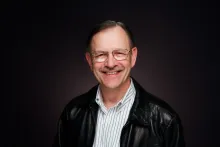
Tony grew up in a small town in Saskatchewan and became a member of the Church of God as a teenager as a result of listening to a radio program on CFQC Saskatoon starting in 1962. Today he and his wife, Linda, wear multiple hats in UCG including working at the UCG-Canada National Office, serving on the Canadian national board and pastoring several congregations. They have served in various pastorates in the United States and Canada.
The Wasilkoffs have two grown children (Paul and Cheri), a daughter-in-law (Coreen), a son-in-law (Jared Williams), four grandsons (Logan, Anthony, Jayden and Colton) and a granddaughter (Calista). They enjoy staying in touch with their grandchildren as much as possible in person and failing that, via the remarkable features of Skype.
