
Steve Shafer
This transcript was generated by AI and may contain errors. It is provided to assist those who may not be able to listen to the message.
Well, I appreciate Mr. Sorby directing the sermonette towards the youth, and the sermon is pretty much directed towards the youth as well, a good portion of it. I want to put something in perspective. It ties in a lot with what Mr. Sorby covered in the sermonette, but I'm going to go back to the Book of Job and cover a little differently from a different aspect of it, to kind of go beyond what he covered there. Take a little step further, or deeper, I should say. But one thing I think we're all aware of, we're all aware of the, it's been over a week now, but the shootings that took place in Colorado, where it actually was called a tragedy, but it was merely more than a tragedy, it was merely a massacre. Some are rightfully calling it, where this young man, I think he was 24 years old, he'd met his place in the theater, then he went out and got dressed up and brought in like an automatic weapon and some other weapons, several weapons, and came in and really just started firing, actually killed 12 people. One was a six year old girl, and most of them were young people, young men and women in their 20s, I think the oldest one was 51, but most of them were in their 20s, young men and women, and their lives cut off, just slaughtered, didn't even know who they were. And 12 of them were killed, and I think 58 were wounded, some critically, some are still in the hospital. And it was almost, I think I was in Colorado, but it was kind of reminiscent of Columbine High School, where a couple of young men walked in and killed, I think, 12 students and a teacher, and then committed suicide. That was back in 1999, not too far from where Roar, Colorado, where this recent shooting took place. And then it was about a year ago today, another horrible thing took place, you might recall, they were bringing out in the news, that was over in Norway, where a 33-year-old man in Norway actually killed 77 people in a bomb and gun massacre, and most of them were young men and women who were at a camp on an island off the coast of Norway. 77 people killed in that. Those were monumental tragedies for the families of the victims, who suddenly, and they're under-spent lost loved ones for absolutely no apparent reason whatsoever. So I'm just going to ask all of us here, as young people in the Church of God, in God's Church, and all of us in God's Church, as followers of Jesus Christ, what perspective would God want us to have concerning these kinds of events that take place? Because it probably will be more of these might be take place in the future as well. Does God want us to be touched by the tragedy and suffering of other people in the world, and these things happen, even though we don't know any of them personally. But someday it might happen closer to home, or it might be people we do know. But that's what I want to take a look at this afternoon. How does God himself view human tragedy, and how does God want all of us to view human tragedy? And maybe a bigger question than that, especially for all of you young people, why would God allow such things?
Why does God allow human tragedies to take place? That's my title. My title is in the form of a question. My title is, Why Does God Allow Human Tragedy?
What did God predict would happen in the last days? Let's begin there.
Let's go to 2 Timothy, 2 Timothy chapter 3. The Scripture is quite familiar to most of us. 2 Timothy chapter 3, beginning in verse 1, where Paul here writing to Timothy says this, But know this, in the last days, of course, there was a time when Paul thought he was living the last days, he later realized he wasn't. We now feel we are very likely living in the last days or approaching that period of time. Know this in the last days, perilous times are going to come. Perilous are dangerous. Times are going to come. It's going to be a very dangerous time. And we can tell, look around the world, and the different things that happen, we are living definitely in very dangerous and very perilous times. Why will dangerous or perilous times come in the last days? The answer for that is given to us in the next few verses. Verse 2 says, Because men will be lovers of themselves. They'll be thinking of themselves, not other people. They're going to be lovers of money. They'll be incarcerated on what kind of material wealth they can build for themselves. They're going to be boasters and proud. They're going to be blasphemers. Children are not going to be taught family values. They're going to be in broken homes, and they'll be disobedient to their parents. They're not going to have a real family structure there to get them security and well-being. And they're going to be unthankful and unholy, unloving, unforgiving, slanders without self-control, brutal, despisers of good, traitors, headstrong, haughty, lovers of pleasure rather than lovers of God. Focusing on pleasure, how you can have pleasure for yourself. Having also a form of godliness, but denying God's power from such people, turn away. So in other words, selfishness, greed, the breakdown of the family and family values, having little or no regard for the value of other people's lives, having no real spiritual values or purpose and having no spiritual perspective of things, denying God's power to work out his purpose. Instead, a lot of people didn't try to take matters into their own hands. Those are some of the reasons why all these things are going to happen, why it's going to be very dangerous and perilous times. Well, things get worse before they get better. 2 Timothy 3, verse 13, Evil men and impostors will grow worse and worse, deceiving and being deceived.
And why will that be the case at the time of the end? Well, just a couple of scriptures to give you. I think we all just realized that because Satan, as we know, is the God of this world, as it tells us in 2 Corinthians 4, verse 4. And also, Satan is called the prince of the power of the air, Ephesians 2, 2. He influences people. His spirit is around to influence people, especially when he wants to influence young people. As much as he can, he wants to get to them early if he can.
As time goes on, Satan's wrath and evil influence will increase because he will know that his time is becoming shorter and shorter, and shorter, as it tells us in Revelation 12, verse 12. His wrath is going to increase as he realizes his time is short to try to destroy lives and influence people, especially young people. Thus, we'll probably see increased human tragedies in the years ahead of us. What then should our perspective be? First of all, what is God's perspective when it comes to human tragedy? How does God look on these things? How does he feel about it? How does God view human tragedy? Well, as we know, the very few first human tragedy occurred when Cain, in a very jealous rage, murdered his brother Abel. Let's turn back there. Genesis 4, is when that occurred. It's recorded for us in Genesis 4, verse 8, the very first murder that took place, the first tragedy where our parents lost a son.
It's a real tragedy because it was killed by his brother. Genesis 4, verse 8, it says, Now Cain talked with Abel, his brother. Well, that's putting it mildly. It was far more than just a normal conversation. Cain was very angry, as it says in verse 5, and went into a jealous rage. He was enraged against his brother.
He talked with his brother Abel, actually in a very angry way, very enraged way, very jealous. And it came to pass in, because he couldn't get his anger under control. When they were in the field, Cain rose up against Abel, his brother, and he murdered him. Then the Lord said to Cain, well, where is Abel your brother? Because God knew what happened. But he wants Cain to answer. Where is your brother? And he said, I don't know. Am I my brother's keeper? That's a famous line we use today.
And God said back to Cain, what have you done? The voice of your brother's blood cries out to me from the ground. In these words, if you just think about them, you can feel the agony of God over what happened and what took place. Now, God's punishment was then to cause Cain to have to live with the pain and agony he had brought upon his family. He had to live with that.
And he had to live with it kind of apart from his family. He'd have to do that as a fugitive and a vagabond, as it says, which is greater than it says he could bear.
He had to live with that for the rest of his life, knowing what he had done and all the hurt he'd caused. We could say for Cain at that time was a punishment worse than death. Now, tragically, mankind has gone the way of Cain for the past six thousand years, which is why God sent forth his son. Let's go to John 3. Again, it's all part of God's plan to take care of all these things.
And of course, that began with God's son coming to the earth to die for man's sins. John 3, verse 16, it says, For God so loved the world that he gave his only begotten son that whoever believes in him should not perish but have everlasting life. For God didn't send his son into the world to condemn the world, but that the world through him might be saved. Now, God could very readily and very justifiably condemn the world, but God doesn't want to condemn the world. He wants to save the world. We need to understand God's mindset through all these things that take place to save the world from death.
As they were told very plainly in 1 Corinthians 15, the resurrection chapter, I'll just turn there quickly, 1 Corinthians chapter 15, beginning in verse 20. But now Christ has risen from the dead and has become the firstfruits of those who have fallen asleep. For since by man came death, by man, by Jesus Christ, also came the resurrection of the dead. For as an Adam all die, even so in Christ all are going to be made alive again, brought back to life, but each one his own order, etc. And then he's going to come to the end when he delivers the kingdom to God the Father and puts an end to all rule and all authority and power of mankind.
And he must reign until he has put all enemies under his feet. And the last enemy that God is going to destroy is death. So God's whole plan and purpose through Christ and Christ's sacrifices to destroy death in the long run. Now Christ himself, as he was being taken to Golgotha to be crucified and to die for the sins of the world, Christ himself gives us his perspective regarding human tragedy.
And that's recorded for us in Luke's Gospel, in Luke chapter 23. Turn there quickly, Luke 23, beginning in verse 26. As they led him away to Golgotha to be crucified, they laid over a certain man, Simon of Cyrian, who was coming from the country, and on him they laid the cross that he might bear it after Jesus. And a great multitude of the people followed him, and women who were also mourned, and the men informed him. They saw the terrible suffering he'd already gone through and was in. He was way too weak to even carry the cross.
They had to have somebody else there to carry that for him. But Jesus, when he saw them weeping and crying for him, he turned to them, verse 28, and he said, Daughters of Jerusalem, do not weep for me, but weep for yourselves and for your children, for indeed the days are coming in which they will say, Blessed are the barren wombs that never bore, and breasted which never nourished.
Then they will begin to say, To the mountains fallen us, and to the hills cover us. For they do these things in the green wood, in good times, what will be done in bad times? When it gets really bad, and people really get desperate, how bad are things going to get?
So at the moment of his greatest tragedy, Christ was only concerned about the tragedy that others are going to have to experience and go through in the future. Rather than the tragedy and suffering he was going through at that particular time. Now earlier, going back just a few chapters to Luke 13, Christ said this. Let's go back there just quickly and look at two verses in Luke 13.
Luke 13, verses 34 and 35, where Christ said, O Jerusalem, Jerusalem, the one who kills the prophets and stones those who are sent to her. How often I wanted to gather your children together, to keep them from these things, to protect them. As a hen gathers her brood under her wings, or her chicks under her wings.
But you were not willing. You wouldn't do it. You wouldn't come to me. And because of that, it says, Your house is left to you desolate, and assuredly I say to you, You shall not see me again until the time comes when you say, Blessed is he who comes in the name of the Lord. Now God would like to put everyone under his protection and gather them to himself. But people have to make choices in life. That's a decision that every person has to make.
Every young man, young woman has to make a decision as to whether they want to be under God's wing and God's protection or not. If they want to live their lives in a way, they will put them under God's wing and under God's protection. God can't force us to make that decision against our will. Godly love and respect and Godly character cannot be coerced. It must be developed by and through free moral agency.
But God himself is very touched by human tragedy. How often I want to gather your children together as a hen gathers her chicks under her wings, but you are not willing. That's God's perspective. Now what should our perspective be? Well, our perspective should be the same as God's perspective. Now I'm going to look at two Old Testament scriptures that tell us what God says our perspective should be when it comes to human tragedy. First, let's go back to the book of Ezekiel. Turn back to Ezekiel 9.
Ezekiel 9, I'll begin in verse 3. In the middle of a prophecy here. There's now the glory of God, of Israel, of God, not from the carob, where it had been. And it comes up to the threshold of the temple. Now spiritually speaking, of course, the temple is God's church, God's people. And he called to the man called the linen who had this writer's ink corn in his hand. And the Lord said to him, Go through the midst of the city, through the midst of Jerusalem, and mark on the foreheads of the men who sigh and cry over the abominations that are done within this city. Do you see abominations? Do you think horrible tragic things that are done like this killing and took place in Colorado? He says, We should be sighing and crying. That should move us very deeply. To the others, he said in my hearing, Go after him through the city, and kill, do not let your eyes bear, or have any pity, for those that don't have any pity, or care about what happens to other people. And slay old and young men, maidens and little children and women, but do not come near anyone on whom I put my mark, or I look down and see that they're really concerned about what's happening to people in the world. And they desperately want to do something about it by yielding themselves to God.
And he said, Begin at my sanctuary. Begin with my people, with my church. So begin with the elders who before... begin with the leaders of my church. They've got to be the first ones to set the example of what he's saying.
Now, the time is going to come when God is going to pour out His judgment on modern day Israel. But it says here, God will spare those who sigh and cry over all the abominations they see being done, and having taken place. Who feels sorrow as God feels sorrow, because of the suffering mankind is going through, and because of what mankind brings upon himself and is on his fellow man. When the person ends up being influenced by the prince of the power of the air, so to speak, by Satan, and because of the human tragedies that occur. We know God is extremely patient and long suffering. He wants to give mankind every opportunity possible to turn away from evil, and instead turn back to God. But at times it's going to come when God will have to personally intervene and bring judgment on mankind, so He can put an end to evil. And God is going to keep... He's very patient. He wants everyone to have an opportunity to repent, become a part of His family now. But the time will come when I'll have to say that's enough is enough.
But God doesn't... I want to point out something, though. God does not look forward to that time when He's going to have to intervene and basically pour out His judgment, because that's going to bring a huge amount of pain and suffering on mankind, too, when He has to do that in order to put a stop to evil. He doesn't look forward to what's going to take place in order for Him to have to do that.
Nor should we look forward to that time. Now, the time of God's direct intervention into the affairs of mankind, as we know, is called the Day of the Lord. It will probably take place during that year prior to Christ's return. The book of Joel, he prophetically describes the Day of the Lord, but here is what we're told.
I'm going to turn to Joel. I'm going to turn to the book of Amos. Hosea Joel Amos. So, the book after the book of Joel, the book of Amos. So, if you turn me back to the book of Amos, Amos chapter 5. Look at a few verses there. Amos chapter 5. Beginning in verse 1, Hear this word which I take up against you, a lamentation, a house of Israel. The version of Israel has fallen, and she will rise no more.
She lies forsaken on our land, there is no one to raise her up. For this is the Lord, the city that goes out by a thousand is going to only have a hundred left. There's going to be a lot of things that are going to have to take place in the time leading up to Christ's return through the Great Tribulation. And that which goes out by a hundred will have ten left to the house of Israel. For thus is the Lord to the house of Israel, you can prevent that.
Seek me. If you seek me and put me first in your life, then you can live. You can live. We could then add what Christ said in Luke 13, 34, how often I wanted to gather your children together, but you were not willing. Just seek God, you can live. Going down to verse 14 of Amos chapter 5, seek good and not evil, that you may live. So Lord, your God of hosts will be with you as you have spoken. Hate evil, verse 15, love good, establish justice in the gates like Job did. That's what Job did. He hated, he shunned evil, he hated evil, wanted to do good, he wanted to help people.
He was a tremendous example, as pointed out in the sermon at. Hate evil, love good, establish justice in the gate. It may be that the Lord your God of hosts will be gracious to the remnant of Joseph. But again, most will not be willing to do that, to seek God first, but God first in their life. Which then will result in what we read next, beginning in verse 16.
Therefore the Lord of God hosts, the Lord says this, because you're not willing to seek God first, there should be wailing in all the streets, and they shall say in all the highways, alas, alas. They shall call the farmer to mourning, and skillful lamenters to wailing. In all vineyards there shall be wailing, for I will pass through you, says the Lord. Now, I want to look at what it says in Exodus. Should we desire for this time to come, just so God's Kingdom will come? We all want God's Kingdom to come, but we should be looking forward to what the world is going to have to go through in order for God's Kingdom to come, and for evil to be extinguished from the earth.
What does the next verse tell us? Verse 18. Woe to you who desire the day of the Lord! Don't desire that! For what good is the day of the Lord to you? It's not going to be good to anybody. It's going to be terrible, but it's something that God is going to have to bring about, to bring judgment on the earth in order to do away with evil. But it's going to be a time of darkness, not light. Verse 19. It will be as though a man fled from a lion, and a bear met him.
Or as he went into the house, leaned his hand on the wall, and a serpent bit him. It's not the day of the Lord's darkness, and not light. It's not very dark, with no brightness whatsoever in it.
So we should never look forward to any kind of tragedies that are going to end up suffering upon mankind, even though we know they will occur in order to finally bring about the return of Christ and establishing the Kingdom of God on the earth. Now this doesn't bring us to the bottom-line question. Many ask themselves when something like this happens.
And people ask themselves this. In fact, I'm going to read what one person who was actually a professing Christian said after the Colorado shootings. Why does God allow such things to happen? God is the loving God. He's all-powerful. He could see what was going on. He could see this guy was leaving the theater there and getting all his stuff on, getting all these guns out of his car to come back in to kill these people. Why didn't God stop it? Why did He allow it to happen?
Since God is all-powerful and all-knowing, why didn't God intervene to prevent this massacre of incident lights from happening in the first place in Colorado? I want to read a comment that was sent in to Christianity Today's website. This is from a person who was a professing Christian, but she's struggling with trying to understand this. She says this. Why weren't those who were mercifully slaughtered, why weren't their prayers heard? Evidently, God was too busy planning with Tebow for touchdowns this fall to check His voicemail. It just makes no sense to me to pray to a God that can't stop such things from happening in the first place. What kind of a God who is truly all-powerful, just, or loving just sits back and lets innocent people die?
That's a good question. You young people here, do you understand why God allows that? Why that happens? Certainly not one I prayed to, she says, or even bother with. Now, this person is a professing Christian, but she's struggling with this. It does make even the faithful wonder what kind of a God we have put our faith in. Apparently, it is a God who does not intervene to prevent such horrors for reasons we find unfathomable. That's one lady who was struggling trying to find out why we got a lot of such a tragedy to happen in the first place. It's a good question. I wonder how many of our young people might be asking similar questions when they see some of these things take place. What kind of a God do my parents worship? I thought He's supposed to be a loving God, an all-powerful God. And all-knowing, why doesn't He stop these things? Why does He allow them to happen? See, what kind of a God have we put our faith in? Why doesn't God intervene to prevent such horrors from happening? Now, I'm going to let God answer that for you. From the Book of Job, as you were in the Sermonet, I'm going to go back to the Book of Job. Let's go back there again.
I'm going to cover it from a little different perspective than Mr. Sorby did, because I'm going to let God answer this question for Himself from the Book of Job. We'll get to that in a moment. Let's again go back and reiterate what's covered there in Job 1. There was a man in the land of Uz, whose name was Job, and that man was blameless. Boy, he was blameless! As Mr. Sorby said, he was quoting from Job 27, whatever the chapter he was in there, he helped the wills, he helped people, he had concern for others, he did everything he could to help people. He was a righteous man, and he was blameless, he was upright, he feared God, and he shunned evil, he turned away from evil, he hated evil.
We all know what happened in this story. Satan came before God.
And God then said, and we'll go down to verse 8, after Satan came before God, verse 8, chapter 1, The Lord then said to Satan, if you consider my servant Job, there is nobody like him on the earth, there's nobody that follows God and God's laws and is righteous like Job is, blameless and upright man who fears God and shunns evil.
So then Satan meets the challenge, he says, well, does Job fear God for nothing? Look at him! You blessed him! You put a hedge of protection around him and his family!
Around his household and around all that he has on every side, you have blessed the work of his hands and his possessions have increased in the land. But now, verse 11, stretch out your hand and touch all that he has, he's going to curse you to your face. That's a challenge Satan offers Job. Now, you have to wonder, why does God even allow this challenge to take place?
So God then allowed tragedy to strike Job's family in possession, he lost everything. He had seven sons and three daughters, and all of a sudden the house falls in with a tornado or something wind that comes along, and all ten of his children are killed and one fell swoop. Can you even imagine such a thing? Plus, he lost all his possessions, all his cattle, and all his servants were killed. He lost everything. Then God allowed tragedy to personally affect Job himself by putting Job into Satan's hand.
Chapter 2, verse 7, So then Satan went out from the presence of the Lord and struck Job with painful boils from the sole of his foot to the crown of his head. Why would a loving God, who is all-powerful, allow Satan to do that to a man who was blameless and upright and who feared God and hated evil?
What kind of a God would allow that and should we even put any faith in that kind of a God?
A God who would allow such things. Now, Job's wife must have been asking herself those very questions, because here's what Job's wife says in chapter 2, verse 9. Then his wife said to him, Do you still hold fast to your integrity, to this God that you're worshiping? Curse God and die! Why would you worship such a God as that, that allows us to lose all of our children and everything else in your servants and all your possessions?
Because they don't really know what's going on behind the scenes, but all they see is the effect of what happened. Verse 10, But Job said to her, You speak as one of the foolish women speaks. Shall we indeed accept good from God, and shall we not accept adversity? In all this, Job did not sin with his lips. But you had to know that when the thoughts were falling in his mind, he was wondering, Why would God allow all this to happen? After all, I've been serving God all my life. I've been putting God first all my life.
Then comes, of course, a long dissertation between Job and his three friends in trying to make sense of something that doesn't make any sense. Then another individual, Laihu, gives his input, beginning in Job 32, which then continues on all the way through Job 37.
You can do return to Job 38, because finally, beginning in Job 38, God himself answers Job.
And God's answer to Job spans the next four chapters, chapters 38 through chapter 41. I'm just going to read small portions of that, God's response to Job, which also then, to those who ask, What kind of a God would allow evil to happen, and be perpetrated on innocent victims? Job certainly was an innocent victim. Job 38, let's look at that, begin there, and that's where God begins to respond to Job. Job 38, verse 1, Then the Lord answered Job out of the whirlwind and said, Who is this who darkens counsel by words without knowledge? God's basically, Job, you don't know what you're talking about.
Prepare yourself like a man, and he says, I will question you, and you shall answer me. Now, interesting, Job has all these questions swirling around his mind. Why would God allow this? Instead of answering Job, God questions Job, just like Christ did to the Sadducees and Pharisees. When they questioned Christ, he threw questions back to them that they couldn't answer. Same thing happens here. But why did God say, why did God say here to Job, I will question you, and you will answer me? Why did he try to explain to Job so Job could understand?
See, why did God say, I will question you, and you will answer me? The reason he did that, in my mind, is I analyze this, because the real problem was not God. God was not the problem. Job thought, Job's why? They all thought, well, there's some kind of problem with God that he would allow this, but the problem wasn't with God. The real problem was Job's understanding and perception of God. That was where the problem was. Job did not really understand God. Did God really create all things? Is he the Creator? Is God really aware of everything that happens in the realm of man? Does God know what's going on? Is God aware of Satan and Satan's deception?
Can Satan, by any and all acts of evil, in any way whatsoever, thwart God's plan for mankind? Is there anything that can thwart God's plan for mankind? Is there a reason why God allows things to play out the way they do? Does God cease things from maybe a way that we might not? Does God know what he's doing and why he's doing it? Can we trust God's judgment, even though sometimes it doesn't make any sense? See, who is God? Who is this God we worship? Who is he, really? See, Job thought he knew God, but in reality, Job's understanding of God was woefully inadequate. Job 38, let's continue, verse 4. God asked, Joe, where were you when I laid the foundation of the earth?
Tell me if you have understanding. Were you there? Who determines his measurements? Surely you must know. Who set the line upon it? To what were its foundations fastened, or who laid his cornerstone? When the morning stars sang together, and all the sons of God shouted for joy. All the sons of God. The sons of God are called morning stars. Some of them are, anyway. And there was one particular son of God that was called the morning star.
When all the morning stars sang together in unity. Verse 12, have you commanded the morning since your days began, and caused the dawn to know its place? Verse 19, where is the way to the dwelling of light and darkness? Where is this place?
Verse 21, do you know it because you were born then? Back then? Or because the number of your days are great? Verse 36, who has put wisdom in the mind? Who created the mind to man, and put wisdom in there? Who created the human body? In the brain? In the mind?
Who has given an understanding to the heart?
Chapter 40, verse 1, Moreover the Lord answered Job and said, Show the one who contends with the Almighty, correct him? Can you correct God? And say, God, you don't know what you're doing. Why are you allowing this?
He rebukes God, let him answer it. Then Job answered, verse 3, and said, Behold, I am vile. What shall I answer you? I lay my hand over my mouth once I have spoken, but I will not answer. Just twice, but I will proceed no further. Then the Lord answered Job again, and said, Now prepare yourself like a man, and I will question you, and you shall answer me some more. Would you indeed ano my judgment? Do you think you know better how to plan salvation for mankind than I do? Do you think you know better how to carry out my plan than I do?
Would you condemn me that you may be justified by your reasoning? Have you an arm like God? Do you have the power of God to work things out, according to God's purpose? Can you thunder with a voice like his? Verse 12, Look on everyone who is proud, and bring him well. How do you deal with the pride of man and the arrogance of man? Do you know how to bring man down and help him learn what he needs to learn? Can you know how to tread the wicked in their place? Can you then hide them in the dust and bind their faces in hidden darkness until the time of resurrection and bring them back to life so they can learn what they need to learn, to finally fulfill their purpose?
He says in verse 14, he says, Joe, if you can do that, if you can do all those things, then it will also confess to you that your own right hand can save you. If you can do all that, you ought to be able to save yourself. Of course, no one can save themselves. None of us can resurrect ourselves once we die. Mankind cannot resolve the problems of mankind. Mankind can't save mankind. Only God can.
So here's the bottom line lesson Job learned from God's questions. The lesson that Job learned from coming to really know God and who God is, chapter 42, verse 1. Then Job answered the Lord and said, I know now that you can do everything. And no matter what happens, how evil it is or how bad, there's no purpose of yours that can be withheld from you. Not even by anything Satan can do.
You asked, who is this who hides counsel without knowledge? Therefore, I have uttered what I did not understand. Things too wonderful for me, which I didn't know. Listen, please, and let me speak. You said I will question you and you shall answer me. I have heard of you by the hearing of the year. I thought I understood you. I thought I knew you. But now my eyes see you. Now my mind is opened. I can really see and I really understand now God who you are and why your judgment is what it is. And you can do all things. Therefore, I abhor myself and repent and dust and ashes.
See, all this occurred and is recorded for all of us, so we can come to know God as Job came to know God. To know that no matter what evil God allows, in the long run it's only going to serve God's purpose. Even Satan is only a tool in God's hand to help work out God's ultimate purpose for mankind, because God can do everything and no purpose of God can be withheld from him. But let's go a step further. I want to take this a step deeper and ask, why does God allow Satan? He says, Satan is the God of this world, he's the prince of the power of the air. Why does God allow that? Why does God allow Satan to be the God of this world and to be the prince of the power of the air? Why didn't God take Satan out 6,000 years ago? He could have saved mankind all this misery and death and problems and destruction and all these tragedies that would take place. Why did God allow him to be deceived? He saw Satan coming down there in the form of a serpent. Why didn't he take him out right then?
And why did God allow Satan to influence Cain, to go into a jealous rage, to kill his brother Abel? God could have stopped that. Why didn't he? You know, we could go on and on.
I would like to begin to conclude by proposing an answer to that question. We just read in Job that when God created the earth, it says, The morning stars sang together, and all the sons of God shouted for joy.
Now, one of the bright morning stars was Halel. H-E-Y-L-E-L. That's his name in Hebrew, Lucifer in Latin.
Halel literally means morning star of God. Morning star of God. Lucifer or Halel means morning star of God. And at one time, it says, the morning stars sang together, Job 38.7. We just read that. They were united. But then something happened.
The leading morning star rebelled against God to become the adversary of God. Let's go to Isaiah 14.
Isaiah 14.
Verse 12.
How are you fallen from heaven, O Lucifer, son of the morning? This is the only place in the Bible where Satan's original name appears in Scripture. In Hebrew, if you look it up in Hebrew, it's Halel. H-E-Y-L-E-L. Lucifer in Latin. Again, which means morning star of God. What caused Halel to rebel against God?
Verse 12. How have you fallen from heaven, O Lucifer, son of the morning? How are you cut down to the ground, who weakened the nations? For you have said in your heart, I will ascend into heaven. I will exalt my throne above the stars of God. I will also sit on the mountain of the congregation on the farther sides of the north, where God's throne is. And I will ascend above the heights of the clouds. I will be like the Most High.
Now, this is my thought, but I dare say this is probably where the doctrines of Trinity originated.
The two members of the Godhead were God and the Word who was with God and who was God. John 1, verse 1. The two members of the Godhead were the Father and the Son. And here, Halel says, I'm going to be like the Most High. I want to be the third member of the Godhead. I want to be co-equal with them. We will be three persons as one God. This is likely where the doctrine of Trinity originated, with Halel wanting to be like God. Like the Word who was God and who was with God.
And Halel wanted to be the third and final member of the Godhead. That's why it was a close triangle. He wanted to be the third and final member of the Godhead. What happened instead? Verse 15. He usually brought down the Sheol, the lowest depths of the pit. But the big question is, what caused Halel to rebel? What happened? But Halel is going to Ezekiel 28. Ezekiel 28, beginning in verse 12.
Son of man, take up a lamentation for the king of Tyre, and say to him, Thus is the Lord God, you were the seal of perfection, full of wisdom and perfect in beauty. You were in Eden, the garden of God. Obviously, this could not be talking about a physical king. It's talking about the spiritual power behind that physical king of Tyre.
It's talking about a great archangel, as we obviously conclude from continuing to read. You were in Eden, the garden of God. Every precious stone was your covering, the sardus, topaz, diamond, barrel onyx, jasper, sapphire, turquoise, emerald with gold. And the workmanship of your temples and pipes was prepared for you on the day that you were created. And you were the anointed caribou covers. Can't get any cleaner than that. He's not talking about the king of Tyre. He's talking about the archangel, Halel, who rebelled against God to become Satan. You were the anointed caribou covers. I established you. You were on the holy mountain of God. You walked back and forth in the midst of the fiery stones. You were perfect in your ways from the day you were created, till iniquity was found in you. And then it says in verse 16, By the abundance of your trading, you became filled with violence within, within his own thoughts, within his own mind. And you sinned. Therefore I cast you as a profane thing out of the mountain of God, and I destroyed you, O covering carib, from the midst of the fiery stones. Now what iniquity was found in him that caused him to become filled with violence from within? See, something happened within his own thinking. Something happened within. What happened? Verse 17, Your heart was lifted up because of your beauty. You corrupted your wisdom for the sake of your splendor. So I cast you to the ground. I laid you before kings, that they might gaze at you. His heart became lifted up with pride and vanity.
You know, he thought he deserved more than he'd been given. He thought he deserved better. And he undoubtedly felt God was unfair in not giving him what he thought he deserved.
Whenever those kinds of thoughts ever come to our mind, and they do sometimes, realize where those kinds of thoughts originated and what it led to.
Don't ever think about yourself to go the direction of thinking that God is unfair because of something that happens. Whether it would be an unfairly treated or recognized, remember from whom those kinds of thoughts originated. Now all the angels were created with free moral agency, even as we are. God didn't want a bunch of living robots. And God doesn't want a family to live with, for a turn to you who feel they have been forced to be there. And who might someday look to God as a harsh dictator. Or who might someday disagree with God, or feel he is being unfair in how they are being treated or recognized in his family.
See, God made us all free moral agents. We have to make choices. We have to make decisions. He tells us that very plainly in Deuteronomy chapter 30. I'll just go back there and read that again just to remind us. Deuteronomy chapter 30, just look to verses 15, where God says, I have said before you today life and good, death and evil. I've given you a choice. Verse 19, I call heaven and earth as witnesses today against you, that I have said before you life and death, blessing and cursing. Therefore, as free moral agents, choose life that both you and your descendants may live. But the choice has to be ours, and ours alone to make. And for all the youth in the church, the choice is yours.
Why did God create us that way? Why did God allow Satan to become the God of this world? Why did he make us, you know, have to make choices? Going on in verse 20, the reason he did this is that you may learn to love the Lord your God with all your heart. You may obey his voice. That you may clean to him. Clean to him. You know, it's interesting because it talks about when God created Adam and Eve, and Eve to be the wife of the wife, is made to cling to her husband. We are the bride of Christ. We can only cling to Christ, cling to God. In other words, you've got to love God so much that you're going to cling to Him. Nothing's going to ever cause you to separate.
That you may learn to cling to God, no matter what, for He is your life, and the length of your days. And that you may dwell in the land which the Lord swore to your fathers of Abraham and Isaac and Jacob to give them. So God created us with three moral aims, so we can truly love God and cling to God and to God's ways, no matter what we go through, no matter what happens, no matter what kind of tragedies happen to our families or anybody else.
We can have that kind of faith and love toward God and realize God's power and God's ability to work things out and have faith in God and trust God's judgment. We have to choose God's ways and resist all temptation to the contrary. So we can develop godly character and the love of God can be developed in us to where God and God's ways are a part of us, a part of who we are.
So we become like God, because once you become like God, there's no way you will ever separate yourself from God as Hailel did and go the other way. See, once we become like God, we will never rebel against God as Hailel did. And that is why I believe God allowed Satan to be the God of this world. So we could... we would have to learn to choose God's ways and so we would come to learn never to go Satan's way. Because we know from 6,000 years of experience written in blood that Satan's ways only lead to death, mystery, and destruction.
And we will never go that way. We will always cling to God. Now, I think most of us do sigh and cry over the events like the Colorado shootings, especially when it's a massacre of innocent victims. That touches all of our hearts.
As we know, God's going to restore each and every one of those lies and His plan. They're all going to be restored. Even as Job's sons and daughters, God restored their life. You read the latter part of Job. Their lives are restored, and God blessed the end of Job more than his beginning. And God's going to restore all those lives that are tragically lost in each kind of tragedies. And God's purpose is going to be worked out for every one of those people and individuals so they can have an opportunity to be in his family, regardless of Satan's influence and efforts to try to destroy lives. Because, as Job learned, God can do everything, and no purpose of God, no matter what Satan does, can be withheld from God.
Satan can be no more than a tool in God's hand to bring about his purpose in the long run. Let's just close here quickly by turning to Matthew 6 and by reading how Christ said we should all pray, especially in the times, the perilous times that we're living in. Matthew 6, beginning in verse 9, where Christ said, In this manner, therefore pray, Our Father in heaven, how would be your name? Your kingdom come. We need your kingdom, so that your will can be done on earth as it is in heaven.
And give us this day what we need. Give us our food and our shelter, the things we really need in this life. But don't let us be greedy and want more than what we need. And let us be willing to share with other people who are less fortunate. Give us this day our daily bread, and also forgive us our debts. Forgive us the mistakes we make.
Forgive us our trespasses. And do that as we also learn to forgive others, like you've forgiven us. Don't lead us into temptation. But Father, we live in a very dangerous world. Please deliver us from, as it says here correctly, deliver us from the evil one. You don't have a purpose in allowing him to be the God of this world, but deliver us from the evil one, so he can cling to you. For yours is the kingdom, and the power, and the glory, forever. Amen.
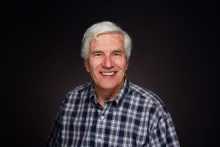
Steve Shafer was born and raised in Seattle. He graduated from Queen Anne High School in 1959 and later graduated from Ambassador College, Big Sandy, Texas in 1967, receiving a degree in Theology. He has been an ordained Elder of the Church of God for 34 years and has pastored congregations in Michigan and Washington State. He and his wife Evelyn have been married for over 48 years and have three children and ten grandchildren.
