

Roy Holladay
This transcript was generated by AI and may contain errors. It is provided to assist those who may not be able to listen to the message.
Brethren, we live in an age today where the existence of God is doubted. Evolution is taught freely in our schools, and any hint of biblical teaching about creation in schools is ridiculed, attacked, and actually it's not allowed in most schools today. Scientists who come out and publish some articles or put an article in a journal about intelligent design as a proof of a Creator or a higher being are ostracized and ridiculed by their peers. They're looked down upon. However, you and I believe that there is a God, and we know that He exists.
You know, in Hebrews 11 and verse 6, we used this last week in the sermon, but I'd like to focus on another part of this verse, Hebrews 11 and verse 6. It says, Without faith it's impossible to please Him, for He who comes to God must believe that He is. In other words, we've got to believe that God exists, that He is. We have to believe and know that He is, not just an idle belief, but an absolute knowledge and know that God exists.
I can remember to this day attending Ambassador College years ago, and I believe Jim Lichtenstein, Norm, and I all came into the same class together. One of the things that was very avidly taught at that time was the seven proofs of God's existence. You know, those seven proofs have not disappeared. They're still valid today, as much as they were at that time. Basically, you find that law demands a law-giver. Life demands a life-giver. Where does life come from? It comes from pre-existing life. Where do laws come from? They don't just happen. Somebody has to create them. Creation demands a creator, and you can prove that creation is running down.
You know, matter, especially radioactive matter, has a half-life, and it has another half-life, and so on and so on. You can tell how old it is by the life. Design demands a designer. This hole was designed. It didn't just happen. Somebody might think it did. This microphone didn't just happen. Somebody had to design it and create it. Then there's sustainer of law. You have law, but somebody is sustaining it and keeping it going.
Then finally, we have fulfilled prophecy and answered prayer. You have all of these proofs that there is a God. These are not the only ones, but they were major, overarching proofs that we were taught when we went to Ambassador College. Why is that important? It's important because if there is a God, and if we know that He is, then He has the authority and the right to tell us how to worship Him. He has the right to tell us what to do. We don't have the right to determine that.
He does. He has the authority. He's the one who sets the standards and tells us which days to observe, which days not to observe, which customs to keep, which customs not to keep, which laws to observe, which laws not to observe. That's why we look to God to tell us how to obey Him. The Bible is explicit in this area, very clear that God is the one who tells us what to do.
Rather than when it comes to worshiping God and what days we worship, we're here on a day that the majority of people in this country are not meeting. I was talking with Mr. Petty before services. He was just recounting the fact that when you start talking about not working on Saturday, you don't answer your phone on Saturday, they want to know about it.
Is that your day of worship? Are you a Jew? No, I'm not a Jew. I'm as much of a Christian as you are. Most people do not believe that Saturday is the Sabbath. They will say, well, that's your Sabbath. My Sabbath is Sunday. Well, that's an oxymoron. Sunday is Sunday. The Sabbath is the Sabbath, and that's today. They may claim that, but that's not the truth. God is the one who sets the standards. So he says, worship me collectively as a body, as a community, on this day. That's why we are here on this day. He's also the one who tells us which Holy Days, annual Holy Days, to worship him on.
They're not the ones that have been designated in society today that we see the average person obeying. We look to God to tell us how to keep his days. You and I, brethren, are fast approaching the spring Holy Days. They're going to be here shortly, and we will be observing the Passover and the Days of Unleavened Bread. How do we observe those days? Who do we go to to find out?
Who has the final authority to tell us? See, the average church gour never stops to ask himself the question. Never doubts in his mind, maybe my church isn't right or maybe what we're doing is wrong. He just goes to church. And the reason why? Well, maybe he grew up in that church.
His parents, quote-unquote, were Baptists or Catholic or Protestant, and so therefore he grew up. And that's why he goes. So you have family ties. It's close. It's right around the corner. It's convenient. They have a nice parking lot. Now, these aren't things I've dreamed up.
There have been studies done on this, and these are answers that have been given.
They've got a good sports program. They've got a good youth program. I like the minister. He's charismatic. Boy, he's powerful. And all kinds of things. I like their music.
And they allow guitars, drums, cymbals, or whatever it might be. And so there are all kinds of reasons why people go to the church they go to. Is the main reason why they go because they believe that God's in charge and that the doctrines, the teachings, the customs, the days that are observed are what the Bible says. God is the ultimate authority on why we observe certain days, keep various customs. We find that the church also, and God has given to the church and delegated to his church to help us to keep the Passover, the holy days, because God doesn't tell us everything. He gives us a general overview.
But sometimes when it comes down to certain applications, how do you do it?
You see, we don't decide individually, do we?
Guess what? If we all decided individually, if there were a hundred people in our congregation, guess what? There would be a hundred different opinions on how things should be done.
And that's the problem. When everybody is left up to his own devices, there's a way that seems right to a man, but that's not the way of God. So who has the authority to tell you how to observe the holy days? Well, let's notice. Let's go back to Leviticus 23, beginning in verse 1. Leviticus 23, and we will begin to read in verse 1 here. And I want you to notice what it says, The Lord spoke to Moses. So where do we find what is recorded here in chapter 23?
Where do we find that came from? Well, God spoke to Moses. So it came from God directly to Moses. Moses wrote it down, and then it's been conveyed to us. It didn't originate with Moses. It came from God. He is the one who originated it. And he revealed it to Moses, told him to pass it on, write it down, pass it on to us. And notice, verse 2, speak to the children of Israel and say to them.
So now he's being told precisely what to say to the children of Israel. The Feast of the Lord, which you shall proclaim to be holy convocations, these are my feasts.
So I want you to notice whose feasts they are. They're not the Canaanite feasts.
Our former association years ago claimed they originated in paganism, and that the Israelites borrowed them from the pagans. That's not what the Bible says here. God says, these are my feasts.
So that's what we believe. See, the difference among true believers and those who aren't is if you read it, it's what the Bible says, guess what? That's it. That's what we believe. These are my feasts, God says. The word feast is a Hebrew word moad. It means an appointed time.
So when it talks about the feast of God, these are special, appointed times, times that God has appointed for us to worship Him. And He goes on to say, and He shall proclaim to be holy convocations. A convocation is a calling together or a sacred assembly. Now, what makes it holy? Only God can make something holy. We don't. God does. God is holy, so therefore a holy convocation is something that God is in.
It's holy because His presence is there. Holy convocation also means a commanded assembly.
It's not, well, I think I'll come if I want to. No, we are commanded to bring our hide along with our brain and everything else to be there, to attend and to obey. We are to assemble together.
It's a sacred assembly because of God's presence. He sanctions it. He blesses it. He hallows it.
And He has the authority to tell us how to keep it. Now, notice in verse 3, Six days shall work be done, but the seventh day is the Sabbath of solemn rest. A holy convocation.
We're meeting here today because God has told us to be here.
You shall do no work on it. It is the Sabbath of the Lord and all of your dwellings.
Now, these are the feasts of the Lord. Notice again these are God's feasts.
These are holy convocations, commanded solemn sacred assemblies, which you shall proclaim at their appointed time. The word proclaim means exactly that. It means to proclaim, to read aloud, to summons, to invite. You and I have been summons. We've been invited to keep these holy days, as it says here, at their appointed time. That's the Hebrew word mo'ad again. At their appointed time. That's what the meaning of feasts means. It is an appointment with God. And, brethren, today on this weekly Sabbath, we are observing an appointment with God.
Same thing on the annual holy days. Now, let's go over to the book of Colossians. Colossians chapter 2. And I want you to notice that God is also given to his church the responsibility for guiding and directing and showing how certain days should be kept, how they should be observed. The church in Colossae had a problem. They had a lot of false teachers who were coming into the church. Many of these were Gnostic. Gnosticism is a teaching that the Gnostic supposedly has superior knowledge. And it was supposedly superior knowledge above the knowledge revealed in the scriptures about God. So, let's notice here in Colossians chapter 2 and verse 8. It says, beware. So, here's a warning. Look out. He says, beware. Lest anyone cheat you through philosophy and empty deceit. Now, these false teachers were coming along and judging the church, as I will show you, on how they kept the Sabbath and how they were observing the holy days. The word cheat in the Greek means to take over complete control of a person, as one would take over control of a captive. It is a word that in the Greek implies the booty of war. You come in, you take over a city, you capture a city, you haul off all of the people as slaves. You carry out all of the booty, all of their wealth, along with you.
And so, what he's saying is that we should not let anyone gain control over us by using human reasoning. As he says, beware of those who would cheat you through philosophy and empty deceit. Now, after what? According to the traditions of men. Not according to what God says, but men's traditions, human traditions, and not godly traditions, according to the basic principles of the world. That is, the Greek word stoichiia, and it has stoichiia refers to the philosophy of this world. It goes back to Gnosticism. The Gnostics taught that every human being had a soul, and that when you die, that soul was trying to get back to God. In other words, go to heaven. That it came from heaven, they said the souls, every star up there in heaven, was a soul. And when a baby is born, soul comes down, and then when it dies, it's trying to get back to God. This is where purgatory, limousine phantom, limousine potrum, all of these doctrines come from. They're not based upon the scriptures. They're not based upon the Bible. They're based upon human tradition. So he's saying, don't let anyone come along through worldly philosophy and teachings. Notice, let's drop down to verse 18 to show you again that through this whole section, this is what he is referring to. He says, let no one cheat you of your reward, taking delight in false humility and worship of angels.
So they worship angels, intruding into things which he has not seen, vainly puffed up by his fleshly mind. And we can see that today among so many of the so-called educated in this world, in this society, they are so vain that they are so intelligent that they don't believe there's a God.
In other words, they're so dumb and ignorant that they don't believe there's a God, but they think they're intelligent. And so this is what he's talking about here. These individuals coming along, teaching of false humility, even into worshiping angels. Now, the word cheat here means to judge as a referee that someone is not worthy to receive a prize. So he's saying, don't let them cheat you or disqualify you from receiving your reward. If you follow them, do what they say, then you will be disqualified. You won't get your reward, is what he's talking about. They'll deprive you of your reward. So he's saying, don't listen to these individuals. Verse 19, what was their problem? Well, they're not holding fast to the head. Who is the head? Well, Jesus Christ is the head of the church, and God's the head of the whole family. But it says, from whom the body, nourished and knit together by joints and ligament, grows with the increases that is from God. So we have to hold to our head Jesus Christ. Therefore, if you died with Christ from the basic principles of the world, again, stoichiya, the basic elements, teachings, philosophies of this world, why as though living in the world, see we still have to live in the world, don't we? Do you subject yourselves to regulations? What kind of regulations? Don't touch, don't taste, don't handle. See, these were ascetic ideas. Well, you can't eat a lot of things. You shouldn't touch certain things, certain handles, couldn't handle certain things, which all concerned things which perish with using. According, notice where these came from, from the commandments and doctrines of men, not from God. These were humanly devised philosophies and approaches.
These things indeed have an appearance of wisdom. See, they appear to be wise. People think, oh, look at how wise these people are. And it says in self-imposed religion, see, they impose their ideas on religion, in false humility, and neglect of the body, but are of no value against the indulgence of the flesh. They don't really help you to overcome the flesh and the indulgence that you have. So, we find here that he's talking about these philosophers who were coming along, along these Gnostics. See, Gnosticism wasn't a totally separate religion. It was supposed to add to your religion. It was supposed to add different information to it, build to it. But, as he shows, it was not. Now, let's go over here to verse 13, and I'll show you here that he clearly spells out and explains that when it comes to who should judge you, who should tell you the right way that the Church should, not philosophers, not those of this world. So, in verse 13, he says, "...and you being dead in your trespasses and the uncircumcision of your flesh, he is made alive together with him, having forgiven you all trespasses." So, notice what the theme is. He's talking about how our past sins are all forgiven, having wiped out the handwriting of requirements.
Now, let me just explain. The theologians of this world like to interpret what this means, and when they read this, they say handwriting of requirements, they say the Ten Commandments.
But where does it say the Ten Commandments? Or where does it say the Law of God? What it does say, they've wiped out the handwriting of requirements that was against us. Are the Ten Commandments against us? If we love the Lord our God with all our heart, all our soul, and all of our mind, love our neighbors, ourself, which summarizes the Law, is that what this is talking about? That that's against us? It's against God? Well, absolutely not. Notice, but whatever this was, was against us, and contrary to us, he's taking it out of the way, having nailed it to the cross. So, they say, well, the Law was nailed to the cross. Well, that's not what this is talking about. The Greek word here is chia-graphon, and it is a handwritten record of your debt. I sell you a car. I write on a sheet of paper. I sold Bradley Klevinsky, my car. I say what it is, for $500, and he is going to make me payments $50 a month. That's a debt. He owes it. It's something that he has to repay.
It's an IOU. That's what chia-graphon is. It's an IOU. Remember in the Lord's Prayer, forgive us our debts as we forgive our debtors?
Our debts are the sins that we have incurred, the breaking of God's law, the transgression of God's law. And so, we have incurred a debt. That's what we were reading about in verse 13. We've been forgiven our trespasses. Christ came and he wiped out that debt, that IOU that we owe.
And what is it that we owe? The wages of sin is death. So we had the death penalty against us.
And so he came. Our sins can be forgiven, and we do not have to die the second death in the lake of fire. We can be forgiven. So he's wiped all of that out.
Having disarmed principalities and powers, he made a public specter, or a spectacle of them, triumphing over them in it. So let no one judge you in word or in drink or in regard to a festival or a new moon or a Sabbath.
Now, stop and notice what he says here. Don't let, in other words, anyone judge you.
The word judge, crino, can mean condemn or judge you in food or drink. And what he's talking about in the eating and drinking part of or says regarding a festival, a new moon, are Sabbaths.
So there were those who were coming and judging them on how they kept the Sabbath, how they were observing the Holy Days or the Festivals. And they were judging them. And you'll notice the word festival here means feast days, if you'll look at your margin.
So they were being judged or condemned by others for how they were eating and drinking, how they observed it. These are called feast days, festivals. And we do rejoice on these days.
So he says, don't let them do that, which are a shadow of things to come. Now, notice, he doesn't say which were a shadow in the past of things to come. He says, which are a shadow.
In the Greek, it is present, progressive, which are a shadow of things to come. If something is a shadow or cast a shadow, it's there. The sun's shining. I go outside and there's a big tree there and it's casting a shadow. I say, well, it's casting a shadow. What does that tell me? Well, it tells me the tree is there and it's still there. It's casting a shadow. God's holy days are still here. His festivals are still here and they were at this time. Otherwise, I could say, one time I used to walk out here, there was a big tree there. And at the right time of the day, it would cast a shadow, but it's no longer there. Well, that's not what he says. He says here, which are a shadow of things to come. The Sabbath foreshadows what? It foreshadows the millennium, the holy days, picture, the plan of God. The new moons show us when the feast, counting the calendar, were reminded back at that time because the average individual would be told this is the beginning of a new month. So he goes on to say, which are a shadow of things to come, but the substance is of Christ. Now, you'll notice the word is an italics. It's not in the original. The word substance, in the King James Version, I believe it translates it, but the body is of Christ. The word substance, if you'll look in your margin, I've got a little number one here for verse 17. In the margin, it says body and what it's talking about, but the body of Christ. It's an elliptical clause. Don't let any man judge you, but let the body of Christ judge you. What is the body of Christ? It's the Church. The Church has responsibility to tell us how to eat, how to drink, how to observe the Holy Days. We don't just allow anyone to come in and say, yeah, this is how it should be done. And that's what was occurring back at that time. So with that as a background, with that understanding that God is the ultimate authority He gives these days, He gives us the overview on how they should be kept. But the Church can also tell us about them, the body of Christ.
Let's go back to Exodus 12 and let's take a look at where the Passover was first given.
Exodus 12. And let's understand the symbolisms that are given here. The beginning of verse 1, it says, Now the Lord spoke to Moses and Aaron in the land of Egypt.
Remember, they were still in the land of Egypt when God gave them the Holy Days.
This month shall be the beginning of months. So God was going to give them a calendar, what we today call the Jewish calendar. And He said, this month will be the beginning of month, the month of Nisan or Abib. It shall be the first month of the year to you.
March the 12th this year begins the new year.
The, you know, on the calendar. The first day of the first month is on March the 12th this year.
Look at the little pocket calendar. They always give you the first day of the new year on there.
This month shall be the beginning of months. It shall be the first month. Speak to the congregation of Israel saying that on the 10th day of this month, every man shall take for himself a lamb according to the house of his father, a lamb for a household.
If the household is too small for the lamb, in other words, what if you were a widow and you had a lamb? Can you eat a whole lamb in one night? Well, no, you can't.
So you might get together with your neighbor. If your household is too small for the lamb, let him and his neighbor next to the house take it according to the number of the persons. According to each man's need, you shall make your count for the lamb. So if you look at the average size lamb, you might say five, six, seven people might eat on that or eight, and so you get together. Your lamb shall be without blemish. Now this lamb, the Passover lamb, was a type of Jesus Christ who was the Lamb of God, John 1, 29. Remember, John said, Behold the Lamb of God, which takes away the sins of the world. Christ was the Lamb of God, and he was without blemish, as we read in chapter 2. I think it was 2 Peter 2. See the 1st Peter 2 or 2 Peter 2. Christ is without blemish, so this lamb was to be without blemish. He couldn't have a blind eye or broken leg or some type of deformity. It was to picture the perfection of the Lamb of God to come in the future. A male the first year, you shall take it from the sheep or from the goats, so it could come from a sheep or from a goat. A lot of people have always thought it had come from a sheep, but it either won, sheep or goat. Now you shall keep it up till the 14th day of the same month. Then the whole assembly of the congregation of Israel shall kill it at twilight. Twilight is the going down of the sun. Sun is over the horizon. You don't see it anymore, but it's not dark yet. It's probably a space of 20 minutes to a half hour. If you're out hunting, I used to deer hunt a lot. If you're out hunting, twilight you can still shoot until it gets dark. So that's when the deer start moving around. Now this is not a deer story, but this is talking about the Passover. It's that twilight. At the beginning of the 14th, you find that's when they were to kill. Each one of them went out, killed the Lamb, and then noticed, and they shall take some of the blood and put it on the two doorposts on the lentils of the house where they eat it. They shall eat the flesh on that night, roasted in fire. The only way they could eat it is to roast it.
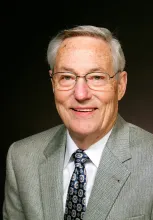
At the time of his retirement in 2016, Roy Holladay was serving the Operation Manager for Ministerial and Member Services of the United Church of God. Mr. and Mrs. Holladay have served in Pittsburgh, Akron, Toledo, Wheeling, Charleston, Uniontown, San Antonio, Austin, Corpus Christi, Uvalde, the Rio Grand Valley, Richmond, Norfolk, Arlington, Hinsdale, Chicago North, St. Petersburg, New Port Richey, Fort Myers, Miami, West Palm Beach, Big Sandy, Texarkana, Chattanooga and Rome congregations.
Roy Holladay was instrumental in the founding of the United Church of God, serving on the transitional board and later on the Council of Elders for nine years (acting as chairman for four-plus years). Mr. Holladay was the United Church of God president for three years (May 2002-July 2005). Over the years he was an instructor at Ambassador Bible College and was a festival coordinator for nine years.
