


Mario Seiglie
This transcript was generated by AI and may contain errors. It is provided to assist those who may not be able to listen to the message.
As was mentioned earlier, the Passover is only three weeks away. It's the beginning of the annual festival season. It's a reminder of the commitment we made at baptism. It's a commitment toward God and also God's commitment toward us. He also commits himself to be with us, to accompany us, and one day bring us into His glorious kingdom. I'll read 1 Corinthians 11, verses 26-28 because the Passover is the one feast that God says we have to examine ourselves specifically. We have to prepare for it. This is what it says in 1 Corinthians 11, verses 26-28.
Now, one of the ways to examine ourselves is to truly appreciate what God has done for us. This isn't just some ritual. I remember growing up in the Catholic Church, and I was an altar boy. Basically, I do confess, I was so bored that I wanted to do something active. So at least I got to pour the wine for the priest and ring the bells. At least it was something than just sitting there and having those services repeat. They basically said the same thing every week. This isn't a ritual like that at all.
It says it has to be not only on the outside, but on the inside. We should spiritually prepare for it. This isn't something you can take a pill and feel a certain way. We have to do it. We have to prepare if we're going to do it. God doesn't want this to be just a routine, just some mechanical practice that we go through at all. Every year it has to be new, it has to be fresh, we have to prepare ourselves for it.
One of the ways that I want to focus on this sermon later on, because it's so profound and there's so much in it, I can't do it all in one sermon. But to be able to appreciate what has been done for us, the tremendous sacrifice by God the Father and Jesus Christ. Giving Jesus Christ here, talking about Him, His body to be beaten and His blood to be spilled for us.
Even a young person, if they focus on this, it's something that's going to last for all their lives. I spent years going to church, getting so little out of what I had been. But these truths are so precious. We can take them with us for all our lives. There's only one set of truths. There's not two or three. And once you learn the truth, you can never really compare it to anything else that is taught. This is the most wonderful understanding. I think we're going to go on this trip, which is in the Bible, that was before the beginning of the universe.
Before time and space existed. This is something that was revealed to the Apostle John by God. It's like the movie Close Encounters of the Third Type. Here you are receiving communication from the being, the God who created all things. He's revealing this in such a way that we can't get it anywhere else. We're going to squeeze this lemon every drop.
It's so important. These are things that I have learned, and I want to share them with you. In this series, we're going to examine the greatness of Christ's sacrifice for us and for our sins. I've been studying intensely for the past two weeks this subject, this message from heaven.
It's like getting a message from extraterrestrial, which God is extraterrestrial because he's not from the earth. He's from heaven. What he is revealing to us is so privileged to understand it. It's such privileged information. We're going to go into the first chapter of John, the first 18 verses. We're going to focus because when you realize this is God explaining who he is, when he is, what he is, and where he is. This is just 18 verses. There's no other place that focuses like it does on explaining who God is, what is his purpose, how everything about his plan is being carried out.
John, the apostle, gives us his purpose for writing the Gospel of John, one of the four Gospels. But John wrote it later. He wasn't interested in just the historical details of Christ's life. He was interested in describing that this Christ that walked among them was the word, the God, who has always existed and who was with God the Father. In John chapter 20, we begin our journey. In verses 30 and 31, John gives his purpose. Remember how when Spokesman's Club or any type of speech club they tell you, have a specific purpose statement.
Tell people what the purpose of your speech is all about. Well, John gave his specific purpose statement, the SPS as we call it. John 20 verse 30 through 31, he says, And truly Jesus did many other signs in the presence of his disciples, which are not written in this book. But these, what he wrote down, are written that you may believe that Jesus is the Christ, the Son of God, and believing you may have life in his name.
So he wasn't revealing Jesus Christ as someone just born in Nazareth or a great prophet. No, this was the God that existed before all things. And he wants us to understand the purpose behind this. There's nothing that can be revealed through nature or through studies of philosophy. Nothing can reveal what God revealed here in John chapter 1. And I want you to see the Passover through the Apostle John's eyes. He knew best Jesus Christ who became that Passover Lamb. And he was, as he writes, the disciple whom Jesus loved, and he was saying is loved the most. So he knew him even closer than Peter or the rest of them did. And God chose him because of that relationship to talk about what this whole plan of salvation, why we're here on earth, why people suffer, why children get disease or accidents happen.
All of this. John reveals to us so that we have meaning and significance in our lives. So we have to take this one step at a time. Every word that John uses there in John chapter 1 verses 1 through 18 are filled with meaning. And so I hope you can remember these things because so much is said in such few words. It's a very good preparation for the coming Passover. So this message, let's go to John chapter 1 and verse 1. The more I look at it, the more I realize this is other-worldly.
This isn't something that just came from the mind of a man. This is God revealing once and for all what He is, what the whole purpose of creating mankind is all about. So in John chapter 1 verse 1, here we have 17 words in this first verse. In the beginning was the Word, and the Word was with God, and the Word was God.
Sounds so simple, doesn't it? But it reveals who God is, what God consists of, when and where did God exist. So we start out with the first three words. In the beginning, these are the same words that the Bible starts with in the Old Testament. In the beginning, God created the heavens and the earth. And now John is going to focus, and he's going to give us details about that God who created the heavens and the earth. That's the first verse in the Bible in Genesis 1.1. He's going to go into it now because it's time to reveal who that God is.
John is filling the blanks. Now the term is archi in the Greek, and grammatically it means before anything else physical existed. So it says in the beginning, but actually it's going and saying before anything else existed, at that time, this is where God was. So you have to erase angels, you have to erase the universe, you have to go back before that. Notice modern translations do a better job than the King James or the New King James. In the Good News Bible it says, in the beginning the Word already existed. The Word was with God, and the Word was God. So the term here goes back before the existence of time. Now in Genesis 1.1 also, in the beginning God created the heavens and the earth. So he's saying this is the cause, this is the agent that produced the heavens and the earth. But it's going back to the Godhead that brought it about. So it further describes who God is. In Genesis 1.1 it says, in the beginning God, and that term is in the Hebrew Eloim, which shows a plurality and a unity. So it's one of those mysteries that they don't understand in all of these theology schools and everything. See, God chose a term because there is more than one being in this Godhead, but it can also refer to either one. So Eloim sometimes is used in the singular because it talks about one of those beings. But there are times when it's talking about the two beings. Genesis 1.26. Notice what it says. Then God, using the term Eloim, said, let us make man in our image according to our likeness. Now, Genesis doesn't explain any more how God can say, let us. It doesn't explain how it can be used in the plural this way. But John 1.1 does explain it. It reveals the secret. It reveals the truth about it. In the beginning was the Word. And John's gospel is primarily about that word, that one of those two beings in the Godhead. But it isn't the Word, the only one in that Godhead, because it says, and the Word was with God. Verses 14 and 28 mention who the Word was with. It identifies who that second person is in this Godhead. Notice in verse 14, and the Word became flesh and dwelt among us, and we beheld His glory, the glory as of the only begotten of the Father, full of grace and truth. So now we know that when the Word was with God, that God was God the Father. And notice in verse 18, it further explains it. It says, no one has seen God, talking about God the Father, at any time. The only begotten Son, which is mentioned as the Word also, who is in the bosom of the Father, He has declared them. So now you know the two persons that are part of that Godhead.
The Word who became God the Son and God who became God the Father, they took on those roles. So we see that before everything else, the Word existed. It's very important. It doesn't say, in the beginning, a word was with God. No, it's the. It uses a definite article to show it is a person. It isn't a thought. It isn't an idea. This has a being, it has a will, it has everything to do with a person. And that word was before anything else. And that word was with God. The term was also is not very well translated. Again, it means it always existed. In the beginning, the word always existed. That's what was means. Unfortunately, in English, they don't have the same grammatical tense as in the Greek. But it's a continual action. He always was with the Father. There isn't a time when He didn't exist. He's been there ever since.
The term, the word, which identifies them, comes from the term logos. One of my favorite Greek words. It just has so much meaning to it. And it actually is a translation from a Hebrew word, which is called memra. M-E-M-R-A. Which refers to the being in the Old Testament that was known as the angel of the Lord or the messenger of the Lord. And that mysterious being that came, talked to Abraham, talked to others. And yet, he also identified himself as the Lord.
Sometimes the angel of the Lord is used interchangeably with the Lord, as in Genesis 16, the first time. It talks about the angel of the Lord when he spoke with Hagar. And he says, I will do this. He doesn't say the Lord in heaven. He says, I'm going to do it. But he identified himself as the Lord. And this is known as the memra, this other being that interacted with human beings. Then in Genesis 22, after Abraham is willing to sacrifice his son Isaac, it also says the angel of the Lord was the one to stop. Don't do it. And he identified himself also in Genesis 31 with Jacob. I am the angel of the Lord. And at the same time, he uses the term Lord. It's interchangeable. It's to separate the two. It's not God the Father. It's God who became the Son, the pre-existent Christ.
So it's very important that little word, the word, it's a definite article, refers to a person, not a thought or an idea, who has always been with God the Father. The term with also important, it means toward another person or a thing. It means being with a person doesn't mean you're just sitting there next to them accidentally. No, it's a very intimate, loving relationship. I can be with a lot of people, but it's not the same as being with my wife. Right? And it's the same way here. The term pros in Greek is toward as a loving relationship, which is described in John 1.18. John 1.18. It says, No one has seen God at any time, the only begotten Son, who is in the bosom of the Father, he has declared him. So this term bosom is very close proximity. Again, you can say you have bosom buddies, people that are just best friends, but this is even more close. It describes a loving relationship, a unity between the two, having love and outgoing concern toward the other. Remember, God is love. That's the relationship. But that's describing, first of all, between the word and who became God the Father. It goes on to say, and the word was God. Here we are. We haven't even finished verse 1. Here's the third section. And the word was God. Not a thought, but a being, a person, who has always been. That's the was, again. It's a continuous action of this verb. In the expanded Bible, it says, in the beginning there was the word. In brackets, the word already existed. The word was with, which expands it here, in the presence of, in intimate relationship with God, talking about the Father. And the word was fully God, describing the equality. You've got God the Father, you've got the Son, and here that word that was with God was also God. He wasn't an inferior being. He wasn't created by the first one. This is all in one verse of John. In other words, this being has always existed.
It was not the God. It doesn't say at the end, and the word was the God. Because then it would say, what happened to God the Father? If you have just a definite article, no? He was God as the Father is God. That's how every word is so important to take into account here.
Was God as the Father?
The point is, Jesus or Christ, the word, was God as the Father is God.
That's the way this is equating every phrase. There are two God beings sharing a Godhead. They can be called, in a sense, one Godhead, but there are two God beings there. They have a familial and loving relationship, and they share the same spirit. Notice in Ephesians 4.4, it says, there is one body and one spirit, just as you were called in one hope of your calling. So God the Father and Jesus Christ as the word, they share a common spirit. They both have creative powers. It's not just one. Either one can create things, but each one is carrying out a specific role. And then we go to verse 2. Here we only have seven little words, but again, this is from beyond human knowledge, because nobody was there except God. And he's explaining, this is who I am, this is how I am, and this is how I have been. Verse 2, it says, He was in the beginning with God. Notice it doesn't say it or something created. No, He. Talking about the word. It is a person. Never forget that. He was in the beginning with God. In the beginning, the same words as the first verse. That before anything else existed, He was with God the Father. In verse 14, it says, and the word, remember the, it's a being, who says, became flesh and dwelt among us. So you can imagine, He's saying, here we are, we have existed forever, we have all power, and we have this loving relationship, and that we never had a beginning like human beings or anything material. There's a plan, and one of those beings, in all that glory, came down and became flesh, became a human being, lowered himself to that level, and dwelt with men, and was here for a purpose, to sacrifice himself so that one day we could be part of God's family. Doesn't make much sense, does it, to lower yourself to that point? But that's what it tells us in verse 14. And the word became flesh and dwelt among us, as it's probably brought out. Dweld means, pitched his tent. It was a temporary time that he would be like a human being, walk among them. He pitched his tent, and we beheld his glory, the glory as of the only begotten of the Father, full of grace and truth. You can read that in Matthew 17, the transfiguration of Christ, where he showed, just for a brief instant, all that glory, as the word, of course, limited, because they would have been evaporated if he could have just intensified it, but they beheld his glory. In other words, this is the same person that created everything, and yet he was willing to carry out a plan where he was going to have to die for those that he created, for those that were enemies of his, who were rebellious, carnal, and yet he stooped down and did it, and did it willingly.
So, this word, who had always existed, became flesh, the Passover lamb for us. We don't deserve it. We actually have been disqualified by sin, and yet, being an enemy of God, rebellious, carnal, that word was willing to die for us.
Notice what it says in Romans 5, verses 6 through 8.
Romans 5, 6 through 8. It says, For when we were still without strength, in other words, powerless, we couldn't save ourselves, we were condemned, in due time Christ died for the ungodly, for scarcely for a righteous man will one die. Yet, perhaps for a good man, someone would even dare to die.
But God demonstrated his own love toward us, in that while we were still sinners, we were all condemned, Christ died for us. So, it wasn't, he came with all these people, beholding him, and being friends, and, oh, he was going to be welcome, and have a wonderful time here on this earth. No, it was a hostile earth that he had to face, and yet, he says, despite all of that, I'm dying for every one of you.
You don't deserve it, but it's who I am, who the Father are, that love that much, that I'm willing to do this. So, we need to meditate on the enormity of this Passover sacrifice, that in three weeks, we're going to re-enact, that the Word was willing to do this for us.
That, basically, we're just activated dirt, right? We had a beginning of life. We didn't exist before that. Activated dirt, and we're going to be deactivated one day if Christ doesn't come back and resurrect us right as we're alive. We need to meditate on that great sacrifice, and for whom we are carrying out when we do this Passover. The gratefulness toward both God the Father and God the Son.
So, I think I took you way in the past. Fast forward. This is actually something that couldn't just be revealed through human means. It's something so profound, every one of those words. So, I'm going to leave the second part, which is the continuation of these little verses that say so much to us. So, the next time, we'll go further about the Word as the Passover sacrifice for us. What have we learned today? Number one, from John 1, we learned this is the Word. Not a word, not something inferior to God the Father, but the Word, the person that existed. A being equal to God the Father, in essence, but he assumed a different role than God the Father.
Secondly, that this word was, quote, with God. Not in a passive way, but actively toward God. They work together in tandem. They express love, outgoing concern toward each other and then toward those that they have created. Thirdly, that this word became flesh. He didn't put on a coat, didn't get dressed up with flesh. He became flesh. He was fully God and he was fully man.
That's why one of his names was Immanuel, God with us. The Word was with us, walked those dusty paths of Israel. He had a great job to do, to become the Passover Lamb and sacrifice himself for us. In John 1.29, it says, the next day John, talking about John the Baptist, saw Jesus coming toward him and said, Behold, the Lamb of God who takes away the sin of the world. That was the purpose. This word that John was describing was willing to stoop this low, was willing to humble himself to that point.
So, in these next three weeks, let's leave the trivial problems behind us. What we think is so important, so great, people don't understand us, what we're going through or whatever. To properly prepare, when comparing what the Word has done for us and wants to do for us. Really, we have so much to be thankful about. Let's finish in Romans chapter 8. Romans chapter 8 verse 31. This summarizes everything we have discussed. Romans 8 verse 31 through 34. It says, What then shall we say to these things? If God is for us, who can be against us?
He who did not spare his own Son, but delivered him up for us all. How shall he not with him also freely give us all things? Who shall bring a charge against God's elect? It is God who justifies. He paid the price. We receive forgiveness through that sacrifice. Who is he who condemns? It is Christ who died, and furthermore is also risen, who is even at the right hand of God, who also makes intercession for us.
Who shall separate us from the love of Christ? Shall tribulation or distress or persecution or famine or nakedness or peril or sword? Verse 37, Yet in all these things we are more than conquerors through him who loved us. God's plan starts with love, and will end with love. God is the same yesterday, today, and forever. So let's keep to faith, strengthen ourselves, and when we come to that Passover, to really appreciate what God has done for each one of us.
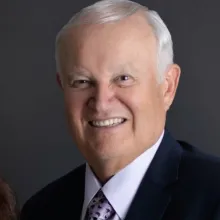
Mr. Seiglie was born in Havana, Cuba, and came to the United States when he was a child. He found out about the Church when he was 17 from a Church member in high school. He went to Ambassador College in Big Sandy, Texas, and in Pasadena, California, graduating with degrees in theology and Spanish. He serves as the pastor of the Garden Grove, CA UCG congregation and serves in the Spanish speaking areas of South America. He also writes for the Beyond Today magazine and currently serves on the UCG Council of Elders. He and his wife, Caty, have four grown daughters, and grandchildren.
