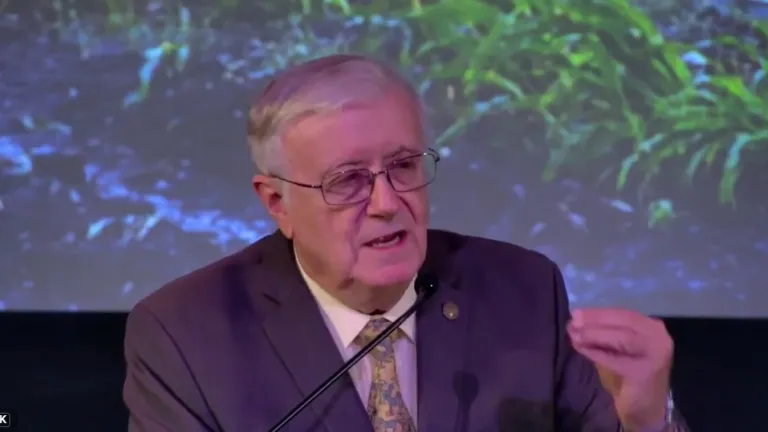
Jorge de Campos
This sermon explains God’s plan for mankind: humanity rejected God’s way, resulting in 6,000 years of self-rule and suffering. Through Christ’s sacrifice and the Holy Spirit, God now calls people to repentance, transformation, and faithful obedience, preparing them for resurrection and sonship in God’s Kingdom.
Well, good morning, everyone! Good morning, everyone! That's good. That means you're awake. So, now it's nice to see you all and welcome to a few people that I haven't seen before, as well as a number of you that I haven't seen for a long time. So it's nice to have combined services and it really is a pleasure to be with you all.
I want to thank for the special music. Appreciate that. It was very nice. And I also want to thank Mr. Matthew McDonald for his sermonette. Very appropriate and very encouraging.
Before the beginning of creation, the two God beings, which were eternal, decided to have a family. And they wanted a family in their likeness and image as mature sons and daughters of God to be like him or like them and learn to think and act like those two eternal beings. And they wanted to share all the moments of happiness and joy with the family. But for human beings to be true sons of God, they needed to have the ability to choose the right and the wrong by their own free will.
They needed to be able to make those choices. And therefore, they created an environment, a whole environment, to support that ultimate goal of having children in their family. And they gave them free moral agency to learn to make the right decisions. And therefore, they gave men and women, which they made them according to their kind, the kind of Godkind, they gave them a choice of two ways, a way of life, as symbolized by the Tree of Life and the Tree of Life, indeed, was there, and also a tree of knowledge of good and evil.
But those two trees had a deeper spiritual meaning, a profound meaning, a profound symbolism, because the Tree of Life symbolized complete trust in God. It symbolized that we would, as human beings, we would trust them in what is the right and the wrong way. And on the other side, the Tree of Knowledge of Good and Evil symbolized mankind saying, in a sense, I don't trust you, God. I have to try it for myself and for myself decide what is right and what is wrong.
In other words, human reasoning apart from God. And therefore, that Tree of Knowledge of Good and Evil could just as well have been called the Tree of Death. And so you and I know the story that Eve decided not to trust God. She decided not to trust God's revealed knowledge. And Adam went along with it. And so Adam, representing mankind, he of his own free will, he separated himself, cut himself from God's true knowledge. And in effect, in effect, it's like God saying, okay, you've made a decision for mankind.
You have decided to reject me as the source of knowledge. You have decided to reject the power from me because that Tree also symbolized the help that God would give us, as we heard in the sermonette, through the power of God's Holy Spirit. And you, Adam and Eve, representing mankind, have chosen the way of self, of get, of taking, of fight, of competing. But God, in his great wisdom and loving kindness, left himself in the position, of course, that he would call many people. And we know many are called. But few voluntarily choose to respond to that calling.
Many are called, but few are chosen because few choose to respond to that calling, that opportunity to qualify as servant leaders in his family as he develops his family. Therefore, in effect, mankind was sentenced for the last few thousand years, six thousand years, of not receiving God's Holy Spirit as mankind as a whole because they had not responded to the calling. And indeed, only those few that respond to that calling will then go through a process of special preparatory training program to be in the family of God, in the kingdom of God.
And so, summarizing it another way, mankind decided for themselves Adam and Eve representing mankind. And we all have basically followed that same way. As human beings, we've decided of our own free will to exercise that free will and decide for ourselves what's good and evil.
Therefore, we created our own education system which is in some good points and a lot of bad points, a mixture of good and evil. We've created our own way of doing business with some good points and some bad points. We've created our financial system with some good points and bad points. In fact, we've got our own society. There are some good points and some bad points. Enough bad to be a way of death. And so, mankind has been choosing for themselves, for mankind, what is right and wrong, making their own rules, and trying every single option, for instance of government, of trying to bring peace to the world, trying every single option, in a way that in the end nothing will be left untried. And it is as if God is saying, you'll come to a point, and God is saying, you have had enough time to solve the own problems you've created, and you've utterly failed. Mankind has failed, and will fail in due time, as you and I know. We have had enough time to quote-unquote fix it, but every time we try and fix it, we make a mess. We make a mess. Peace, peace, and there's no peace. You've had 6,000 years of self-centeredness, vanity, lust, and greed, jealousy, envy, and competition, strife, violence, and wars, and rebellion. And even with the greatest of the greatest technology, you've messed it up. You see, God has allowed mankind of their own free will to write history. Yes, we are writing history to prove beyond any shadow of doubt that our human way, our self-developed way of pride, of greed, will only bring misery, unhappiness, and ultimately death.
You see, mankind of his own free will, without God, has followed the road that is selfish, self-righteous, accusative, blaming others, and wanting to appear right.
And you see many people writing things and accusing others.
And people follow that, only hearing half of the facts.
And, oh well, when you hear the reasoning of one person gives it, it sounds so true until you hear the other side of the story. But unfortunately, people don't get the facts.
So they spin a story.
Ever so cleverly that you listen to it and you say, wow, how could people do that?
The fault is always the other person, the other party.
And you know, as you read 2 Timothy, and I've just recently covered a Bible study about 2 Timothy, and particularly towards the end of 2 Timothy, we can see that 2 Timothy is basically telling a brethren in the church not to deviate from the truth. You know, we can read 2 Timothy and kind of think, well, it's just a story for you not to believe people in the world. But you know what? 2 Timothy is talking about people that have come into the church. And in the church, they've come up with their own little ideas, and they've gone wrong. That's what you read in Acts 20, when Paul was in my letters and called the leaders of the church in Ephesus, he said, from among you.
And 2 Timothy is exactly that, telling Timothy, as he was in Ephesus, as the pastor of Ephesus, to be careful of those people amongst them. That we're in the church, and we're deceiving and being deceived. 2 Timothy 3 verse 13.
You look at the book of James, and the book of James in chapter 4 says, why are there wars and fights amongst you? Now, remember, the book of James is written to the church.
Why are there wars and fights amongst you in the church?
And that is following a very, very profitable and instructive section at the end of the third chapter of James 3, starting from verse 13 through verse 18, where it says, but the envy you read that in verse 14, and self-seeking in your hearts.
You know, that's the wrong wisdom. It's not a godly wisdom.
And that, as it says, produces confusion and every evil thing there. Brethren, we have to be careful, particularly in the church.
But God is merciful. God is merciful. And we know that He will intervene for us and for the whole of mankind. And in His plan is that He will come to a point that He will resurrect those few, see many are called, but few are chosen, those few that have been called, chosen, and faithful till the end.
You see, it's not just being called. You got to be chosen. In other words, you got to respond to that calling and use, as we heard in the sermon, that God's Holy Spirit as we respond to that calling. You see, it is a blessing to be on the damp in the cost and understand that it's the giving of God's Holy Spirit, and we have the God's Holy Spirit, but we have to use it.
It's like yesterday somebody was mentioning, you know, it's nice to have a gym membership, but if you don't practice it, what the good of it is? It's the same thing.
If God has given you God's Holy Spirit, we have to respond and use it. And then, as you know, as we use it, we live through this world and then we die.
We know our faithful, maybe parents, brothers and sisters in the church that have been faithful in the church and have died.
And now they wait for the resurrection.
That's the truth.
They have been harvested from the earth. They've received God's Holy Spirit. They went through the stage of overcoming with the help of God's Holy Spirit.
And they were faithful till the end. And you and I know at the end, God takes the Spirit and puts it into, let's call it, in this analogy of harvesting. He puts it into a spiritual silo, reserved for the resurrection.
At the last trump, which is at the point in history, at the point in history when Christ will come back and will turn this world from being Satan's world to being God's world.
And that is clearly described in Revelation 11.15, that God will change that at Christ's coming, at the seventh trump. And that's the time of the resurrection. And so the question is, why is God waiting for that?
Because as we read in Hebrews, and we'll go through that a little later, those people have died before us. They have not received the promise. They're waiting for us.
For those events surrounding Christ's second coming. Think about it. All those events, the resurrection, trumpets, the Day of Atonement, the Feast of Tabernacles, the Last Great Day, they all on the seventh month, they all represent events tied to Christ's coming.
Second coming.
The spring events, Passover, 11 Bread, and Pentecost, are tied or linked to Christ's first coming. And it's important. And so at Christ's second coming, you'll establish the rule of the kingdom of God on earth. If that will then finally bring peace and harmony, you'll finally restore all things.
Then at that time, mankind will acknowledge this sense. They'll appreciate the free gift of God's only Spirit symbolized by the Tree of Life. They'll learn that it's better to trust God, to trust the spiritual knowledge of God, which is the true knowledge of what is indeed right and what it is wrong according to God's laws. And so God is full of mercy and full of grace. And God allows and allowed mankind free moral agency.
And therefore God, as we can see, God did not totally desert mankind or count himself from God because God sent his Son, the second Adam, to die for us. And since then he has been calling out of this mess of this world many people. He's calling many people.
Turn with me to Romans chapter 8 verse 20. Romans chapter 8 verse 20. He says, for the creation was subject to futility.
You and I, mankind, the whole creation was subject to corruption, to decay, to get old.
Not willingly.
God did not do it willingly so that we would just get old.
But because of him was subjected in hope.
God made us human beings and all of creation subject to the aging process.
Think about it. A young man is going through until they get 20, 30, 40 years old, a growing and developing process, which is not aging, but you get to a certain time in your biological clock that things go the other way.
God did that in hope. In hope that we'd learn some lessons and would respond to his calling.
Look at verse 21 through 23. Because creation itself also be delivered from the bondage of corruption. You and I will be delivered from this bondage of corruption, of decay, into the glorious liberty of the children of God.
When you and I will be truly children of God as spirit beings, at Christ's Second Coming, at the resurrection, at events connected with his Second Coming.
And then verse 22, for we know that all creation grows and labors with birth pains together until now. We all go through pains and things just like before childbirth.
Not only that, but we also have, we have, we have the first fruits of the Holy Spirit.
We are the ones, there are the few, because many are called but few are chosen. We are the few that are responding to that calling. And as such, God gives his spirit to those that obey him, Acts 5.32. And so we have the first fruits of the Holy Spirit. We are the first few that have God's Holy Spirit. We are the first fruits of those, the first few that have received God's Holy Spirit. Even we ourselves, ground within ourselves, waiting eagerly, waiting for the adoption, or maybe an alternative translation, which I believe will be a better one, which would be, the redemption of our body. We wait for when our bodies will be changed from physical to spiritual. You see, that's the hope. That's the hope that you and I will choose God of our own free world choice. And you and I have that opportunity now. We have God's Holy Spirit, and we have to use it. We have to use it.
We are called to choose of our own free will, to respond to God's gracious kindness and God's love towards you and I, which is being extended to you and I today.
But many that have been called have not taken up this opportunity today, regrettably. They have not responded and acted upon this calling.
But again, note, it's not just being called. It's not just responding.
It's remaining faithful till the end. We have to remain faithful till the end.
So that we, you and I, called chosen and faithful, will be of Christ at His coming.
So that you and I will have been those that have qualified. We have used that word, right? We qualified. We made the grade. Put it in other words. We qualified. Those brothers and sisters and parents and friends of ours that have died, they're waiting for the resurrection. They have qualified. Put it in other words, they have been harvested from the earth, but they're not resurrected yet.
You see, so God's plan is that you and I, at the resurrection, at Christ's second coming, as those that have qualified, we will then be changed into spirit beings. So His festivals are memorials. Some are memorials of the past. Passover, a lemon bread, and Pentecost tied to events related to Christ's first coming.
God has given us His Spirit. Now we've got to use it till the end. At the end, we have the events of the fall festivals, which is a seventh trumpet, symbolized by the day, part of the day of trumpets. And all the events triggered following that, which basically are the events related to or linked to Christ's second coming. You see, brethren, God's Holy Days, today, part of them are memorials or things of the past. Part of them are shadows of things to come.
They're future events. When those events will happen, all of God's Holy Days will have been memorials or things that have happened in the future. In the new heaven and new earth, there'll be memorials or things that will have happened. And I believe we'll always remember God's Holy Days because we'll be memorials of great events like you and I in this country. Maybe you have July 24th and you have Memorial Day. You have events that are annual at the right time, that remind us of events of the past. And God's Holy Days will always be that memorials of God's great plan of salvation. Today, though, some of them are the past related to Christ's first coming. Some of them are still future related to Christ's second coming. And so when we look at the law, and particularly for instance Leviticus 23, and we talked about God's Holy Days, some of those events, in fact all of them when they were written, were prophetic. Think about it. They were prophetic. When they received the law and those instructions as they left Egypt, all those events in Leviticus 23, all those symbolisms or rituals pointed to something in the future, were prophetic. And that's why it says when Christ came, I came not to do away of the law, but to fulfill the law. And so he is ready to fulfill the power of that law with his first coming, and he will fulfill the rest of that law with his second coming and the events that follow it.
And so let's turn to Leviticus 23, because in Leviticus 23, we see these prophetic events, and we start at the beginning of Leviticus 23, and right at the beginning it says, you know, these are the feasts of the Lord, and then in verse 4 talks about, verse 4 and 5 talks about the Passover, and then the days of the Lamb of the Bread in verse 6, the days of the Lamb of the Bread.
And so we can see pointing to not just a Passover lamb that was killed on Exodus 12, but pointing to the real Passover lamb, which is Christ. It was prophetic. The law was prophetic, and when Christ came, he fulfilled the law. Yes, of course, he abide the law. I'm not denying that, but he also fulfilled those prophetic parts of the law that pointed to him and pointed to God's Holy Spirit, as we'll see. And then we see also then a little later in verse 11 that he says, During that day after the Sabbath, during the days of the Lamb of the Bread, they were to waive a sheaf, a sheaf of Bali, before the Lord to be accepted on your behalf on the day after the Sabbath, in other words, on the Sunday. They were to waive that sheaf of Bali. Now, it is important to understand that does not represent Christ's resurrection, because Christ resurrected, as you know, and you can go through our booklets and literature to explain, Christ resurrected at the end of the Sabbath. So that wave sheaf represented Christ being accepted in our behalf. And that is beautifully explained. And if you keep your finger on Leviticus, because you're going to come back to it in a moment, but that is beautifully explained in Hebrews chapter 10. In Hebrews chapter 10. And in Hebrews chapter 10, starting in verse 19, it says, therefore brethren, having boldness to enter the holiest. It was God's throne in heaven. How? By the blood of Jesus. By a new and living way which He consecrated for us through the veil, there is His flesh. And having a high priest over the house of God. And so He is now accepted on our behalf as our high priest after the order of Melchizedek is accepted on our behalf. And you and I, therefore, we are the beneficiaries, our behalf, we can therefore have boldness to enter the holiest by the blood of Jesus.
And this is a new and living way because before that, only the high priest could do it on the day of atonement, as you well know. But now you and I can approach God's throne when we repent. And we say, God, help me. And by the blood of Jesus, yes, we've been baptized. Yes, we've received God's Holy Spirit. But you and I still have some little problems. You know, some of us have some slightly bigger than little problems, right? And we still need to repent and come to the holiest by the blood of Jesus through the veil which is Christ's sacrifice, His body. You see, that is prophetic. So that wave sheaf of the Bali that we read in verse 11 of Leviticus 23 pointed to Christ being accepted as a high priest. And you and I, therefore, because of what is done by Him on our behalf, we can now approach the Holy of Holiers. God's very heavenly throne by a new and living way.
You see, no wonder Christ said in John 16.4, that says, I am the way.
Right? He's the way. The new living way. And then we have a count to Pentecost, that we're to count seven weeks from the day of this wave sheaf until the day after seven full weeks, which means to another Sunday. And we get two, in other words, today. We can read that in Leviticus 23 verses 15 and 16.
Now we come to another interesting point, because what I've shown you so far is that that part of the law was prophetic, pointing to what Christ would do, pointing to Christ's first coming. And we know, according to Jewish tradition, that the Ten Commandments were given to the Israelites on this very day. And again, it is Jewish tradition. We can't prove that that was the case, but it makes sense. And you know that they've received the law, Exodus 20.
And you know, and I know, we all know, that they failed miserably, you know, by God's law. Correct? It's a fact. Why? Because in the end, there is also symbolic of pointing to time in the future, symbolic to when we'll receive God's Holy Spirit by the action of the high priest sending it to us on the day of Pentecost. In other words, Christ as the high priest sending to us.
And so the moral of the story is that the Israelites received the law written on tablets, but the prophetic significance of that is that on the day of Pentecost, we received the law written into our hearts and minds by the power of God's Holy Spirit.
And so that is prophetic to the receiving of God's Holy Spirit, because that receiving of the law on Pentecost physically to the Israelites pointed to the real spiritual act of you and I receiving God's law in our hearts and our minds by the power of God's Holy Spirit. But now we got to use it.
But now we got to use it. And so the working of God's Holy Spirit is what this day means.
The working of God's Holy Spirit as receiving God's Holy Spirit and the significance and the meaning that you and I have, God's Holy Spirit, we got to use it.
And so Pentecost, yes, points to receiving God's Holy Spirit, but Pentecost's this holy day, which at the time of the Israelites was in a sense prophetic, but today is historical, pointing to the time on Acts 2 when the Church received God's Holy Spirit. We, as mankind, have access to God's Holy Spirit, provided when we call, we respond to that calling.
So therefore, let's look at the working of God's Holy Spirit. One of the things that God's Holy Spirit gives us is the capability of understanding the Bible, God's Word. You know, how many people have read through the Bible, read through things, and it goes right over their head. But God's Holy Spirit opens our mind to understanding.
You see, God demonstrated His love. His goodness is extended to us, as we read in Romans 2, verse 4, in the hope that we repent, in the hope that we change, in the hope that we respond, and we must hear and act. And then God demonstrates His love and grace to us, as He did, while we were still sinners. Romans 5, verse 8, Christ died for us while we're still sinners.
But then we get to an interesting point, and that's in John 14, 17, because in John 14, 17 says, this is Christ on the evening that He had the change of the symbols and introduction of the symbols of the new covenant Passover. And then He starts explaining about God's Holy Spirit. And then in verse 17 says, the Spirit of truth, whom the world cannot receive. Why? Because they disobey. Unless you respond to the calling and start saying, okay, I want to obey God, then God's Holy Spirit starts working with you. And that's why He says, for He, the Holy Spirit, dwells with you and will be in you. Do you get it? There's two basic steps. One, dwells with you, and two, in you. And just because He's in you does not mean it stops dwelling with you.
You see, God's Holy Spirit is the power of God. You know in Acts chapter 1, Christ told the disciples, wait till the promise of the Father comes to you, the power of God comes to you. That's God's Holy Spirit. And they had to wait until Pentecost, as was clearly shown on the sermon head. The change in Peter was completely remarkable because of God's power and God's Holy Spirit. And therefore, the working of God's Holy Spirit is critical for us to change.
But we've got to use it. We've got to respond. We've got to be led by God's Holy Spirit. Those that are led by God's Holy Spirit are His sons, Romans 8-14. We've got to be led by God's Holy Spirit. We've got to use it. And as we use it, God gives us more of His Spirit and we start understanding more of His truth until we get to a point that we are ready to be baptized to commit. You see, in 1 Corinthians chapter 2, verse 9, 1 Corinthians chapter 2, verse 9, 1 Corinthians chapter 2, verse 9, 2 He says, I have not seen nor you heard, nor have entered in the heart of man the things which God has prepared for those who love Him.
Though all doesn't understand what God's got planned for us, just so amazing. The new heaven and new earth, you just cannot understand.
And you'll never be able to understand it as this physical world in a sense. You'll only be able to see it through a dark, through a gloss like dark, you know, just kind of a little bit because it's spiritual, amazing stuff. So that's why a lot of stuff in Revelation 21 and 22, it's not described in detail because your mind and my mind just can't grasp it.
I always think it's like a box of chocolates. You don't know what you're going to get into it. It's so amazing that you just can't visualize it, but it's going to be amazing. But it says, I have not seen, or you heard, or entered into the heart of man the things that God has prepared for those who love him. It's beyond. But God has revealed them to us up to a point. God helps us. How? By His Spirit. And so as you have God's early spirit, as God's early spirit first starts working with you, not yet baptized, but God's early spirit starts working with you. People start getting it and understanding the truth. And as they respond, God helps them to learn a little bit more. And as they respond more, they help a little bit more. That's why it says, verse 11, for the things of man, we don't know them unless the spirit of man, in other words, the human spirit is with us. A dog, a cat, a giraffe, an elephant, a tiger cannot understand human things because they don't have the human spirit.
But we can because we have the human spirit. So the human spirit helps us to understand human things.
Likewise, it says, even so, no one knows the things of God except the spirit of God. Unless God starts calling you and you start responding, and that starts making sense in your mind. And as you respond, then God will enlighten you a little bit more. And as you respond, God will enlighten you a bit more. Then you're growing in knowledge and understanding till you get to a point that you say, I want to be baptized. This is what I call a virtuous cycle. It's not a vicious cycle, it's a virtuous cycle. As you learn, you respond, and as you respond, God gives more of your spirit. Acts 5.32 gives you more understanding, it is more with you, and you are growing until you get to be baptized, and then God's Holy Spirit is in us. In other words, we now become begotten children of God. And so, on the day that God's Holy Spirit was given to the apostles in Acts 2, Peter was giving a sermon. And they all understood it because the people that come from different areas of the world, and they had different languages, but God miraculously did Google translate dynamically at that time. In other words, God's Holy Spirit's miracle, tongues, the miracle of understanding of languages, they understood the message from Peter. And then, the people said, we killed the Messiah. Wow! We killed Christ! What shall we do? Acts 2, verse 38. And then Peter tells them, repent! As you're getting it, repent! Respond! Do something about it! As we have God's Holy Spirit, we gotta repent, we gotta respond, we gotta change, we gotta make an effort, an ongoing continuous effort.
And we know that at baptism, baptism is followed by the laying on of hands by God's ministers, by God's true ministers. You read in Acts 8, verse 14 through 17, that those people had only been baptized in the name of Jesus! But they didn't have God's Holy Spirit. You read that in Acts 8, verse 14 through 17. They were baptized in the name of Jesus, but they did not have God's Holy Spirit. The apostles had to go there and lay hands on them for them to receive God's Holy Spirit, which is the fulfillment of the stay of Pentecost of us receiving God's Holy Spirit. During my baptism counseling session, many people say, well, I need God's Holy Spirit because God's Holy Spirit is going to make me change, and the way I'm baptized, voila! Everything will be fine. It will be false because baptism, receiving God's Holy Spirit, is not the end of the road.
Receiving God's Holy Spirit is not the end of the road. Being baptized and receiving God's Holy Spirit is only the beginning of the road.
The beginning of you and I having God's Holy Spirit and being led by God's Holy Spirit and working on changing ourselves, working on changing our attitude of mind from a carnal mind following the intense of the carnal mind and following the Spirit as we read in Romans 8, verse 6 and 7, because He that has a carnal mind that's enmity against God and cannot please God. And as you read, then, also in Romans 8, verse 14, we have to be led by God's Holy Spirit to be His children. And then He says in verse 15, for Romans 8, for you do not receive the spirit of bondage, again to fear, but you have received the spirit of adoption, or as I mentioned, of sonship, of becoming His true children, by whom we cry, Abba, Father, Dear Daddy, let's put it this way, Daddy, our spiritual heavenly Daddy. And the Spirit bears witness with our spirit that we are children of God, and if children, then heirs of God, and joint heirs of Christ. If indeed we suffer with Him, we shall be glorified together. What a wonderful plan we have! We will be heirs of God. But then He says in verse 18, I consider that the sufferings of this present age are not worthy to be compared with the glory that will be revealed on us. Just because you and I are baptized and receive God's Holy Spirit does not mean that it's clean sailing from Yah onwards.
Then the hard road begins of overcoming, of looking at ourselves, of going through fiery trials. You look at 1 Peter chapter 4 verse 12 to 13, talks about the fiery trial that will come upon you.
Brethren, there are fiery trials coming upon us, and some of the real fiery trials, or in those golden years of ours when we get older and we go through a lot of painful diseases and sometimes pain. Some don't have the same trials, but some do. We go through fiery trials. Our inward man is going to be renewed daily. 2 Corinthians 4 verse 16, we're going to be renewed daily. That is a process that takes time. You've received God's Holy Spirit. You've been baptized, received God's Holy Spirit. Now you go through this process of overcoming. In other words, yes, you've been called, yes, you've been chosen. But now is the hard part. Remain faithful till the end. That's all part of the meaning of the Day of Pentecost. We have to use God's Holy Spirit and work. That's why in 1 Peter 1 chapter 1 verse 2 says the sanctification of the Spirit.
That means being set apart and using God's Holy Spirit, we are being set apart from the world and it says for obedience, for obedience, and the sprinkling of the blood of Jesus. Why? Because we still have sins. We still have sins. And so that is a process that you read in Ephesians 4 and in Colossians 3. It's the change of the old man to the new man. It's an ongoing process. It takes time. But God's Holy Spirit is the Spirit of power and love and of a sound mind.
2 Timothy 1, 16, 7. And so you and I have to grow through ups and downs. We have to grow, but hopefully there's an upward strand.
There's trials. There's putting off sin. But that is the work of the Holy Spirit.
We're going to use God's Holy Spirit. That is the working of God's Holy Spirit. That is the process, as we read at the end of 2 Peter, chapter 3, of growing in the grace and knowledge of our Lord and Savior, 2 Peter 3, verse 18. And brethren, when we do that, we are actually fulfilling Hebrews chapter 10. We read it a moment ago, but I want to go back and read it again to reemphasize what is happening at this time. Hebrews chapter 10, verse 19. Therefore, brethren, having boldness to enter the holiest by the blood of Jesus, by a new and living way which He consecrated for us through the veil that is His flesh, and having a high priest over the house of God.
Christ has opened this for us. He is our high priest. He was accepted on our behalf. And now during these days of our life, symbolized by this day of Pentecost, we are growing. Yes, we are growing, but we still have sin. It's both. You got sin, but it's still growing. And we are accepted before God. And then we continue in verse 20. A bigger part in verse 22. Let us draw near with a true art in full assurance of faith, having our hearts sprinkled from an evil conscience, and our bodies washed with pure water. That's how we use God's Holy Spirit. God's Holy Spirit symbolically is that water that washes us, that cleans us, and our consciences are, as it says, sprinkled. And that's a growing process that you and I are going, which is this wonderful meaning of this day of Pentecost, not just receiving our Holy Spirit, but using it. Using it. And you know, the more you use it, you feel inside, don't you? You feel positive. You feel encouraged. You feel uplifted. And that's where I hope and pray this day today, as we complete this day, that you will all be filled with God's Holy Spirit and motivated and inspired and encouraged to move forwards. Brethren, this is our church age. Think about it. Today, Pentecost symbolizes, putting it in other words, our church age. It symbolizes our walk in this life. When we are being led through the working of God's Holy Spirit in our lives.
And then when we die, when we die at the end of this road, our spirit goes to God, doesn't it? That's what we read in Acts 7, verse 59, when Stephen said, Lord Jesus, receive my spirit. Even Christ himself, we know it as he says, receive my spirit.
But he hadn't resurrected yet. Stephen hasn't resurrected yet. But the moment that you and I have completed this walk in this life, and you have qualified, and God is holding your human spirit mixed with God's Holy Spirit, you have been harvested from the earth.
We have the first fruits of the Spirit, and we wait for the sonship, as we read in Romans 8, verse 23. But we know that when we die, we dead. We are asleep. We are waiting for the resurrection. And you read, Hebrews 11. It says in verse 13, these are waiting for us.
Reading verse 39 and 40 of Hebrews 11, it says, they are not resurrected, waiting for us.
They have made it. They have qualified. They have been harvested from the earth.
But not yet resurrected.
The resurrection is part of the symbolism of the Holy Days tied to Christ's Second Coming.
But today, we've got to use God's Holy Spirit. And there is a wonderful meaning of this Holy Day. And in 1 John chapter 3, 1 John chapter 3, we read in verse 1, Behold, what manner of love the Father has bestowed upon us, that we should be called the children of God. Today, you and I are called the children of God.
Therefore, the wall does not know us, because you do not know him. Beloved, we know now we are the children of God, and it has not yet been revealed what we shall be.
We will be spirit beings.
But we know that when Christ is revealed, that means that Christ's coming, his Second Coming. We shall be like him, and we shall see him as he is.
Today, you can't see God or Christ as he is, because that glory would completely destroy your physical body. But when you and I are spirit beings, you'll be able to see them as they are. And because we have, reading verse 3, we have this hope. We purify ourselves.
We are using God's Holy Spirit to change.
We have to remain faithful to the end, brethren, whenever the end is the end for you. God knows when it's your end. Maybe your end is when you die. Maybe your end is when Christ comes, and you'll be changed as spirit beings.
God knows when your end is.
But doesn't this excite you? That you will be a true Son of God, like Christ, like God himself, in that glory? That's why it says, the trials of this wall are nothing to be compared with the glory to come.
This is the working of God's Holy Spirit today, symbolized by the church age.
And this is because of the work of our high priest, Jesus Christ, and the power of God that he sent to us. And so, brethren, when we go back to Leviticus 23, and we go back to verse 17, on Day of the Pentecost, you read in Leviticus 23 verse 17, that you have these two wave loaves that are baked with leaven.
They are the first fruits to the Lord. Brethren, it's us today. In this church age, baked with leaven. Baked means we go through fiery trials. With leaven means we have sin, but we're also growing. Oh, though people say, oh well, leaven doesn't just mean sin, can mean growth. Yes! But doesn't delete the other. You and I have sinned, but you and I have to grow in the grace and knowledge of our Lord and Savior as we come to this throne. And that's why we are presented before God in verse 17, which is symbolism of what I explained in Hebrews 10, that we can now appear before the Holy of Holies. And brethren, it's also in Exodus 23, 16, called, it's the Feast of Harvest. Yes, we are harvested. We have made it if we remain faithful till the end, and we have qualified like some of our beloved ones have made it and qualified. They've been harvested from this earth. That's why this is the Feast of Harvest, but they're not resurrected yet. So brethren, the events tied to Christ's first coming are Passover, Unleavened Bread, and Pentecost. Pentecost is clearly tied to Christ's first coming by a count of 50 days.
We therefore, with the symbolism of this day, receive God's Holy Spirit, and we use it through the working of God's Holy Spirit.
Those that have died have qualified. They've been harvested.
Wonderful meaning of this Festival Day. But they wait for Christ's second coming at the seventh trumpet.
And it is God's Holy Spirit that helps us to make this change from carnal to divine nature. It is the working of God's Holy Spirit today. And what beautiful meaning this day has. And so to conclude, I'll just like to turn to Romans 8, one final time, in Romans 8, starting in verse 14. Romans 8, verse 14. And it says, For as many as are led by the Spirit of God, and the sons of God. You see, we've got to be led. We've got to be responding today. We've got to be responding.
And it says, You do not receive the Spirit of fear, but the Spirit of sonship. And then we are the children of God. And in verse 17 says, We are heirs of God. We're going to inherit the divine family as sons of God, if indeed we suffer with Him.
Then we shall also be glorified with Him together. And as we read in 1 John, chapter 3, verse 2, when Christ is revealed, when Christ is coming. Brethren, what a beautiful meaning of today.
That it's not only the receiving God's Holy Spirit, but the wonderful opportunity that you and I have to grow, to mature, to qualify, to ultimately be the sons of God in the new heaven and new earth.
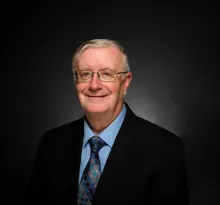
Jorge and his wife Kathy serve the Dallas (TX) and Lawton (OK) congregations. Jorge was born in Portuguese East Africa, now Mozambique, and also lived and served the Church in South Africa. He is also responsible for God’s Work in the Portuguese language, and has been visiting Portugal, Brazil and Angola at least once a year. Kathy was born in Pennsylvania and also served for a number of years in South Africa. They are the proud parents of five children, with 12 grandchildren and live in Allen, north of Dallas (TX).