


Jorge De Campos
The world faces profound changes and growing prophetic threats. Although no one knows when Christ will return, biblical warnings call for vigilance and repentance. Despite the coming tribulation, we are assured that Jesus Christ will intervene and establish God's Kingdom.
Good afternoon, brethren. It's nice to see you. I know there's a lot of brethren that have gone to camp out, so I hope and pray they're all doing well. The weather looks good, not too hot, so we pray for them. Brethren, we are living in very, very difficult times. The Bible clearly says that at the end time, there will be very, very difficult times. We are witnessing profound changes in the international order in our country, with elections. We see things are changing dramatically. It's not only you. Maybe you watched on the news, but in Brazil, they just had elections as well. So there's profound changes happening.
In our four decades, the United States has been a dominant military, economic, technological, and political power. That's a fact. We've been very dominant in world affairs. Our alliances and our own strength that God has blessed us with, and other alliances with other countries, have provided a certain measure of stability around the world, but particularly in Europe.
But this international order is being challenged. Consider some of just a few highlight points I've got here. Think about the Ukraine and Russia. That war has shaken Europe. Europe's security and they are raising fundamental questions about the future of European defence.
These are very changing times. This is very, very, very critical. Then we have, on another side, we have China. China is growing economically, technologically, and militarily. And their capabilities are challenging the American influence around the world, and particularly in Asia and the Pacific, the Pacific Ocean area. It's particularly concerning, brethren, what may happen in the near future as far as Taiwan. Think about it. That is very serious, because that remains a potential flashpoint. And then I've mentioned Europe, but European nations are reconsidering their dependence on American military protection. They're exploring greater strategic independence. At the same time, they're having serious economic challenges.
They're having political difficulties. They're having political divisions and social unrest. If you just look at, for instance, some of the unrest they've had in France recently, they're having serious situations which are complicating their decisions. And brethren, we all know about the Middle East. Conflicts involving Israel, Iran, and other regional powers in the Middle East are threatening the stability around the world, not just in that region. And in our own country, the United States, we've got deep political divisions. Growing financial troubles and debt, and disagreements about our international commitments, which you and I surely have many questions about what will happen next. And then we've got technology. We are entering a period of economic crisis, and we're going to have a period of very critical technology advances, particularly in artificial intelligence. And with it, dangers related to cyber security, which will have, or could have, maybe I should not say will, but it could have, at least, serious economic and military consequences.
And so, just highlighting those few points, and you are pretty well aware of them, the balance of power around the world is changing. It's changing. What will emerge? A different international order? New alliances? New centers of influence? Great economic growth? What will happen? We don't know that the Bible points to certain things, but exactly the details of how those things will develop. You and I just don't know. But if we don't open our eyes and listen to history, then we are bound to commit the same mistakes.
And regrettably, many people know very little about history. But if we don't open our eyes and listen to history, then we are bound to commit the same mistakes. But history teaches us one thing amongst many others, that changes can occur rather unexpectedly. Sometimes events, sometimes events accelerate very quickly, while other times they slow down. It's like a different kind of a world on an upward trend. Or they may take directions that are not anticipated, go in a different direction that we don't expect or people don't expect. I'll give you two simple examples.
One of a European history and another one of history that I saw it in my own eyes. The one of European history is the French Revolution in 1789. It emerged from a combination of different financial problems, food shortages, political frustration, social inequality, and then those events that initially appeared in the European history appeared manageable, eventually transformed France and much of Europe. You go and look at history. That's a fact. Things happen very quick.
The one I want to mention that I've lived through it and experienced it firsthand was the June 16, 1976 Soweto, and the first that's an area outside of Johannesburg, South Africa, uprising. It became a major turning point in South Africa's struggle against apartheid, although the political transformation took many years. I remember one day there was a complete national strike, me being naive, remembering the church says, God will protect me, I'll go. So I went to work. And I'll never forget highways. Think about the highway.
You measure our way 75 and other highways like that. There were highways like that. There are highways like that in Johannesburg. There was not a single car, not a single car on the road besides me. And you know, you get that eerie feeling. You get a eerie feeling. And then on a bridge underneath, I see a bus loaded with people. And now you may think, okay, what do you mean loaded with people?
Well, what I mean loaded with people is people were sticking out of the windows. They were so loaded and people were standing on top of the bus. I have never seen a picture like that. And when I got to work, I was the only one there. There was nobody. And I said, well, what I'm doing now, I'll go back home. But things can happen very quickly. And I've experienced many miracles in my life and my family's life. And I've experienced many miracles in my life and my family's life where we had robbers inside the house stealing and they got frightened and left, where robbers hijacking the car, putting guns on my children's heads, and they're suddenly running away, when just a few weeks after that, they were going to be in the car putting guns on my children's heads and they're suddenly running away, when just a few weeks after that, two houses down the road, which is like maybe 200 or 300 feet, same thing happened and that family was shot dead and the other one became paralyzed and things like that.
We know the other one, there was a Kuman teacher that had a gun put it in the mouth because they got the gun out of her own safe, put it in her mouth and shot her right there, and she became paralyzed. And things like that. We have experienced many things, many things that we generally speaking in this society, we do not begin to comprehend the stress and how that affects people, children, etc.
We just sometimes don't comprehend. But the point is that when powers get challenged, like the French power, the South African strength that was at that time, people don't understand that South Africa at that time had the atomic bomb. It was very advanced. This was in the 70s. They already had the atomic bomb. They were the first country, the only country to denuclearize. People don't understand that. They were the first country to be able to do that.
They were the first country to be able to denuclearize. People don't understand that. They were the first country that was the first worldwide heart transplant. It was a very advanced country, an Israelite-ish country, that lost their blessings. It happened quickly, brethren. It happened quickly. And then when those powers weaken, a vacuum is created. For instance, in early 7th century, there was the exhausting Byzantine cessation wars that in the end the Byzantine won, but those two groups were beat down, exhausted. They didn't have any more strength. And then out of the blue, a power rose, which became Islam, that took over a lot of the areas around the European areas and the Middle East for nearly a thousand years.
You see, these are different examples of different stress affecting nations and affecting individuals at different levels. Remind us that in this world, the international order is not permanent. The international order is not permanent. The international order is not permanent. However, we in the church have to be careful. Why? Because we cannot predict precisely how certain events will unfold. We can't. We just don't know. Nor can we predict every election or international disagreement or military development as immediate fulfillment of a specific or particularly prophecy.
What is the key question for you and I as Christians? What should we learn spiritually from these developments? What should we learn spiritually from these developments? And what does God reveal about the future of nations? Now, if we turn to Daniel 2, verse 21, in Daniel 2, we know the story which is about the statue of Nebuchadnezzar and that vision.
But yeah, in verse 21, it says, Daniel 2, verse 21, let me get to it, it says that he, God, changes the times and the seasons and removes kings and raises up kings. He gives wisdom to the wise and knowledge to those who have understanding. God removes kings and raises up kings. Daniel reminds us this fundamental truth.
It is a fundamental truth that political developments ultimately are under God's almighty control. Successive kingdoms, as we know from the great image of Nebuchadnezzar, rose and came about to be. But we know at the end of that, we know the image of the feet and that stone. And in verse 44, in Daniel 2, verse 44, it says, And in the days of these kings, the God of heaven will set up a kingdom which shall never be destroyed, and the kingdom shall not be left to other people, it shall break in pieces and consume all these human kingdoms, and the kingdom of God, it, that kingdom, shall stand forever.
This is the final outcome of world history. It's not a kingdom established by human elections. It's not a kingdom established by political negotiations, or by military alliances, or technological superiority. It's the kingdom of God. And in Psalm chapter 2, verse 1, Psalm chapter 2, let's just turn there, Psalm chapter 2, Psalm chapter 2, Psalm chapter 2, Psalm chapter 2, Psalm chapter 2, Psalm chapter 2, verse 1, it says, Why do the nations rage, and the people plot a vain thing? The kings of the earth set themselves, and the rulers stay counseled together against the Lord, and against his anointed, saying, Let us break their bonds in pieces, and cast away their cords from us.
And then he says, You will sit in the heavens, shall laugh, and the Lord shall hold them in the region. Why did the nations rage? Why did rulers of this world are in opposition to God and Christ? We know that leaders continuously attempt to establish security, prosperity, peace, according to their own understanding. Yet they repeatedly fall, they repeatedly fail to solve humanity's most fundamental problems. Why? Why? Because the problem is not political or economic. The problem is spiritual. The problem is spiritual. Isaiah 59, verse 8, tells us that the people who are in the world are not the way of peace they have not known.
Humanity has developed amazing technology, scientific stuff, but it has not learned to live in peace. And this leads you and I to a sobering biblical warning. And the sober biblical warning is mentioned, for instance, in Leviticus 26. Leviticus 26. Leviticus 26. Let's just turn to verse 14 through 19. Leviticus 26, verse 14 through 19. But if you do not obey and do not observe these commandments, if they despise my statutes or if your soul abodes my judgments or that you do not perform my commandments but break my covenant, I will do this to you.
I shall even appoint terror over you, waste disease and fever, which shall consume the eyes and cause sorrow of art, and you shall sow your seed in vain, for your enemies shall eat it. I will set my face against you, and you shall be defeated by your enemies. Those who hate you shall reign over you and shall flee, and you shall flee when no one pursues. And all of you shall be defeated after all this, if you will not obey me, then I'll punish you seven times even more, and I'll break the pride of your power.
You see, there are a number of promises of blessings, but also warnings against disobedience. And when it says, I'll break the pride of your power, consider the significance of this statement. A nation can possess a powerful military, tremendous wealth, advanced technology, extensive international alliances, and still lose the strength and influence it once enjoyed. The extraordinary blessings received by English-speaking nations are connected with God's promises to Abraham and his descendants. These nations of Israel, which we understand are the English-speaking nations today, amongst others, of course, face serious prophetic consequences for turning away from God.
In Deuteronomy 28, it is a parallel section, and therefore, for instance, in verses 15 through 20, Deuteronomy 28, verse 15 says, that if you do not obey the voice of the Lord, to observe carefully all these commandments and these statutes we are commanding you today, that all these curses will come upon you. Curses shall be in the city, cursed shall be in the country, cursed shall be your basket and your kneading ball, cursed shall be the fruit of your body and the produce of your land and the increase of your cattle. So you can see it goes on and on and on. Blessings can become curses. Moses warned Israel that disobedience would bring consequences.
Serious consequences, which virtually would affect every aspect of national life, including economic distress, disease, agricultural failure, military defeat, and ultimately, captivity. Notice that these warnings address the consequences of a nation's collective departure from God's laws. I believe this should cause us to ask some serious questions. Have our nation's our English-speaking nations grown closer to God as their wealth and influence have increased? I think you know the answer. Have our societies become more respectful of God's commandments? I think you know the answer. Do we increasingly acknowledge God as the source of our blessings? Or do we attribute our blessings to our own intelligence, ingenuity, our own accomplishments? These are questions we must examine. You know, there's an interesting prophecy in Isaiah chapter 5. Isaiah chapter 5. And Isaiah chapter 5 is a prophecy of a vineyard, a beautiful vineyard that God did everything for that vineyard. Obviously, it's a parable, let's call that, or an analogy. Starting in verse 1. Now let me sing to my well beloved a song of my beloved regarding his vineyard. My well beloved as a vineyard on a very fruitful hill. He dug it up and cleared out its stones. He planted it with the choicestest vine. He built a tower in its mists and also made a winepress in it.
He expected it to bring forth good grapes. But it brought forth wild grapes. And now our inhabitants of Jerusalem and men of Judah. Charge please between me and my vineyard.
What more could I have done to my vineyard that I've not done on it? What more? He did everything for that vineyard. Why then, when I expected to bring forth good grapes, did it bring forth wild grapes? And now please let me tell you what I'll do to my vineyard.
I will take away its hedge. I will take away its hedge. In other words, I'll protect. I'll take away that protection that I've given you and it shall be burned. You see, so God, in this analogy, is actually talking to a nation that has received birth to a nation with blessings from God, but it will eventually lose God's protection when it persistently rejects God's ways. That is the spiritual issue that we have to address. It's not simply the political direction of America or Brazil or whatever country, because this principle is applicable not to the states but to every country that disobeys God. It's not about which party wins an election. It's not about which international alliance because it's not about which party wins an election. It's about which international alliance because it becomes stronger, but what it is about? It is about whether our society is producing the fruits of righteousness that God expects. In the Autonomy 28, where we were earlier, and you read in verse 43 and 44, it says something very interesting. The Autonomy 28, verse 43 to 44. The alien who is among you is the one who is among you, and the one who is among you shall rise higher and higher above you, and you shall come down lower and lower. And verse 44 says, he shall be the head, and you shall be the tail. Brethren, this is very significant. I mean, I was appalled to see some acceptance speeches by some leaders being completely spoken in a foreign language that you and I don't understand.
So, as it says, the alien among you will rise higher and higher above you, and you shall come down lower and lower. I don't want to get into specifics, but the key problem, brethren, is that this is part of a very broad covenant warning that God is giving us. It's a Biblical warning that concerns national disobedience, and the resulting reversal of both economic and political circumstances. When you think about the things that could happen, your mind boggles. But the question is, brethren, is whether the nation is obeying God. God is removing the hedge, is removing that protective hedge, and is removing the wise among us. And we know that their warning just becomes bigger and bigger when you read further down in the Leviticus 26 verse 23 to 33. It just gets bigger and bigger. Why? Because the nation, Israel's descendants today, continue to reject correction. And so, these warnings include disease, famine, warfare, destruction, and eventual scattering.
Brethren, these consequences are not just random events. They are connected with a persistent refusal to repent. God repeatedly warns these people, giving them opportunities to change their ways. But what happens when you and I, or the nation, refuse to repent? God is using repentance. That's why He says in Jeremiah chapter 30, verse 7. Jeremiah chapter 30, verse 7. Alice, for that day is great, that nansh is like it. It is the time of Jacob's trouble. But there's a hope, because it says, but He shall be saved out of it. The warning as an end-time application is that the people of the nation, the nation, to the modern descendants of Israel, which is us. The severity of the warning should not be minimized. Cry loud, spare not. Tell our people their sins. Jesus Christ Himself spoke of unprecedented period of trouble. You know, Matthew 24, verse 21 and 22, where He talks about the Great Tribulation. And unless that time will be shortened, no one will be saved. This is an extraordinary statement, because humanity today has developed the weapons capable of destruction on a scale unmanageable in earlier generations. And technology, such as AI, introduce additional uncertainties concerning warfare and the future of the world.
Including international competition and national security. Brethren, do we realize how close you and I are to the edge? You see, Christ's warning is unmistakable.
Human civilization will reach a point at which divine intervention becomes essential for human survival. And brethren, this brings us to the urgency of the time we live in. In Matthew 24, verse 36, says, no man knows the day or the hour. We must not forget this statement. We can recognize prophetic trends. We can observe international developments.
We can understand warnings in Scripture. But you and I cannot calculate the date of Christ's return. We know in history that many have tried to do that and were proven wrong. We must not do the same mistakes. Because the urgency of prophecy does not mean that we do not give us permission to establish dates that God has not revealed. But in Matthew 24, verse 42 and 43 says, be ready, for we do not know when our Lord is coming. You see, the instruction is not related to be obsessed about what predict events are going to happen now, this detail and that detail. That is not the instruction. The instruction is to remain spiritually prepared. You see, what is the purpose of the process?
Watching world events helps us recognize the seriousness of the times. Watching the spiritual condition of the nation helps us prepare for Christ's return. But speculating about dates can distract us from the responsibility that Christ gave us. The question is not simply how much time remains for America or England or Canada or Australia or the world in general.
The important question is and and mark this, the important question is how much time do we, do you, do I have to become the people God wants me and you and I to become the people God wants me and you and I to be? That's the question. How much time do we have for us to change? Because the bride will be ready and maybe if I'm not ready, I just want to be part of the bride. Because we don't know how much time we have. Even if Christ's return were a few years ahead, none of us knows how much time we have to live. Do we?
We have to be part of the bride. We have to be part of the bride. And we have to live. Do we?
And so look at the warning in Romans 13, Romans 13, 11 and 12. Romans 13, 11 and 12. And do this knowing the time that now is I time to wake up out of sleep for now our salvation is nearer than when we first believed, when we first called. The night is for spent, the day is at hand, therefore let us cast off the works of darkness and let us put on the armor of light.
We've got to wake up from our spiritual sleep.
We cannot afford spiritual complacency.
We cannot afford postponing repentance. We cannot afford to assume that we will always have another opportunity to overcome our weaknesses. We must act now, not because we know the date of Christ's return, but because we do not know.
We don't know.
As I mentioned earlier on, cry aloud and spare not. God instructs us to declare the transgressions of the people.
Brethren, this is not a message to frighten us.
It's a warning intended to wake us up.
And the warning must begin with an honest examination of myself and ourselves.
It's easy to criticize the political leaders. It's easy to condemn the moral failures of the society. It's easy to point mistakes on others. But you and I need to examine our own spiritual life very seriously.
In 1 Peter 4 verse 17 says, the judgment begins at the house of God.
Peter reminds us that we are being judged today.
You and I are not called to simply announce the consequences of other people's sins.
But we are called to examine ourselves whether we are living according to the truths that we proclaim. Are we becoming more like Christ? Are we overcoming pride, selfishness, resentment, and division? Are we growing in mercy, patience, humility, and love? Are we producing the fruits of God's Holy Spirit?
There's a very profound scripture that I want to emphasize, which is in 2 Peter chapter 3. 2 Peter chapter 3.
And verse 10 and 11.
2 Peter chapter 3 verse 10 and 11.
So ultimately, all this will just... this period of Christ judging, of His returning, and the years that will take, and the millennium, and the lost, correct day, and all what will happen after that, this all will be burnt up.
Therefore, verse 11, Therefore, since all these sins will be dissolved, what manner of persons ought you to be in holy conduct and godliness? Peter describes the eventual destruction of the present world order and its fruits. But his conclusion, Peter's conclusion, is not encouraging us to speculate political developments.
But his question is, what kind of people ought you and I to be?
Peter's emphasis is on holy conduct and godliness.
Brethren, the purpose of understanding prophecy is not for you and I to merely know what will happen to the world.
But the purpose of understanding prophecy is to motivate you and I to change our lives.
You see, the world needs repentance. Our nations need repentance.
But it must begin with each one of us.
But understand, every prophetic warning emphasizes a wonderful hope that God has promised for mankind.
The Bible does not end with destruction of all nations. It does not end with war, famine, captivity, or suffering.
It ends with the establishment of the kingdom of God.
As we read in Matthew 24-22 that, you know, that Christ will intervene.
You know, He will intervene for the elect's sake.
Christ declares that the days of unprecedented tribulation will be shortened for the elect's sake.
Humanity will not be permitted to destroy itself completely.
Christ will intervene.
That is not speculation. That's a promise.
That is not a solid.
In Daniel 2, verse 44, we were earlier on reading Daniel, but let's look at that end again.
Daniel 2, verse 44. Daniel 2, verse 44.
And in the days of those kings, the God of heaven will set up a kingdom which shall never be destroyed.
And the kingdom shall not be left to other people.
It shall break in pieces and consume all these kingdoms, and it shall stand forever.
You see, the kingdoms of the swole are temporary.
Romans' empire did not endure.
Great empires in history eventually declined.
And the present international world order will not last forever.
But God's kingdom will. God's kingdom will. It will not be replaced by another political system.
It will not collapse through corruption or internal division.
It will never be conquered.
And as we read in Isaiah, we say, nations will learn war no more.
Isaiah chapter 2 is a wonderful scripture about the world tomorrow.
And the nations there describes that it will come to Jerusalem to learn God's ways.
The law will go out from Zion.
Nations will no longer resolve their disagreements through warfare, and they'll no longer be trained for war.
What a beautiful promise that is for us.
You see, for thousands of years humanity has struggled to establish lost in peace.
Treaties have been signed and broken.
Military alliances have been formed and dissolved.
Empires have risen and fallen.
In other words, mankind has never succeeded in eliminating warfare.
But the good news? Christ will.
Christ will accomplish what human governments have never been able to achieve.
In Revelation 11 verse 15, he talks about at the seventh trumpet.
Revelation 11, 15, it says, The nations of this world will now belong to God, who become part of the kingdom of God.
That seventh trumpet announces the transfer of world government to Christ.
The present political order will be replaced with Christ's righteous rule.
That is the eternal and central hope of biblical prophecy.
It's not merely the restoration of a specific nation.
It's not a recovery of a specific nation's prosperity.
But it's the establishment of God's government over all nations.
And we read in 1 Corinthians 15 verses 24 and 28, that says that when Christ, once his accomplishments, will end over all to the Father. God's plan extends far beyond the rise of individual nations.
It concerns salvation for mankind.
And that is the fulfillment of God's purpose for you and I.
You see, brethren, in a world of turmoil, in a world of undergoing profound changes as we can see, our nation's international position is being challenged.
Europe is reassessing its future.
China and other powers are seeking greater influence.
War's economic uncertainties, political divisions, remind us of fragile.
We as humans are. But we must not panic, because God is in control.
We saw in Daniel 2.21 that God removes kings and raises up kings.
We saw in Matthew 24 that terrible events will happen.
But also in Matthew 24 we saw that we have an assurance that Christ will intervene.
You and I don't know what every international development will lead to, how it will unfold.
But we do know, we do know that God's promises are certain.
So what shall we do?
We must remain spiritually awake. We must repent where repentance is needed.
We must grow in faith, obedience, humility, and love.
We must faithfully carry out the work God has entrusted to us as His Church.
And we must never lose sight of the wonderful future God has promised us. Jesus Christ is coming back, brethren. He will establish His kingdom.
He will bring justice to the nations. He will teach humanity the way of peace.
Nations will finally learn war no more.
And so, brethren, as I conclude, my message, please, is one of urgency, but not of despair.
It's one of warning, but not of panic.
It's one of repentance and tremendous hope.
For the same God that warns us of troubles ahead, He also promised the great ultimate solution, the return of Jesus Christ and the establishment of the kingdom of God on earth.
Thank God.
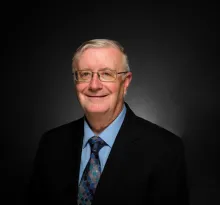
Jorge and his wife Kathy serve the Dallas (TX) and Lawton (OK) congregations. Jorge was born in Portuguese East Africa, now Mozambique, and also lived and served the Church in South Africa. He is also responsible for God’s Work in the Portuguese language, and has been visiting Portugal, Brazil and Angola at least once a year. Kathy was born in Pennsylvania and also served for a number of years in South Africa. They are the proud parents of five children, with 12 grandchildren and live in Allen, north of Dallas (TX).
