

Robin S Webber
This transcript was generated by AI and may contain errors. It is provided to assist those who may not be able to listen to the message.
Well, we can all go home now, after that message. But we're not going to let you rest until afterwards, okay? That is actually, I was just telling Suzie, that's one of the, playing this is one of my favorite memories in the years that, I think probably six or seven years, that we went out on those prophecy talk tours around Canada and the United States. I would introduce this. I had a two-part series on Jerusalem, present, past, and future. And I would play this at the end, and I'd say, this is from a gentleman, a guy from California named Marty Gatz. They'd go, Marty Gatz? Who's that? This is like a Midwest audience for, you know, beet potato, sober, nice. Our families are from there. I like Midwesterners. You know what I'm saying? They hadn't heard of Marty. And then there'd be like a thousand people out there, and all of a sudden that music just began to flow with the words out of the Bible. You know one thing, there's nothing better than the words of the Bible. Just period. Straight up, simple, and right at you. And I hope to agree to be able to do that with all of us today. During the recent weeks, I've made a habit of turning to one set of scriptures in the morning and at night. Not a whole lot of scriptures, not a whole different, lot of scriptures in different chapters. I kind of keep on going back to this, and sometimes I will at nighttime just, I turn out, Susan knows I'll kind of turn the lights down low, and I just tend to listen to a lot of music.
It's just very soothing to me, and with beautiful music, and sometimes God at least speaks to me. But during the past weeks, I've been turning to this set of scriptures I'm going to share with you in a moment, which has provided an anchor of hope and joy. And that's what Christians are called to. They're called to an existence of hope and joy, no matter what's coming our way or no matter what's passing us by, to be anchored in hope and joy. Especially during these very, very challenging times of pandemic, cultural and societal transition, and even violence and destruction in our neighborhoods, even here in San Diego, even here in La Mesa. Would you join me, please? Let's open up our Bibles. Let's read this together as a congregation and as a family. And I'd really like to allow these words to fall on each and every one of us, because they are the words of God that I hope that will sink into us, that we can absorb, that will give us nourishment on this Holy Sabbath day. In Micah 4, and normally we hear these words a lot. We tend to, for some reason, go to Isaiah 2, 1-3, 1-5, but I'm going to be reading from Micah because I think it has a little bit fuller tonality, fuller measure of what God himself is going to be bringing to us. Now it shall come to pass in the latter days, that the mountain of the Lord's house shall be established on the top of the mountains and shall be exalted above the hills. This is not talking about geography, topography. This is talking about the kingdom of God being above and exalted above all the kingdoms of the world. Notice what it says, and the people shall flow to it. And many nations shall come and say, come and let us go up to the mountain of the Lord, to the house of the God of Jacob. He will teach us His ways, and we shall walk in His paths. For out of Zion the law shall go forth in the word of the Lord from Jerusalem, and He shall judge between many, many peoples, and rebuke strong nations. And they shall beat their swords into plowshares and their spears into pruning hooks. Nation shall not lift up sword against nation, neither shall they learn war anymore. But everyone shall sit under His vine and under His fig tree, and no one shall make them afraid. For the mouth of the Lord of hosts has spoken this. For all people walk each in the name of His God. But we will walk in the name of the Lord our God, for ever and ever.
This passage that I am sharing with you today, that I share with myself every day at this time, grants us a vision. It is so important, ladies and gentlemen, for each and every one of us to be locked into a vision. As the Scripture itself says, where there is no vision, it says that the people perish.
And it says that even our forefathers, the patriarchs, that they march forward, not receiving the promises in their time, but looking ahead to that Zion, to that city of God, a city in the future in which all the nations are going to flow to.
It is that vision, then, that allows us to have faith, to have hope, to be able to experience and share the love of God with others. Remember what Paul says in 1 Corinthians 13? These are the building blocks of a pilgrim moving towards the kingdom.
There is faith. There is hope. But the greatest of these is love. Why do I share that with you? And why have I shared Micah with you? Right now, we are being prepared, now, not only to serve in the future, but allow me to bring back a very short word that needs expansion in each and every one of our lives.
We are not only preparing for the future and to project this into the future, but it is in the now that we live. When you go through the book of Hebrews, it is very interesting the emphasis on the word now. Now. And now, dear friends, I have an announcement to give you information. Now is the time of God's visitation to each and every one of us. He has come into our lives. He has interrupted our lives, as Doug was mentioning, about the sound of a trumpet that awoke us to Him and that we responded to and that now we live by. The reason why I mention this is simply this. With these beautiful passages that I have just shared and the music that I shared with you before, let's understand something. Life is not going to be going back to normal.
It's a dream. Life, as we have known it in America, is not going to be going back to normal. Whether due to the pandemic and or whether to the cultural upheavals that we are experiencing in America, of where we are unraveling as a people. I'm not being overdramatic. I do study history. I analyze history. That's my background. But I'm also a man of God. We know about human nature.
And we recognize that we are at a turning point as a nation. And probably even more so in the next couple of months and whatever might happen after those months. I want you to understand something. We are not going back to the old normal. There is going to be a new normal. And it is not going to be pretty. I'm sorry if I'm disappointing your day. I'm just a realist.
But we're going to be talking about God's eternal normal by the end of this message. And that is what we are looking forward to as a people. So what I'm sharing with you is simply this. It's time to put on our spiritual seat belts. It's time to put on our spiritual seat belts. Because again, as this world goes low, we've got to remain high with Jesus Christ as our King and our Lord, with the laws of God embedded in our heart, worshipping Him in spirit and truth, and being a light to this world.
And the Feast of Tabernacles that we're coming up to has everything to do with that. This year, many of us have experienced church in a very unique manner, haven't we all? It's called Zoom! Okay, we've had Zoom. We've had other ways of gathering together. And we're going to be, to a degree, many of us are going to be experiencing the Feast again. Not only Sabbath services weekly, but we're going to be experiencing the festivals in a unique manner. Probably no matter where we go in the United States, it's not going to be like Grandma or Papa's Feast. We're all, to a degree, going to be doing it differently.
And when you think about that, you say, well, I've got to do this, I've got to do that, or this is happening, or look at the world, the world's coming down all around us, and this, and this, and this.
I'm going to share a thought with you. I'm speaking to you as God's servant. I'm going to give it really upfront, short, and simple. Get ready? Are you ready? Here we go. Embrace it. Embrace it. Don't fight it. Embrace it. Deal with it. Don't moan and don't groan. Is it pretty? No, it ain't pretty. Is it fun? No. Americans are not used to this level of discomfort for generations. Neither is the world to a degree. We need to embrace what is coming. And as this world goes low, we need to go high. Absolutely. So buckle up. Buckle up. God is an interrupter of the comfortable. And we are preparing to assist Jesus Christ as kings and priests.
A kingdom of priests. Of what remains in a society that's been turned upside down. The tribulation, the time of Satan's wrath, even the day of the Lord upon those that are unjust, where God meets out his judgment upon this world, is not going to be pretty. It's not going to be comfortable. And you and I have a high calling and privilege, not because of who we are, but because of God's grace. He's calling us to one day assist Jesus Christ as the kingdom of God is established on this world and we go out from Jerusalem or people flow up to Jerusalem.
Could God the Father do it himself? Could Jesus Christ do it himself? Absolutely. Why? How do I know that? Because they're God. But they have elected. They love to share. They love to give. They love to expand. And they are calling us to be a part of that solution for all of humanity. It's training time. So buckle up. 1 Peter 2.
Join me if you will there for a second. 1 Peter 2. What is our calling? Now, it's kind of interesting. Here we are, just 50 people here today in the body of Christ scattered around the world. I think there used to be a rock group called Motley Crew. I think that was after my time. You like their music, right? I don't know. I just said, you know, people could look and say, well, this is it.
Kind of like looking at David amongst the sons of Jesse. This is it? Oh, God is full of surprises. And it's not about us. It's about him and what he can do. Because when we are weak, he is strong. And that's what we're going to be sharing with people in the wonderful world tomorrow. It's not about us, but we're elected for this cause. Notice what it says in 1 Peter 2 and verse 9.
But you are a chosen generation, a royal priesthood, a holy nation, his own special people, that you may proclaim the praises of him who called you out of the darkness into his marvelous light. Who once were not a people. We didn't know one another. We didn't know one another. What draws us together is Christ. What draws us together is a way of life. What draws us together is having a faith in God Almighty, having a hope in Christ, and having the love of Christ shed abroad in our hearts to share with others. Join me if you would in Revelation 5 and verse 10.
Some of these scriptures may not be familiar with those that are newer to us. And sometimes, maybe we that have been around for decades need to be refreshed with these scriptures.
This is what we're about in Revelation 5 and verse 10. God hasn't changed his mind. Maybe we've changed our heart, but God hasn't changed his mind. He says here in Revelation 5 and verse 10, Speaking of the saints and has made us kings and priests to our God, and we shall reign.
We shall reign on earth. How incredible! How marvelous! But you know what? Just like the kings of England, you just don't get the crown without the training. People that are born into the royal family spend a lifetime in training. To be a king, to be a monarch, doesn't just happen. Join me if you would in Jeremiah 12. Join me if you would there for a moment. In Jeremiah 12, verse 5. If you have run with the footmen and they have worn you out, then how can you contend with the horses?
And if in the land of peace in which you trust it, God bless America, in the land in which you trust it, they wearied you, then how will you do in the floodplain of the Jordan? Brethren, we're here by God's grace, by the Spirit of God and the Spirit of Christ in us. That is the Holy Spirit. We are in training. And how do you train if everything is just peaceful? And I'm the first one that loves peace.
We all love peace. But we're being groomed and we're being trained to be under Jesus Christ, to be a part of His team, a part of His family, a spiritual peace card. We're not going to be entering a Disneyland.
Get that out of your mind. Please, don't go there. You can't go there anyway right now in Anaheim. But don't go there into the Millennium. Millennium's not going to be, you know, fairy dust, sparkled. Everybody's going to be happy. It's going to be tough. The world will have experienced what might as well be thought of as like five asteroids hitting it all at once. It says that the blood is going to be so high that it goes up to the top of a horse.
It's going to take months, months just to get the clean up physically before we can begin to help Christ clean up the mess of human nature and teach other peoples His ways. It's not my words. That's God's. Matthew 5 and verse 14. Just reading some scriptures to stir us up. Kind of blow the trumpet here for a moment. Matthew 5 and verse 14. Notice what it says. You are the light of the world.
A city that is set on a hill cannot be hidden. That's what we've been called. We have not been called, dear friends, to descend down into the darkness of this age of 2020. And as Mr. Young was expressing, a nation that is turning away from God. And you know, when you begin tinkering with one part of God's word, what is the relationship between a man and a woman in marriage? It all begins to crumble. All morals begin to crumble. All morals begin... When you begin tinkering with God's word over here, it's all going to crumble.
Then a man is left to do what seems right in his eyes. Now, let's consider something here. I'm going to plan a thought on you, and I'm going to share this again at Oceanside. So you that are coming to Oceanside, come. For many, many years, we have been receiving...
We've been on the receiving end of the Kingdom of God. What the Kingdom of God will be like. But we're going to change that. We're going to think about this, not only as we're coming up to the Feast, but every time that we are together. Because the Feast is more than an event. It's an experience to carry throughout every day of our life. And it's simply this. We need to be more than a Kingdom receiver. We need to... Here are the words I want to give you. And I borrowed from N.T. Wright.
We need to be Kingdom bringers. Kingdom bringers. We are the light of the world. People have got to know that when they come up against us, they have met something different that we have. As with the early apostles, that they knew that there was something different about them. And they came to understand that they had been with Jesus.
Acts 4. There was a difference. They didn't go low. They were not sneaks. They were right out in front. They were proud of their witness. They were proud of their testimony. You say, I don't know if I can do that. The Apostle Paul, though, again and again hits this anthem where we are weak. Where maybe our knees are weary. Where maybe our knees are shaking. God says, in your weakness, I am made strong. So some of us, right now in this room, some of us are going to be going to the feast for the very first time. The two witnesses right here on the front. Second round.
And Daniel is going to be going to the feast. And others, perhaps, going to the feast for the very first time. So I'm kind of talking to you today and everybody's listening in, but I'm going to be talking to them, too. And not only that, but some of you, all of a sudden, have kind of woken up and said, you know, I need to really get both feet into the water of the feast. You know, I've been doing this for decades. I've been kind of showing up, but that's all I've been doing. I've been showing up.
I've just been passing time at the feast. Going out and getting a few good meals, a little fellowship.
Listen, I want to tell you something. The feast is not just simply an event. You might want to jot this down. I'm always very careful with my words. The feast is not an event. It's an experience.
If you go to an event, you come, you go. You and I, each and every one of us, you're my dear friends, you're our San Diego family, each and every one of us has been called to experience God and Jesus Christ at the Feast of Tabernacles. And every day before that, a lot of us looked forward to the feast. I was just talking to our ladies here in the front, you know, about, you've heard about the feast, and everybody lights up, the feast!
And so everybody's never been to the feast, and Daniel, I think I mentioned this to Daniel before, everybody goes, the feast! You just don't say the feast. It's the feast! And everybody says, well, what is the feast? The feast is wonderful. It really is. It really is. But it becomes more wonderful when you put first things first. And let's remember that the feast is not just a spiritual vacation. It is a holy vocation. If you'll just take those three or four words, your festival experience can turn around. The feast is not a spiritual vacation. Christians don't take time off. Oh, we can have fun along the way. We can have joy, and we can have a good meal! We can do things that perhaps we don't do the rest of the year, but if that's all we're doing, that's all you'll get. Susan and I are going to Oceanside to experience a holy vocation and just waiting in store what God has in store for us to learn more about Him. It's very interesting. Those two words almost sound like vocation, vacation. What are you planning to do at the feast? Vacation or vocation? Now, let me share something with you. I know the feast is wonderful. It can be family time. It can be this, and it can be that. But you know what? Scripture itself says, you know, seek you first the kingdom of God and... Help me? And His...
Oh, thank you. A little hint along the way. And His righteousness. And then notice what it says. And all of these things shall be added to you. All of those things added to you are the caboose, not the engine. Are you with me? Got that? It's not hard. It's a three-part breakdown.
So as we seek the kingdom of God, as we seek His righteousness, everything else is going to even be more wonderful as we put first things first. So here's the title of my message. I'm going to go real quickly here. How... you know what it said in Micah? It says that there are going to be those that are going to walk. Here's the title. How do we walk? How do we walk in the name of the Lord at the feast? It says we will go up to the house of the Lord. It says that He will teach us His ways. And we will walk in the name of the Lord our God at the feast.
Walking is important. Walking can set you apart. And walking takes steps, doesn't it? No. One after another. I'm going to give you some steps as we go along. Let's begin to recognize something about this very unique time that we live in. We are observing what covenant people have always observed throughout the book, both in the Old Testament and the New Testament. I'd like to just refresh some of our newer members and reinvigorate those that have done this for many years.
Covenant people have always observed, straight out of the Scripture, without any sugar-coating of paganism, God's holy days. Not based on feelings, not based upon feelings, but based upon holiness.
A holiness that is not of this world.
So often we think of the holidays. I know people are already gearing up for what they call the holidays. It's like we're in the heat of summer, but they can't wait. The aromas, the smells, the habits of what each holiday brings.
And humanly, they're very intoxicating. They're very stimulating. The feelings are there. The spirit of Christmas.
The spirit of Christmas.
We need to understand that God's Holy Spirit is tied with His holy days, not with days that have been moved around and are gift-wrapped in paganism.
The hoodwink people.
The Israelites kept the holy days. Jesus kept the holy days. Absolutely. He kept the holy days.
Let's go to Leviticus 23 for a second. Leviticus 23.
Leviticus 23.
I want to share a thought with all of you to anchor and to root us.
Because we are Christians, stay with me, please. Because we are Christians, Christians tend to lean forward and look to the future. Because there is a future, because Jesus rose from the grave. There was light that came into the darkness, and we look forward to His coming.
The Jewish community tends to look in the rears and remember what God has done and move it forward.
Both have their place.
So let's go back to Leviticus. Why are we going to be going to Tucson? Why are we going to be going to St. George? Why are we going to come over here to Oceanside? It kind of begins back in Leviticus 23-39.
Also, on the 15th day of the seventh month, when you have gathered in the fruit of the land, you shall keep the feast of the eternal. Notice very importantly, it's not man's feast. It's God's feast. It's the eternal feast.
For seven days, and on the first day, there shall be a Sabbath rest, and on the eighth day, a Sabbath rest. Two separate festivals, two separate high days within those festivals.
And you shall take for yourself, on the first day, the fruit of beautiful trees, branches of palm, the boughs of leafy trees, and willows of the brook. And you shall notice rejoice before the Lord your God for seven days. You might want to circle that word rejoice if you're daring enough to circle in your Bible. You don't have to, but to rejoice. And the feast is about rejoicing. Just like we heard that song about God is not going to rest. I rejoice in understanding that, that we have a God that is restless, that is leaning over, ready to come and to interrupt this earth and to establish His kingdom. And you shall keep it at home, here it goes again, as a feast to the eternal, to the Lord for seven days in the year. And it shall be a statute forever in your generations, and you shall celebrate it in the seventh month.
And you shall dwell in booths or sukkoths or tents for seven days. And all who are native Israelites shall dwell in booths. Now, why? Ah, good question. Thanks for asking. This is why God is the master educator.
God wanted to imprint a lesson on this covenant people, that your generations may know that I made the children of Israel dwell in booths when I brought them out of the land of Egypt. I am, I am the Lord your God. And so God declared to the children of Israel, notice, the feast of the eternal.
See, God not only desires to be worshipped, He tells us how to worship Him. And remember what it says in Scripture about the things that God gives in Deuteronomy 12 and verse 32? Whatsoever I have commanded, observe to do it. Don't add. Don't diminish.
Jesus, in His lifetime, performed the pilgrimage up to the festivals in Jerusalem. In fact, on John 7, 37, 38, it speaks of Him speaking on the last day of the Feast of Tabernacles, with the Jews called the last great day, the day of the fulfillment, the finality of the water ceremony. Jesus, Jesus who tabernacled with man, observed the Feast of Tabernacles right in Jerusalem.
One more thought. Paul in Acts 17 said, I must be on my way to Jerusalem to keep the festival.
And actually, just to add, Doug, what would be done by the Jews, the diaspora, when they were away, they took in the whole enchilada, as we would say in Southern California. They made that pilgrimage to be in Jerusalem for the Feast of Trumpets, for the Day of Atonement. Because sometimes it was a one-life scenario to where they could make it to Jerusalem. So that's why they hung around, and that's why the Roman armies also hung around during the time of Jesus, because you had all of those people visiting Jerusalem.
Deuteronomy 14.23. Why do we observe the Feast of Tabernacles? Why do we have this annual reminder? Deuteronomy 14.23.
I'm going to break into thought here. This is speaking of keeping a festival tithe.
And you shall eat before the Lord your God, in the place where he chooses to make his name abide, the tithe of your grain, and your new wine, and your oil of the first-born of your herds, and your flocks. Now, stay with me right here. Let's look at the bottom of this verse, verse 23. That you may learn to fear the Lord your God always.
Does that mean you're supposed to have the shakes?
Does that mean you're supposed to go to pieces? No, that's not the kind of fear that's being talked about here at all. If you go to the American Heritage Dictionary, it's defined as, this fear is defined as a feeling of profound awe and respect. And, or the key word in the Hebrew is reverence. We observe the Feast Days, these pilgrimage festivals, to learn to revere. Boy, that doesn't happen today in our society. We've lost all sense of respect. Americans are losing respect for one another in Washington, D.C., throughout the nation, and even on the freeways, as I was coming down here, I noticed. Going in and out in the lanes in front. They don't care. They're number one. My way or the highway? Here, you have the highway. You know, me or the highway. As Christians, as disciples of Jesus Christ, we need to hold on to that respect and that fear and that reverence and that awe that we have towards God. That is what the Feast of Tabernacles is all about. It's very interesting. I want to share a thought with you here in this unique year. You know, it says that in Deuteronomy 16 16 that you will honor God and we go up to the place where He has placed His name. It's going to be a little bit different this year. Some of us are not going to be able to attend a physical site. Many of our brethren around the world are not going to be able to attend a site. Let's understand something. God's—and when we have opportunity in a regular year, absolutely, we need to, in that sense, make our 21st century pilgrimage, which is, do I dare say, different than the folks of Old Dead. Our Succoths are a little upgraded from what the folks of Old Dead. But let's understand what it means when it says where you have placed your name. We've often said that, well, you know, the Feast is up in St. George or the Feast is going to be over here or there. This is where God has placed His name. Okay, that's good because we want to do things organized. But let's take it a step deeper here and recognize simply this. A couple of verses I'd like to share with you. Let's remember what—I'm going to go very quickly here. You might want to jot these down and look at it later. In number six, in the great blessing that Moses taught Aaron to have the priest give to the people, it says, God Himself says, and I will place my name on them. I will place my name on them. Not a geographic location, but on a human location, on a human people, on a human heart. That's very important to understand. In Philippians 3, 13-17—Philippians 3, 13-17, he says, the family of God—I'm going to go to Philippians 3 just so I can quote it right here a second. Pardon me. You can stay put, and I'll just—I'm going to do this for you here. Philippians 3. In Philippians 3, where it says—let me find it here. 13. Nope. That's not what I want. I might have lost it. Please have an Ephesians one second. Oh, it's Ephesians 3. Pardon me. Ephesians 3.
For this reason, verse 14, I bow my knees to the Father of our Lord Jesus Christ, for whom the whole family in heaven and earth is named. Let's understand something. We bear the name of God. The name of God is not necessarily about a location as of old. It is about those that He has gone into covenant with and accepted that covenant. Okay? Be with me. And to recognize again, if you want to jot down Exodus 20, where it speaks about the Third Commandment, I will not hold Him guiltless, who takes my name in vain. If we're going to the Feast of Tabernacles just to have a spiritual vacation, just to be a part of an event and come and go, as we always have. I want to share something with you. You could be breaking the Third Commandment. The Third Commandment is not about cussing alone. The Third Commandment is that God Almighty, the Holy God, has placed His name on you. He set us apart. Are you with me? He set us apart for a purpose that we are in training to be kings and priests, to be disciples of Jesus, to be a part of the solution in the wonderful world tomorrow. Again, in this unique year where we're not going to be together as we have before, remember the conversation that Jesus had with the Samaritan women, where they were going back and forth about the Temple in Samaria versus the Temple in Jerusalem. Jesus said, there is coming a time when we will neither worship on this mountain or that mountain. But the true followers of God will worship Him in spirit and in truth. The followers who all look to Father Abraham as a father in the faith, who lived a life of pilgrimage, who so often was asked to move and get up and get to going by Himself.
And yet, wherever He went, he built an altar. He worshiped God even if it was alone. And the most important altar, the most important location, are you with me? Get ready. I'm going to reveal it to you right now. During this Feast of Tabernacles, the most important location, the most important altar that God is interested in is your heart.
A heart of sacrifice and a heart of worship and a heart of growing in faith and hope and love towards God. I'm going to give you three points. I'm going to divide them. I'm actually going to just boom, boom, boom. But I want to get this out. It says, come and let us go up.
He will teach us His ways, and we will walk in the paths of the Lord our God. Number one. Number one is simply this. In Psalm 84, it's about coming. How do we go up to the Feast? Let us go up. Come. In Psalms 84 and verse 5.
Notice what it says here. Blessed is the man whose strength is in you, not in ourselves, but in you, whose heart, not whose G.P. is in you, is in you, not in ourselves, but in you, whose heart, not whose G.P.S. is set, of how to get to a physical location, to a feast site, but whose heart is set on pilgrimage. Are you ready? Is your heart preparing now, before the event, for pilgrimage? What is a pilgrim? A pilgrim is an individual that is moving towards a place of devotion or a shrine. A pilgrim is an individual that has not yet arrived and yet longs to and looks forward to in the future. Once you put your tap roots down, once you put your roots down, you are no longer a pilgrim. When you think you're done, when you think you've learned enough on this journey of Christianity, of being a disciple of Jesus Christ, in this moment, at this time, you're no longer a pilgrim. There is more yet ahead. The journey lies ahead. Are you with me? Are you understanding this? This is so important, brethren. We need to wake up. Just like Doug mentioned, we can be lulled to sleep as a church, simply satisfied on our knowledge, satisfied on black and white in a booklet, rather than living it. Having the very living Jesus Christ be exercised in us during the Feast of Tabernacles, during trumpets, during atonement that's coming up. We need a revival. We need to get stirred up. As the world is going down, we need to get stirred up and get off the merry-go-round of familiarity.
That's how important it is.
If my voice is going up, it's because I love God and I love Christ and I love each and every one of you.
Sometimes in our community, we can just kind of, okay, sabbath in, sabbath out, feast in, feast out. Susan and I have, between us, kept about 115 festival experiences over the years, probably almost more than anybody else here combined. Not combined, but just as a couple. And that's a blessing. We came in just so you know. We came in as kids. We're not that much... Okay, just so you're watching. It's not 50 plus 57. Okay, just... Okay. And we read about these things. We've read about how society is going to go down. We recognize how society is going to get the shakes. But brethren, it's here. Society is unraveling.
Don't think that November 3rd is going to solve anything one way or the other. I'm sorry, it isn't. The book of Isaiah says the entire body is sick from head to toe. It's not just the people, it's the leaders. It's not just the leaders, it's the people. God gave the diagnosis. Oh, sure, we can have it. God, we trust on our coins. How's that working? With what people do with the rest of their lives, day in and day out. Jesus Christ is coming back to this world for a reason, and He's going to bring a kingdom. And His Father above is not going to rest. We need to have a heart that is set on pilgrimage.
I'm going to give you another thought. And it says that as we go up, it says that He's going to teach us His ways. He's going to teach us His ways. Take one verse on that, Psalm 40. And let's pick up the thought. If we could, please, in verse 8.
Psalm 40, verse 8. I delight to do your will, O my God, and your law is within my heart. I proclaim the good news of righteousness in the great assembly. Indeed, I do not restrain my lips, O Lord, you yourself know. I have not hidden your righteousness within my heart. I have declared your faithfulness and your salvation. And I have not concealed your loving kindness and your truth from the great assembly. Do not withhold your tender mercies from me, O Lord. Let your loving kindness and your truth continually preserve me.
This is what we need to absorb during the Feast of Tabernacles. We need to have... I remember my mentor used to use this in counseling sessions when it came to baptism. We need to have fertile ears. It's quite a statement. We need to have fertile ears.
We need to have ears that are ready to be impregnated with the Word of God. And not only the Word of God, but what is the motivating foundation behind the words that He gives us?
You know, so often we talk about somebody that has seven or eight or nine kids, and we say, Well, there's fertile myrtle. Did I say that?
I wasn't the one that made it up. And we're so glad that they have eight or nine kids. I remember when I first met Susan and we were dating, and you know, you start talking, How many kids do you want to have? I said, I'd like to have eight. Later on, she spelled eight. T-H-R-E-E. Oh, brethren, this is just so very important. Let's just go to Psalm 86. 8 for a moment. Psalm 86. Just stay with me a second here. Psalm 86. Notice what it says here. Psalm 86, verse 8. This is so exciting. This is what God wants us to have during the feast. Psalm 86, verse 8.
Among the gods there is none like you, O Lord, nor are there any works like your works. All nations whom you have made shall come and worship before you. We've got a head start. All the nations are going to go up to Jerusalem, but God's given us a head start right now to worship Him in typology, wherever we choose to be, even if it's in Zoom.
Zoom land is going to be one of the kingdoms that is going to come under God in the wonderful world tomorrow.
For you are great and do wondrous things, you alone are God. Now notice verse 11. And this may be the biggest thing that all of us need as men and women. Teach me your way, O Lord. I walk in your truth. Remind my heart to fear your name. Reverence, honor, respect, to glorify the name of God.
We're going to be getting a lot during the feast. Psalm 25 and verse 4 says that we need to pray for understanding. I want to share something with you. Are you with me?
Simply this.
You can mark your feast as to what you will receive and what you will be able to experience through three key words. Are you ready? Number one, the information. This is important. Number one is information. You will be receiving a lot of information during the feast.
Number one, hopefully it is correct information. Does everybody like correct information? I do. I love it. It's good. We hope that our ministers will get correct. Number two, there will be inspiration. There will be inspiration. And hopefully, what is inspiration? It's a motivating force that goes up and down like cotton candy. It goes up and down like pop goes the weasel. Is inspiration important? Yes, inspiration is a start, but it's not the finish.
As you go to the feast, you ask God that He will give you the information that you need for your life. Number two, that He will inspire you to act upon that information. But number three, the most important thing, transformation. Are you a transformative individual? Are you ready to be different as you leave the feast than when you came to the feast?
That's a big question. And only you, with God's Spirit and God's help, can fill that in. Number three, we'll conclude, plan to expand your family. Plan to expand your family at the feast. You see, the festival experience is not just simply lab session. It's a laboratory. It's hands-on, hearts-on work with those that come into your life. Never underestimate who God is going to place and put right in front of you during the feast experience to motivate you. To share your faith, to share your hope, and to increase your love. Never underestimate what you're going to be able to do with that individual. One thing I'd like to share with you, you can just jot this down in Deuteronomy 14, verse 26. God always speaks of a covenant people as a family. And even when it was going up to the feast, he would mention to remember the widows, to remember the orphan. He even says in Psalms, he says he puts the solitaire, the single person in families. Are you with me? We have a big job. And the most important thing you've heard me say this over the years, for you that are new, I've been preaching and teaching down here since 1890...no, no, 2004, 2003. It is not our job to choose God's family. It's our job to accept God's family and go to work. This is not the old soup plantation before it went out of business. I'll take this, I'm going to skip over this, fetch...oh, this person, and I'll go to this. You know, sometimes people might look like broccoli. Like George Bush, never liked broccoli. But you know what? That might be the sure cure that God wants you to grow with during the feast, to learn the love of God, and to recognize that you needed that person more than they needed you. How often all of us that are elders and ministers' time have gone into a hospital and to deal with somebody, and we went in to show them love, to care for them, to let them know that they're not alone. And we came out, vitalized, wow, and encouraged to be a more loving, more faithful person, even as that person's life was draining from them. How many times have been with people in their last day of life in a hospital, and sometimes actually held their hand in some of the last moments, to transition that they're not alone, and to talk about that kingdom of God? I always think of one Susan that I'll draw upon as a lady that was up in Bakersfield, a dingy hospital. She couldn't breathe. Held her hand. Old Oakey, and I say that with great endearment, you have to understand, half of Bakersfield used to be from Oklahoma or Arkansas. They all go by one brand up there, and they love it. They're proud to be Oakes, okay? So that her name was Alita Graham. And I said, Alita, she said, Mr. Weber, I can't breathe, and it's going to get worse. I said, I know, Alita, it's going to get tough for just a few minutes. But I want you to remember, if you can just go for those couple of minutes, just recognize everything that is beyond those couple of minutes. You're going to have to measure the moments of angst versus the measure of glory and honor and being with God and Jesus Christ forever.
And that's what she did. And she's dead, and she awaits Doug, the trumpet's call, as do all of us. Listen, I'm going to finish right there. I hope that in some small, meager way that I've been able to trumpet this afternoon along with my good friend Doug.
Brethren, this is going to – can I make a comment? No people on the media are saying this is going to be the most important election that has ever been.
I want to share something with you. This is going to be the most important feast of tabernacles and eighth-day festival that we have experienced ever.
It's our approach, and it's our training moving towards it that will make all the difference.
Buckle up. Buckle up. At this time, I'm going to have Adam pass out. Adam, maybe you can give it to one other person that can hit the other side. Have those to skip. Let's go real quickly. I've got a song. I'm down here today, brethren. I want to share something with you. It's fun to be back.
I am here to stir up the people of God. That's my calling. And as I'm stirring you up, I'm stirring myself up. And so we're talking about walking. We're going to be running now. And this is called, Let Us Run. And then afterwards, we'll have Mr. Star Wars conclude with him.
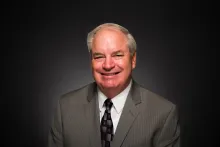
Robin Webber was born in Chicago, Illinois, in 1951, but has lived most of his life in California. He has been a part of the Church of God community since 1963. He attended Ambassador College in Pasadena from 1969-1973. He majored in theology and history.
Mr. Webber's interest remains in the study of history, socio-economics and literature. Over the years, he has offered his services to museums as a docent to share his enthusiasm and passions regarding these areas of expertise.
When time permits, he loves to go mountain biking on nearby ranch land and meet his wife as she hikes toward him.
