


Robin S Webber
This transcript was generated by AI and may contain errors. It is provided to assist those who may not be able to listen to the message.
Well, I appreciated the message that Ms. Carlisle brought, because I'd like to build upon that and expand upon that. He used that four-letter word. I don't know if you missed it or not. Did you use a four-letter word during the message? Self. And so we're going to build on that, because it's not only the world at times that has the challenge of self, but we can also have the challenge of self as members of the body of Christ.
We can even have that challenge and that dilemma even as we come up and we experience the festivals of God. And thus, this is why this, I hope, encouraging message is directed to all of us today. And the title of my message is simply this. I'd like to bring it right up front so you know what I'm speaking about. It's simply this, worshiping God in spirit and truth at the feast. Worshiping God in spirit and truth at the feast. I'd like to have you all join me as a congregation. Let's turn to the Gospel of Luke. Let's turn to Luke 2 and verse 49.
I don't know how often we think about it, but Jesus himself would travel up to the feast, as many of us are going to be traveling, because it was a pilgrimage festival. So the entire community, or as many as possible that might be able to go, would go up as Nazarenes. They would go up to Jerusalem to keep the feast. They would go up with their kindred. They would go up with their neighbors. They would go up with their associates. They would go up as one people to worship God.
Many of us are familiar with this story, but let's re-familiarize ourselves here. He is in Jerusalem. He's 12 years old, as much as we can tell. We found that in verse 46. Now it was that after three days, and they found him in the temple, speaking of Jesus, notice, sitting in the midst of the teachers, both listening to them and asking them questions. All who heard him were astonished at his understanding and his answers. So when they saw him, they were amazed. And his mother said to him, Son, why have you done this to us?
Because they were looking all over the place for him, as I'm sure all of us at one time or another have looked for our children when we can't find them. Because back then, all of the Nazarenes would go up together. And so, if you didn't see, as he would have been called back then, Yeshua, if you didn't see Yeshua, then you figured he was with an uncle or an aunt or maybe he was with a neighbor or maybe he was back at the end of the train of people going towards Jerusalem, playing with the kids.
Actually, they were going back home now, and they couldn't find him. And so then they find him in the temple complex. And notice what it says, Your father and I have sought you anxiously in verse 48, and he said to them, Why did you seek me? Did you not know that I must be about my father's business? Members of Redlands, each and every one of you, whether we are able to travel around the world, go to our local feast site, and or even if you are at home during the Feast of Tabernacles, this is a time and space within the calendar that our father above asked us to be about his business.
You would say, Well, how can I do that if I'm staying at home, if I'm in my apartment complex, etc., etc. Well, that's why I want you to keep on listening, because we're going to be addressing that in the course of this message. All of us are to be about our father's business.
The Feast is not about self. And what I want to share with you, and I've been kind of hitting on this theme recently in the messages I've been giving throughout the Southland, is simply this, that each day of the Feast, just like the creation story in Genesis 1, we have a decision to make. We have a thought to ponder and build upon. Every day as we wake up, will it be in the beginning God and being about our father's business, or will it be in the beginning me, and what can I get out of this Feast?
Let's talk about pilgrimage festivals for a moment. There are three great pilgrimage festivals that are mentioned. Let's go over to Deuteronomy 16 for a moment. Deuteronomy 16. We often turn to this when there is an offeratory that is being given, but I want to build on some of the basic points that do come out of it. Deuteronomy 16 and verse 16. That's an easy one to remember.
Three times a year, all your males shall appear before the Lord your God in the place which he chooses. So, it was very important minimally that the males did occur, but we do also know that women and children would go up with them as ought to appear before the Lord your God in the place where he chooses at the Feast of Unleavened Bread, at the Feast of Weeks, and the Feast of Tabernacles. And notice, and they shall not appear before the Lord empty-handed.
Every man shall give as he is able according to the blessing of the Lord your God which he has given you. So, we look at this. We notice that we are to appear where God has chosen. Very important!
To appear where God has chosen to appear. We have a summons, we have an appointment, we have, in a sense, an order to appear before our great God. Number two, we're to come with an offering. It says that we are not to come empty-handed. With that, though, God qualifies that to give as we are able. We often utilize this series of verses about an offering, but we're going to build upon this today, brother, and I hope you'll hear me clearly and distinctly, because the greatest offering that you can give during this holy time that is coming up, the Feast of Tabernacles, is you being the offering. Not what you put in an envelope, and that is well and good, and that is important, and that is commanded. But here's the thought I want to share with all of you for a moment. I'm going to let Steve and Susan finish their business, and then we'll keep everybody going, because this is important. I want everybody to hear it. Go ahead. Go ahead. You're looking for the hymn? Show me your ways, O Lord.
Do another hymn. Okay, here we go. Don't worry about it.
That's fine. We like that one. Go ahead.
Go ahead. We're just waiting on you.
Whatever you want to do. You figure it out. I want to continue the sermon. Let's go. Yeah, no problem. Okay, here we go. Thank you, Stephen. Diligent. Appreciate it. Okay, here we go.
Because I want Stephen to hear this. I want to hear all of us to hear each and every word that I'm going to speak, because I prayed about it, and this is very important. Because many of us have experienced the peace for 45, 50, or 55, 60 years. Sometimes we focus on the person up on the stage rather than recognizing that the world is the stage, as Shakespeare would say. And each and every one of us, no matter who we are, has something to give. It's very interesting, and the course of this message and why I'm bringing it to you today is simply this. God says not to appear empty-handed, and you may well give an offering, and you may put into the envelope and do your diligent duty. But the reason I'm giving this message is for you in the body of Christ to be able to worship God in spirit and truth. Because I want each and every one of us not to appear before our God empty-hearted. You may not be empty-handed, and you may have an envelope in your hand. But what God wants the most during this, the Feast of Tabernacles, in the eighth day is your heart. And now is the time to prepare our hearts, not just simply to bump into the Feast, but to know what we are doing. God, when we look at this, looks at the Feast, and He tells us something very important. Do you know me if you wouldn't do it on me 14? In Deuteronomy 14—let's pick up the thought here—and in verse 26, it says here, And you shall spend that money, speaking of festival tithes, for whatever your heart desires, for whatever your heart desires, for oxen sheep, for wine or similar drink, for whatever your heart desires. So God does want us to thrill and to fill and to experience His goodness during the Feast. And you shall eat there before the Lord your God. He is always a resident guest in everything that we do during the Feast, and notice you and your household. The festivals, the way that they were intended from the days of Sinai forward to the New Covenant people today, God always thinks of the Feast as in a family sense, in a family sense, not only about self, not only about the individual, but for everybody else. Let's see how that works as we go to the New Testament, Matthew 19.29. We say, maybe I didn't know I had additional family. I sent my mother a Mother's Day card this year. Who else are you thinking of, Mr. Weber? When Matthew 19.29, Jesus is answering Peter when he says, Lord, you know, we have basically forsaken everything. And it says here in Matthew 19.29, and everyone who has left, Jesus speaking, houses and or households or brothers or sisters or father or mother or wife of children or land for my namesake shall receive a hundred fold and eternal life. There are times because of our beliefs that we have to meaningfully move forward, love our family, but they may not be with us the Feast. But God has also given us grandparents, spiritual grandparents, spiritual mothers, spiritual fathers, spiritual children. We may not be of one blood, but we are under one blood, the blood of Christ, but we are combined in a very unique manner, and that is one spirit. And wherever we are during this coming Feast of Tabernacles, eighth day, we may not even be together in the same room, but we will be connected by the one Spirit of God, drawing us towards Him to worship Him in spirit and truth. Show me if you would in Ephesians 3 and Ephesians 3.14.
For this reason I bow my knees to the Father of our Lord Jesus Christ, notice from whom the whole family in heaven and on earth, God sees it as one, is named. So God looks at us as a family, and my encouragement to all of us as we begin to focus and prepare for the Feast of Tabernacles is to recognize that it is a spiritual family experience and exercise to come together before Him. Now, it's interesting as we go back to Deuteronomy 14.26, it says, and you shall rejoice in you and your household.
Now, we want to rejoice as physical households, absolutely. And again, God wants us to experience the wonderful things that can happen during this week. We can have that lies ahead of us.
But I want to expand our consciousness and our spirit today to think of the spiritual household of God and how we're going to integrate ourselves into that. It says, you shall rejoice, you and your household. The big question I want to share with you this afternoon is this, will we cause God to rejoice during the Feast? That's a good question, isn't it?
God wants us to rejoice. It says to rejoice you and your household. But the most important factor in all of this is by our hearts, our minds, our souls, our activities, our words, are you, as a child of God, going to allow God the Father and Jesus Christ to rejoice during the Feast?
Oftentimes over the years, we've used a phrase that this was the best Feast ever. We all know that phrase, this was the best Feast ever.
I always tend to say something else, that this was the best Feast yet, because I'm always looking forward to God yet doing something yet another day, another message, another interaction with the brethren, another ability when Susan and I served the whole community during the Feast of Tabernacles in our role, to realize that I'm still a work in motion, that God still has business to do with me. He's not finished with me yet. This will be this year my 55th Feast. I think it'll be Susan's 56th Feast. So we have a few feasts between us.
And the most important thing that I want to share with all of you, because so often we can almost kind of do this in a role, and it almost becomes familiar to us. And here's the point that I want to share with you, and I hope that you will really pray about this, brother. I'm going to pray about it for myself, because everything that I'm sharing up here is, I'm directing to me, I hear the echo coming off of what I need. The reason I'm giving this is that God commands us not to appear empty-handed. We've got that. How many offeratories have we heard of that? And then we pop in the little green envelope, which is very generous, and our brethren are incredibly generous in supporting the activity of the United Church of God. But what to me is essential more than ever, especially with the Bábár brought out, is the world becomes more and more disconnected from God. And then the possibility of being disconnected with people that have the truths of God, we in a sense need to more than ever become connected with the Word of God, the Spirit of God, and yes, the people of God, because we are moving in a very challenging situation as Bábár brought up. I've mentioned it to Susan, I've also mentioned to other congregations that more and more we're going to find ourselves to be very much like the early Christian community in the first century, second century A.D., as the world embraces humanism, as the world embraces secularism, as so many even in our own nation are approaching government as God.
And that's where their allegiance is, rather than the God of all nations and the God of this universe. So this is very important. Join me if you would in Psalm 51. Let's go over there for a second. I'd like to apply this verse to the feast days as we come up, the Day of Atonement, Feast of Tabernacles, the eighth day in Psalms 51.
Verse 12. And we know that commonly this is called the Psalm of Repentance, David's Great Psalm. Inspire to us down to this day. Let's look at this as a keystone, a stepping stone, a launch pad as we come to the Day of Atonement.
A launch pad during the Day of Atonement, that's when my calories are the lowest in my tummy.
Blast-off time, tremendous meaning, and while our tummies might be empty, our hearts need to be full. Maybe we've been going through the motions. Do I dare say somebody in this congregation for years? Okay, in and out, in and out, this face, that face, haven't heard anything new.
So I'll do it because I know I'm supposed to do it. God wants me to do it, so I'll just do it because, well, I'll just do it. Here's brethren where we need to kick into gear. I choose my words very carefully. Restore to me the joy of your salvation and uphold me by your generous spirit.
But it's not just for self, it's not just that I might be restored, that I will teach transgressors your ways and sinners shall be converted to you. Restore to me! Get me excited!
Not by our doing and not by our works, but by God's grace. And His grace alone has He opened our minds and our hearts to what others can't see.
Their eyes, their hearts are still veiled.
And now is the time, not next year, not the year after, but now, to be revitalized to return to the excitement that we know that humanity is not headed towards disaster, but headed towards destiny, that God has laid out, that God has a future for everybody.
And while we may not perfectly understand all of the holy days in every manner, in every paragraph, in every this or that, I'll be honest enough to say that. I'd like to leave some things for God, but the holy days give us an incredible GPS that we are not alone. And that now is the time. Now is our moment. Now is our salvation at hand. Now is our moment to learn to become teachers. Back in 1981, 1982, back in the auditorium, there was an elderly gentleman who actually gave some of his finest thoughts and direction to the body of Christ that would remain after he died.
Number one, come out of the world. The first mandate. Number two, simplify your lives. Because until you come out of the world, and until you simplify your life, you can't do point number three. And that is to learn now to become teachers. Now. Because we look at Revelation 5 and verse 10. Join me if you would there for a moment. Revelation 5 and verse 10. Where it says in verse 10, and he has made us kings and priests. Some translations say a kingdom of priests. A kingdom of priests. And priests teach. Priests lead and direct people towards God. We're going to be talking about that about the great high priest on the day of Atonement. And that's what we're going to be talking about. And that's what we're going to be talking about. And here we are in training. Always in training.
You know, over my years, thinking about it, I've had a blessing and tremendous training over the years. Having gone to Imperial schools. Having gone to Ambassador College. Having had tremendous mentors. But I seriously suggest that you come out of the world. Having had tremendous mentors. But I seriously suggest, and I have a great wife who stays with me and really helps me, and is a part of that training process. But I look that my greatest training is yet ahead of me. My life is not over. My spiritual life is not over.
You know, I know that all of you, when you see me, I'm normally the peace coordinator somewhere, and I'm up on the stage, or I'm giving some message, or this or that. And I'm undergoing tremendous training during the feast just at the personal level of what I'm experiencing. What I'm actually learning about myself. Seeing what I need to yet incorporate. What I need to change. What I need to repent of. I'll give you a little hint, because you're my friends here in Redlands. And you've always heard me get up at the feast and say, blessed are the flexible, for they shall not be bent out of shape. Anybody ever heard that from me? Okay. Who do you think I'm talking to that time, that day? Because life is what you haven't planned for. Howard and I have been working on the ocean side, the feast side for a year, and we've got a pretty well planned, but you know what? Something's going to happen. That's good. And that teaches us to rely on God, rather than computers, or rather on our good wits and our 40 years of experience doing this. See, God is always molding. He's always shaping. He's always developing us. Are you prepared? Are you ready? Are you prepared to have the divine heavenly scalpo go to work on you during this feast in a way that you have not yet fathomed? I'm getting prepared. John 4, verse 23. Join me there. This is where the title of the message comes from, John 4.
Verse 23.
Let's actually go to verse 21. Jesus speaking to the Samaritan woman, Woman, believe me, the hour is coming when you will neither on this mountain nor in Jerusalem worship the Father. You worship what you do not know. We know what we worship for salvation as of the Jews. But the hour is coming and now is. That's how God always looks at things. Now is. When the true worshipers will worship the Father in spirit and in truth, for the Father is seeking such to worship Him. God is spirit, and those who worship Him must worship in spirit and in truth. Let's divide that up for a moment. You can understand intellectually the truth of appearing before God at the Feast of Tabernacles.
That's truth. We believe that the Holy Days remain incumbent upon New Covenant Christians. That's truth. That's revelation. That's truth. And you can plant that in your mind and go. But God wants something much more during this Feast of Tabernacles from each and every one of us. He doesn't want our body. He doesn't want our mind. He wants our spirit to be connected with His and be open and be willing and available for Him to act upon us during this Feast. Why is that so important? Join me if you would in Deuteronomy 4.
And let's pick up the thought if we could in verse 5.
You see, God's people, both in the Old Testament and the New Testament, under the Old Covenant and now the New Covenant, have always been called to be a light. It didn't just happen when Jesus said, you are the light of the world. God always desired that His chosen people be a light.
Verse 5, Therefore, be careful to observe them, for this is your wisdom and your understanding in the sight of the peoples, who will hear all of these statutes and say, Surely this great nation is a wise and understanding people, for what great nation is there that has a God so near to it, as the Lord our God is to us, for whatever reason we may call upon Him? And what great nation is there that has such statutes and righteous judgments as are all in this law, which I have set before you this day?
We have an opportunity to be that light in that example, not only in the communities in which the Feast of Tabernacles will be held, but in a way, in our own learning, and as a spiritual lightning rod for others, by how we act, how we respond, by what we share, to encourage people to recognize how incredible it is that our God truly is.
That's why, brethren, and you've heard me say this over the years, many different times in different ways and different messages, the Feast of Tabernacles is not just a church convention with a vacation attached to it. I sincerely believe that the Feast of Tabernacles is a holy vocation that each and every one of us is called to, to really drink in as much as possible. Here's what I want to share with you in that vocation that you and I share, that the most powerful messages will not come from the stage, will not come from the stage, most likely. Our messages, like Paul speaks about the foolishness of preaching, they will come and they will go, but they will come from between the aisles, the parking lots, the hotel hallways, at gatherings, and at public locations where you practice what you preach.
The Christianity that God wants us to experience during the Feast of Tabernacles is not just simply vertical, going up to Him. It's horizontal. It's horizontal.
The gathering that we assembled before as people take upon themselves the incumbency of following God's command to go to where He has placed His name, okay, those people are our family, and they are the direct objects of our conversion.
When you take the Bible as a whole, when you look at the Feast of Tabernacles on Leviticus 2339, you will notice that great lay of Scripture that is there basically told ancient Israel to build booths, booths to remember what God did for them, and delivering them from Egypt.
That they will remember that. That's why the Feast of Tabernacles in the Old Testament, it was always to remember what God had done.
Way now, in 2018, with the New Testament written with the revelation of God, move from the past to our present and look to the future, that God ultimately is going to deliver the entire world from a spiritual pharaoh, which Bob was alluding to. Deliverance is coming.
And we project forward, but that projection forward also means to recognize that we are being trained now to prepare to be with people. That's what's going to happen. We are going to be sharing ourselves with people during the millennium. And the most important thing that we can do during this time is to recognize by our example our children are watching. We also have new members that will be with us this year that are watching. The Feast is something that we learn from the scriptures, but also we teach people how to observe the Feast by our examples as parents, as ministry, and as members. With that stated, I'm going to give you three quick spiritual stepping stones so that we might be about our Father's business. And, yes, experience the best Feast ever to this point. Yeah, going to be three quick points. You ready? You might want to jot them down and see if I get to them real quickly. Okay? Faith, humility, and joy. The first point is under faith. We, brethren, need to recognize that we have a great God that has called us. So the first point is that it's faith in your calling from God, and that He is performing His work in you.
Faith that there is a God. Faith that God does not have accidents as a Father.
You are purposed. You are planted at this time to develop that faith.
We need to embrace that. We need to be restored to that joy that we are called of God. You don't join the body of Christ. You are called into that body. Join me if you would in Ephesians 2 and verse 10. Ephesians 2 and verse 10.
Let's actually go on verse 8. I'm sorry. Notice it says, For by grace, not by works, not by all of our knowledge, or the jigsaw puzzle that we figured out, for by grace you have been saved through faith.
And that not of yourselves, it is the gift of God, and not of works lest any one should boast. Now notice this, verse 10. For we are His workmanship.
Now for many, many years, and I remember as a young lad growing up in Long Beach later in Pasadena, we talk about doing the work. And there is a role for the body of Christ to do the work, to assist in preaching the gospel. But I think sometimes we lost a portion of that, because here in Ephesians 2, 10, it says, For we are His workmanship. God is doing also a work in us. He is creating kings and priests for the future, for good works which God prepared beforehand that we should walk in them. Do you have an itch inside of you? Do you understand by faith that God has called us, and that God has a work inside of us? Oh no, please understand, and do not mistake me. Christianity is not simply individuality. There is a collectivity to it in the body of Christ. We are baptized individually, but then joined to the body of Christ. But there is a work that is going on in you to be a light, to be an example, to be in training. Bob is describing this world that is going to be devoid of Satan at the beginning of the millennium. But those that are going to be there, they are going to survive the trumpets and the woes and all of that. You are going to be a teacher, and you cannot teach what you have not learned yourself, because otherwise your echo is hollow. And so we are in training right now. So in faith, we need to request God to direct our steps by daily prayer during the feast. Remember the old Carl Maldonad? Don't leave home without it. And actually, this is where Stephen was being so very, very diligent, which I appreciate with my lovely wife. I was asking for a hymn to be played at the end of this service, but I'll just read it on my own. It would have been prettier hearing you sing it. But in Psalm 25, join me if you would, please. Psalm 25. Let's notice what it says here. In Psalm 25 and verse 3.
No, actually, verse 4. This should be our prayer during the feast days. Show me your ways, O Lord. Show me your ways. Because it can kind of get complicated out there. Hundreds of people, perhaps, in a building.
Hundreds of people. And you may be an introvert, and all of a sudden you're in this swath of people. You may be a mid-vert. Sorry to be a mid-vert. That's halfway between an introvert and an extrovert. Okay? But you have all of these people, and you're kind of reminded of what happened, you know, when Parzan came home from work one day, and Jane asked him, well, how's it going out there? He says, it's a jungle out there, Jane. That's supposed to be funny. I can tell that really went over big. Okay, it's a jungle. The point is this. It can get complicated, and we can get blurred. Here's what I want to share with you here. Show me your ways. Not what I have planned, not what I expect, but what you expect of me, and that you will give me the ability by your spirit, by the sensitivity that Jesus himself exercised as a human being, that I will understand the need for touch and to be touched, and to be able to help those that are in the aisles, those that are in the hallways, those that need the spiritual human touch that you're calling me to give during that time. In faith, here's another one, in faith, ask God to be your partner during the day. Whenever we travel, Susan and I always ask God, we always pray before we leave someplace, and we ask him that he will be our partner. Will you please partner with us and show us things that we could not show ourselves? And we pray that in faith, and we very rarely been disappointed at the course of a day, maybe just a nice day, a rare day, that we have where we just get off by ourselves and do something or we're with the family or we're doing this or that. Later on, we say, there's the prayer.
There's the prayer. This window opened up. This door opened up. This opportunity opened up. Well, we didn't plan this, and look how much we are enjoying this.
Literally ask God to be your partner during the Feast of Tabernacles. Pray about it. Then the most important part is, it says, then rise up, rise up, and prepare to meet your prayer during the day. Perhaps not in your timing, but God's timing. If you expect nothing, you will receive nothing. Ever run into somebody like that? They expect nothing, and God grants them their wish every time. But if you pray to God, show me your ways. If you pray to God to be your partner during the Feast of Tabernacles, wherever you are on earth, and you have an expectation, you get up and to meet your prayers. Not maybe in the A, B, C, D, E that you lined out, but to be prepared to understand what God is going to do. Ask, seek, and knock. I think sometimes we, as Christians, are better at asking than seeking and knocking.
But it is in the seeking, in faith, that once we have committed ourselves daily during this Feast, that God will answer our prayers.
It's very interesting that before Jesus chose his disciples on this earth, he prayed about it, didn't he? Will you, as a committee of one, people say, well, give us something to do. Okay, I'm going to give you something to do. Will you, as a committee of one, pray to God that he will put into your life the people that you need to spiritually grow during the Feast on a daily basis? And will you also ask God to help his spirit and you to be sensitive to meet those, to understand those that need what you have to give them? It's a pretty good deal, isn't it? 50-50? And then rise up and expect that to occur in your life. Ask, seek, and knock.
I can guarantee you that by doing this, you can make a difference in believing faith, that he will give you means to do this as you appear in the form of clay, to be molded and to be shaped, where he has placed his name to be assembled. Point number two, point number two, practice humility. Practice humility. The Feast is a humility factory. It really is.
Prepare for further assembly. None of us are yet what we ought be.
Prepare for further assembly. Batteries to be coming your way and to be assembled with God's help and the help of your spiritual family that is around you. Humility is a good thing. It's a wonderful thing. Jesus said, blessed are the poor in spirit, for theirs will be the kingdom of God. I have a question for you. How prepared are you to give light to people during the Feast? Bob, do you still have that glass of water? Can I have that? That plastic cup?
I saw that during your message, and I wanted to borrow it later on.
There's only water in there, right? Yeah.
Okay. Oh, that feels good. Okay, I'm awake. How prepared are we to give life to people during the Feast that are going through a drought in their life, that are probably dried up from not seeing the living God, and they're a little dried up? How prepared are we to give them a drop of spiritual moisture? You know, Susan and I for years, twice now, have pastored up in the Central Valley, and there's signs along the 99 and the 5 that go like this. Plants grow where water flows.
Plants grow where water flows. And we have people, if I can just speak to you as a family, we have people that are going through dry spells right now. We all do. We have some people that are literally going through a drought. Are we going to be ready after we pray that we go into a assembly prepared to serve, prepared to give, to be sensitive to God's Spirit?
It's amazing what just a little water can do. Susan and I had a wonderful experience. I told her I'd share this. Oh, do I have to stay behind here? Okay. Several weeks ago, we were going up to Bakersfield for church. And we... confession's good for the soul, so I'll tell you this. We were in the drive-in lane of Carl Jr's. And because we love, in the morning when we travel, we love their burrito combo breakfast. I think that all told came to about $18.10, as I can remember, because I was ready to pay for it. And then when we got up to the cashier, the cashier just spoke out of the window and said, you don't know anything. The car in front of you paid for you.
We never met those people. That's part of the beauty. It was anonymous, but we never met those people. That was so exciting. And to a degree, it's changed my life a little bit. Not that hopefully I don't do nice things for people, but all of a sudden it got contagious. You know how sometimes if you're going like this, like the monkeys, they all start going like this? Somebody in an audience yawns, which nobody has done yet to this point. Everybody starts yawning. Can you imagine the contagion of when God's Spirit is active, the Spirit of faith, the Spirit of humility, the Spirit of sensitivity, the Spirit of love, and how that begins to pervade into an assembly of God's people? You know, over the years I've taken my dad out to breakfast, and at times I've gone to pay the bill, and I'm waiting for the check, and waiting for the check, and then all of a sudden somebody will come up to me and say, your check has been paid for by a veteran, because my dad will sometimes, not sometimes, I think it's glued to his head.
He has his World War II Marine cap on. Now, you know, in my dad, I had to tell him, dad, you don't have to wear that every restaurant. You know, we can't pay for our meals. But there's a power there. As we come into an assembly, sometimes hundreds of people, we need to recognize something that Christianity is a contact sport, and we have a target rich environment. God's people, God's people, are the world that we also exist are the direct object of our conversion. The direct object of our conversion is not a mirror. That'd be like a predicate nominative. It just reflects back on self. People, people are the direct object of our conversion, and therein lies the growing ground. Here's just a few quick points that I want to share with you about under this point as we come to the Feast. We're going to have an opportunity to have a lot of conversations. Number one, a lot of conversations, a lot of flow of give and take during the Feast. When we are talking to somebody, seek first to understand. Seek first to understand rather than being understood. That's hard because we either want to tell our story or we want a problem solved for somebody that's not really wanting to have their problems solved. It's just that they're sharing themselves. That leads to point number two, and I've given messages on this. Put this into practice during the Feast. Stop, look, and listen. Give people your undivided attention. Give people your undivided attention during the Feast.
That may be more important to them than the greatest sermon ever given at some site. It's the sermon that you're given, the living sermon, that you have fastened your eyes on somebody and that you are giving them dignity. You're giving them worth. You're giving them yourself. You're giving them your ears. More than that, you are giving them your heart.
Point number three. We are to be a light of the kingdom of God. We are to be the light of Christ, the light of being a Christian. And our tongues will either portray or portray what is inside of us. Let us, as ambassadors at large as we go out, let's make sure that whatever we say, number one, is true. And it may be true, but number two, is it needed? Is it needed? There are things that are true, but it might not be the time. Is it needed? And number three, is it kind? Is what I'm sharing, or is it going to unite? Or is it going to divide? Is it pointing people to God, or is it pointing people to me, as the great arbiter of the human experience? In the beginning, God, or in the beginning, me? Number four, be sensitive to the touch of others. Be sensitive to the touch of others. There can be loneliness in a crowd. There can be loneliness in a crowd. We just don't know what our brothers and sisters in Christ are going through in a year, in a month, or any given day.
Remember how Jesus, as he was moving through a crowd, a very large crowd, as he was coming into his city, the woman with the issue of blood came up behind him, and he said, who touched me? Who touched me? Who touched me? My encouragement is during this feast to be sensitive, not only to the touch of individuals, but the touch of God, for you to be touched by individuals, to be able to serve them, to give to them. And you may not even have all of the answers, but you can listen and you can hug them. Sometimes there are experiences that are going on in our lives, even right now, and words fail. But hugs are always good.
Hugs are always good.
If you're lonely during the feast, find somebody that's lonelier. That's a hard play. If you are lonely during the feast, and there can be loneliness during the feast in a crowd of hundreds of people, again, remember going back and living, believing faith that God is partnering with you, that you've asked him that you might be a tool by his grace. And that's what God is doing. God is partnering with you, that you've asked him that you might be a tool by his grace.
You ask to find somebody lonelier than you, and to share your self-time with him. Psalm 68, verse 6, and just jot it down, God says that he sets the solitaire person, the single individual in families. I'm kind of smiling. You just thought you were going to stay in your four-star condo. You just thought that you were going to do this and that. Now Weber's loading up the artwork for you.
But let's remember, the feast is to be enjoyed. Make no mistake about that.
But this is a holy vocation, not just a church convention with a vacation tied on. You know, religious people—why do I say this? Religious people can be very critical. And religious people can also be very, very, very busy. Religious people have a habit in the scriptures when you look at it. The church people of Jesus Day, looking at different people, will say, well, what are they doing here? Who let them in?
Let's treat every individual that we come into contact with during the feast with dignity and respect by some of the items that I've just given that are made in God's image.
God knows their story. We don't. We rejoice that they have entered our doors and we have an opportunity to minister to them, to give to them, to serve to them. And that you, as a committee of one for such a time as now, are on the front lines of doing so. Let's remember the example of the story of the Good Samaritan, the priest, and the Levite, those that were supposed to be the people of God, who skirted opportunity from the man that was fallen on the road to Jericho.
Never underestimate that by your spirit and by your heart, and by the heart that is behind your ears and sitting down with somebody when you have maybe had something else planned, that for such a time as now, for such a time as now, you've been called to be at that feast site to give to that person. Let's always remember this as we come to the feast. And this can apply to a weekly Sabbath. Our job is not to choose God's family. It's our job to accept them.
When I was a little boy growing up in the church, I was a teen at the time, how often I would hear at Squaw Valley in Blytherina.
Sermons always wind up with Isaiah 30 verse 21. This is the way. Walk you in it. That young teen grew up, and for about 15 years he wrote a column in one of our church publications.
This is the way. Never underestimate what your child, your young lady, your young man is listening to and how it will help them. Be sensitive during this feast of tabernacles to the prompting of God's Holy Spirit. You want to go this way. You had this plan. And please don't re-alter all of your plans during the feast. That's not the purpose of this message. But be flexible and recognize that sometimes people should be placed ahead of programs. Hearts are more important than tickets at an event. Be flexible. Be ready to serve. This is what it is about. To be flexible. This is the way. Well, I wanted to go this way. I've got all of this paperwork. One thing that I find as a festival coordinator over the years, and I was telling Howard this back of the building beforehand, is that I always really appreciate having the fine assistant helping me with the feast and organizing it and then kind of manning the office along with his lovely wife and others. But that allows me an opportunity to go out. I'll just share a little trade secret being a festival coordinator. As a festival coordinator, you do not want to be buried in paperwork during the feast. You do not want to be behind some barricade or some partition during the feast. You want to be in the midst of your people, God's people. At times, other people have the gift of dealing with paper. They also have the gift of dealing with people. But the most important thing as a leader, a spiritual leader within the body of Christ, within the community, shall we say, at Oceanside or past in the years past, is to be in the midst of your people and to look for that solitaire person. To do everything that I've been talking about to this point, that God will direct my footsteps and direct your footsteps. Paper will come and go. You can even make a paper airplane out of a piece of paper. But people do not just simply come and go. They have a need. Let's go to point number three. Oh, let me just mention this one last thing about this, and we're going to go real quickly. The main thing, you've heard me say this before, the main thing about the main thing is that the main thing always needs to remain the main thing. Other than hearing the word of God and worshipping God, our main focus and the direct object of our conversion is people. Christianity is transactional. It is vertical and it is horizontal. In so doing, we will be about our Father's business. And remember that, as Jesus himself said, who himself was involved in pilgrimage festivals, said this, if you've done it to the least of these, my brethren, you've also done it to me. If you've done it to the least of these, my brethren, you've done it to me. Let's go to point three. Be prepared to experience God's joy. Be prepared. Many people know over the years, I have different expressions, some that follow me, whether they should or not, but I always talk about feeling the joy. I'm not just simply talking about an emotion, brethren. I'm talking about a gift that comes from God. It's not just to feel that joy, but it is to experience the joy of God. Restore to me, as I said, the joy of your salvation.
Philippians 4 and verse 4 says, rejoice. And again, I say, rejoice. I have a whole story that I could share about that, but we're already a tad over time, so I won't go into that. Rejoice. And I say, as your friend and as your fellow Christian and as your pastor, find a means, whether you're in Indian Wells or whether you're over here in Mira Loma, whether you're in Oceanside or whether you're in France or whether you're on the moon.
Do we have a feast? No, okay. Wherever you are in God's universe, rejoice. Rejoice.
God is your God, and we are his people. We are all going to be connected by his Spirit. We are one during this time. God knows exactly where you are. That full moon is going to rise on Mira Loma, and it's going to rise on Indian Wells, and it's going to rise on Highland, just as much as it's going to rise over in France or Italy.
Or Jekyll Island or Oceanside, California. And we with our hearts will rise before God.
During this feast, more than ever—and again, remember this echo is coming back to me, brethren—be open, be available, and be willing. Nothing is beyond or beneath our calling during the feast. Nothing. As coordinator of a feast site, I will be moving chairs in the blinking of an eye.
I will probably run into Dave Hall, who always is the Statue of Liberty off of our avenue. He's done parking for years. Never asked for a different job. Loves it. He's our first line of greeting.
First servant. But I'll probably join Dave. All of a sudden, I'll just be walking. Maybe I'll go somewhere and I'll see something. You do it. You just do it. Something needs to come off the stage. I'll probably go up. I'll help with the stage crew. It has to be done. Jesus himself set the example about the Feast of Tabernacles. When he washed feet, he was willing to take on any job. Same guy that did the pilgrimage feast just like you and I are doing. He washed feet. He said, well, that's not below me. That's not beneath me. And again, what I'm talking about is not just service for service sake and just physical service, which is very much needed, because we're basically kind of like running a city for eight days. We're not talking about just adding your name to a list, and that is well and good. And we really appreciate that, don't we, Howard? We'd be able to do that. But we're talking about a spiritual service. We're talking about service of the heart. We're talking about faith and humility and joy and being able to do this. People are watching you during the feast, your children, new members, our fellow members, to be encouraged. Again, Shakespeare said that the world is the stage, and so much happens during the feast. Let me share just two stories with you. I have a very—confession's good for the soul—I have a very dear friend. He was a fellow council member when I was on the council for nearly that decade.
And we had somewhat of a parting of ways about 35 years before, during 1979, for those of you that remember 1979, without going into all of it. And he didn't have the highest impression of me at that time. Susan knows his story.
In fact, he used a Hebrew word linking it with me, little me somehow.
The Hebrew word was scumbag. Not a very nice word. It doesn't need too much defining. And then we were at the feast in 1993. I was the guest speaker at that time, and we used to have guest speakers in the other organization. So the guest speaker was supposed to be on the front row. The guest speaker was—and most of you know I don't like sitting on the front row to begin with, Susan's arrived—but that he had this whole ministerial section roped off. You know how that used to go. It was like really roped off. You know, you had to—how do you get in? Well, okay, so he had this one. Then everybody was there, but Robin and Susan, so he's looking, where are they going to show up? And then finally he looked back and he saw us sitting about halfway up the balcony, about 250 feet away from the stage.
And as that line goes in Casablanca, Louis, I think this is the beginning of a wonderful friendship.
He changed his whole approach, his whole thought of something that happened during the Feast of Tabernacles. You see, the world is the stage. The Feast is the stage, and people are learning about one another as to what they put priorities on. There's another situation that I'd bring out is during the West Coast cruise back in 1988, my mind, 30 years ago. And I remember there was a lady that had some very, very, very serious issue, and she was going to have to be put ashore. I happened to be involved very early. I could have asked somebody to do something about it, but I didn't. I felt it was very, very, very serious.
I felt it was very important that I be involved as the coordinator. And I remember carrying the lady like this, carrying the lady on the deck, and then went down the stairs to the little boat that came in from shore. I could have delegated that. I could have had somebody else do that. I could have said, well, I'm very, very, very, very, very busy. But you see, that's the whole lesson, that we need to be open, that we need to be willing, that we need to be available, and that there is no task, no job that comes our way, that we shouldn't rise to it with God's Spirit and make a difference in the lives of other people. Galatians 6 and verse 9 simply says this, don't grow weary of well-doing. Don't grow weary of well-doing. And brethren, some of us, we've been maybe keeping the feast for decades now, done this, done that, gone there, heard this, heard that, don't grow weary in well-doing. I always like to think that the best is yet to come. And one thing I want to encourage you is that what a joy we have that the feast is seven days plus one. You can actually have a really bad day during the Feast of Tabernacles, just a bad day, and recognize that God is giving us rebound time to come back. Another day, another moment to do something.
Let's pray during this to be servants of God, spiritual service. Oh, there'll be many people that will step and do physical service, and I am so very, very thankful for that. But first and foremost, we have a spiritual service as we come to the feast to worship God in spirit and in truth.
And Jesus himself said, if you have done it under the least of these, you've done it to me.
So let us go up to the mountain of the Lord.
Let us learn of His ways. Let us be prepared to teach others.
Not only by what we know, but by what we do. And then let's give God the Father and Jesus Christ all the credit that they duly deserve. See you after services.
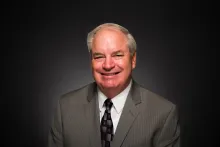
Robin Webber was born in Chicago, Illinois, in 1951, but has lived most of his life in California. He has been a part of the Church of God community since 1963. He attended Ambassador College in Pasadena from 1969-1973. He majored in theology and history.
Mr. Webber's interest remains in the study of history, socio-economics and literature. Over the years, he has offered his services to museums as a docent to share his enthusiasm and passions regarding these areas of expertise.
When time permits, he loves to go mountain biking on nearby ranch land and meet his wife as she hikes toward him.
