
Robin S Webber
This transcript was generated by AI and may contain errors. It is provided to assist those who may not be able to listen to the message.
Let's begin this message by turning to Deuteronomy 18 and verse 15. Deuteronomy 18 verse 15 speaks of two individuals. It says, The LORD, your God, will raise up for you a prophet like me from your midst, and from your brethren, and him you shall hear. This is one of the Messianic prophecies found all the way back in the Old Testament. That God would once again raise up somebody as viable and as dynamic, a deliverer, just like Moses.
It is with that which creates interest when we think of the Old Testament and the New Testament, when we think of the Passover of old and the Passover that we find in the New Testament, which is already being talked about this morning. There are similarities between Moses of old and that second Moses, known as Jesus Christ. Let's think about it for a moment, some of the similarities, and then we'll expand beyond that thought. Moses was an individual that was sent, and he was also trained. It's interesting that he was trained both as a general. In Josephus, he's called Murmashoi Kincare, and who was the general that was sent against Ethiopia to incorporate Ethiopia into the Egyptian Empire.
God trained him first, or allowed him to be trained first as a general, because God was looking down the line and knew exactly the training that Moses would need to lead the children of Israel. Then after that, there was a new course. About one that Moses was thinking about became a shepherd, because he also had to have training as far as learning to herd people.
People can be just as interesting as sheep, can't they, being one myself? So we notice that Moses was sent, Moses was trained, and ultimately he was right on the doorstep of Pharaoh. And that man a message from God Almighty. When we think of Jesus Christ, we also recognize that he too was sent.
He was sent. He was sent from heaven above. We also recognize that he brought incredible, impeccable resources with them, being God in the flesh. Unlike Moses, he was not on the doorstep of Pharaoh, but he came upon the doorstep of Jerusalem. It's very interesting that both of these men, as the Passover came up to them, that ultimate Passover, that they did many miracles and they did many wonders as they came up to Passover. In one sense, it would be an event, that is the Passover, that would spare people from death.
But there is a difference between the Passover of old and the Passover that comes up in the New Testament, especially the last one that Jesus Christ kept. And even as both gentlemen, Moses and that second Moses, Jesus, performed in raw many wonders and miracles to testify of God, the second Moses is a greater Moses.
Join me, if you would, in Hebrews 3 and verse 1. In Hebrews 3, the author of Hebrews talks about that difference. In Hebrews 3 and again verse 1, Therefore, holy brethren, partakers of the heavenly calling, enter the apostle and the high priest of our confession, Christ Jesus, who was faithful to him, who appointed him as Moses, also was faithful in all his house.
For this one has been counted worthy of much more glory than Moses, inasmuch as he who built the house has more honor than the house. For every house is built by someone, but he who built all things is God. See, as we come up to that thought of Passover, we begin to understand the difference. Again, Moses was used of God to spare the Israelites from death. The instrument of God that came against Egypt passed over the children of Israel, and they were spared death. But the second Moses did a mightier wonder, did a mightier deed, as he came up against the Passover, the last of his human existence.
He raised people from the dead. It's one thing to spare people from death. It's another thing to raise people from the dead. And I'd like to move us to, again, a story that I like to share every couple of years, to in a sense introduce the congregation to what Christ was doing to the people of the world. And as he was about to participate in his last human Passover. Join me, if you would, in John 11. It's an incredible story. And it's a story that I think has so many facets for us to consider as we come up to partake of the New Testament Passover, as to what was on Christ's mind, as to what we are to experience during the Passover.
We keep the Passover every year, but we grow in understanding and deepening and awakening. And as much as sometimes we think, we know and understand everything, this story tells us that God wants each and every one of them in this room to go deeper and deeper.
Just as much as Mr. Hall encouraged us to go deeper and deeper in just one aspect of the ceremony that we partake of at the Passover, every time I come up against John 11, I myself recognize that I have myself not fully apprehended. And yet I press on, and I understand more about this story. This story does not go away. And it not only tells us about the man, but it tells us about the man that resurrected the man and why he is worthy of honor and why he is worthy of honor, and why at the end of the day, when you and I partake of that bread and of that wine at the Passover, we like David are able to say, the Lord is my shepherd and I shall not want.
Now it's easy to recite, and we all know Psalm 23.
We come to a point where we say, the Lord is my shepherd and I shall not want, but you know and I know that days go by and months can go by and matters can come into our life, and we feel we are wanting. Where did God go? Is the shepherd awake? Alert? Aware? Does he really know what's happening to me? And that's why this story is here. It's an incredible story. I want to share some of the points right out front so that this story will mean more than ever to you and can galvanize your spiritual development as we move forward. Why am I sharing this story? Because I'm so grateful to you. I'm so grateful to you. And I want to share some of the points that God has to give you as we move forward. Why am I sharing this story with you today? The story of Lazarus is a story that takes place about 30 days before that Passover when Jesus Christ gave his life for you and for me, Just a month out, and we're about five weeks out right now from the Passover. Interesting.
It displays God's awesome power, the might of God Almighty, and at the same time, His tender feelings towards those whom He loves. It jolts us from what we might call faithless familiarity.
Shocks our system, makes us go deeper, and to understand that God still has some homework for each and every one of us on this journey to become complete in Christ. It helps us to come to expect the unexpected from God.
Christianity is all about coming to expect the unexpected from God, and never to not understand that God will not continue to cease to amaze us as we go along the way.
Share that with some thoughts with my wife, who's out in the audience right now, with some conversations that we had this morning and twists and turns that we didn't expect, and are recognized to always come to expect the unexpected from God. He will answer in His way, in His time, and in a manner that you may not think so and or in the vehicle that you don't think so. The most important thing I want to share with you, brethren, as your pastor, is to help you to realize that we do not have an accidental Savior. God does not do things accidentally in our life. Even sometimes when we think we might be an accident that's happening, we do not worship an accidental Savior. Jesus Christ did not come to this earth wondering if He was going to make it or not, or was somehow on the job training. He knew exactly what He was doing. And lastly, then, again, to move us into a deeper, deeper understanding of God. Each and every individual that's in this room right now, if I asked you, does God love you, and do you love God, I think that would almost be a unanimous ballot. That's not the issue. The issue is understanding God's love in a greater capacity, and for we, in turn, to learn to love God in a deeper way ourselves. So let's pick up the thought here. We're just going to go through the story, but that kind of gives you a framework. I don't want you to wonder where I'm taking you. We're all on the same spiritual GPS as we begin.
I'd like to share some thoughts that maybe you've never thought about before in this story, and let's read it through together. Now, a certain man was sick.
His name was Lazarus of Bethany, the town of Mary and her sister Martha. This was an entire family.
It's very interesting. Maybe you've never heard this before, but Bethany is about just two or three miles outside of Jerusalem. Just two or three miles. Actually, today, we would call it being in the West Bank. It's just to the east of Jerusalem. One thing that you may not know, and God sometimes calls things for what they are, Bethany literally means the house of the poor. And there's a story behind that. It's called the house of the poor. It can also be called the house of misery.
And it's thought somewhat in the Aramaic that it came from the alms house, the poor house, set up there, perhaps even caring for lepers. It was a site of misery and people that were poor. Very interesting. And we'll deal with that a little bit later on. And it was in Bethany. And it was that Mary who anointed the Lord with fragrant oil and wiped his feet with her hair, whose brother Lazarus was sick. Now, that's very important to the story. Germain to every point that we're going to make. Notice you might want to circle that Mary.
This one, the one that had given everything up to that point that she had to give, the one that was up close and personal and done everything that she could as a human being to display her love to Jesus Christ, had humanly poured herself out and given her all. It was that Mary. Not just the gal down the street, that Mary. And therefore the sister sent her saying, Lord, behold he whom you love is sick. It wasn't only that Lazarus loved Jesus, but also that Jesus had a very particular affection for this man known as Lazarus.
He's the one that is sick. And they thought when Mary would express that, that they thought that, Jesus would come like so much Federal Express.
He'd be right there for them, because he'd always been there for them before. And when Jesus heard that, he said, this sickness is not unto death, but the glory of God, that the Son of God might be glorified through it. Now let's remember this is 30 days out from him being crucified in Jerusalem. And when Jesus often spoke in the Gospels about the aspect of the glory of God, that the Son of God might be glorified, it was speaking of the crucifixion. Speaking of the crucifixion, I understand that his disciples did not get that at this point. They didn't understand the glory that was being spoke about. Now Jesus might have been speaking Aramaic, they spoke Aramaic. They said the same word, but in a sense they were spelling it differently, and it had not struck them. Here's the thought I want to share with you as we move towards another Passover.
These gentlemen had walked and talked and existed with Jesus Christ for three and a half years.
And in some sense, they did not fully understand yet what he was all about. Maybe that's our story today as we're here at Sabbath Services, and maybe we've been a follower of Jesus Christ for more than three and a half years, maybe even for 30 years. But I ask you to explore this thought. How much do we have yet to go deeper and to get it and understand what Jesus Christ wants us to understand about him? That's a thought. Sometimes, humanly, we can think that we have already arrived, already made it, already crossed the goal post. We have the recipe, we have so many facts, but then we are confronted with a whole new learning episode to go deeper. Now, Jesus loved Martha and her sister and Lazarus. So, the Lazarus loved him, and Jesus loved the family. So, when he heard that he was sick, notice he stayed two more days in the place where he was.
How do you like love like that? I love you. I'm just going to stay here.
And sometimes, God can love us and what we're going through, and we want an immediate answer, like God or Christ being a cosmic bellboy, but they don't deliver. But then we associate that perhaps with unlove. And here, Jesus does not move at that point. He stays two more days where he was. And then after this, he said to the disciples, let us go up to Judea again, which was about 25 miles away. And the disciples said to him, Rabbi, lately the Jews sought to stone you, and you're going there. And Jesus answered, Are there not twelve hours in the day? And if anyone walks in the day, he does not stumble because he sees the light of this world. But if one walks in the night, he stumbles because the light is not in him. Now, Jesus knew that his time was coming near. It was the eleventh hour as the son of the ant man, and yet he had more time. But I want to share a verse with you, and it's actually one of my favorite verses in the Bible. Would you join me in Luke 9.51? In Luke 9.51. Jesus had been up in Galilee, he'd also been in Samaria. But I often think about this verse, because this has relationship to Jerusalem.
This is a comment by Luke. In Luke 9 and verse 51, let's take a look here. Now it came to pass. How often do we hear that in the book of Judges or in other sections?
Talking about God's timing. And now it came to pass, when the time had come for him to be received hop. The hour was near that he steadfastly set his face to go to Jerusalem.
Jerusalem became like a magnet to him. He had a destiny, he had a purpose, and Jerusalem was it. And nothing was going to keep him from that. And this story of Lazarus has every part to deal with that. Because if you'll join me again in John 15 and verse 13, greater love has no one than this, than to lay down one's life for his friend. Jesus, by going to Bethany to visit Lazarus 25 miles away, was going to be the beginning of his death. Let's think about it this way, friends, here in Redlands. That what he was doing, as he went to Bethany, he was going to...
He was knocking right on the door of Jerusalem. He realized that whatever he did in Bethany was going to immediately go back then. They didn't have tweets, and they didn't have Facebook, and they didn't have texting, and they didn't have cell phones. And so he had to get up close and personal to Jerusalem. Because just two or three miles out, the word was going to go in that this Moses, this second Moses, was doing mighty wonders and deeds. One that had been sent. And one that was going to do more than spare people's lives, but raise people from the dead to life. You say, well, okay, that's 2,000 years ago. What's that have to do about me? Please stand by for the rest of the message. So it says here, then, these things he said, and after that he said to them, our friend Lazarus sleeps, that I go, that I may wake him up. And then his disciples said, Lord, well, if he sleeps, isn't he going to get well? Isn't sleep God's medicine? And then his disciples said, Lord, if he sleeps, he gets well. However, Jesus spoke of his death. But they thought that he was speaking about taking rest in sleep. And then Jesus just had to be utterly blunt. This is it, folks. Lazarus is dead. Now, the reason why I'm sharing this with all of you is simply this. These gentlemen had been with Jesus for three and a half years, and they still really didn't get dead. They didn't understand what he was about. And not only that, but what he was about in them. See, there's a difference between walking with Jesus and allowing him to walk inside of us and to understand his purpose and his ways and what he wants us to do for him.
I am glad for your sake that I was not there, that you may believe.
Nevertheless, let us go to him. And then Thomas, known as Didymus, the twin, said to his fellow disciples, Let us also go, that we may die with him. Now, again, this is a fantastic verse. And, again, frankly, one of my favorite verses, and I'll tell you why to share the lesson with you. So often we think of Didymus or Thomas, excuse me, as the one that... what's his nickname? Doubting Thomas. And so often we capture either an individual in Scripture... are you with me? And where we capture, do I dare say an individual in this congregation? And we have a postcard of them. We freeze frame them.
And that is our thoughts about them. We give people just a nickname on the moment, or we freeze frame them in time, and we don't allow them to grow, and or we don't allow also, even though they have this issue, look also what they are doing for God.
The Bible does not allow us to be narrow with people.
The Bible asks us, when we read the entirety of the Bible, to understand that God calls everybody for a reason. There are strengths, and there are weaknesses, and both of them have got to be given to him. I'm speaking to myself. All of us so often just pigeonhole people, and we give them a nickname. Sometimes, even when we've known people in our church history that have grown up in the church, maybe we just remember them as a young lad, or we remember people when they first came into this way, and we don't allow that picture of what God is doing to grow. Here is a man that just said, hey, I'm ready to go up, and I'm ready to dive. Let's do it, gang.
Isn't this going to be fun? We're going to have an adventure with Jesus. Whoa!
Everybody's back to the scene. Slow down. Not yet.
Then comes one of the great statements in this. I love this. I was reading through this this morning. So when Jesus came...
History. Mystery. It was about to be made and about to be revealed.
See, so often in our own Christian walk, we are a little bit like Martha and Mary and become impatient. Wonder where Jesus is. Wonder what God is doing.
And then you have this phrase, so when Jesus came. Have you found that in your life at times where it seems like time has just passed, gone on, no answers? And then this verse comes. But how often does it say about those that wait upon the Lord? To wait upon the Lord and to recognize that God will answer at the right time and in the right way and never be late.
Never be late. And what's fascinating about Lazarus' story is so often we equate death with late. And yet here comes this great story now. So when Jesus came, he found that he'd already been dead in the tomb for four days. There was a reason why Jesus did not come immediately. And that was simply that this was the fourth day.
Jewish culture was for the first three days. The first three days were called the days of weeping. The days of weeping. And then the next seven days were known as the days of lamenting.
And all of this was for a purpose. Let's think about this. There are three—you might want to jot this down, go back, read the stories—there are three resurrections that are mentioned in Jesus' ministry. One is the daughter of Jareus. One is the son of the widow of Nan.
But there is a difference between those two resurrections and this resurrection.
Jesus was immediately upon the scene with the resurrection of the daughter of Jareus. And he was immediately upon the scene and came upon it with the son of the widow of Nan. Four days had gone by. Allow me to ask the audience a question for a moment. Why did he wait? And why four days? Any thought? That's right. When you're dead for four days, you're like Rover. You're dead all over. There is no way of saying, oh, he kind of slumbered and woke up. What I want to share a thought in all of this is simply this. You may want to jot this down.
God never wastes a miracle. God never wastes a miracle. He is in control. He knows exactly what he's doing. The reason why I'm sharing this with all of you—this is our story. We are Lazarus. Lazarus' life is our life. The story of Mary and Martha is our life. Sometimes we ourselves want to treat God like a cosmic bellboy. We call He Delivers. He's going to do it in His time. But I don't like His time. I don't like His way. But that's what we're saying at Passover, when we partake of that bread and we partake of that wine, we are saying God's gift. The Lord is my shepherd. I shall not want. And I renew that covenant with God that once again, for every day and every breath that God gives me, I will accept not only His Son, but the way that He and His Son will deal with me in the days, in the months, in the years ahead. Notice what happens here as we go down the story. It says, Now Bethany was near Jerusalem just about two miles away, and many of the Jews had joined the women around Martha and Mary to comfort them concerning their brother.
Now Martha, and we know the sisters. Some of us have sisters here. I'm smiling at one out here. She's laughing. We call them the sisters. But others of us have sisters, and we have brothers, and we recognize that we all come out of the same factory as it were, but we all have different personalities. And there are going to be two more distinct personalities in Scripture than Martha and Mary. And you notice, now Martha, as soon as she heard that Jesus was coming, went and met Him. You know, Martha's not going to be distracted. We know the story about Mary. You know, she's going to make a beeline for Jesus because she's one busy lady. And as she heard that was coming and went and met Him. But Mary was sitting in the house. Mary was pondering. Mary had lost her brother, and everybody grieves deeper. And I can just imagine Mary was, in a sense, just a mess, as all of us would be when we lose a loved one. And Mary is, for the moment, down. Now, Martha said to Jesus, Lord, Lord, if You had been here, my brother would not have died. But even now, I know that whatever You ask of God, God will give You. Interesting. Here we are.
Here's Martha. There's a lesson here that's being worked out.
Martha, at this point, was having to learn a lesson that each and every one of us had to learn this year. And if we have not learned it, we will learn next year. And that we will have to go deeper in. And that is simply this. And it was really hard for that community. Remember, we're reading their story that was being written out.
Martha, to a degree, looked at Jesus, loved Jesus, respected Jesus, but she looked at Him as basically a localized holy man. Good for being on the spot. Just like any other prophet.
If He's not there, nothing's happening. If You had been here, everything would have been all right.
Let's move with this story. But even now, I know that whatever You ask of God, God will give You. And Jesus said to her, Your brother will rise again. And Martha said to Him, I know that he will rise again in the resurrection of the last day. Every Jew and Jewess knew the words of Daniel. And Jesus said to her, I am the resurrection and the life. And he who believes in me, though he may die, he shall live. And whoever lives and believes in me shall never die. And here comes the big question. Do you believe this? Do you believe this? That's not just a question that goes to Martha. It goes to each and every one of us as to whether or not we truly believe that Jesus Christ is the Son of God. Notice what happens next. And whoever lives and believes in me shall never die. Do you believe this? And she said to Him, Yes, Lord, I believe that You are the Christ, the Son of God, who is to come into the world. Chot down Matthew 16, 15, please.
It is the same question that was asked of Peter. It is the question that is asked of Martha. It is the question that is asked of us every day. Who do you say that I am? Who do you say that I am?
And it's not the pronunciation. It's the actions that you live out every day.
Following his example that we heard from the opening message. Who do you say that I am?
She said, You are the Christ. Christ means anointed one. Yes, You are the Messiah. You are the fulfillment of Isaiah. But more than that, notice what it says here. You are the Son of God. You are the answer. You are the life giver.
See, Jesus had said, I am the resurrection and the life. Up to that point, Jesus said, I am the door. I am the truth. I am the light. I am the way. But now he makes a claim that can only be made of God. God in the flesh. I am the very name of God. I am. I am He that allows to stand. You might jot this down. Latin is just a fancy Latin word, which means to stand. That's what resurrection means. We say, well, how they get that word? Well, how many dead people have you seen standing? Dead people are, if you want to look up here, dead people are normally this way.
Resurrection means this way. Death means you're normally laying on your back.
Resurrection means you're standing on all twos. I am the resurrection and I am the life. Now, we could take that broader and maybe we will in the course of the year, what that life is. Life eternal. Life immortal. But also just to live. Once again, I am that resurrection. I am that life. And she had to answer that. It's very interesting when it says, but even now I know that whatever you ask of God, God will give you. Back in verse 22.
Mary and Martha had issues. They wanted to believe. They were basically coming to Christ, saying, help thou my unbelief. And he was about to do that. We notice in what it says here, and when she had said these things, she went her way and secretly called Mary her sister, saying, the teacher has come and is going to call calling for you. And as soon as she heard that, she rose quickly and came to him. Now, Jesus had not yet come into the town, but was in the place where Martha met him. This gives me a clemitous confidence as I partake of the bread and the wine this coming Passover, that that coming year and every day of my life. I love this verse. I just have shared. I love this story. It's so powerful. It says that where Jesus met Martha. And here's the point I just want to share with you. It's an article of faith. Jesus will meet us right where we need to be met. He knows when to meet us. He knows where to meet us. He knows how to meet us in his timing and in his way. And he will meet us in any condition, in any way. I firmly believe that.
I know sometimes I haven't been ready. I know myself I haven't been prepared. I know myself I haven't been always looking for the answers. But when I'm on that proverbial road, I know that God the Father will send his Son and meet me exactly where I need to be met. That I might go deeper, that I might grow wider, that I might look up higher, and know that the Lord is my Shepherd. I shall not want. And then the Jews were with her in the house and comforted her. And when they saw that Mary rose up quickly and went out, followed her, saying, She is going to the tomb to weep there. And then when Mary came where Jesus was and saw him, she fell down as the feet, saying, Oh, Lord, if you had been here, my brother would not have died. Therefore, when Jesus saw her weeping, and the Jews who came with her weeping, he groaned in the Spirit and was troubled.
Christ was not troubled about raising the dead. He already knew what he was going to do. He already knew what he was going to do. But there was this groan that was within him. And he said, Where have you laid him? And they said to him, Lord, come and see.
And then one of the great verses of Scripture, verse 35, Jesus wept.
And it is in this brief passage that we have come together, something that is incredible, that is, the divine mystery and the divine revelation. Allow me to explain, please, friends. It is in these few verses that we understand that Jesus Christ was fully God, and yet he was also fully man.
Fully God and fully man. He was going to do something much different than Moses did, of all. Moses came as a messenger from God. This is what is very important.
Moses came as a messenger from God and said what God was going to do.
Jesus, unlike that, said what he was going to do. Big difference.
Big difference. You know, when you think of Matthew 7.29, where it said that he astonished the religious community because he was a man speaking with authority, sometimes we say, oh, that must be because he raised his voice, or he was dynamic, or he knew what he was talking about.
The real difference there in your studies will lead you to this point.
Jesus spoke in the first person. He spoke in the first person. That's what made him different. You're all nodding when you think about it. He spoke in the first person. I will. Not that he did not acknowledge the Father, and not that he did not pray to the Father, but so often he said, I. I have not come to destroy the law and or the prophets.
He brought himself into first reference, and we'll find more of that right now. And Jesus wept. And it is the beauty of this passage that we capture God in a teardrop.
God in flesh, framed by a teardrop, and to understand where he was at, he understood the hold that death had on mankind. He recognized how far apart man, even at his best, was apart from God. And then the Jews said, see how he loved him. And some of them said, could not this man who opened the eyes of the blind also have kept the man from dying? And then Jesus again noticed, groaned in himself, came to the tomb. It was a cave, and a stone laid against it. And Jesus said, take away that stone.
And Martha, the sister of him who was dead, said to him, Lord, by this time there is a stench. He's been dead for four days. The King James, the Elizabethan tongue, puts it much more bluntly. It says, he stinketh. That really gets across the point. He stinketh.
And that again is why Jesus did not come running based upon the first invitation. A point was going to be made here. And Jesus said, or did I not say to you that if you would believe, you would see the glory of God. It is here that it is so important for us, brethren, as we come up to renew that Passover commitment, to recognize that Christ enters the scene of our life when it is darkest and when it is starkest. And even when it is smelly, even when it stinks, even when we stink, before baptism or even after baptism. When, like Paul, we do that, which we ought not, and all the things we ought, we do not, that God, to put it bluntly, is used to our bad smells.
Now, we can also lift up an aroma to God in our prayers, but he's also very familiar of entering human history and our human lives when it is stinkiest.
Like Bethlehem, like how Christ was born.
I don't think there was any perfume in that room when he was born. I don't think there was any antiseptic when he was born.
Like when he had that stone rolled away.
He was not in unfamiliar territory. And or like when we ask God to allow Christ, as Dave mentioned in the first message, to clean our hearts. Not only wash our feet, but clean our hearts through his Spirit.
So they took away the stone from the place where the dead man was lying. And Jesus lifted up his eyes and said, Father, I thank you that you have heard me.
And I know that you always hear me. But because of the people who are standing by, I say this, that they may believe that you sent me.
That's very important.
Join me if you would in 1 Kings 1837. 1 Kings 1837 is very much a familiar prayer.
1 Kings 1837. Elijah is there at Malcarmo. He's facing the priest of Baal.
And he's asking for something dramatic to happen.
He's having to face off with what is it, 400 of the priests of Baal. And they're moaning and groaning. And they're singing up a song. And you talk about odds. 1 against 400. Notice this. And here's Elijah. Hear me, O LORD! Hear me, and that this people may know that you are the Lord God, and that you have turned their hearts back to you again.
Wasn't for Jesus. He knew his father.
It was for those that were around. It says that he spoke with a loud voice. See, back in that time of antiquity, there were a lot of shamans, and there were magicians, and sorcerers, and magi. All those people that did the abracadabra, cakal, kazam, or whatever that is.
Speaking in tongues. Gibberish. Secret potions. That isn't what Jesus did, and that is not what a minister of Jesus Christ does.
Jesus Christ spoke loud, and he spoke clear. And also he looked up. He spoke to his father above, and he said, Let this be known, and I thank you that you have heard me. And I know that you have heard me.
And that's the confidence we have to have as we partake of that bread and that wine, as we come up to Passover and renew that unconditional surrender, and renew that covenant trust, that God the Father always hears us, will hear us, and that he will never be late, and that he will answer at the right time and the right way, and meet us at the very best spot to develop us further in his way.
And then he said with a loud voice, Lazarus, come forth. And when he had died, when he who had died came outbound hand and foot with grave clothes, and his face was wrapped with a cloth, Jesus said to them, Loose him, and let him go.
It's kind of interesting that God always does that which only God can do. Only God could raise the dead. But then he gives us a job, and those that were about, he said, you do the rest, and you unbind him, and you loosen him. Then many of the Jews who had come to Mary and had seen the things Jesus did, believed in him. But some of them went to the Pharisees and told them the things that Jesus did. And then the chief priest in the Pharisees gathered for a council and said, What shall we do for this man works many signs? If we let him alone like this, everyone will believe in him, and the Romans will come and take away both of our place and nation. And one of them, Caiaphas, being high priests this year, said to them, You know nothing at all, nor do you consider that it is expedient for us that one man should die for the people, and not the whole nation should perish. Now this he did not sing it on his own authority, but being the high priest that year, he prophesied that Jesus would die for the nation, and not for the nation only, but also that he would grant together in the one the children of God who were scattered abroad. Verse 53, notice this, Then from that day on they plotted to put him to death.
This is a powerful story.
It is the introduction to the season of Passover, 30 days out.
What have we gained? What have we learned from this? Jesus came, a-knocking, outside the gates of Jerusalem, at the right time and the right way, because he knew that his time was near. Oh yes, he would withdraw once more, but the word would come in. The word of one that not only spared people from life like the Moses of old, but would raise people from the dead to life.
You know what's very interesting, rather, and when you think about all this, join me if you would in 1 Corinthians 15. There are parallels that each and every one of us need to understand as we go home this week. 1 Corinthians 15.
And let's pick up the thought in verse 53. 3 For this corruptible must put on incorruption.
This is even speaking of the pilgrims of God.
Those that are holy, those that have been set apart.
For it is given to all men once to die.
For the corruptible must put on the incorruption, and this mortal must put on immortality. So when this corruptible is put on incorruption, and this mortal has put on immortality, then shall be brought to pass the saying that is written, Death is swallowed up in victory. O death, where is your sting? O grave, where is your victory?
The sting of death is sin, and the strength of sin is the long. But thanks be to God, who gives us the victory through the Lord Jesus Christ.
The same victory he gave for a moment to Lazarus.
By tradition, Lazarus was approximately 30 years of age, which is interesting.
Not the same age as Christ. And by tradition, he lived about 30 years more.
I have a question for the audience, so you're not going to get off easy here.
Why do you think Lazarus was allowed to live 30 years more?
Just a question.
I'm not going to grade you. You're all going to pass on this. Thank you very much.
That was the witness. That I am the resurrection, and that I am the life.
Now, it wasn't written in the synoptic Gospels, but it was written in the book of John.
And to think for 30 years that he bumped into people. In fact, the very next chapter, he's had a table eating.
Is that not cool?
And guess who's still serving the tables?
Martha.
But she's doing it in a better way.
Just like our friend Didymus, Thomas, just like Martha, we have to allow people, time and room to grow and to be as patient with people as Christ is.
Isn't that the lesson as we come to the Passover?
That in one sense we are all undeserving, but by God's grace, by the gift of His Son, we have life.
We have spiritual life. And we have another opportunity, another year, to go deeper, wider, looking higher.
Even as we continue this walk and this relationship with Christ, like the disciples, like Mary, Martha and Lazarus, who thought they knew and then understood that Christ wanted them to go deeper. This is a question that I leave you with. Do you understand the sense of the story?
Come to expect the unexpected from God.
Learn that God is going to create a positive disruption in your life to wake us up, as much as He did the disciples and Mary and Martha, to look for it, to expect it, to wait for it, and understand that He'll do it at the right time and in the right way. And then when it comes, to understand that you will understand that you have had a visit, not in Bethany, but in your life, on a road that you and the Christ walk together. It's been a pleasure being with all of you today. I hope this will awaken all of us, as it were, as we move forward as Passover, and that it can be meaningful to all of us.
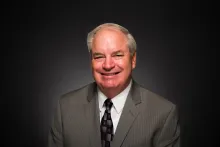
Robin Webber was born in Chicago, Illinois, in 1951, but has lived most of his life in California. He has been a part of the Church of God community since 1963. He attended Ambassador College in Pasadena from 1969-1973. He majored in theology and history.
Mr. Webber's interest remains in the study of history, socio-economics and literature. Over the years, he has offered his services to museums as a docent to share his enthusiasm and passions regarding these areas of expertise.
When time permits, he loves to go mountain biking on nearby ranch land and meet his wife as she hikes toward him.
