
Robin S Webber
This transcript was generated by AI and may contain errors. It is provided to assist those who may not be able to listen to the message.
The title of my message is simply this. It's a few words, but let's put it all together. Christ Passover Discipleship. Christ Passover Discipleship. Or we could say, Discipling by Lazarus Story. Jesus of Nazareth was the divine rabbi.
He is the spiritual teacher that our Heavenly Father sent to us.
And therefore, when we think of a disciple, a disciple is one that learns from the rabbi, from the teacher, and not only learns what to think, but how to think, to get into the mind, to get into the heart of the one that is doing the teaching. And this, after all, then is the divine master teacher. And I want to share with you some of his teaching today that will be coming out of the story of Lazarus. Let's step back for just a second and recognize that there are certain similarities between the Passover of Old, back in what we call the Old Testament, and the New Testament, or the New Covenant Passover, that we find rendered in the New Testament that Jesus brought to us. The New Testament Passover that we're going to experience is not merely an event. Is it an event? Yes, but I said it's not merely an event. What we are demonstrating, and what we are bonding with God in that covenant as we ratify it by partaking of the bread and the wine, is to exist within God and within Jesus Christ every day and every moment, in every action, in every thought, in every word, and in every need. That's the calling that is set before us. When we partake of that bread and we partake of that wine, that is based upon faith. That means believing faith, not just faith, but believing faith beyond the moment.
Now, when we think of the Passover of old and the Moses that was back in the Old Testament, there were a number of miracles and interventions by God even before that night of the Passover.
And when we think of the New Testament Passover, again that second Moses, that greater Moses, the greatest of deliverers, also had events and had miracles preceding that Passover.
And that's what I'd like to draw upon today, and that is in the discussion of the story of Lazarus. And I'm actually going to be giving you seven points out of the story. We're going to be spending a lot of time in that story when we go through John 11. But there's going to be points that I want to draw out. I hope that you'll write them down. I certainly, by God's grace and hopefully by his inspiration, don't want to waste your time or my time in going through this. It's been very meaningful to me, and I hope it'll be meaningful to you because each of these points is going to lead to why we partake of that bread. And each of these points is going to be an ingredient in that bread. Not just something that we partake of, and then that's it, but something that is living, because Jesus is that living bread of life that dwells in us. And as we partake of that wine that represents his blood, that we're really saying something. This is not just a ritual. This is not just showing up and, oh, here we go another year. No, this is our covenant. This is our bonding.
This is the intimacy that God desires out of you and me to witness that we truly believe that our Father above sent his Son to this earth and that that Son was none other than Jesus of Nazareth, as we'll see in the story. So let's get right into it. And again, these points that I'm going to share out of the story—and you might want to start turning over to John 11—but this is going to help us kind of fulfill the admonition in 1 Corinthians 11 and verse 28 where it says, But let a man and or woman examine themselves, and so let them partake and drink of that cup.
And that's what we're doing today together as a family of God, as friends, as those that are going through this life together and more than ever needing to know, especially after this year, needing to know that we do not walk alone, that there is a God, that we are in covenant with him, and that there is a purpose that is being worked out here below.
Before you go to John 11—and pardon me a second—I'm going to give you the first point, because we're going to actually start somewhere else before I take you to John 11. Here's the first point that I would like to give you. Point number one, Christ lived on earth to serve a purpose. Christ lived on this earth to serve a purpose, and that's the first point we're going to draw from the story of Lazarus. But we've actually got to start somewhere else. Join me if you would in Luke 9, the Gospel of Luke, Luke 9 verse 51.
If you want to open up your Bible, wherever you are in Arizona or California or Nevada, I really welcome you, because that's why God's given us the Bible. When we open up our Bibles, that's probably a hint that we have an open heart, and we really want to learn. Luke 9 and verse 51. Allow me to set the stage here. Jesus was drawn towards the end of his ministry, and the time had come. The time was ripe to take the next step. He'd be going down to Jerusalem off and on to observe the different festivals, which you can read about in the Gospel.
But he'd spent a lot of his time up in Galilee. He'd spent a lot of his time up in Samaria, but now the time was ripe. The time was near. And we'll notice in Luke 9 and verse 51, where it says this, Now it came to pass, when the time had come for him to be received up, that he steadfastly set his face to go to Jerusalem.
There was a movement. There was a change of direction. And what I want to share with you is the verb and the energy and the wherewithal that comes out of this verse. Notice what it says. The time had come. And then it says, And he steadfastly he locked in, and nothing was going to alter or distract him from making that straight line towards Jerusalem. And he set his face to go.
He was determined one direction. He set his face, and his face was only an outer part of what his heart and that spirit that was within him was telling him to set his face to go to Jerusalem. Jerusalem is the bullseye of biblical news. It's the bullseye of prophecy. And the messianic prophecies were coming to the fore regarding this Lamb of God, regarding this suffering servant out of Isaiah 53.
And here he was, the one in which heaven and earth came together, the Son of God, the Son of Man. He was headed to Jerusalem, the very place that down through human history where the temple was, where heaven and earth again integrated became one, where God touched that city again and again and again. And that he was moved, and he was driven to go to Jerusalem, recognizing that that ultimately was going to be the fulfillment of prophecy, and that he would be sacrificed on that altar of Golgotha for you and for me.
Let's understand something here to begin with. Christ lived on this earth and to serve a purpose, and he would not be distracted. Join me if you would in John 1737. The Gospel of John, John 1737. This is his discussion with Pontius Pilate, and in John 1737 we'll be acquainted with this. Now I'm just going to use this as a principle. Pilate, the Roman governor, therefore said, are you a king then?
And Jesus answered, you say rightly that I am born, I am a king, and for this cause I was born, and for this cause I have come into the world, that I should bear witness to the truth, and everyone who is of the truth hears my voice. For this purpose, I was born. For this purpose, I came to this earth.
How many of us can call back and remember when God began working with our parents or grandparents, or as it began to strike us and resonate with us? Why was I born? What is the purpose? Why is man made in God's image and after his likeness? And Jesus of Nazareth spearheaded that purpose. Join me if you would in John 4.34. In John 4 and verse 34.
Notice what it says here, where he defines what he's doing. Jesus said to them, My food is to do the will of him who sent me, and to finish notice his work. That was his meat.
That's what was his driving force. That is what saturated him. That's why he drew breath in this fleshly tabernacle. He was commissioned and sent by the Father above, and he came voluntarily to fulfill that work. And now he was headed to Jerusalem for a part, not the end, because there's more to come after that, but he recognized that he was going to Jerusalem for a purpose, to be sacrificed for you and for me. Now, when you think about that for a moment, it's interesting what he said about being born when Pilate said, Are you a king? And he said, And for this purpose, I was born. But it's completely different. I want you to think about this from him. When Jesus was on this earth, he would be offered up in sacrifice.
He would have to bear a cross before he bore a crown. And when we think about that, as we move into the New Testament Passover, that's exactly what we have to do as his followers, as his disciples, as those that are learning from him and following his example, that before we bear that crown that is mentioned in the Scriptures, we too are going to have to bear a cross.
1 Corinthians 1, verse 26. 1 Corinthians 1, verse 26. For you see your calling, brethren.
And it talks about how God calls individuals. Not many wise, not many noble are called, but God has chosen. We've been selected. We've been called. You don't join God. You don't join the church of God. That word, church, is speaking of a spiritual organism of those that come and worship God, and live for God, and follow the example of Jesus Christ in spirit and in truth, that give their life away and sacrifice just as much as he did in that proverbial sense, our proverbial sense, with what he did in the literal sense, on Golgotham. That's our calling. Why? Because when you look down here at the bottom in verse 31, that as it is written, he who glories, let him glory in the Lord, that no flesh of and by itself should be glorified, but all the glory goes to God. Here's what I want to share with you after point one. Please listen. When we partake of the bread and the wine on the evening of Passover, we testify to the teaching of the divine rabbi, Jesus of Nazareth, the Son of Man, the Son of God, who now is exalted in heaven above at the right hand of God. And we are stating, reconfirming our commitment and our willingness to live likewise by the indwelling of his Spirit, that it is not our will, but God's will, and that we live and we breathe to serve the purpose of our heavenly Father that loves us and his Son that gave his life for us.
Point number one, then again, just to—there is a purpose that's being worked out here below. We are a creation from clay, but more than that, because Christ has come, we are a new creation—new creation by God's grace. With that point in mind, then, let's go to John and pick up the story. John 11. Now, the reason I'm dealing with Lazarus today is because this story actually happened about 30 days outside of the Passover—about 30 days. And we're just a little bit more than that. So, in a sense, we're talking about a real Son of Man, a real Son of God, somebody that really was going through this, and people that were with him. So, we are, in a sense, in real time with a real story before you. Notice what it says in John 11, verse 1. Now, a man named Lazarus was sick, and he was from Bethany. Now, Bethany is just about two miles outside of Bethlehem. So, what Jesus was doing is, once he set his mind to Jerusalem, he made that straight line, and he came right up to Jerusalem. And it was like he was knocking on the door. Bethany was like the front doormat to Jerusalem. And in that sense, he was beginning to say and to announce, I am coming. I am the King.
I am that suffering servant. I'm going to be the Lamb of God. I am here. I am ready to continue to inaugurate that kingdom experience. I'm going to bring about that greater exodus of drawing people out of this world towards a greater Promised Land than that which even ancient Israel saw. And so, he's right there at Bethany. And it says here, which was in the…he says now, a man, Lazarus, was sick and was from Bethany, and the village of Mary and her sister, Martha. And this Mary, whose brother Lazarus now lay sick, was the same one who poured perfume on the Lord and wiped his feet with her hair. So, the sister sent words to Jesus, Lord, the one you, emphyse you, love, is sick. And when he had heard this, Jesus said, well, this sickness will not end in death. No, it is for God's glory, so that God's Son may be glorified through it. And Jesus loved Martha and her sister and Lazarus. And when he heard that Lazarus was sick, he stayed where he was two more days. Two more days! What's that about? Then he said to the disciples, let us go back to Judea. But Rabbi, they said, a short while ago, the Jews tried to stone you, and yet you are going back there. And Jesus answered, are there not twelve hours of daylight? A man who walks by day will not stumble, for he sees by this road, slighted as when he walks by night, and that he stumbles, for he has no light. Now verse 11. And after he had said this, he went on to tell them, our friend—there's a collective there—our friend—Lazarus has fallen asleep, but I'm going to go there to wake him up. His disciples replied, Lord, if he sleeps, he'll get better. Jesus had been speaking of his death, but his disciples thought he meant natural sleep. So then he told them plainly, Lazarus is dead, and for your sake I am glad I was not there, so that you may believe, but let us go to him. And then Thomas said to the rest of the disciples, let us go, that we may die with him. Again, just a side point, sometimes we kind of freeze frame this gentleman, Didymus, for Thomas being doubting Thomas. But that's a whole other lesson about moving towards the Passover—is to stop judging people by just one thing that they've done. There's a bigger story about Thomas than what he did later on. He wanted to go up with Jesus, even die with him.
Maybe a thought as we move towards the New Testament Passover, to have a wider scope like Jesus did, and not just to put people in a notch and to leave them there, but to recognize that we all have strengths and weaknesses that God uses. Then notice what it says, on his arrival, Jesus found Lazarus had already been in the tomb for four days, and Bethany was less than two miles from Jerusalem, and many Jews had come to Martha and Mary to comfort them in the loss of the brother. And when Martha heard that Jesus is coming, she went out to the tomb, but Mary stayed at home. Two sisters, two friends. Interesting. Then notice verse 21, Lord, Martha said to Jesus, if you had been here, my brother would not have died.
She kind of let him know her mind. You ever done that? You know, when you're just pressed up against something? And up to this point now, I want to share point two and point three with you. The first point was that we want to, again, live with purpose, just as Jesus lived with purpose, and not be distracted, not to be uprooted from that purpose. Point number two, then, point number two, that we find here, God is the master of timing beyond the moment. When you partake of that bread and wine at the Passover service, you are saying that you worship a God that moves beyond the moment, that is the Alpha and the Omega, and not only created time, but is the master of timing. One that moves beyond the moment in a way that we don't understand. Please jot down Isaiah 55, 7 through 8. And we're reminded that God Himself gives self-disclosure. My ways are not your ways. My thoughts are not your thoughts. Just simply are not. And to recognize that Jesus Christ was working on a purpose here. He came on the fourth day. He didn't leave immediately to tend to His dear friend Lazarus. There was a reason a miracle was going to occur. A miracle that was going to give God glory also point to what God was going to do with him 30 days later.
And that was that the Jews basically believed that the Spirit hovered above a grave for three days. That was a part of their culture. That was a part of their belief system. So Jesus purposefully waited beyond that. It came the fourth day when it was all over dead. It wasn't like the story of Romeo and Juliet where one of them rises from the dead. There was nothing to rise from. The exclamation point of death was real. And that's when Jesus moved in because with this friend of His that what He was going to do, He wanted no excuse, no thought that there was any hocus pocus or abracadabra, and that a miracle was going to be done. Now, Martha and Mary didn't know that at the time, but Jesus knew exactly what He was going to do. And God the Father and Jesus Christ know exactly what they are doing with us to prepare us towards being with them for eternity, even when we are stuck in the moment. So let's understand point number two. Jesus is the master of timing beyond the moment. And to recognize that sometimes, you know, that those moments can seem forever. Join me if you would in 2 Corinthians 4. 2 Corinthians 4 verse 16. God doesn't keep time like we do.
No, we live in this western world where we live by the minute, and I realize those minutes can sometimes seem like hours, absolutely. But notice what it says in verse 16. Therefore we do not lose heart, even though our outward man is perishing, yet the inward man is being renewed day by day.
That's what we say when we partake of the bread and the wine. It only takes a couple of seconds unless you savor it the bread and the wine. But what we're doing is we're saying these symbolic items that we partake. While they may in a sense go down into our system, but for a moment there is something that is more deeply rooted beyond our flesh, beyond our blood, but of the Spirit, of the Spirit, that we believe that we are here for a purpose, and point number one, but to recognize that God works beyond our timing, beyond when we think things ought to be. And therefore we wait on the Lord, that famous phrase again and again, we wait on the Lord. How long, O Lord? How long, O Lord? Only God knows.
And that puts pressure on us, but God is not making trinkets. He's making jewels. He takes this hunk of coal, me. He takes that hunk of coal, you, and is creating a diamond for his joy and for his pleasure, for all eternity, to be with them. Verse 17, for our light affliction, which is but for a moment, is working for us a far more exceeding and eternal weight of glory.
We think of Mary and Martha, and we think they're saying, where were you?
Where were you? You should have been here.
You weren't here on time.
We're giving our existence to an ageless God who is working and creating in us this new creation that is going to be eternal. When you partake of that bread and that wine, you are saying that you understand simply this, that God is the master of timing, and you give your watch. You give your clock, but more than that, you give your heart in faith that God will answer at the right time and in the right way and never be late, even if it is in death. Point number three. Notice what it says here in John 11.21, where it says, yes, verse 21, Lord, Martha said to Jesus, if you had been here, my brother would not have died.
The blame game. We've all done it. We've all done it. We do it too.
Those are nearest and dearest to us, and God is nearest and dearest to us, and sometimes you say, God, where were you? Why weren't you here again? I want to share a thought beyond timing, but the next point I want to share with you is point number three, and that is simply this. To recognize that in all of this, God sees everything.
God sees everything here below. Let's think about this for a moment.
And this is what we have to come to understand about God and about Jesus Christ, who is God in the flesh and now is exalted at the right throne of God.
She was having—and this was a dear friend and a disciple of Jesus—but he was taking her to a new and a more expanded step.
That Jesus was not just a friend. He was not just a good man. He was not just a prophet, but he was indeed the Son of God. He was very God, encapsulated in flesh, and that same God that it is pre-existence that they worshiped as along with the—they worshiped in the Old Testament—is to recognize that he sees everything. He sees everything. Nothing is amiss. Let's just go to Psalm 139 for a moment. Psalm 139. Just pick up a thought here to encourage us as we come up to the New Testament Passover.
Where it says this in verse 7, Where can I go from your Spirit? Or where can I flee from your presence? If I sin into heaven, you are there, and if I make my bed in the grave, behold, you are there. And it goes on to say, If I take the wings of the morning and dwell in the uttermost parts of the sea, even there your hand shall leave me. Nothing, nothing escapes God's attention or desire to reach down and help us in the right way and at the right time beyond the moment. No, he was not just a local deity. See, that's what people were used to in the world of antiquity. They had idols, so they had to take their idols with them. It was something that they could grab ahold of, rather than recognizing that God is all-knowing, all-wise, everywhere, sees everything.
Nothing is missed by him. As we know, Jesus says he even knows the sparrow that lights to the ground.
He even knows the sparrow that is thrown in to seal the bargain that nobody else wanted. That's you, and that's me. That's the confidence and the faith that we are to have by the gift of God, because that faith is a gift of God. It's one of the gifts of the Spirit. It's a part of that trunk of the tree that David was talking about in the first message. It's a gift that we expand upon and that we grow upon. And in all of this, what I'm sharing today is not to discourage you of where we have been, but in 2021, where we can grow in grace and to know the extent and the immensity of God's love and his attention to each and every one of us. Notice then what it says here, just going a step further, which will take us to the next point.
It says, again, Lord, Martha said, if you had been here, my brother would not have died, but I know that even now God will give you whatever you ask. And Jesus said, your brother will rise again in the resurrection at the last day. And Jesus said to her, I am the resurrection and the life, and he who believes in me will live even though he dies, and whoever lives and believes in me will never die. And the question comes, do you believe this? Jesus was telling her something profound. Absolutely. And the question I have for you as we come up to the New Testament Passover of what we've been through this year, that no matter what we have been through, do we believe that Jesus is indeed the resurrection and the life, and that even if we die, that we shall live again. This is what he was telling Martha. And absolutely, and to recognize, the bottom line is this. The fourth point I want to give you is this, that we have faith in the death and the life of Jesus Christ. The faith in the death and the life Passover, a lamb was slain. But unlike the Old Testament, that lamb does not remain dead, but is resurrected after three days and three nights.
And that lamb now is exalted at the right hand of God. In Revelation 1, and I think I will turn it there real quickly, Revelation 1, if you'll join me there for a second, in Revelation 1, let's notice what it says. And the first chapter of Revelation, as I mentioned a week or so ago to all of you, is a reminder. It's not only prophetic, and it is prophetic, but the first chapter reminds us that Jesus is not just one more dead lamb that died in the environs of Jerusalem. He's alive. He is living. And when I saw him, verse 70, I fell at his feet as dead, but he laid his right hand on me, saying to me, Do not be afraid. I am the first and the last. I am he who lives and was dead, and behold, I am alive forever. So be it. And I have the keys of the grave and of death. I own both worlds. I own both worlds. I've been in both worlds.
And I'm now beyond both worlds. Death is nothing to me. The grave, the grave that we see in Lazarus, which is about to be opened in a month later, his grave opening up, is but a forerunner of what God wants to do for you and me, no matter what happens. That we have that confidence, that we have that assuredly by the very word of God, that Jesus is living and is working and serving before God the Father for you and for me. When we partake of the bread and the wine, that is what we're saying, that we have believing and living and loving faith in the one that gave his life for us and his Father that is right there on the throne with them. Let's take it a step further then. Yes, Lord, she told him, I believe that you are Christ, the Son of God who has come into the world. And after she had said this, she went back and called her sister Mary. The teacher is here, she said, and is asking for you. And when Mary heard this, she got up quickly and went to him. Now Jesus had not entered the village, but was still at the place where Martha had met him. And everybody grieves differently. Martha was kind of right out there and at Christ, and Martha was probably a different personality and just needed that quiet time. But now she is there with Jesus. And when the Jews had been with Mary in the house comforting her, notice how quickly she got up and went out. They followed her, supposing she was going to the tomb to mourn her, mourn there. And when Mary reached the place where Jesus was and saw him, she fell as a saint and said, Lord, if you had been here, my brother would not have died. Sounds like two peas in a pod, right? With her sister, Martha. But that's how she felt. Jesus can take it. God can take our raw human feelings and take that clay and begin to work with it towards our understanding and towards His glory. And when Jesus saw her weeping, and the Jews who had come along with her also weeping, He was deeply moved in spirit and troubled. Where have you laid Him? He asked. Come and see, Lord, they replied, and Jesus wept.
And then the Jews said, look and see how He loved Him. And that then takes us to the next point.
Point number five is to recognize that when we partake of the bread and the wine, we recognize God's great love and great compassion for whatever we're going through.
He's right there. And here is the one who is the Son of Man and the Son of God in mystery, encapsulated in one being, known as Jesus of Nazareth, born in Bethlehem, and now in Bethany. And he's got Mary who he's talked to, Martha who he's talked to, Mary who might have been down on the dirt. I don't know. I'm not that old. I wasn't there, but I can only picture the grief that was coming out of Mary. She might have been holding onto his legs, just down in the dust, just despondent. You were his friend. You were the one that loved him. Where were you? And then see what he did here. It says here that when you look at it, he was deeply moved and troubled. And wherever you laid him, that was the question. And the Jews stepped back and said, how do you love him? I recognize that this verse is taken in two different ways, and often as mentioned in the sense that he was troubled because he saw the non-belief that was around him. Of course, Dad is dead until Jesus came. Okay, are you with me?
They didn't think they were going to see their dear friend Lazarus again.
Dead, like Rover, dead, all over.
And there could have been that unbelief. There could have been that distancing.
There is a distance. There is a great separation between the living and the dead.
And he might have, in that sense, said, oh, come on. Don't you know that this is why I'm here?
But may I suggest, and I think the Greek bears this out because John was written to the Greek community that I think it was an interruption. It was an amazement in Jesus at the moment, being not only the Son of God, but the Son of Man, and having those human, human feelings in him.
He mourned. He mourned for Mary. He mourned for Martha. He mourned in that sense for that state that Lazarus was in. And it says he wept. And it is in that framework of that tear.
It's in that framework that God the Father wants us to see his Son and to see himself, the longing and the emotion and the compassion that doesn't drown in emotion. It is real, but there is solution. And that's about to happen right now. And that is the same Son of God that we can go to in his name to our Father, who is that spirit of experience who says in Hebrews 4 that, you know, he's likened unto us. He gets it. He knows what you and I are going through in this life of flesh and blood. He knows what it feels like to be separated from a loved one.
And then we notice what happens here. We notice what happens here.
Jesus, once more deeply moved, came to the tomb, and it was a cave with a stone laid across the entrance. Take away the stone. Take away the barrier. Taking away the stone was a tremendous statement. Down come the barriers. Rather than just simply opening up the Red Sea, like the first Moses did in the first Exodus, Jesus says, rather than opening up the sea, open up the tomb. Roll the stone away. Nothing is too heavy here to do. Notice what it says here.
Then Jesus said, I tell you that if you believed you would see the glory of God, so they took away the stone. Then Jesus looked up and said, Father, I thank you that you have heard me. I know that you always hear me, but I said this for the benefit of the people standing here, that they may believe that you sent me. When he had said this, Jesus called in a loud voice, Lazarus, come out. The dead man came out, his hands and feet wrapped with strips of linen and a cloth around his face. Then Jesus said to them, take off their gray clothes and let him go.
We're going to wrap this up now. Just a couple more points.
What we learned out of this is here, point number six.
Beautiful, beautiful. Are you with me, friends? In Arizona, in Nevada, in California, these are beautiful words. He's teaching us as the rabbi, as the divine rabbi for we that follow him and his father. Notice what it says here. This is so neat. I know, look who says, I thank you that you have heard me, and I know that you always hear me. That's beautiful. That's just absolutely beautiful. Join me if you would in Psalm 66. In Psalm 66, and let's pick up the thought if we could in verse 19.
A Jewish lad growing up would be rehearsing the scriptures that were given at that time. They would draw upon them. Many a time, the lads had basically memorized the Bible.
Maybe Jesus was thinking about this. Blessed be God, who has not turned away my prayer—you hear me?
Those that think you're having some log jams, that your prayers are not getting above the ceiling.
Blessed be God, who has turned away my prayer, nor his mercy from me.
When we partake of the bread and the wine, and we renew our terms under the new covenant, with the one that gave it—God the Father, and the one that sealed it by his blood—Jesus Christ— we are saying that we have an open channel to the throne room of God up above.
Think about that. That we testify by that bread and that wine that we take.
That God is always awake. That he neither slumbers nor sleeps, but is awake.
Remember it wasn't Elijah that was chiding the priest of Baal? A little bit louder? Louder? Hello up there? Anybody? Louder? Maybe he's asleep? We have a God that neither sleeps nor slumbers. And he is so tuned in to those that have surrendered their lives to him in a covenant that is sealed by the blood of his own Son, that he always hears us.
When we partake of that bread and the wine, we're saying in living and loving and believing faith that God hears us and will this coming year, no matter what comes. Are you with me? Isn't that beautiful? Isn't that incredible? Isn't that wonderful? Then notice what he says here at the end, where it says, and when he had said this, Jesus called in a loud voice, saying, Lazarus, come out.
Why did he say that in a loud voice? Very important. You need to understand that the shamans, the magi, the magicians, the different peoples and the different religions, they oftentimes did a lot of chanting, things that, you know, some secret Gnostic language, a lot of mumbling, a lot of chanting. That's why God says, don't do a lot of chanting. What that's really not talking about is not just saying, Holy, Holy, Holy, because that can be understood, but a lot of mumbo-jumbo, abracadabra, you know, pig Latin, things that people couldn't understand. Now, Jesus wanted the audience to know that he was drawing upon his Father, who always heard him, and he did that with a loud voice, a loud voice, so that everybody knew the witness. He didn't do it because God was asleep. He did it for all of us, and that God might use his Son, that all might know that God the Father sent this rabbi, this divine rabbi, to teach us, to guide us, to put into us even this example in preparing us for the New Testament Passover of what he did so long ago. Join me over in John 7, verse 37. In John 7, remember how he said with a loud voice, with a loud voice, Lazarus' rise? It's not the only time Jesus used a loud voice. When God opens our hearts and opens our minds, we hear the loudness of Jesus' message. Notice what it says in John 7. This was on the seventh day of the Feast of Tabernacles, the day of the water festival. It says in John 7, verse 37, on the last day, that great day of the feast that the Jews recognized as that last day of the Feast of Tabernacles, when the water festival had come to completion after seven days, Jesus stood and cried out, cried out with a loud voice. The Master of Timing came in with a loud, dynamic voice that nobody, nobody could deny. If anyone thirst, let him come to me and drink. And he who believes in me, as the Scripture said, out of this heart will flow rivers of living water. This is the loud voice of today. Not my voice, but the voice that comes from Scripture. The voice that came as that second and greater Moses, that moved people more than through water, but brought a man through a tomb from death to life for you and I to gain faith, to gain spiritual vitamins, as we come up to the New Testament Passover, to recognize these points that have been given as we partake of the bread and the wine. A point to number one to recognize that we live a purpose as Jesus himself was called and born for a purpose, and we have been born from above, not because of who we are, but who God is and has given us a purpose. We've come to understand point number two, that God is the Master of Timing, and he will intervene beyond our good for his perfection, that not only we will be served, but that all of humanity will be served, and that God alone will be glorified. We will come to point number three to recognize that God, even when we don't see him in front of us, is everywhere, everywhere, and knows exactly what's going on. Point number four, we will know that the aspect of the faith and the death and the life of Jesus Christ. And then to recognize his compassion, to recognize then that God always hears, and last but not least, that that loud voice calls out to us today. Come, come to that New Testament Passover. Come in faith. Come in confidence. Come in knowing that I willingly gave my life for you. And God the Father says, I gave my son for you.
Want to see you there. Oh yes, we've done this. We've done that this year. We have stumbled.
But to recognize that I have given you life beyond the grave, and I give you a new life.
You are a new creation. You are a new way of being a man, a new way of being a woman, a new way of being a spiritual community. Come, the loud voice, the lessons and the story of what the divine rabbi, Jesus Christ, disciples us on this Holy Sabbath day about Lazarus story.
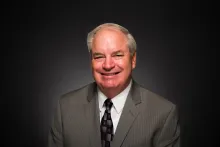
Robin Webber was born in Chicago, Illinois, in 1951, but has lived most of his life in California. He has been a part of the Church of God community since 1963. He attended Ambassador College in Pasadena from 1969-1973. He majored in theology and history.
Mr. Webber's interest remains in the study of history, socio-economics and literature. Over the years, he has offered his services to museums as a docent to share his enthusiasm and passions regarding these areas of expertise.
When time permits, he loves to go mountain biking on nearby ranch land and meet his wife as she hikes toward him.
