

Robin S Webber
"Suppose" Christ by His Spirit comes knocking on the "door of your heart" (Rev. 3:20)---what will be your response? The big question is not if He will knock, but how will you respond! As we approach the New Testament Passover (a festival of faith) and are requested to examine ourselves as to the meaning of the bread and wine and WHO it represents----let's explore Moses' relationship with the "I Am" on Mt. Sinai (Exodus 3) and our growing relationship with "The I Am" of Mt. Zion (Heb. 12:22-24) who are One in the same.
Okay, well, we want to welcome everybody that is joining us today, whether it's here on the webcast or in weeks, months, sometimes years down the line as these videos get out and stay out for a long time. And here we are, as we heard in the first message today, that we are just weeks away from the spring festivals with the festival of the Passover of the New Covenant to be followed by the days of Unleavened Bread. And so we will be addressing that subject today following the fine introduction that our elder Bob Gardinhire gave us. If you can go way back, you'll remember a cute little phrase. It was somewhat of a nonsensical English verse that was given further birth by, I believe it was in some movie, etc., but we used to also use it in the old spokesman's clubs that we would have in the church. And it goes simply like this, Moses supposes his tozas are roses. Remember that one? Or am I the only one?
I'm one of the younger people here, so my mind's still—no, I'm just joking. So, Moses supposes his tozas are roses. Let's have some fun. You know, church should be fun for a moment. On the count of three, let's see how you all do on this. Okay? One, two, three. Moses supposes his tozas are roses. Okay. I think we have to work on that for a Sabbath or two till we get it right. But let's just go back again. Moses suppo—not you, but Moses supposes his tozas are roses. And the word that I want to center on as we come up to the spring festivals is simply this, is the term suppose. Because sometimes, just like Moses, we do a lot of supposes when God comes knocking at our door. And so let's talk about that today, because the people of God down through the ages to our time, sometimes when God does knock on their door, they stop, and their supposing tends to stymie any possible growth in service to God and or to others. And what better time to consider this right now as we approach the New Testament Passover?
As was mentioned in the beginning message, but bears witness as well in this message, because sometimes they are listened to separately. It is simply this, is the admonition of Paul to the early church. Again in 1 Corinthians 11 verse 28, "'Let a man, and in this day and age, let a man and woman,' how's that, ladies, let a man and or a woman examine themselves." In other words, to take it to heart, "'and so let him eat of the bread and drink of the cup.'" And to remember that this festival of the New Testament Passover is not just simply an event. It's not just simply an experience. It speaks to God as we partake of that bread and as we drink of that wine.
It speaks of an existence, our dedication, our renewing of that covenant that comes from above.
And to recognize that that covenant is not from Mount Sinai. That was a start, but this is the covenant that comes up before, as it says in the book of Hebrews, Zion. It is an expansion based upon the foundation that was in the Old Testament. And so therefore we take it very, very seriously.
I have a question for you. Have you ever noticed that life is what's happening, that you're not prepared for? And that even tells me as a follower of Jesus Christ, with God the Father and Jesus Christ as our audience looking down upon us and molding and shaping us, that we also need to come to expect the unexpected. And it's going to hit us. I've been in this way of life for 60 years and as an adult for 50 years and more. And to recognize just when I think I'm on the same trajectory as God, He has some work to do with me. He's going to touch me and He's going to stretch me.
Maybe I'm the only one. I'm looking at your faces. But to recognize that it's one thing to go down into the pool of baptism, it's another to come up and then to begin to allow God to shape you, to mold you, to strengthen us. And that strength only comes by the pressure that He allows to come into our life. One thing that happens when we have that proverbial knock on the door, there's three questions that might come up. You might want to jot these down. They're very simple.
And that is simply this. The three questions are, what now? Hello? What now?
But as that question is formulated and resonates in our mind, then we get into what I call the, well, what ifs. Number one is what now. Then you find out what the now is and what the what is of the what now. Then you go, not good timing, not good timing, not up to it, not ready, got the wrong person. And then it is who's calling? Who's calling? So what now?
We come up with our what ifs, and then normally who is calling? It's all W words.
We'll hopefully generate a right response. Responses, though, can come this way very simply.
Once that knock, that touch upon us and our life comes, you can kind of come up with three answers.
Number one, I won't. I won't. Number two, I can't. I can't. And number three, I will. Sometimes it takes a while to get to the I will as we move through the machinations of life. I would say, and I hope I think I'm realistic and not overly generous, I think most disciples of Jesus Christ and children of the Father will at times disregard the I won't. They'll say, it's just not in me.
I don't have the ability. I don't have the strength. I don't have the wherewithal.
And what can happen is that they could get stuck on that so much that I can't, that their I can't actually ultimately becomes an I won't. And can I say something, friends?
Wait, we don't want to become I won't Christians. Are you with me? I think we're talking to the right people here. And we need to understand that. And so there's a story that I want to share with you. It's a story that all of us have heard at one time or another, but I think it's a good story because it'll tell us a little bit about ourselves as we go through this instruction.
If you were turned over to Exodus 3, Exodus 3, and it's the story of Moses. Moses' story is our story. His time up on the mountain is our time up in the mountain. The way he receives the instruction of God is sometimes how we receive the instruction and we ponder and we wonder. And are you ready? What's our word? And we suppose. We're going to go through this story, which I think is during this time for us to examine ourselves, some of us that have partaken of the Passover for 60, 50 years, to recognize we may all know the verses, but how deep do we go in our examination? How responsive are we to the touch, to the word, to the voice of God through His Spirit, motivating and shaping us? So we're going to take a look at this. And before any further, allow me to give you the title of this message, and that'll be my SPS2.
Moving beyond our human moments. Now, I know you look at me. I'm your pastor. I'm an elder.
Can I tell you something? I have moments. Okay. To use bad English, I am one. I'm a human being, and I'm still growing in grace and knowledge, and I want to. But sometimes we get stuck, because we're not ready for God's call or that moment, or when He's coming at us, or simply, I can't. And as a growing and developing Christian, I want to get beyond the camps.
So are we all in Exodus 3? Because we're going to stay in there for a while, put on your seatbelts, and here we go. Notice what it says in chapter 3 in verse 1.
Now, Moses was tending the flock of Jethro, his father-in-law, the priest of Midian, and he led the flock to the banks of the desert and came to Horeb, the mountain of God. So he's down there in that Sinai range. You know, and you've often heard me say this almost ad nauseam, but to recognize the smallest words in the English language are sometimes the most powerful and instructive in the Bible. Words like so, words like now, words like if, words like therefore.
Now, that's a two-syllable word, but that usually comes after the now because God explains himself, and then therefore, what are we going to do?
I won't. I can't. I will. How often do we have now moments that we don't expect as we begin a day and we need to lean and listen to God? And notice what it says here. And the angel of the Lord appeared to him in a flame from the midst of a bush, and some looked, and behold, the bush was burning with fire, but the bush was not consumed. In other words, something is going on here. This is not normal. And then Moses said, I will now turn aside and see this great sight why the bush does not burn. Now, it's very interesting in verse 2. It says, an angel of the Lord, but this was the word there is out of the Hebrew, and it really defines messenger, messenger. This was not a spiritually created son of God, which we would call the angelic realm. This was something beyond our physical creation, beyond the spiritual creation of angels. This was unique. This was an existence beyond nature. And this was God's calling card to attract Moses to him, to a spot. Are you ready? For a now moment that Moses didn't necessarily expect. And then Moses said, I will now turn aside and see this great sight why the bush does not burn. So when the Lord saw that he turned aside to look, notice now God called to him from the midst of the bush and said, Moses, Moses. And he said, here I am. Now, something to kind of look at here as we're moving into the story. So we notice it is not just an angel of the Lord, but now it's further defined that this, that is in the midst of this bush that is burning, that does not decay. It is no other than God himself. And notice now, very important, Moses' initial response is positive. He says, here I am.
Sounds very much like Isaiah 6 in verse 8, where God says, whom then shall we send before us?
And the voice comes back, here I am. Send me. So you might say at first that Moses gets out of the blocks pretty good. He says, present and ready to listen. And then he said, do not draw, then the voice came saying, do not draw near to this place. Take your sandals off for your place where you stand is holy ground. Now that's not something an angel would say. So again, this defines God, this defines the I am. And moreover, he said, I am the God, the God of your father, the God of Abraham, the God of Isaac, and the God of Jacob. And Moses hit his face, for he was afraid to look upon God.
So there is no mistaking now where the encounter is between a human being and deity. And the Lord said, I have surely seen the oppression of my people who are in Egypt and have heard their cry because of their taskmasters, for I know their sorrows. Now, very important pronouns say a lot.
And at the very top, it says, I have seen the oppression of, capitalized, my people.
This is a relationship. This is a love story that God is in the midst of and is directing.
For I know their sorrows. God is not an absentee landlord. Yes, Egypt has, excuse me, yes, Israel has been in Egypt now for some centuries.
It went south in their relationship with the Egyptians. The Egyptians enslaved them, and they are living a living death every day as far as being slaves under the Egyptian Empire.
I know their sorrows. That's going to be key later on. So I have come down to deliver them out of the hand of the Egyptians and to bring them up to a land flowing with milk and honey to the place of the Canaanites and the Hittites and the Amorites and the parasites and all the Hittites and the Jebusites, those people that were in the environs of Jerusalem.
So here we have a story of how God views his creation. God is not an absentee landlord. He is not stuck in the heavens. God always looks at heaven and earth as all in all. Heaven and earth.
It's a man that keeps earth to himself and pushes God up in heaven, being distant, being absent.
God says, I am here. I see what's happening on this earth, and I now come down and to bring them up from the land to a good in a large land, to a land flowing with milk and honey to the place of the Canaanites. Oh, and I already mentioned that. Pardon me. And to recognize then that he was going to deliver on a promise. You can just jot down Genesis 17.8, where he made a promise to Abraham that his progeny, his descendants, would one day be in that land. Well, you know, that's, that was 500 years before it. Is God kind of losing it up? You know, they do call them the ancient days. So did he forget something along the way? No. God acts when the timing is right.
So now notice verse 10. Now we're going to get into some interesting stuff. So it says, Come now, therefore. That sounds inviting, doesn't it? Join what I'm about to do. Come now.
Therefore, and I will send you to Pharaoh that you may bring my people.
Now, Moses is one of those people, but they belong to God. They belong to God.
The children of Israel. And I will take them out of Egypt.
Now, one of the biggest words in all of the Bible that define human nature and us as the spiritual Israel of God today, one of those little tiny words, but, okay, here we go. Get ready.
But Moses said to God, Who am I that I should go to Pharaoh, that I should bring the children of Israel out of Egypt?
So God says, We're ready. Take off. But Moses kind of goes, But. So there's going to be a hurdle that's going to have to be overcome. Just a question to bring us all. Sometimes when the word of God is speaking to us, either the prompting of the Spirit in us and or we're reading something and God's Spirit is guiding us to take something. And we go, Oh, we're going and we go, Yeah, yeah, yeah, but, but, but. And it might end up with no, no, no.
Rather than recognizing that God is personally dealing with us. And he said, Who am I?
Moses. So Moses is going to have an easy back out. Okay, if you're God, then who am I? Well, the Who am I, if you go back to Moses, let's understand something because God never has an accident. He knows the experience of Moses. Moses was the son of, of the, of the princess of Egypt.
Moses later as an adult and Josephus brings this out, was the conqueror of Ethiopia, the conqueror of Ethiopia. His Egyptian name was Murmashoi Kinkare. And he was lauded. And Josephus mentions him. And then not only was he able to lead men in an organized manner into battle, but then he'd been what? For 40 years. He'd been a shepherd. Do you see what I'm talking about?
This was preparation that he did not even understand at this point of how he was going to take two and a half million people out of Egypt. That was going to be in a sense, the army of God on earth. Plus, we know about, we know about people. They can be sheepish.
They're not always lambs. Okay. And how do you keep them all together? So God knew what he was doing.
This didn't just happen. You know, sometimes we need to look back in our lives, way back here, and see what God is doing back here in preparing us for over here. God doesn't make mistakes. He doesn't make accidents. And Moses said, Who am I that I'm going to bring the—it wasn't Moses. I want to share something very important as we're coming up to the New Testament Passover, which, of course, is built upon the Passover of old. So we want to bring it all together because the Bible is one book. But to recognize, what is the first commandment? What does it say?
I am important. I am definition. I am the Lord your God who brought you out of the land of Egypt.
You always have to go with that first verse. If you have kids or grandkids, always teach them the fullness of the Ten Commandments. It says, Therefore, you shall have no other gods before you. That's the short form. God identifies Himself. I am the name of God. I am the God which brought you out of the land. It wasn't man. Moses was going to be used as, do I dare say a word, as an instrument. He was going to be used as a vehicle. He was going to be used as a biblical word, as a vessel of communication between the God of Israel and His children, the Israelites.
But He found Himself that He was going to be unworthy. And so we take a look at that.
So God is going to have some work here with Moses. Then Moses said to God, Indeed, when I come to the children of Israel and say to them, Let me just make sure I've got the... Let me just make sure I've got the words right.
So verse 13, Then. So we've had, But. Now here's another little word. You're going to get used to this because these little words are the connection. Then. So come back. Moses said to God, Indeed, when I come to the children of Israel and say to them, The God of your fathers has sent me to you. They say to me, What is His name? What shall I say to them? Now, it tells you that the people themselves over generations had lost some of the meaning about Father Abraham.
You know, when you're just think about it, even in America, when you have, by the third generation, you begin to have a distancing from the old country. Irish, Polish, Mexican, Chinese, whatever. In America, you know, the first generation comes over, the next generation kind of carries on the ways, the next generation kind of carries half of the ways. I know the Irish are still dressing green for St. Patrick's Day. Okay, that's right. But anyway, I didn't say it's all right, but they do it. Okay. And that and so you but by the third of the fourth generation, Hello? Who's your daddy? Where did you come from?
And so he said, Who am I going to say sent me from way over there across the Red Sea?
And God said to Moses, tell him this, I am who I am. And he said, Thus you shall say to the get it right. In other words, Thus you shall say to the children of Israel, I am has sent me to you.
Now that's interesting. And that's something that we need to reflect as we're coming up to the Passover table here in several weeks. God is basically saying this, you might want to jot this down. Just call me always. Just call me always. I am. He's declaring when he says I am that I am, and it's always very important to understand this is that God is declaring his nature, his nature. He is before creation. He is not created. The Word who is speaking here later on Jesus Christ was not created. That's heresy. Jesus is no less than God. All you have to do is go to John 1. So there's two things that are happening. Number one, when God says I am who I am, number one, it defines his nature. He has life inherent. Now that's hard to wrap our physical minds around, and we're used to a stopwatch in point A to point B. That's what makes God God.
Number two, it also defines his attributes. Remember how it says in Hebrews 13, 7, where it's speaking of the I am in the New Testament since, and now the I am Jesus Christ, the same yesterday, today, and forever. And that should give us, as we examine, as we're coming up to the Spring Festival, confidence. We don't have a God that is new on the job that's going to change his mind. He has one purpose in store, and he wants you and he wants me to be a part of his kingdom.
For the rest of—I've got to be careful, maybe—for the rest of forever.
It's kind of—I'm trying to use English to make it—he wants us to enter eternity with him through that second Moses, through that greater Moses, Jesus to Christ.
So that's who you're going to say he sends you. More over God said to Moses, thus you shall say to the children of Israel, the Lord God of your fathers, the God of Abraham, the God of Isaac, the God of Jacob has sent me, this is my name forever, and this is my memorial to all generations. So go and gather the elders of Israel together. He gives them an assignment.
One thing we want to remember as we are examining ourselves as we're coming up to the New Testament Passover, God will always do what only God can do. Only God could open the Red Sea.
Yes, Moses was—Charlton Heston was there with the staff. I don't know if it's Charlton, but, you know, we've all seen the movie. No, God opened up the Red Sea. Moses was a vehicle.
And we notice again here that he'll always give us something to do. Remember how we covered Lazarus a couple of weeks ago? Did I get the sermon on Lazarus here? Was that in Redlands?
Maybe that was in Redlands. Okay. But anyway, God will always—Christ brought Lazarus out of the grave. But then he said, you that are around, you take his grave clothes off. God will do what only he can do, and then he will give us assignments to partner with him. And so it goes on to say here, then, go talk to the elders. Assignment. And of J—and all of them, and tell them I have surely visited you and seen what is done in Egypt. And I have said I will bring you up out of the affliction of Egypt to the land of the Canaanites and the Hittites. God is basically saying, I'm the Lord your God who brought you out of the land of Egypt. I'm going to do this. I'm going to just skip this a little bit for sake of time. Notice what it says here. I'm going to go down further.
So, number one, one point I want to go back to just to help you with the studies. The first the first suppose what we call the first suppose occurred here in chapter two chapter three verse eleven the first suppose now we're going to get down to another one we're going to drop all the way down to chapter four so God had to work with him just when you think Moses is ready to go more going then Moses answered and said but suppose there it is and he's not talking about toes or roses then Moses and said but suppose they will will not believe me or listen to my voice because they say the Lord has not appeared to you so the Lord said to him what is that in your hand and he said I have a rod and he said cast it on the ground and so he cast it on the ground and it became a serpent and Moses fled from it now what's going to happen here and of course these come into play later on when he is in Egypt with all the different miracles that are created so what God is going to do okay I want to share something with you this is important in under him God is patient God is patient he doesn't give it to Moses come on step two now Moses says that famous but what if you're up there I'm down here what if so God's going to give him a toolbox I'm just going to explain the toolbox for a moment okay number one it's going to be the story of the the serpent but the staff goes further on in the story it's going to be about a healing where Moses puts his hand in his hair and it comes out lepros oh then he puts it back in it comes back out it's healed then he's going to go to point number three and that's the third sign where he takes some this some water it becomes blood the blood returns to be water this is kind of what we call in America you know when we talk about off broadway this is off-broadway this this is playing in Peoria right now on the top of Mount Sinai it's going to get ready for the big top the big theater when he's right there before Pharaoh with with all of those miracles and and that's what's going on here and it says here with all of that said notice verse 17 chapter 3 and I have said I will bring you up out of the affliction of Egypt to the land of the Canaanites and that's exactly what he's going to do God will not be deterred now he also says another thing here in verse 19 but I am sure that the king of Egypt will not let you go no not even by a mighty hand see God is God is in a sense a time traveler he's not trapped in time and space and he already knows even in that sense the attitude of Pharaoh and that Pharaoh is not going to let them go he knows that attitude that is going on so we take a look at that and then let's notice here and it's uh and it shall be uh verse nine verse nine it says and it's we they do not believe even these two signs then he gives him this third sign now let's notice verse 10 then Moses said to the Lord oh my Lord I am not eloquent neither before nor since you have spoken to your servant but I am slow of speech and slow of tongue so the Lord said um who has made man's mouth or who makes the mute the deaf the the seeing or the blind have not I the Lord now therefore go and I will be with your mouth and teach you what to say I have a question for you wouldn't you like to have a boss like this that's willing to bend over and make things work for you it's not like Norse mythology you know if if if Abraham had been a Viking I think there would have been a thunderbolt by now sent down by Thor can we get somebody else but you see the patience of God and one thing I want to share as we're coming up and examining ourselves let's understand we have a loving father and he wants the very best for us and he's willing to work with us and he is patient that's one of the the fruits of his very own spirit but there does come a time when God has as his expectations do need to turn into actions notice what it says in 13 but he said oh my lord please sin by the hand of whomever else you might send sin somebody else sin somebody else so God got this word here I'm going to use the so the anger we could use the Hebrew term he got miffed does God ever get miffed sounds like he got miffed here and it was kittled against Moses and he said is not Aaron the Levite your brother I know that he is also coming out to meet you see God already knew that he sees in the future and when he sees you he will be glad in his heart now you shall speak to him and put the words in his mouth and I will be with your mouth and with his mouth and I will teach you what you shall do so he shall be your spokesman to the people and he himself shall be a mouth for you and you shall be to him as God now that isn't mean God as God is God if I can use that phrase algae but he's going to be God's direct vessel to his brother to help him and you shall take this rod and it goes on so what I want to share with this as we begin to look to the next step of how it affects you simply this here's Moses he's on the mountain and three times if I can kind of tell you what I'm going to do and three times if I can kind of put it in the vernacular he tries to get out of this he's squirming but God's going to be all right and God is going to use him now you might say how does that affect me as a member of the spiritual is excuse me as the spiritual israel of God we're going to go through this very quickly I may send you out my notes just in case let's understand one thing here as to how it relates to us very important we want to remember you want to just take some brief notes on this we want to remember that mount sine sine has already been approached and dealt with and the covenant that was at the bottom has now been replaced by what scripture itself says is a better covenant a better covenant and as it says in Hebrews 12 and verse 18 and also in verse 22 and 23 it says we we have we do not approach Sinai but you and me as the Israel of God have been invited and we've accepted that invitation to come up before mount sine I like to just read that for a second I think we'll be encouraging as we examine ourselves let's go to Hebrews 12 for a second in Hebrews 12 and picking up the thought here in verse 22 now notice this here's Moses and he thinks he's all alone with this I am that I am God but notice what it says here but you have come to mount sine into the city of the living God God is not myth he's not a statue he's not a bust he's not an obelisk of some form over in Thebes or Memphis or Luxor or later on in history in Alexandria in Egypt he is real he is living and that is what we have to be energized by dear friends we worship the living God we come before the heavenly Jerusalem to an innumerable company of angels and to the general assembly in church of the firstborn who are noted who are registered in heaven to God the judge of all in the spirit of just men made perfect and to Jesus the mediator of the new covenant and to the blood of the sprinkling that speaks better things than that of Abel and this is very very important brethren to recognize as we look at the Bible as a whole Moses did and became a wonderful servant of God he is the first Moses he is the first Moses named accordingly but you and I now serve the second Moses in Deuteronomy 18 in verse 15 join me if you would for a second in Deuteronomy 18 and speaking out of verse 15 if my memory serves me correctly this is Moses writing then the Lord your God will raise up for you a prophet like me from your midst from your brethren him you shall hear here is a prophecy about Jesus of Nazareth 1400 year 1500 years before he would be born in Bethlehem and that Jesus would also be a deliverer he is the lamb he is the lion of Judah that has conquered the grave he is the one that is that bridge between earth and heaven above the bridge that you and I can travel over to our father when we say in his name in Jesus name that that is the the beginning and to recognize again just as God was knocking on the door of Moses at Sinai join me if you would in Revelation 3 lest we forget and this is written at the end of all seven see the the letter to the seven churches first and foremost was a letter written at that time and we all draw meaning from it from each and every message that God gives to each and every one of those seven churches and we look for application but notice again what it says in Revelation 3 and verse 20 and it says this behold Jesus it's in red ink behold I stand at the door and knock and if anyone hears my voice and opens the door I will come into him and I will dine with him and he with me I would say notice what it says behold I stand at the door I stand at the door in San Diego I stand at the door in Bob in La Mesa California I stand at the door Julian and Colleen in Albuquerque or on the other side of the Rockies where you live from Albuquerque God is going to knock Christ is going to knock it may not be on a mountaintop in the desert in the Sinai but he tells us here because this was not only written for those in 85 or 90 AD but in 2025 be prepared be open be willing be available the big three be open be willing be available to serve God now today and we we may at times pick out an assignment to do something as Bob generously mentioned to serve and help others and we may be in our same routine but be ready for assignments that God has not placed in your mind yet maybe it's just an assignment to work with yourself to further surrender to his ways as we examine ourselves as we come up to the New Testament Passover let a man let a woman examine themselves to see if we are worthy to partake of that bread and to partake of that wine this is serious stuff this is real and to be able to do that and to recognize that as we partake of that to recognize as Jesus Christ mentioned not Jesus Christ but as that God proclaimed himself that I am that I am that Jesus of Nazareth the living Christ now glorified and exalted is the I am it's interesting as we go through the different names that we can draw upon you might as we examine ourselves coming up to the New Testament Passover to to look at John 1 1 through 4 in the beginning in the beginning was God and it mentions the word and the word was God and the word was with God in the beginning when you look at Genesis 1 1 when you look at John 1 1 and then you look at your story written out so far is your story every day and in every way start with in the beginning God is that in a sense your motto that's your starting point that's your line in Hebrew script of course Hebrews read from right to left when it says in the beginning God the way the Hebrew has it is God in the beginning did you know that God and the the letter there for God if you how shall I do that PowerPoint get right out there so the script the script goes this way but that the letter for God here is open it's open it's not closed it's as if always and that who's elected each and every one of us each and every one of us to be a part of his family the God of always is the God that not only stayed up there but came down to us that God that identifies himself and I'll send it out in my notes just think this through again I am that I am and you think of the seven great I am's that John the apostle writes in the in the book of John where he says I am the bread of life that's the real bread that's what we're munching on that night we're going to make sure that you have something to munch on a little bit more than a swallow okay not a loaf but just you think about that I am the bread of life I am the light of the world what was the first thing that God created in the beginning and he said let there be light when you go to the end of the book what does it say there is no son because the I am and his father are there they are going to be the light in the new Jerusalem he says I am the gate for the sheep I am the door I am the way and well that's another one I am I'm the gate of the sheep number four I am the good shepherd number five I am the resurrection and the life number six I am the way the truth and the life number seven I am the true vine just a couple thoughts and then I'll conclude here simply this as I look over my notes let's understand that Jesus Christ on that last night of his life speaking how his spirit was going to come amongst his disciples said don't worry about it I will give you the words don't worry about it when you come against tough situations even people that don't like you I'll give you the words the great anthem of all scripture going back to and and I think this is kind of important because all of the festivals are festivals of faith festivals of faith and think of the human father of the faithful the human of father of the faithful a brahm later abraham and he's sacrificing isaac he's sacrificing isaac and isaac says isaac's not a dumb guy he's probably around 2021 am I am I missing something here we're this high where where's the sacrifice wouldn't you have that kind of question if you were with pops and he says god will provide now he was still moving through god given him an instruction up to that point and you know the rest of the story as paul harvey used to say he stayed the hand stayed the hand of abraham abraham was going to go through it knowing as it says in hebrews that god might be able to raise up his son because it says through this son so he put one and one together in that first sense of resurrection but at the end he names that mount which is in the mountains of mariah which is in the environs of jerusalem may be exactly where may wasn't there might be where the sacrifice occurred on mount mariah but he named it at that time god will provide now we're going to wrap this up i could go another hour but we're going to go simply this here's what i want you to do you say go ahead mike i like you okay no so come to expect the unexpected recognize that as we come up to this new testament passover whether we've kept it for 50 years or five years or are yet to keep it as some of you may be we worship a god that will provide he will never ask us to do something that he will not partner with is that he will not come alongside and he loves us and as we come up to this time is to recognize that he loves us so very much that he himself provided the dearest one ever to him that he shares eternity with that god so loved the world that he he gave his only begotten son he's got skin he's got skin in this game and it's not really a game is it that's our god he will never ask you or me to do something that he has not already done and Jesus who is the heavenly apostle from which we gain our teaching is one that always practiced what he think about it always practice what he preached locked in and he will never ask you to do something that he has not done himself first and that includes crosses that he that would follow me will bear a cross but that god will provide the way so i hope this has been a little bit of a situation remember what the title of the message was moving beyond our human moments with the i am god bless you god keep you and let's keep on looking up
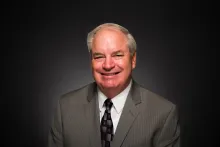
Robin Webber was born in Chicago, Illinois, in 1951, but has lived most of his life in California. He has been a part of the Church of God community since 1963. He attended Ambassador College in Pasadena from 1969-1973. He majored in theology and history.
Mr. Webber's interest remains in the study of history, socio-economics and literature. Over the years, he has offered his services to museums as a docent to share his enthusiasm and passions regarding these areas of expertise.
When time permits, he loves to go mountain biking on nearby ranch land and meet his wife as she hikes toward him.
